Reviewed · TOURS IN TOKYO
Kintsugi Experience with Arita Ware in Tokyo (English Guide)
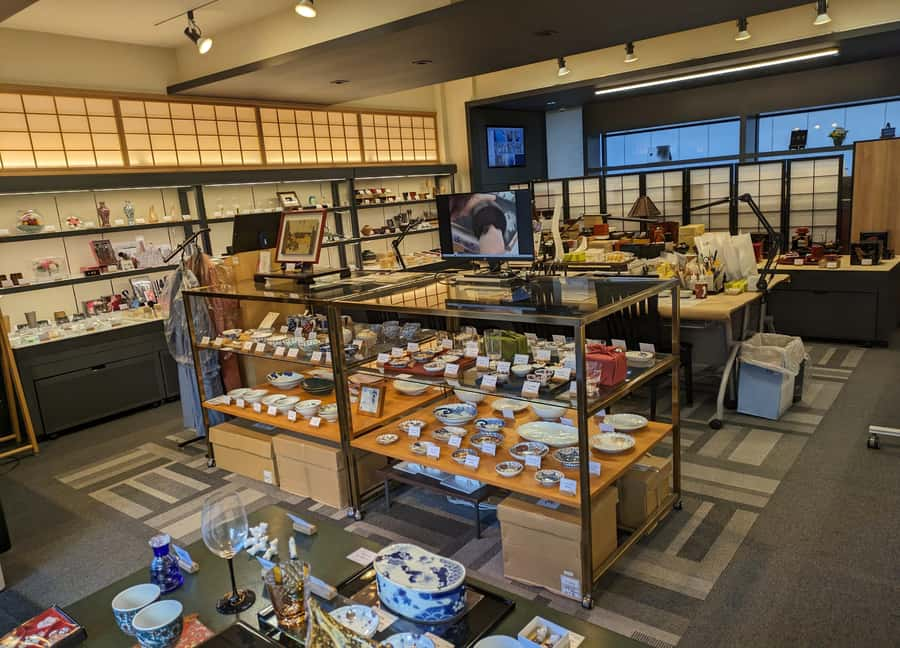
Kintsugi turns a broken plate into a keepsake, rather than hiding its scars. In this 90-minute Tokyo workshop, you work with Arita Ware, Japan’s first porcelain, while an English-speaking instructor explains the craft at Nihonbashi Mutoh Main Store, a lacquerware shop dating from 1923.
I like the useful souvenir and the setting. You make one plate and take it home, while the shop’s shelves of lacquerware and glassware give the lesson a proper craft-shop backdrop. The small group, capped at 10, also leaves enough room for clear instruction.
The main drawback is the narrow format: you complete one object, with limited choice according to one review. Your repaired piece must dry indoors for about a week, then serve as decoration only, not tableware.
Key details before you book
- A 90-minute hands-on craft: You spend the full session making one repaired plate, not simply watching a demonstration.
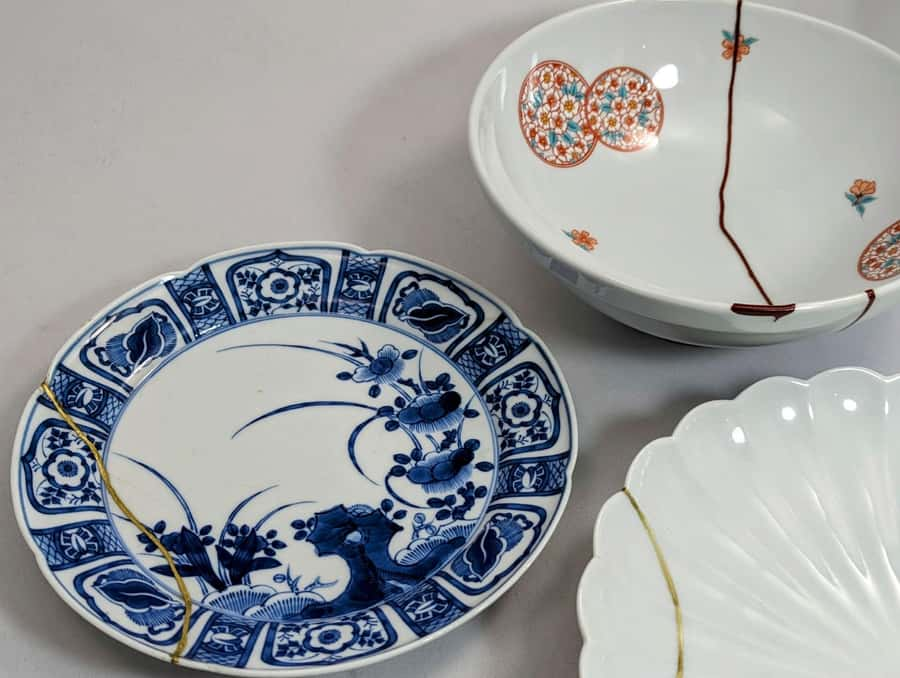
- Arita Ware with 400 years of history: The supplied plate connects the activity to Japan’s first porcelain tradition.
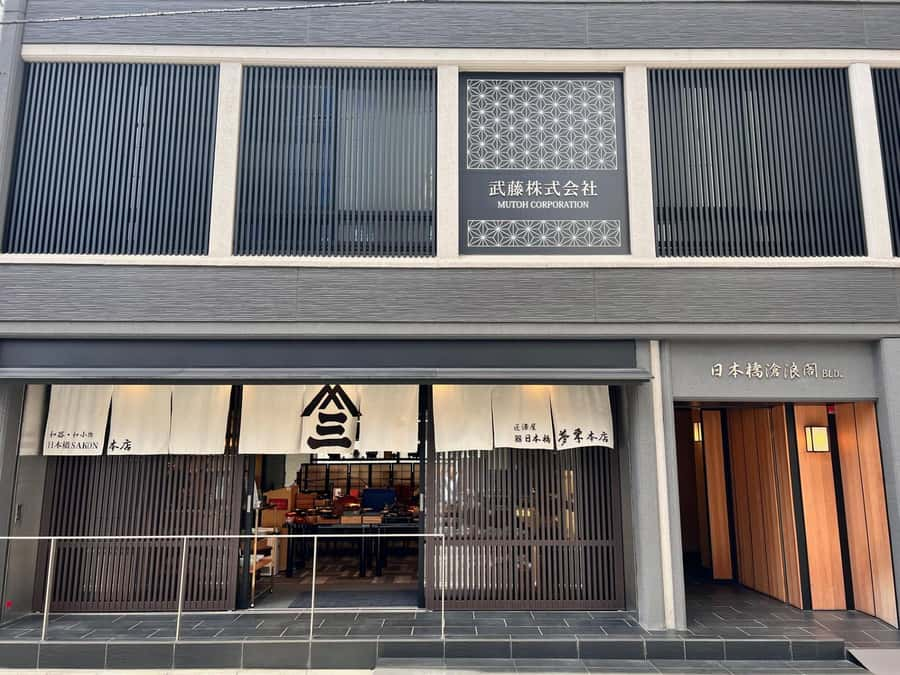
- An old Nihonbashi craft shop: Nihonbashi Mutoh Main Store has operated since 1923 as a dealer in lacquerware and glassware.
- Bring your own broken piece if it fits: Ceramic or porcelain items up to about 15 centimeters wide and 15 centimeters tall are accepted, with one or two broken sections.
- English support in a small group: The class is limited to 10 people, though it may take place alongside regular customers.
- A decorative souvenir, not a usable dish: The finished work needs one week to dry and must be hand-washed only, with no microwave or dishwasher use.
What kintsugi means beyond a repaired plate
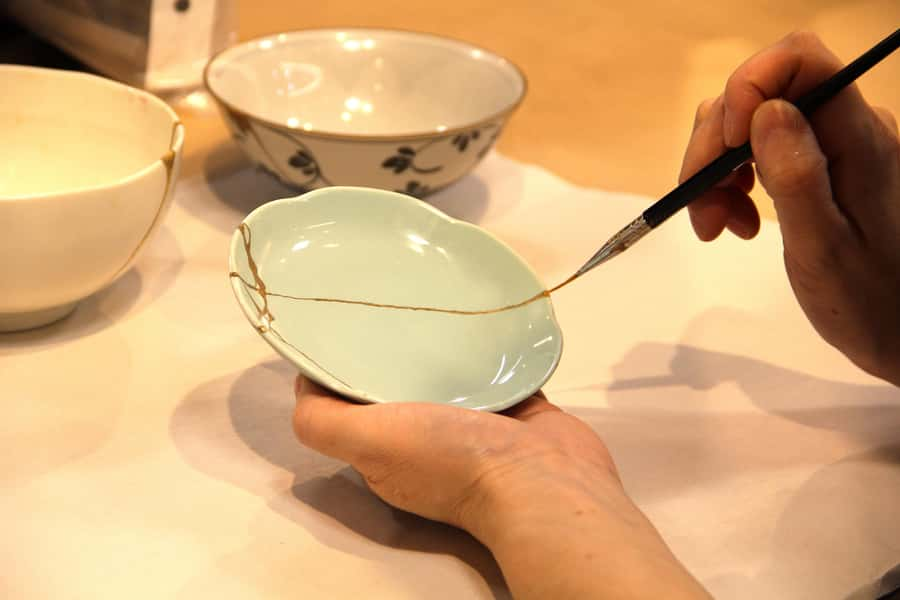
Kintsugi is the Japanese craft of joining broken pottery with gold. Rather than making a break disappear, the repair draws attention to it and treats the damage as part of the object’s story.
The tradition is linked with wabi-sabi, a Japanese way of seeing beauty in imperfection, age, and change. That idea gives this workshop more weight than a standard paint-and-take-home craft. You are not aiming for a flawless factory finish. You are making a personal object whose visible lines show that it was repaired.
The activity description places kintsugi’s beginnings in the 15th century. You do not need a background in Japanese art to enjoy the idea. The practical appeal is simple: a broken object can still have value, and the repair can make it more distinctive.
This also explains why the finished plate is for decoration. It is a craft object, not a replacement for a kitchen plate. Treat it as a small piece of Japanese-inspired art for a shelf or display cabinet.
Other experiences people book in Tokyo:
- Mt Fuji and Hakone 1-Day Bus Tour Return by Bullet Train
★ 5.0 · 26,383 reviews - 1-Day Tokyo Bus Tour
★ 5.0 · 14,250 reviews - Tokyo: TOKYO SKYTREE® Admission ticket
★ 4.5 · 11,192 reviews
Entering Nihonbashi Mutoh Main Store
The meeting point is Nihonbashi Mutoh Main Store at 1-8-3 Honcho, Nihonbashi, Chuo City, Tokyo 1030023. The shop was established in 1923 and deals in high-quality lacquerware and glassware.
That setting matters. You are not making kintsugi in a generic classroom with bare walls. You work in a store surrounded by traditional craft goods, including lacquerware and porcelain. The surroundings help place the technique in its wider context, even though the workshop itself is short.
The shop also serves as a useful stop for anyone interested in Japanese household crafts. You may find yourself looking at the shelves before or after the class, but the supplied details do not promise a separate shopping tour or formal store presentation. The focus remains the repair session.
The workshop can run with regular customers in the shop. If you want a private, quiet class with no other activity around you, this may not be the right choice. If you are comfortable working in a real retail setting, the arrangement gives the experience a more everyday feel.
Arita porcelain gives the exercise a real connection to Japan
The plate used in the class is Arita Ware. Arita porcelain has a 400-year history and is described as the first porcelain made in Japan. The pieces supplied for the workshop come from Shobido Honten, a brand with fans in Japan and overseas.
That choice adds value to the $139 price. You are not simply repairing an anonymous ceramic blank. You receive an object tied to one of Japan’s best-known porcelain traditions, then alter it with your own hands.
The details of the plate selection are limited, and one participant wished there had been more variety to choose from. Keep that in mind if you have a specific shape, color, or pattern in mind. This is not presented as a build-your-own ceramics class where you select from a large menu of pieces.
You can also bring an item from home instead. It must be ceramic or porcelain, no larger than about 15 centimeters in diameter and 15 centimeters high, with one or two broken parts. That option can make the session more personal, especially if the piece has sentimental value.
I would avoid bringing anything irreplaceable. The activity accepts suitable objects, but the information does not promise that every repair will be perfect or that an unsuitable item can be used. A modest broken cup or plate is a safer choice than a family heirloom.
The 90-minute workshop, step by step
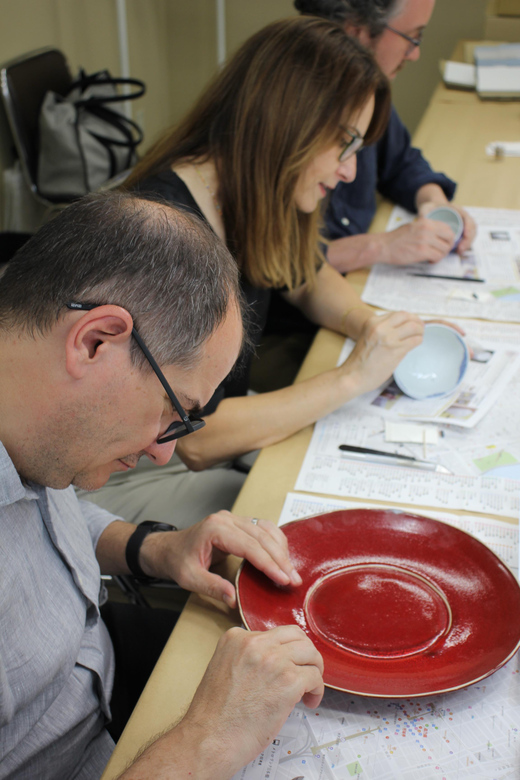
The scheduled times are 10:30 to noon, 1:30 to 3 p.m., and 3:30 to 5 p.m. Choose carefully, since arriving late does not extend the end time.
The session begins with instruction on kintsugi and the repair process. The teaching is in English, and the class is designed for people who speak English. One account describes instructions being given first in Japanese and then translated into English, so you should expect clear guidance even when the class includes Japanese-speaking participants.
You then work on the plate provided for the activity, or on your eligible personal item. The class is long enough to complete one object. That is a sensible limit for a 90-minute session, but it also means you should not expect to repair several pieces or learn every stage of professional kintsugi in detail.
The hands-on portion is the heart of the activity. You follow the instructor’s directions and create your own visible repair. The calm, careful pace suits people who like detailed work. It is less suitable if you want a fast-moving attraction with lots of different tasks.
At the end, you take your piece home. It needs to dry indoors for about one week. Plan your packing with care, especially if you are flying soon after the class. The supplied information does not specify protective packaging or shipping, so ask at the shop if you need special help carrying it safely.
Same base, a different sort of day:
- Tokyo: teamLab Planets TOKYO Digital Art Museum Entry Ticket
★ 4.6 · 9,779 reviews - Mt Fuji & Hakone Cruise, Drum Show Bullet Train 1 Day from Tokyo
★ 4.0 · 7,413 reviews - Tokyo: Sumo Show Experience with Chicken Hot Pot and a Photo
★ 4.8 · 6,678 reviews - Tokyo: Shinjuku Food Tour (13 Dishes at 4 Local Eateries)
★ 5.0 · 6,603 reviews
English instruction and group size
The instructor teaches in English, and the group size is limited to 10. That is small enough to make hands-on help more realistic than in a large class.
The teaching has received particularly strong praise. The instructor is described as friendly and skilled, and the directions are said to be clear. Another account calls the teacher excellent and describes the workshop as peaceful and interesting. Those details fit the nature of the craft: careful guidance is more useful here than a long lecture.
No instructor name is provided, so you cannot request a particular teacher in advance. The language arrangement is the important point. You should have English support throughout the 90-minute activity, although some explanations may be delivered in Japanese first and then translated.
Because regular customers may be present, the group is not necessarily isolated from the shop’s normal business. That is a minor tradeoff for a workshop held in an operating craft store.
The activity is not suitable for children under 13. Older children and teenagers may enjoy it, but the work involves patience and careful handling rather than a simple coloring project. The listing also recommends clothes you do not mind getting dirty.
What you take home, and how to care for it
The plate used in the experience is included, along with all required materials. That keeps the final cost clear and means you do not need to buy a separate object before arriving.
Your repaired piece must dry indoors for around one week. Do not rush this step or pack it tightly while it is still drying. If you are changing hotels, you will need to manage that carefully.
Once ready, wash it by hand with dishwashing detergent. It should not go into a dishwasher or microwave, and it is intended for decoration rather than eating or drinking.
These restrictions are not a small footnote. They define the souvenir. You are paying for a creative object and an introduction to a traditional repair craft, not for a functional plate you can use every day.
Bring a protective bag or box if you have one, though no special packing service is specified. If you are taking the piece home by air, keep it where it will not be crushed by clothing or souvenirs.
Is $139 a fair price?
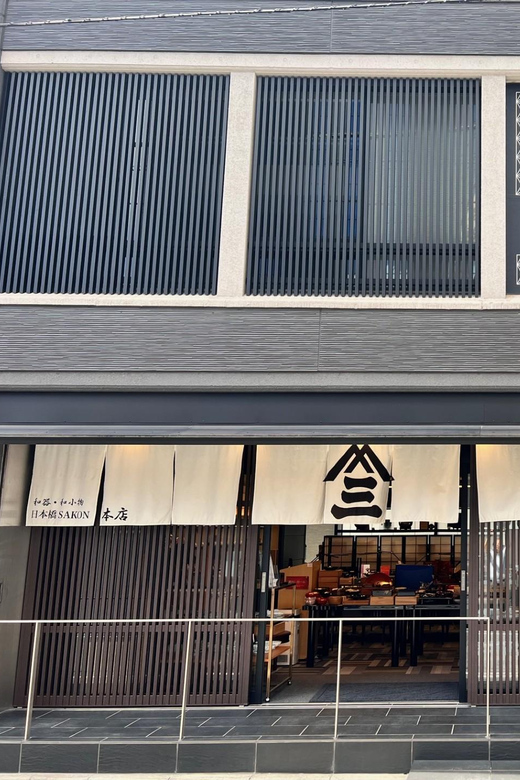
At $139 per person, this is not a bargain activity in the usual Tokyo sense. The price makes more sense if you value the combination of three things: a guided English class, a genuine Arita porcelain piece, and a hands-on souvenir made in a historic craft shop.
The 90-minute duration is long enough to complete one object but too short for an advanced course. You are paying for access, materials, instruction, and the setting. You are not paying for a full professional qualification or a multi-piece workshop.
The small group improves the value. With up to 10 participants, the instructor has a reasonable chance to help with individual work. The included plate also saves you from buying a separate Arita piece, although the limited choice may disappoint anyone hoping for a particular design.
I see this as better value for someone who wants a meaningful souvenir than for someone comparing activities purely by minutes per dollar. If you only want to see traditional Japanese crafts, visiting a shop would cost less. If you want to make something yourself and have English guidance, the price is easier to justify.
Who will enjoy this most?
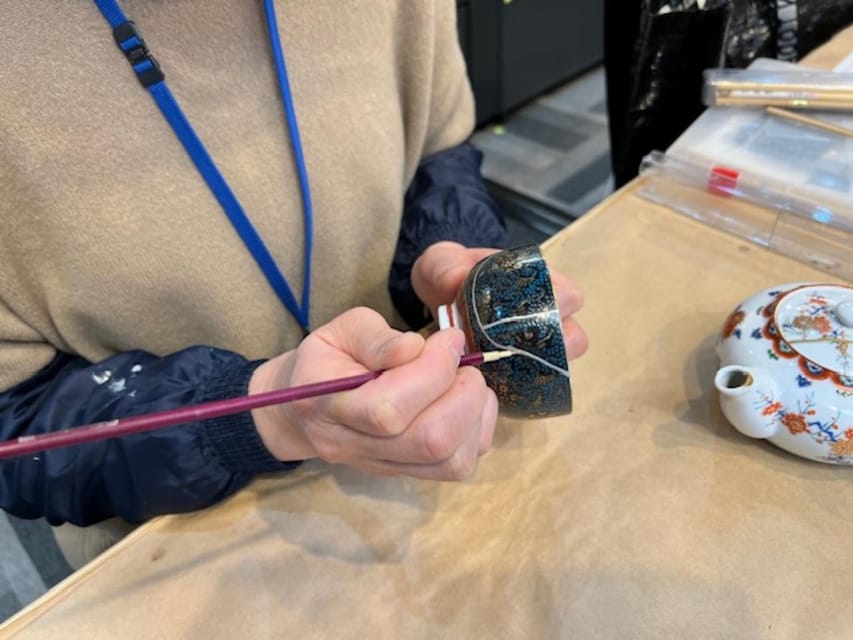
I would recommend this workshop to adults and children aged 13 or older who like quiet, focused activities. It suits people interested in Japanese art, ceramics, lacquerware, and the ideas behind wabi-sabi.
It is also a good choice if you have a suitable broken item at home. Repairing your own ceramic or porcelain piece can give the activity more emotional weight than using the supplied plate.
Couples may find it a pleasant shared activity, since each person makes a separate souvenir. It also works for solo visitors who want a structured craft session rather than another sightseeing stop.
You may want to skip it if you dislike careful handwork, want a broad choice of objects, or need a fully private class. The activity is deliberately focused: one item, one session, one decorative result.
The workshop is wheelchair accessible. Food and drinks are not included, though the 90-minute length makes the activity easy to fit between other plans in Nihonbashi.
Booking, timing, and cancellation advice
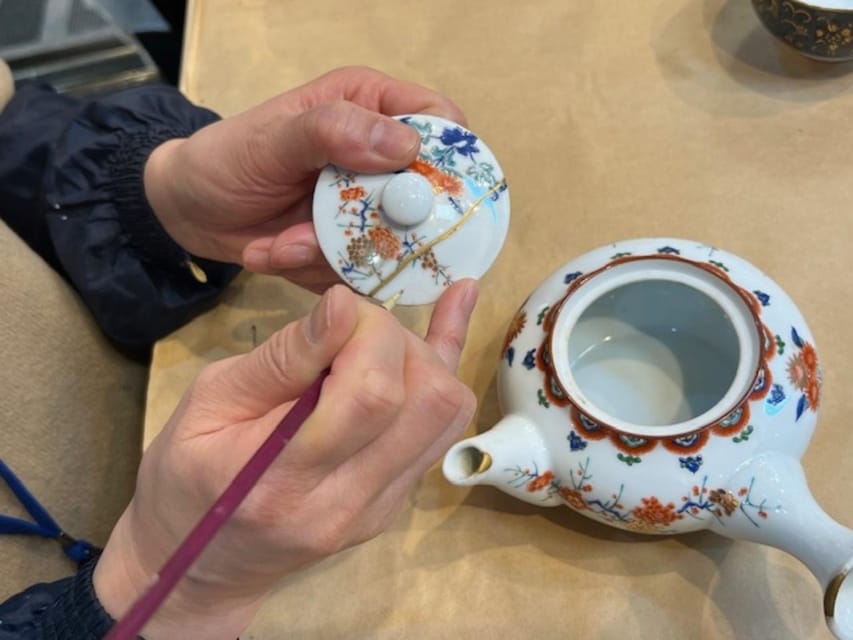
Select one of the three listed times: 10:30 a.m., 1:30 p.m., or 3:30 p.m. Arrive on time, since a late start still ends at the scheduled finish.
You can cancel up to three days in advance for a full refund. No refund is issued if you fail to attend on the scheduled day, so allow enough time to reach Nihonbashi.
The class may be held beside regular customers, and it is not advertised as a private group session. The maximum group size is 10, which keeps the class small but does not guarantee that every booking will feel completely secluded.
Should you book the Kintsugi Experience?
Book it if you want to make a decorative souvenir, appreciate traditional Japanese craft, and can spare 90 focused minutes. The Arita Ware, English instruction, historic shop, and small group give the class a clear identity.
Think twice if you want many objects to choose from, need a functional dish, or prefer a fully private workshop. The most important practical point is the drying period and the care restrictions after you leave.
For the right person, this is a thoughtful Tokyo activity. You leave with more than a purchased souvenir: you take home a plate whose repaired line records your own brief encounter with kintsugi.
FAQ
How long does the kintsugi workshop last?
The workshop lasts 90 minutes, or 1.5 hours.
What are the available starting times?
The listed sessions begin at 10:30 a.m., 1:30 p.m., and 3:30 p.m.
Where does the activity take place?
It takes place at Nihonbashi Mutoh Main Store, 1-8-3 Honcho, Nihonbashi, Chuo City, Tokyo 1030023.
Is the workshop taught in English?
Yes. An English-speaking instructor leads the activity.
How many people can join the group?
The group is limited to 10 participants.
What item do I repair during the workshop?
A plate used in the experience is included and can be taken home. You may also bring your own suitable ceramic or porcelain item.
Can I bring a broken item from home?
Yes. It must be ceramic or porcelain, no larger than about 15 centimeters in diameter and 15 centimeters high, with one or two broken parts.
Can I use the repaired plate for food or drinks?
No. The finished piece is intended for decoration only.
How should I clean the repaired item?
Hand-wash it with dishwashing detergent. Do not use a dishwasher or microwave.
Is the activity wheelchair accessible?
Yes, the activity is wheelchair accessible. Children under 13 are not permitted to participate.
Just added in Tokyo
- The 10 Tastings of Tokyo With Locals: Private Street Food Tour★ 5.0 · 48 reviews
- Small Town in the Big City: Tasting Tokyo’s Kichijoji★ 5.0 · 195 reviews
- Small Town in the Big City: Tasting Tokyo’s Kichijoji★ 5.0 · 16 reviews
- EXCLUSIVE Tokyo Secret: Kichijoji Small-Group Food & Bar Hopping★ 5.0 · 29 reviews
- Explore Kichijoji: Walk Through One of Tokyo’s Beloved Districts★ 5.0 · 21 reviews
- :Tokyo,Shibuya/ Pro Photography in Kimono / English-Friendly★ 5.0 · 26 reviews
- 【R34】Tokyo:Private Daikoku tour in Modified R34★ 4.9 · 92 reviews
- Tokyo:Calligraphy &Make your original folding fan in Asakusa★ 5.0 · 62 reviews
Tours in Tokyo, compared.

Mt Fuji and Hakone 1-Day Bus Tour Return by Bullet Train
Read our review →


teamLab Planets TOKYO Digital Art Museum Entry Ticket
Read our review →
Mt Fuji & Hakone Cruise, Drum Show Bullet Train 1 Day from Tokyo
Read our review →
Sumo Show Experience with Chicken Hot Pot and a Photo
Read our review →
Shinjuku Food Tour (13 Dishes at 4 Local Eateries)
Read our review →