
Reviewed · TOURS IN TOKYO
Tokyo Shinjuku Chopsticks Making Class
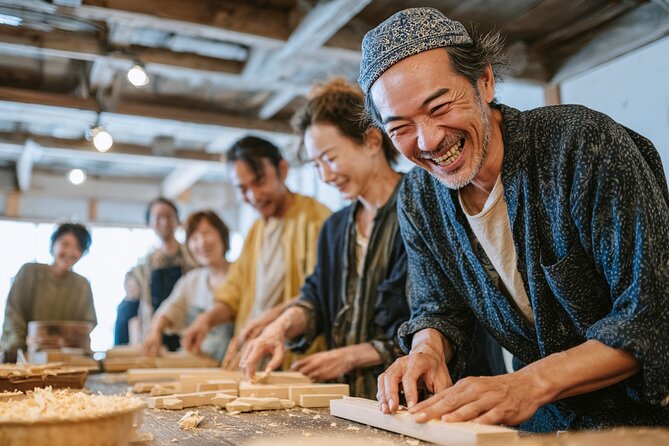
Turning two rough sticks into something you can use at home is the clever part of this one-hour Shinjuku workshop. You work with a traditional Japanese kanna, a small hand plane, and learn by shaving, smoothing, sanding, and oiling the wood.
I like the useful souvenir and the fact that the activity suits families, including mixed-age groups. I also like the patient English-speaking staff, with instructors such as Masa, Tom, Yuki, Nana, Sayaka, and Ken often helping at the workstations.
The main catch is the add-on pricing. Two wood choices are included, but premium woods and 2,000-yen engraving cost extra. The room can also feel rushed when many of the 32 available places are filled, especially around the middle of the day.
Key points to know before you book
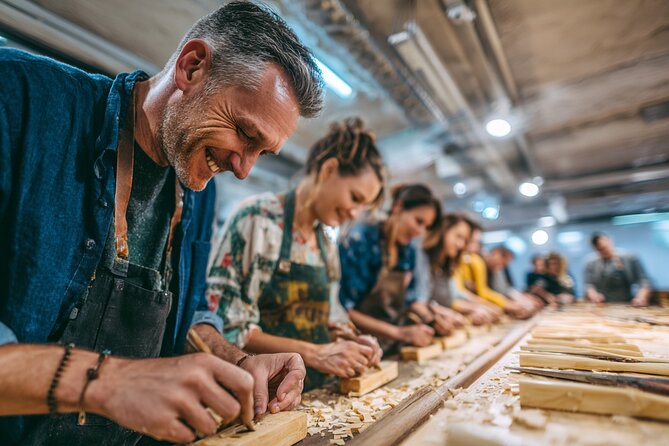
- You make the chopsticks from raw wood: The work is not just painting or decorating a finished souvenir. You shape the sticks yourself with a Japanese hand plane.
- Two wood options are included: Premium woods are available for an added fee, so ask about prices before choosing.
- English guidance is available: Staff members including Tom, Yuki, Masa, Nana, and Sayaka have helped visitors through the process in English.
- Engraving costs 2,000 yen: It adds a personal touch, but it is not included in the base price.
- The class lasts about one hour: It fits neatly between sightseeing stops in Shinjuku.
- Busy sessions can feel hectic: The maximum group size is 32, and assistance may take longer when every station is occupied.
From rough sticks to a Japanese souvenir
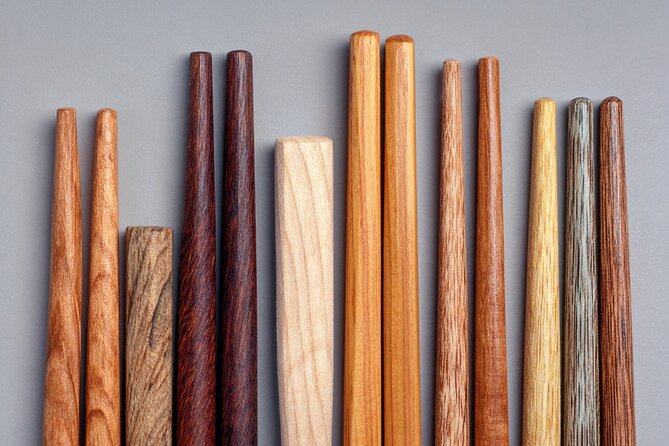
The activity begins with a pair of plain wooden sticks. They may look simple, but the point is to turn them into a pair that fits your hands and carries the marks of your own work.
You use a kanna, a traditional Japanese hand plane, to remove thin shavings from the wood. This takes some practice. The tool is not difficult to understand, but you need to learn how firmly to hold it and how to guide it along the grain.
That small learning curve gives the experience its character. You are not simply buying chopsticks in a shop. You are learning why the surface becomes smooth and how the shape develops through repeated passes.
The class is designed for beginners. Staff explain how to shave the wood, then show you how to sand and oil the finished pair. You do not need woodworking experience, though a little patience helps. One instructor may need to correct your grip or technique, particularly if the first stick does not take shape as expected.
Some people need another attempt. That is not necessarily a problem. The staff have been willing to help participants start again when a stick was damaged or shaped unevenly. If you are worried about making a mistake, ask for guidance early rather than continuing with a poor angle.
Other experiences people book in Tokyo:
- Mt Fuji and Hakone 1-Day Bus Tour Return by Bullet Train
★ 5.0 · 26,383 reviews - 1-Day Tokyo Bus Tour
★ 5.0 · 14,250 reviews - Tokyo: TOKYO SKYTREE® Admission ticket
★ 4.5 · 11,192 reviews
Choosing the wood and understanding the extra costs
The standard price is about $20 per person. Two types of wood are included, giving you a real choice without forcing you to pay more before the class begins.
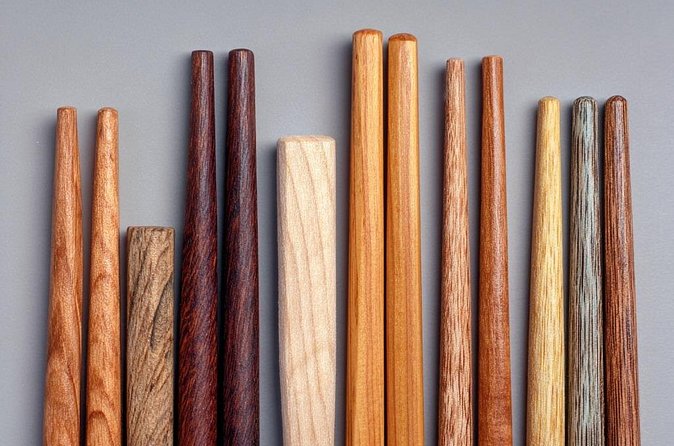
Premium woods are available for a small upgrade. The exact wood selection and surcharge can vary, so ask the staff about the cost before committing. Different woods have different textures, colors, scents, and levels of hardness. A harder piece may require more effort with the hand plane.
This is one place where the class can feel less inexpensive than the advertised price suggests. The base fee is reasonable for a guided craft session and a finished pair of chopsticks, but premium wood raises the total. Engraving adds another 2,000 yen.
I recommend deciding your budget before you enter. The included wood is enough to make the experience worthwhile. Premium wood may appeal to you if you care about the grain or want a particular color, but it is not needed for a successful souvenir.
Engraving is also optional. It can turn the chopsticks into a more personal keepsake, especially if you are marking a first visit to Japan or making a gift. Still, you should treat it as an add-on rather than part of the class.
What happens during the one-hour class
The workshop follows a clear sequence, although the amount of help you receive can depend on how crowded the room is.
1. Select your wood
You begin by choosing from the available wood options. The standard choices are included, while premium pieces cost more.
Look at the surface and ask which pieces are easier for a first attempt. If you are working with children or have limited hand strength, a simpler piece may be a better choice than the hardest or most decorative wood.
Same base, a different sort of day:
- Tokyo: teamLab Planets TOKYO Digital Art Museum Entry Ticket
★ 4.6 · 9,779 reviews - Mt Fuji & Hakone Cruise, Drum Show Bullet Train 1 Day from Tokyo
★ 4.0 · 7,413 reviews - Tokyo: Sumo Show Experience with Chicken Hot Pot and a Photo
★ 4.8 · 6,678 reviews - Tokyo: Shinjuku Food Tour (13 Dishes at 4 Local Eateries)
★ 5.0 · 6,603 reviews
2. Learn to use the kanna
The instructor explains how to position the wood and use the hand plane. You then begin shaving the surface.
This is the most distinctive part of the activity. The shavings curl away as you work, and you can feel the grain change beneath the tool. Some participants enjoy keeping the shavings as a small extra reminder of the process.
Do not expect the tool to do all the work. Several parts of the process require force and control, especially with harder wood. The class is accessible, but it is not completely passive. Children can take part, though younger participants may need close adult help.
3. Shape and smooth the sticks
After the rough shaping, you refine the form and smooth the surface. Your goal is not necessarily perfect factory symmetry. The charm comes from making a pair that feels comfortable and looks pleasing in your hands.
You may need to remove more material from one side than another. Staff can show you where to continue and how to avoid taking off too much. If the blade is not cutting cleanly, ask for help rather than pressing harder.
A few sessions may have tools that feel less sharp than ideal. That can make the work slower and more tiring. A patient instructor can still help, but this is worth knowing if you expect a polished woodworking setup.
4. Sand and oil the chopsticks
Sanding gives the wood its final smooth feel. This is a quieter stage and lets you correct some roughness left by the hand plane.
The final oiling helps bring out the appearance of the wood and prepares the chopsticks for use. Staff explain the basic process, and the finished pair should feel far more refined than the raw sticks you started with.
The result will not look identical to a mass-produced pair. That is part of the appeal. Small variations show that you shaped the chopsticks yourself.
5. Add engraving if you choose
Engraving is available for an extra 2,000 yen. It can include a name or personal marking, creating a stronger connection to the trip.
Ask about the engraving charge before you order it. Some people consider it a worthwhile final touch, while others prefer to keep the cost at the base price. The chopsticks are already personal because you made them, so engraving is optional rather than essential.
Why the instructors matter
The staff are a major part of the experience. English-speaking instructors have included Tom, Yuki, Masa, Nana, Sayaka, Ken, Katana, Kiwa, Mauro, Yin, Mimi, and Shae.
Names and staffing can change, but the important point is that the workshop has people available to explain the technique and answer questions. When the room is running smoothly, staff check on your progress and step in when a cut goes wrong.
Masa has been praised for patient guidance, particularly when a first attempt did not work. Tom and Yuki have explained the steps clearly in English, while Nana and Sayaka have helped participants who arrived early and were ready to begin.
Do not hesitate to ask for a demonstration. The basic movement is easy to describe but easier to understand when you see the angle of the tool. If one instructor is busy, another staff member may give a slightly different suggestion, so listen for the common principle: follow the grain, remove small amounts, and ask before forcing the tool.
A family activity with real work involved
This is a strong choice for a family group because everyone can participate at the same table. It is suitable for a wide age range, with one family group ranging from age 10 to 84 enjoying the activity together.
The session also works for friends, couples, and solo visitors. You leave with a practical object instead of a souvenir that sits on a shelf, and the work gives you something to talk about during the rest of the day.
Still, do not confuse beginner-friendly with effortless. Shaping wood takes some muscle, and the process can be tiring if you choose a harder premium wood. Younger children may need an adult nearby, and anyone with limited hand strength should ask about the easiest wood option.
The class does not require artistic talent. You are not expected to produce museum-quality craftwork. The instructors guide you toward a usable result, and mistakes can often be corrected or avoided with help.
Timing, group size, and the feel of the room
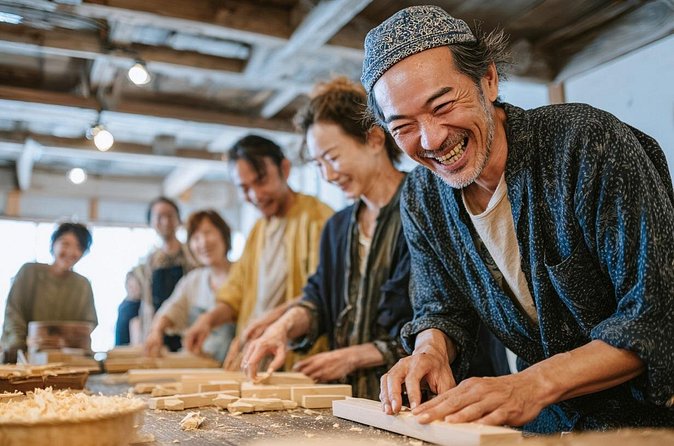
The activity lasts approximately one hour and ends at the same place where it begins. That makes it easy to add to a Shinjuku day without arranging separate transport afterward.
The meeting point is at 7-chōme-4-5 Nishishinjuku, Shinjuku City, Tokyo 160-0023. It is near public transportation, but check your confirmation carefully before setting out. One booking message has caused confusion about the location, with people checking more than one address. Use the current meeting-point details and allow a little extra time to find the workshop.
The maximum group size is 32. The room is arranged with several tables and multiple workstations, so a full session can feel active and crowded.
A quieter time is likely to give you more direct instruction. Midday can be busy, and limited staff attention may mean waiting when you need help. If your schedule allows, avoid the most crowded period. You may still complete the work during a busy session, but the teaching can feel less personal.
The staff generally do not rush people out, which is useful if you need a little longer to finish. Even so, the pace may not feel relaxed when many people are working at once.
What makes this more than a souvenir shop purchase
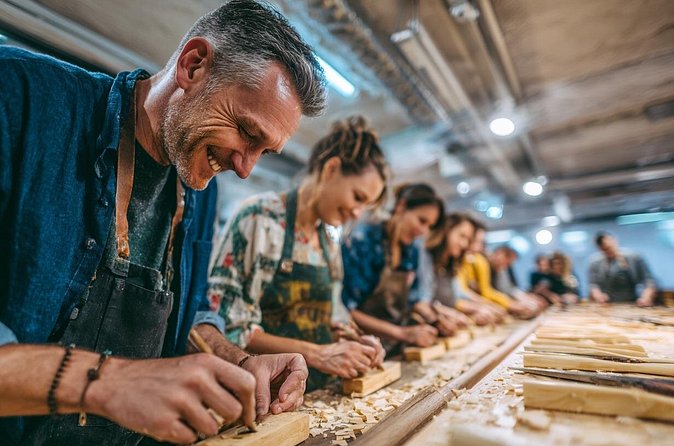
Tokyo offers endless chances to buy chopsticks. This class earns its place in an itinerary because it shows you something about the making process.
You feel the grain rather than simply seeing a finished product. You learn how a hand plane removes material in thin layers. You also discover that a familiar Japanese object depends on balance, smoothness, and careful finishing.
The finished chopsticks carry a small record of your time in the workshop. The uneven details may remind you where you had to adjust your technique. Keeping the wood shavings can add another physical reminder of the work.
This is also a good break from observation-heavy sightseeing. After several temples, department stores, and train rides, sitting down to make something gives your hands a job. The session is short enough not to consume your day, but active enough to feel like a real activity.
Value at about $20 per person
At roughly $20, the base price is fair if you value the guided instruction and the finished chopsticks. You are paying for the workspace, tools, staff help, materials, and a souvenir you made yourself.
The value weakens if you add several upgrades without planning for them. Premium wood and 2,000-yen engraving can push the final cost higher than expected. Some people will happily pay for a special wood or name, while others will find the extras unnecessary.
I would book it at the base price if you want a short cultural activity with a useful result. I would choose a premium wood only if its appearance or texture matters to you. Engraving makes most sense for a gift or a major personal milestone.
The 4.9 rating and 99 percent recommendation signal that the experience works very well for most people, but the lower scores point to two real concerns: confusing directions and crowded sessions. Those issues are manageable if you verify the address and avoid the busiest time you can.
Who should book this Shinjuku workshop?
You should consider it if you:
- Want a hands-on activity rather than another sightseeing stop
- Need a family-friendly option for several generations
- Like useful souvenirs with a personal story
- Are curious about Japanese craft tools
- Want an activity that lasts about one hour
- Feel comfortable doing light physical work with your hands
You may want to skip it if you want a quiet, highly polished craft lesson with one instructor assigned to you. A full room can limit individual attention, and the tools may not always feel as sharp as you expect.
It is also less suitable if you dislike optional charges. The included wood is enough, but premium selections and engraving are offered during the experience, so decide in advance what you are willing to spend.
Should you book the chopsticks class?
I would book this activity for a family, couple, or small group looking for an easy cultural experience in Shinjuku. The best parts are the direct work with raw wood, the chance to use a traditional kanna, and the personal souvenir you take home.
Book with realistic expectations. This is a compact tourist workshop, not a private woodworking lesson. Confirm the Nishishinjuku meeting point, allow for a busy room, and ask about upgrade prices before choosing your wood.
If you keep the base package, ask for help when the first stick feels difficult, and treat engraving as optional, the class offers good value and a memorable way to spend an hour in Tokyo.
FAQ
How long does the chopsticks-making class last?
The activity lasts approximately one hour.
Where does the activity begin and end?
It begins at 7-chōme-4-5 Nishishinjuku, Shinjuku City, Tokyo 160-0023, Japan, and ends back at the meeting point.
Do I need woodworking experience?
No. The activity is designed for beginners, and instructors guide you through shaping, sanding, and oiling the chopsticks.
What tools do I use?
You use a traditional Japanese kanna, or small hand plane, to shape the raw wood. The process also includes sanding and oiling.
Are premium wood and engraving included?
Two types of wood are included. Premium woods cost extra, and engraving costs 2,000 yen.
Can I cancel for a full refund?
Yes, if you cancel at least 24 hours before the experience start time. Cancellations or changes made within 24 hours are not refunded or accepted.
Just added in Tokyo
- Nikko: Edo Wonderland Edomura Cultural Theme Park Ticket★ 4.3 · 205 reviews
- 《MEMBERS-ONLY-BAR-HOPPING》Discover Your Special Whiskey in Tokyo!★ 5.0 · 29 reviews
- Japanese Whisky Hunting《HIGH-QUALITY-ONLY》Rare Tasting Class★ 5.0 · 20 reviews
- Luxury Tokyo Sake, Cocktail, Whisky and Pairing Tour★ 5.0 · 18 reviews
- Wagyu & Sake Pairing in Shinjuku – Steak, Shabu-Shabu & More★ 5.0 · 112 reviews
- Small-Group Wagyu Beef and 7 Japanese Dishes Tokyo Cooking Class★ 5.0 · 190 reviews
- Mt. Fuji & Hakone Cherry Blossom private One Day Tour★ 4.5 · 35 reviews
- Mt. Fuji, Hakone Private Tour from Tokyo – Onsen, Arts and Nature★ 5.0 · 79 reviews
Tours in Tokyo, compared.

Mt Fuji and Hakone 1-Day Bus Tour Return by Bullet Train
Read our review →


teamLab Planets TOKYO Digital Art Museum Entry Ticket
Read our review →
Mt Fuji & Hakone Cruise, Drum Show Bullet Train 1 Day from Tokyo
Read our review →
Sumo Show Experience with Chicken Hot Pot and a Photo
Read our review →
Shinjuku Food Tour (13 Dishes at 4 Local Eateries)
Read our review →
Tokyo Mt Fuji 5th St & Hakone Cruise Bus Tour w/Bullet Train
Read our review →Browse the lists this tour appears in