
Reviewed · ARASHIYAMA & BAMBOO GROVE TOURS
Kyoto: Avoid the Crowds at the Hidden Gems of Arashiyama
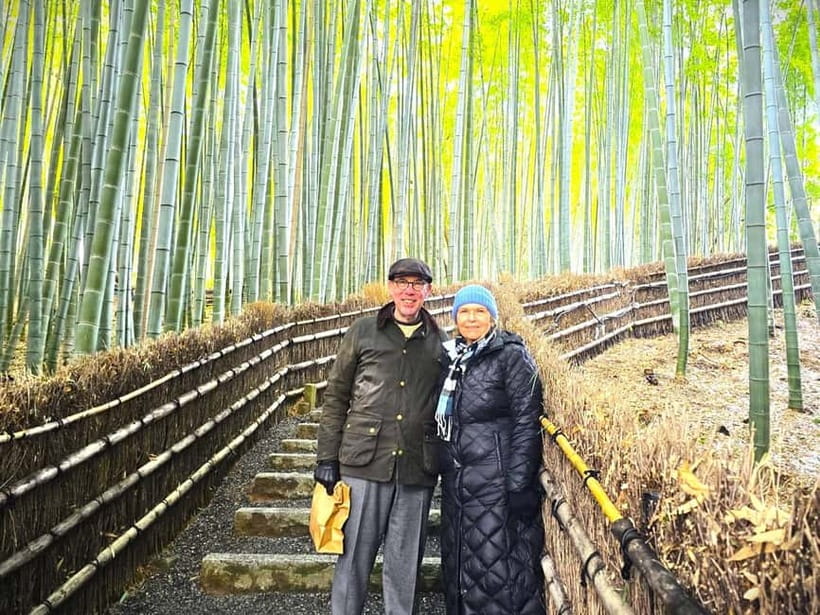
Arashiyama is best known for its bamboo grove, but the area becomes more interesting once you leave the main path. This four-hour walk takes you from Togetsu Bridge through quiet temple grounds, old wooden houses, and two unusual temple collections that many short visits miss.
I like the mix of famous sights and less familiar stops. Otagi Nenbutsuji’s 1,200 playful statues are unlike anything else in Kyoto, while Adashino Nenbutsuji’s 8,000 stone figures create a much quieter, more reflective visit. The main drawback is simple: this is a walking tour with moderate walking, stairs and uneven temple paths, so it is not suited to wheelchair users or people with mobility problems.
Key points to know before booking
- A four-hour walk with a clear route: Start at Saga Arashiyama Station and finish there, with no need to arrange local transport between stops.
- Two very different temples: Otagi Nenbutsuji feels whimsical and personal, while Adashino Nenbutsuji is solemn and atmospheric.
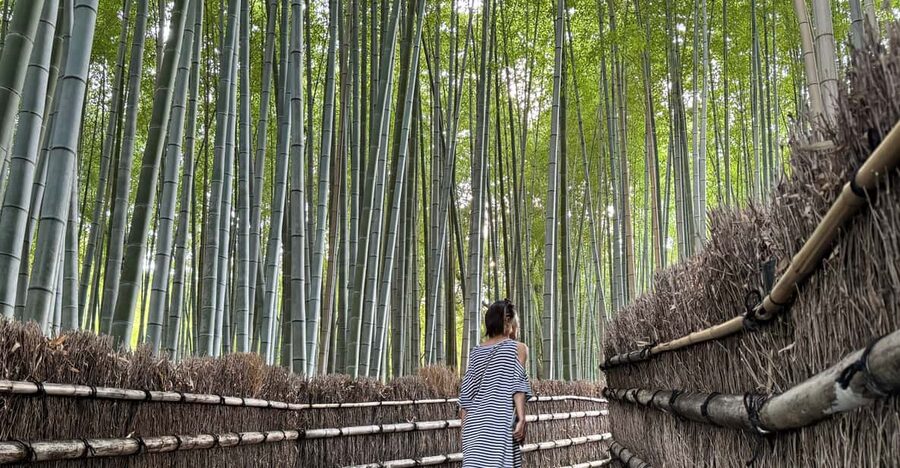
- A short bamboo forest visit: You get a photo stop, but this is not a long, crowd-free bamboo experience.
- A guide adds cultural context: English and Japanese guides explain Arashiyama, Okusaga, Buddhism, customs, food, and local life.
- Traditional streets and small shops: Saga Toriimoto brings old houses, a cocoon-doll shop, and a Washi paper shop into the walk.
- Good value for a small group: At $83 per person, the price includes the guide and both temple admissions, but not food, drinks, or souvenirs.
Why this Arashiyama walk takes a better route
The famous bamboo grove is only one small part of Arashiyama. If you arrive, take a quick photo, and leave, you miss the older streets and temples farther into Okusaga.
This experience gives you a useful four-hour route without asking you to work out the order yourself. You meet in front of the ticket gate at Saga Arashiyama Station, where your guide holds a yellow DeepExperience sign. From there, the walk moves through the best-known part of Arashiyama before heading into quieter surroundings.
That route matters. You get the postcard views first, then more time for places where a guide can explain what you are seeing. The walk ends back at Saga Arashiyama Station, which makes the outing easy to fit into a day of sightseeing.
The tour is offered privately or in small groups. That is worth considering if you like asking questions. Guides have included Megumi, Yoshi, Kana, Juraj, Akino, and Juliette, and the feedback points to warm, engaged guiding. Yoshi, for example, helped with a restaurant recommendation and even offered further assistance after the tour. Juliette also speaks French in addition to English, according to one booking experience.
Other mornings on the western edge of Kyoto:
- Kyoto: Fushimi Inari, Kinkakuji, Bamboo Grove 1 Day Bus Tour
★ 4.8 · 4,316 reviews - Osaka/Kyoto:Kinkakuji,Arashiyama,FushimiInariShrine,NaraPark
★ 4.1 · 1,596 reviews - Kyoto/Osaka: Nara, Fushimi Inari Taisha, Arashiyama Bus Tour
★ 4.7 · 1,275 reviews
Togetsu Bridge and the first view of Arashiyama
Your first stop is Togetsu Bridge, the landmark that gives Arashiyama much of its visual identity. The visit here is brief, about five minutes, so think of it as an orientation stop rather than a long riverside pause.
You will have time to admire the bridge, the river, and the surrounding hills before continuing. The setting changes with the seasons, but the bridge is especially useful at the start because it helps you understand how the river divides the busy sightseeing zone from the quieter streets ahead.
The walk then passes through Arashiyama for about ten minutes, including scenic views on the way to the park observatory. This section helps you get your bearings before the tour turns toward the bamboo and temples.
Arashiyama Park and the bamboo photo stop
The observatory in Arashiyama Park gives you a broader view than the narrow bamboo paths. It is a sensible addition because the grove itself can feel enclosed, while the park lets you pause and take in the wider setting.
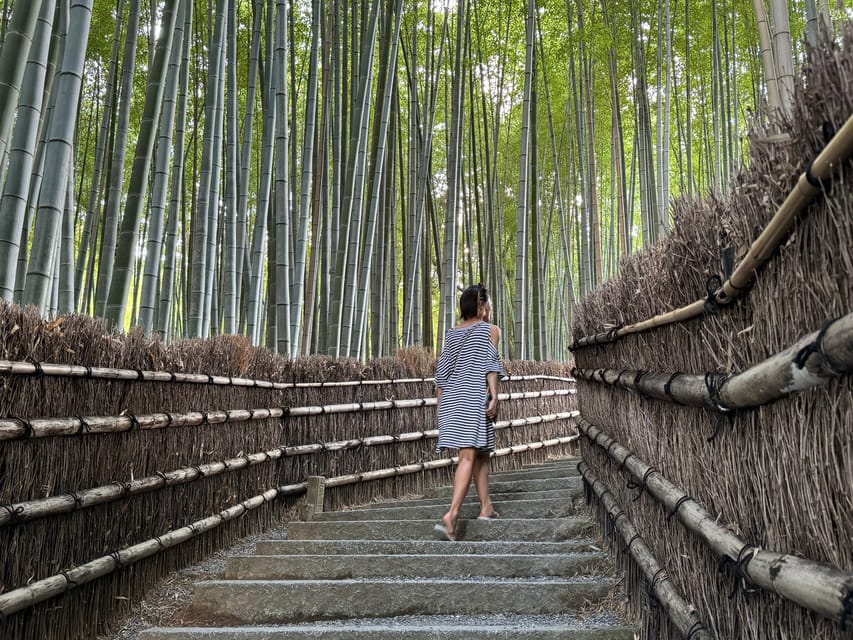
The bamboo forest stop lasts around five minutes. You can take your photograph in front of the bamboo, but you should set your expectations correctly. This is a brief photo opportunity, not a long period wandering through every part of the grove.
That short timing may actually help. The bamboo area is one of Kyoto’s most popular photo stops, and lingering there can mean standing in a steady stream of people. This tour gives you the essential view, then takes you toward places with more room and more cultural explanation.
If the bamboo grove is your main reason for visiting Arashiyama, you may want to return independently at another time of day. If you want the grove as one part of a wider route, the five-minute stop is enough to see it and move on.
Otagi Nenbutsuji and its 1,200 stone faces
Otagi Nenbutsuji is one of the strongest parts of the tour. You spend about 30 minutes here, and that gives you time to look closely at its collection of 1,200 unique stone statues.
The figures are often described as whimsical because they have different faces, expressions, and poses. Some seem cheerful, some odd, and some almost mischievous. This is not a temple visit where you simply walk past one large building, take a photo, and leave. The statues reward slow looking.
I especially like this stop for families and younger visitors because it offers an immediate visual hook. At the same time, adults who want more context can ask the guide about Buddhist imagery, temple customs, and the role of statues in Japanese religious spaces.
The guide is useful here. Without explanation, you may see a hillside filled with amusing stone figures. With explanation, you can start to understand how the temple’s religious setting and artistic details fit together.
The path may be uneven, and you should wear shoes with good support. The supplied information specifically warns of moderate walking, and temple grounds in Kyoto are not designed like modern museums.
Other quiet corners of Kyoto:
- Kyoto Geisha Walking Tour: Gion District & Hidden Gems
★ 4.7 · 3,273 reviews - Private Kyoto Tour with a Local, Highlights & Hidden Gems, Personalised
★ 5.0 · 1,543 reviews - Arashiyama Bamboo Forest & Hidden Gems Bike Tour (Early Bird)
★ 5.0 · 613 reviews - Kyoto: Hidden Gems E-Bike Tour with Local Japanese Guide
★ 4.9 · 189 reviews
Adashino Nenbutsuji and 8,000 stone memorials
The next temple offers a sharp change in mood. Adashino Nenbutsuji is known for about 8,000 stone images and pagodas. Instead of the playful character of Otagi Nenbutsuji, this site feels more solemn and contemplative.
The large number of stone figures is part of what makes the visit powerful. You are not looking at a single famous object. You are seeing a field of memorial forms, each contributing to the atmosphere of the temple grounds.
This is one of the places where a guide can make a real difference. The tour information emphasizes Buddhist philosophy, temple traditions, and the history of Okusaga and Arashiyama. Juraj, one of the guides named in the booking feedback, was praised for explaining Buddhist philosophy, temple sects, and religious ideas in fluent English and Japanese.
Do not rush this stop. The stated visit time is about 30 minutes, which is enough for an introduction and a careful look, though you may wish you had longer if religious art and history are your main interests.
The contrast between the two temples is a major strength. Otagi Nenbutsuji brings humor and surprise. Adashino Nenbutsuji asks for quiet attention. Together, they show two very different sides of Kyoto’s temple culture.
Saga Toriimoto’s preserved street
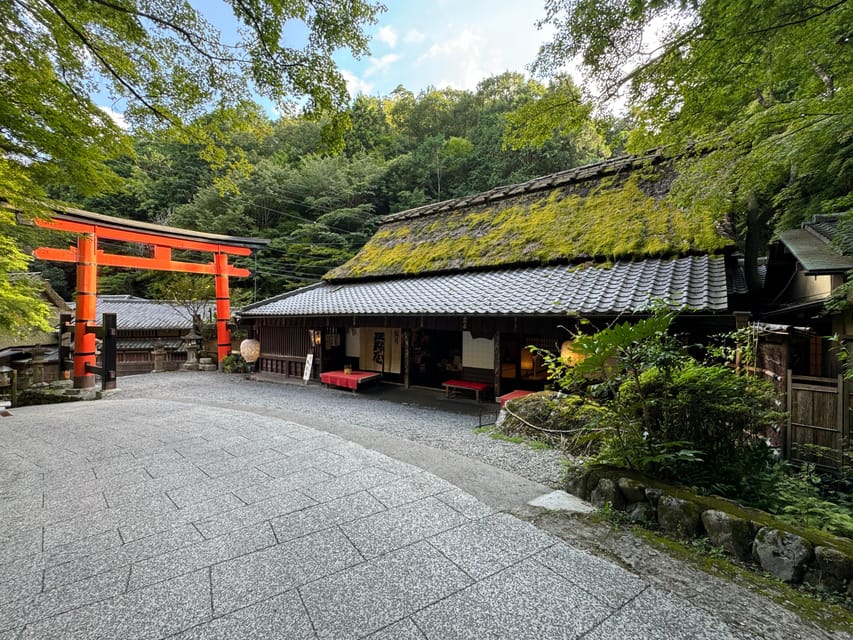
The route continues through Saga Toriimoto, a preserved street lined with traditional Japanese houses. This is a welcome change from temple grounds and a chance to see a quieter side of the Arashiyama area.
The guided portion here lasts about 30 minutes. You will have time to look at the old houses and visit local shops, including a cocoon-doll shop and a Washi paper shop. These are small details, but they give the walk a more local character than a simple procession between major sights.
Washi is traditional Japanese paper, and a shop devoted to it offers a useful reminder that Kyoto’s culture is not limited to shrines, temples, and gardens. The cocoon dolls add another handmade element to the route.
The exact amount of time spent in each shop can vary, especially in a private or small group. The tour does not include souvenirs, so budget separately if you see something you want to buy.
Seiryoji Temple and the return to the station
Seiryoji Temple is the final listed temple stop, with about 15 minutes set aside for a visit. It gives the tour one more religious and architectural point of interest before the return to Saga Arashiyama Station.
This is a relatively short stop, so you should not expect a long guided study of the temple. Instead, it works as a final piece in the route, following the statues, memorial stones, and traditional street views.
You then return to the station, where the tour finishes. Since the route starts and ends at Saga Arashiyama Station, you can continue with your own plans without needing to find your way back from a distant neighborhood.
What the guide adds to the walk
The guide is the main reason to choose this experience rather than simply visiting the same places on your own. The temples are attractive without commentary, but their meaning is harder to grasp from signs alone.
You can ask about:
- Buddhist philosophy and temple sects
- The history of Okusaga and Arashiyama
- Japanese customs and daily culture
- Local food and restaurant suggestions
- The meaning or purpose of the stone figures and pagodas
The tone appears to be conversational rather than lecture-heavy. Megumi was described as friendly, cheerful, and humorous, while Kana guided a group along the river, bamboo area, streets, and temples while answering questions. Those details matter because four hours is a long time to spend with a guide. A warm personality can make the walk much more enjoyable.
English and Japanese are available. The guide names and language abilities can vary by booking, so if you need a particular language or have a strong preference, check availability before paying.
Walking conditions, timing, and who should book
You should bring comfortable walking shoes and water. A camera is useful, especially for Togetsu Bridge, the bamboo grove, the stone statues, and Saga Toriimoto’s traditional houses.
Smoking is not allowed. Food and drinks are not included, so bring water and plan your meal separately. The activity lasts four hours, with starting times subject to availability.
This tour is a good match for you if:
- You want more than the standard bamboo forest visit
- You enjoy temples, religious art, and local history
- You prefer a guide-led walk to planning each stop yourself
- You are comfortable walking for several hours
- You like small groups and time for questions
- You want to see traditional shops and old houses along with major sights
It is less suitable if you have mobility impairments, use a wheelchair, or dislike walking on temple paths. It is also not the best choice if your only goal is taking an extended set of photographs in the bamboo grove. The bamboo stop is short, and the tour’s real value lies farther along the route.
Is $83 a fair price?
At $83 per person, the cost is not the cheapest way to see Arashiyama. You could visit the bridge, bamboo grove, streets, and temples independently for less, though you would need to plan the route and pay the temple admissions yourself.
The price makes more sense if you value interpretation and company. It includes a local guide and admission to Otagi Nenbutsuji and Adashino Nenbutsuji. You are paying for the route, the historical background, help with questions, and the ease of moving through several sights in the right order.
A private or small-group format also improves the value for people who want personal attention. The experience is less compelling if you prefer to explore every temple at your own pace or spend a long time shopping.
The strongest value comes from the two temple visits. Otagi Nenbutsuji and Adashino Nenbutsuji are not simply stops added to fill time. They are the heart of the walk, and a guide can help you understand why they feel so different.
Should you book this Arashiyama experience?
I would book this tour if you want to see Arashiyama beyond the famous bamboo photograph. The route gives you Togetsu Bridge and the bamboo grove, then moves into Otagi Nenbutsuji, Adashino Nenbutsuji, Saga Toriimoto, and Seiryoji Temple.
You should book it especially if Buddhist culture, unusual statues, traditional houses, and local history interest you. The consistently high rating and repeated praise for guides such as Megumi, Yoshi, Kana, and Juraj support the idea that the human side of the tour is a major part of its value.
Choose another plan if you need a wheelchair-accessible outing, want very little walking, or want most of your time in the bamboo forest. For a curious, mobile visitor who wants a fuller four-hour introduction to western Kyoto, this is a well-shaped and worthwhile walk.
FAQ
Where does the tour start and finish?
The tour starts in front of the ticket gate at Saga Arashiyama Station and finishes back at Saga Arashiyama Station.
How long does the experience last?
The tour lasts four hours. Starting times depend on availability.
Which languages are available?
Live guiding is available in English and Japanese. One guide named in the booking information also speaks French, but specific language availability should be checked when booking.
What admissions are included?
Admission to Otagi Nenbutsuji Temple and Adashino Nenbutsuji Temple is included. Food, drinks, and souvenirs are not included.
Is the tour suitable for wheelchair users?
No. The experience is not suitable for wheelchair users or people with mobility impairments, and it involves a moderate amount of walking.
What should I bring?
Bring comfortable walking shoes, water, and a camera. Smoking is not allowed during the activity.
Just added in Kyoto
- Private Cooking Class Udon in Kyoto Japan★ 5.0 · 23 reviews
- Your Private Vacation Photography Session In Kyoto★ 5.0 · 110 reviews
- Kyoto: Zen Meditation at a Private Temple with a Monk★ 5.0 · 25 reviews
- Private Pewter Sake Cup Experience with a Kyoto Artisan★ 5.0 · 31 reviews
- Kyoto Wagashi(Japanese sweets) Cooking Class near Fushimiinari★ 5.0 · 60 reviews
- Kyoto:Family-Friendly Kimono & Yukata Experience at WARGO★ 5.0 · 147 reviews
- Private Guided Traditional Buddhist Cooking in Japan★ 5.0 · 16 reviews
- Kyoto: Gion Geisha District & Sake-in-Hand Walking Tour★ 5.0 · 37 reviews
Arashiyama & Bamboo Grove Tours, compared.
Osaka/Kyoto:Kinkakuji,Arashiyama,FushimiInariShrine,NaraPark
Read our review →
Kyoto/Osaka: Nara, Fushimi Inari Taisha, Arashiyama Bus Tour
Read our review →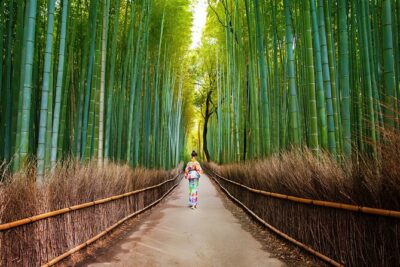
Kyoto Arashiyama Walking Tour: Bamboo, Monkeys, Gardens & Secrets
Read our review →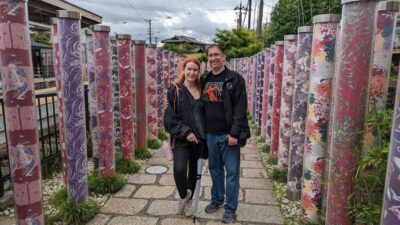
Arashiyama Bamboo, Temple, Monkeys, or Secret Sake Brewery
Read our review →
Arashiyama Bamboo Forest, Monkeys, Matcha & Temple Tour
Read our review →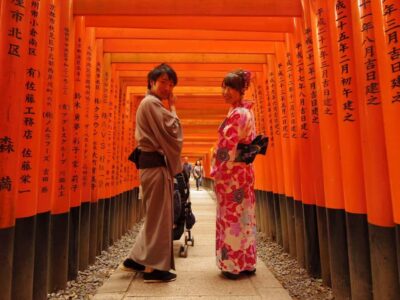
Osaka/Kyoto: Arashiyama, Nara & Fushimi Inari Shrine w/Lunch
Read our review →
Nijo, Kinkaku-ji, Arashiyama, Kiyomizu & Fushimi Inari
Read our review →
Kyoto Ghost Tour: Dark Tales, Urban Legends, Bamboo Forest Night
Read our review →Browse the lists this tour appears in