
Reviewed · SAMURAI & NINJA EXPERIENCES
Kyoto : Family-Friendly Sword Lesson at Samurai Ninja Museum
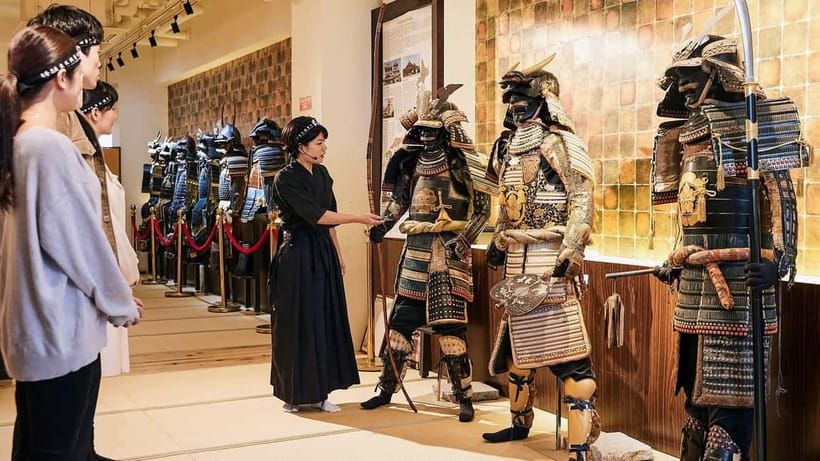
Kyoto’s Samurai Ninja Museum lets you do more than look at old weapons behind glass. You’ll put on hakama, armor, and a helmet, learn how to handle a katana, and practice a short sequence under an English-speaking instructor. The session also includes ninja weapon practice and staged photos.
I like the mix of hands-on training and museum context. The small-group format, advertised for up to 10 people, gives instructors such as Ken, Nobu, Raito, and Jukia room to work with participants. I also like that children can take part in the costume and photo side of the activity, not just watch from the edge.
The main thing to consider is the level of sword work. This is a beginner lesson and cultural activity, not a full martial arts course. The wider activity information allows up to 22 people, so ask about the expected group size if personal instruction matters to you.
Key points to know before booking
- You learn two katana sequences: One detailed account describes practicing two kata, or set movement patterns, rather than simply waving a sword for a photo.
- The costume is part of the activity: Hakama, samurai armor, and a helmet are provided, giving you a full look for the lesson and photographs.
- Ninja practice follows the sword lesson: You can try ninja weapons at a target, adding a playful change of pace.
- English instruction is included: Guides named Ken, Nobu, Raito, and Jukia have led sessions.
- It suits families with young children: Children under three cannot enter, but older children can join the activity, and the format includes plenty to see and do.
- The $66 price covers the core experience: Transportation is not included, but the lesson, clothing, equipment, museum visit, and photo settings are part of the package.
What the two-hour Kyoto session is really about
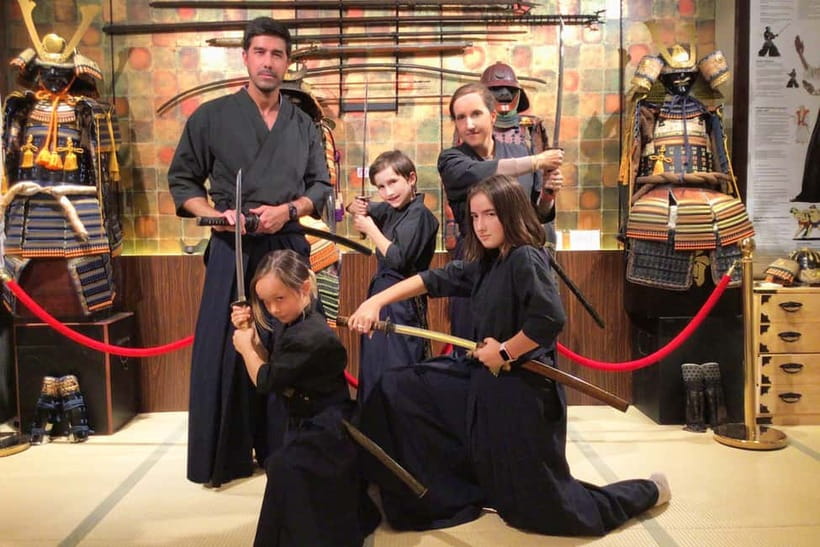
This experience is built around participation. You are not just walking through a display of samurai objects while a guide talks. You put on traditional clothing, handle a training sword, copy a demonstrated movement, and take home photographs of the day.
That makes it a good fit for families who want a break from temples and formal sightseeing. Kyoto can ask a lot from children, especially during a packed day of shrines, gardens, and historic streets. A structured activity with costumes and simple physical practice gives younger visitors a clear reason to stay interested.
The tone is theatrical, but that is part of the point. You are stepping into a carefully staged version of samurai life rather than receiving specialist weapons instruction. If you approach it as a cultural activity with a strong photo element, the two hours make sense.
The English-speaking format also helps. The listed instructors include Ken, Nobu, Raito, and Jukia, and the available feedback specifically praises the instructors for making the class enjoyable and easy to follow. The activity is designed for international visitors, so language should not be a major barrier.
Other swordplay and stealth sessions in Kyoto:
- Kyoto Samurai Experience
★ 5.0 · 1,294 reviews - Kyoto: Kendo and Samurai Experience with Uniform and Gear
★ 4.9 · 815 reviews - Kyoto: Samurai Sword Class by Experts in Traditional Arts
★ 4.9 · 657 reviews
Getting dressed as a samurai
The first memorable stage is the costume change. You can use a hakama, samurai armor, and a helmet as part of the session. These pieces turn the activity from a short demonstration into something that feels like an event.
For families, this is where the age range can work well. An adult can take the lesson seriously while a child enjoys the transformation and the chance to pose in costume. You do not need to arrive with any knowledge of Japanese sword traditions.
The armor and helmet are also useful for photographs, but keep your expectations practical. The outfit is supplied for the activity, not presented as a custom historical reconstruction. The value comes from wearing recognizable samurai clothing in a museum setting and themed photo areas.
I would plan your clothing with changing in mind. The supplied details do not specify changing-room arrangements or what to wear underneath, so simple, comfortable clothes are the sensible choice. Avoid turning up in anything that makes movement or changing awkward.
Learning the katana movements
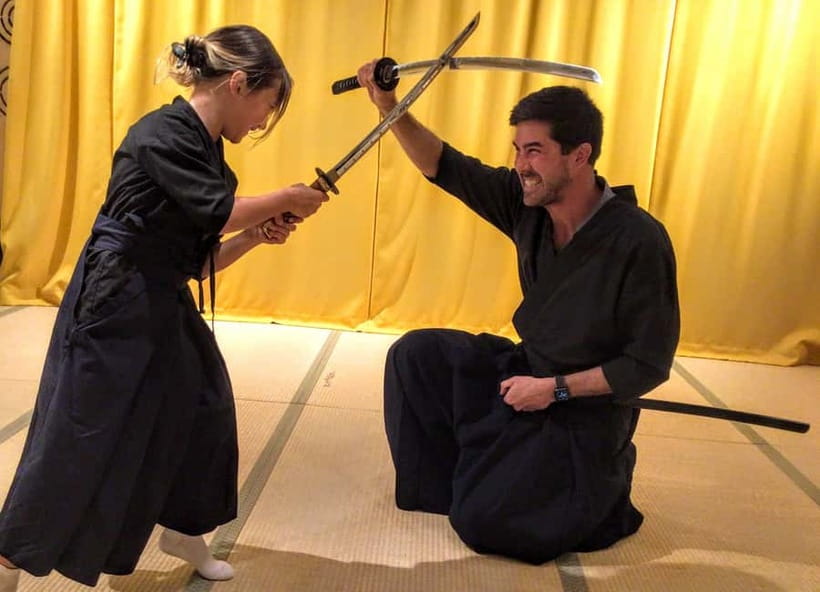
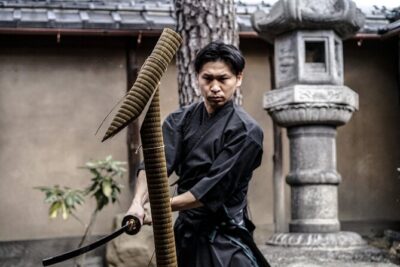
After dressing, you watch a demonstration of how to swing the sword properly. You then try the movement yourself under instruction. The lesson is aimed at beginners, so you are learning a controlled sequence rather than fighting, sparring, or testing a sharp blade.
One especially useful detail is the mention of two kata. A kata is a fixed pattern of movements, and learning two sequences gives the lesson more shape than a single photo pose. You have something to practice, remember, and perform for the camera.
The instructors are the key to this part. Ken is identified as a sword teacher, while Raito is praised for his experience and teaching. Nobu and Jukia are also named as instructors who made sessions enjoyable. Since the activity is limited to a small group in its main description, you should have a better chance of seeing and copying the demonstration than in a large stage show.
Still, do not confuse a two-hour introduction with formal training. You will not leave ready for advanced sword work. The lesson gives you a safe, accessible taste of the movements and the discipline associated with samurai presentation.
For nervous children, the instructor-led structure should help. They can watch first, then try the movement when ready. For energetic children, the activity provides a clear task, though parents may need to remind them that the sword work is controlled practice, not play fighting.
From sword lesson to museum displays
The experience also includes a visit to the Samurai and Ninja Museum. This gives context to the costume and practice. Instead of treating the sword as a simple prop, the museum portion helps explain why samurai and ninja remain such powerful symbols in Japanese popular culture.
The exact museum route and display list are not specified, so I would not book this expecting a long specialist collection or an academic lecture. Think of it as a guided introduction that supports the hands-on lesson.
That balance is useful for first-time visitors. A child may remember the sword movements and costume more clearly than the explanations, while an adult can take in the historical material. The museum stop keeps the activity from becoming only a photo session.
The guided portion is in English. That matters because the value of a museum visit depends heavily on explanation. You can ask questions during the visit rather than trying to decode labels alone.
A few more things to do in Kyoto worth a look
- Kyoto: Tea Museum Tickets and Matcha Grinding Experience
★ 4.9 · 739 reviews - Skip the lines Basic Ticket at SAMURAI NINJA MUSEUM KYOTO
★ 4.5 · 632 reviews - Kyoto : Geiko Maiko Dance of Kyoto & Visits of Gion Museum
★ 4.6 · 415 reviews - Kyoto Sword Experience – includes Museum Ticket/Ninja Experience
★ 4.5 · 149 reviews
Trying the ninja weapons
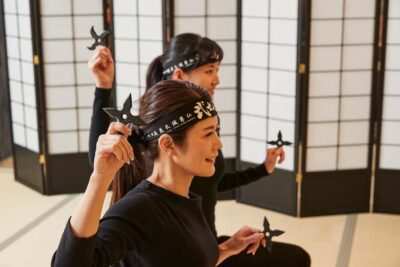
The ninja section adds a second physical activity. You can try ninja weapons at a target, an element that gives the session a different feel after the controlled katana practice.
This is likely to be a hit with children, but it also gives adults a chance to join in without needing sword skills. The activity is presented as a trial, not as professional weapons training, so the emphasis is on taking part and seeing how the equipment works.
The switch from samurai costume and sword movements to ninja-themed practice keeps the two hours from feeling repetitive. It also gives families more than one type of photograph and memory from the visit.
The supplied information does not specify the exact ninja equipment, the number of attempts, or the target setup. For that reason, I would treat this as a fun extra rather than the main reason to book. The katana lesson and costume experience are the core of the outing.
Making the most of the photo session
The themed photo opportunities are not an afterthought. You can pose with swords in front of studio settings or samurai-themed backgrounds, using the supplied clothing and equipment.
This is where the activity works particularly well for groups. A family can take individual portraits, paired photographs, and a full-group picture. Children often get more from a visit when they can show relatives what they did, and the costume gives the photographs a clear story.
You should also allow a little patience here. Everyone may want a turn, and the group needs to move through the photo setup. A small group should keep the wait reasonable, but the activity information also lists a maximum of 22 people. If you are booking during a busy period, confirm how many participants are expected.
The photo side may feel too staged if you want a quiet, traditional museum visit. That is not a flaw, but it is an important choice. This experience is designed to be seen, remembered, and photographed.
Is $66 a fair price?
At $66 per person, the value depends on what you want from a Kyoto activity. The price includes the sword lesson, hakama, samurai armor, helmet, themed photographs, ninja weapon practice, and the museum visit. It does not include transport to or from the venue.
Compared with paying only for admission to a museum, this costs more. You are paying for the instructor-led lesson, costume use, equipment, and a guided activity, not just entry. For a family, that added structure can be worth the difference because everyone has something to do.
I think the price is easiest to justify when two or more people in your group will take part fully. If one person only wants to watch, the value drops because the main benefit is active participation.
The photo opportunity also matters. If you already plan to pay for a family portrait in costume elsewhere, this activity combines that goal with a museum visit and sword lesson. If photographs do not interest you, compare the price with other cultural activities in Kyoto before booking.
Group size, access, and timing
The session lasts two hours, which is long enough to include dressing, instruction, museum content, ninja practice, and photographs without taking a full day from your Kyoto plans. You will need to check the available start times when booking.
The activity is described as a small group limited to 10 participants, though the wider information gives a maximum of 22 travelers. That difference is worth checking directly if you want a quieter class or more instructor attention.
The venue is near public transportation, and transport to and from the activity is not included. You will need to make your own way there and back. Since the location is in Kyoto, it is sensible to leave time for the journey rather than scheduling another attraction immediately afterward.
The experience is listed as wheelchair accessible and stroller accessible. That is useful for families, but the supplied information does not explain every detail of the costume area, floor surfaces, or sword-practice space. If your group has specific mobility needs, confirm the practical arrangements before arrival.
Children under three cannot enter the samurai venue. Older children can participate, and the family focus makes this a stronger choice for groups with school-age children than for families with babies or toddlers.
What the strongest feedback tells you
The most consistent praise focuses on the instructors and the small-group feel. One session with Ken included dressing, two kata with the katana, a museum visit, ninja target practice, and photographs. That sequence shows why the activity feels fuller than a quick costume rental.
Raito is singled out as an experienced teacher, while Nobu and Jukia are also praised for making the session enjoyable. The useful takeaway is not that every class will be identical. It is that the instructor plays a large role in setting the pace and helping people feel comfortable.
The overall score is 4.4 from 14 reviews, with several five-star ratings. That is a positive sign, but the sample is not large enough to promise a perfect experience for every group. Your enjoyment will depend on how much you like staged photographs, simple sword practice, and family-friendly museum activities.
The Italian-language account is particularly helpful because it describes the full flow rather than just praising the staff. It confirms that the children were highly engaged, that adults also enjoyed the activity, and that the combination of sword practice, museum viewing, ninja target work, and photographs created a strong shared memory.
Who should book this experience?
I would recommend it to families with children over three, first-time visitors who want an active cultural outing, and adults who enjoy costume photography without needing advanced instruction.
It is also a good choice if your Kyoto schedule already includes several quiet temple visits. Two hours of structured activity can break up a sightseeing day and give children something they can take part in directly.
Couples and adult friends can enjoy it too, especially if they are happy to dress up and pose. The activity is not limited to children, and the instructors work with adults as well.
I would hesitate if you want a serious study of Japanese martial arts, a long museum visit, or a private lesson. The supplied information points to an introductory, social experience with a strong entertainment element.
Should you book the Kyoto samurai lesson?
Book this if you want a hands-on family activity that combines costume, basic katana movements, museum context, ninja target practice, and photographs in one two-hour visit. The named instructors and generally strong feedback suggest that teaching style is one of its best features.
Skip it if you are looking for advanced sword training or a quiet, traditional museum tour. For most families, though, the $66 price is reasonable because it covers much more than entry. Check the actual group size, confirm accessibility details if needed, and leave enough time for transport. If your children are old enough to enter and willing to dress up, this is a lively change from Kyoto’s usual sightseeing routine.
FAQ
How long does the samurai experience last?
The activity lasts two hours.
How much does the experience cost?
The listed price is $66 per person.
Is the activity suitable for children?
Yes, children can participate, but children under three cannot enter the samurai venue.
Is the lesson taught in English?
Yes. English instruction is provided.
Which instructors may lead the session?
Instructors named in the available information include Ken, Nobu, Raito, and Jukia.
What clothing is provided?
Use of hakama, samurai armor, and a samurai helmet is included.
Is a sword lesson included?
Yes. The activity includes a samurai sword lesson and a demonstration of how to swing the sword properly.
Can you try ninja weapons?
Yes. Ninja weapon practice is included as part of the experience.
Is transportation included?
No. Transportation to and from the activity is not included.
Is the venue accessible with a wheelchair or stroller?
The activity is listed as wheelchair accessible and stroller accessible. Children under three cannot enter the venue.
Just added in Kyoto
- Private Cooking Class Udon in Kyoto Japan★ 5.0 · 23 reviews
- Your Private Vacation Photography Session In Kyoto★ 5.0 · 110 reviews
- Kyoto: Zen Meditation at a Private Temple with a Monk★ 5.0 · 25 reviews
- Private Pewter Sake Cup Experience with a Kyoto Artisan★ 5.0 · 31 reviews
- Kyoto Wagashi(Japanese sweets) Cooking Class near Fushimiinari★ 5.0 · 60 reviews
- Kyoto:Family-Friendly Kimono & Yukata Experience at WARGO★ 5.0 · 147 reviews
- Private Guided Traditional Buddhist Cooking in Japan★ 5.0 · 16 reviews
- Kyoto: Gion Geisha District & Sake-in-Hand Walking Tour★ 5.0 · 37 reviews
Samurai & Ninja Experiences, compared.
Samurai Ninja Museum Guided tour and Experience
Read our review →
Kendo and Samurai Experience with Uniform and Gear
Read our review →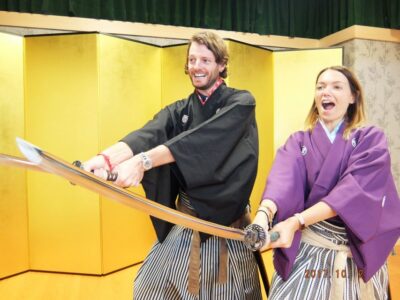
Samurai Sword Class by Experts in Traditional Arts
Read our review →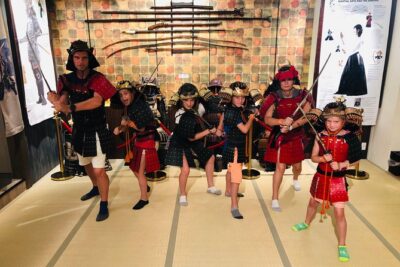
Skip the lines Basic Ticket at SAMURAI NINJA MUSEUM KYOTO
Read our review →
Samurai Sword & Archery Class from Samurai Descendant
Read our review →
Browse the lists this tour appears in