
Reviewed · IMPERIAL PALACE & HISTORIC SITES
Kyoto: Nijo Castle and Kyoto Imperial Palace Guided Tour
Nijo Castle and Kyoto Imperial Palace reveal two very different sides of old Kyoto. Nijo Castle presents the shogun’s political power through ornate rooms, careful design, and the famous Ninomaru Palace, while the Imperial Palace offers a quieter look at court life, gardens, and ceremonial architecture.
I like the way this tour links those two sites instead of treating them as separate sights. I also like the small group limit of nine, which gives you a better chance to ask questions and get help with photographs. The main drawback is that parts of the Imperial Palace may be viewed only from outside, so the tour is strongest for context and grounds rather than access to every interior.
Key points to know before booking
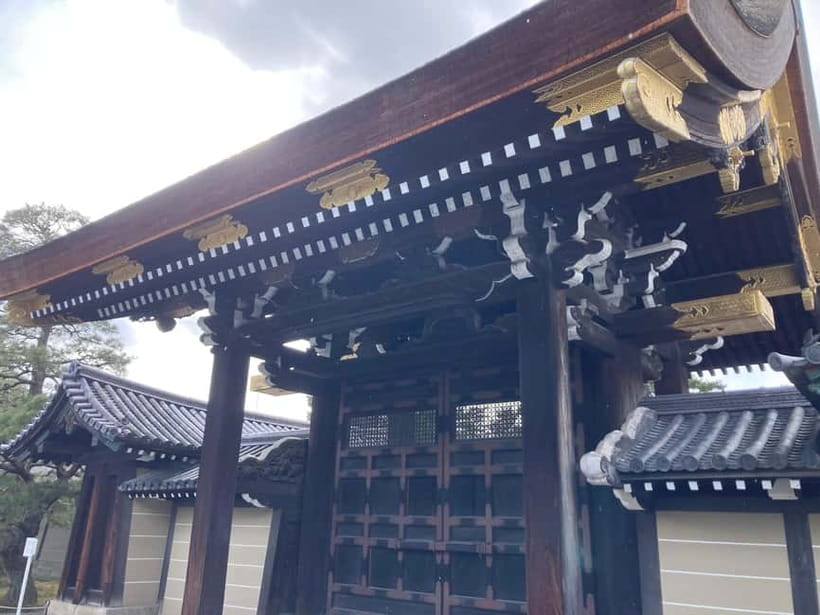
- Two rival centers of authority: See how the shogun’s castle and the emperor’s palace expressed power in different ways.
- A guide-led history lesson: Guides such as Goku, Kayo, Nene, and Taku explain politics, architecture, art, and Japanese culture in clear English.
- A 20-minute walk connects the sites: The route gives you time to discuss Kyoto, Japan, and Western culture between major stops.
- A small group of nine: The format suits curious visitors who want to ask questions without joining a large crowd.
- Mostly an outdoor experience: Expect gardens, courtyards, streets, and exterior views, so dress for the weather and wear comfortable shoes.
- Good value at $63: Admission to Nijo Castle, Ninomaru Palace, and the Art Gallery is included, along with the guide.
Two political worlds in one Kyoto walk
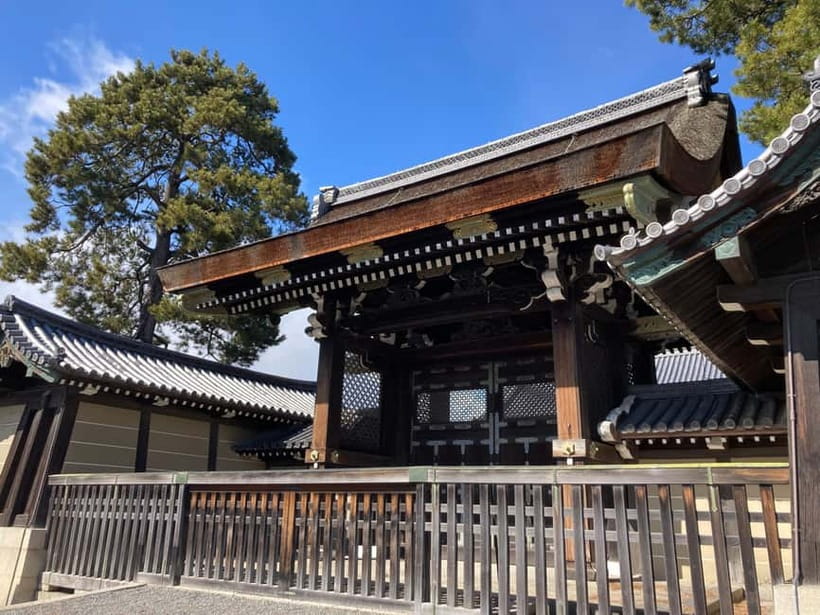
This tour works because the two stops tell different parts of the same story. Kyoto served as Japan’s imperial capital, yet political control often rested with military leaders. At Nijo Castle, you see the authority of the Tokugawa shogunate expressed in grand rooms and strict design. At the Imperial Palace, you encounter the refined world associated with Japan’s emperors.
I find that contrast more useful than visiting either site alone. A castle can seem like a collection of decorated rooms if nobody explains who used it and why. A palace garden can look peaceful without showing how the imperial household fit into Japan’s political system. The guide connects those pieces.
The meeting point is the Nakadachiuri Gate of Kyoto Imperial Palace. You receive information in advance about what your guide looks like and what they will be wearing, which matters on a busy sightseeing day. The experience lasts three hours, and available start times vary, so check the schedule before building the rest of your day.
Other historic grounds in Kyoto:
- Kyoto: Imperial Palace & Nijo Castle Guided Walking Tour
★ 4.7 · 453 reviews - Kyoto Imperial Palace & Nijo Castle Guided Walking Tour – 3 Hours
★ 4.5 · 106 reviews - Nijo Castle and Imperial Palace Visit with Guide
★ 5.0 · 53 reviews
Kyoto Imperial Palace: gardens, ceremony, and exterior views
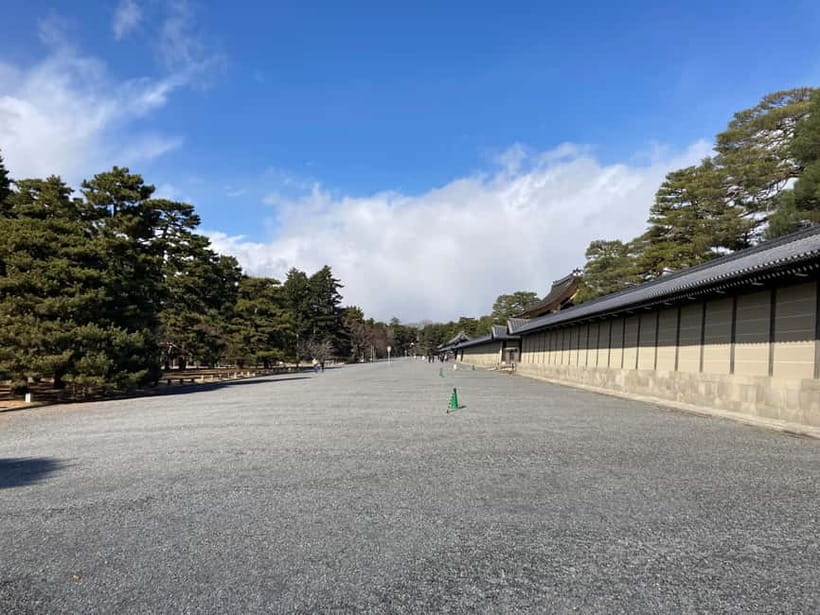
The tour begins at Kyoto Imperial Palace, the former residence of Japan’s emperors. The palace grounds give you a broad setting for understanding Kyoto’s role in Japanese culture and government. The architecture is formal and restrained, with a different mood from the ornate interiors at Nijo Castle.
The gardens are a major reason to choose this tour. Their design highlights seasonal change, so the experience shifts with the calendar. In spring, blossoms add color to the grounds. Other seasons bring their own quieter details, and the guide can help you notice how paths, plantings, water, and open space shape the visit.
You should set your expectations carefully. The Imperial Palace portion may focus on the grounds and the exteriors of buildings rather than interior rooms. That limitation was a clear concern for one participant, and it is worth knowing before you pay. If your main goal is to walk through imperial interiors, this may not be the right Kyoto activity.
Still, the palace can be rewarding when you value setting and explanation. The open grounds let you see how Japanese court architecture differs from the defensive and theatrical design of a shogun’s castle. A good guide also gives the gardens a purpose beyond pretty photographs, explaining their connection to seasonal beauty and traditional aesthetics.
The walk from the palace to Nijo Castle
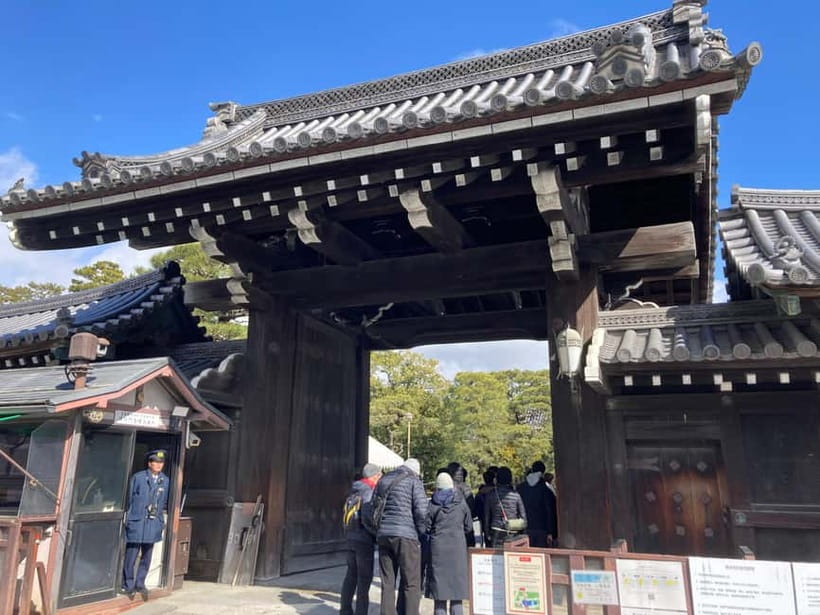
The transfer between the two sites is on foot and takes about 20 minutes. This is not wasted time. It gives your guide room to explain Kyoto’s political past, local culture, and the relationship between Japanese and Western traditions.
You should treat this section as part of the tour rather than a simple transfer. The group moves through Kyoto streets, with opportunities to notice traditional townhouses and a spot known for cherry blossoms. These details help connect the formal monuments to the ordinary city around them.
The walk also means you need sensible footwear. Three hours is not an extreme amount of time, but you will be on your feet at both sites and between them. I would choose shoes that handle pavement and garden paths comfortably.
The pace may suit an active visitor better than someone seeking a seated, low-effort sightseeing experience. The activity is listed as unsuitable for pregnant women, so take that restriction seriously when deciding if it fits your plans.
Nijo Castle and the authority of the shogun
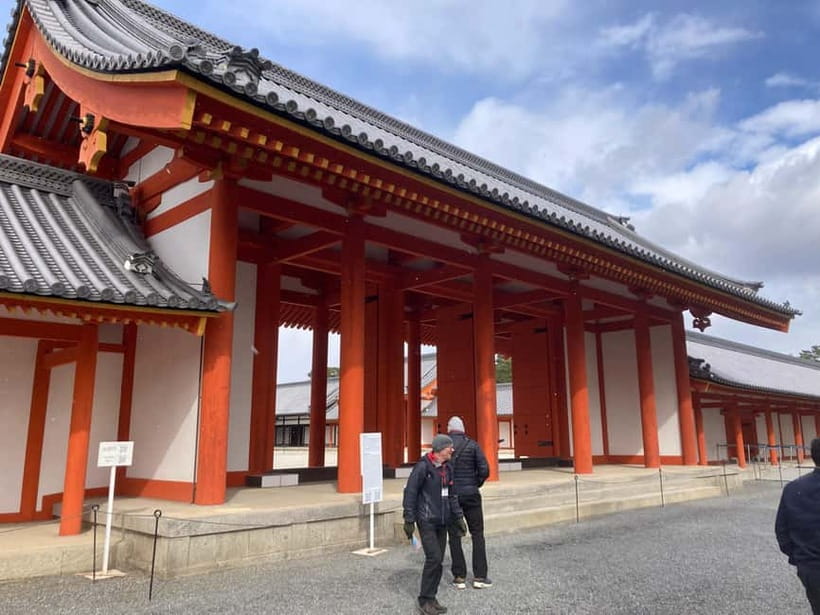
Nijo Castle is the more dramatic stop. Built by Tokugawa Ieyasu, it was designed to display the power and status of the Tokugawa shogunate. The castle is not important only because of its age or appearance. Its rooms and layout show how architecture could communicate rank, control, and political confidence.
The tour includes admission to Nijo Castle, Ninomaru Palace, and the Art Gallery. Ninomaru Palace is especially important because its interiors show the formal world of the shogunate through lavish decoration and careful detail. Your guide helps you read the rooms as political spaces, not just beautiful ones.
Pay attention to the contrast with the Imperial Palace. Nijo Castle feels more direct in its display of authority. The palace grounds express elegance and ceremony, while Nijo Castle puts power closer to eye level through decorated interiors and controlled movement from one room to another.
The strongest guide-led discussions focus on the political climate of the period. Goku, in particular, received repeated praise for explaining events involving shoguns and emperors, including smaller details that are easy to miss when walking alone. Kayo, Nene, and Taku were also repeatedly singled out for clear explanations and an easy manner with questions.
That personal element matters here. Historical sites in Japan can offer many signs, but a sign rarely explains why a room mattered or how an architectural choice reflected the politics of the time. A guide gives you a usable framework, especially if Japanese history is new to you.
Other castles reached from Kyoto:
- Kyoto: Nijo-jo Castle and Ninomaru Palace Guided Tour
★ 4.7 · 1,020 reviews - Kyoto: Nijo Castle, Kiyomizu & Fushimi Inari Guided Tour
★ 4.7 · 700 reviews - Kyoto: Nijo, Kinkaku-ji, Arashiyama, Kiyomizu & Fushimi Inari
★ 5.0 · 699 reviews - Kyoto: Nijo Castle World Heritage Guided Tour with Admission
★ 5.0 · 128 reviews
What the guides add to the experience
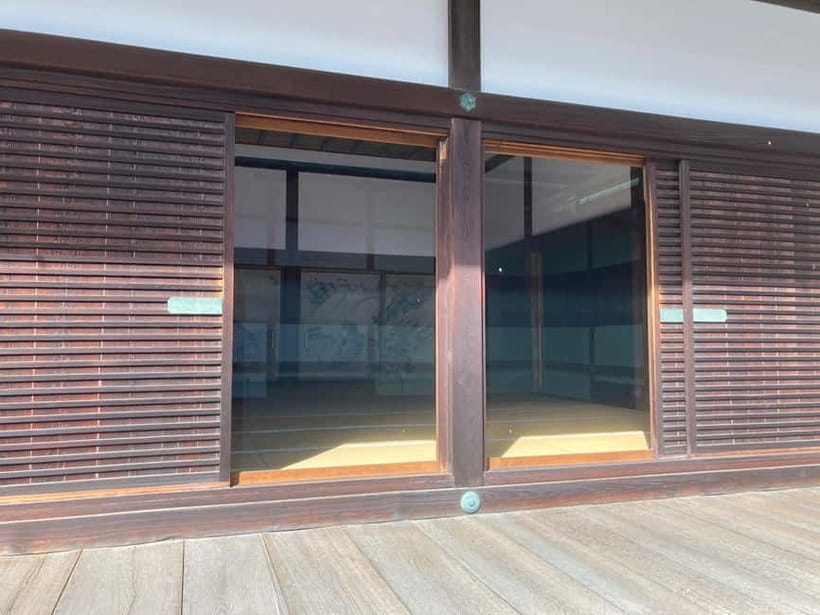
The guide is the deciding factor in this tour. The strongest accounts describe guides who combine history with architecture, art, politics, and everyday cultural context rather than reciting dates.
Goku is particularly well suited to visitors who enjoy detailed historical discussion. He has handled questions about shoguns, emperors, postwar Japan, and Japanese culture, while also adjusting the visit for families with teenagers and people who prefer photography. If you want a guide who can respond to unexpected questions, he appears to be a strong possibility, though guide assignment is not guaranteed.
Kayo is described as warm, funny, and able to keep a three-hour visit moving. That combination is useful at sites where long explanations can become tiring. Nene has been praised for clear explanations, patience, and flexibility, including taking over a tour at short notice. Taku has helped solo visitors with photographs and offered restaurant suggestions after the tour.
Those details point to a tour style that is more conversational than rigid. You can expect the guide to answer questions and, depending on the person assigned, adjust the emphasis toward history, photographs, architecture, or local advice. The languages offered are English, French, Spanish, Japanese, Portuguese, and Russian, though you should confirm your preferred language when booking.
Is $63 a fair price?
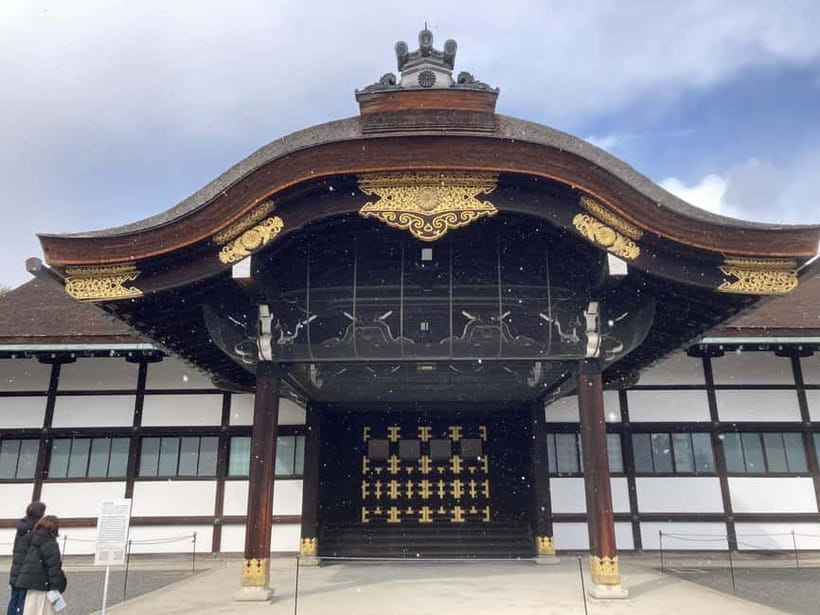
At $63 per person, this is not the cheapest way to see Kyoto’s major landmarks. You can visit many Japanese sites independently for less than the cost of a guided experience. The value here comes from combining two important locations with admission and a small-group guide in three hours.
The price includes entry to Nijo Castle, Ninomaru Palace, and the Art Gallery, as well as the walking tour and professional guide. It does not simply cover transportation between attractions. You are paying for the historical connection between the sites and for someone to explain details you might otherwise miss.
I think the price is fair if you are visiting Kyoto for the first time, have limited time, or want a clear introduction to the shogun and imperial sides of the city. It is less appealing if you already know Japanese history well or prefer to explore at your own pace without a fixed walking route.
The small group makes the cost easier to justify. A limit of nine is intimate enough for questions, photographs, and some flexibility, without the private-tour price. One solo visitor even had a guide-led experience with only the two of them at the time, though you should not assume that will happen on your date.
Who will get the most from this tour?
I would recommend this experience to first-time Kyoto visitors who want more than attractive buildings and garden photographs. It gives you a basic political map of old Japan and shows how authority looked different in an imperial palace and a shogun’s castle.
It also suits families with older children or teenagers who may respond better to stories about rival power centers than to a silent walk through gardens. One guide successfully balanced detailed history with the needs of teenage sons, which suggests that the right guide can keep a mixed-age group involved.
Solo visitors can benefit from the small group and the practical help with photos. People interested in architecture will appreciate the contrast between restrained court design and the lavish interiors of Nijo Castle. Anyone hoping to collect local suggestions may also find the guide useful after the formal tour ends.
I would hesitate to recommend it to someone who wants extensive access inside the Imperial Palace. I would also reconsider it if you dislike walking, are pregnant, or plan to wear shorts, which are not allowed. Bring cash and a camera, and dress for an outdoor visit even though one major stop includes interiors.
Practical planning for the day
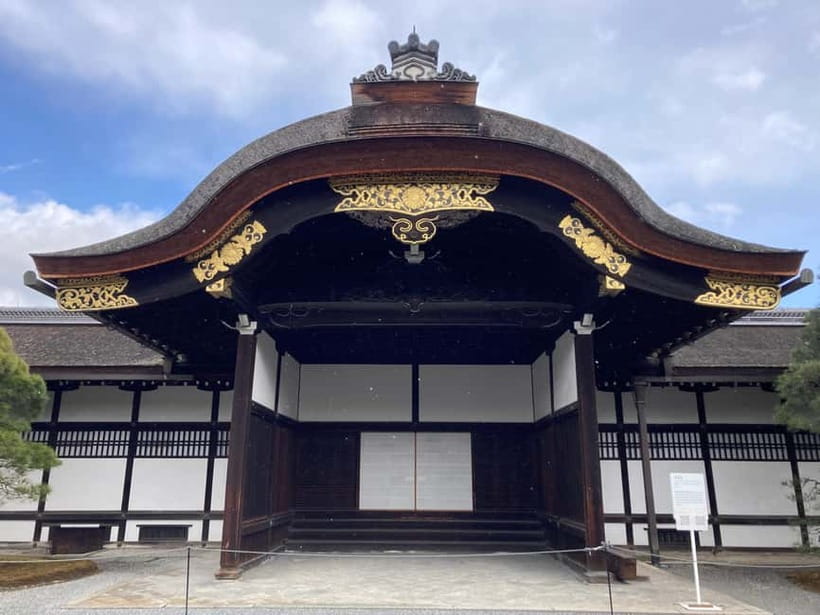
Plan to arrive at the Nakadachiuri Gate with enough time to identify your guide. Advance information about clothing and appearance should make the meeting easier, but you still need to pay attention to the exact gate because the palace grounds are large.
Wear comfortable shoes and clothing suitable for walking through gardens and city streets. Shorts are not allowed, and the tour is not suitable for pregnant women. Bring a camera for the buildings, gardens, and group photographs, along with cash for the day.
The activity offers free cancellation up to 24 hours before departure and allows you to reserve now and pay later. Those terms help if your Kyoto schedule is still shifting, but the important practical choice is the starting time. Leave enough room afterward for lunch, another nearby sight, or a slower return to your accommodation.
The tour has a rating of 4.6 from 98 reviews, with 5 out of 5 ratings repeatedly focused on guide quality, clear explanations, kindness, humor, and flexibility. There is also a 4 out of 5 assessment that points out the limited interior access at the Imperial Palace. That mix gives you a fair picture: the guide-led interpretation is the main strength, while the palace interiors are the main limitation.
Should you book the Nijo Castle and Imperial Palace tour?
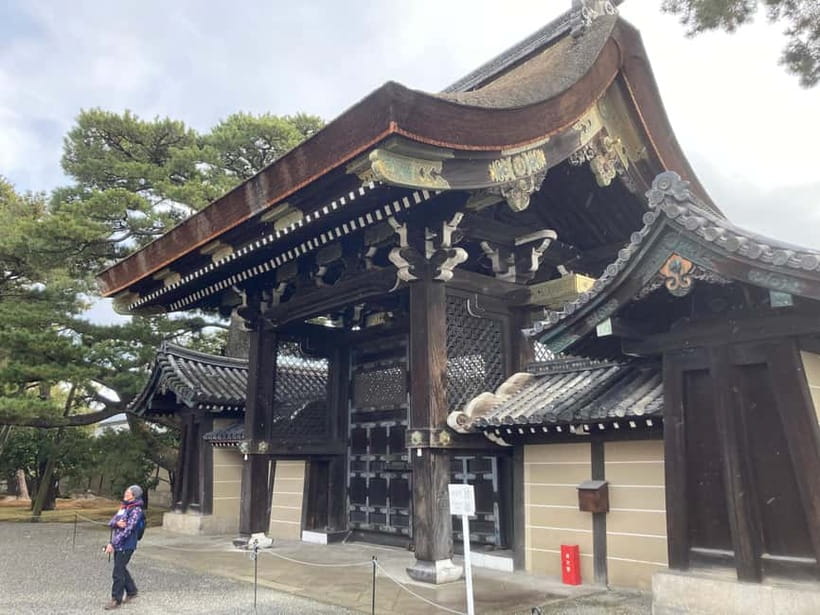
Book it if you want a compact, guided introduction to Kyoto’s political and architectural past. The pairing is smart, the group is small, the major Nijo Castle admissions are included, and guides such as Goku, Kayo, Nene, and Taku have shown an ability to make history lively and personal.
Skip it if you mainly want to wander alone, dislike a three-hour walking schedule, or expect to tour the inside of every Imperial Palace building. For most first-time visitors who want context without committing to a full-day tour, $63 is a reasonable price for two major sites and a guide who can turn details into a coherent story.
FAQ
Where does the tour meet?
The meeting point is the Nakadachiuri Gate of Kyoto Imperial Palace.
How long does the tour last?
The tour lasts three hours.
What sites are included?
The tour visits Kyoto Imperial Palace and Nijo Castle. Admission includes Nijo Castle, Ninomaru Palace, and the Art Gallery.
Is the tour conducted in English?
English is one of the available tour languages. French, Spanish, Japanese, Portuguese, and Russian are also listed.
How large is the group?
The tour is limited to nine participants.
What does the price include?
The $63 price includes a professional guide, admission tickets for Nijo Castle, Ninomaru Palace, and the Art Gallery, plus the walking tour.
Can I see the inside of Kyoto Imperial Palace?
The Imperial Palace portion may include exterior views only for some buildings. The tour also covers the grounds and gardens.
What should I bring?
Bring a camera and cash. Comfortable walking shoes are also practical for the three-hour route.
Can I cancel the booking?
You can cancel up to 24 hours in advance for a full refund. The activity also offers a reserve-now, pay-later option.
Just added in Kyoto
- Private Cooking Class Udon in Kyoto Japan★ 5.0 · 23 reviews
- Your Private Vacation Photography Session In Kyoto★ 5.0 · 110 reviews
- Kyoto: Zen Meditation at a Private Temple with a Monk★ 5.0 · 25 reviews
- Private Pewter Sake Cup Experience with a Kyoto Artisan★ 5.0 · 31 reviews
- Kyoto Wagashi(Japanese sweets) Cooking Class near Fushimiinari★ 5.0 · 60 reviews
- Private Guided Traditional Buddhist Cooking in Japan★ 5.0 · 16 reviews
- Kyoto: Gion Geisha District & Sake-in-Hand Walking Tour★ 5.0 · 37 reviews
- Kyoto:Family-Friendly Kimono & Yukata Experience at WARGO★ 5.0 · 147 reviews
Imperial Palace & Historic Sites, compared.
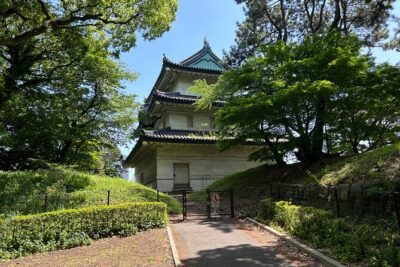
Imperial Palace and Shogun Historical Walking Tour
Read our review →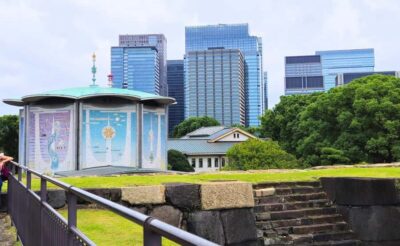
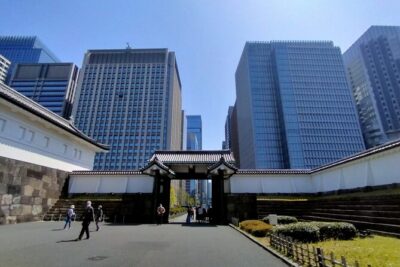
Imperial Palace East Garden and Edo Castle Walking Tour in Tokyo
Read our review →
Imperial Palace & Nijo Castle Guided Walking Tour
Read our review →
Imperial Palace, Sensō-ji Temple, & Tokyo Tower Tour
Read our review →
Tokyo Castle, Imperial Palace, Shogun & Garden Walking Tour
Read our review →
Imperial Palace, the history of Japan (ENGLISH GUIDE)
Read our review →Browse the lists this tour appears in