
Reviewed · FOOD TOURS
Kyoto: Nishiki Market and Depachika Food Tour with a Local
Kyoto’s food culture makes most sense one bite at a time, and this short walk puts you in two very different settings: Daimaru’s Depachika, a polished basement food hall, and Nishiki Market, a narrow arcade of longtime food shops. You try yuba sashimi, a soy milk doughnut, Nishiki gyoza, and hamo tempura while a local guide explains what is on your plate.
I like the small group, limited to nine people, and the chance to ask questions without shouting over a large crowd. I also like the guide’s flexibility. Guides such as Mao, Jasmine, Boris, Ai, and Kats have helped visitors adjust the pace, explain unfamiliar ingredients, and suggest useful food stops. The main caution is the tasting structure: one participant found it unclear when food would be served, so ask your guide early what is planned.
Key points to know before booking
- Two sides of Kyoto food culture: Compare Daimaru’s elegant department-store food hall with the traditional stalls of Nishiki Market.
- Four named tastings included: Expect yuba sashimi, a soy milk doughnut, Nishiki gyoza, and hamo fish tempura.
- Small group format: The tour accepts up to nine participants, making conversation and questions easier.
- A shrine visit adds context: Nishiki-Tenmangu offers a quiet pause and an introduction to Shinto customs.
- Flexible local guidance: Guides have adjusted the pace for families, lingering shoppers, and different food preferences.
- Bring cash and good shoes: You will walk and may want to buy extra food beyond the included samples.
Why this food walk works in Kyoto
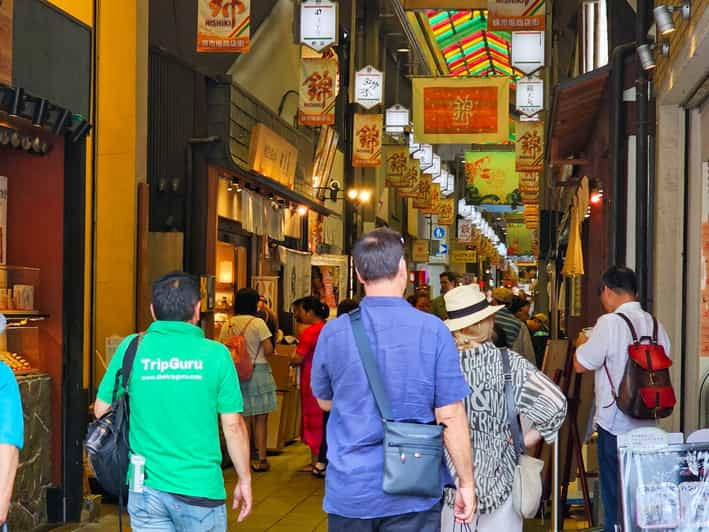
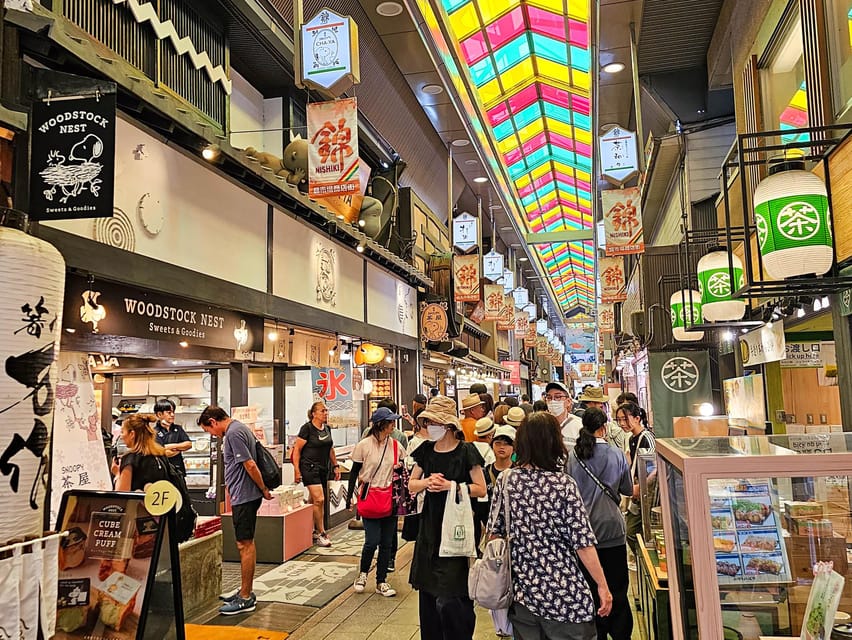
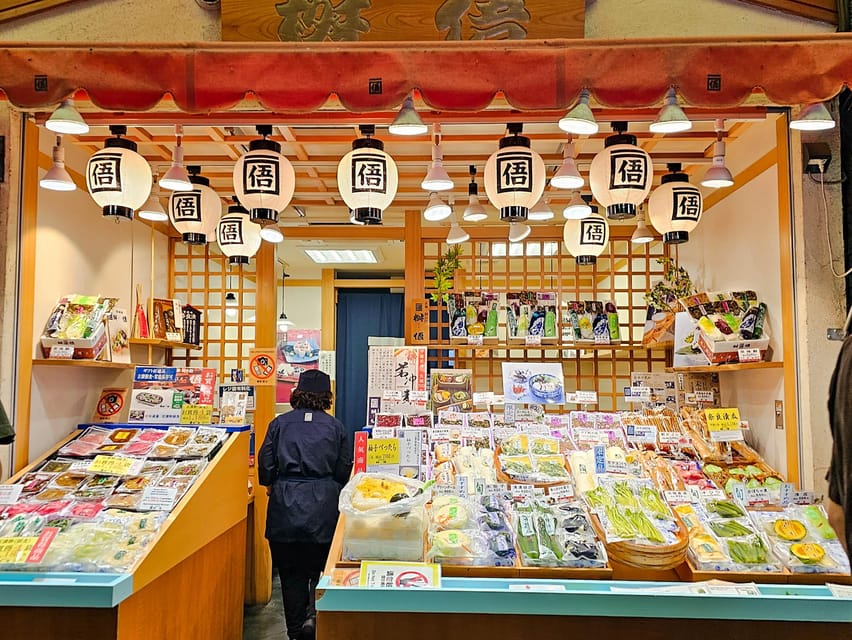
Nishiki Market is often called Kyoto’s Kitchen, but it can be hard to understand on your own. The arcade is packed with shops selling seasonal foods, pickles, seafood, sweets, produce, knives, and cookware. You can easily walk past something important simply because you do not know what it is or how it is eaten.
A local guide gives the market a useful framework. Instead of treating every stall as a photo stop, you learn which foods connect to Kyoto, which items are worth trying, and how local ingredients fit into Japanese cooking. Guides have explained food traditions, preparation, and customary ways to eat particular items, which makes the tastings more than quick snacks.
I especially like the contrast with Daimaru. Nishiki feels street-level and traditional, while the department-store basement shows another side of Japanese food culture. Depachika food halls are known for careful presentation, beautifully arranged prepared food, sweets, boxed meals, and specialty products. You get to browse both settings in one compact outing.
The tour has a rating of 4.7 from 76 reviews, and the strongest pattern is clear: guides are warm, friendly, and good at explaining food and customs. That matters here. The market is crowded and visually busy, so having someone point out what is worth your attention can save time and reduce guesswork.
More eating your way round Kyoto:
- Kyoto Night Foodie Tour in Gion (9+ dishes + 6 Sake tastings)
★ 5.0 · 1,762 reviews - Kyoto: Gion Food Tour 13 Dishes at 4 Eateries
★ 5.0 · 408 reviews - Kyoto Foodie Night Tour
★ 5.0 · 376 reviews
Meeting at Apple Kyoto
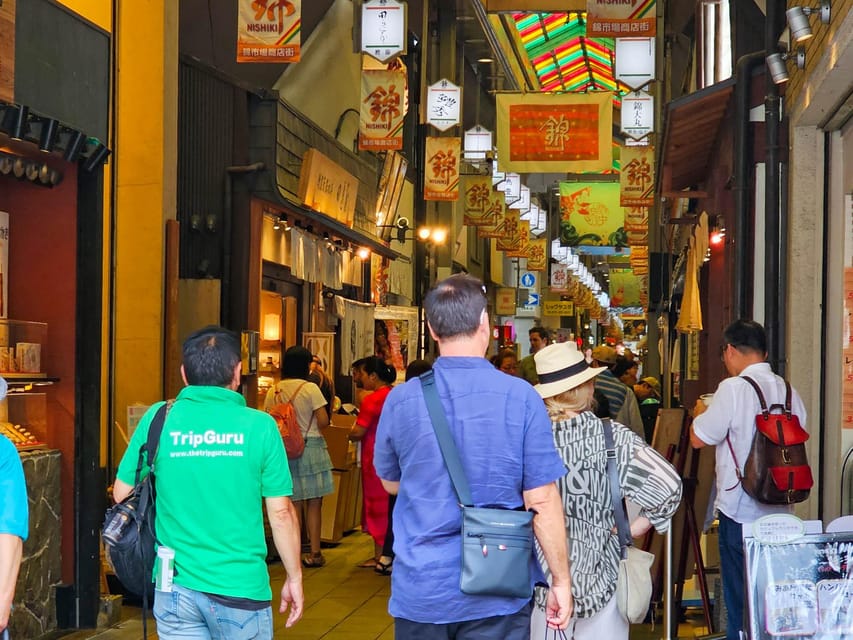
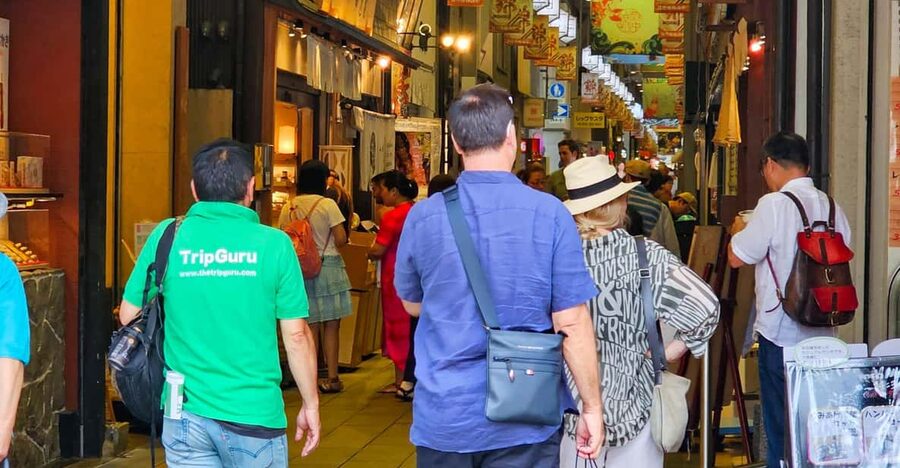
The tour begins at Apple Kyoto. Your guide waits in a TripGuru shirt or holds a TripGuru sign, so arrive at least 10 minutes early. The guide will only wait a maximum of 10 minutes before moving on, and missing the start could be especially troublesome on a walking tour with several food stops.
Apple Kyoto is a central starting point for exploring the shopping streets around Shijo and Kawaramachi. Still, allow extra time to reach it. Morning traffic can be heavier and less predictable than navigation apps suggest, so do not plan your arrival too closely.
This is not a hotel pickup service. You make your own way to the meeting point and finish at Kyoto-Kawaramachi Station, a useful location for continuing into central Kyoto after the tour.
Starting at Daimaru’s Depachika
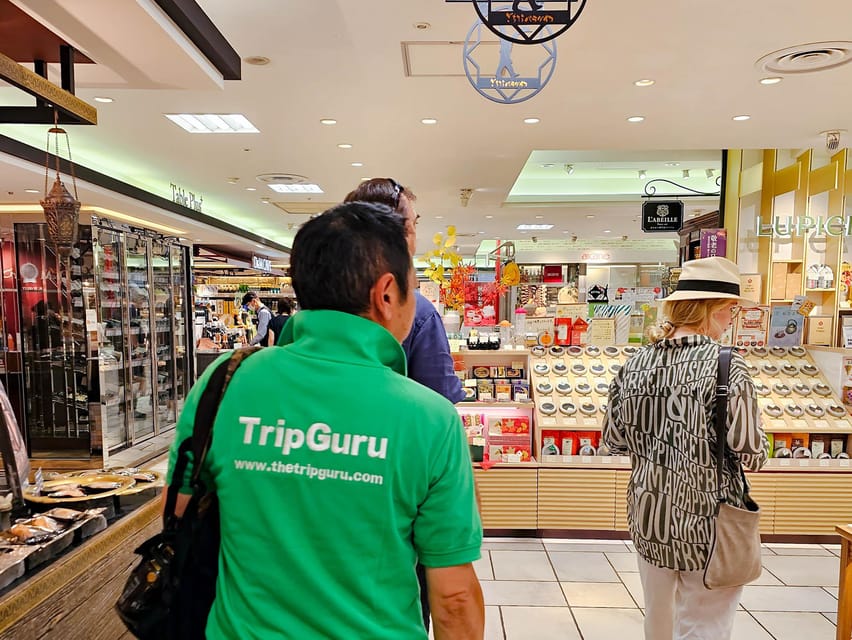
The first major stop is Daimaru Kyoto, where you spend time in the underground food hall. The word Depachika combines the Japanese terms for department store and basement, and the setting is a good introduction to the polished side of Japanese food shopping.
Here you can expect an orderly display of prepared dishes, sweets, traditional Japanese treats, and international foods. The department-store setting also gives you a chance to see how presentation and packaging matter in Japanese food culture. Guides have pointed out useful purchases such as bento boxes and have helped visitors understand which items may be less worthwhile for the price.
The included tastings begin to make Kyoto’s food vocabulary more approachable. Yuba sashimi, made from tofu skin, has a delicate texture and is strongly associated with the wider Kyoto food tradition. It is a useful food to try with guidance because the name may sound more familiar than the actual dish.
The soy milk doughnut offers a sweeter and more accessible contrast. Nishiki gyoza brings a savory, familiar format, while hamo tempura introduces a local fish preparation. Hamo is conger pike, a fish with many fine bones that requires careful preparation. The included sample gives you a chance to try it without committing to a full meal.
You should not expect the included food to replace lunch. The portions are tastings, and the experience is designed to help you sample several items rather than fill you up. If you have a large appetite, bring cash for additional purchases.
Moving through Nishiki Market
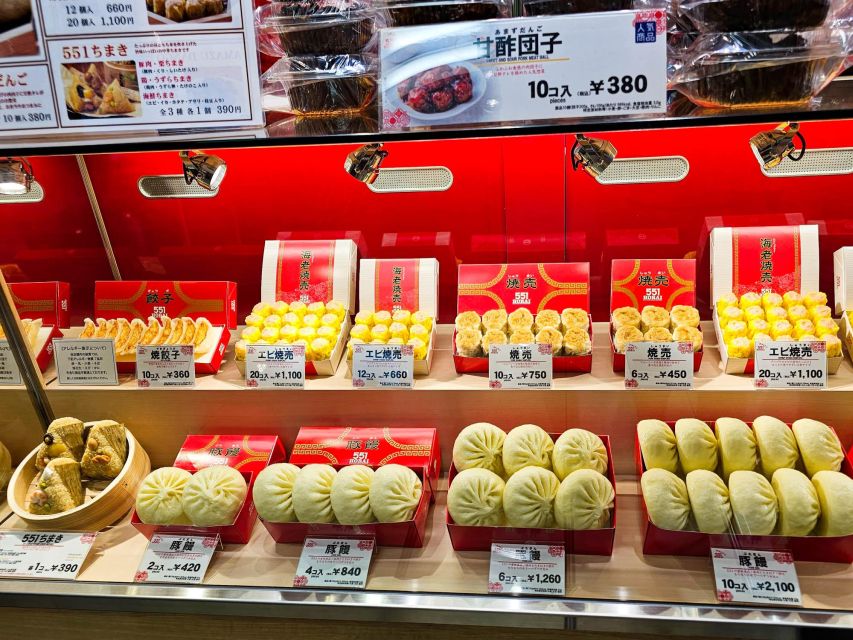
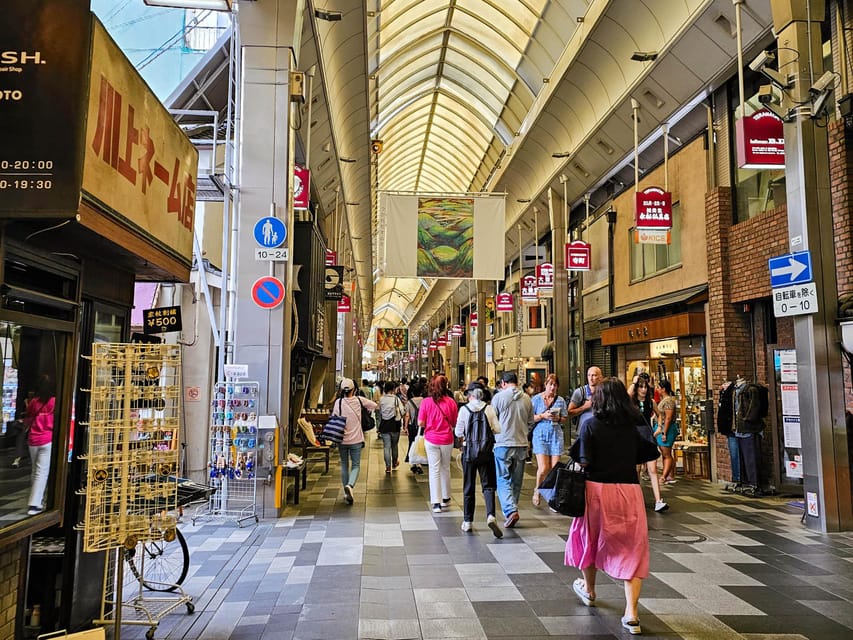
After Daimaru, the walk continues to Nishiki Market. The market runs through a covered arcade lined with vendors, so the tour can continue even when the weather is poor. Its narrow passage can feel crowded, particularly when several groups stop at the same stall.
This is where a guide earns the price of admission. You may see unusual seafood, pickled vegetables, Kyoto sweets, tofu products, cookware, and knives. Some shops have been operated by the same families for generations, and a guide can add the background that is not obvious from a quick look at the displays.
The included Nishiki gyoza and hamo tempura are part of the tasting plan, while the market also gives you time to notice other possibilities. You may find yourself interested in foods not included in the tour, so keep your wallet handy and do not spend all your time taking pictures.
One useful feature is the absence of pressure to buy. The guide can organize tastings and explain products without turning the walk into a sales pitch. That lets you browse at your own pace. If you want to shop, say so. One guide, Ai, was particularly good at giving visitors room to look around while arranging the food samples.
The market is not a quiet museum. You will be walking, standing, and sharing narrow aisles with shoppers and other groups. Comfortable shoes matter. People with mobility impairments, heart problems, respiratory issues, or pregnancy are advised not to book this activity.
Same base, a different sort of day:
- PERFECT KYOTO 1-Day Bus Tour
★ 5.0 · 13,518 reviews - Kyoto: Fushimi Inari, Kinkakuji, Bamboo Grove 1 Day Bus Tour
★ 4.8 · 4,316 reviews - Kyoto: Tea Ceremony in a Traditional Tea House in Kiyomizu
★ 4.9 · 3,519 reviews - Kyoto Geisha Walking Tour: Gion District & Hidden Gems
★ 4.7 · 3,273 reviews
A quiet pause at Nishiki-Tenmangu
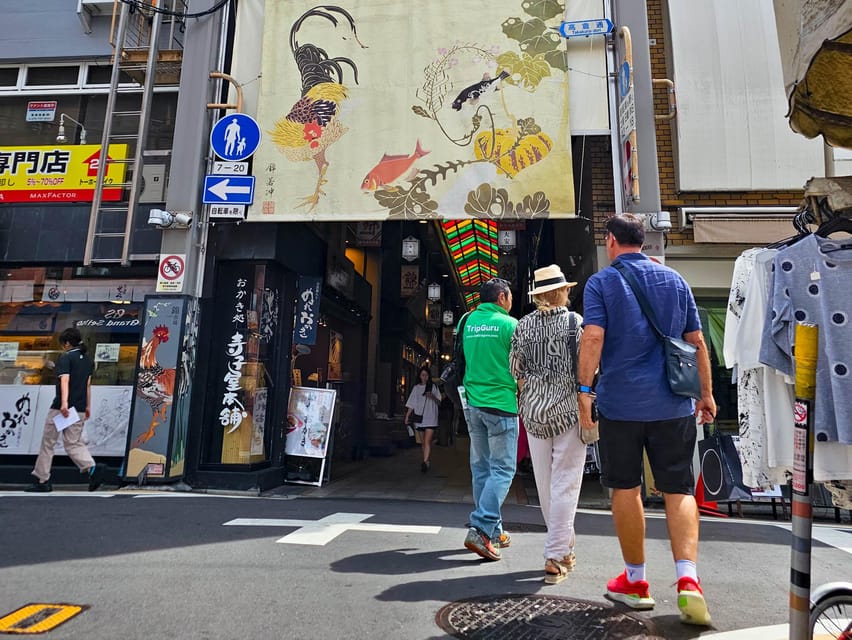
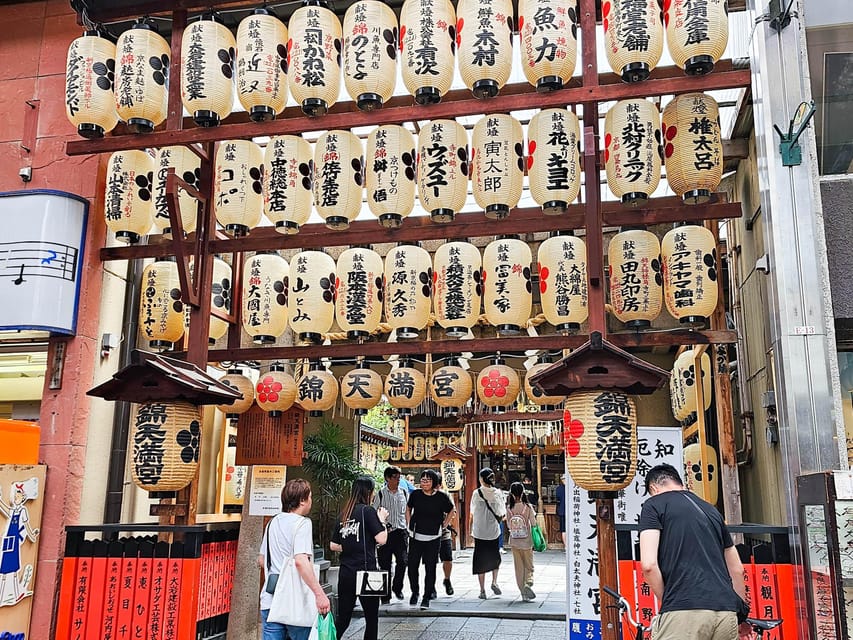
The final sightseeing stop is Nishiki-Tenmangu Shrine, close to the market. This small Shinto shrine changes the rhythm of the outing. After the noise and food displays, you get a short opportunity to notice Kyoto’s religious traditions.
The shrine is dedicated to the deity of learning. Your guide explains the basic customs, including the water fountain where you cleanse your hands before approaching the shrine. The architectural details and ritual steps are easier to appreciate when someone explains what they mean.
I like this stop because it prevents the experience from becoming only a sequence of snacks. You see how food, commerce, belief, and daily life sit close together in central Kyoto. The visit is brief, though, so do not expect an extended temple or shrine tour.
The walk finishes at Kyoto-Kawaramachi Station. From there, you can continue shopping, find a meal, or use the station as a practical point for the next part of your day.
What the guides add
The guide can shape the quality of the experience. Several guides have received especially warm praise for their English, enthusiasm, and ability to answer questions. Boris has been noted for explaining food, culture, and history in detail, while also adjusting choices for a child with a limited palate.
Mao has helped visitors try Kyoto specialties and understand the meaning of shrine features. Jasmine has combined market history with tasting guidance. Ai has offered practical advice on what to buy, including bento boxes, and has taken visitors to stalls they might not have tried alone.
Kats, described as Kyoto-born, has answered detailed food questions and offered suggestions for continuing after the tour. Richard has shared recommendations for food and drinks beyond the scheduled walk. These details matter because the guide is not only leading you from one address to another. The best guides help you make better choices for the rest of your Kyoto stay.
The small group, capped at nine, supports this style. You can ask about an ingredient, pause for a photo, or explain a dietary preference more easily than you could in a 20-person group. One family also found that a guide was patient when they spent longer than planned at Daimaru.
Still, guide performance can vary from one departure to another. The activity is in English, and the supplied experiences show a generally strong standard, but your exact guide will determine how much cultural explanation and personal attention you receive.
The tasting plan and its limits
The listed tastings are yuba sashimi, soy milk doughnut, Nishiki gyoza, and hamo tempura. This is a sensible range because it covers tofu skin, a sweet, a dumpling, and fish. You get several textures and flavor profiles rather than four versions of the same snack.
I would ask for the tasting plan at the beginning. One participant expected clearer guidance about what would be served and ended up trying fewer foods than expected. The issue was not a lack of friendliness, but a mismatch in expectations. A simple question such as Which tastings are included, and when will we stop for each one? should make the plan clearer.
Extra food and drinks are not included. Personal purchases are also your responsibility, so bring cash as requested. You may prefer to spend more on a particular item once you understand it, but you should not feel obliged to buy anything.
If you have dietary restrictions or strong dislikes, explain them at the start. The available information does not promise vegetarian, vegan, allergy-friendly, or halal substitutions, so do not assume that every tasting can be changed.
Is $42 a fair price?
At $42 per person, this is not the cheapest way to stroll through Nishiki Market. You could enter the market and browse for free. You could also buy individual snacks as you go.
The value comes from the combination of included tastings, a small English-speaking group, and interpretation. You are paying to reduce the uncertainty of a food market where labels and ingredients may not be obvious. The Depachika visit is also useful because many independent visitors skip department-store basements, even though they offer a strong look at Japanese food shopping.
For me, the price makes the most sense early in a Kyoto stay. You get an introduction to local foods, learn what appeals to you, and receive suggestions for places to return. It is less valuable if you already know Nishiki Market well or prefer to choose every dish independently.
The two-hour duration suits a tight schedule. It can fit between major sights, shopping, or an evening reservation. However, the listed stop times add up to more than two hours: Daimaru is shown as 1.5 hours, Nishiki Market as one hour, and the shrine as 30 minutes. Since the activity is advertised as two hours, confirm the exact timing when booking and expect the pace to vary.
Who should book this experience?
I would recommend it to first-time Kyoto visitors who want a gentle introduction to Japanese food without committing to a long cooking class or full-day food tour. It also suits curious eaters who would like a local to explain unfamiliar dishes before they spend money on them.
Families can benefit from the flexible pacing, especially if children need simpler choices. The small group also makes it easier to ask questions without holding up a large crowd.
This is less suitable for anyone who dislikes walking, standing, or crowded shopping areas. It is also not the right choice if you want a sit-down meal, extensive portions, or a slow private tour. You should also reconsider if you need guaranteed dietary substitutions, since none are listed.
Book at least 10 minutes before the start, wear comfortable shoes, and bring cash. Multiple start times are available, and you can cancel up to 24 hours before the tour for a full refund or reserve now and pay later, which helps if your Kyoto schedule is still shifting.
Should you book it?
Book this tour if you want a compact, guided introduction to Kyoto food and prefer explanation over guesswork. The strongest reasons are the small group, the contrast between Daimaru and Nishiki Market, and the guides’ ability to explain ingredients, customs, and shopping choices.
Skip it if you already know the market, want a substantial meal, or prefer wandering alone. If you do book, clarify the included tastings at the start and treat the $42 as payment for context and guidance as much as for the food itself.
FAQ
Where does the tour begin?
The meeting point is Apple Kyoto. Your guide will wear a TripGuru shirt or hold a TripGuru sign.
Where does the tour finish?
The tour finishes at Kyoto-Kawaramachi Station.
How long is the tour?
The advertised duration is two hours. The listed stop timings total more than two hours, so confirm the exact schedule when booking.
What food is included?
Included tastings are yuba sashimi, a soy milk doughnut, Nishiki gyoza, and Uoriki tempura hamo fish.
Is the food enough for a full meal?
No. The included items are tasting portions. Additional food and drinks cost extra.
Is the tour conducted in English?
Yes. It includes a live English-speaking guide.
How large is the group?
The group is limited to nine participants.
Do I need to bring cash?
Yes. Cash is listed among the recommended items, especially if you want to buy extra food or other products.
Can I cancel the booking?
You can cancel up to 24 hours in advance for a full refund. The activity also offers a reserve-now, pay-later option.
Just added in Kyoto
- Kyoto: Zen Meditation at a Private Temple with a Monk★ 5.0 · 25 reviews
- Private Cooking Class Udon in Kyoto Japan★ 5.0 · 23 reviews
- Your Private Vacation Photography Session In Kyoto★ 5.0 · 110 reviews
- Private Pewter Sake Cup Experience with a Kyoto Artisan★ 5.0 · 31 reviews
- Kyoto Wagashi(Japanese sweets) Cooking Class near Fushimiinari★ 5.0 · 60 reviews
- Kyoto:Family-Friendly Kimono & Yukata Experience at WARGO★ 5.0 · 147 reviews
- Private Guided Traditional Buddhist Cooking in Japan★ 5.0 · 16 reviews
- Kyoto: Gion Geisha District & Sake-in-Hand Walking Tour★ 5.0 · 37 reviews
Food Tours, compared.
Shinjuku Food Tour (13 Dishes at 4 Local Eateries)
Read our review →
Osaka Food Tour: 13 Dishes at 5 Local Eateries
Read our review →
Best of Shinjuku: Izakaya Food Tour (4 Stops, 14+ Tastings)
Read our review →
Kyoto Night Foodie Tour in Gion (9+ dishes + 6 Sake tastings)
Read our review →
Hungry Osaka Street Food Tour:15 Tastings & 3 Drinks with a Local
Read our review →
Tokyo Night Foodie Tour in Shinjuku – Seasonal Sushi, Wagyu Beef
Read our review →
Osaka Local Foodie Walking Tour in Dotonbori and Shinsekai
Read our review →
Eat and Drink Like a Local: Tokyo Ueno Food Tour-Taverns&Ramen
Read our review →Browse the lists this tour appears in