
Reviewed · SAMURAI & NINJA EXPERIENCES
Kyoto: Samurai Ninja Museum guided tour
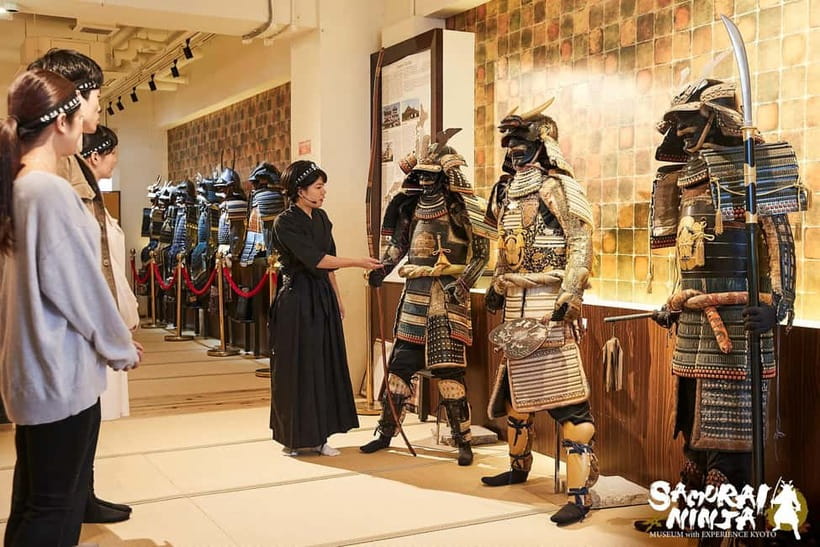
Kyoto’s samurai and ninja museum turns a history lesson into something you can handle, wear, and throw. In one hour, you’ll see armor and weapons, hear how samurai and ninja fit into Japanese history, try on samurai clothing and a real helmet, and finish with a shuriken, or ninja star, activity.
I like the way the tour mixes clear historical explanation with hands-on activities, especially the costume and star throwing. I also like the small advertised group size of up to 10 people, which gives an English-speaking guide such as Miu, Sayo, Akiko, or Ko a fair chance to involve you.
The main drawback is its short length. At $28 per person, it offers good value if you want an active introduction, but it is not a full museum visit or a serious martial arts class. Also, the booking information lists both small groups of up to 10 and a maximum of 30 participants, so confirm the group size when you book.
Key points to know before you book
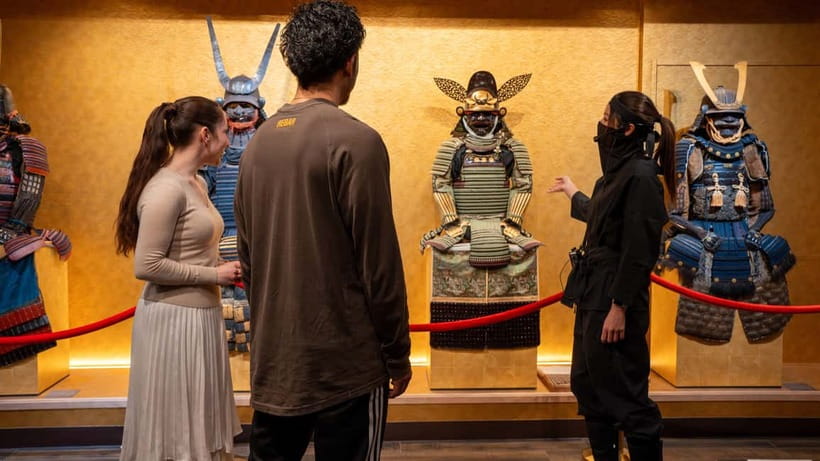
- One hour, with a lot packed in: You move from history and displays to dressing up and ninja star throwing without a long pause.
- English guidance matters: The tour is led in English, with guides including Miu, Sayo, Akiko, Ko, and others praised for clear explanations and friendly presentation.
- The costume activity is more than a photo stop: You can wear samurai clothing, put on a real helmet, and hold a replica sword.
- Shuriken throwing is the crowd favorite: The activity gives children and teenagers a reason to stay focused, while adults can join in too.
- Good for a first Kyoto visit: It provides basic context about samurai, ninja, armor, and weapons without requiring prior study.
- Check the group details: The experience is described as a small-group tour, but the stated maximum also appears as 30 people.
A compact introduction to samurai and ninja in Kyoto
The museum presents samurai and ninja as part of Kyoto’s long political and military story, from the early Heian period through the end of the Tokugawa shogunate. That broad span helps you place the displays in time, even if you should not expect a university-level lecture in a one-hour session.
I find the subject especially useful in Kyoto because the city is often presented through temples, gardens, tea culture, and imperial history. This tour adds another side of the city: the warriors, weapons, clothing, and power structures that shaped Japan for centuries.
The guide does much of the work. Instead of wandering past armor with only a label to read, you hear explanations about the warriors and the craftsmanship behind their equipment. Several guides, including Aya, Jukia, Miu, and Akiko, received praise for making the history easy to follow in English.
The tone is designed to be lively rather than solemn. Guides may ask questions, draw you into the discussion, and use the displays as a starting point. That approach works well for families, teenagers, and anyone who would rather learn through a short story and an object than through a long wall of text.
Other swordplay and stealth sessions in Kyoto:
- Kyoto Samurai Experience
★ 5.0 · 1,294 reviews - Kyoto: Kendo and Samurai Experience with Uniform and Gear
★ 4.9 · 815 reviews - Kyoto: Samurai Sword Class by Experts in Traditional Arts
★ 4.9 · 657 reviews
What you see among the armor and weapons
The museum portion focuses on samurai and ninja equipment, with armor, weapons, and related props on display. The displays give you something concrete to look at while the guide explains the period and the people who used these tools.
The armor is likely to be the strongest visual part of the visit. Samurai armor was made for protection, movement, and identity, and the shapes and decoration can say as much as the weaponry. You will not just hear the word samurai repeatedly. You will see the equipment connected with that world.
The weapons section also helps separate historical objects from popular movie images. The tour includes discussion of ninja tools and throwing stars, while the practical activities use replicas. That distinction matters. You get the fun of handling and using equipment without the confusion of assuming every theatrical ninja image is historically precise.
The available information also describes a katana lesson and a chance to use a ninja fukiya, a blowpipe. The included highlights specifically confirm the costume and ninja star throwing, so I would treat the katana and fukiya elements as parts of the planned experience that may depend on the session format.
Do not expect a large national museum. This is a focused attraction built around a guided encounter. Its strength is the guide-led explanation and interaction, not hours of independent viewing.
The samurai costume, helmet, and replica sword
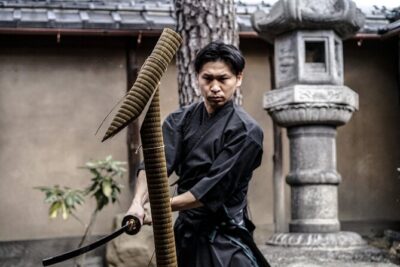
The dress-up portion gives the tour its best photo opportunity. You can put on samurai clothing, wear a real samurai helmet, and hold a replica sword. For children, this can turn an abstract lesson into a role-playing moment. For adults, it is a pleasant break from simply looking at exhibits.
The helmet is a particularly useful detail because it gives you a better sense of the weight and presence of samurai equipment. The experience does not make you a warrior, of course, and the sword is a replica, but that is exactly the right level for a short family activity.
I would plan your expectations around a brief try-on rather than a full costume session. The tour lasts only one hour and also includes explanations, museum displays, and ninja activities. You should have time for pictures, but you should not expect an elaborate theatrical performance or a long photo shoot.
This section works best when the guide explains what you are wearing and why it mattered. The strongest sessions appear to connect the clothing and armor to the wider story, rather than treating the costume as a stand-alone prop.
Shuriken throwing gives the hour a clear finish
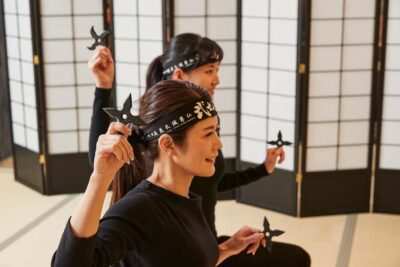
The ninja star activity, or shuriken throwing, is the most direct piece of participation. You get a chance to throw replica ninja stars under the guide’s direction, and some sessions turn it into a friendly competition.
That simple activity has real practical value. A one-hour history tour can lose a young person’s attention, but throwing stars gives children and teenagers something to anticipate. It also keeps adults involved, especially if you enjoy trying a skill rather than only watching one.
The activity is not a martial arts course. You should think of it as a supervised introduction and a bit of fun, not training in ninja technique. The experience is valuable because it gives the tour a memorable ending, not because it teaches a complete combat system.
If you are visiting with children, this is one of the strongest reasons to choose the museum over a purely historical display. The costume and star throwing offer two different types of participation, so the hour does not depend entirely on sitting still and listening.
A few more things to do in Kyoto worth a look
- Kyoto: Tea Museum Tickets and Matcha Grinding Experience
★ 4.9 · 739 reviews - Skip the lines Basic Ticket at SAMURAI NINJA MUSEUM KYOTO
★ 4.5 · 632 reviews - Kyoto : Geiko Maiko Dance of Kyoto & Visits of Gion Museum
★ 4.6 · 415 reviews - Kyoto Sword Experience – includes Museum Ticket/Ninja Experience
★ 4.5 · 149 reviews
Why the guides make the difference
The guide is the key variable in this experience. The tour is delivered in English, and the strongest feedback repeatedly highlights clear explanations, friendly energy, and the ability to involve the whole group.
Names praised across the bookings include Miu, Sayo, Akiko, Ko, Aya, Jukia, Mami, Taka, Saku, and Aoi. You cannot choose a particular guide from the information provided, but these names give you an idea of the style to expect: accessible English, questions for the group, historical background, and a willingness to help with photos and activities.
Several guides were singled out for explaining the history and craftsmanship of the equipment. That is important because the museum’s displays become much more useful when someone points out what you are seeing and explains how it fits into Japanese society.
The best guide-led tours do not bury you in dates. They give you enough context to understand the samurai period, the role of ninja in popular culture and history, and the importance of weapons and armor. If you already know a lot about Japanese military history, you may find the material basic. If you are new to the subject, the clear structure should work well.
One useful tip comes from the practical feedback: reading a little about ninja beforehand can improve the experience. You do not need a textbook. A basic idea of the difference between samurai and ninja, and of the periods being discussed, will help you ask better questions.
Is $28 a fair price for one hour?
At $28 per person, the value depends on what you want from the outing. If you are seeking a large museum with rare artifacts and several hours of independent viewing, this is not the right comparison. If you want a guided, English-language activity with a costume, photo opportunity, and shuriken throwing, the price is reasonable.
You are paying for more than admission. The cost includes the museum entry, a professional guide, samurai costume use, and ninja star throwing. The guide also saves you from having to build your own explanation from labels and online reading.
The short duration keeps the commitment easy. You can fit it between other Kyoto plans, and you are unlikely to feel that it has consumed an entire afternoon. That is useful in a city where you may also be visiting temples, gardens, markets, and palaces.
There is one caution. One four-star assessment felt the price included an unwanted upcharge for a museum ticket and standard guiding. That is a fair concern if you mainly want the lowest possible admission cost. The tour makes more sense when you value the English explanation and interactive elements rather than treating it as a simple museum ticket.
The booking terms add flexibility. You can cancel up to 24 hours ahead for a full refund, and the reserve-now, pay-later option lets you hold a place without paying at once. Those terms are useful if your Kyoto schedule is still shifting.
Timing, location, and practical details
The museum is in Kyoto on Honshu, but transportation to and from the attraction is not included. You will need to arrange your own way there, so allow time to reach the museum before the starting time.
The activity lasts one hour, with starting times available according to the booking calendar. That makes it easy to place in a busy day, but it also means you should arrive ready to begin. A late arrival could cut into the costume or throwing portion because the schedule is compact.
The tour is advertised as wheelchair accessible. English is the stated tour language, and the activity includes a live guide rather than a self-guided audio visit.
The group information needs a little care. The experience is described as a small group limited to 10 participants, while the important information also gives a maximum of 30 travelers. Since those figures do not match, check the current booking details if group size is important to you.
Who will enjoy this Kyoto experience?
I would recommend it most strongly to families, first-time visitors to Japan, and anyone who wants a short cultural activity with a playful side. The costume and shuriken throwing give children something active to do, while the guide supplies enough history to make the displays meaningful.
Teenagers are another good match. The tour offers a better chance of holding their attention than a quiet exhibit-only visit, especially if they enjoy Japanese history, martial arts, video games, anime, or historical fiction.
Adults without children can enjoy it too, particularly if you like taking photos and learning through demonstrations. The dress-up portion is not limited to kids, and the throwing activity gives the group a shared goal.
I would be more cautious if your main interest is rigorous historical research, authentic weapons handling, or a long look at original artifacts. The experience is introductory and theatrical in places. It is designed to make the subject approachable, not to replace a specialist museum or academic tour.
How to get the most from the one-hour format
Read a short introduction to samurai and ninja before you go. Even a few minutes of preparation will help you follow the guide’s timeline and understand why the equipment matters.
Keep your schedule flexible enough to enjoy the activity rather than rushing out immediately afterward. The tour is only an hour, but you will likely want time for photos in costume and a final look at the displays.
Ask questions. The guides are described as engaging and open to questions, and the format is better when you take part. If you are with children, let them answer the guide’s questions and try the throwing activity themselves.
Expect replicas for the practical sections. The real helmet is a notable detail, but the sword and ninja throwing activity are intended for safe handling. That is a good arrangement for a public experience and helps keep the focus on learning and fun.
Should you book it?
Book this tour if you want a lively one-hour introduction to samurai and ninja history, especially if you are traveling with children or teenagers. The combination of English guidance, armor and weapons, costume photos, and shuriken throwing gives you more to do than a standard museum visit.
Skip it if you want a long, quiet, artifact-heavy museum experience or advanced martial arts instruction. Also check the current group size before paying if a small group is essential to you, since the published capacity figures differ.
For most first-time visitors, $28 is a fair price for a compact activity that adds variety to a Kyoto itinerary. It is less about mastering the subject than leaving with a clearer picture of samurai culture, a few good photographs, and a memorable attempt at throwing a ninja star.
FAQ
Where is the Samurai Ninja Museum tour located?
The experience is located in Kyoto on Japan’s main island of Honshu.
How long does the tour last?
The guided activity lasts one hour.
What language is the tour conducted in?
The live tour guide speaks English.
What is included in the price?
The price includes museum admission, a professional guided tour, a samurai costume, and ninja star throwing.
Can I wear samurai clothing during the experience?
Yes. The activity includes dressing as a samurai, wearing a real samurai helmet, and holding a replica sword.
Is ninja star throwing included?
Yes. Ninja star, or shuriken, throwing is included in the tour.
Is transportation included?
No. Transportation to and from the attraction is not included.
Can I cancel the booking?
You can cancel up to 24 hours in advance for a full refund. A reserve-now, pay-later option is also available.
Just added in Kyoto
- Your Private Vacation Photography Session In Kyoto★ 5.0 · 110 reviews
- Kyoto: Zen Meditation at a Private Temple with a Monk★ 5.0 · 25 reviews
- Private Cooking Class Udon in Kyoto Japan★ 5.0 · 23 reviews
- Private Pewter Sake Cup Experience with a Kyoto Artisan★ 5.0 · 31 reviews
- Kyoto Wagashi(Japanese sweets) Cooking Class near Fushimiinari★ 5.0 · 60 reviews
- Kyoto:Family-Friendly Kimono & Yukata Experience at WARGO★ 5.0 · 147 reviews
- Private Guided Traditional Buddhist Cooking in Japan★ 5.0 · 16 reviews
- Kyoto: Gion Geisha District & Sake-in-Hand Walking Tour★ 5.0 · 37 reviews
Samurai & Ninja Experiences, compared.
Samurai Ninja Museum Guided tour and Experience
Read our review →
Kendo and Samurai Experience with Uniform and Gear
Read our review →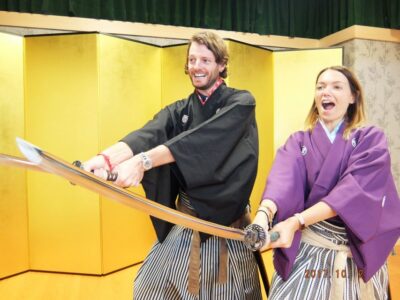
Samurai Sword Class by Experts in Traditional Arts
Read our review →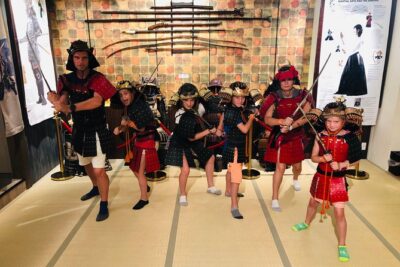
Skip the lines Basic Ticket at SAMURAI NINJA MUSEUM KYOTO
Read our review →
Samurai Sword & Archery Class from Samurai Descendant
Read our review →
Browse the lists this tour appears in