
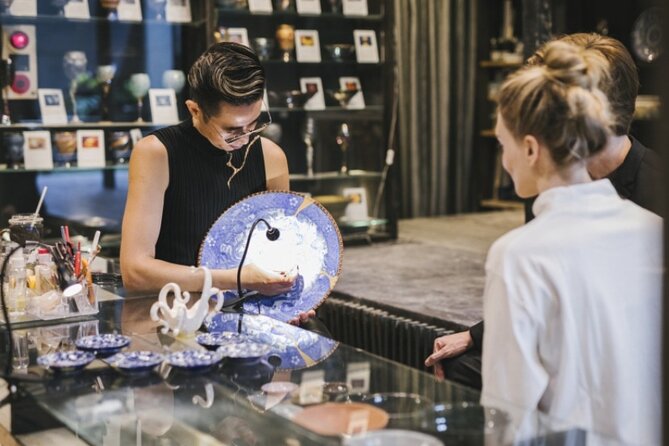
Reviewed · TOURS IN TOKYO
Authentic Pure Gold Kintsugi Workshop with Master Taku in Tokyo
Kintsugi turns a broken plate into a piece of art by tracing its cracks with real lacquer and pure gold. At Master Taku’s Tokyo studio, you work with pottery he made himself, hear the ideas behind wabi-sabi, and finish with a souvenir that carries your own handwork.
I like the small maximum group of five, which gives the instructor time to check each step. I also like that this is an actual craft lesson, not a quick paint-and-go activity. The main caution is that the experience costs $142.60 and is non-refundable, so you should be sure of your schedule before booking.
Key points to know before you book
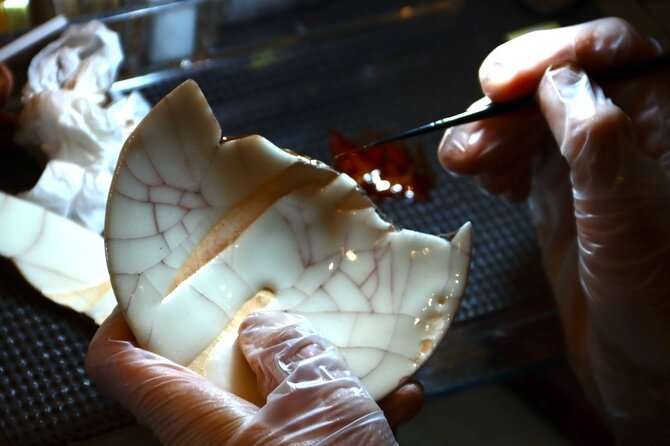
- Real urushi and pure gold: The traditional option uses natural lacquer and real gold powder rather than a decorative imitation.
- Three repair styles: Choose a classic gold repair, a black plate with gold lines, or yobitsugi, which adds material to missing sections.
- Master Taku’s own pottery: Your plate is hand-crafted by ceramist Taku Nakano and goes home with you after the lesson.
- Small, personal class: The group is limited to five people, with patient guidance from Master Taku or an assistant such as Junko.
- A calm change of pace: The work requires attention and patience, making it a good pause between Tokyo’s busy sights.
- Allow about two hours: The hands-on choices run from 90 to 110 minutes, with the full experience listed at about two hours.
Why this Tokyo craft class feels different
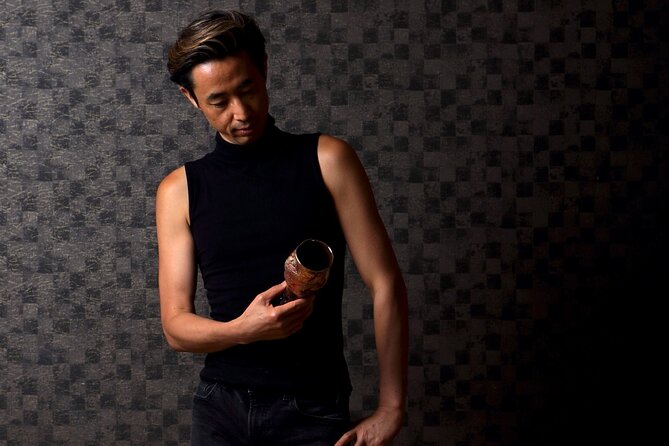
Many Tokyo activities give you something to buy. This one asks you to make something, and the difference matters. You leave with a plate that is not merely Japanese-themed. It is marked by your own decisions, your own brushwork, and the visible history of a repaired object.
Kintsugi is often presented as the art of highlighting damage rather than hiding it. That idea connects with wabi-sabi, the Japanese appreciation of imperfection, age, and change. Here, those ideas are not left as a short speech for a guide to rush through. The lesson uses the plate in front of you to make them practical.
The experience takes place at TNCA Minami-Aoyama Studio in Minato City, an area known for fashion, design, and galleries. You are not being sent to a large tourist attraction or a souvenir shop. You are visiting a working pottery studio connected with Taku Nakano, a ceramist whose guiding idea is to make an object even more beautiful and stronger after it breaks.
That setting gives the activity a clear sense of purpose. You are learning a craft from an artist who makes the pottery himself, rather than following a generic craft project built only for visitors.
Other experiences people book in Tokyo:
- Mt Fuji and Hakone 1-Day Bus Tour Return by Bullet Train
★ 5.0 · 26,383 reviews - 1-Day Tokyo Bus Tour
★ 5.0 · 14,250 reviews - Tokyo: TOKYO SKYTREE® Admission ticket
★ 4.5 · 11,192 reviews
Inside TNCA Minami-Aoyama Studio
The meeting point is TNCA Minami-Aoyama Studio, 3-chome-8-2 Minamiaoyama, Minato City, Tokyo 107-0062. It is near public transportation, though one participant found the studio a bit hard to locate and arrived late. I would allow extra time for the final walk, especially if you are unfamiliar with Minami-Aoyama.
The class is capped at five people. That is a useful limit for an activity involving small tools, lacquer, pottery, and gold powder. You are not simply watching a demonstration from the back of a crowded room. The instructor can look at your plate, explain the next step, and correct your technique as you work.
Master Taku teaches the craft, and assistants may help with the class. Junko, who has assisted with the authentic workshop, is praised for explaining the process at a comfortable pace. The teaching is available in English, and Master Taku is described as speaking good English. His manner is calm and encouraging, which helps because the work calls for a steady hand rather than speed.
You will find the necessary equipment and materials waiting for you. The fee also includes the plate used in the lesson, which you take home at the end.
Choosing your plate and repair style
You have three formats to choose from. The best option depends on how traditional, graphic, or decorative you want the finished piece to look.
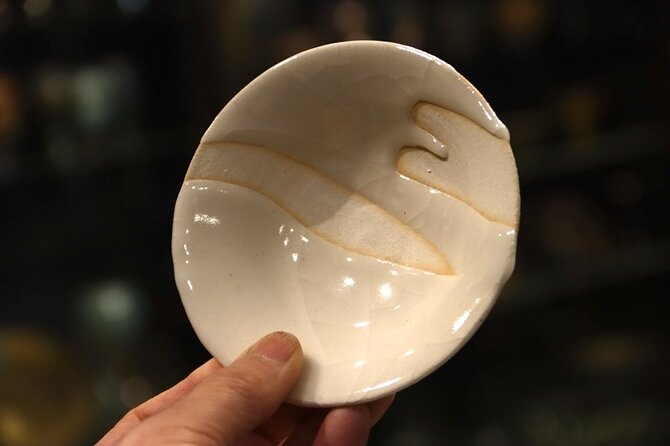
Option A, Shuurushi kannyuzome kintsugi, is the classic choice. It takes about 110 minutes and uses real natural urushi lacquer with pure gold. The pottery is prepared with a rustic lacquer finish, giving it a weathered, sabi feeling before the repair work begins. If your main reason for booking is to learn authentic kintsugi, this is the option to select.
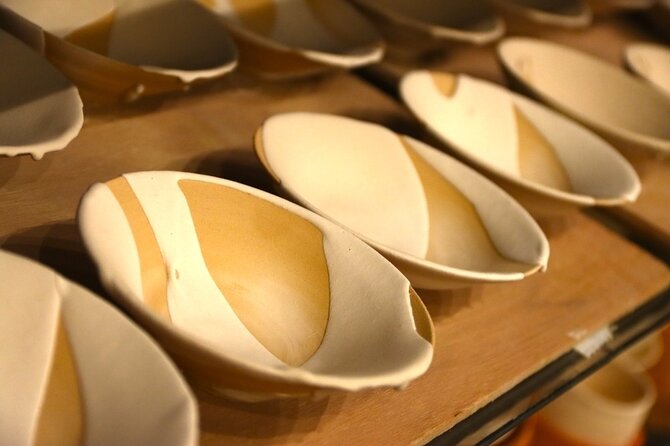
The class uses a plate prepared for the activity rather than asking you to bring a treasured family dish from home. That makes sense for a first lesson. You can focus on the technique without worrying about ruining an irreplaceable object.
Option B, Black and Gold Shikkokurai, takes about 90 minutes. You repair a black plate using the same basic kintsugi method, but the dark surface gives the gold a stronger, more graphic look. This choice suits you if you want a clean, sophisticated object that will fit easily into a modern home.
Option C is yobitsugi, also about 90 minutes. This is a higher-level kintsugi technique in which different decorations and materials are attached to missing sections. It is not just a matter of tracing a crack. You add something to the absent part, making the repair more visibly creative.
The exact starting pieces and decorative choices can vary, but the workshop offers multiple options for the plate you begin with. If you are uncertain, ask the instructor which style matches your pace and design preference.
What happens during the lesson
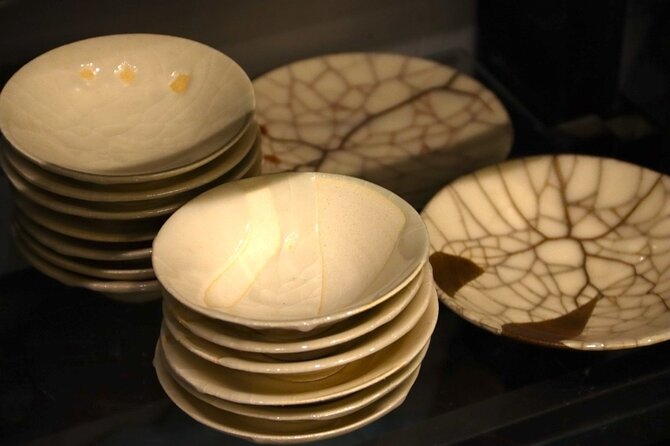
The session begins with an introduction to kintsugi, its origins, and the ideas of wabi-sabi. This context is useful because the work can otherwise feel like a simple pottery decoration exercise. Once you understand why the crack is being emphasized, the gold line becomes part of the object’s story.
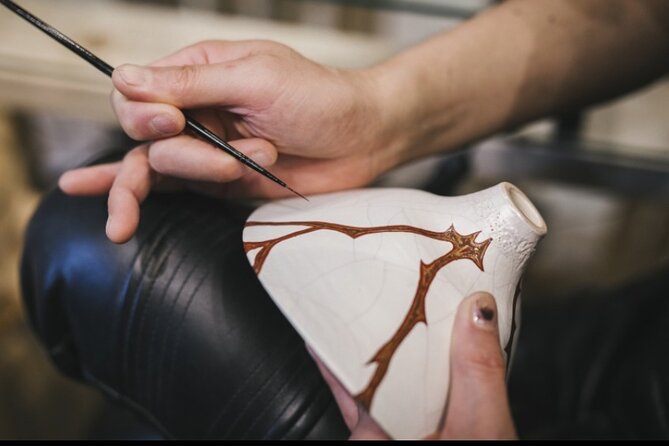
You then work on the supplied pottery. The important materials are natural urushi lacquer and pure gold powder. The gold is not simply brushed on as paint. It is used with the lacquer to create the characteristic bright repair line.
The teacher explains the process in stages. You have time to follow along, and the small class makes it possible to ask questions when the material behaves differently than expected. The technique rewards patience. A rushed line will look rushed, while a careful one becomes the feature of the plate.
At the end, you take the completed plate with you. This is one of the strongest practical benefits of the workshop. You are not waiting for an object to be fired or shipped later, and you do not need to arrange delivery to your hotel. The activity ends at the same studio where it begins.
The full experience is listed at about two hours. The traditional option takes around 110 minutes, while the black plate and yobitsugi choices take around 90 minutes. Those times give you a useful planning guide, but I would avoid scheduling a major attraction immediately afterward. A little breathing room is wise if the class runs long or you need extra time to finish your design.
Same base, a different sort of day:
- Tokyo: teamLab Planets TOKYO Digital Art Museum Entry Ticket
★ 4.6 · 9,779 reviews - Mt Fuji & Hakone Cruise, Drum Show Bullet Train 1 Day from Tokyo
★ 4.0 · 7,413 reviews - Tokyo: Sumo Show Experience with Chicken Hot Pot and a Photo
★ 4.8 · 6,678 reviews - Tokyo: Shinjuku Food Tour (13 Dishes at 4 Local Eateries)
★ 5.0 · 6,603 reviews
The value of a $142.60 workshop
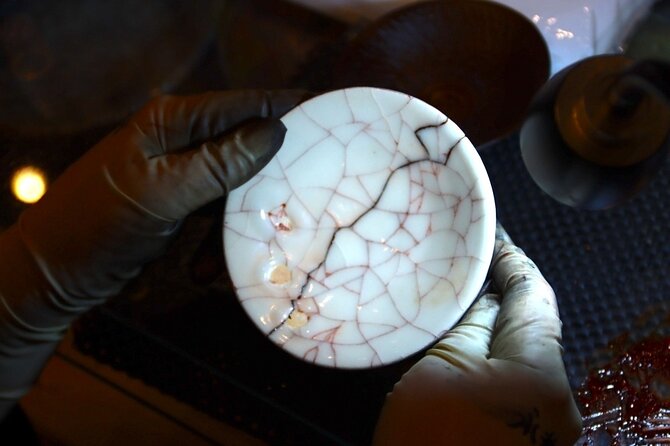
At $142.60 per person, this is not a bargain craft session. You are paying more than the cost of a ready-made ceramic souvenir in Tokyo. The value comes from several things working together: a small group, instruction from an established ceramist, a hand-made plate, specialist materials, and a finished object to take home.
The use of real urushi and pure gold is particularly important. If you are comparing this with a casual craft activity using ordinary paint, the two experiences are not really the same. Here, the price reflects access to a traditional process and materials that are central to the technique.
The workshop also gives you about two hours of focused instruction. For a couple, parent and adult child, or small group of friends, the price can make sense as a shared memory rather than a simple purchase. One parent and daughter found the activity meaningful, and the format works well for two people who want a quieter experience together.
I would be less quick to recommend it if you only want a low-cost souvenir or if you dislike careful handwork. The class is not a sightseeing stop with a quick photo opportunity. You need to concentrate, listen, and accept that handmade work will not look factory-perfect.
All taxes, fees, equipment, lesson costs, and the plate are included. Food, drinks, and hotel transportation are not included.
Why the instructors matter
A kintsugi class can easily become frustrating if the teacher gives only a quick demonstration and leaves you alone with the tools. The strongest feature here is the amount of personal attention built into the small group.
Master Taku is both the artist behind the studio and the person who explains the craft. His approach is described as patient, calm, and encouraging. That matters when you are handling lacquer and trying to control a fine repair line for the first time.
Assistants also help. Junko has led the authentic workshop and explains the steps at a manageable pace. The class can include several experience levels, so clear group instruction followed by individual help is useful.
The atmosphere appears friendly rather than formal. One late arrival was still welcomed warmly, and the instructor even helped a participant cool down on a hot day. That small detail tells you something about the tone of the lesson: attentive and human, not stiff or hurried.
You should still arrive on time. A late start can cut into your working period, and finding the studio may take longer than expected.
A good break from Tokyo sightseeing
This class works best when placed between active sightseeing days. Tokyo can fill your schedule with temples, department stores, train rides, food stops, and crowded streets. A quiet table, a plate, and a careful repair offer a useful change of rhythm.
I especially like the fact that the experience has a clear beginning and end. You arrive at the studio, learn the background, complete a project, and leave with it in hand. There is no vague promise of inspiration. You have a physical result.
It also gives you a more personal connection to Japanese culture than simply buying a piece of pottery. You learn why an imperfect repair can be valued, then make your own version. The lesson is short enough to fit into a Tokyo itinerary, but substantial enough to feel like an activity rather than a filler stop.
The class suits adults, couples, families with older children, and anyone interested in ceramics, design, or Japanese philosophy. Most people can participate, but the work does require patience and close hand use. If your interest is mainly in watching an artist rather than making something yourself, a studio visit may suit you better.
Practical planning for your visit
Book only when your schedule is firm. This experience is non-refundable and cannot be changed for any reason. If the minimum number of participants is not reached and the provider cancels, you are offered another date or experience, or a full refund.
Your confirmation arrives within 48 hours, subject to availability. The mobile ticket is convenient, and the activity returns you to the meeting point at the end.
Wear something that lets you work comfortably at a table. Specific clothing rules are not provided, so I would avoid bringing anything you would worry about around craft materials. Food and drinks are not part of the activity, so plan those separately before or after class.
The studio is near public transportation, but do not assume you can step off a train and walk straight in. Use the exact address, allow extra time, and keep your phone ready for navigation.
Who should book the kintsugi experience
Book this workshop if you want a hands-on souvenir, enjoy pottery or design, and value patient instruction in a small group. It is especially good for a parent and adult child, a couple, or friends who want a shared activity that is quieter than a food tour or major attraction.
Choose the authentic 110-minute option if learning the traditional process is your priority. Pick the black plate if you want a sharper modern look and a slightly shorter session. Choose yobitsugi if the idea of adding materials to missing sections appeals to your creative side.
Think twice if you are trying to keep activity costs low, need a flexible booking, or want a fast, polished souvenir. The price is high, the booking cannot be changed, and the finished plate will show handmade variation.
Should you book it?
I would book this for a meaningful Tokyo afternoon, not as a routine souvenir stop. The combination of Master Taku’s pottery, natural urushi, pure gold, and a maximum of five people gives the class real substance.
The best reason to go is simple: you do not just purchase an object that represents Japan. You make one, learn why the repair matters, and carry home a plate that could not belong to anyone else. If that sounds more appealing than another item from a shop shelf, the $142.60 price is easier to justify.
FAQ
Where does the kintsugi workshop take place?
The workshop takes place at TNCA Minami-Aoyama Studio, 3-chome-8-2 Minamiaoyama, Minato City, Tokyo 107-0062, Japan. The activity ends at the same meeting point.
How long does the experience last?
The overall experience lasts about two hours. The traditional option takes approximately 110 minutes, while the black plate and yobitsugi options take about 90 minutes.
How many people can join the class?
The activity has a maximum of five participants.
What materials are used?
The authentic option uses real natural urushi lacquer and pure gold powder. The workshop supplies the necessary equipment and materials.
Can I take my finished plate home?
Yes. The plate used for the lesson is included, and you can take it home after completing the workshop.
Who teaches the workshop?
Ceramist Taku Nakano runs the pottery studio and teaches the kintsugi process. Assistants, including Junko, may also help with instruction.
Is the activity refundable if I cancel?
No. The experience is non-refundable and cannot be changed for any reason. If the provider cancels because the minimum number of participants is not met, you are offered another date or experience, or a full refund.
Just added in Tokyo
- Nikko: Edo Wonderland Edomura Cultural Theme Park Ticket★ 4.3 · 205 reviews
- 《MEMBERS-ONLY-BAR-HOPPING》Discover Your Special Whiskey in Tokyo!★ 5.0 · 29 reviews
- Japanese Whisky Hunting《HIGH-QUALITY-ONLY》Rare Tasting Class★ 5.0 · 20 reviews
- Luxury Tokyo Sake, Cocktail, Whisky and Pairing Tour★ 5.0 · 18 reviews
- Wagyu & Sake Pairing in Shinjuku – Steak, Shabu-Shabu & More★ 5.0 · 112 reviews
- Small-Group Wagyu Beef and 7 Japanese Dishes Tokyo Cooking Class★ 5.0 · 190 reviews
- From Tokyo: Private Tour to Fuji/Hakone – Onsen, Art, Nature★ 5.0 · 116 reviews
- Tokyo: KABUKI Show at Kabukiza Theatre Admission Ticket★ 4.8 · 152 reviews
Tours in Tokyo, compared.

Mt Fuji and Hakone 1-Day Bus Tour Return by Bullet Train
Read our review →


teamLab Planets TOKYO Digital Art Museum Entry Ticket
Read our review →
Mt Fuji & Hakone Cruise, Drum Show Bullet Train 1 Day from Tokyo
Read our review →
Sumo Show Experience with Chicken Hot Pot and a Photo
Read our review →
Shinjuku Food Tour (13 Dishes at 4 Local Eateries)
Read our review →
Tokyo Mt Fuji 5th St & Hakone Cruise Bus Tour w/Bullet Train
Read our review →Browse the lists this tour appears in