
Reviewed · TOURS IN TOKYO
Japanese Speaking Experience Meet the locals Friend Cafe Shibuya
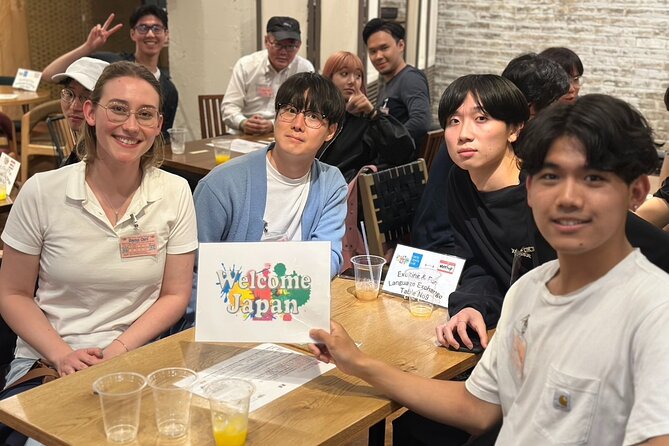
The best part of this Shibuya evening is its simple social rhythm: you talk in English for 15 minutes, switch to Japanese for 15, then change seats and start again with new people. Beginners are welcome, so you do not need polished Japanese to take part. I like the topic cards and small groups, which give shy speakers something to work with instead of leaving you to force a conversation.
I also like the seat changes, since you meet several Japanese and international participants rather than spending two hours with one table. Hosts such as Candice and Rikiya have been praised for keeping the room friendly and organized. The main drawback is the setting: it is held in a pub, with drinks at your own cost, and the nearby bowling activity can make things a little loud.
Key points to know before you book
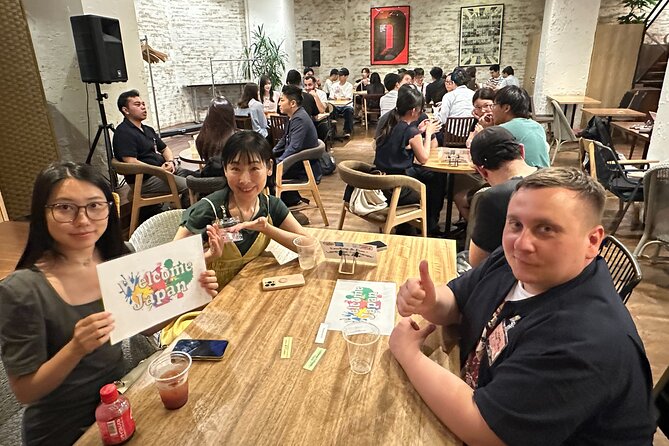
- Six short conversation rounds: English and Japanese alternate in 15-minute blocks.
- Small mixed groups: Staff arrange groups of three or four, with Japanese and international participants.
- Useful conversation help: Topic cards are available if you need an easy opening line.
- Good for complete beginners: You can join even if you cannot speak Japanese yet.
- Extra cost at the bar: The $29 ticket does not include food or drinks, and you must buy at least one drink.
- A Monday night in Shibuya: The event runs from 7:30 to 9:30 pm and is for ages 18 and over.
Why this language exchange works better than a random bar chat
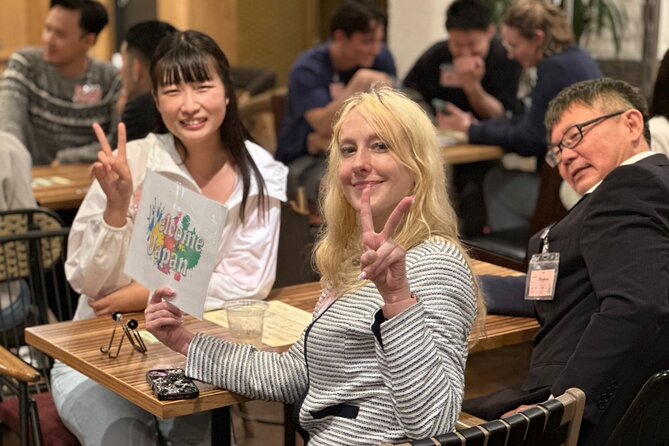
A language exchange can sound awkward on paper. You walk into a room, meet strangers, and hope conversation takes care of itself. This event removes much of that guesswork with a fixed schedule, assigned groups, prompt cards, and regular seat changes.
You are not expected to carry one long conversation. Each round lasts 15 minutes, which is long enough to get past introductions but short enough to avoid being trapped in a difficult pairing. If the conversation feels slow, the next rotation arrives soon.
The English and Japanese split also gives the evening a clear purpose. English speakers can help local participants practice English, while Japanese learners get a safe place to try simple phrases. You may spend one round speaking mostly English and the next trying basic Japanese greetings, questions, or answers.
That balance matters. In many casual meetups, the strongest English speaker takes over, or the Japanese learner spends the night listening. Here, the staff set a pattern that gives both languages time. The structure is especially useful if you want practice but do not yet feel ready for a long, free-flowing conversation.
Other experiences people book in Tokyo:
- Mt Fuji and Hakone 1-Day Bus Tour Return by Bullet Train
★ 5.0 · 26,383 reviews - 1-Day Tokyo Bus Tour
★ 5.0 · 14,250 reviews - Tokyo: TOKYO SKYTREE® Admission ticket
★ 4.5 · 11,192 reviews
Arriving at the B1F pub in Shibuya
The meeting point is Shibuya Bowling CafeShibuya EST at 1-chōme-14-14 Shibuya, Tokyo 150-0002. The cafe is on the basement level, or B1F. Allow enough time to find the entrance and reach reception, since check-in begins 10 minutes before the scheduled start.
At reception, you check in and buy a drink from the bar. The ticket covers the event fees and taxes, but it does not cover alcohol, soft drinks, or food. You must purchase at least one drink when you arrive, so the real cost is $29 plus whatever you order.
That extra charge is not a surprise, but it is important when comparing this with a walking tour or a museum visit. You are paying for a hosted social activity rather than sightseeing. The value comes from the organized introductions, language practice, and chance to meet several people in one evening.
The pub setting also shapes the mood. It is more relaxed than a classroom, but not as quiet. The bowling area can add background noise, and one report specifically found the bowling a little loud. If you need a calm space to hear every word, this may not be your ideal Japanese lesson.
The first groups and the conversation cards
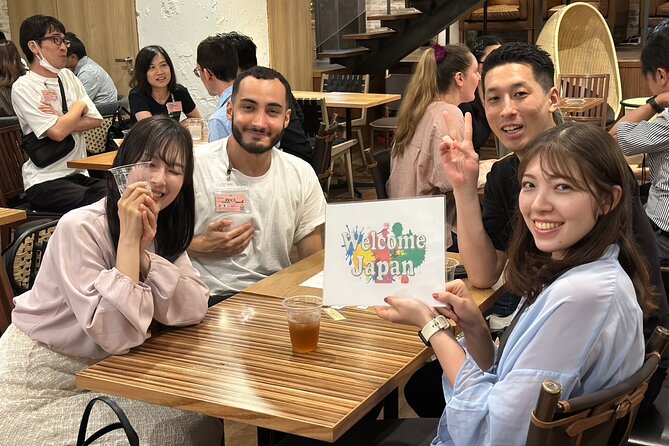
Once check-in is finished, staff arrange participants in small groups of three or four. The mix includes Japanese and international participants, with the aim of making each table useful for both languages.
You receive topic cards to help keep the conversation moving. These cards matter more than they might seem. A simple prompt can get you past the first few minutes, especially if you are nervous about pronunciation or unsure what is polite to ask.
You can use the cards as much or as little as you like. They are not a strict worksheet, and the format is social rather than academic. You should expect conversation practice, not a formal grammar class or a lesson built around correcting every mistake.
The small group size is another strong point. Three or four people gives you a chance to listen, speak, and ask questions without having to compete with a large table. It also makes it easier to notice how others phrase things. If you are an English speaker helping someone practice, you have room to slow down and keep the exchange friendly.
How the six 15-minute rounds unfold
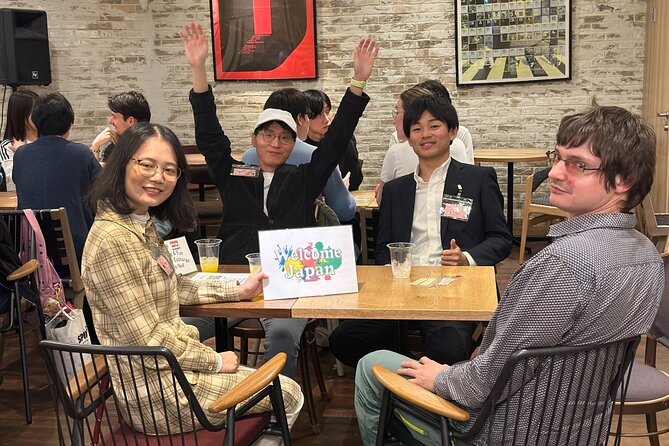
The evening follows a clear sequence:
- Reception and check-in
- 15 minutes of English conversation
- 15 minutes of Japanese conversation
- Five-minute break and seat change
- 15 minutes of English conversation
- 15 minutes of Japanese conversation
- Five-minute break and seat change
- 15 minutes of English conversation
- 15 minutes of Japanese conversation
- Closing group photo
That makes six main conversation rounds, split evenly between English and Japanese. The short breaks give you time to move and reset before meeting another group.
The first English round is likely to feel easiest for many international participants. It lets you get comfortable with the format and meet your first table without worrying about Japanese right away. The Japanese round that follows then gives you a clear chance to try what you know.
By the second and third sets, the seat changes become the heart of the event. You get more than two or three chances to speak with different people, which helps prevent the evening from becoming a single conversation with one table. You may find that one group is more talkative, while another gives you more time to practice.
The schedule also protects you from social fatigue. Two hours can feel long if every minute is unstructured. Here, each round has a beginning and an end, and the breaks mark your progress. You can take a breath, get another drink if you wish, and move to the next group.
Same base, a different sort of day:
- Tokyo: teamLab Planets TOKYO Digital Art Museum Entry Ticket
★ 4.6 · 9,779 reviews - Mt Fuji & Hakone Cruise, Drum Show Bullet Train 1 Day from Tokyo
★ 4.0 · 7,413 reviews - Tokyo: Sumo Show Experience with Chicken Hot Pot and a Photo
★ 4.8 · 6,678 reviews - Tokyo: Shinjuku Food Tour (13 Dishes at 4 Local Eateries)
★ 5.0 · 6,603 reviews
What the Japanese practice is really like
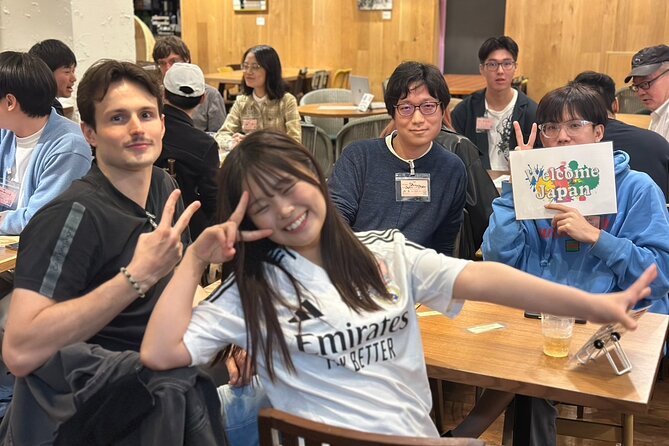
This is a low-pressure place to try Japanese, not a substitute for a language course. The available information does not promise a teacher, individual correction, or a set lesson level. You should book it for conversation and contact with local people, not for a detailed grammar explanation.
That makes it suitable for a wide range of ability levels. If you are a complete beginner, you can take part through greetings, short questions, and simple answers. If you already know some Japanese, you can use the rounds to build speed and confidence.
The English side is equally important. Japanese participants come to practice English, so the exchange works best when you give them time to speak and avoid turning the evening into a one-way lesson. You may find the most useful conversations are the ones where both people slow down, repeat a phrase, and compare how an idea is expressed in each language.
The topic cards can help when your vocabulary runs out. Still, you should expect some uneven moments. One person may be shy, another may speak much more confidently, and a group may move between English and Japanese in a less tidy way than the printed schedule suggests.
The hosts and the tone of the evening
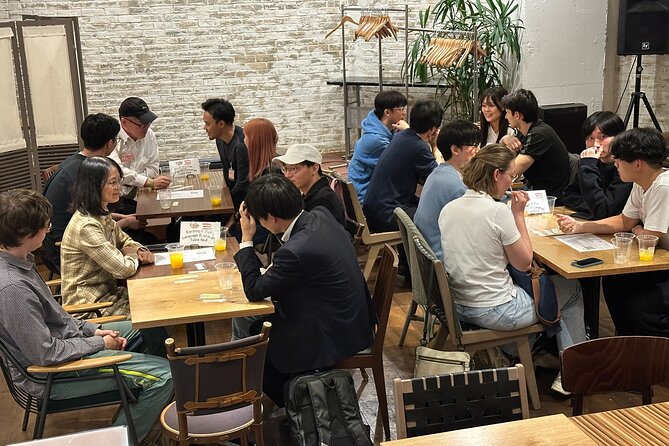
Good hosting matters at an event like this. The supplied feedback gives special credit to Candice for getting people laughing and dancing at another social event, while Rikiya is praised for organizing a meetup and helping people feel more comfortable talking. Names can vary by date, so you should not assume one particular host will lead every session.
What matters is the hosting style described by the event format: staff organize the groups, manage seat changes, provide the cards, and guide the schedule. That support keeps the room from becoming a collection of isolated tables.
The tone appears friendly rather than formal. One account describes the atmosphere as easy to enter and not intimidating, while another praises the hosts for being organized and the people for being kind. That is useful if you are arriving alone and do not want to walk into a loud party with no clear way to join in.
The closing group photo gives the evening a definite finish. You can leave after that, or treat the event as the first stop in a larger night out in Shibuya. The activity itself does not include a bar crawl, though the social setting makes it easy to continue your evening independently.
Is $29 a fair price?
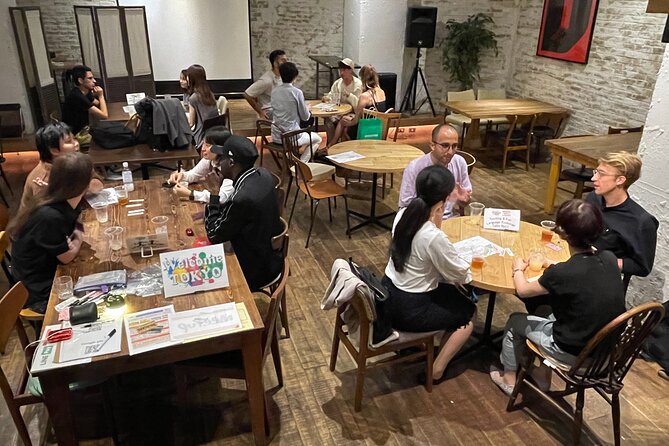
At $29 per person, this is not the cheapest way to practice Japanese. You could find free language exchange communities in Tokyo, and a drink at a normal cafe would cost less than the full ticket.
The price makes more sense if you value structure. You are paying for staff coordination, mixed small groups, topic cards, planned language switching, and several seat rotations. A casual meetup may offer more freedom, but it may also leave you talking only with the person beside you.
The maximum group size is 20 people. That is small enough for the organized format to work, while still giving staff enough people to create several mixed groups. A smaller turnout could mean a more intimate evening, while a full session should give you more variety in accents, ages, and conversation styles.
Food and drinks are not included, so budget for at least one drink on top of the ticket. If you are mainly interested in sightseeing, $29 may feel high because there is no tour of Shibuya and no included meal. If your goal is to meet people and use language in a real social setting, the added organization can justify the cost.
Who will get the most from this evening
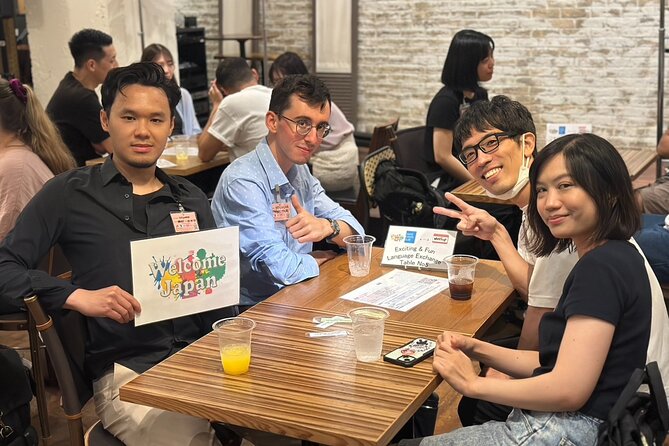
I would choose this activity if you fit one or more of these descriptions:
- You are learning Japanese and want a gentle first chance to speak.
- You are an English speaker who wants to help Japanese participants practice.
- You are visiting Tokyo alone and want a planned social activity.
- You prefer short conversations to one long, formal lesson.
- You want to meet people from Japan and other parts of the world.
- You are looking for a relaxed start to a Monday night in Shibuya.
It is also a good match for people who dislike making the first move at a bar. The staff give you a table, a topic, and a next step. You still need to introduce yourself and participate, but you do not have to invent the whole evening.
I would be more cautious if you want quiet surroundings, sightseeing, or a serious classroom course. The pub setting may be noisy, the conversation level can vary, and the event is for adults 18 and over because alcohol is available at the venue.
Practical details that affect your choice
The activity runs on Mondays from 7:30 to 9:30 pm during the stated operating period, with a duration of about two hours. It ends at the same meeting point, which is convenient if you want to make your own plans afterward.
A mobile ticket is accepted, and confirmation is provided when you book. The venue is near public transportation, and most people can participate. No special physical requirements are listed, but the basement cafe and pub format are worth keeping in mind if you have mobility concerns.
Free cancellation is available if you cancel at least 24 hours before the local start time. Cancellations or changes made inside that window are not refunded or accepted. That policy is fairly simple, but check your Monday plans before committing.
The activity is capped at 20 participants. Since the seat rotation and small groups are central to the format, booking around 12 days ahead is sensible if your Tokyo schedule is fixed.
Should you book Japanese Speaking Experience Meet the locals Friend Cafe Shibuya?
Book it if you want organized social practice, especially as a beginner. The combination of 15-minute language rounds, topic cards, and rotating groups gives you more chances to speak than an ordinary night at a pub.
Skip it if you are seeking a quiet Japanese class, a sightseeing tour, or a night where drinks and food are included. For the right person, though, $29 plus one drink buys a friendly, practical way to meet people and make Japanese part of your Tokyo evening instead of keeping it on the page.
FAQ
Where does the Japanese language exchange take place?
It takes place at Shibuya Bowling CafeShibuya EST, 1-chōme-14-14 Shibuya, Tokyo 150-0002, Japan. The cafe is on B1F.
What time does the activity run?
The scheduled time is Monday from 7:30 pm to 9:30 pm. The experience lasts about two hours, with reception starting 10 minutes before the activity.
Are beginners in Japanese welcome?
Yes. You can participate even if you cannot speak Japanese, as long as you are interested in the exchange.
How are the conversation groups arranged?
Staff place participants into small groups of three or four, mixing Japanese and international participants. Staff also change seats during the event so you can speak with several different people.
How much Japanese and English conversation is included?
The schedule alternates 15 minutes of English conversation with 15 minutes of Japanese conversation. There are six main rounds in total, split evenly between the two languages.
Are drinks and food included in the ticket?
No. The $29 ticket includes fees and taxes, but not food or alcoholic beverages. You must buy at least one drink at the bar when you arrive.
Can I cancel for a full refund?
Yes, if you cancel at least 24 hours before the experience start time. Cancellations or changes made less than 24 hours before the start are not refunded or accepted.
Just added in Tokyo
- 《MEMBERS-ONLY-BAR-HOPPING》Discover Your Special Whiskey in Tokyo!★ 5.0 · 29 reviews
- Japanese Whisky Hunting《HIGH-QUALITY-ONLY》Rare Tasting Class★ 5.0 · 20 reviews
- Luxury Tokyo Sake, Cocktail, Whisky and Pairing Tour★ 5.0 · 18 reviews
- Wagyu & Sake Pairing in Shinjuku – Steak, Shabu-Shabu & More★ 5.0 · 112 reviews
- Small-Group Wagyu Beef and 7 Japanese Dishes Tokyo Cooking Class★ 5.0 · 190 reviews
- Nikko: Edo Wonderland Edomura Cultural Theme Park Ticket★ 4.3 · 205 reviews
- From Tokyo: Private Tour to Fuji/Hakone – Onsen, Art, Nature★ 5.0 · 116 reviews
- Tokyo: KABUKI Show at Kabukiza Theatre Admission Ticket★ 4.8 · 152 reviews
Tours in Tokyo, compared.
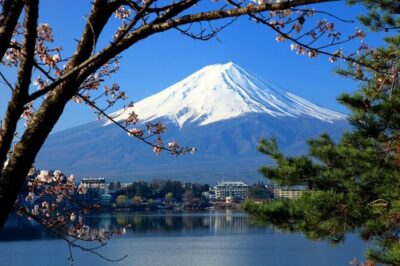
Mt Fuji and Hakone 1-Day Bus Tour Return by Bullet Train
Read our review →


teamLab Planets TOKYO Digital Art Museum Entry Ticket
Read our review →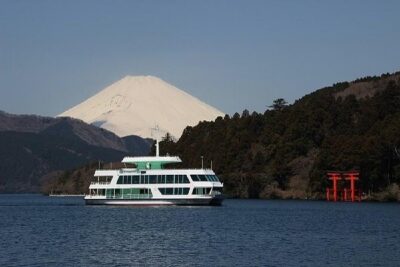
Mt Fuji & Hakone Cruise, Drum Show Bullet Train 1 Day from Tokyo
Read our review →
Sumo Show Experience with Chicken Hot Pot and a Photo
Read our review →
Shinjuku Food Tour (13 Dishes at 4 Local Eateries)
Read our review →
Tokyo Mt Fuji 5th St & Hakone Cruise Bus Tour w/Bullet Train
Read our review →Browse the lists this tour appears in