Reviewed · TOURS IN TOKYO
Japanese Traditional Music Show in Tokyo
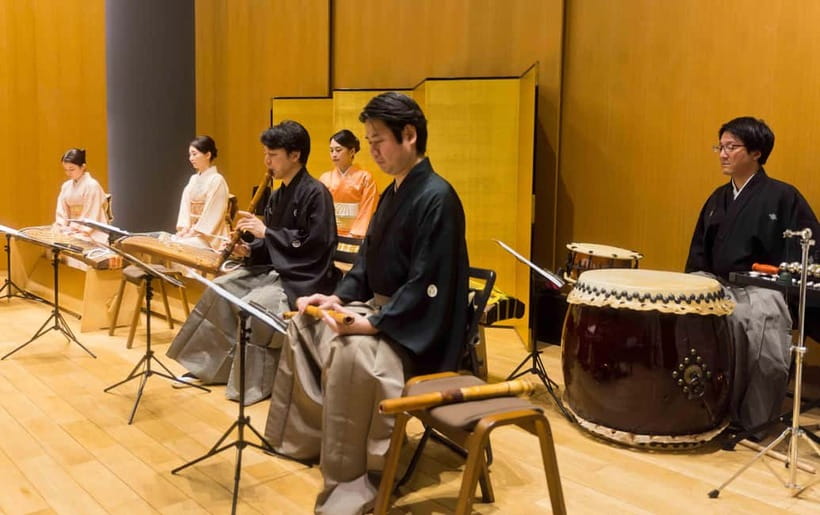
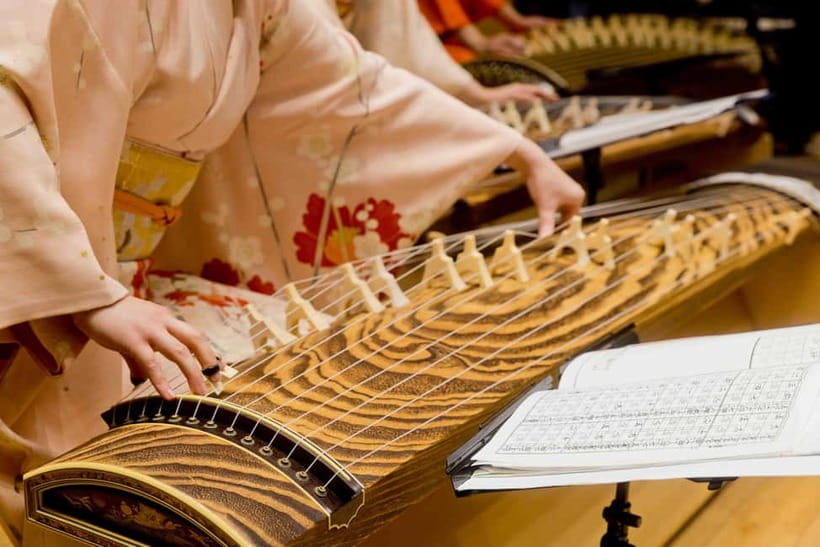
The most appealing part of this Tokyo show is the close-up setting. You sit in a small numbered audience with musicians in kimono directly in front of you, watching the hands, strings, breath, and drumwork that create each sound. The program moves from ancient Japanese music to newer arrangements, with a western cover as a playful surprise.
I like the clear explanations of each instrument, and I like that the host works in English and Japanese rather than leaving you to guess at the meaning. You can also take photos and videos during the concert, then pose with the performers afterward. The main consideration is the short one-hour format: this is an introduction to Japanese music, not a full evening concert.
Key points to know before booking
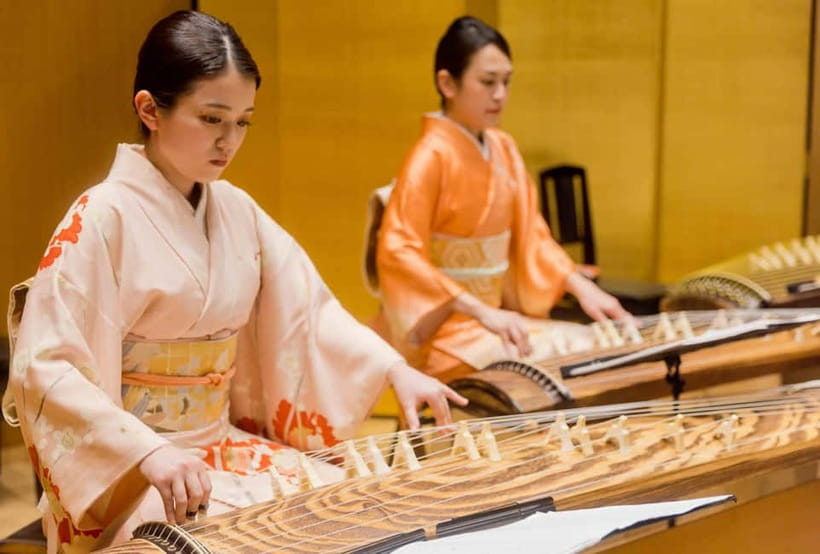
- Hear four very different Japanese instruments: The program features koto, shamisen, shakuhachi flute, and taiko drums, each with its own sound and playing style.
- Sit close to the performers: The limited, numbered seating gives the show a personal feel and lets you watch the musicians at close range.
- Get context in English: The host explains the instruments, the music, and the history of the pieces in English and Japanese.
- Expect old, new, and one surprise: The set includes traditional compositions, modern Japanese music, and a western hit played on Japanese instruments.
- Photos are part of the experience: Recording is allowed during the show, and you can take pictures with the musicians afterward.
- Reach it easily from Harajuku: Hall 60 is one minute from Meiji-Jingumae Station Exit 7 and about five minutes from JR Harajuku Station’s Omotesando Exit.
A close look at Japanese music in central Tokyo
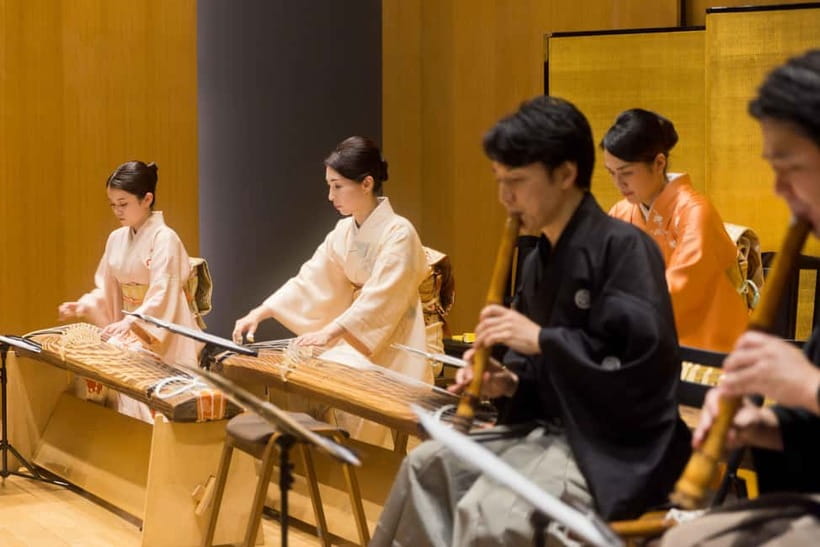
Tokyo offers grand concerts, formal theaters, and noisy pop districts. ZAKURO SHOW gives you something more focused: a one-hour introduction to wagakki, the broad Japanese term for traditional instruments.
The setting matters. You are not watching from the back of a large hall. The audience is small, seats are numbered, and the musicians sit or perform right in front of you. That makes it easier to notice the details that can disappear in a bigger production, such as the movement of a shamisen pick, the shape of a koto, or the force behind a taiko strike.
I especially like this format for a first encounter with Japanese music. You get enough performance time to hear the instruments in action, but you also receive explanations that help you understand what you are hearing.
The show is designed for both international visitors and Japanese residents. Its English and Japanese presentation makes it approachable if you do not know the names of the instruments or the customs surrounding traditional performance.
Other experiences people book in Tokyo:
- Mt Fuji and Hakone 1-Day Bus Tour Return by Bullet Train
★ 5.0 · 26,383 reviews - 1-Day Tokyo Bus Tour
★ 5.0 · 14,250 reviews - Tokyo: TOKYO SKYTREE® Admission ticket
★ 4.5 · 11,192 reviews
What happens during the one-hour program
The exact order of the pieces is not listed, so you should think of the program as a guided concert rather than a fixed sightseeing itinerary with separate stops. The host introduces the instruments and provides background on the music between performances.
The koto, often described in English as a Japanese harp, gives the program its bright string sound. You will hear the musicians explain the instrument and then hear how it works in a full piece. The demonstration is useful because the koto can look simple at first glance, while its playing technique creates a wide range of tones.
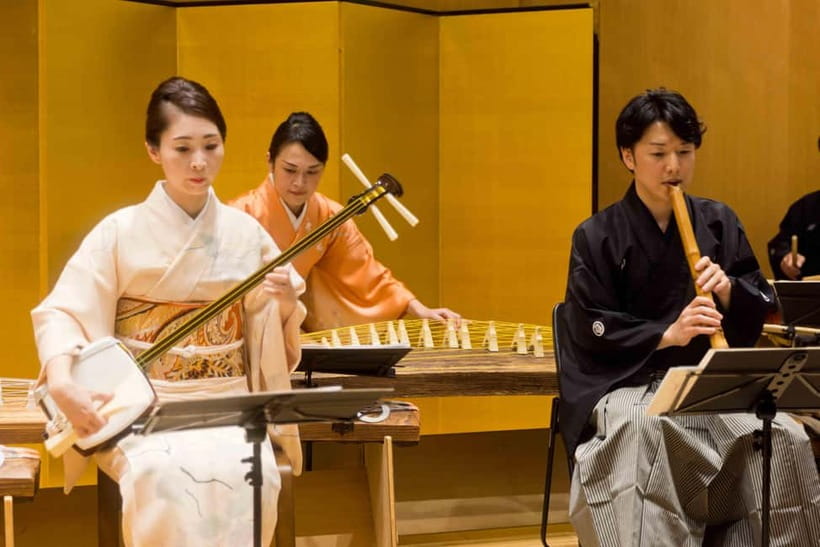
The shamisen brings a sharper, more rhythmic string sound. Its long neck and distinctive body make it easy to recognize, but hearing it live gives you a better sense of its character. It can sound delicate, brisk, or forceful depending on the piece and the playing style.
The shakuhachi is a bamboo flute with a breathy tone. It provides a strong contrast to the strings and drums. The explanations help you understand why the instrument sounds so different from a standard concert flute.
Taiko drums provide the most physical part of the program. The sound is direct and powerful, and the small hall allows you to feel the contrast between the quiet instruments and the drum sections. If you are attending with children or teenagers, this change in energy can help keep the hour engaging.
The music is not limited to old compositions. The program joins ancient and modern Japanese traditional music, then adds a western hit played through Japanese instruments. That final idea is more than a novelty. It helps you compare familiar musical patterns with the tones of the koto, shamisen, shakuhachi, and taiko.
One useful feature is the way the explanations are placed between pieces. You are not asked to sit through a long lecture before the concert begins. Instead, the information arrives in smaller parts, giving you a reason to listen differently to the next selection.
Why the explanations matter
Traditional music can be hard to approach when you do not know the instruments, the period of the music, or what to listen for. Without context, a short performance may sound pleasant but remain distant.
The host helps close that gap. The presentation covers the history of the instruments and the pieces, as well as how the instruments are made and played. English translation is provided, so you can follow along even if your Japanese is limited.
This is one of the strongest reasons to book the show instead of simply searching for a performance online. A recording can give you the sound, but it cannot explain why the instruments look and work as they do. Here, the teaching is part of the concert.
The explanations are also useful for mixed groups. A music enthusiast can listen closely to technique, while someone who knows little about Japanese music can follow the basic story. The program is not aimed only at trained musicians.
I would not expect a detailed academic lecture. The one-hour length requires the host to keep things moving. You receive a practical introduction, clear translation, and enough background to make the music easier to understand.
The small venue changes the experience
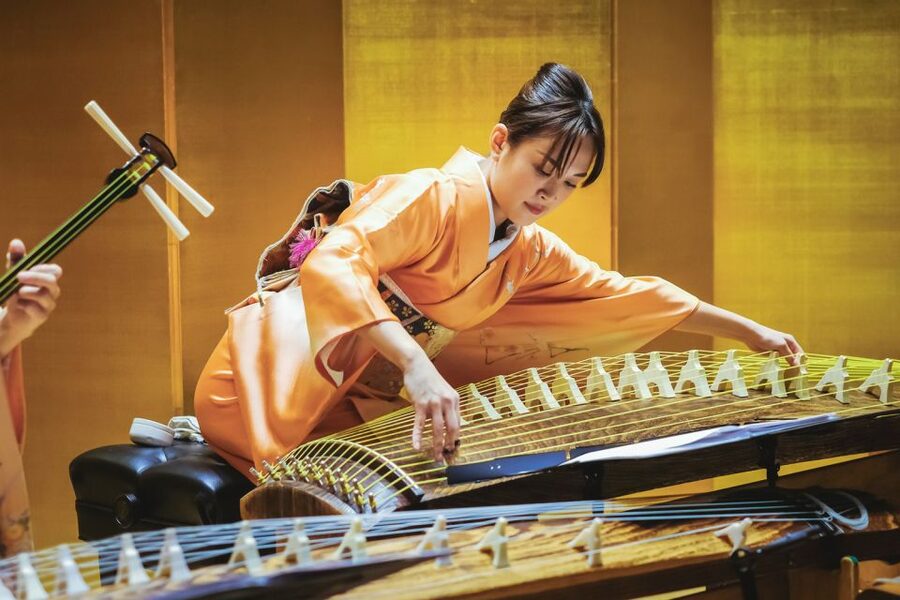
The limited audience is one of the show’s best features. In a large theater, you may admire the overall performance but lose the fine points. At Hall 60, you can watch the performers and instruments at close range.
That closeness is especially valuable during the quieter pieces. You can see the musicians’ hands and posture, then notice how the sound changes when the program shifts to a different instrument. The taiko sections benefit from the same setup, since the power of the drums does not need a huge stage to make an impression.
Small seating also means you should treat your reserved seat as part of the booking value. You are paying for a carefully limited audience rather than an open, crowded event. The numbered seating removes some uncertainty once you arrive.
There is a tradeoff. A small room cannot offer the scale or theatrical sweep of a major concert hall. If you want a large orchestra, elaborate staging, or a two-hour formal performance, this show may feel brief. If you want access and explanation, the intimate format works in its favor.
Same base, a different sort of day:
- Tokyo: teamLab Planets TOKYO Digital Art Museum Entry Ticket
★ 4.6 · 9,779 reviews - Mt Fuji & Hakone Cruise, Drum Show Bullet Train 1 Day from Tokyo
★ 4.0 · 7,413 reviews - Tokyo: Sumo Show Experience with Chicken Hot Pot and a Photo
★ 4.8 · 6,678 reviews - Tokyo: Shinjuku Food Tour (13 Dishes at 4 Local Eateries)
★ 5.0 · 6,603 reviews
Photos, videos, and meeting the musicians
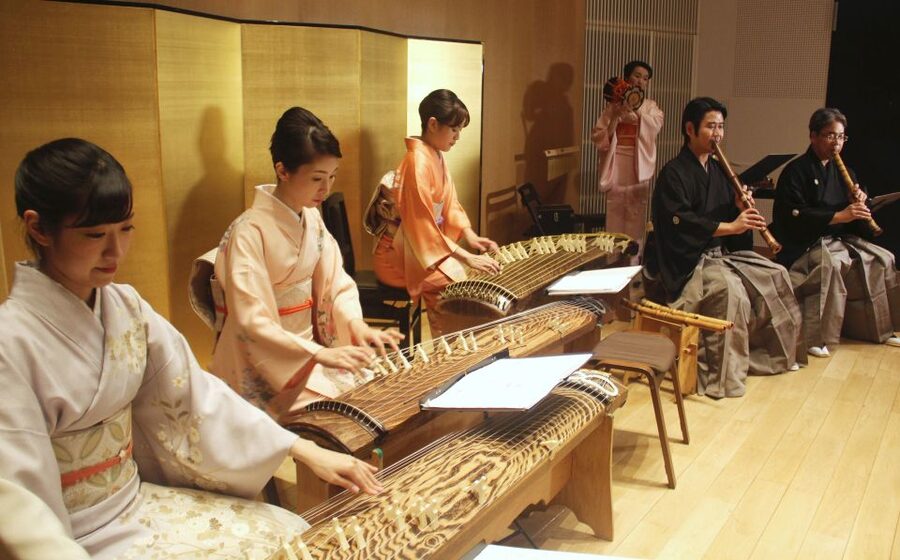
Many cultural performances ask you to keep your phone away. Here, photos and videos are allowed during the show, which makes the event useful for families and younger audiences who want a personal record of the music.
Use that permission thoughtfully. You can record portions of the performance, but it is still worth putting the phone down for some pieces so you can concentrate on the live sound. The close seating means you may capture better detail than you would from a distant stage.
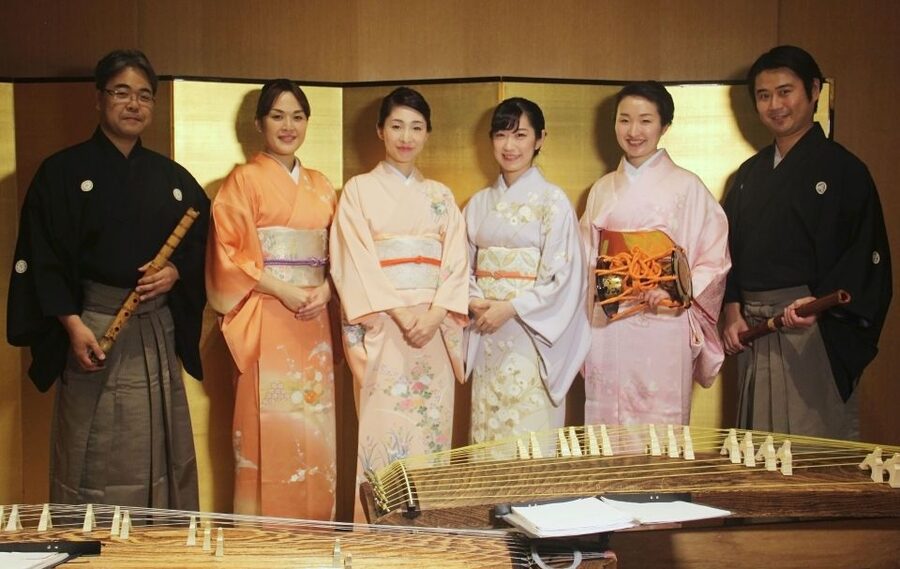
The photo opportunity continues after the concert. You can take pictures with the musicians and their instruments, giving the experience a friendly ending rather than a simple exit after the final note.
This also makes the show a good choice for a special family outing. Teenagers can record the performance, while younger children can see the instruments up close. The combination of live music, short explanations, and a surprise song gives the hour a clear rhythm.
Location near Harajuku makes scheduling simple
Hall 60 is in a convenient part of Tokyo. From Meiji-Jingumae Station, use Exit 7, and the venue is about a one-minute walk away. From JR Harajuku Station, use the Omotesando Exit and allow about five minutes on foot.
That location makes the show easy to pair with time around Harajuku and Omotesando. You can schedule it before or after shopping, sightseeing, or a meal in the area. The short duration is helpful if you want to add a cultural activity without giving up an entire afternoon or evening.
The meeting point is specific, so check that you are heading to Hall 60 rather than simply navigating to Harajuku Station. Starting times vary, and availability should be checked when you choose a date.
The experience includes entry, a reserved seat, and the one-hour concert. Hotel pickup and drop-off are not included, nor are food, drinks, or merchandise. Since the venue is close to major rail stations, arranging your own transport should be straightforward.
The venue is wheelchair accessible. If you need particular seating arrangements, confirm the details when booking so the reserved-seat system works well for you.
Is $38 a fair price?
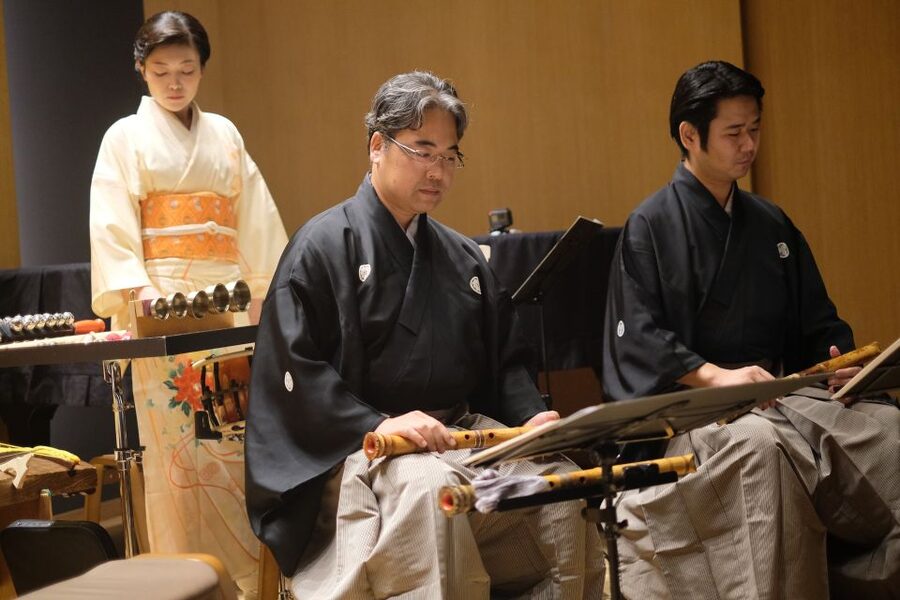
At $38 per person, this is not the cheapest way to hear live music in Tokyo. It is also more than a casual street performance or a free cultural event. The value comes from the combination of four elements: live musicians, a small audience, English explanation, and the chance to photograph the performers afterward.
A one-hour program can sound short for the price. I would judge it by what you want from the evening. If you are looking for a full concert with several acts and an extended program, you may prefer a larger performance. If you want a well-organized introduction that fits neatly into a busy Tokyo schedule, the price is easier to justify.
The teaching adds real value. You are not only hearing a koto, shamisen, shakuhachi, and taiko. You are learning how they differ and why they matter in Japanese music. That makes the experience more useful than a concert where you receive no explanation.
The small audience is another part of the price. Close seating and direct contact with the musicians can be hard to find in a large city. For someone with a serious interest in Japanese culture, the combination is likely worth the admission cost.
Who will enjoy ZAKURO SHOW most?
I would recommend this show to anyone visiting Tokyo for the first time who wants a manageable introduction to Japanese traditional music. You do not need prior knowledge, and the English guidance keeps the presentation easy to follow.
It is also well suited to:
- Couples looking for a cultural evening near Harajuku
- Families with teenagers who want to take photos and videos
- Music fans interested in unusual instruments and playing styles
- Visitors who have already seen temples and gardens and want a live cultural activity
- Japanese residents who want a short concert with both old and modern material
The program may be less suitable if you dislike explanation during a concert. The host’s information is central to the experience, not an optional extra. It is also not the best match for someone seeking a long, formal concert or a large-scale stage production.
The western cover helps make the program accessible, but it should not be the main reason you book. The heart of the show is the traditional music and the chance to hear the instruments in their intended setting.
Practical booking advice
The show offers free cancellation up to 24 hours before the start time, and you can reserve now and pay later. That is useful in Tokyo, where weather, train delays, and changing plans can affect a busy itinerary.
Book ahead if the small audience is important to you. Limited seating is part of the appeal, but it also means there are fewer places in each performance. Check the available starting times and plan your Harajuku schedule around the concert rather than assuming you can arrive at any point.
Arrive at the stated meeting point, Hall 60, and allow enough time to locate the venue. Meiji-Jingumae Station is the closest option, while JR Harajuku Station is also within a short walk.
No food or drinks are included, so plan those separately. Merchandise is also not part of the ticket. The ticket covers the venue entry, your reserved seat, and the concert itself.
Should you book this Tokyo music show?
I would book ZAKURO SHOW if you want a short, personal, and understandable introduction to Japanese music. The strongest reasons are the close seating, the clear English guidance, the range of instruments, and the unusual mix of traditional pieces, modern arrangements, and a western song.
The one-hour length is both its strength and its limit. It fits neatly into a Tokyo day, but it will not satisfy someone hoping for a long concert. At $38, the value depends on how much you care about context and access.
For a first visit to Japan, this is a smart cultural choice. You hear instruments you may not encounter elsewhere, learn what makes them different, and leave with photos of the musicians. If that sounds more appealing than another large sightseeing attraction, reserve a seat while the intimate format remains available.
FAQ
Where is the Japanese Traditional Music Show held?
The show takes place at Hall 60. It is about a one-minute walk from Meiji-Jingumae Station Exit 7 and about a five-minute walk from JR Harajuku Station’s Omotesando Exit.
How long does the concert last?
The concert program lasts one hour.
Which instruments are performed?
The program features the koto, also described as a Japanese harp, shamisen, shakuhachi flute, and taiko drums.
Is the show presented in English?
Yes. The host or greeter speaks English and Japanese, and the program provides explanations and translation for the audience.
Can I take photos and videos?
Yes. Photos and videos are allowed during the show. You can also take pictures with the musicians afterward.
Is the venue wheelchair accessible?
Yes. The activity is listed as wheelchair accessible.
Just added in Tokyo
- The 10 Tastings of Tokyo With Locals: Private Street Food Tour★ 5.0 · 48 reviews
- Small Town in the Big City: Tasting Tokyo’s Kichijoji★ 5.0 · 195 reviews
- Small Town in the Big City: Tasting Tokyo’s Kichijoji★ 5.0 · 16 reviews
- EXCLUSIVE Tokyo Secret: Kichijoji Small-Group Food & Bar Hopping★ 5.0 · 29 reviews
- Explore Kichijoji: Walk Through One of Tokyo’s Beloved Districts★ 5.0 · 21 reviews
- :Tokyo,Shibuya/ Pro Photography in Kimono / English-Friendly★ 5.0 · 26 reviews
- 【R34】Tokyo:Private Daikoku tour in Modified R34★ 4.9 · 92 reviews
- Tokyo:Calligraphy &Make your original folding fan in Asakusa★ 5.0 · 62 reviews
Tours in Tokyo, compared.

Mt Fuji and Hakone 1-Day Bus Tour Return by Bullet Train
Read our review →

teamLab Planets TOKYO Digital Art Museum Entry Ticket
Read our review →
Mt Fuji & Hakone Cruise, Drum Show Bullet Train 1 Day from Tokyo
Read our review →
Sumo Show Experience with Chicken Hot Pot and a Photo
Read our review →
Shinjuku Food Tour (13 Dishes at 4 Local Eateries)
Read our review →