
Reviewed · SAMURAI & NINJA EXPERIENCES
Kendo and samurai experience in Kyoto
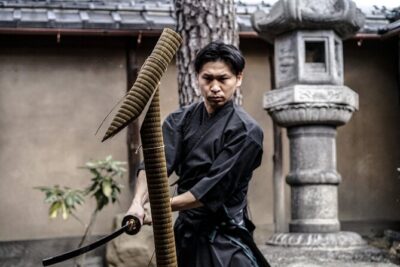
The most memorable part of this Kyoto experience is the hands-on sword training. At Atelier NIN near Shugakuin Imperial Villa, you learn how to hold, draw, and swing a Japanese sword, then practice the disciplined movements of kendo under an instructor’s close watch.
I like the private-class feel, which gives your teacher time to correct your posture and answer questions. I also like the mix of real technique, samurai customs, training gear, and photo opportunities. Guides named Taka, Kengo, Hayato, and Matsudaira Takato have led sessions, depending on the booking.
The main caution is important: tatami mat cutting is not guaranteed. Some sessions have included it, while others have not, and a recent legal change may prevent the activity from being offered. Confirm the current program before paying if that is your main reason for booking.
Key points to know before booking
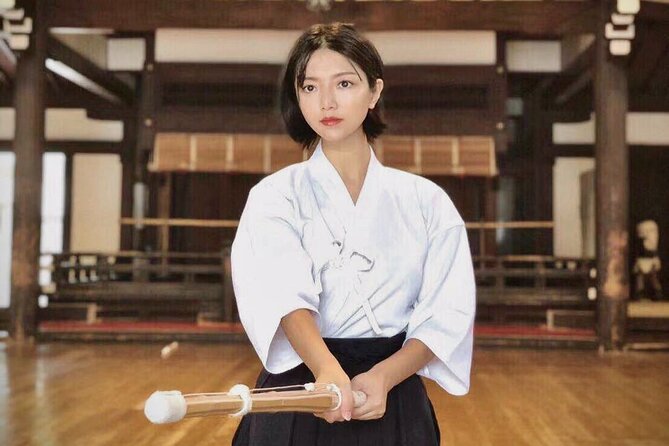
- Practice comes before performance: You learn posture, sword handling, and basic kendo movements rather than simply posing with a katana.
- Private attention matters: The instructor can adjust your grip, stance, and swing in a small group or private setting.
- Several training tools are used: Expect bamboo swords, foam swords, and blunt replica blades during the lesson.
- Traditional clothing may vary: Some sessions include samurai attire or kendo armor, but full uniform use is not guaranteed.
- Tatami cutting is uncertain: Past sessions have included it, but legal restrictions may mean it is no longer available.
- The location takes planning: The studio is in the Shugakuin area, away from central Kyoto, and can be hard to find if you arrive without checking directions.
A sword lesson, not just a costume photo
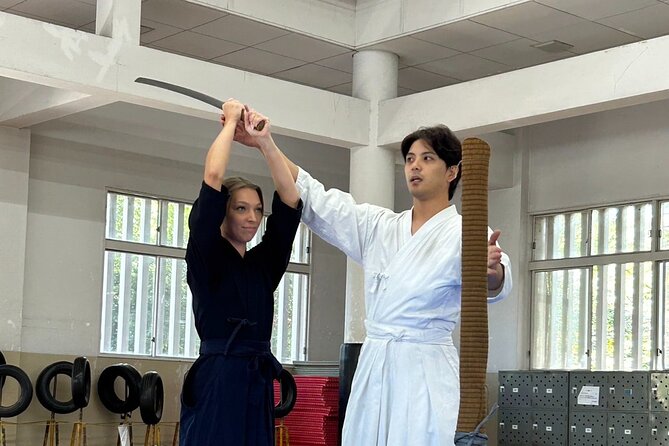
Kyoto offers plenty of ways to look at samurai culture from a distance. You can visit castles, museums, gardens, and old districts. This experience takes a different route. You do not simply watch a demonstration. You learn the basic actions yourself, with a teacher standing close enough to correct small mistakes.
That difference matters. Holding a sword safely, keeping your feet in the right position, and controlling the end of a swing require more care than a quick photo suggests. The class presents kendo and traditional swordsmanship as disciplined practices, not as movie combat.
You begin with an introduction to the history, customs, movements, and rules connected with kendo and samurai training. The instructor then shows you how to handle the equipment. Depending on the session, you may work with bamboo practice swords, foam swords, or blunt replica blades.
The setting is described as a small dojo or private home in the Shugakuin area. That can feel more personal than a large commercial attraction, but it also means you should not expect a grand museum or polished theatrical venue. One past complaint concerned a dusty, run-down interior, so visitors who want a slick show may find the surroundings plain.
Other martial arts sessions in Kyoto:
- Kyoto: Kendo and Samurai Experience with Uniform and Gear
★ 4.9 · 815 reviews - Kyoto: Japanese Archery Workshop with Experienced Instructor
★ 4.9 · 132 reviews - Kyoto 2 Hours Genuine Kendo / Samurai Experience In Japan
★ 5.0 · 57 reviews
What happens during the two-hour session
The advertised duration is about two hours. That sounds generous for a short introduction, but the clock includes changing clothes, explanations, photographs, and practice. If you want extended combat drills or a long technical lesson, keep your expectations in check.
The opening usually focuses on basic form. You learn how to stand, how to hold the sword, and how to move with control. The teacher explains the names and purpose of the actions, then gives you time to repeat them.
You may also learn how to take a sword in and out properly. This small ritual helps explain the respect built into Japanese sword traditions. The class is not only about making a strong swing. It is about making a safe, controlled movement with the correct posture.
Kendo practice adds another layer. Kendo uses bamboo swords and formal movements, and the instructor introduces the basic spirit of the sport. Some sessions include light sparring or practice against another member of your group. That possibility makes the class more active, but it should not be treated as a full martial arts course.
The pace is generally forgiving. You do not need previous martial arts experience, and the teacher works with beginners. If you are nervous about handling a sword, that is exactly the sort of concern this format can address. You receive direct help rather than trying to copy a distant demonstration.
The value of a private or nearly private class
The experience allows a maximum of 15 people, but the actual session may be much smaller. A group of five once found that nobody else had booked their time, so they received what was effectively a private class.
That possibility is a real advantage. Sword handling depends on details that are easy to miss in a crowd. A good instructor can spot a bent wrist, a poor stance, or a swing that uses too much force. The class becomes more useful when the teacher can slow down for you.
Several instructors have been praised for patience and a friendly manner. Taka has been described as an excellent teacher, while Kengo has helped late arrivals find the studio and taken photos during the session. Hayato and Matsudaira Takato have also been named in connection with particularly memorable classes.
Instructor quality can vary by date. English ability may also vary. Some sessions are easy to follow in English, while another participant found communication slower and needed Google Translate. That does not make the lesson impossible, since the movements can be demonstrated, but it may limit detailed discussion about technique or history.
Clothing, armor, and photographs
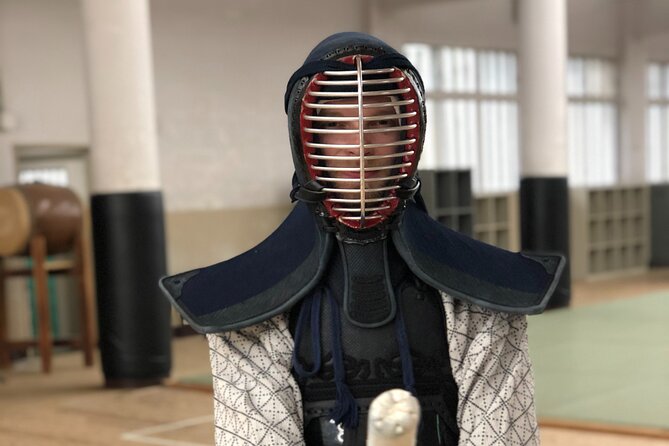
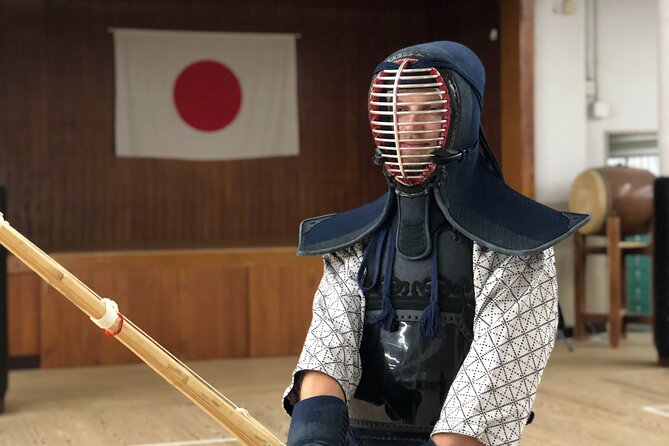
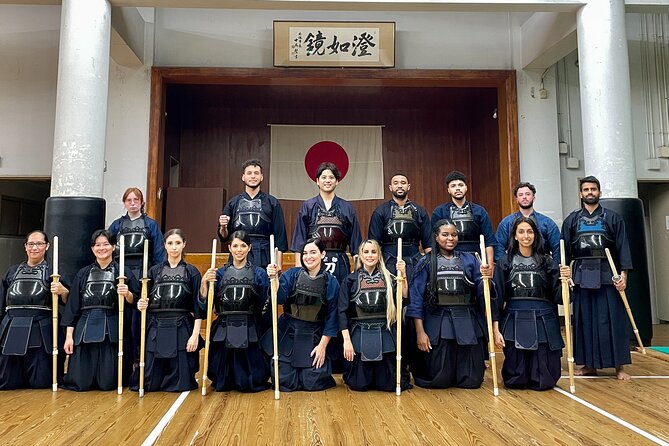
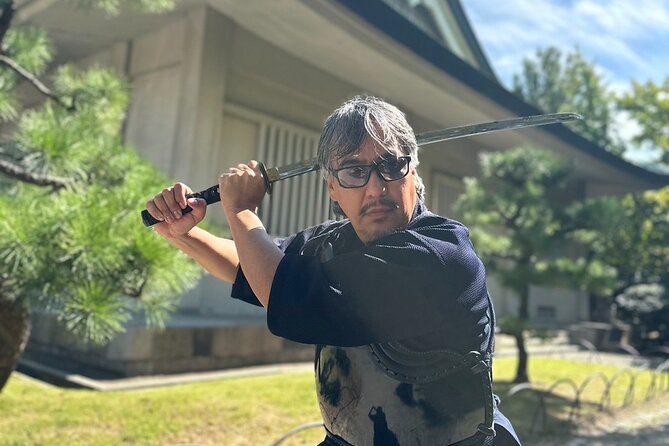
One appealing part of the experience is the chance to wear traditional training clothing. Some sessions have included samurai attire, kendo armor, or both. The clothing helps you understand how the equipment affects movement and makes for strong photographs.
Still, do not assume that you will wear the full uniform. One unhappy participant saw only a helmet and did not get dressed in complete armor. The exact costume setup appears to depend on the session, equipment, and current operation of the studio.
Photography is built into the experience. The instructor may help take photographs and videos, giving you a record of sword poses, kendo practice, or a formal stance. This is useful for families and groups, especially when everyone wants to be in the frame.
The photo element also takes time. If you care more about learning than posing, say so early and ask the instructor to keep the camera portion short. If you want a souvenir-style session, the photos add value to the price.
Other swordplay and stealth sessions in Kyoto:
- Kyoto Samurai Experience
★ 5.0 · 1,294 reviews - Kyoto: Samurai Sword Class by Experts in Traditional Arts
★ 4.9 · 657 reviews - Skip the lines Basic Ticket at SAMURAI NINJA MUSEUM KYOTO
★ 4.5 · 632 reviews - Ninja 1-hour Hands-on Lesson by Japanese master in Kyoto -Entry
★ 5.0 · 489 reviews
The tatami cutting question
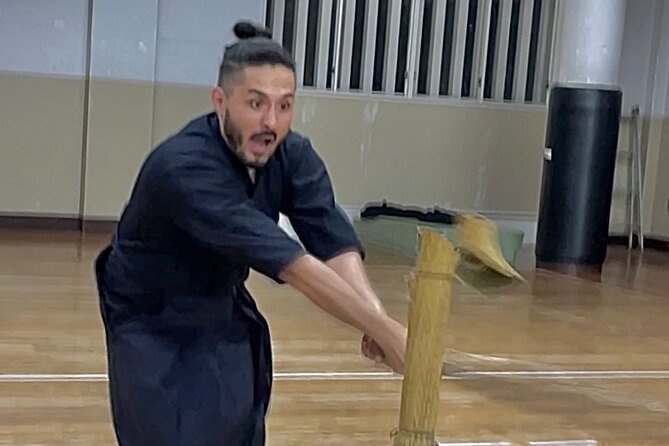
Tatami cutting is the point that needs the clearest warning. The original program has described slicing a tatami mat with a sword, and some participants have completed that exercise. Others arrived expecting it and did not get the chance.
The reason given for the change is a recent law in Japan that may prevent the studio from offering tatami cutting legally. This is not a minor detail. For many people, cutting a rolled tatami mat is the main reason to choose a sword experience rather than a standard kendo lesson.
Treat it as an optional possibility, not a promise. Ask the provider directly before booking, and ask again if the answer matters to your decision. Also ask what kind of blade and supervision will be used. The supplied information confirms that training includes blunt replica blades, but it does not guarantee that a live blade exercise remains part of every session.
If tatami cutting is unavailable, the class still offers sword handling, kendo basics, cultural explanation, and photographs. That may be enough for you. If the cutting demonstration is essential, book only after receiving a clear current answer.
Why Shugakuin changes the feel of the visit
The meeting point is at studio NIN, at 16 Shugakuin Daidocho in Sakyo Ward. The activity begins and ends there, near Shugakuin Imperial Villa.
This is not a central Kyoto stop that you can casually add between Nishiki Market and Gion. The studio is in the outskirts of the city, and finding it can be difficult if you rely on street signs or expect a busy commercial area. One person nearly gave up after getting lost, while another found the quieter setting a welcome break from central Kyoto.
Plan extra time to reach the meeting point. Use the exact address, check the route before leaving, and avoid arriving at the last minute. The provided information confirms that the location is near public transportation, but it does not give a specific station, walking time, or train route, so check those details for your own starting point.
The quiet setting can be part of the appeal. You are not performing in a crowded tourist district. You are visiting a small training space where the lesson can feel more personal and less like a stage show. The trade-off is convenience and polish.
Is $105.68 a fair price?
At $105.68 per person, this is not a cheap photo stop. You are paying for about two hours of instruction, equipment, a small-group format, and the chance to handle swords under supervision.
The price makes more sense if you value personal teaching. A short group demonstration elsewhere may cost less, but it may not give you time to repeat movements or ask questions. Here, the instructor’s attention is the main product.
The value drops if you expect a large dojo, a full historical presentation, guaranteed armor, or tatami cutting. The surroundings may be modest, the English may not be equally strong with every instructor, and changing and taking photos can reduce practice time.
For a group of friends or a family, the price can feel more reasonable because the session may become nearly private. It is also a good fit for someone who has already visited Kyoto’s major sights and wants an activity that involves participation rather than more viewing.
I would compare this experience with your priorities. If you want a serious multi-day martial arts course, this is too short. If you want a safe introduction with cultural context and memorable photographs, it offers a useful two-hour format.
Who will enjoy this experience most?
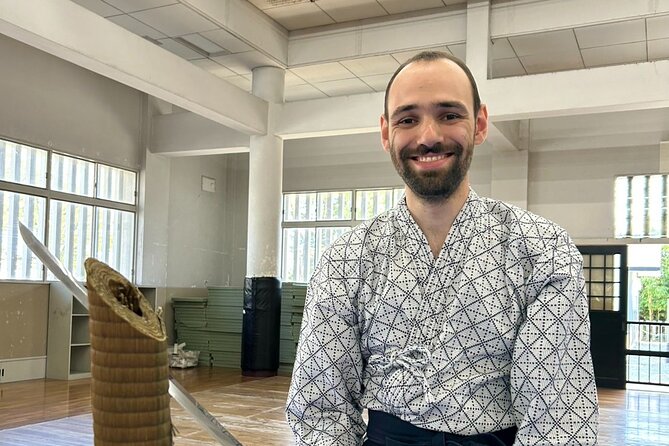
You are likely to enjoy the class if you are curious about Japanese martial arts, enjoy learning by doing, or want a different kind of Kyoto memory. It suits beginners because no martial arts background is required.
It works especially well for small groups. Friends can practice together, take turns with photographs, and possibly try light sparring if the instructor includes it. Families may enjoy it too, though the supplied information does not set a minimum age, so ask the provider about children before booking.
Fans of samurai films, manga, anime, or Japanese history will find plenty to enjoy. The lesson connects the outward image of the samurai with details such as posture, etiquette, movement, and control.
You may want to skip it if you dislike changing clothes, staged photos, or instruction that moves between history and basic drills. You should also reconsider if your main goal is tatami cutting and the provider cannot confirm that feature.
Service animals are allowed, and most people can participate. The experience is not presented as physically demanding, but the class does involve standing, handling equipment, and repeating movements. Ask the provider directly about any personal mobility concern not covered in the supplied details.
Practical timing and cancellation advice
The session lasts approximately two hours and returns you to the meeting point. Allow extra time for the journey to Shugakuin, since the area can be confusing to reach and the activity does not end in central Kyoto.
Confirmation is provided when you book. The maximum group size is 15, although the session may be much smaller. The activity requires a minimum number of participants, so a cancellation for that reason may lead to another date or a full refund.
You can cancel for a full refund up to 24 hours before the start time. Changes or cancellations made within 24 hours are not accepted for a refund, and cut-off times follow local Kyoto time. That policy makes it wise to settle your transport plans before the final day.
Should you book it?
Book this experience if you want close instruction, basic kendo, sword-handling practice, and a personal look at samurai culture. The strongest parts are the patient teaching, the chance to repeat real movements, and the possibility of a small or private class.
Before booking, contact Atelier NIN about three points: who will teach your session, what clothing will be available, and whether tatami cutting is currently legal and included. Those answers will determine if the $105.68 price feels worthwhile to you.
I would recommend it to curious beginners and small groups who value participation over a polished attraction. I would not book it solely for the tatami cut unless that feature is confirmed in writing.
FAQ
Where does the kendo and samurai experience take place?
It takes place at studio NIN, 16 Shugakuin Daidocho, Sakyo Ward, Kyoto, 606-8037, near Shugakuin Imperial Villa. The activity begins and ends at the studio.
How long does the experience last?
The experience lasts approximately two hours, including instruction, equipment use, changing, and photographs.
How much does it cost?
The listed price is $105.68 per person.
Do I need martial arts experience?
No. The class is designed for beginners, and the instructor teaches basic sword handling and kendo movements in a supportive setting.
What equipment will I use?
Training may include bamboo practice swords, foam swords, and blunt replica blades. The instructor explains how to handle the equipment safely.
Will I wear samurai clothing or kendo armor?
Traditional clothing, samurai attire, or kendo armor may be available, but full uniform use is not guaranteed for every session. Confirm the current arrangement before booking if clothing is important to you.
Is tatami mat cutting included?
Tatami cutting is not guaranteed. Some sessions have included it, while others have not, and legal changes may prevent it from being offered. Confirm the current program directly with Atelier NIN.
How many people can join?
The maximum group size is 15 people. A session may be much smaller and can sometimes function as a private class if no other bookings are made.
Can I cancel for a full refund?
Yes. You must cancel at least 24 hours before the experience start time for a full refund. Cancellations or changes made less than 24 hours in advance are not refunded or accepted.
Just added in Kyoto
- Private Cooking Class Udon in Kyoto Japan★ 5.0 · 23 reviews
- Your Private Vacation Photography Session In Kyoto★ 5.0 · 110 reviews
- Kyoto: Zen Meditation at a Private Temple with a Monk★ 5.0 · 25 reviews
- Private Pewter Sake Cup Experience with a Kyoto Artisan★ 5.0 · 31 reviews
- Kyoto Wagashi(Japanese sweets) Cooking Class near Fushimiinari★ 5.0 · 60 reviews
- Kyoto:Family-Friendly Kimono & Yukata Experience at WARGO★ 5.0 · 147 reviews
- Private Guided Traditional Buddhist Cooking in Japan★ 5.0 · 16 reviews
- Kyoto: Gion Geisha District & Sake-in-Hand Walking Tour★ 5.0 · 37 reviews
Samurai & Ninja Experiences, compared.
Samurai Ninja Museum Guided tour and Experience
Read our review →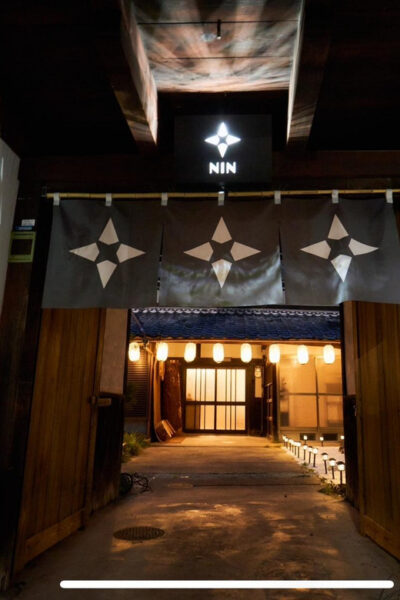
Kendo and Samurai Experience with Uniform and Gear
Read our review →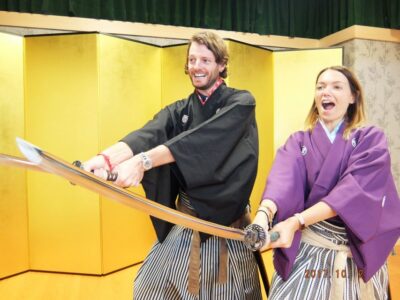
Samurai Sword Class by Experts in Traditional Arts
Read our review →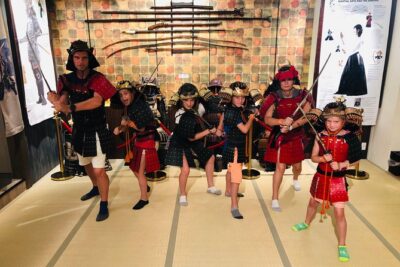
Skip the lines Basic Ticket at SAMURAI NINJA MUSEUM KYOTO
Read our review →
Samurai Sword & Archery Class from Samurai Descendant
Read our review →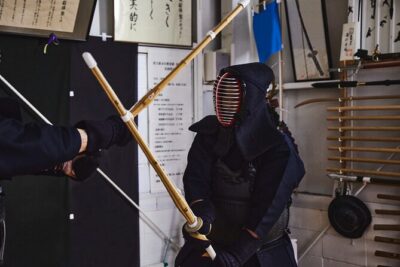
Browse the lists this tour appears in