
Reviewed · SAMURAI & NINJA EXPERIENCES
Kyoto 2 Hours Genuine Kendo / Samurai Experience In Japan
Kendo here is more than swinging a bamboo sword. In a Kyoto dojo, you learn the rules, bowing, footwork, armor, and the focused habits behind this Japanese martial art. Takahiro Hayashi and other experienced instructors guide beginners in English, so you are not left guessing at every command.
I like two things right away: the class gives you real hands-on practice, and it connects each movement to manners and lifelong discipline. The progression from warm-up to footwork, dummy practice, and friendly matches also keeps the two hours moving.
The main drawback is physical heat and effort. The outfit can get warm, and the class calls for moderate fitness. A group can also reach 30 people, so the amount of personal attention may vary.
Key points for your Kyoto kendo lesson
- Meet at Hanazono Station: Your instructor meets you at the station and walks you to the dojo, less than five minutes away.
- Learn the customs first: Bowing, etiquette, terminology, and the basic rules are part of the lesson, not an afterthought.
- Practice with full equipment: Kendo armor and bamboo swords are included, along with a towel and bottled water.
- Build skills in stages: You work through warm-ups, footwork, strikes against a dummy, and practice bouts.
- Learn in English: The instructors have experience teaching English-speaking beginners and explain the basics in clear terms.
- Expect a workout: The clothing can feel hot, and you should have a moderate level of physical fitness.
What this Kyoto kendo experience really offers
This two-hour activity gives you a practical introduction to kendo, not a staged samurai performance. You learn how the sport works, how to behave in the dojo, and how the body, mind, and sword movements fit together.
That difference matters. Kendo has a strong physical side, but the lesson also presents it as a way to unify spirit, practice good manners, and keep learning over a lifetime. You will not master the art in one morning, of course. You will, however, gain a better sense of why a simple bow or precise step matters.
The class is held in Kyoto, a city where many visitors spend their time looking at temples and gardens. This experience gives you a different connection to Japanese culture. You are not only observing a tradition through glass or from a viewing platform. You are taking part in a supervised lesson and trying its basic forms yourself.
The instructors have decades of experience in kendo, and the teaching team includes a 7th Dan master. That level of experience does not turn you into a skilled fighter in two hours, but it does give the session a firm base. The teachers can show beginners what to do while keeping the atmosphere safe and friendly.
Other martial arts sessions in Kyoto:
- Kyoto: Kendo and Samurai Experience with Uniform and Gear
★ 4.9 · 815 reviews - Kyoto: Japanese Archery Workshop with Experienced Instructor
★ 4.9 · 132 reviews - Kendo and samurai experience in Kyoto
★ 4.5 · 47 reviews
Meeting at Hanazono Station
The meeting point is Hanazono Station on the San-In line, at Hanazonoteranouchicho in Kyoto’s Ukyo Ward. Your instructor meets you at the station and walks with you to the dojo, which is less than five minutes away.
That short station transfer is useful. You do not have to search for an unfamiliar building in a residential part of Kyoto, and you can ask questions before the lesson starts. Plan to arrive with enough time to find the station and meeting point before the 10:00 am start.
The station meeting also makes this activity easier to fit into a Kyoto day. You begin in the morning and finish back at the meeting point after about two hours. From there, you can continue sightseeing or return toward central Kyoto using public transportation.
The group may hold up to 30 people. That is a larger possible group for a hands-on martial arts class, so the amount of one-to-one correction can depend on attendance. The instructors have experience working with beginners, but you should not book this expecting a private lesson unless your reservation specifically says so.
Starting with bowing, rules, and dojo manners
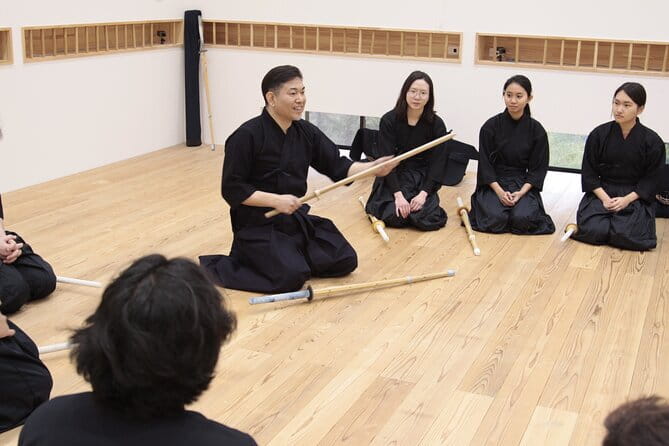
The opening part of the class sets the tone. You learn basic rules, terminology, and the etiquette used in kendo practice. Bowing is not decorative here. It shows respect for the instructor, practice partners, and the space where training takes place.
For many first-time participants, this is one of the most useful parts of the lesson. Without it, the activity could feel like a quick sword-fighting game. With it, you begin to understand that kendo asks for attention and self-control before speed.
The teacher also explains the cultural and spiritual side of the art. Kendo is presented through ideas such as unifying the spirit, practicing manners, and continuing throughout life. These ideas give context to the repeated movements and formal commands.
English instruction is a major advantage. Many kendo teachers in Japan do not teach in English, which can make a first lesson hard to follow. Here, the instructors are used to explaining kendo to English-speaking beginners, and the class breaks down the concepts instead of assuming you already know martial arts terms.
Warm-up and the first footwork drills
The physical portion begins with a warm-up. This prepares you for the movements ahead and helps you adjust to the clothing and equipment. You should expect to move, bend, and repeat basic actions rather than simply watch a demonstration.
Footwork comes early in the progression. That is a sensible choice. Kendo is not just about arm strength or hitting a target. Your stance, distance, timing, and forward movement all affect what happens next.
You may find the footwork more demanding than it first appears. The patterns are basic, but repeating them while listening to instructions takes concentration. This is also where the English explanations matter most. A small correction in foot placement or posture can make the later sword exercises easier to understand.
Wear clothing that allows movement under the kendo equipment. The supplied information does not set out a formal dress code, but the class is physical, and the outfit can become hot. A towel is provided, and bottled water is included, though bringing extra water may be sensible if you normally drink a lot during exercise.
Other swordplay and stealth sessions in Kyoto:
- Kyoto Samurai Experience
★ 5.0 · 1,294 reviews - Kyoto: Samurai Sword Class by Experts in Traditional Arts
★ 4.9 · 657 reviews - Skip the lines Basic Ticket at SAMURAI NINJA MUSEUM KYOTO
★ 4.5 · 632 reviews - Ninja 1-hour Hands-on Lesson by Japanese master in Kyoto -Entry
★ 5.0 · 489 reviews
Learning to handle the bamboo sword
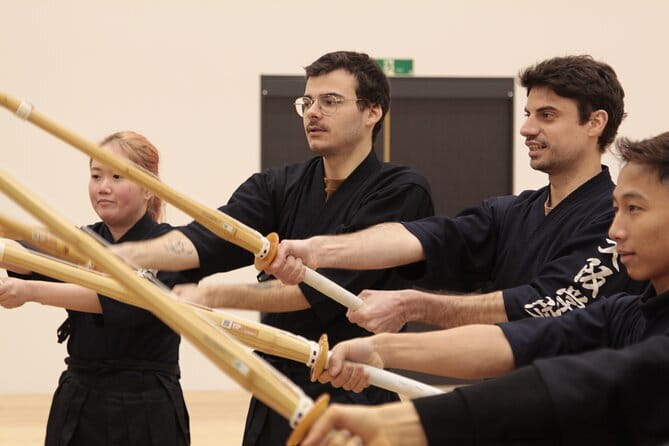
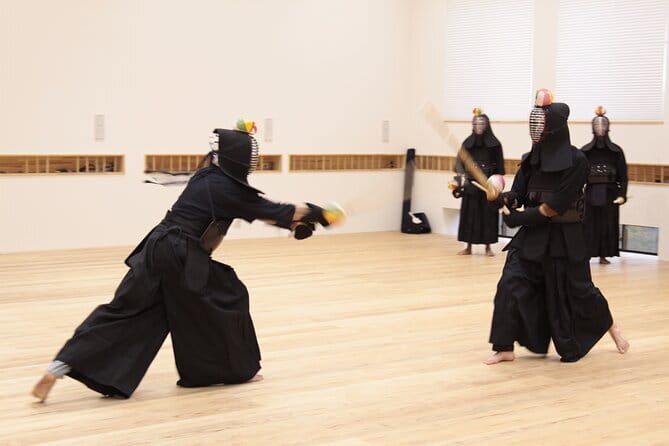
Once the basic movement is in place, you progress to the bamboo sword. The class introduces fundamental techniques and shows you how to use the weapon safely and correctly.
A practice dummy is part of the sequence described by participants in the class. Working against a dummy gives you a clear target and lets you concentrate on form before facing another person. You can focus on the motion, distance, and timing without worrying about an opponent moving toward you.
The bamboo sword makes the lesson feel active, but the emphasis remains on control. This is not a free-for-all. You follow the instructor’s directions and learn how the basic rules shape each movement.
The instructor may also explain how the equipment and armor work. Full kendo equipment is included in the price, so you do not need to arrange a rental separately. Learning how to use the armor is part of the experience and helps you see how formal kendo practice differs from a casual sword demonstration.
Putting on armor and learning the rules of a match
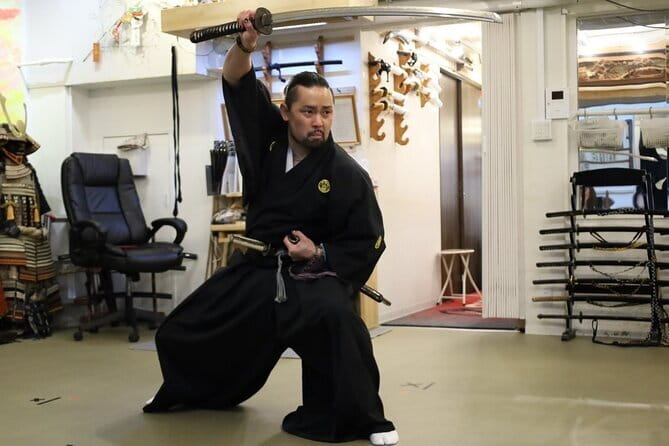
The armor is one of the most memorable parts of the session, but it changes the physical feel of the activity. It adds weight and warmth, and it can make simple movements feel more deliberate.
You learn the basic rules of kendo and how the protective equipment fits into practice. The lesson is designed as an entry point, so you do not need previous martial arts experience. Still, listening closely matters. Kendo depends on form, control, and proper conduct as much as contact.
If you are expecting movie-style swordplay, adjust your expectations. The class is about learning the foundations of a Japanese martial art. The armor and bamboo sword make the experience vivid, but the goal is not to stage a dramatic battle.
The safety guidance from experienced instructors is important here. The teachers have long kendo backgrounds, and the activity is described as suitable for beginners with moderate physical fitness. You should still tell yourself honestly if you have trouble with heat, repeated movement, or a strenuous two-hour session.
Finishing with friendly practice matches
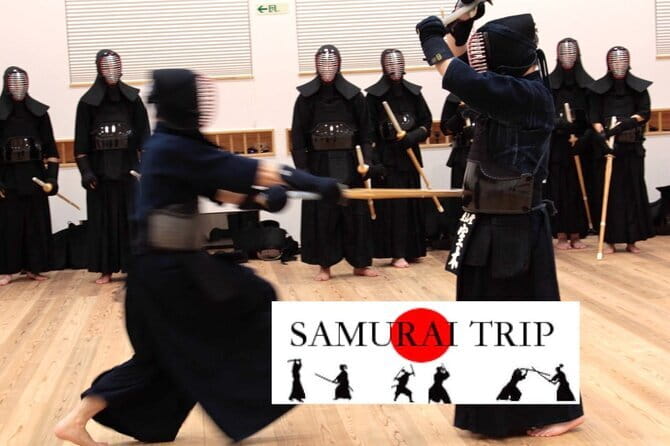
The class builds toward practice bouts. This is where the earlier lessons begin to make sense. Footwork, distance, rules, and the use of the bamboo sword all come together when you face another participant.
The match portion is a strong finish because it gives you a reason to use what you just learned. You are not expected to perform like an expert. The point is to try the movements in a controlled setting and experience the focus of kendo from the inside.
In a smaller group, you might even practice against the instructor. That can be exciting, but it also means you should keep your expectations realistic. A teacher may adjust the pace to your level, demonstrate a technique, or let you feel how difficult it is to create a clean opening.
The class includes friendly guidance rather than a harsh competitive mood. Families and first-time participants can take part, and the instructors are described as patient and encouraging. Still, the match is active, and you should be comfortable with moderate exercise before booking.
How the price compares with the experience
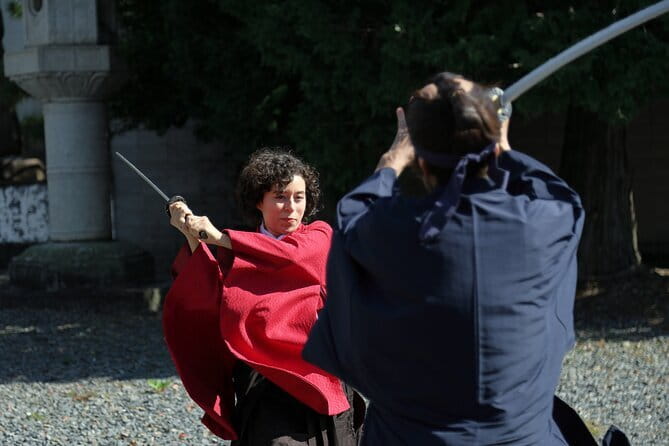
At $118.89 per person, this is not a cheap add-on activity. The value depends on what you want from your Kyoto visit.
The price includes all kendo equipment, a towel, and bottled water. You also receive about two hours of instruction, access to a dojo, English-language teaching, and practice with both a dummy and other participants. Those inclusions make the cost easier to justify than a short photo opportunity in borrowed costume.
You are paying for instruction and participation, not a sightseeing route. There is no food, hotel pickup, or hotel drop-off. If you want a martial arts lesson that gives you a real introduction to rules, etiquette, equipment, and practice, the price is reasonable for a specialized activity.
The value is strongest for people who have already seen Kyoto’s major temples and want something active. It is also good for families with older children, couples, solo visitors, and anyone curious about Japanese martial arts. It is less suitable if you want a quiet cultural talk, a low-effort activity, or a theatrical samurai show.
The activity is booked, on average, 44 days ahead. That suggests you should reserve early if the 10:00 am slot matters to your schedule. Confirmation arrives when you book, and free cancellation is available if you cancel at least 24 hours before the start time.
Staying comfortable during the two hours
The outfit can get hot. That is the most practical warning to take seriously. The dojo setting and physical work mean you may sweat, especially once you begin moving with armor and a bamboo sword.
A towel and bottled water are included, which helps. I would still wear light clothing under the equipment and plan your day so you are not rushing directly into another demanding activity. The activity ends at the meeting point, so you can take a break before continuing around Kyoto.
The physical requirement is listed as moderate fitness. You do not need to arrive as a trained athlete, and beginners are welcome, but you should be ready for a workout. Repeated footwork, warm-ups, equipment, and practice bouts require more effort than a standard cultural demonstration.
If heat or physical strain is a concern, consider the time of year and your own limits. The class is safe and guided, but safe does not mean effortless.
Who will enjoy this most
I would recommend this experience to you if you want to do something active and culturally grounded in Kyoto. It works especially well for:
- First-time kendo participants who want clear instruction in English
- Families looking for a shared activity beyond temples and shopping
- Martial arts fans who want to learn the basics from experienced teachers
- Visitors interested in Japanese etiquette and the mental side of training
- Solo visitors who enjoy structured, hands-on activities
- Anyone who wants photos and videos from a distinctive Kyoto experience
It may not suit you if you dislike uniforms, heat, formal etiquette, or physical repetition. It is also not the right choice if you expect to leave with advanced fighting skills. Two hours gives you an introduction, not a full education in kendo.
The possible group size of 30 is another factor. A large group can make the class lively, but it may reduce the time you spend receiving individual corrections. If personal coaching is your top priority, ask about the expected group size before committing.
Practical details before you book
The start time is 10:00 am, and the activity lasts about two hours. The class returns to the same meeting point at Hanazono Station.
You receive a mobile ticket and confirmation at booking. Public transportation is nearby, and the station meeting makes the final walk simple. Food and hotel transfers are not included, so plan your breakfast and onward transport separately.
The activity provider is SAMURAI TRIP. The instructors include Takahiro Hayashi, and the teaching team includes a 7th Dan master with more than 40 years of kendo experience. Those details matter because the quality of a beginner martial arts class depends heavily on clear demonstrations and patient correction.
The activity has a 100 percent recommendation record and a 5.0 rating from 57 reviews at the time of the supplied information. The strongest praise centers on the friendly teaching, clear progression, authentic setting, and the fun of the practice matches. Those are the parts I would value most when deciding if the price fits your trip.
Should you book this Kyoto kendo lesson?
Book it if you want a real beginner lesson with cultural context, not a costume photo session. You will learn bowing and etiquette, practice footwork and strikes, handle a bamboo sword, wear kendo equipment, and finish with controlled matches.
The best reason to choose it is the combination of hands-on training and Japanese manners. The English instruction from experienced teachers makes a difficult art approachable, while the dojo setting keeps the activity grounded in actual practice.
Skip it if you want a relaxed morning or have concerns about heat and moderate exercise. For everyone else, this is a strong choice for a different side of Kyoto, especially if you reserve ahead and arrive ready to listen, move, and sweat a little.
FAQ
Where does the kendo experience begin?
The activity begins at Hanazono Station in Kyoto’s Ukyo Ward. The instructor meets you there and walks you to the dojo, which is less than five minutes away.
What time does the class start?
The class starts at 10:00 am and lasts about two hours.
Is kendo equipment included?
Yes. All kendo equipment is included, along with a free kendo towel and bottled water.
Is the lesson taught in English?
The instructor has experience teaching kendo in English and can explain the basic rules and techniques to English-speaking beginners.
How physically demanding is the activity?
You should have a moderate level of physical fitness. The class includes warm-ups, footwork, equipment, bamboo-sword practice, and matches, and the outfit can become hot.
Can I cancel for a full refund?
Yes. You can receive a full refund if you cancel at least 24 hours before the experience start time. Changes or cancellations made less than 24 hours before the start are not accepted or refunded.
Just added in Kyoto
- Private Cooking Class Udon in Kyoto Japan★ 5.0 · 23 reviews
- Your Private Vacation Photography Session In Kyoto★ 5.0 · 110 reviews
- Kyoto: Zen Meditation at a Private Temple with a Monk★ 5.0 · 25 reviews
- Private Pewter Sake Cup Experience with a Kyoto Artisan★ 5.0 · 31 reviews
- Kyoto Wagashi(Japanese sweets) Cooking Class near Fushimiinari★ 5.0 · 60 reviews
- Kyoto:Family-Friendly Kimono & Yukata Experience at WARGO★ 5.0 · 147 reviews
- Private Guided Traditional Buddhist Cooking in Japan★ 5.0 · 16 reviews
- Kyoto: Gion Geisha District & Sake-in-Hand Walking Tour★ 5.0 · 37 reviews
Samurai & Ninja Experiences, compared.
Samurai Ninja Museum Guided tour and Experience
Read our review →
Kendo and Samurai Experience with Uniform and Gear
Read our review →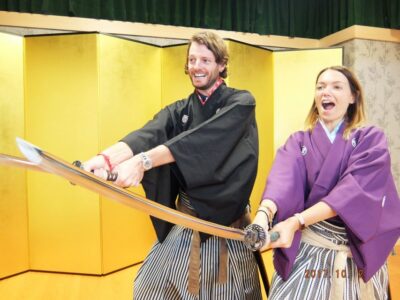
Samurai Sword Class by Experts in Traditional Arts
Read our review →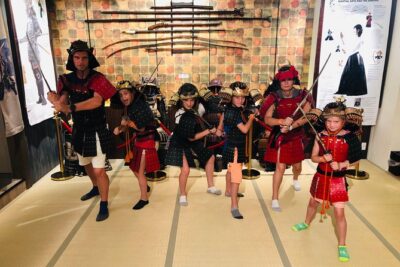
Skip the lines Basic Ticket at SAMURAI NINJA MUSEUM KYOTO
Read our review →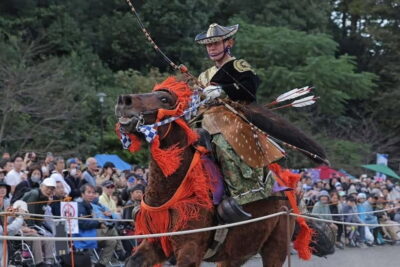
Samurai Sword & Archery Class from Samurai Descendant
Read our review →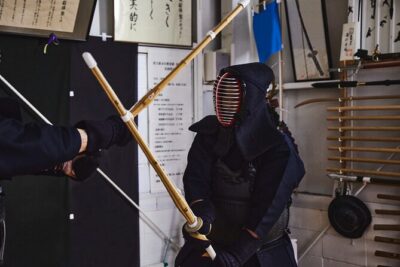
Browse the lists this tour appears in