
Reviewed · GOVERNMENT-LICENSED GUIDE TOURS
Kobe 4hr Private Tour with Government-Licensed Guide
Kobe’s best feature is its variety. In a single morning or afternoon, you can ride toward the hills, taste the city’s sake culture, walk old foreign residences, or trace the port’s earthquake story. This private, customizable tour lets you choose two or three sights instead of following a fixed group route.
I like the freedom to shape the day, and I like having a government-licensed English-speaking guide who can explain customs, history, food, and public transport. The main catch is simple: four hours passes quickly, and transportation, entrance fees, lunch, and private vehicles are extra.
Key points to know
- Choose only two or three stops: The long list of possible sights is a menu, not a promise to visit them all.
- Private walking format: Your group travels with its own guide, usually using trains, buses, taxis, or ropeways as needed.
- Strong guide record: Yama, Norio, Mizuho, Hiro, Harumi, Ayako, Akira, Yoshii, and others have led successful outings.
- Excellent for local help: Guides can explain shrine customs, sake brewing, Kobe’s earthquake, and practical train connections.
- Sake is a Kobe specialty: Nada’s breweries offer a useful look at rice, water, weather, tools, and brewing methods.
- Plan distant sights carefully: Mt. Rokko and the Akashi Kaikyo Bridge can consume much of your four-hour window.
A flexible way to see Kobe in four hours
This tour works best as a private planning session with a guide, not as a checklist race. Before the outing, you can discuss what interests you and combine your wishes with the guide’s suggestions.
That matters in Kobe because the city’s sights spread across different areas. Kitano and Chinatown fit naturally with central Kobe. Harborland and the Port of Kobe Earthquake Memorial Park also work well together. The Nada sake museums form another sensible cluster. Mt. Rokko, the Shin-Kobe area, and the Akashi Kaikyo Bridge require more thought because travel time can eat into the sightseeing.
You receive a licensed local English-speaking guide and meet on foot within the designated Kobe area. This is a private activity, so your party is not joined by strangers. The format suits people who want to ask questions, pause for photos, alter the pace, or stop for a meal recommendation.
The tour has morning and afternoon start times. That flexibility is useful for cruise passengers, people arriving by train, or anyone fitting Kobe between other plans. Still, confirm your meeting point and chosen route early. A private tour can be tailored, but it cannot defeat distance or traffic.
Other tours with a licensed guide in Japan:
- Tokyo 6hr Private Tour with Government-Licensed Guide
★ 5.0 · 3,902 reviews - Tokyo 4hr Private Tour with Government-Licensed Guide
★ 5.0 · 1,394 reviews - Kyoto 6hr Private Tour with Government-Licensed Guide
★ 5.0 · 1,369 reviews
Mt. Rokko and the Shin-Kobe hills
Mt. Rokko rises to 931 meters and gives Kobe its green backdrop and broad city views. It is the choice for fresh air, higher ground, and a break from the city streets.
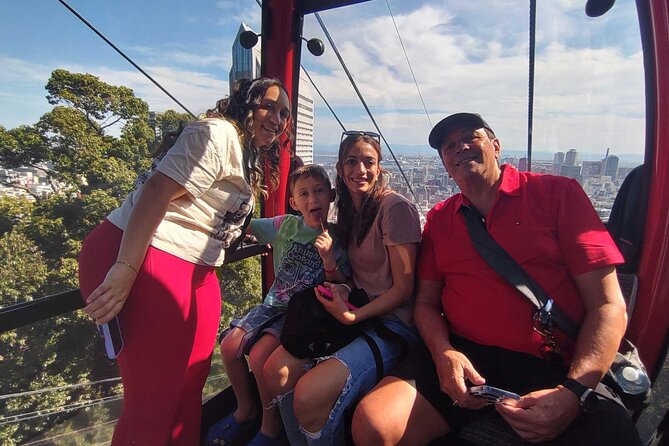
The Shin-Kobe Trail and Shin-Kobe Ropeway provide access to the southern slopes of the Rokko range. The ropeway leaves near Shin-Kobe Station, making this option especially useful if you are arriving by bullet train or want to combine the hills with the Nunobiki area.
Past outings have included the cable car to Kobe Nunobiki Herb Garden. You may find flower displays, city views, and a fragrance room where you can sample different scents. In autumn, the foliage can be beautiful, though fog may hide the view. That is an important practical point: the hill experience depends on weather.
The ropeway is not included in the tour price, and transportation fees are extra. Ask your guide how much of the four-hour period will be spent reaching the ride, going up, walking around, and returning. If the hills are your main goal, make them one of your two or three stops rather than adding them to a long city circuit.
The trails and slopes also mean this is not a flat stroll. One guide was praised for waiting at the top of stairs, while another was described as walking quickly. Tell your guide if you prefer an easy pace.
Kitano’s foreign residences and Kobe’s port story
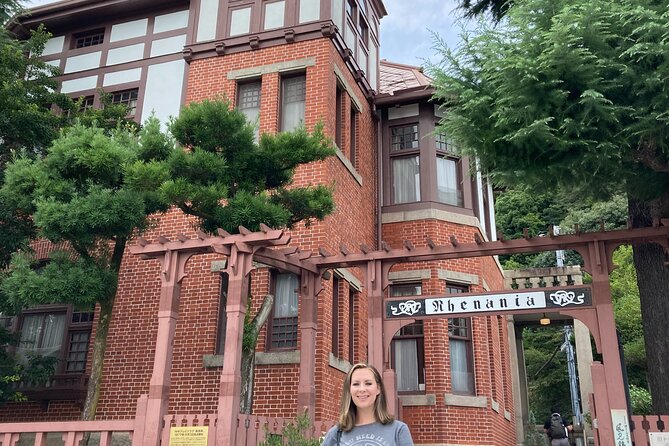
Kitano-cho sits at the foot of the Rokko range. After Kobe opened to foreign trade, overseas merchants and diplomats settled here. The district’s Ijinkan, or former foreign residences, offer a different side of Japan, shaped by the port’s international past.
This is a good pick if you like architecture, local history, and walking streets rather than shopping centers. Combine Kitano with Shin-Kobe or Chinatown, since all are in or near central Kobe. The hills around Kitano can add effort, so comfortable shoes are a sensible choice.
At the waterfront, Kobe Harborland gives you a change of pace. The area between JR Kobe Station and the port includes shops, restaurants, cafés, and entertainment. It is less about a single historic building and more about seeing how Kobe uses its waterfront today.
The Port of Kobe Earthquake Memorial Park provides a more serious stop. The Great Hanshin Awaji Earthquake struck at 5:46 a.m. on January 17, 1995. More than 5,000 people died, and tens of thousands of homes were destroyed. The memorial helps connect the modern port city with the disaster and the work of rebuilding.
I would not try to pair every central stop with Mt. Rokko and the bridge. For a balanced four hours, choose Kitano, the earthquake memorial, and Harborland, or replace one with Chinatown.
Chinatown and the taste of central Kobe
Nankinmachi is a compact Chinatown in central Kobe and an important center of the Chinese community in the Kansai region. Chinese merchants settled near the port after Kobe opened to foreign trade, giving the district a direct link to the city’s international character.
It is an easy choice for a short tour because you can walk through the area, look at the food stalls and shops, and ask your guide what to try. The tour price does not include lunch or personal expenses, so you pay separately for anything you eat.
Several guides have helped arrange or suggest Kobe beef meals. That can be useful, but restaurant costs are not included, and a sit-down meal may take a large part of the four-hour schedule. If food is your priority, tell the guide before the day begins and consider making Chinatown or a beef meal the final stop.
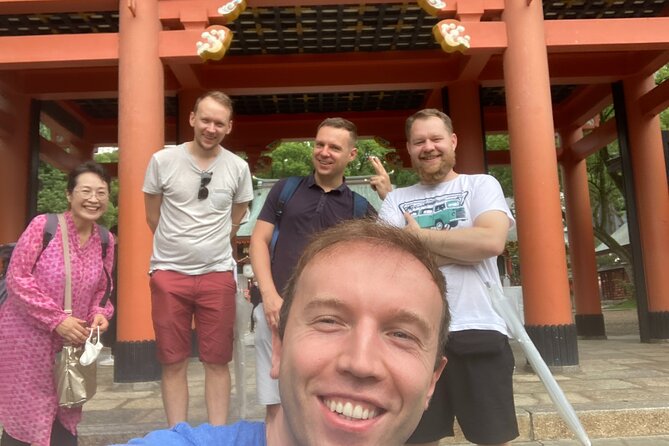
One practical advantage of a private guide is help with public transport. Mizuho, for example, met a group at the port terminal and used trains to reach Hakutsuru Sake Brewery Museum, Ikuta Shrine, and Chinatown. Other guides have helped visitors find the correct train back to Osaka. That kind of assistance can be worth more than another rushed sight.
Same base, a different sort of day:
- Mt Fuji and Hakone 1-Day Bus Tour Return by Bullet Train
★ 5.0 · 26,383 reviews - 1-Day Tokyo Bus Tour
★ 5.0 · 14,250 reviews - PERFECT KYOTO 1-Day Bus Tour
★ 5.0 · 13,518 reviews - Tokyo: TOKYO SKYTREE® Admission ticket
★ 4.5 · 11,192 reviews
Nada sake museums, Kobe’s most distinctive specialty
Kobe’s Nada district is Japan’s leading sake-producing area. Its reputation comes from good rice, suitable water, and favorable weather. If you want a cultural stop that feels specific to Kobe, the sake museums are among the strongest choices.
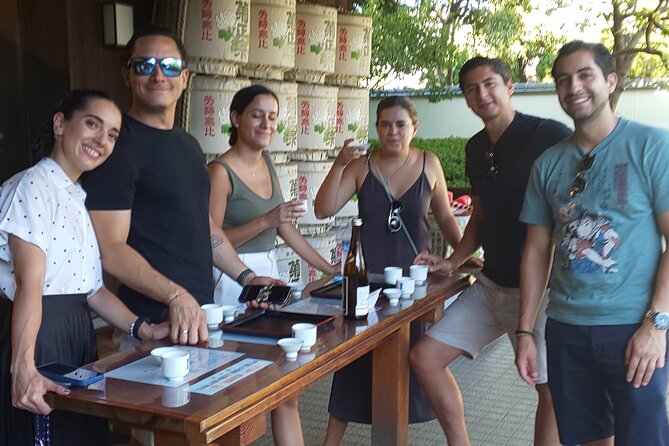
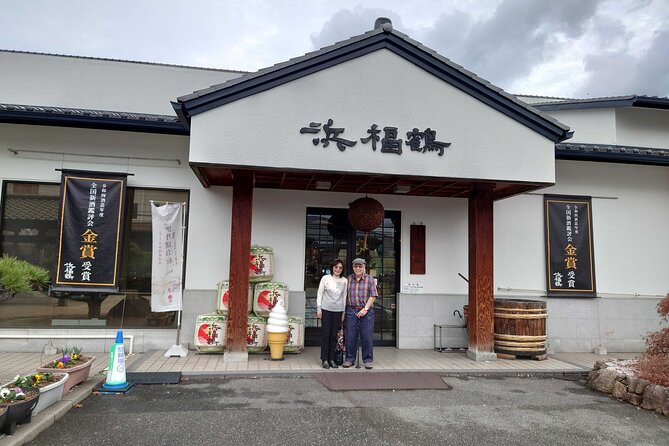
The Hakutsuru Sake Brewery Museum explains how sake is made and may include a tasting of premium sake. The building and exhibits give you a clear introduction to the brewing process without requiring a full day.
Sawanotsuru Museum focuses on the brewing tradition of Nada. It opened in 1978, was destroyed in the 1995 earthquake, and was later rebuilt. That makes it particularly useful if you want to connect local industry with Kobe’s disaster and recovery story.
Sakuramasamune Kinenkan Sakuraen has a small exhibition area with older tools and simple machines used in sake production. A video presentation adds context. Hamafukutsuru Ginjo Brewery explains its ginjo brewing process through diagrams and written displays, with attention to the brewery’s award-winning high-grade sake.
Kiku-Masamune Shuzo Kinenkan occupies a wooden and plaster building. Its exhibits include wooden tools, containers, and machinery, with traditional music and atmospheric lighting. Kobe Shushinkan adds a large shop, sake products, a Japanese restaurant, and a free guided warehouse tour held once each day.
You cannot reasonably visit all six brewery-related choices during this four-hour tour, especially if you also want Chinatown or Mt. Rokko. Pick one or two based on your interest. Hakutsuru is a strong general introduction. Kiku-Masamune offers an attractive museum setting. Shushinkan may suit you if shopping or a meal matters.
Check opening days and times with your guide before committing. One past outing ran into brewery closures. The museums are not simply interchangeable, and a little planning prevents a disappointing walk.
The Akashi Kaikyo Bridge requires a separate plan
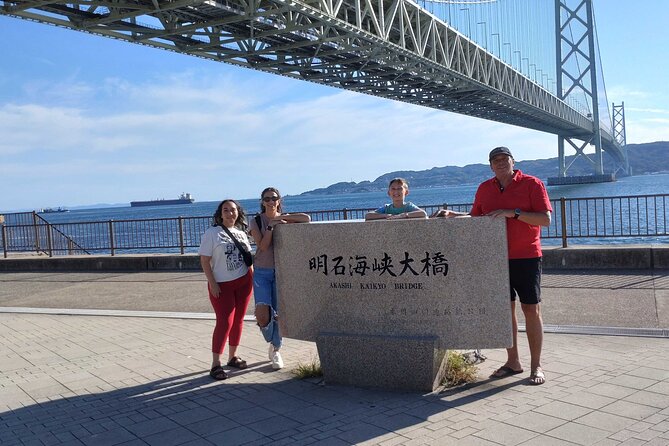
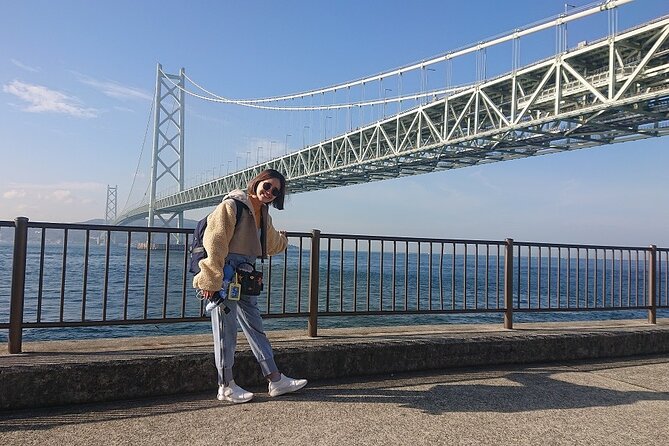
The Akashi Kaikyo Bridge stretches almost four kilometers across the Akashi Strait between Kobe and Awaji Island. Opened in 1998, it is famous for its enormous scale and suspension design.
This is a worthwhile choice if large engineering projects interest you, or if you have already seen central Kobe. It is not a casual add-on to a morning that already includes Mt. Rokko, Chinatown, and a brewery.
A past four-hour outing combined the bridge, Hakutsuru Sake Brewery Museum, and Nunobiki Herb Garden. The guide noted that these places cover a wide area and required extra time. That is the clearest lesson here: the private format gives you freedom, but the clock still rules.
Ask exactly how you will reach the bridge and how long the journey leaves for each other stop. Transportation fees are extra, and the tour does not include a private vehicle. If your priority is the bridge, build the tour around it.
What the guides add to the experience
The strongest part of this experience is the human element. Yama has guided visitors through Kobe’s history, temples, former residences, and food options. He is also known for a brisk walking pace, so speak up if you want more time between stops.
Norio has helped groups understand sake production, find authentic ramen, ride toward the herb garden, and locate the correct train back to Osaka. His careful planning was especially useful for people trying to cover several parts of Kobe in a short window.
Mizuho has contacted guests before the tour, built an itinerary around their interests, met them at the port, and helped arrange Kobe beef afterward. Hiro has helped families use buses and trains and has recommended restaurants after visits to the herb garden and sake museums.
Harumi has led visitors to the Mt. Rokko area and explained shrine gates and customs. Ayako, Akira, Yoshii, and other guides have also handled city history, cherry blossom locations, temples, and transport.
Guide quality can vary. One outing had communication problems and some confusion about directions, and two bookings were canceled when a guide could not be found. The overall rating is 4.8 from 59 ratings, with 95 percent recommending the experience, but those exceptions matter. Booking early is wise during busy periods, and you should provide clear interests and mobility needs before the tour.
Price, walking, and what you pay extra for
The listed price is $108.99 per person. That is not a cheap way to obtain basic sightseeing, but it can be fair value for a private group that wants an efficient introduction and personal help.
Your payment covers the licensed local English-speaking guide and the custom format for two or three selected sights. It does not cover trains, buses, taxis, ropeways, admission fees, lunch, private vehicles, or personal purchases. Guide entry fees are covered only for sights included under the experience details.
For two people, the per-person cost can feel high compared with joining a public walking tour. The value improves if you are a small group that wants private attention, has limited time, or needs help navigating Kobe’s train system. Group discounts may also be available.
This is described as a walking tour, with pickup on foot. Most people can take part, and service animals are allowed. You should still expect stairs, hills, and a fair amount of walking, especially around Kitano, Mt. Rokko, and the ropeway area.
Free cancellation is available up to 24 hours before the start time. Changes or cancellations made within 24 hours are not accepted for a refund.
Who should book this Kobe tour?
I would choose this tour if you have only four hours, want to avoid a fixed group schedule, and already know whether your priority is sake, food, port history, old residences, or mountain views.
It is especially useful for cruise passengers, first-time visitors, families, and people who want help with trains and local customs. A guide can also recommend a Kobe beef restaurant, though you should treat the meal as a separate plan and expense.
I would hesitate if you expect a private car, a full city tour, or all 13 listed sights in one afternoon. You also need to be comfortable paying transport and entrance costs as you go.
Final call on the Kobe private tour
Book it if you will choose a focused route and make good use of the guide’s local help. My preferred combinations would be Kitano, Chinatown, and the earthquake memorial for central Kobe; one Nada brewery with Harborland for food and port culture; or Mt. Rokko with one nearby city stop for views and gardens.
The tour earns its price through flexibility, not volume. Pick two or three places, tell the guide what matters to you, and leave room for walking time. Done that way, this is a practical introduction to a city that rewards curiosity more than rushing.
FAQ
How long is the Kobe private tour?
The tour lasts approximately four hours.
How many sights can I choose?
The experience includes a customizable itinerary covering two or three sites from the listed options.
Is transportation included?
No. Transportation fees are not included, and the tour does not provide a private vehicle.
Is this a group tour?
No. It is a private activity, so only your group participates.
Where does the tour meet?
You meet the guide on foot within the designated area of Kobe. Walking pickup is offered.
Are entrance fees included?
Entrance fees are not generally included. Guide entry fees are covered only for sights listed under the experience details.
Can I cancel for a full refund?
Yes. You can cancel at least 24 hours before the local start time for a full refund. Changes or cancellations made less than 24 hours before the start time are not accepted.
Just added in Japan
- 1 Day Tour: Snow Monkeys & Snow Fun in Shiga Kogen★ 5.0 · 52 reviews
- Hokkaido Seasonal: Lake Toya & Noboribetsu Jigokudani Valley★ 4.7 · 173 reviews
- Kagoshima Private & Custom Tour with Licensed Guide and Vehicle★ 5.0 · 29 reviews
- Japanese Whisky Hunting《HIGH-QUALITY-ONLY》Rare Tasting Class★ 5.0 · 20 reviews
- Kobe: Guided Sake Breweries Tour with Tastings★ 5.0 · 55 reviews
- Kamakura Historical Walking Tour with the Great Buddha★ 5.0 · 129 reviews
- Luxury Tokyo Sake, Cocktail, Whisky and Pairing Tour★ 5.0 · 18 reviews
- Matsumoto Castle Town Walking Tour★ 4.8 · 58 reviews
Government-Licensed Guide Tours, compared.
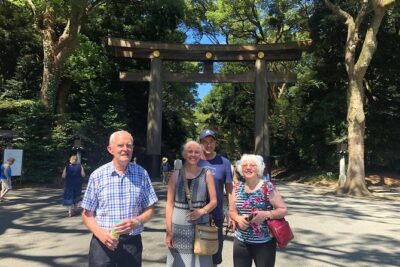
Tokyo 6hr Private Tour with Government-Licensed Guide
Read our review →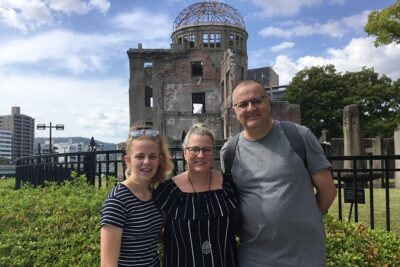
Hiroshima / Miyajima Full-day Private Tour with Government Licensed Guide
Read our review →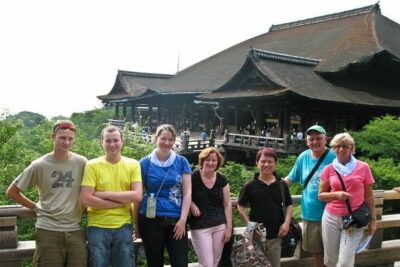
Kyoto 4hr Private Tour with Government-Licensed Guide
Read our review →
Hiroshima City 4hr Private Walking Tour with Licensed Guide
Read our review →
Private Kyoto Tour with Licensed Guide & Vehicle (Max 15 persons)
Read our review →
Nikko Full-Day Private Tour with Government-Licensed Guide
Read our review →
Himeji Half-Day Private Tour with Government-Licensed Guide
Read our review →Browse the lists this tour appears in