
Reviewed · GOVERNMENT-LICENSED GUIDE TOURS
Kyoto Full Day Tour from Kobe with Licensed Guide and Vehicle
Kyoto’s famous sights are spread across the city, and this private day trip gives you a practical way to connect them from Kobe. You can pair Fushimi Inari’s red torii gates with Kiyomizu-dera, Gion, the Golden Pavilion, or Arashiyama without learning Kyoto’s train and bus system on the fly. The licensed guide also gives the old temples and customs some useful context.
I like the private vehicle, especially if you are arriving by cruise ship or traveling with children, luggage, or limited time. I also like the advance contact with your guide, which lets you choose three or four main stops instead of accepting a fixed route. The drawback is clear: nine hours is not enough for the entire long list of possible sights, and entrance fees, lunch, and personal costs are extra.
Key points to know before booking
- Choose three or four priorities: The long sight list is a menu, not a promise that you will visit every place.
- Private transport from Kobe: Your group travels alone in a private vehicle with pickup offered.
- Strong guide flexibility: Kazuo, Yuka, Hiro, Kiriko, Andy, and other guides have adjusted routes for cruise timetables, food requests, and personal interests.
- Best for a first Kyoto visit: You can combine major temples, Gion, shrines, and a market in one carefully paced day.
- Plan around traffic: Kobe to Kyoto is a long outing, and Kyoto roads can slow the schedule.
- Budget beyond the tour price: The listed price is $1,165.63 per group of up to two, while many temple admissions and lunch are not included.
A private Kyoto day from Kobe, with room to choose
This is not a standard sightseeing loop with every stop fixed in advance. After booking, a guide contacts you and asks which places matter most. The practical limit is three or four main sites during the roughly nine-hour day.
That distinction matters. The tour information presents nearly 30 possible stops, from Fushimi Inari and Kiyomizu-dera to the Bamboo Forest, Kinkakuji, and the Imperial Palace. You should read that list as a set of choices. If you try to cover all of Kyoto, you will spend much of the day getting in and out of the vehicle and seeing temples from the outside.
I would choose one compact area in the morning and one in the afternoon. For a first visit, a sensible wish list might be Fushimi Inari, Kiyomizu-dera and Gion, followed by either Kinkakuji or Arashiyama. If you care more about gardens and Zen temples, select Ryoan-ji, Ginkakuji, Nanzenji, or Tenryu-ji instead.
The flexibility works particularly well for cruise passengers. The tour lasts about nine hours, and one guide, Andy, is specifically praised for arranging the day so his group returned to the ship before departure. Still, you should give the guide your firm return time at the start. A long road day from Kobe leaves less room for delays than a tour beginning in central Kyoto.
Other tours with a licensed guide in Kobe:
- Kobe 4hr Private Tour with Government-Licensed Guide
★ 5.0 · 59 reviews - Exploring Nada Sake Breweries Kobe Private Tour with Government-Licensed Guide
★ 5.0 · 17 reviews - Tokyo 6hr Private Tour with Government-Licensed Guide
★ 5.0 · 3,902 reviews
What the private vehicle adds
The vehicle is the main reason to consider this outing instead of traveling independently. Kyoto’s major sights sit in different parts of town. Fushimi Inari and Tofuku-ji are in the southeast, Kiyomizu-dera and Gion are farther north, Kinkakuji is in the northwest, and Arashiyama is well to the west.
A private vehicle cuts down on transfers. You can leave one temple, meet the driver, and continue without finding another platform or negotiating a crowded bus. The driver can also time the pickup while you walk through a temple district. One account specifically praises the driver’s ability to use quicker routes and collect the group at the right time.
There is a tradeoff. Kyoto traffic can be heavy, and a car does not put you at the gate of every sight. You will still walk on slopes, stairs, stone lanes, and temple paths. Kiyomizu-dera, Fushimi Inari, Arashiyama, and the northern temples all require time on foot.
The tour is private, so only your group participates. The listed price is for up to two people, not per person. That makes the value easier to justify for a couple who wants privacy, but less attractive if you are a solo visitor comparing it with public transport or a shared group tour.
Fushimi Inari and the red gate route
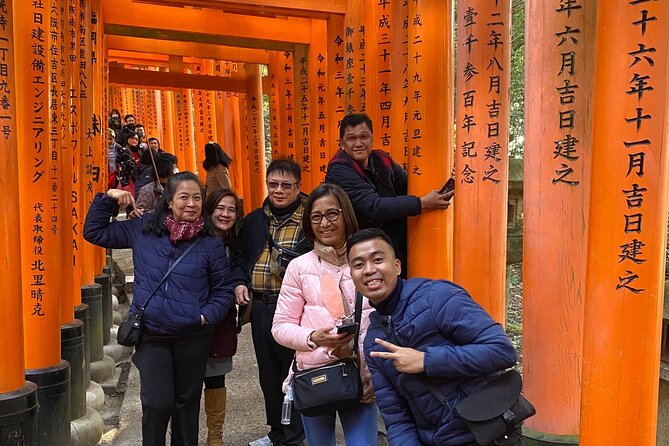
Fushimi Inari-taisha is one of the strongest choices for your first or last major stop. Its rows of orange torii gates climb the wooded slopes behind the shrine, and the path gives you a very different feel from Kyoto’s formal temple gardens.
The listed visit time is only 15 minutes, but that is a short introduction rather than a full climb. One guide helped a couple use extra time at the end of the day to walk farther up the mountain and see more gates. If Fushimi Inari is your priority, tell the guide before the tour so the schedule can allow for more walking.
The shrine itself is free, but the route is not flat. Wear shoes you can use on steps and uneven paths. The private vehicle helps you reach the shrine, but it cannot remove the physical effort once you arrive.
Kiyomizu-dera, Higashiyama, and Gion
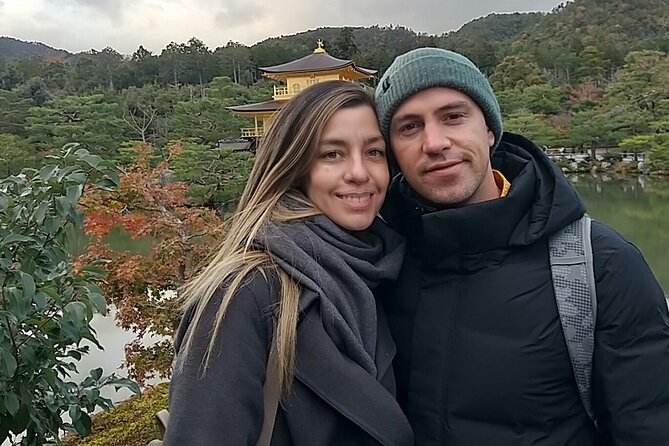
Kiyomizu-dera is a natural match with the Higashiyama historic district and Gion. The temple sits above the old streets, and the approach gives you a chance to walk through one of Kyoto’s most recognizable traditional areas.
The published visit time for Kiyomizu-dera is 15 minutes, although the description also refers to a one-hour guided visit. This is a point to settle with your guide before the day begins. Admission is not included, and the temple grounds require walking.
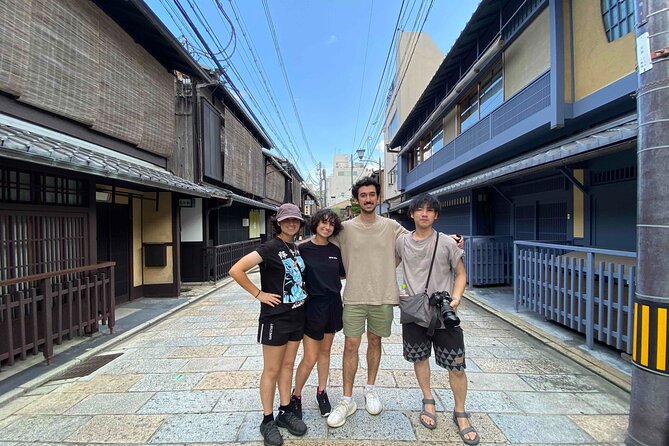
Higashiyama is appealing because you get more than a single monument. The district has preserved lanes, old-style buildings, shops, and approaches to temples. Gion adds the cultural setting associated with geisha, though you should treat it as a working neighborhood rather than a stage set. Walk quietly, follow local rules, and do not block lanes for photographs.
Pontocho is another possible stop. This narrow dining alley runs near the Kamogawa River and is best suited to an evening meal or a brief look at Kyoto’s restaurant culture. It may be a poor use of daytime sightseeing if temples are your main goal, but it can pair nicely with a lunch or dinner plan if your schedule allows.
Kennin-ji, near Hanamikoji and Shijo streets, offers dry gardens and a quieter temple setting close to Gion. The listed stop is only one minute, so it is plainly an optional add-on rather than a full visit.
Same base, a different sort of day:
- KOBE Sake Tasting Tour at Breweries (tasting fee included)
★ 5.0 · 154 reviews - Kobe Highlights & Hidden Gems: Private & Custom Tour with a Guide
★ 4.5 · 70 reviews - Kobe: Guided Sake Breweries Tour with Tastings
★ 5.0 · 55 reviews - Nijigen No Mori:Naruto & Boruto Theme Park Entry Ticket
★ 4.5 · 53 reviews
Kinkakuji and the northern temple group
Kinkakuji, the Golden Pavilion, is one of Kyoto’s most recognizable sights. Its upper floors are covered in gold leaf, and the building is viewed across a pond in a carefully arranged garden. Admission is not included, and the grounds can be busy.
You can combine Kinkakuji with Ryoan-ji and Ninna-ji if your interests lean toward Zen design and temple architecture. Ryoan-ji is home to Japan’s best-known rock garden. Its appeal is quiet and spare, but a short stop will not give you much time to sit, look, and form your own impression.
Ninna-ji dates from 888 and is connected with the Omuro school of Shingon Buddhism. It offers a broader temple setting than a single famous view. Again, the listed 15-minute timing means you need to choose your focus carefully.
These northern sights work well as a group because they are closer to one another than Arashiyama or Fushimi Inari. They are less efficient to combine with every southern Kyoto stop. Ask the guide to arrange sights by area rather than simply following the order in the online list.
Arashiyama, bamboo, and the western hills
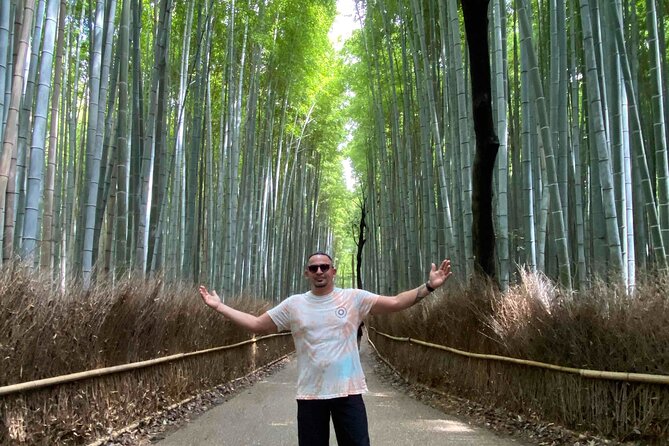
Arashiyama is one of the biggest choices on the menu. The district includes the Bamboo Forest, Tenryu-ji, the Togetsukyo Bridge, Okochi Sanso Garden, Jojakko-ji, Nison-in, Gio-ji, Adashino Nenbutsu-ji, Otagi Nenbutsu-ji, and more.
The Bamboo Forest is free and easy to recognize, but the main path is short. A private car gets you near the district, yet you still need to walk between sights. Tenryu-ji is the major temple choice here, with gardens and Zen connections, while Togetsukyo Bridge gives you the classic river and mountain view.
Okochi Sanso Garden costs extra but can provide a more measured break from the main pedestrian route. Jojakko-ji, Nison-in, and Gio-ji offer smaller temple grounds, moss, trees, and hillside paths. They are attractive choices if you prefer quiet details to famous photo stops.
Adashino Nenbutsu-ji has stone figures connected with memorial traditions, while Otagi Nenbutsu-ji is known for roughly 1,200 carved stone figures, each with a different expression. These sites take you farther into the Saga-Toriimoto area and require more time on foot. They are not sensible additions to a packed first-visit route.
A guide can help you decide if Arashiyama fits your day. I would not combine the full western district with Fushimi Inari, Kinkakuji, and Gion unless you are happy with brief visits and a fast pace.
Ginkakuji, Nanzenji, and the eastern temple route
Ginkakuji, the Silver Pavilion, was built as a retirement villa for shogun Ashikaga Yoshimasa. Despite its name, it is not covered in silver. The real attraction is the relationship between the understated building, moss, sand, and hillside setting.
Nanzenji is one of Kyoto’s important Zen temples and is known for its broad grounds and brick aqueduct, Nanzenji Suirokaku. It gives you more room to stroll than some of the compact central temples. The listed time is 15 minutes, so you should identify one or two features to see rather than attempt every sub-area.
Tofuku-ji, in southeastern Kyoto, is especially known for autumn color. It can pair well with Fushimi Inari because both are in the southeast, though the best combination depends on the season and the time available.
This eastern and southeastern route suits you if you want temple architecture, gardens, and fewer food-market stops. It is less suitable if your main goal is to sample Kyoto’s shopping streets and traditional neighborhoods.
Nishiki Market and Kyoto’s food side
Nishiki Market is a narrow, five-block shopping street known as Kyoto’s Kitchen. More than 100 shops and restaurants sell food and related goods, making it a useful change of pace after several temples.
I would use Nishiki as a lunch or snack stop, not simply a quick photo stop. The tour price does not include lunch, and the market gives you choices. Your guide may also help explain unfamiliar foods or suggest a place to eat. One group was taken to a tempura restaurant, while another finished the day with a Kobe beef lunch.
Market lanes can be crowded, so keep your group together and avoid treating every stall as a place to stop suddenly. If food matters as much to you as temples, say so when planning the route. Three or four stops could mean two temples, Nishiki, and Gion rather than a long list of religious sites.
Imperial villas, mountain sites, and optional choices
The Imperial Palace, Katsura Imperial Villa, and Shugakuin Imperial Villa represent a different side of Kyoto. The Kyoto Imperial Palace was the home of Japan’s Imperial Family until 1868. Katsura is valued for its architecture and garden design, while Shugakuin includes upper, middle, and lower villa areas built in the 17th century.
These are not casual drop-in stops in the same way as a market or public street. The tour data lists entrance fees as extra, and some sites may require more planning than the short stop times suggest. Ask the provider exactly what access is possible for your date before making a villa the centerpiece of your day.
Kibune, Kurama, and Kurama-dera take you into Kyoto’s northern mountains. Kibune developed around Kifune Shrine, while Kurama is known for its temple and hot spring. These places can give you a greener, quieter day, but they are far from the central sights. Choose them only if mountain scenery and rural temples matter more than checking off Kyoto’s famous landmarks.
Toji, near Kyoto Station, is an older temple founded soon after the capital moved to Kyoto in the late eighth century. Yoshimine-dera, in the western mountains, offers hillside temple scenery. Both are worthwhile possibilities, but neither should be added casually to a route already filled with Arashiyama or northern Kyoto.
Guide quality and communication
The guide can make or break this experience. The strongest part of the service is the personal planning before arrival. Kazuo has contacted guests with a list of possible places and refined the route through several emails. Kiriko built a full, fast itinerary around a couple’s wishes, and Yuka has handled cruise-port pickup, drop-off, restaurant help, and custom requests.
Hiro has shaped a day around specific interests, while Andy has been careful with timing and photography. Kazuo has also explained the correct way to enter a Shinto shrine and a Buddhist temple, which adds useful cultural detail to the visit.
The overall rating is 4.6 from 19 ratings, but one serious complaint concerns weak English communication and an extra payment request after the tour. The provider responded that communication difficulties had occurred. I would treat this as a reason to confirm your guide’s language ability, inclusions, and final charges in writing before departure.
The tour states that the guide is licensed and multilingual, but language ability can vary by individual guide. Ask who is assigned and what language will be used. That small step protects an expensive day.
Price, inclusions, and practical value
At $1,165.63 per group of up to two, this is a premium outing. The cost includes a licensed local English-speaking guide, a private vehicle, pickup, and a custom route. It does not include entrance fees, lunch, or personal expenses.
The value is strongest when you have only one day, are arriving by ship, or would lose time and comfort using public transport. It also makes sense for a couple who wants a private pace and help with cultural details. The value is weaker if you are staying in Kyoto for several days and can spread the sights across separate neighborhoods.
Car seats and booster seats are limited, and rear-facing seats are not available. Contact the provider directly if you need one. Service animals are allowed, and most people can participate, but expect substantial walking at the temples and shrine paths.
Free cancellation is available up to 24 hours before the start time. Changes or cancellations within 24 hours are not accepted for a refund.
Should you book this Kyoto tour from Kobe?
Book it if you want to make one ambitious Kyoto day work from Kobe, especially from a cruise port. The private car, advance planning, and guide support can turn a complicated route into a manageable one. For the best result, choose three or four sights and rank them clearly.
I would especially consider Fushimi Inari, Kiyomizu-dera with Gion, Kinkakuji, or Arashiyama. Choose a smaller route if you want time to listen, eat, and walk without racing.
Skip it if the price strains your budget or if you have several days to explore Kyoto independently. Before paying, confirm the guide’s language, pickup point, return deadline, likely vehicle, entrance costs, and exact priority stops. Done that way, this is a useful private introduction to Kyoto, not a promise to see the whole city in nine hours.
FAQ
How long is the Kyoto tour from Kobe?
The tour lasts approximately nine hours.
How many people can join the private tour?
The listed price is for a private group of up to two people. Only your group participates.
Can I choose which Kyoto sights to visit?
Yes. The tour is customizable, and you are asked to select your must-see places from the provided list. The included plan is for three to four sites.
Is pickup available?
Yes. Pickup is offered, including examples of pickup and drop-off at the cruise port.
Are entrance fees and lunch included?
No. Entrance fees, lunch, and other personal expenses are not included. Guide entry fees are covered only for sights listed in the tour information.
Can I cancel for a full refund?
You can cancel at least 24 hours before the experience start time for a full refund. Cancellations or changes made less than 24 hours before the start time are not accepted.
Just added in Kobe
- Exploring Nada Sake Breweries Kobe Private Tour with Government-Licensed Guide★ 5.0 · 17 reviews
- Cruise Stop-Over: Private Custom Day trip to Kyoto from Kobe Port★ 4.5 · 12 reviews
- Next-Generation Local Guide: Private Kobe Tour★ 5.0 · 39 reviews
- Private Shore Excursion Kobe Port – Best of Kobe with a local★ 5.0 · 19 reviews
- Sake Brewery and Japanese Life Experience Tour in Kobe★ 5.0 · 39 reviews
- Shore excursion: Full Day Private Kyoto Tour From Osaka/Kobe Port★ 4.5 · 36 reviews
- Kobe : Private Custom Tour (Excursion to Osaka / Kyoto possible)★ 4.5 · 12 reviews
- KOBE, SHIOYA, a quaint fishing town walking tour★ 5.0 · 19 reviews
Government-Licensed Guide Tours, compared.
Tokyo 6hr Private Tour with Government-Licensed Guide
Read our review →
Hiroshima / Miyajima Full-day Private Tour with Government Licensed Guide
Read our review →
Kyoto 4hr Private Tour with Government-Licensed Guide
Read our review →
Hiroshima City 4hr Private Walking Tour with Licensed Guide
Read our review →
Private Kyoto Tour with Licensed Guide & Vehicle (Max 15 persons)
Read our review →
Nikko Full-Day Private Tour with Government-Licensed Guide
Read our review →
Himeji Half-Day Private Tour with Government-Licensed Guide
Read our review →Browse the lists this tour appears in