
Reviewed · SIGHTSEEING BUS TOURS
Kyoto 1 Day Golden Route Bus Tour
Kyoto’s Golden Route packs the city’s biggest names into one long day: red torii gates, a hillside temple, a bamboo grove, the Golden Pavilion, lunch, and a craft-shopping stop. It is a practical way to get your bearings when time is short, especially since an air-conditioned vehicle handles the long hops between sights.
I like the strong sightseeing value and the fact that entrance fees and full-day lunch are included. I also like the small-group feel of a vehicle capped at 40 people, with guides such as Kuri, Toshi, Haromi, and Yoko praised for being warm and helpful.
The catch is simple: this is a very active day. Expect about 16,000 steps, stairs, crowds, and a tight schedule. You will see a lot, but you will not linger long at every temple.
Key points to know before booking
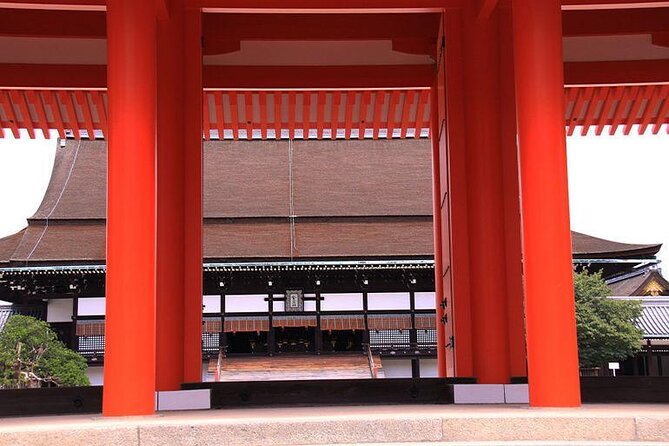
- Six major stops in one day: Kiyomizu-dera, Fushimi Inari, Arashiyama, Kinkaku-ji, and the Kyoto Handicraft Center are all covered on the full-day plan.
- A full sightseeing workout: One review counted about 16,000 steps, with plenty of walking and stairs.
- English-speaking guides vary by date: Past guides include Kuri, Toshi, Haromi, and Yoko.
- Kyoto-style buffet lunch is included: This applies to the full-day plan, not the half-day option.
- The bus saves time between districts: You are not figuring out Kyoto’s transport system between each major sight.
- The half-day plan ends at Arashiyama: You must make your own way back after that option.
What this one-day Kyoto tour is really trying to do
Kyoto is not a city where the headline sights sit around one easy central square. Fushimi Inari is south of the center, Kiyomizu-dera is on the eastern hills, Arashiyama is far to the west, and Kinkaku-ji sits in the northwest. Seeing all of them independently in one day takes careful planning and some luck with transport.
This tour solves that problem with a set route and a bus or passenger van. You meet at 8:15 am at the Tourist Bus Terminal by Kyoto Station’s Hachijo Entrance, then spend roughly nine hours and 45 minutes moving between the city’s best-known sights. The full-day schedule returns to the same meeting point.
I see this as a first-day orientation tour, not a slow temple study. You will learn where Kyoto’s key areas are, see the places most people put at the top of their list, and leave with a useful sense of which district deserves a longer visit later.
The group can reach a maximum of 40 people. That is not an intimate private tour, but the passenger-van format used on at least one departure helped reduce the time spent loading and unloading. The exact vehicle may vary, so expect organized group transport rather than a private car.
Other tours by coach from Kyoto:
- PERFECT KYOTO 1-Day Bus Tour
★ 5.0 · 13,518 reviews - Kyoto: Fushimi Inari, Kinkakuji, Bamboo Grove 1 Day Bus Tour
★ 4.8 · 4,316 reviews - Kyoto: Hop-on Hop-off Sightseeing Bus Ticket
★ 3.9 · 2,034 reviews
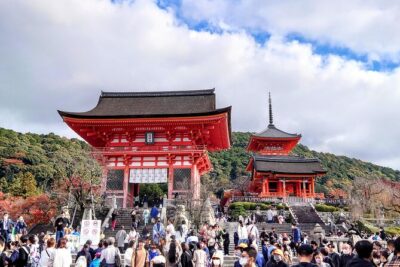
Kiyomizu-dera, Kyoto’s hillside opening act
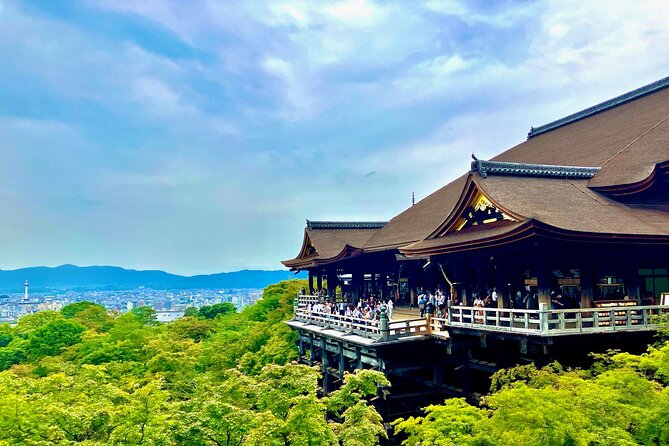
The day begins with about 70 minutes at Kiyomizu-dera, one of Kyoto’s best-known temples and a UNESCO World Heritage site. The temple’s hillside position gives you broad views over Kyoto, which makes this an effective first stop. You get architecture, religious history, and a city panorama in one place.
The approach and temple grounds involve walking and stairs. Wear shoes that will not punish you after several more hours on foot. The entrance fee is included, so you can focus on the visit instead of sorting out payment at the gate.
Seventy minutes is enough to see the main areas and hear an explanation from the guide, but it is not enough for every corner of the temple precinct. If you like taking photos, the clock can feel tight. I would keep your camera ready, listen for the meeting instructions, and avoid wandering too far from the main route.
Kiyomizu-dera also gives the guide a useful early chance to explain Kyoto’s religious traditions and temple layout. The quality of that introduction depends on the person leading your group. Past guides named Kuri, Toshi, Haromi, and Yoko received especially strong praise for clear explanations, confidence, and a friendly approach.
Fushimi Inari and the famous red torii
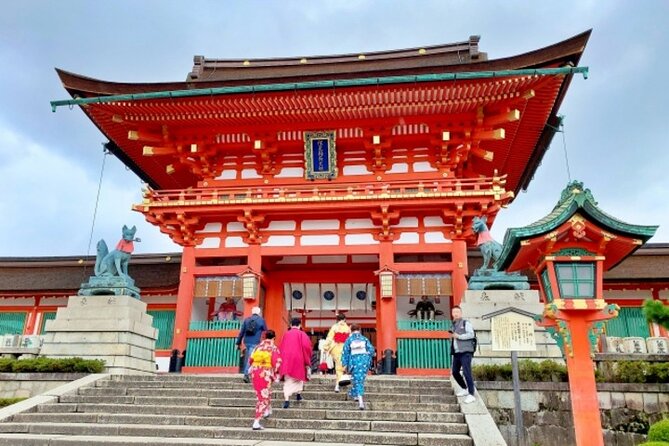
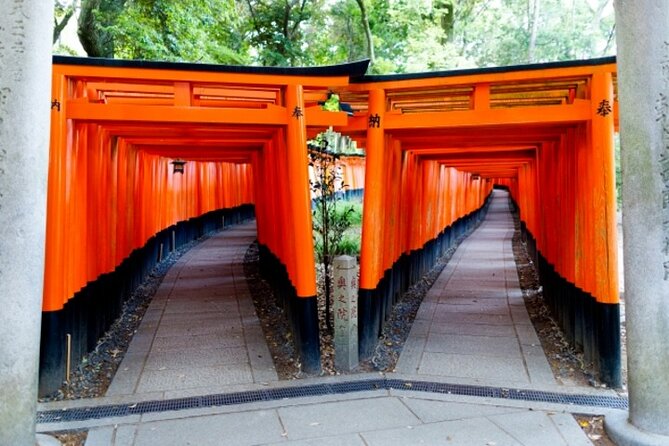
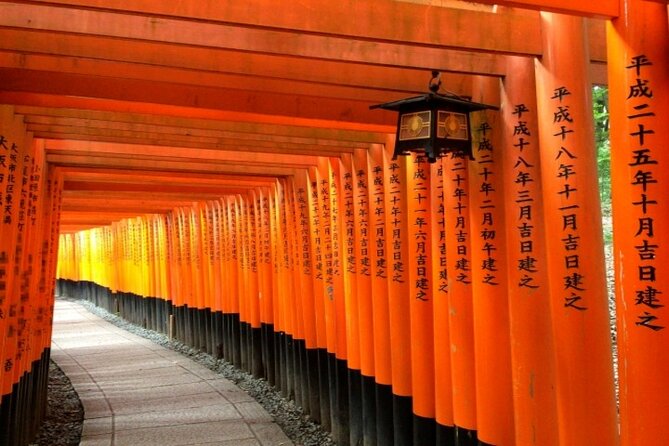
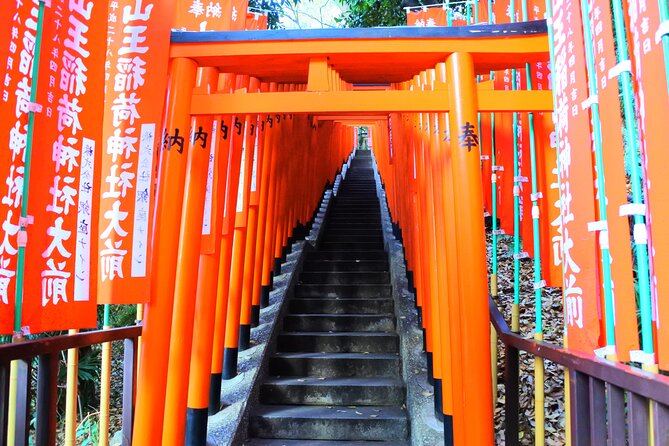
Next comes Fushimi Inari-taisha, with about 70 minutes to walk through its celebrated rows of orange-red torii gates. This is the image of Kyoto that appears on countless postcards, but the place is more than a photo stop. The gates form a path up the wooded mountain, creating a sequence of views that changes as you walk.
Here, the main limitation is time. Fushimi Inari can absorb half a day if you continue well up the mountain. On this tour, you will have time to enter the torii-gate paths and experience the atmosphere, but not to complete the full mountain route.
That is not a flaw if you want a broad one-day look at Kyoto. It is a reason to return if Fushimi Inari is high on your personal list. Keep an eye on the time, because the bus will leave according to schedule and does not wait for late arrivals.
The shrine visit comes before lunch, so bring only what you need. Large luggage is not allowed on the tour, and you are responsible for your valuables and personal belongings.
Lunch breaks the sightseeing rhythm
The full-day plan includes a 50-minute Kyoto-style buffet lunch. For a day with this much walking, that break matters. You get a proper chance to sit down, eat, and reset before the afternoon stops.
Drinks are not included. You also cannot bring your own food or drinks into the restaurant, so plan to purchase beverages separately if you want one with lunch. If you have allergies or dietary restrictions, provide that information when booking.
A buffet is a sensible choice for a mixed group because you can choose your portion and sample different dishes. Still, the meal is part of a fixed schedule, not a leisurely restaurant visit. If you prefer long lunches or have strong food requirements, ask about those needs in advance.
The 50-minute break also shows how this tour works. It protects the schedule, but it leaves little room for delays. Rain, crowds, traffic, or a slow group can make the day feel compressed.
Same base, a different sort of day:
- Kyoto: Tea Ceremony in a Traditional Tea House in Kiyomizu
★ 4.9 · 3,519 reviews - Kyoto Geisha Walking Tour: Gion District & Hidden Gems
★ 4.7 · 3,273 reviews - Kyoto: Tea Ceremony Ju-An at Jotokuji Temple
★ 4.9 · 3,207 reviews - Kyoto: Gion Magical Night Walking Tour with Geisha Trivia
★ 4.9 · 2,393 reviews
Arashiyama and Tenryu-ji’s bamboo setting
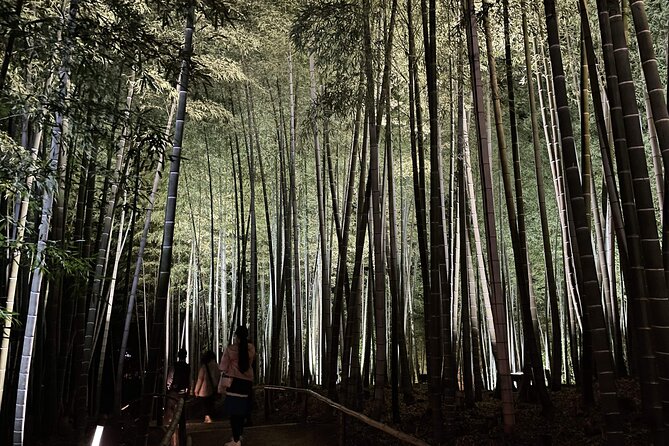
The afternoon moves west to Arashiyama, where you get two hours for Tenryu-ji and the bamboo grove. This is the longest scheduled stop, and it needs to be. Arashiyama offers several distinct sights in a compact but busy area, with temple grounds, paths, and the famous bamboo corridor.
Tenryu-ji’s admission is included on the full-day plan. The temple gives the bamboo visit more context, while the grove supplies the visual drama. Walking under the tall bamboo is one of Kyoto’s most recognizable experiences, but it is also one of the places where crowds can affect the mood.
Two hours sounds generous compared with the shorter temple stops, but Arashiyama can still feel rushed. You will need to balance the temple, the grove, photographs, and the meeting point. Stay aware of where the guide says to regroup.
If you choose the half-day plan, the tour ends and disbands in Arashiyama after Fushimi Inari and the afternoon visit. You must return on your own. That option can work if you want a shorter guided introduction and plan to spend more time in Arashiyama, but it does not include the full-day Kinkaku-ji and handicraft stops.
Kinkaku-ji, the Golden Pavilion
The full-day route continues to Kinkaku-ji, the Golden Pavilion, for about 45 minutes. This is a short stop, but it covers one of Kyoto’s most recognizable landmarks. The pavilion’s gold exterior reflects in the pond, making the visit especially visual and easy to appreciate even if you know little about Japanese temple architecture.
The short time here is both useful and limiting. You can see the main view, walk the prescribed grounds, and take photographs. You will not have the leisure to explore every part of the surrounding temple area.
I would treat Kinkaku-ji as a focused landmark visit. If it is one of your main reasons for coming to Kyoto, you may want a separate return visit later. On a one-day tour, though, its inclusion is valuable because reaching the pavilion independently while also fitting in Fushimi Inari, Kiyomizu-dera, and Arashiyama requires careful timing.
The entrance fee is included in the full-day plan. That makes the price easier to assess, since several of the day’s major admission charges are already covered.
Kyoto Handicraft Center and the final shopping stop
The final stop is a 30-minute visit to the Kyoto Handicraft Center. This is a brief chance to look at Kyoto-made crafts and consider gifts without giving up another major sightseeing site.
Thirty minutes is enough for browsing, but not for a relaxed shopping trip. If you are searching for a particular craft or need time to compare prices, this stop may feel too short. It works best as a convenient introduction to local goods at the end of an already packed day.
I also see this stop as a practical buffer. After temples, stairs, gates, and long walks, a short indoor shopping visit gives you a change of pace before returning to Kyoto Station.
Why the guide can make or break the day
A route this busy needs clear direction. You need to know when to return to the vehicle, where the group meets, and which parts of each site deserve your limited time.
The tour uses a government-licensed English-speaking guide. Past guide names include Kuri, Toshi, Haromi, and Yoko. Haromi was praised for confident explanations and for making sure people were helped on the return to Osaka. Toshi was noted for being personable and interactive with a family group. Kuri was described as professional, while Yoko was appreciated for being friendly and well informed.
The experience can vary by guide. One review found the English less strong on a rainy day, although the guide remained ready to answer questions. That is useful context: the tour is conducted in English, but the level of fluency and presentation style may not be identical on every date.
I would choose a seat where you can hear easily, keep questions short during the moving parts of the day, and ask the guide early about the meeting procedure. A good guide can turn a fast route into a coherent story. A less polished presentation may leave you mainly following the clock.
Is $71.85 a fair price?
At $71.85 per person, the value depends on how much you want covered in one day. The price includes transport, an English-speaking licensed guide, admission to Kiyomizu-dera, Kinkaku-ji, and Tenryu-ji on the full-day plan, plus the buffet lunch.
Buying separate tickets would not be the only cost of doing this independently. You would also spend time planning routes between distant parts of Kyoto, navigating buses or trains, and managing the risk of missing a connection. The tour’s real value is the coordination.
The trade-off is flexibility. You are paying for a fixed schedule, not for the freedom to linger at one temple for hours. You also pay for a group experience, with a maximum of 40 people, rather than a private guide.
For a first visit, a short stay, or a day when you simply want the major sights handled for you, I think the price is reasonable. If you are staying in Kyoto for several days and prefer quiet temple visits, you may get more from independent days in individual districts.
Walking, weather, and practical preparation
The physical demand is the biggest issue to consider. A past participant estimated about 16,000 steps, and the route includes stairs and extended walking at temples, shrines, and Arashiyama. Most people can participate, but this is not a sit-back-and-watch-the-city outing.
Wear comfortable walking shoes and carry only what you need. Large luggage is not permitted. Keep your phone, wallet, passport, and other valuables with you, since you are personally responsible for them and items left on the bus may be disposed of.
Arrive at the Kyoto Station meeting point 15 minutes before the 8:15 am departure. The bus leaves on schedule and will not wait for late arrivals. Missing the start means losing the tour, with no refund for a no-show.
Weather matters, too. The activity requires good weather and may be canceled if conditions are poor. In that case, you receive the choice of another date or a full refund. The schedule can also change without advance notice, so treat the listed order as a plan rather than a guarantee.
Free cancellation is available up to 24 hours before the start time. Changes or cancellations made inside that window are not accepted and are not refunded. The tour also needs at least four participants, and a date may be canceled if that minimum is not reached 14 days beforehand.
Who should book this Kyoto route?
I would recommend it most strongly to a first-time Kyoto visitor with one open day and a firm list of must-see sights. It also suits anyone staying elsewhere in Japan who wants to cover Kyoto’s headline places without building a complicated transport plan.
Families can benefit from the structure, especially with a guide who keeps children involved. The day is still tiring, so families should be honest about the walking and stairs.
I would be more cautious if you dislike group schedules, want quiet temple time, or plan to photograph each place at a slow pace. The tour gives you breadth, not solitude.
Should you book the Kyoto Golden Route tour?
Book it if your priority is seeing Kyoto’s major sights efficiently. The combination of transport, entrance fees, lunch, and an English-speaking guide makes $71.85 a sensible price for a tightly organized day.
Skip it if you already know Kyoto well or want to build each visit around your own pace. The tour moves quickly, and the 16,000-step estimate is not a joke.
For most first-time visitors with limited time, I would book the full-day plan rather than the half-day option. The full route adds Kinkaku-ji, lunch, the handicraft center, and a return to the starting point. Just arrive early, wear good shoes, watch the clock, and expect a full day of classic Kyoto.
FAQ
Where does the tour start?
It starts at the Tourist Bus Terminal at Kyoto Station’s Hachijo Entrance, by Kyoto Avanti, in Kyoto’s Minami Ward.
What time should I arrive?
The tour departs at 8:15 am. You should arrive at the meeting location 15 minutes before departure.
Does the tour return to the starting point?
The full-day activity ends back at the meeting point. The half-day plan ends in Arashiyama, and you must return on your own.
Is lunch included?
A Kyoto-style buffet lunch is included with the full-day plan. Beverages are not included, and you should not bring your own food or drinks into the restaurant.
Which admissions are included?
The tour includes admission to Kiyomizu-dera. On the full-day plan, it also includes admission to Kinkaku-ji and Tenryu-ji.
Is the tour conducted in English?
Yes. The tour uses a government-licensed, English-speaking guide.
Can I cancel for a full refund?
Yes, if you cancel at least 24 hours before the experience start time. Cancellations made less than 24 hours before the start are not refunded.
Just added in Kyoto
- Private Cooking Class Udon in Kyoto Japan★ 5.0 · 23 reviews
- Your Private Vacation Photography Session In Kyoto★ 5.0 · 110 reviews
- Kyoto: Zen Meditation at a Private Temple with a Monk★ 5.0 · 25 reviews
- Private Pewter Sake Cup Experience with a Kyoto Artisan★ 5.0 · 31 reviews
- Kyoto Wagashi(Japanese sweets) Cooking Class near Fushimiinari★ 5.0 · 60 reviews
- Kyoto: Gion Geisha District & Sake-in-Hand Walking Tour★ 5.0 · 37 reviews
- Kyoto:Family-Friendly Kimono & Yukata Experience at WARGO★ 5.0 · 147 reviews
- Private Guided Traditional Buddhist Cooking in Japan★ 5.0 · 16 reviews
Sightseeing Bus Tours, compared.
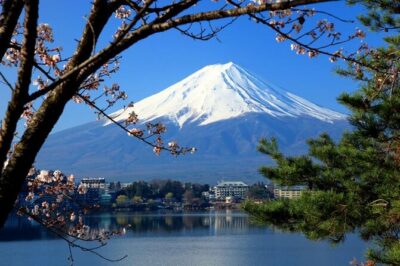
Mt Fuji and Hakone 1-Day Bus Tour Return by Bullet Train
Read our review →
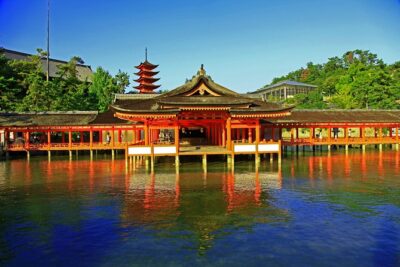
Peaceful Hiroshima & Miyajima UNESCO 1 Day Bus Tour
Read our review →
Tokyo Mt Fuji 5th St & Hakone Cruise Bus Tour w/Bullet Train
Read our review →
Meiji Shrine, Asakusa, Skytree Bus Tour and Cruise
Read our review →
Kyoto/Osaka: Nara, Fushimi Inari Taisha, Arashiyama Bus Tour
Read our review →Browse the lists this tour appears in