
Reviewed · HIKING & TREKKING
Kyoto Hiking Tour: The Nature and Legends of Kurama and Kibune
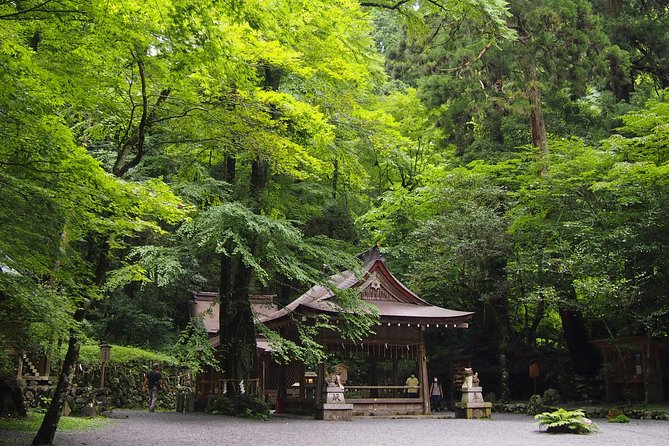
Mount Kurama gives you a very different Kyoto: cedar forest, steep stone steps, old shrines, mountain air and legends tied to Reiki. This private tour connects Yuki Shrine, Kurama-dera and Kifune Shrine in one long day, with an English-speaking guide to explain what you are seeing.
I like the hotel pickup and private format, since you do not need to sort out the route alone. I also like the guides’ flexibility. Miyo, Akari, Yoji, Miki, Michiko and others have adjusted walking speed, explained religious traditions, and changed plans when weather or injuries required it.
The catch is simple: this is a real mountain walk, not a gentle stroll. You will face many stairs, uneven ground and steps going both up and down. At $191.60 per person, the price makes the most sense if you value a private guide, included admissions and a full day away from central Kyoto.
Key points to know before booking
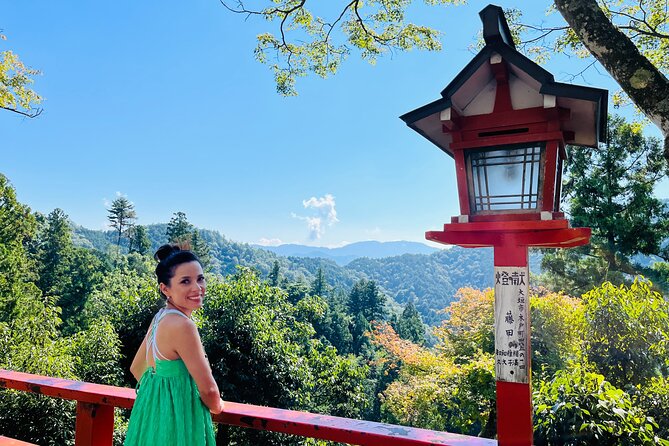
- The route links two mountain areas: You visit Kurama and Kibune, with shrines, temples and forest paths between them.
- The hike includes many stairs: A moderate fitness level is required, and some sections have uneven surfaces.
- A private guide shapes the day: Guides such as Mariko, Ryoma, Yuki, Akari, Miyo and Yoji have been praised for clear English, patience and local insight.
- Hotel transfers are included: Pickup and drop-off are offered in Kyoto’s urban area and the Kurama area.
- Temple admission is covered: Kurama-dera entrance and other listed admissions are included, along with fees and taxes.
- Weather can change the plan: Heavy rain may cancel the forest walk or the entire tour, with a new date or full refund offered.
Why Mount Kurama feels far from Kyoto
Kyoto is famous for its temples in the city center, but Mount Kurama gives you a quieter and more physical way to meet the region. The setting changes quickly from urban streets to wooded mountain trails, shrines and small communities.
This is not just a walk through nature. Kurama has strong ties to Japanese religious traditions and to the modern healing practice called Reiki. The tour explains the connection between the mountain, meditation and spiritual belief without requiring you to know anything in advance.
The private format matters here. A guide can stop to explain a shrine gate, a sacred tree or a local legend instead of rushing your group along. You can also ask questions about Japanese religion, food, customs and daily life, subjects that several guides have included in their conversations.
The experience lasts about eight hours and begins at 9:00 a.m. Hotel pickup removes one practical worry, especially if you are staying in central Kyoto. Private transportation by taxi, car or bus is listed as an extra option, so confirm what your included transfer covers when you book.
More walking routes from Kyoto:
- Fushimi Inari Hidden Hiking Tour (Private Option Available)
★ 5.0 · 1,750 reviews - Kyoto: 3-Hour Fushimi Inari Shrine Hidden Hiking Tour
★ 4.9 · 270 reviews - Kyoto: Hike and Hot Springs in Kurama
★ 5.0 · 49 reviews
Yuki Shrine and the 800-year-old cedar
The first listed stop is Yuki Shrine, reached in the Kurama area. The shrine was originally built in central Kyoto and moved to Kurama in 940 to protect the region from mysterious evil. That detail gives the visit a useful sense of place: this is not simply an attractive building in the woods, but a shrine with a protective role in local tradition.
You have about 20 minutes here. That is enough for a focused visit rather than a long free period. Look for the 800-year-old cedar tree, one of the shrine’s main features, and ask your guide to explain the symbols and customs you might otherwise miss.
Yuki Shrine is a good early stop because it sets up the themes of the day: mountain worship, protective deities, old legends and the close relationship between religion and the natural world. The short visit also saves energy for the main climb.
Mount Kurama and the Reiki connection
Mount Kurama is associated with Reiki, the holistic healing practice founded by Mikao Usui. The tour explains that Usui meditated on the mountain for 21 days in the early 1900s and received the Reiki healing energy there.
You have about an hour assigned to Mount Kurama. Treat this as a cultural and spiritual visit as much as a hiking segment. The importance of the mountain comes from its traditions and stories, not just from a viewpoint or a quick photo stop.
The term Reiki may attract people interested in meditation, healing or Japanese spirituality, but you do not need a special interest to enjoy this section. The guide helps place the story in its local setting and can connect it to the broader religious practices found around the mountain.
Expect the walking pace to vary by guide and group needs. The tour is private, which allows the guide to adjust the pace more easily than a large group excursion. One older participant described the route as manageable because the guide made frequent stops and kept the focus on the sites rather than treating the climb as a race.
Kurama-dera and the forest path
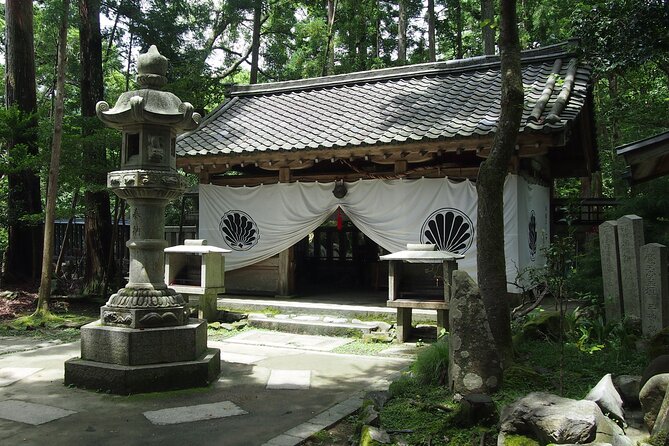
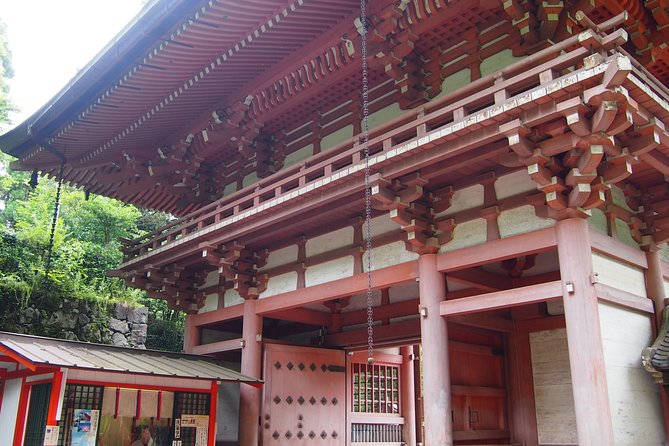
After Yuki Shrine, the route includes a pleasant forest walk of about 25 minutes to Kurama-dera. The temple dates to the eighth century and is dedicated to the warrior deity Bishamonten.
This section is where the tour feels most like a mountain pilgrimage. You move through trees and along a path toward an old temple rather than simply arriving by road, and the walking helps connect the sites into one experience.
Kurama-dera receives about 45 minutes. Admission is included, so you do not need to budget separately for the temple entrance. Use the time to look at the setting, listen to the explanation and rest before continuing.
The word pleasant should not be mistaken for effortless. The route contains many stairs, and the ground can be uneven. Several descriptions of the walk point out that the climb is short enough to manage for a reasonably fit person but demanding enough to require care. Good walking shoes are a sensible choice, although the supplied information does not set out a formal footwear rule.
Same base, a different sort of day:
- PERFECT KYOTO 1-Day Bus Tour
★ 5.0 · 13,518 reviews - Kyoto: Fushimi Inari, Kinkakuji, Bamboo Grove 1 Day Bus Tour
★ 4.8 · 4,316 reviews - Kyoto: Tea Ceremony in a Traditional Tea House in Kiyomizu
★ 4.9 · 3,519 reviews - Kyoto Geisha Walking Tour: Gion District & Hidden Gems
★ 4.7 · 3,273 reviews
Okunoin Maoden and the mountain’s darker legends
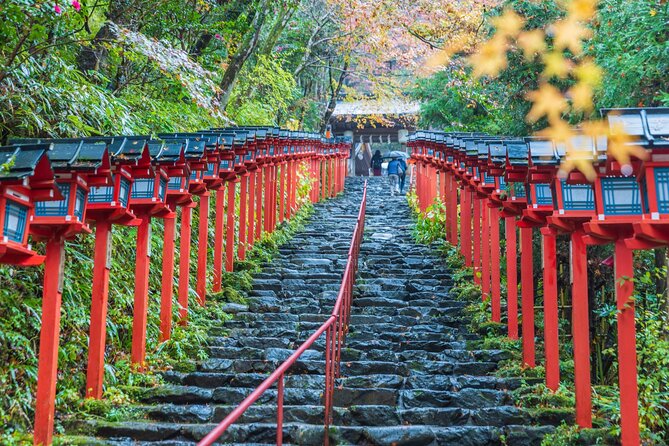
Okunoin Maoden is a brief stop, listed at about 10 minutes. It lies farther into the mountain and is said to be a place where demons reign. The atmosphere is described as mysterious, which gives the route a change of mood after the more familiar shrine and temple visits.
Do not expect a large complex or a long sightseeing session here. The value is in the location and the story. A guide can explain why such legends matter in the religious imagination of the area and how the mountain holds both protective and unsettling associations.
This is also a reminder that the tour is not built around a single grand monument. Its appeal comes from the sequence: forest, stairs, shrines, temples, sacred stories and small moments of interpretation along the way.
Kifune Shrine and the God of water
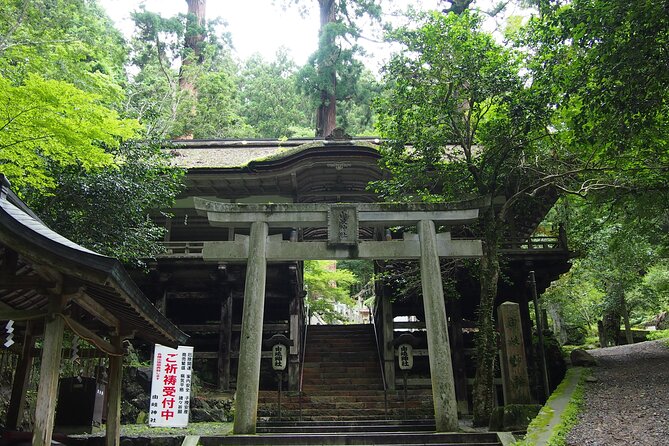
The route then reaches Kifune Shrine, with about 30 minutes at the main shrine. Kifune is dedicated to the God of water and rain and has long been associated with sailors seeking luck for their voyages.
You can drink the pure mountain water here, according to the tour information. That detail fits the setting. Water is not an abstract idea at Kifune. It is part of the physical character of the area and the reason this shrine has its particular religious role.
The guide’s explanations are especially useful at Kifune because the shrine’s purpose may not be obvious from its buildings alone. You learn how a place of prayer can serve people connected to travel, weather and the sea, even though the shrine is now in the mountains.
The tour gives you time to take in the setting, but do not expect an unstructured afternoon. The schedule must still connect the main shrine with the inner shrine and the rest of the route.
The inner shrine and the boat legend
A second 25-minute stop visits the inner shrine of Kifune. According to local legend, a goddess traveled by boat from Osaka up the river into these mountains, and the inner shrine houses the boat she is said to have used.
This is one of the tour’s more distinctive stories. It links Osaka, the river and the mountain shrine, giving you a legend that reaches beyond the immediate site. Ask your guide to explain how the story fits with the shrine’s connection to water and travel.
The inner shrine also shows why a private guide can add real value. You are not merely checking off two shrine names. You are hearing how the sites relate to one another and how stories give meaning to the route.
The hike: beautiful, but not a casual walk
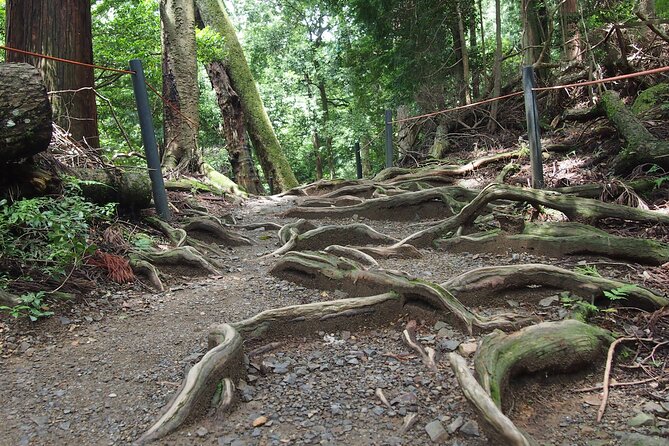
The strongest praise for this experience centers on the combination of forest, shrines and guiding. The most important caution is the physical effort. You will encounter a lot of stairs, steps going up and down, and uneven surfaces.
The walk is described as a moderate physical activity. That does not mean extreme mountaineering, but it does rule out a relaxed park stroll. One guide helped a group in its seventies complete the route by setting a manageable pace and stopping often. Another guide changed the plan after a participant suffered an injury.
Your experience will depend on weather, fitness and the guide’s judgment. The private format is a major advantage if members of your group walk at different speeds. You can discuss your needs before or during the tour, and guides have shown a willingness to adapt.
Rain deserves special attention. One account describes heavy rainfall that led to the forest walk being canceled in favor of easier shrine access and other cultural stops. The guide also arranged efficient transportation and suggested an alternative visit to the Home of 1000 Buddhas. The full tour requires good weather, and if poor weather forces cancellation, you are offered another date or a full refund.
What the guides add to the day
The guide may be the biggest reason to choose this experience instead of arranging the route yourself. Guides named in the supplied information include Mariko, Ryoma, Yuki, Etsuko Nakaba, Miyo, Akira, Miki, Akari, Mizuho, Michiko Murayama and Yoji.
The repeated strengths are clear: strong English, patience, cultural knowledge and flexibility. Guides have explained Japanese history, religion, food and lifestyle, found lesser-known places, adjusted walking speed and altered the route for injuries or rain.
Yoji, for example, is described as a strong conversationalist who matched his pace to a 66-year-old participant. Miki was praised for her passion and style. Akari took particular care with group safety on the stairs. Michiko handled umbrellas, towels and route changes during a wet day while keeping the cultural side of the visit worthwhile.
Guide quality can vary from person to person, as it does on any private tour. Still, the range of names and the consistent emphasis on personal attention suggest that the guide is central to the experience rather than a minor add-on.
Lunch, transport and the real value of $191.60
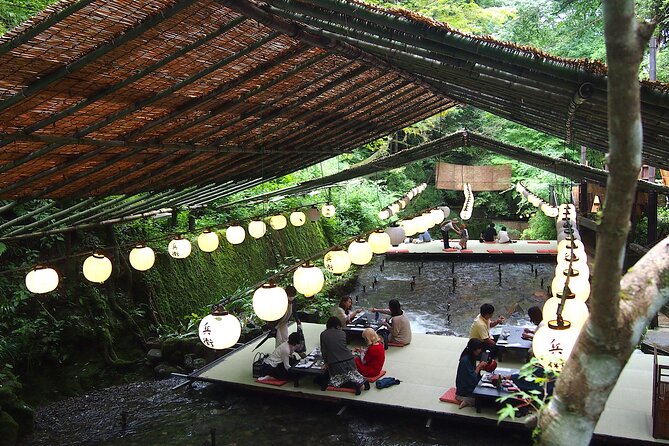
Lunch is not included. The schedule leaves room for a meal, and one account describes a delicious soba lunch, while another notes a picturesque lunch setting in a valley beside a small stream. Since the exact restaurant is not guaranteed in the supplied details, plan to pay separately and ask your guide what is practical that day.
At $191.60 per person, this is not a budget hiking outing. The value comes from several pieces working together: a full eight-hour day, a private English-speaking guide, hotel pickup and drop-off in the stated areas, included temple admission, all fees and taxes, and help navigating a route that combines two mountain communities.
For a solo participant or a couple, the price may feel high compared with using public transport and walking independently. For a small private group, the cost can feel more reasonable because everyone receives direct attention and the route can be adjusted around the group.
The tour also includes photos of the participants. That is a small but useful extra, especially on a day when you may not want to manage a camera while climbing stairs.
Who should book this Kurama and Kibune tour?
I would choose this tour if you want Kyoto’s mountain culture but do not want to spend your day working out every train, trail and temple detail. It suits people who care about local legends, religious sites, forests and conversation with a guide.
It is also a good choice if you want a private pace. A guide can pause for questions, make frequent rests and respond to an injury or change in interest. Families and mixed-ability groups may find that more useful than a fixed group itinerary.
I would hesitate if you are looking for easy sightseeing with very little walking. The route includes substantial stairs and uneven surfaces, and the physical side is not optional. I would also think twice if lunch and private transport costs must stay tightly controlled, since lunch is extra and some private vehicle options cost more.
Free cancellation is available up to 24 hours before the 9:00 a.m. start time. Changes or cancellations inside that window are not refunded, so check the local cutoff time before making last-minute plans.
Should you book it?
Book this tour if you want a full day that joins mountain walking, Japanese religious traditions and local legends rather than a quick temple stop. The private guide, hotel transfer and included admission make the route easier to manage, while the personal stories from guides such as Akari, Miyo, Yoji and Michiko show how much the day can improve with a thoughtful escort.
Skip it if you want a flat route, a short outing or a low-cost way to reach Kurama and Kibune. For fit visitors who accept the stairs and want a quieter, more reflective side of Kyoto, this is a strong choice.
FAQ
How long does the tour last?
The experience lasts approximately eight hours and starts at 9:00 a.m.
Is hotel pickup included?
Yes. Hotel pickup and drop-off are included from the Kyoto urban area and the Kurama area.
Is this a private tour?
Yes. Only your group participates in the activity.
What level of fitness is required?
A moderate level of physical fitness is recommended. The route includes many stairs, steps going up and down, and uneven surfaces.
Are temple entrance fees included?
Yes. Kurama-dera admission is included, along with the listed fees and taxes. Admissions for the listed shrine and temple stops are also shown as included.
Is lunch included?
No. Lunch is not included in the tour price.
What happens if the weather is poor?
The experience requires good weather. If it is canceled because of poor weather, you are offered a different date or a full refund. If rain affects only part of the route, the guide may change the itinerary for safety.
Just added in Kyoto
- Kyoto: Zen Meditation at a Private Temple with a Monk★ 5.0 · 25 reviews
- Private Cooking Class Udon in Kyoto Japan★ 5.0 · 23 reviews
- Your Private Vacation Photography Session In Kyoto★ 5.0 · 110 reviews
- Private Pewter Sake Cup Experience with a Kyoto Artisan★ 5.0 · 31 reviews
- Kyoto Wagashi(Japanese sweets) Cooking Class near Fushimiinari★ 5.0 · 60 reviews
- Kyoto:Family-Friendly Kimono & Yukata Experience at WARGO★ 5.0 · 147 reviews
- Private Guided Traditional Buddhist Cooking in Japan★ 5.0 · 16 reviews
- Kyoto: Gion Geisha District & Sake-in-Hand Walking Tour★ 5.0 · 37 reviews
Hiking & Trekking, compared.
Fushimi Inari Hidden Hiking Tour (Private Option Available)
Read our review →
Hiroshima Local guided Hiking Tour&Open-air Tea Ceremony
Read our review →
Hiking the Historic Nakasendo Trail [1 Day Tour from Nagoya]
Read our review →
Hike Japan Heritage Hakone Hachiri with certified mountain guide
Read our review →Browse the lists this tour appears in