
Reviewed · CASTLE TOURS
Kyoto: Nijo Castle World Heritage Guided Tour with Admission
Nijo Castle was built to make a point, not to win a siege. The Tokugawa shoguns placed this ornate palace close to the Emperor’s residence in Kyoto, using gates, corridors, room sizes, and decoration to show who held power. The most striking moment comes inside Ninomaru Palace, where the floors chirp underfoot and the end of the shogunate took shape in 1867.
I like the small group limit of 10, since it gives you room to ask questions and hear the guide without fighting through a large crowd. I also like the mix of political drama and small details, from koi carp in the moats to the palace’s clever sound system. The main consideration is practical: you must remove your shoes inside the palace, and the 90-minute visit may feel brief if you want to inspect every garden path.
Key points to know
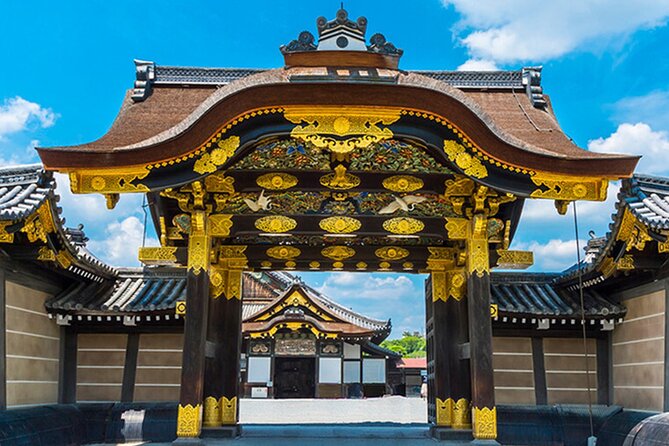
- The palace was built for display: Nijo Castle shows how the shoguns used architecture and ceremony to control Kyoto.
- Ninomaru Palace is the main event: See the nightingale floors, formal rooms, layered corridors, and carefully graded spaces.
- The tour ends at a major turning point: You stand in the room linked to Tokugawa Yoshinobu’s return of authority to the Emperor in 1867.
- Groups stay small: A maximum of 10 people makes it easier to ask questions and keep close to the guide.
- English guides add local detail: Guides including Nao, Naoya, Uta, and Benjamin have been praised for clear storytelling, humor, and practical Kyoto advice.
- Admission is included: The $40 price covers entry and the 90-minute guided tour.
Why Nijo Castle feels different from a European castle
When you first hear the word castle, you may picture stone walls, towers, and a battlefield. Nijo Castle works differently. Its power is quieter and more theatrical.
The Tokugawa shoguns ruled Japan from Edo, now Tokyo, but Kyoto remained the Emperor’s city. Building a lavish palace near the Imperial residence sent a clear message: the shogun was close by, wealthy, protected, and in control.
The castle’s design helped deliver that message. Gates frame each approach. Corridors guide your movement. Rooms become larger or more decorated according to the rank of the person allowed to use them. You are not simply walking through an old building. You are moving through a carefully arranged lesson in status.
That is why a guide helps here. Without context, you may see attractive woodwork and painted screens but miss the political theater. With the story in place, the castle becomes easier to read.
Other castles reached from Tokyo:
- Tokyo Castle & Imperial PalaceーShogun Walking Tour
★ 4.7 · 1,068 reviews - Tokyo Castle & Imperial PalaceーShogun Walking Tour
★ 5.0 · 724 reviews - Imperial Palace East Garden and Edo Castle Walking Tour in Tokyo
★ 5.0 · 510 reviews
Meeting at Nijōjō-mae Station
The tour begins outside Exit 1 of Nijōjō-mae Station. Look for a guide holding a sign marked Local Guide Stars. This is a simple meeting point, but give yourself enough time to get out of the station and locate the guide without rushing.
The route returns to the same station area after the castle visit. That makes the tour easy to fit into a day of sightseeing around central Kyoto.
The guide speaks English, and the group is limited to 10 people. That size matters at Nijo Castle. You will need to stay with the group through the palace, and a compact group makes it easier to hear explanations before moving into the next room.
Several guides have led this experience, including Nao, Naoya, Uta, Benjamin, and Alexander. Nao has been singled out for detailed explanations and strong storytelling. Naoya has been praised for answering questions and adjusting the pace for a mixed-age family. Uta brings information about local customs along with the castle story, while Benjamin is known for adding humor to the historical details.
Guide assignments can change, so you should not book on the assumption that one particular person will lead your visit. The useful point is that the tour has a record of guides who can explain both the building and its place in Japanese culture.
Passing through a castle built to intimidate
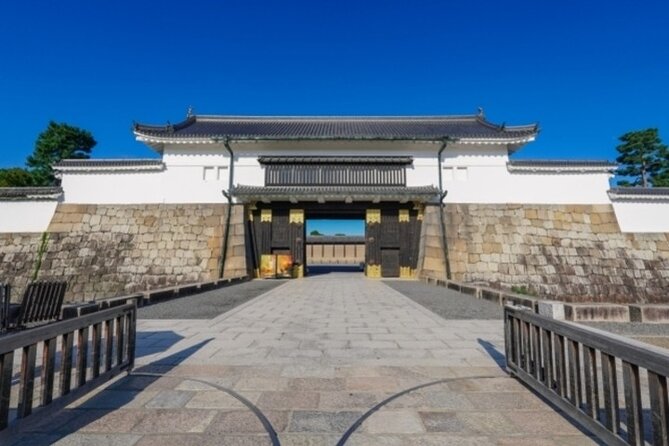
The first part of the walk helps you understand the castle’s purpose. Nijo Castle was not designed only to keep enemies out. It was also designed to make important visitors feel the shogun’s authority before a conversation even began.
Notice how the route controls what you see and when you see it. Gates divide the grounds into stages. Walls and corridors prevent a quick view of the whole complex. Each step gives the impression that you are entering a more important space.
Your guide explains the rivalry between shogun and Emperor, a useful frame for the entire visit. The shoguns held practical political power for more than 260 years, while the Emperor remained the symbolic head of Japan in Kyoto. Nijo Castle made that imbalance visible.
I find this political angle more useful than a simple list of dates. It tells you why the castle is in Kyoto, why it is so elaborate, and why its rooms were arranged with such care.
Ninomaru Palace and the chirping floors
Ninomaru Palace is the heart of the tour. Before entering, you must remove your shoes. The palace has mostly level access, but the shoe rule is important if you prefer easy footwear or have mobility concerns.
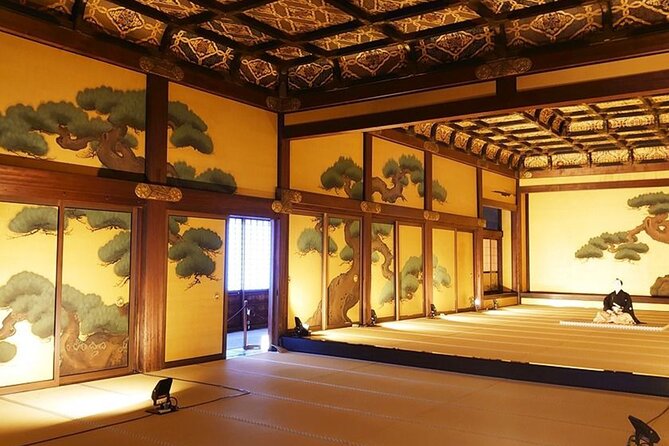
Inside, the famous nightingale floors are the detail most people anticipate. As you walk, the boards make a soft chirping sound. The purpose was to warn of intruders moving through the palace at night. It is a clever security feature, but it also fits the building’s larger message: even quiet movement could be noticed.
Do not expect the floors to sound like a loud alarm. The effect is subtle, and the guide can help you understand what you are hearing. The real pleasure comes from connecting the sound to the shogun’s need for control inside a palace that was meant to look open and welcoming.
Room size and decoration also carried meaning. Formal spaces were arranged according to rank, so the building itself reinforced social order. Painted details and polished wood may first catch your eye, but the guide points you toward the less obvious clues: who could enter a room, where someone would sit, and how the route shaped a visitor’s behavior.
The corridors add another layer. Their design allows movement through the palace while keeping people in a controlled sequence. You do not wander freely from room to room. You are directed, observed, and reminded of hierarchy.
Other listed sites reached from Tokyo:
- From Tokyo: Nikko World Heritage Site Private Full-Day Trip
★ 4.9 · 243 reviews - Tokyo: Nikko World Heritage Private Day Trip Hotel Pick-up
★ 4.8 · 145 reviews - From Tokyo: Guided Day Trip to Nikko World Heritage Sites
★ 4.8 · 51 reviews - World Heritage Shirakawa-go and Experience Tours from Kanazawa
★ 5.0 · 4,049 reviews
The room linked to the end of the shogunate
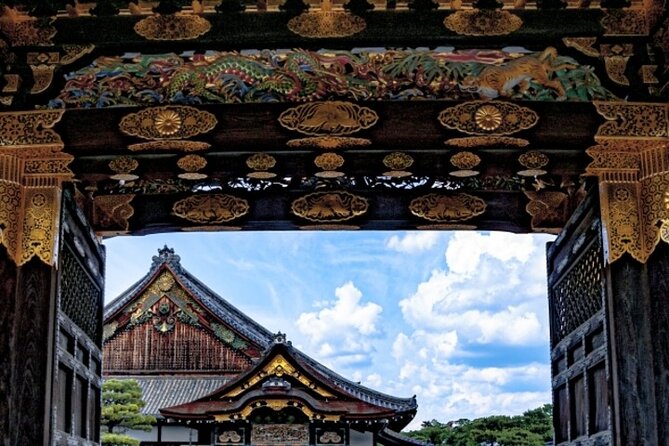
The tour’s strongest historical moment comes in the room where Tokugawa Yoshinobu returned authority to the Emperor in 1867. This act ended more than 260 years of Tokugawa shogunate rule and helped open the way for the Meiji Restoration.
That event gives Nijo Castle an unusual role. It is not only a place where the shoguns displayed their power. It is also the place where that political order began to give way.
The setting makes the transition easier to picture. The same palace built to proclaim shogun authority became associated with the transfer of power back to the Emperor. Your guide explains the shift without turning the visit into a lecture packed with names and dates.
If you have read about the Tokugawa period or watched historical dramas set in Japan, this part will likely connect several ideas. If you are new to the subject, the guide provides enough background to make the event understandable.
Gardens, moats, and a slower change of pace
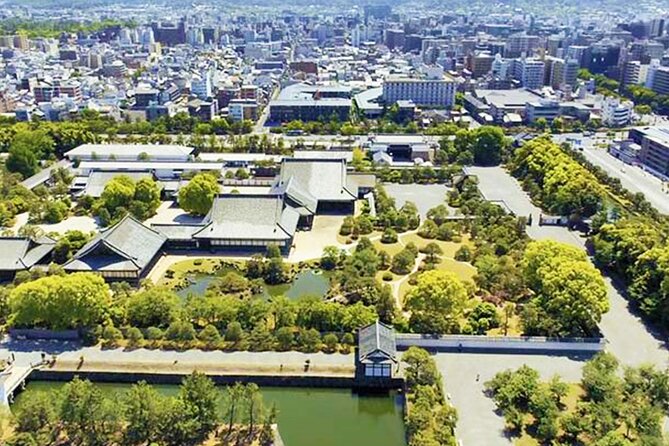
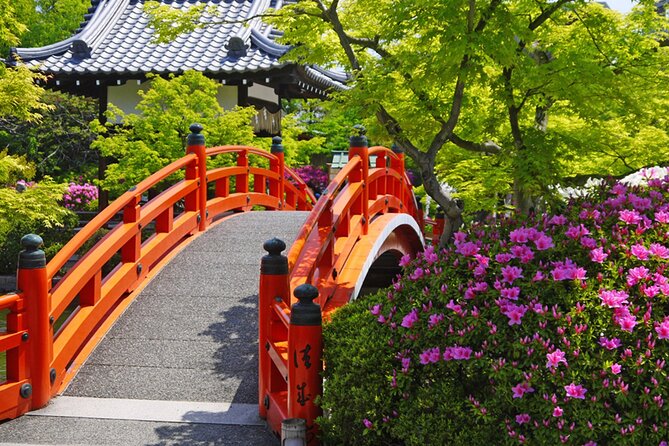
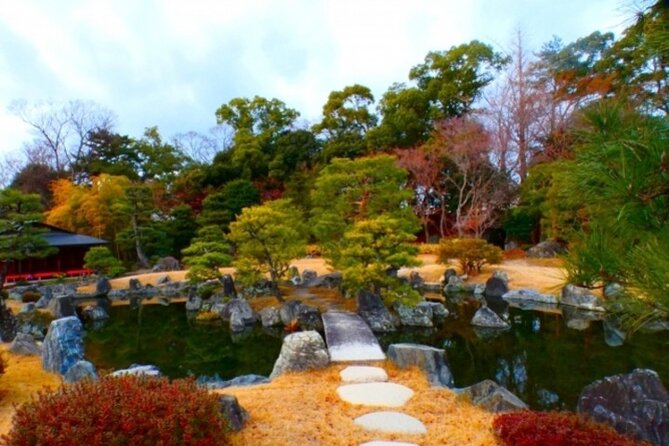
After the formal interior, the grounds provide a welcome change. Nijo Castle’s gardens and moats offer more open views and a chance to slow down.
Colorful koi carp swim through the moats, adding movement to the stone, water, and greenery. These are easy photo opportunities, but I would not treat the gardens as mere decoration. They balance the strict palace interiors with a more relaxed setting.
The grounds also help you see how the castle was organized from outside. The walls, gates, water, and planted areas work together to create distance between public approaches and private spaces. You may find that the gardens are the place where you have the most time to look around, although the tour remains guided and follows a set schedule.
The route outline allows about an hour for the castle visit within the 90-minute experience. That should be enough for the main palace and selected outdoor areas, but it is not a full-day exploration. If you want to linger over every garden view, take extensive photographs, or read every sign, plan to return on your own if your admission arrangement allows it.
What $40 gets you
At $40 per person, this is not the cheapest way to enter Nijo Castle. The value comes from the combination of admission and interpretation.
You are paying for a 90-minute English-guided walk, a small group of up to 10, and entry to the castle. The guide does more than point out the nightingale floors. You get the political reason the castle was built, an explanation of social rank inside the palace, and the connection to the 1867 transfer of power.
That context is especially useful if Nijo Castle is one stop among several in Kyoto. You can see the palace independently, but it is easy to leave with only a general impression of old rooms and pretty gardens. The guided visit gives you a clear story to carry into the rest of your sightseeing.
The price makes less sense if you prefer to move at your own pace or already know the Tokugawa period well. You may also feel limited if you want a long, unhurried garden visit. For a first visit, though, the small group and included admission make the cost reasonable.
The booking terms add flexibility. You can cancel up to 24 hours in advance for a full refund, and you can reserve now and pay later. Starting times vary, so check availability before choosing your day.
Who will get the most from this tour
I would recommend this tour to first-time visitors who want the castle’s story explained in plain English. It is also a good fit if you enjoy political history, architecture, or the practical details of how old buildings worked.
Families can benefit from the short format and the nightingale floors. One family with children aged 8 and 13 found that the guide could adjust to different ages and answer questions at the group’s pace. That is a useful sign for parents who worry that a formal palace visit may lose younger children.
The tour can also work well for older visitors. The terrain is mostly flat, although removing shoes inside the palace is required. Wheelchair access is listed, but you should still consider whether the shoe-removal rule and indoor route suit your needs.
Solo visitors may find the small group especially comfortable. On some departures, the group may be very small, even down to one participant, though you should not count on receiving a private tour.
Small details that improve the visit
Wear shoes that are easy to remove and put back on. This is the most practical tip for the palace interior.
Keep your questions ready. The small group format is designed for interaction, and the guides have been praised for answering questions about both the castle and present-day customs.
Listen for details beyond the famous floorboards. The room hierarchy, layered corridors, and controlled entrances explain how the shoguns used space to shape behavior.
Leave time around the tour if you want photographs. The 90-minute schedule covers the key sights, but it does not promise a long pause at every attractive garden view.
If you are visiting Japan for the first time, ask the guide for suggestions about nearby places or the rest of your Kyoto plans. Guides such as Nao and Naoya have offered practical trip advice after explaining the castle.
Should you book the Nijo Castle tour?
Book it if you want Nijo Castle to make sense, not simply look beautiful. The strongest parts are the Ninomaru Palace, the chirping floors, the carefully arranged social spaces, and the room tied to the end of shogun rule.
The tour is also a sound choice if you value a small group, need English explanations, or want admission handled as part of the experience. Its main limits are the fixed 90-minute schedule, shoe removal, and the fact that independent visitors may prefer more time in the gardens.
For $40, I think the tour earns its price when history and architecture matter to you. If you are happy to read signs and explore without help, save the money and take your time. If you want the castle’s political message, building design, and final shogunate chapter brought together, this is a practical and well-focused way to see Nijo Castle.
FAQ
Where does the tour meet?
Meet outside Exit 1 of Nijōjō-mae Station. The guide will hold a sign that says Local Guide Stars.
How long does the experience last?
The guided experience lasts 90 minutes. The castle visit itself is listed as about one hour within the route.
Is admission to Nijo Castle included?
Yes. The price includes admission to Nijo Castle and the guided tour.
What language is the tour in?
The live guided tour is conducted in English.
How large is the group?
The group is limited to 10 participants.
Do I need to remove my shoes?
Yes. All visitors must remove their shoes when entering the palace.
Is the tour wheelchair accessible?
Yes, the activity is listed as wheelchair accessible, and the grounds are described as mostly flat. Shoe removal is still required inside the palace.
Can I cancel the booking?
Yes. You can cancel up to 24 hours in advance for a full refund. You can also reserve now and pay later.
Just added in Tokyo
- The 10 Tastings of Tokyo With Locals: Private Street Food Tour★ 5.0 · 48 reviews
- Small Town in the Big City: Tasting Tokyo’s Kichijoji★ 5.0 · 195 reviews
- Small Town in the Big City: Tasting Tokyo’s Kichijoji★ 5.0 · 16 reviews
- EXCLUSIVE Tokyo Secret: Kichijoji Small-Group Food & Bar Hopping★ 5.0 · 29 reviews
- Explore Kichijoji: Walk Through One of Tokyo’s Beloved Districts★ 5.0 · 21 reviews
- :Tokyo,Shibuya/ Pro Photography in Kimono / English-Friendly★ 5.0 · 26 reviews
- 【R34】Tokyo:Private Daikoku tour in Modified R34★ 4.9 · 92 reviews
- Tokyo:Calligraphy &Make your original folding fan in Asakusa★ 5.0 · 62 reviews
Castle Tours, compared.
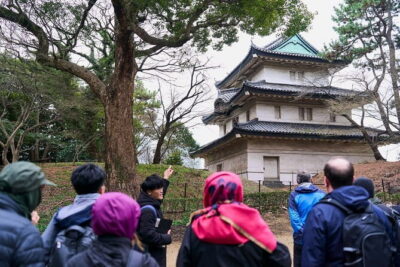
Tokyo Castle & Imperial PalaceーShogun Walking Tour
Read our review →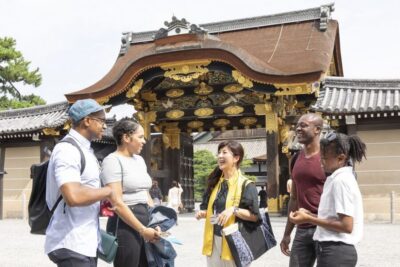
Nijo-jo Castle and Ninomaru Palace Guided Tour
Read our review →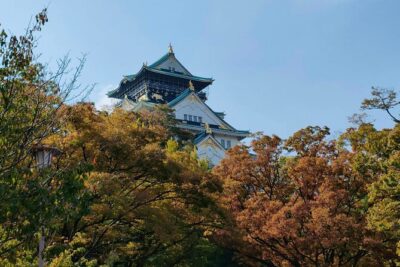
Ultimate Osaka Walking Tour: Castle, Dotonbori & Hidden Gems
Read our review →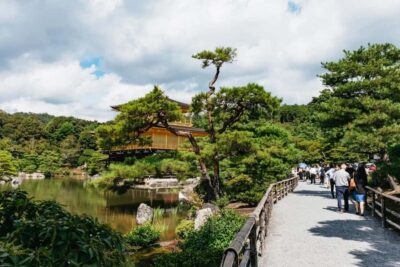
Nijo Castle, Kiyomizu & Fushimi Inari Guided Tour
Read our review →
Nijo, Kinkaku-ji, Arashiyama, Kiyomizu & Fushimi Inari
Read our review →
Osaka Castle Walking Tour and Castle Tower Admission
Read our review →
Imperial Palace East Garden and Edo Castle Walking Tour in Tokyo
Read our review →Browse the lists this tour appears in