
Reviewed · CASTLE TOURS
Tokyo Castle & Imperial PalaceーShogun Walking Tour
Edo Castle was built to keep enemies out, but its walls, gates, guardhouses, and watchtowers now make an excellent open-air history lesson in central Tokyo. This two-hour walk traces the old fortress and the Imperial Palace grounds, with an English-speaking guide explaining how the shogun, samurai, and emperor shaped Japan.
I like the small-group format, advertised for up to 10 people, and the way the route mixes military history with peaceful gardens. I also like the guides’ practical teaching style. K, Keiko, Ai, Shin, and others have been praised for using old maps, photographs, and scale models to make the vanished castle easier to picture.
The main consideration is that this is a walk-by tour of the grounds, not an entrance visit to the Emperor’s residence. You will walk on exposed paths, slopes, and stairs, and the tour is English only. On a hot or rainy day, weather gear and comfortable shoes matter.
Key points to know before booking
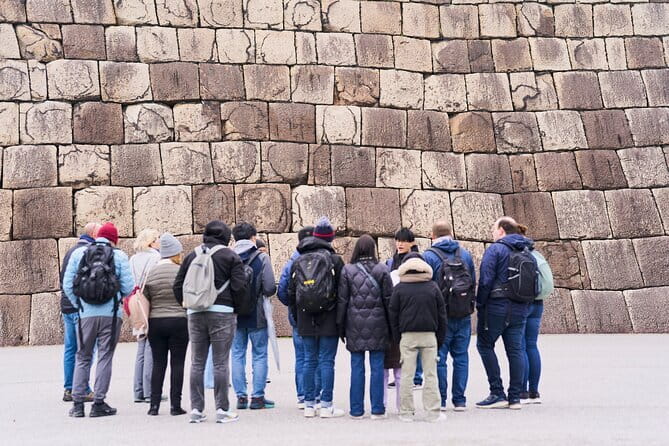
- Edo Castle’s defenses are the star: See massive stone walls, layered gates, guardhouses, and the Sakurada Tatsumi Yagura turret.
- The tour puts samurai into context: You learn who guarded the castle, how ranks worked, and why each checkpoint mattered.
- The former main tower is gone: The East Gardens reveal the castle’s old center through ruins, foundations, and explanation rather than a standing building.
- Ninomaru Garden changes the pace: Koi, seasonal plants, and a traditional pond offer a quiet counterpoint to the fortress story.
- Guides use visual aids: Several guides have used laminated pictures, old layouts, and castle models to explain what no longer survives.
- It is good value at $23.88: The fee buys two hours of organized interpretation across a large historic site, though admission to the Imperial Palace residence is not included because it is not open to the public.
Why this walk helps you understand Tokyo
Tokyo can feel modern enough to hide its older layers. The Imperial Palace grounds are one of the best places to correct that impression. Beneath the trees, lawns, walls, and formal paths is the former center of Edo, the city ruled by the Tokugawa shoguns for more than 250 years.
A guide gives you the missing connection. Without one, you can admire a handsome gate or stone wall without knowing why it was built that way. Here, each stop adds a piece to the castle’s defense system and to Japan’s long imperial story.
The tour also helps separate three ideas that are easy to blend together: samurai, shogun, and emperor. The shogun governed the country from Edo, while the emperor represented the older imperial line. The castle was the shogun’s seat of power, and the current Imperial Palace occupies part of that same historic center.
The setting is central and easy to reach by public transportation. The meeting point is the Starbucks Coffee at Kokyo Gaien Wadakura Fountain Park, 3-1 Kōkyogaien, Chiyoda City. The route ends near the ginkgo-lined avenue in front of Tokyo Station, although the supplied meeting information also says the activity ends back at the starting point. Confirm the exact finish with your guide on the day.
Other walking tours in Tokyo people book:
- Tokyo Tsukiji Fish Market Food and Culture Walking Tour
★ 5.0 · 3,184 reviews - Tokyo: Imperial Palace and Shogun Historical Walking Tour
★ 5.0 · 2,251 reviews - Tokyo: Shinjuku Local Bar and Izakaya Guided Walking Tour
★ 4.9 · 1,794 reviews
From Sakurada Tatsumi Yagura to the castle gates
The first stop is Sakurada Tatsumi Yagura, a surviving turret from the Edo period. This is a useful opening because it shows how the castle was more than one wall around one building. Turrets helped guards watch approaches and protect key corners of the compound.
The guide explains the security systems that still protect the Imperial Palace today. This is not a visit inside the Emperor’s residence. Instead, you learn how the outer grounds are arranged and how old defenses shaped movement through the site.
Next comes Kokyo Otemon Gate, one of the clearest reminders that Edo Castle was a serious fortress. You see two large gates and thick stone walls from the original castle. The narrow, controlled entrance gave defenders an advantage, while the turns and barriers made a direct rush difficult.
This is one of the strongest parts of the tour for visitors who want practical detail. You are not simply told that the castle was well defended. You are shown how gates, walls, and changes in direction worked together.
Three guardhouses, three levels of samurai duty
The Constable Guardhouse is smaller and more modest than the main gates. It was used by lower-ranking samurai, and the guide explains who these men were and why their position mattered.
That detail keeps the story from focusing only on shoguns and famous warriors. A castle depended on many people doing routine work: watching entrances, checking movement, and maintaining order. The Constable Guardhouse gives you a closer look at that daily system.
The Hyakunin Bansho Guardhouse offers a larger sense of scale. Many samurai were stationed here, making it an important point in castle security. The name and function help you picture the castle as a working military compound, not just a ceremonial residence.
At the Obansho Guardhouse, the focus shifts to higher-ranking samurai and their duties near the inner gate. The contrast among these three guardhouses is especially useful. You see that rank affected where a samurai served and what responsibilities he carried.
Each stop lasts about 10 minutes. That may sound brief, but the short pauses keep the walk moving. The tradeoff is that the guide cannot spend a long time on every point, so ask questions when something catches your interest.
Fujimi-yagura and the view from the old watchtower
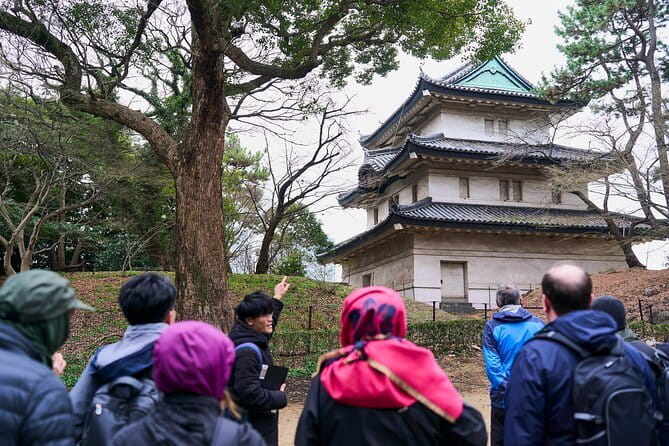
Fujimi-yagura is an old watchtower overlooking the grounds. The guide explains its role and what made it special in the past. Like Sakurada Tatsumi Yagura, it helps you understand the castle’s vertical defenses and the value of a clear view over the surrounding area.
The tour does not promise access to climb the tower. You see and discuss the structure as part of the grounds. That distinction matters if you are expecting an interior castle visit or a high lookout.
This is also where a guide’s teaching style can make a real difference. Guides such as Keiko have used laminated images of old castle layouts and guard towers. A picture of the former arrangement can turn a quiet patch of lawn into a more understandable part of Edo Castle.
Other castles reached from Tokyo:
- Tokyo Castle & Imperial PalaceーShogun Walking Tour
★ 4.7 · 1,068 reviews - Imperial Palace East Garden and Edo Castle Walking Tour in Tokyo
★ 5.0 · 510 reviews - Tokyo Castle, Imperial Palace, Shogun & Garden Walking Tour
★ 5.0 · 211 reviews - Osaka Castle: Museum and Tower Entry Ticket
★ 4.5 · 2,380 reviews
The scale model and the castle that disappeared

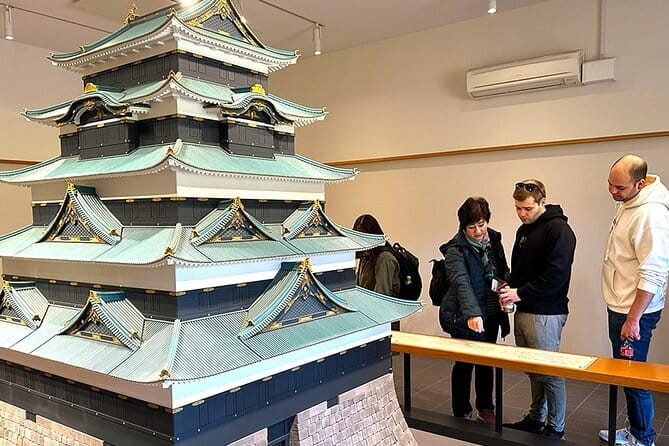
Kokyo Sannomaru Shozokan offers a scale model of the former Edo Castle and a souvenir shop with palace-related items. The model is valuable because very little of the castle survives above ground in its original form.
The next stop, the Edo Castle ruin in the East Gardens, addresses the most obvious question: where is the main tower? The former central tower is no longer standing. Here, the guide explains why the tower disappeared and what remains today.
This is a good moment to adjust your expectations. You will not walk through grand castle rooms or see the Emperor’s residence. You will interpret foundations, walls, open grounds, and surviving structures with help from the guide.
For some people, that makes the tour more interesting. You are learning to read absence as part of the site. For others, the lack of a complete castle may feel anticlimactic. If you need a fully reconstructed Japanese castle interior, this is not that experience.
Ninomaru Garden brings a quieter finish
After gates, walls, watchtowers, and military ranks, Ninomaru Garden changes the mood. It is a traditional Japanese garden with seasonal plants and a pond containing koi.
I like this part because it shows another side of the former castle grounds. The site was not only a place of guards and strategy. It also included spaces designed for beauty, calm, and careful attention to nature.
The garden is a pleasant place to pause, take photographs, and let the earlier explanations settle. Several guides have been praised for making the history of the grounds easier to appreciate, especially for first-time visitors who might otherwise see only a pleasant park.
The garden visit lasts about 15 minutes. The pace is still guided rather than leisurely, so you should not expect a long free period for quiet reflection. Still, it gives the route a better balance than a tour devoted only to walls and military history.
What the guides add to the experience
The strongest part of this activity is the human explanation. Guides including K, Ai, Tomo, Anju, Keiko, Nana, Yuuko, Yuuki, Shin, Dai, Mayuko, Frankie, Mako, and Yuta have been singled out for clear presentations, patience, humor, and enthusiasm.
K has been praised for answering questions in clear English and for combining detail with a lively personality. Keiko has used flashcards showing old layouts, guard towers, and the Imperial family. Nana has been noted for taking extra time with questions, while Shin has helped explain both the palace grounds and the Edo period.
You should not book this expecting every guide to deliver the same style. One negative experience described an English-speaking guide whose communication was difficult, and that participant left early. The wider rating is very high, at 4.9 from 725 ratings with 99 percent recommending the activity, but no guided tour is completely uniform.
The best approach is to arrive ready to ask questions. The route covers a lot in two hours, and a curious group can get more from it than a quiet one. The small-group limit of up to 10 should make conversation easier, although the additional information gives a maximum of 60 participants for the activity overall. That may reflect different operating dates or booking arrangements, so confirm the group size if it is important to you.
Is $23.88 good value?
At $23.88 per person, this is a reasonable price for two hours in one of Tokyo’s most important historic areas. The grounds themselves have free admission at the listed stops, so you are paying mainly for the guide’s explanation, route planning, and historical context.
That value depends on how you like to travel. If you enjoy reading signs, studying maps, and moving at your own pace, you could visit the East Gardens without a guide. But the castle’s original layout is not always obvious, and the Emperor’s residence is not open to the public. A guide helps you make sense of what is visible and what has vanished.
The fee also compares well with the time commitment. Two hours is long enough to cover the main gates, guardhouses, turret, ruins, model, and garden without taking over your whole day. You can place it early in a Tokyo visit to understand the city’s political history, or schedule it before exploring Tokyo Station and Marunouchi.
Free cancellation is available if you cancel at least 24 hours before the start time. Changes or cancellations inside that window are not refunded.
Walking conditions and what to bring
This is an active walking tour, not a seated palace presentation. You will deal with steep slopes and stairs, and much of the route is exposed to the sun.
Wear comfortable shoes. Bring water, especially in hot weather, along with a hat or umbrella for shade. One tour took place in intense heat, and the guide handed out sweets and menthol cooling napkins, but you should not rely on that kind of extra help being available every time.
Rain does not automatically end the experience. A guide has conducted the walk in rainy weather, but you will still want suitable clothing. The security check at the Imperial Palace means you should not bring knives or alcohol.
Most people can take part, and there are no stated health restrictions. Still, the slopes, stairs, heat, and two-hour walking time may be tiring if you have mobility concerns. The route is best for anyone comfortable walking outdoors at a steady pace.
Who should book this Tokyo history walk?
I would choose this tour for a first visit to Tokyo, especially if samurai, shoguns, imperial history, or Japanese gardens are on your list. It is also a good fit if you have trouble picturing historical sites from signs alone.
Families can benefit from the short stops and visual aids. The route offers enough variety to keep the story moving, from giant gates to koi ponds, and guides have been patient with questions.
You may want to skip it if you mainly want to enter the Imperial Palace, see the Emperor’s residence, or explore at your own speed. You should also think twice if a hot, exposed walk or stairs would make two hours uncomfortable.
Should you book the Tokyo Castle and Imperial Palace Shogun Walking Tour?
Book it if you want the former Edo Castle to make sense. The stone walls and gates are impressive on their own, but the explanation of rank, defense, and castle design gives them purpose. The visit to Ninomaru Garden adds beauty and a welcome pause.
At $23.88, the tour offers solid value for a focused two-hour introduction. Choose it early in your Tokyo stay if you want a clearer grasp of the shogun era, and bring water, sun protection, and good shoes. Just remember that you are seeing the grounds and ruins, not entering the Emperor’s home.
FAQ
How long does the tour last?
The tour lasts approximately two hours.
Where does the tour start?
It starts at Starbucks Coffee in Kokyo Gaien Wadakura Fountain Park, 3-1 Kōkyogaien, Chiyoda City, Tokyo 100-0002, Japan.
Where does the tour finish?
The activity concludes near the ginkgo-lined avenue in front of Tokyo Station. The supplied meeting information also says it ends back at the meeting point, so confirm the exact finish with the guide.
Is the tour offered in English?
Yes. The tour is conducted in English only, and Japanese language support is not available.
How large is the group?
The tour is described as a small-group experience with up to 10 people. The activity information also gives a maximum of 60 participants, so the actual group arrangement may vary.
Can I enter the Emperor’s residence?
No. The Emperor’s residence is not open to the public.
Is there a security check?
Yes. You will pass through a security check to enter the Imperial Palace grounds. Do not bring knives or alcohol.
Are the castle and palace stops free?
The listed stops have no admission charge. The price primarily covers the guided experience.
Is the walk physically demanding?
You will need to walk for about two hours, including steep slopes and stairs. Comfortable footwear is recommended.
Can I cancel for a full refund?
Yes, if you cancel at least 24 hours before the experience start time. Cancellations or changes made less than 24 hours before the start are not refunded.
More walking tours elsewhere in Japan
- Tokyo: Tsukiji Fish Market Food and Walking tour
★ 5.0 · 1,724 reviews - Tokyo: Asakusa Walking Tour with Sensoji Temple Visit
★ 4.8 · 1,583 reviews - Tokyo: Tsukiji Fish Market Guided Walking Tour
★ 4.9 · 1,397 reviews - Tokyo: Imperial Palace Japanese History Walking Tour
★ 4.9 · 987 reviews
Just added in Tokyo
- Small-Group Wagyu Beef and 7 Japanese Dishes Tokyo Cooking Class★ 5.0 · 190 reviews
- Nikko: Edo Wonderland Edomura Cultural Theme Park Ticket★ 4.3 · 205 reviews
- 《MEMBERS-ONLY-BAR-HOPPING》Discover Your Special Whiskey in Tokyo!★ 5.0 · 29 reviews
- Japanese Whisky Hunting《HIGH-QUALITY-ONLY》Rare Tasting Class★ 5.0 · 20 reviews
- Luxury Tokyo Sake, Cocktail, Whisky and Pairing Tour★ 5.0 · 18 reviews
- Wagyu & Sake Pairing in Shinjuku – Steak, Shabu-Shabu & More★ 5.0 · 112 reviews
- From Tokyo: Private Tour to Fuji/Hakone – Onsen, Art, Nature★ 5.0 · 116 reviews
- Tokyo: KABUKI Show at Kabukiza Theatre Admission Ticket★ 4.8 · 152 reviews
Castle Tours, compared.
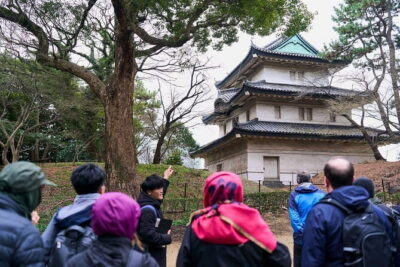
Tokyo Castle & Imperial PalaceーShogun Walking Tour
Read our review →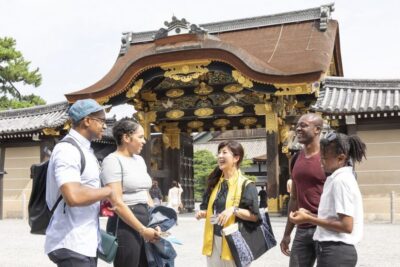
Nijo-jo Castle and Ninomaru Palace Guided Tour
Read our review →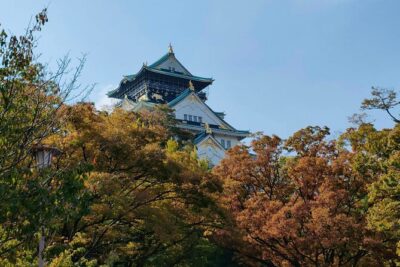
Ultimate Osaka Walking Tour: Castle, Dotonbori & Hidden Gems
Read our review →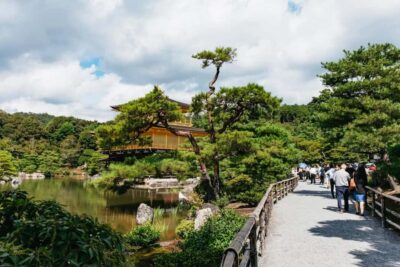
Nijo Castle, Kiyomizu & Fushimi Inari Guided Tour
Read our review →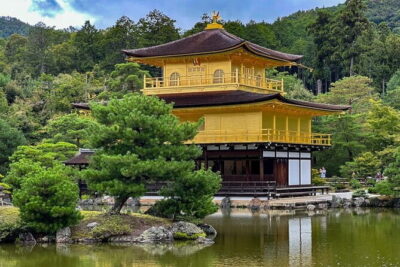
Nijo, Kinkaku-ji, Arashiyama, Kiyomizu & Fushimi Inari
Read our review →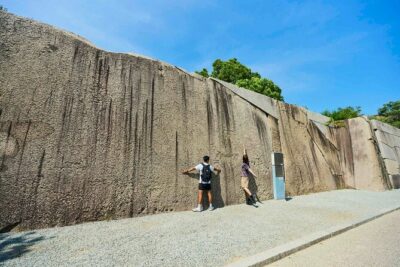
Osaka Castle Walking Tour and Castle Tower Admission
Read our review →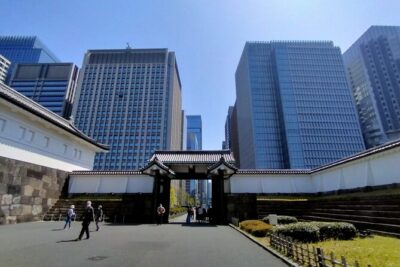
Imperial Palace East Garden and Edo Castle Walking Tour in Tokyo
Read our review →Browse the lists this tour appears in