
Reviewed · NARA & THE DEER PARK
Nara 6hr Private Tour with Government-Licensed Guide
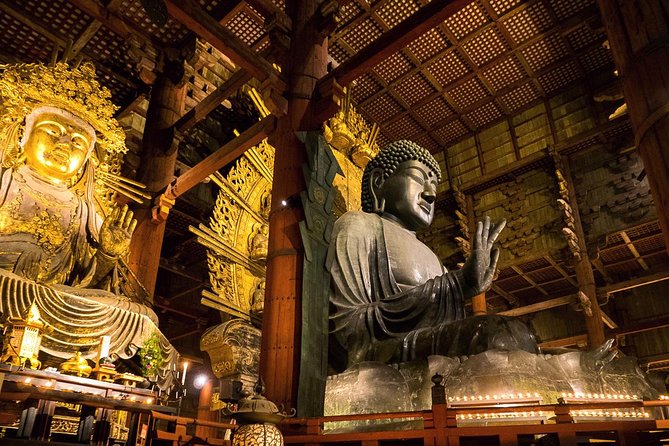
Nara’s great strength is variety packed into one walk: you can stand before Todaiji’s huge Buddha, feed the deer in Nara Park, pass lanterns at Kasuga Taisha, and finish among old merchant houses in Naramachi. This is not a fixed bus loop. You choose three or four sights from a broad menu, then explore with a licensed local guide.
I like the personal pace and the chance to ask real questions about Buddhism, Shinto, Japanese history, and daily life. I also like the local touches: guides have arranged udon lunches, sake tastings, mochi stops, sword museums, and merchant houses when those fit the group. The main catch is simple: six hours on foot can be tiring, and entry fees, meals, and transport are extra.
The best reasons to book this Nara walk
- Choose your own four highlights: Build the day around temples, shrines, gardens, museums, old streets, or a hilltop view.
- Meet at Nara Station: The tour starts on foot, with no private vehicle included.
- Get a guide who adapts: Junichi, Ken, Toshi, Rie, Hiro, Haru, and other licensed guides have shaped days around family interests, history questions, food, and shopping.
- See more than deer: Todaiji and Kasuga Taisha bring the famous sights, while Naramachi, Isuien Garden, and local food add a more personal side of Nara.
- Plan for serious walking: Paths, temple grounds, stairs, and transfers can fill the six hours quickly.
- Pay for the extras yourself: Entrance fees, lunch, public transport, taxis, and personal purchases are not included.
What this private Nara tour really offers
This experience works best as a flexible framework rather than a standard sightseeing package. You select three or four places from a list of 14 possibilities, then your guide helps shape the order and pace.
That flexibility matters in Nara. The famous sights sit near one another in the central park area, while Horyuji, Yakushiji, Toshodaiji, and the Heijo Palace Site are farther out. You cannot reasonably treat every option as a quick stop during six hours, especially if you want proper explanations and time inside the sites.
The guide’s role is the real value. A good guide can explain why a Buddhist temple and Shinto shrine sit within the same sightseeing day, place Nara’s ancient capital in the wider story of Japan, and help you avoid wasting time in crowded areas. Junichi has been praised for clear English, lively explanations, and preparation before the tour. Ken has used handouts to explain Japan’s timeline and planned train, bus, and walking connections carefully. Toshi has been especially useful for families who want context at each temple and shrine.
Guide assignments can vary, so you should not assume you will receive a particular person unless the booking process confirms it. Still, the named guides give you a useful sense of the experience available: this is meant to be an informed conversation, not simply a walk from gate to gate.
Other day trips out of Japan:
- World Heritage Kyoto & Nara Uji Authentic Matcha Experience
★ 5.0 · 1,573 reviews - Kyoto/Osaka: Nara, Fushimi Inari Taisha, Arashiyama Bus Tour
★ 4.7 · 1,275 reviews - Nara Half Day Trip Walking Tour (Private Option Available)
★ 5.0 · 937 reviews
Todaiji and the Great Buddha
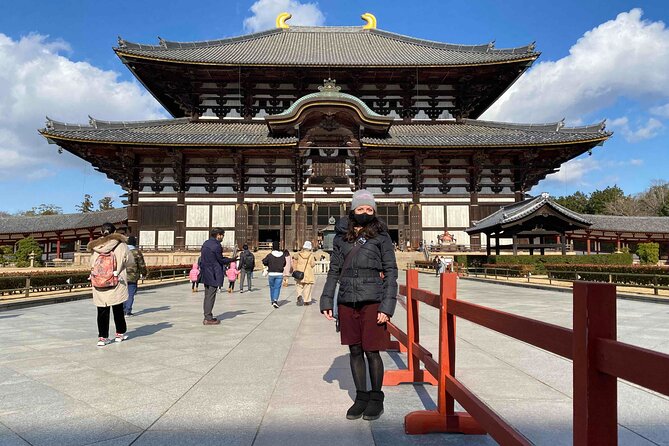
Todaiji is the obvious anchor for a first visit. Founded in 752, it was the head temple for Japan’s provincial temples and remains one of Nara’s most important sights.
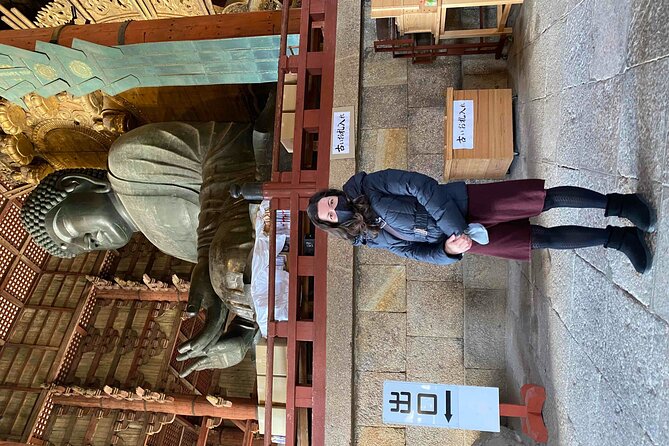
The main draw is the Giant Buddha inside the great hall. The scale is the point. You do not need a long lecture to feel the effect, but a guide can explain why the temple was built, how Buddhism shaped the Nara period, and how the monument fits into the development of the Japanese state.
The scheduled stop is listed as 30 minutes, though your actual time depends on the group’s choices and the day’s walking plan. That is enough for a focused visit, but not necessarily enough for a slow look at every detail.
Admission is extra. Ask your guide early how much time you will have inside, especially if Todaiji is the main reason you came to Nara. One useful feature of a private tour is the chance to make this your priority rather than rushing through it to protect a fixed group schedule.
Nara Park and the deer
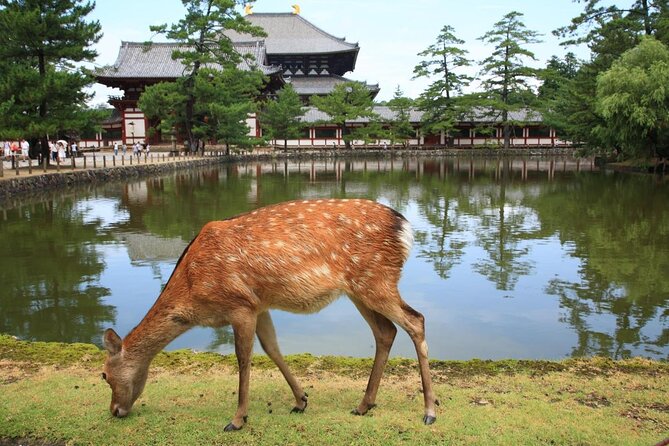
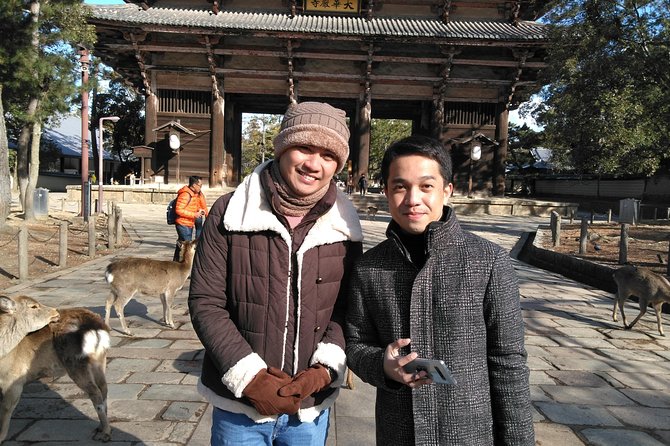
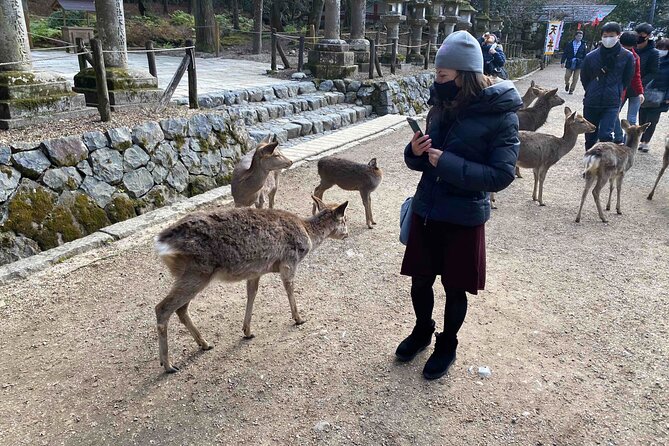
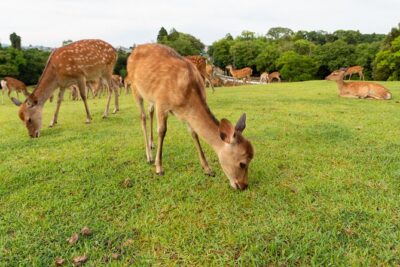
Nara Park is free to enter and contains several of the city’s major sights. The deer are part of the experience, but they should not be treated as tame pets.
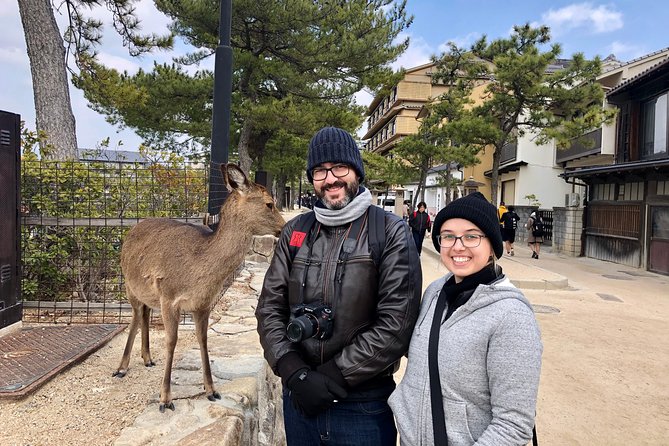
The animals can approach closely, especially when food is involved. One family’s young child became adept at encouraging a deer to bow, while another visitor found the deer more assertive than expected. Take the guide’s advice, keep food under control, and remember that the animals are strong enough to surprise small children.
The park also gives you breathing room between buildings. You can move from open paths to temple grounds, forested approaches, and shrine precincts without feeling trapped inside a museum schedule.
A 30-minute listing for Nara Park is only a rough marker. In practice, the park is the connective tissue of the day. You may spend longer here while walking between Todaiji, Kasuga Taisha, the museum, and the gardens.
Kasuga Taisha and the Shinto side of Nara
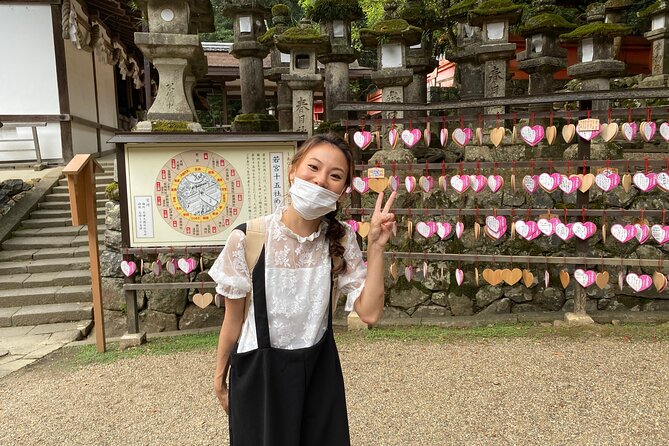
Kasuga Taisha was founded when Nara became the capital and is dedicated to the deity associated with protecting the city. Its approach and grounds offer a different mood from Todaiji.
This is a good place to ask your guide about Shinto customs, shrine architecture, and the way Shinto and Buddhism have interacted in Japan. Guides such as Junichi have made that connection a central part of their explanations, which helps keep the visit from becoming a string of unexplained gates and buildings.
Admission to the main area may vary by section, but the tour information lists the stop as free. Check with your guide about which areas your chosen plan includes.
The walk toward Kasuga Taisha can add distance to the day. That is pleasant in mild weather, but heat, humidity, cold, or wind can change the experience. Wear shoes you can comfortably use for several hours.
Other tours with a licensed guide in Japan:
- Tokyo 6hr Private Tour with Government-Licensed Guide
★ 5.0 · 3,902 reviews - Tokyo 4hr Private Tour with Government-Licensed Guide
★ 5.0 · 1,394 reviews - Kyoto 6hr Private Tour with Government-Licensed Guide
★ 5.0 · 1,369 reviews - Hiroshima / Miyajima Full-day Private Tour with Government Licensed Guide
★ 5.0 · 1,298 reviews
Wakakusayama Hill for a wider view
Wakakusayama is the grass-covered hill behind Nara Park, between Todaiji and Kasuga Taisha. At about 350 meters, it offers broad views over Nara.
This is the most physically demanding choice on the central list. One visitor specifically advised being ready for climbing and long walks, while another praised the hill despite the effort. The exact challenge depends on how far you climb and how the rest of the day is arranged.
Choose it if you want open views and exercise. Skip it if your priority is spending more time inside temples, gardens, or museums. Entrance is not included, and you should ask about the hill’s opening conditions and the amount of walking before making it part of your four.
Naramachi, old homes, and local life
Naramachi was the former merchant district. Traditional homes and storehouses remain, alongside shops, cafes, and small businesses.
I like this option because it gives the day a human scale. Temples show formal religion and power. Naramachi shows where merchants lived, worked, and stored goods. It also offers a sensible place to add food or browsing if your group wants a break from sacred sites.
Some guides have added a traditional merchant house, mochi tasting, sake tasting, or a small food stop when those interests came up in advance. Junichi has taken families to a mochi shop, a katana collection, and a historical merchant house. These are not guaranteed inclusions, so treat them as possible additions, not promises.
Naramachi is free to walk through, but individual buildings or museums may charge admission. Your guide can help you decide if one interior visit is worth the time.
Horyuji, Yakushiji, and Toshodaiji
The farther temples are a strong choice for visitors who care more about early Japanese Buddhism than deer pictures.
Horyuji was founded in 607 by Prince Shotoku and contains some of the world’s oldest surviving wooden structures. It is a major historical site, but its distance from central Nara means transport time matters. One guide successfully planned trains, buses, and walking so a group could combine Horyuji, Toshodaiji, the Heijo Palace Site, and Todaiji in one day. That kind of careful planning is essential.
Yakushiji dates from the late seventh century and is known for its symmetrical layout. It was built for the recovery of Emperor Tenmu’s sick wife. Toshodaiji was founded in 759 by Ganjin, a Chinese priest invited to Japan to help train Buddhist priests.
These temples show how strongly Nara’s Buddhism was connected with continental Asia. Choose them if you want architecture, religious history, and early state formation. Do not choose them simply because they appear on the list. Three or four distant sites can leave little time for a relaxed visit.
Admissions are extra, and public transport fees are also your responsibility. No private vehicle is included.
Kofukuji, the museum, and the gardens
Kofukuji was the family temple of the Fujiwara clan, one of the most powerful aristocratic families during the Nara and Heian periods. It is a useful stop if you want to connect religious buildings with court politics.
The Nara National Museum focuses mainly on Japanese Buddhist art. It is a smart choice for rainy weather or for anyone who wants objects and sculpture to support what the guide explains outdoors. Since museum time can easily expand, decide in advance if you want a quick visit or a serious museum stop.
Isuien Garden uses borrowed scenery, including Todaiji’s Nandaimon Gate and Wakakusayama. The garden can provide a quiet pause after busy temple grounds, but admission costs extra. One guide recalled a visitor listening quietly to the stream here, which captures the appeal: this is a place for slowing down, not rushing through a checklist.
Yoshikien is another pleasant Japanese garden beside the Yoshikigawa River. It was built on the former site of Kofukuji temple priests’ residences. It is a good pick for garden lovers, but choosing both gardens may reduce time for the major temples.
Heijo Palace Site Historical Park
Nara served as Japan’s capital for most of the Nara period, from 710 to 794, and was then known as Heijo-kyo. The palace site once covered about one kilometer by one kilometer.
The listed visit is only 15 minutes, which suggests a brief orientation rather than a full archaeological visit. Pick it if you want to understand the size and planning of the ancient capital, especially alongside Horyuji or Toshodaiji.
It is less immediately dramatic than Todaiji or the deer park. Its value comes from scale, history, and context. A guide can help you picture the administrative city that once occupied the area.
Price, walking, and the real value
The price is $155.86 per person, with group discounts offered. For a private six-hour tour, that can be fair value if your group wants a local guide, custom planning, and help connecting temples with Japanese history.
The price is less attractive if you only want to see Todaiji, Nara Park, and Kasuga Taisha at your own speed. Those central sights are possible to visit independently, and the park itself is free. The private fee pays for interpretation, planning, conversation, and flexibility, not transportation or admission.
Budget separately for entrance fees, lunch, buses or trains, and possible taxis. A guide has recommended excellent udon and sushi stops, but meals are not included. A taxi can also make sense at the end of a long day, though the tour does not provide a private vehicle.
The day is best for people who enjoy walking and asking questions. Most travelers can participate, and service animals are allowed, but the practical reality is stairs, temple approaches, park paths, and long transfers. If you have limited stamina, say so before the route is finalized.
Who should book this private day
Book it if you want to understand what you are seeing, not just photograph it. Families benefit from the private pace, and guides have adapted well to teenagers, children, and mixed interests.
History and religion enthusiasts should consider the farther temples and the palace site. Food and local culture fans should ask about Naramachi, mochi, sake, and a small noodle shop. First-time visitors to Japan can also use the guide for practical advice about transport cards, cash, taxis, and moving around the country.
Skip it if you strongly prefer complete independence, dislike long walks, or only want a short deer-and-temple visit. In that case, central Nara is manageable without a guide.
Should you book it?
I would book this tour for a family or small group that wants a flexible, thoughtful day and is willing to walk. Choose your priorities before arrival, tell the guide your pace, and ask how much transport time each option requires.
For the best balance, combine Todaiji, Nara Park, Kasuga Taisha, and either Naramachi or a garden. Choose Horyuji, Yakushiji, Toshodaiji, or Heijo Palace instead when early Japanese history matters more than a relaxed central walk.
The experience has a 99 percent recommendation rate and a 5 out of 5 rating from 219 reviews, but one poor experience points to the main risk: unclear pacing and unexpected walking can spoil an otherwise good plan. Confirm the route, walking distance, meal plan, and any extra stops before you start. Cancellation is free up to 24 hours before the start time, but later cancellations and changes are not refunded.
FAQ
How long is the Nara private tour?
The tour lasts approximately six hours.
Where do I meet the guide?
You meet the licensed guide at Nara Station or another designated meeting point in Nara. The tour begins on foot.
Is a private vehicle included?
No. The experience does not include a private vehicle. Transportation fees, including public transport or other rides, are your responsibility.
How many places can I visit?
You select three or four sites from the prepared list of Nara highlights. The guide helps shape the route around your interests.
Are admission fees included?
No. Entrance fees are generally not included. The guide’s entry fees are covered only for sights listed under the tour’s What to Expect information.
Is lunch included?
No. Lunch and other personal expenses are not included. Guides may recommend places such as udon or sushi restaurants.
Is the tour suitable for families?
Yes. Most travelers can participate, and the private format lets the guide adjust explanations and the pace for your group. You should still expect substantial walking and some stairs.
Can I cancel for a full refund?
Yes, if you cancel at least 24 hours before the experience start time. Cancellations or changes made less than 24 hours before the start are not refunded.
Just added in Japan
- 1 Day Tour: Snow Monkeys & Snow Fun in Shiga Kogen★ 5.0 · 52 reviews
- Nikko: Edo Wonderland Edomura Cultural Theme Park Ticket★ 4.3 · 205 reviews
- Private Tour – Hakone Day Trip! A Tour to Explore All Must-Sees!★ 5.0 · 58 reviews
- Sapporo Private Tour with a Local – Highlights & Hidden Gems★ 5.0 · 91 reviews
- Fukuoka: Takachiho Gorge & Scenic Railway One Day Tour★ 4.8 · 178 reviews
- 2.5 Hour Private History and Culture Tour in Himeji Castle★ 5.0 · 185 reviews
- Fuji Highlights Group Car Tour by Shimizu Port with Local Guide★ 5.0 · 57 reviews
- Himeji: Private Customized Tour with Licensed Guide★ 4.9 · 122 reviews
Nara & the Deer Park, compared.
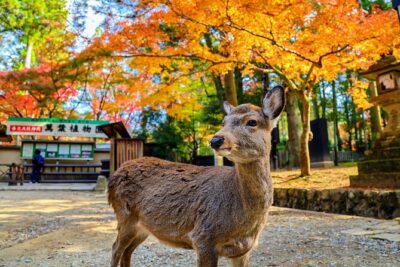
World Heritage Kyoto & Nara Uji Authentic Matcha Experience
Read our review →
Kyoto/Osaka: Nara, Fushimi Inari Taisha, Arashiyama Bus Tour
Read our review →
Nara Half Day Trip Walking Tour (Private Option Available)
Read our review →
Osaka/Kyoto: Arashiyama, Nara & Fushimi Inari Shrine w/Lunch
Read our review →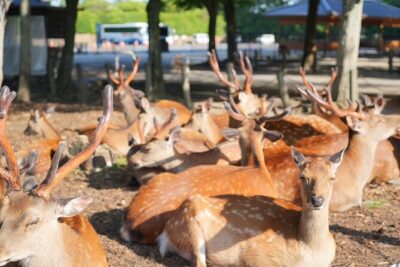
Nara Early Morning Tour (Kyoto or Osaka Departure Available)
Read our review →
Full Day Guided Tour to Kyoto and Nara from Osaka by Van
Read our review →
Browse the lists this tour appears in