
Reviewed · SAMURAI & NINJA EXPERIENCES
Ninja Experience in Takayama – Basic Course
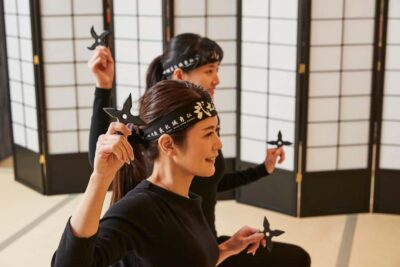
The fun begins before the lesson does: you enter a cafe marked by raccoon dog figures, change into ninja clothing, then handle an iron shuriken under instruction. I like the mix of dress-up and real technique, especially the shuriken throwing and sword kata. I also like that the one-hour format fits neatly into a day exploring Takayama.
The main limitation is that the weapon practice is brief. You get a taste of several skills, not a long training session, and some exercises may take place in the cafe where other people can watch. That matters if you prefer privacy.
Key points
- Iron shuriken practice: Learn to throw a genuine metal ninja star under supervision.
- Three types of training: Try shuriken, a blowpipe, and sword movements with a replica sword.
- Small groups: Sessions are limited to six people, which keeps the activity manageable.
- Family-friendly format: Children aged two and up can take part, with no minimum age listed beyond that.
- Indoor and weatherproof: The entire experience takes place inside, useful on a rainy or cold Takayama day.
- Good photo opportunity: The ninja costume gives you an easy way to add memorable pictures to your Japan trip.
A One-Hour Ninja Lesson in Central Takayama
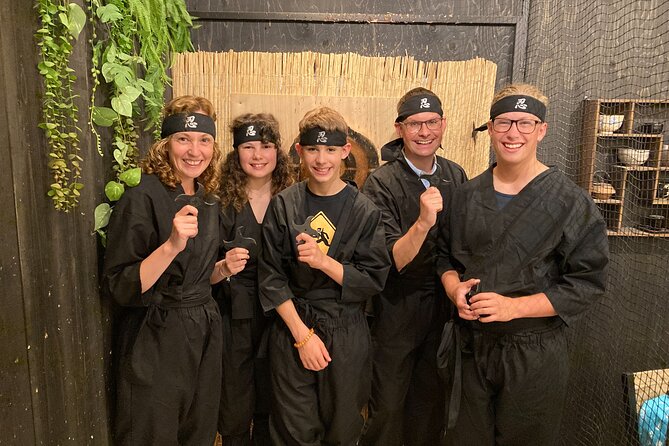
Ninja Cafe Takayama offers a compact introduction to ninja culture in the historic city of Takayama, in Gifu Prefecture. The experience is less about a full historical reenactment and more about trying several traditional-style skills while dressed for the part.
That makes it easy to fit between Takayama’s old streets, morning markets, museums, and food stops. At $35 per person, the price is reasonable for an hour that includes costume rental, entrance, one drink, and guided weapon practice. You are paying for an activity and a photo opportunity, not simply admission to a themed cafe.
The session is limited to six participants. I see that as a useful middle ground. You get a shared activity with enough room for a family or small party, without the feel of a large classroom. English and Japanese instruction is available, so you can book this even if you do not speak Japanese.
Other samurai and ninja experiences in Japan people book:
- Ninja Experience in Takayama – Basic Course
★ 5.0 · 62 reviews - Seki: Samurai Knife Making Experience at the Knife Museum
★ 5.0 · 61 reviews - Knife Making Experience in Samurai Sword Town
★ 5.0 · 29 reviews
Finding the Cafe by the Raccoon Dog Figures
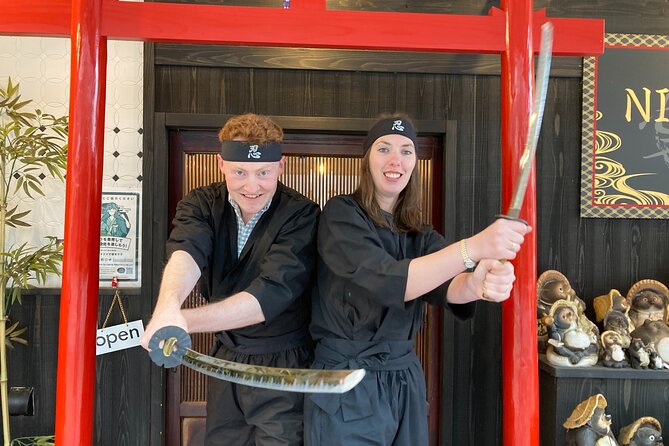
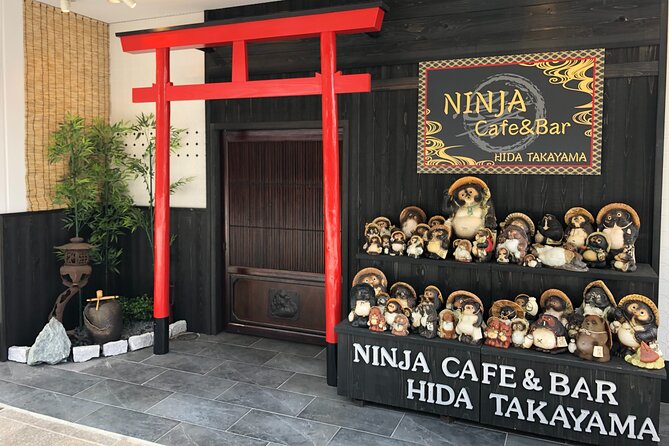
The meeting point is easy to identify: look for the many raccoon dog objects at the cafe entrance. This is a practical detail worth noting, since themed shops in Japanese historic districts can be easy to miss among traditional storefronts.
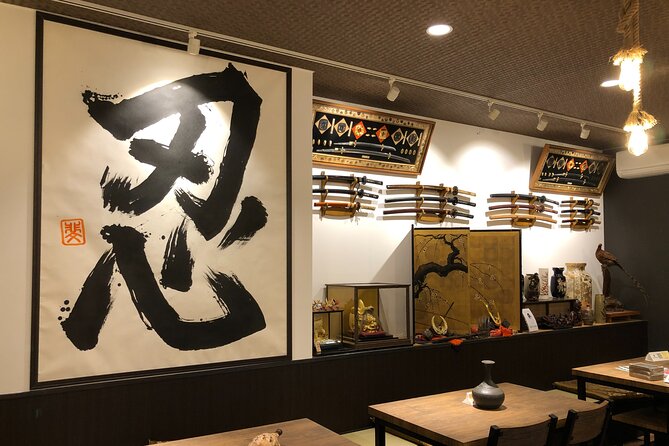
Inside, the cafe displays historical helmets, swords, and tea utensils. These objects give the activity some context before the hands-on part begins. You can see the visual connection between the costume, the weapons, and older Japanese customs rather than treating the session as a generic indoor game.
The venue also serves drinks and sweets. A drink is included with the experience, while snacks cost extra. You can use the cafe as a short rest stop if you have been walking around Takayama or returning from the high mountain area, though the scheduled activity itself is the main reason to come.
Changing Into Ninja Clothing
The first clear step is changing into a ninja outfit. This adds a playful element for children, but adults can enjoy it just as much. The costume also makes the photo session more worthwhile, since ordinary tourist snapshots become more distinctive when everyone is dressed for the activity.
I would allow a few minutes for pictures before the training begins. You may want individual portraits, family shots, and a few action poses with the replica weapons. The setting is indoors, so you do not need to worry about weather spoiling the photos.
The costume is a rental included in the $35 price. You do not need to bring special clothing or equipment. Since the clothing is part of the experience rather than a separate add-on, the price works well for families who want an activity with a visible keepsake value.
Throwing an Iron Shuriken
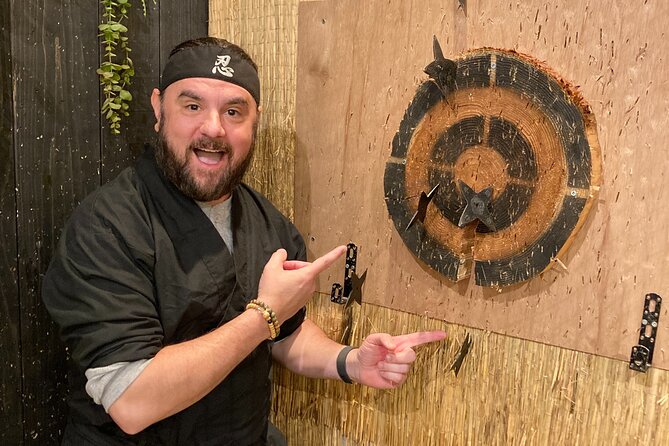
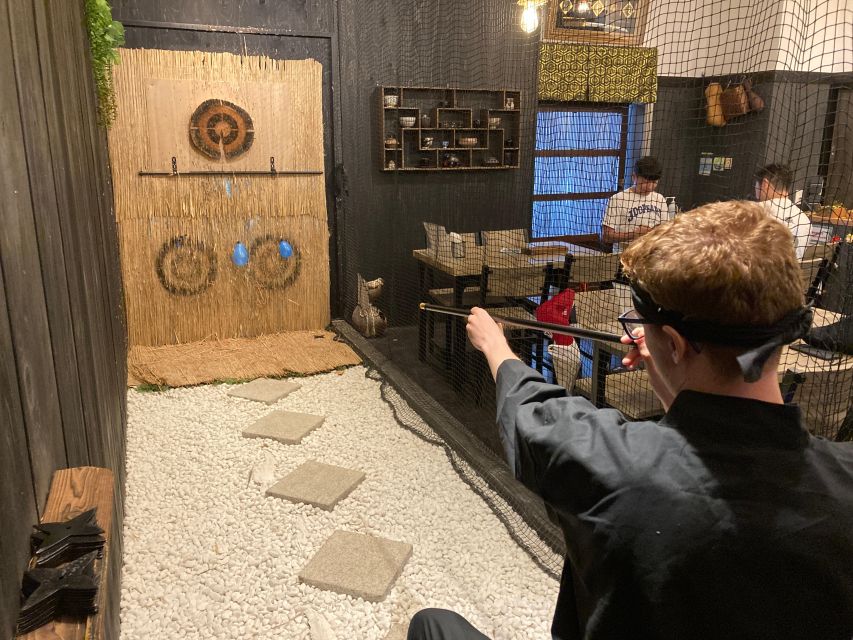
The shuriken exercise is likely to be the highlight for many people. You learn to throw an authentic iron shuriken, rather than handling only a soft or plastic prop. That gives the activity a stronger connection to the tools associated with ninja training, although the session remains an introductory lesson.
The number of throws is limited. If you already enjoy target sports or hands-on workshops, you may wish for more attempts. The short format means you get an introduction to the technique, then move on to the next exercise instead of spending the full hour refining your aim.
For most families, that variety is a fair trade. A child who loses interest in one activity can try another, and adults get a quick sample of several skills. Follow the instructor closely and treat the shuriken as a supervised training tool, not a toy.
Other swordplay and stealth sessions in Japan:
- Tokyo: Samurai Restaurant Show Ticket with 2 Drinks
★ 4.5 · 1,307 reviews - Kyoto Samurai Experience
★ 5.0 · 1,294 reviews - Tokyo: Samurai Ninja Museum Guided tour and Experience
★ 4.6 · 1,010 reviews - Kyoto: Kendo and Samurai Experience with Uniform and Gear
★ 4.9 · 815 reviews
Trying the Blowpipe and Sword Kata
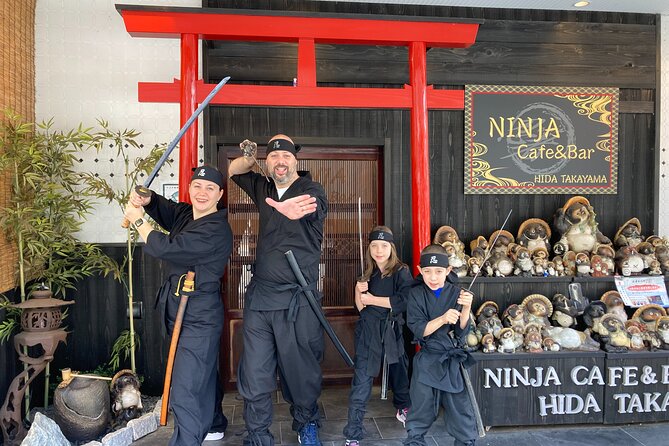
The course also includes a blowpipe exercise, described as blowing an arrow. This adds a different kind of challenge from shuriken throwing. You are using breath and aim rather than simply copying a hand movement, so it helps keep the session varied.
Sword work uses imitation swords. You can practice iai-style movements and basic kata, which are structured forms rather than free fighting. This distinction matters. The activity is about learning controlled motions and getting a feel for training, not staging a combat scene.
The replica sword is appropriate for a beginner-friendly family activity. You can enjoy the appearance and movement of sword practice without handling a live blade. The session introduces the idea that ninja training involved discipline and repeated forms, not only dramatic tricks.
What the Small Group Size Changes
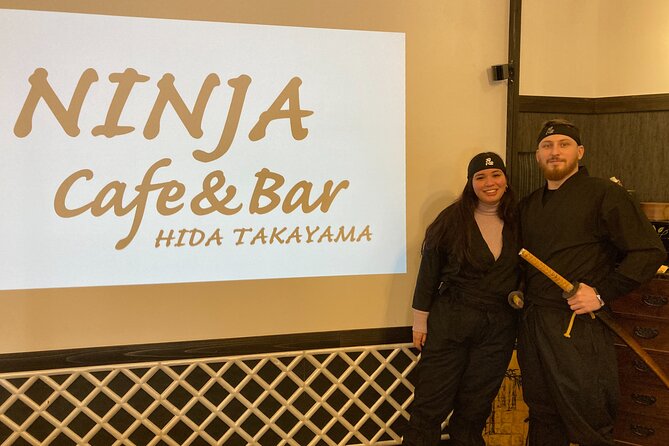
With no more than six participants, the instructor can keep the group moving through the exercises without a long wait between turns. That is especially helpful when children are involved. A large group could make throwing and blowpipe practice feel slow, while six people keeps the activity relatively active.
The cafe setting also means the training may not be completely private. You could be performing exercises in front of people who are having a drink or looking around the space. I would not choose this activity if you need a private studio or dislike being photographed in costume.
For many people, the public setting is part of the fun. You are in a casual cafe rather than a formal martial arts school, and the atmosphere is meant to be approachable. If you are shy, knowing this in advance helps you decide if the playful setting suits you.
How Much History You Really Get
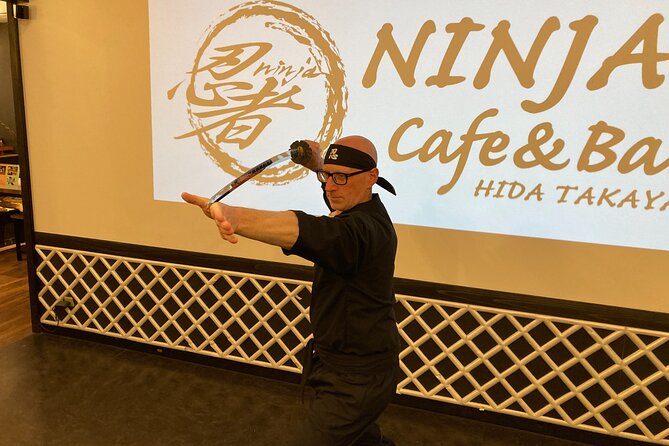
The cafe displays helmets, swords, and tea utensils, and the activity connects the objects with old Japan and the role of the ninja. That provides useful background, but you should set your expectations correctly. This is not a long museum talk or a detailed historical seminar.
The value comes from linking a few physical objects to the actions you try yourself. After seeing a helmet or sword, you move into a costume and practice controlled movements. That hands-on sequence can make the subject easier for children to understand than a purely spoken explanation.
I would treat the cultural information as a helpful layer rather than the central reason to book. If you want a detailed study of ninja history, this one-hour course will feel short. If you want a lively introduction that adds context to a fun activity, it fits better.
Is $35 Good Value?
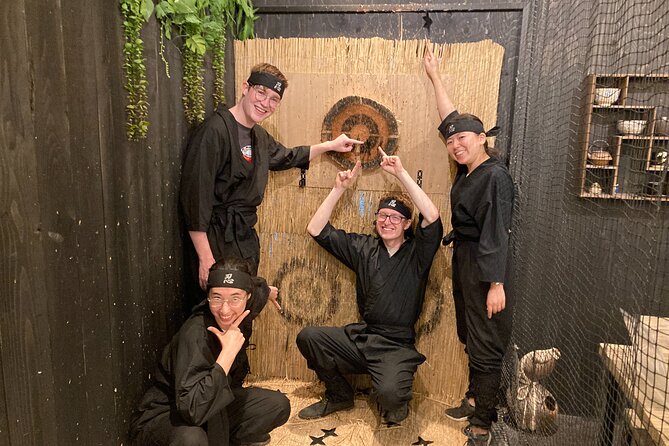
At $35 per person, you receive the entrance, ninja clothing, one drink, and guided training with several weapons. You also get time for pictures. Compared with paying separately for a costume rental and a short activity, the package is fairly priced.
The strongest value comes for families and small groups. Four people can share the photo experience, laugh through the training, and enjoy a simple indoor break without committing half a day. The one-hour length also protects your sightseeing schedule.
The value is weaker if you expect extended practice. You will not spend a long time throwing shuriken or repeating sword forms. The course gives you a sample of each skill, and the price makes sense when you value variety, costumes, instruction, and photos together.
Who Will Enjoy This Most
I would recommend this for families, first-time visitors to Japan, and anyone wanting a light activity between sightseeing stops. Children can take part from age two, though the youngest children may get more from the costume and pictures than from the weapon exercises.
Adults should not dismiss it as only a children’s attraction. The iron shuriken, blowpipe, and sword kata give grown-ups enough to do, and the costume makes for memorable group photos. The friendly, accommodating instruction is another reason the activity works for mixed-age groups.
It may not suit you if you want a serious martial arts lesson, a long private session, or a detailed lecture about ninja history. It is also not the best choice if you prefer every activity to take place away from public view.
Fitting It Into a Takayama Day
The one-hour schedule is easy to combine with other plans. You could place it during a break from walking through Takayama’s historic area, or use it as an indoor option when the weather turns unpleasant. Since the activity is inside, rain and cold do not affect the training.
The course can also help balance a day filled with temples, old houses, markets, and traditional food. Those sights reward slow looking, while the ninja session gives you something active and playful. I like that contrast, especially for families who need a change of pace.
The cafe serves as a resting point as well. One drink is included, but snacks are not, so budget separately if you want food. The information provided does not include hotel pickup or drop-off, so plan to reach the meeting point on your own.
Booking, Cancellations, and Language
You can reserve now and pay later, which is useful when you are still arranging a Japan itinerary. Free cancellation is available up to 24 hours before the activity for a full refund. Check the available start times when booking, since the precise schedule can vary.
Instruction is offered in English and Japanese. That is important for weapon handling and for understanding the sequence of movements. You should still pay close attention to the instructor, especially during shuriken and blowpipe practice.
The activity is indoors and has a maximum group size of six. Children under two are not suitable for the experience. No other accessibility details are provided, so contact the provider directly if you have specific mobility or participation needs.
My Call: Book It for Fun, Not for a Full Training Course
I would book the Ninja Experience in Takayama if I wanted a short, family-friendly activity with costumes, photos, and several hands-on skills. The small group, English instruction, indoor setting, and included drink make it easy to add to a sightseeing day.
I would not book it expecting a long weapons workshop or a serious study of ninja history. The throws are limited, and the cafe setting may not provide much privacy. For the right expectations, though, $35 buys a cheerful hour with enough variety to keep children and adults involved.
FAQ
Where does the Ninja Experience in Takayama take place?
It takes place at Ninja Cafe Takayama in Takayama, Gifu Prefecture. Look for the many raccoon dog objects at the cafe entrance.
How long does the experience last?
The activity lasts one hour.
How much does it cost?
The listed price is $35 per person.
What is included in the price?
The price includes ninja clothing rental, entrance, one drink, and ninja training using ninja weapons.
Are snacks included?
No. Snacks are not included, although drinks and sweets are available at the cafe.
What weapons or skills can I try?
You can throw an iron shuriken, use a blowpipe to blow an arrow, and practice sword iai and kata movements with an imitation sword.
Are the swords real?
The sword practice uses replica or imitation swords.
Is the activity indoors?
Yes. The ninja experience takes place indoors.
Can young children take part?
Children under two are not suitable for the activity. The provided information does not give a more detailed age recommendation.
What languages are available?
Instruction is available in English and Japanese.
How large is the group?
The experience is limited to six participants.
Can I cancel for a refund?
Yes. You can cancel up to 24 hours in advance for a full refund.
Is hotel transportation included?
No. Hotel pickup and drop-off are not included.
Just added in Japan
- 1 Day Tour: Snow Monkeys & Snow Fun in Shiga Kogen★ 5.0 · 52 reviews
- Best of Himeji Castle: 3hr Tour with Licensed Guide★ 5.0 · 186 reviews
- Hakone 8 hour Private Tour with Government-Licensed Guide★ 5.0 · 63 reviews
- Nagasaki Half-Day Private Tour with Government-Licensed Guide★ 5.0 · 53 reviews
- Daikoku & Tokyo Private JDM Tour by 700HP R34 GT-R★ 4.9 · 101 reviews
- Custom Private Tour in Hakone with a Certified Local Guide★ 5.0 · 91 reviews
- [Otaru & Yoichi] Let’s go to Otaru Canal, Sakaimachi Street, Music Box Hall, and Yoichi Nikka Whiskey by private car (arriving and departing from Sapporo)★ 5.0 · 21 reviews
- Nikko: Edo Wonderland Edomura Cultural Theme Park Ticket★ 4.3 · 205 reviews
Samurai & Ninja Experiences, compared.
Samurai Ninja Museum Guided tour and Experience
Read our review →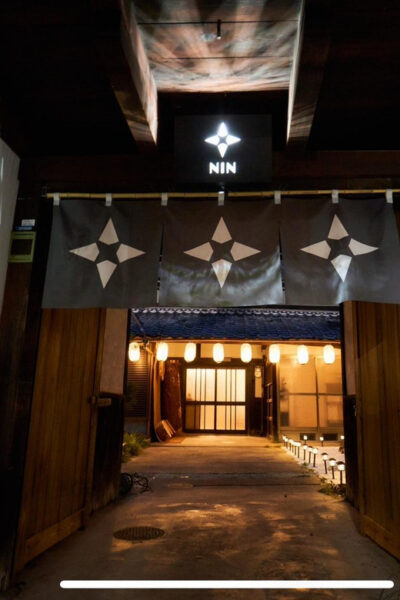
Kendo and Samurai Experience with Uniform and Gear
Read our review →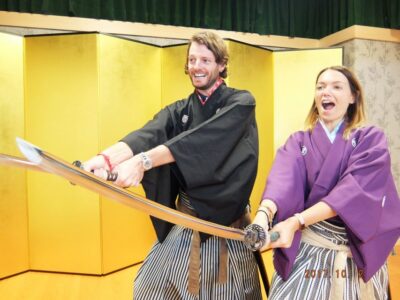
Samurai Sword Class by Experts in Traditional Arts
Read our review →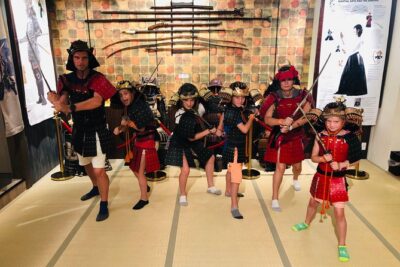
Skip the lines Basic Ticket at SAMURAI NINJA MUSEUM KYOTO
Read our review →
Samurai Sword & Archery Class from Samurai Descendant
Read our review →
Browse the lists this tour appears in