
Reviewed · SAMURAI & NINJA EXPERIENCES
Seki: Samurai Knife Making Experience at the Knife Museum
The heart of this Seki experience is not watching a craftsman work. It is finishing your own Japanese knife, then slicing fresh vegetables to feel how a properly sharpened blade behaves. Sumi and Yoshi guide you through polishing, sharpening, assembly, and name engraving, while Hiro handles translation and transport.
I like two things right away: you take home a useful knife rather than a trinket, and the day connects kitchen craft with samurai sword making. The sushi or other Japanese lunch is another strong touch. The main drawback is time. Knife making can run longer than planned, and the full day may feel like a long outing if you are based in Tokyo.
Key points
- You finish a real kitchen knife: Choose from available shapes and handle colors, then polish, sharpen, assemble, and personalize the blade.
- Your name goes on the blade: The team helps translate your name into Japanese characters before you mark it.
- Hands-on testing matters: Cut fresh local vegetables and, in some sessions, try the knife on a water bottle.
- Seki’s blade tradition comes alive: Visit the G. Sakai Knife Museum and a sword-making or sword showroom after the workshop.
- Lunch is part of the experience: Enjoy Japanese cuisine, often sushi or eel, at a local restaurant.
- Small group, personal teaching: The group is limited to five, with English and Japanese support.
Why Seki is the right place for a knife workshop
Seki, in Gifu Prefecture, has made blades since the Kamakura period, from 1185 to 1333. The area had the ingredients traditional smiths needed: iron sand, charcoal, and clean water. That old craft later supported both sword making and the cutlery industry.
Today, Seki is best known for high-quality knives used by professional cooks and home cooks. The city is not as easy to visit as Kyoto, Osaka, or Tokyo, but that is part of the appeal. You are going to a working center of blade production rather than simply stopping at a themed attraction.
From Kyoto, the journey takes roughly one and a half to two hours by train, depending on your connections. The meeting point is Sekitomioka Station on the Nagaragawa Railway, with pickup scheduled for the train arriving at 10:06 a.m. Hiro then collects you by car.
That pickup is important. Seki’s knife sites are spread out, and getting between the station, workshop, restaurant, and museums would be awkward without local help. If you are traveling from Tokyo, plan carefully. One participant described the trip as long but worthwhile, while others appreciated being dropped at Gifu Station afterward to make the return journey easier. Confirm your final drop-off arrangements before setting out.
Other samurai and ninja experiences in Japan people book:
- Ninja Experience in Takayama – Basic Course
★ 5.0 · 62 reviews - Ninja Experience in Takayama – Basic Course
★ 4.6 · 59 reviews - Knife Making Experience in Samurai Sword Town
★ 5.0 · 29 reviews
Starting with Sumi, Yoshi, and a blade blank
The workshop is beside the G. Sakai Knife Museum, inside part of the G. Sakai factory complex. The process begins with a prepared blade blank, not with you hammering hot steel from raw metal. That distinction matters. This is a finishing and craft workshop, not a full blacksmithing course.
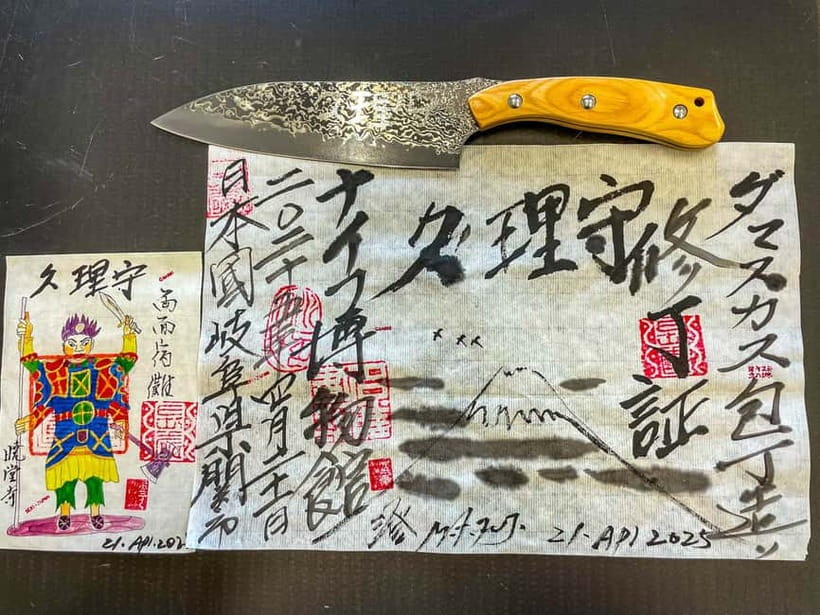
You choose a knife from the available forms and handle colors. The selection is not unlimited, so if you have a very particular shape in mind, keep expectations flexible. Past participants have made chef’s knives and camping-style knives. The finished blades have been described as Damascus steel, and some participants identified theirs as V10 steel. The exact options may vary, so ask the instructors what is available on your date.
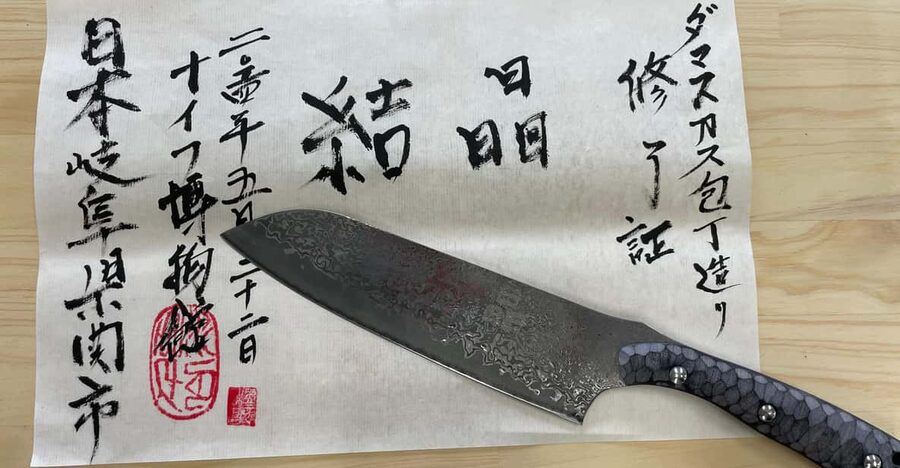
Sumi and Yoshi then lead you through the work. Their teaching is a major part of the experience. You polish the blade, learn how to sharpen it, assemble the handle, and mark your name on the steel using a special technique. Hiro translates and explains the finer points, including how a foreign name can be written in kana or kanji.
The name-marking step gives the knife a personal link to Japan. You are not simply buying a factory-made item from a shop shelf. You are helping finish it, and the characters on the blade carry a meaning that the team explains to you.
The instructors appear to keep the pace calm rather than rushing everyone through a fixed demonstration. That is good for beginners, since sharpening and polishing require care. It also explains why the workshop can run beyond the advertised schedule. One family arrived around 11 a.m. and did not leave the shop until about 4 p.m., including the knife work and related activities.
Learning to sharpen a blade you will actually use
The sharpening lesson is one of the most useful parts of the day. You are not just told that Japanese knives are sharp. You learn how to maintain the edge, a skill you can use later on this knife or on knives belonging to friends and family.
The task still requires attention. A sharp blade is not a toy, and the workshop is hands-on, so follow the instructors closely. The value here is practical: you leave with a useful kitchen tool and some understanding of how its edge was created.
After the work is finished, you test the knife. Fresh vegetables provide the main test, allowing you to feel the difference between a dull blade and a properly sharpened one. Some sessions have also included cutting a water bottle. The point is not a stunt. It is a quick way to show how smoothly the edge moves through a material.
You may be surprised by the result, especially if you normally use ordinary supermarket knives. Still, remember that the knife’s performance depends on how you maintain it at home. The workshop gives you a strong starting point, not a lifetime guarantee that the edge will stay perfect without care.
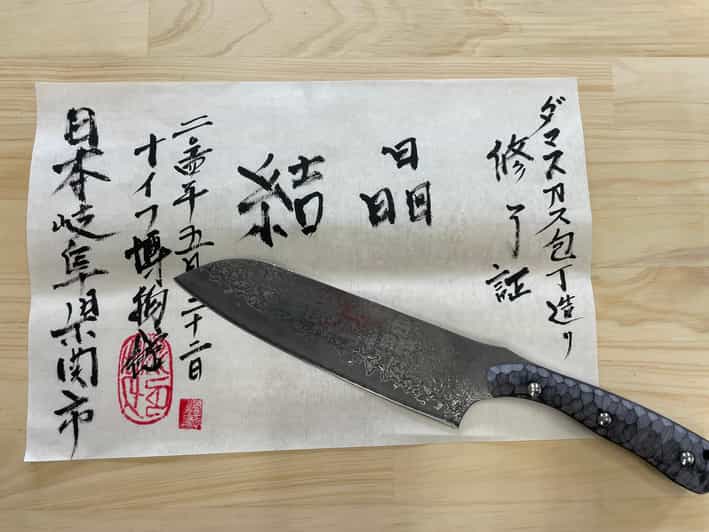
The finished package includes a samurai-style kitchen knife set. A chopping board, mini knife, key ring, certificate, or other small gift may also be provided depending on the current arrangement. The knife itself is the main souvenir, so treat the extra items as pleasant additions rather than guaranteed inclusions unless they are confirmed when you book.
A Japanese lunch that breaks up the workshop
After the knife work, Hiro takes you to a local restaurant for lunch. This is more than a convenient meal between stops. It gives you a chance to sit down, talk about the morning, and use the new knife-making experience as a bridge into Japanese food culture.
The restaurant has served different choices on different days. Sushi prepared by a master with more than 20 years of experience has been served, and one account describes a sushi chef with 43 years in the craft. Eel has also been offered, along with a choice of three meal types on at least one visit.
You should check the available menu if you have dietary needs, since the supplied details do not list vegetarian, allergy, or substitution policies. The lunch is included in the price, but the exact dish should not be assumed in advance.
There is a nice bit of symmetry here. In the morning, you learn how to make a knife suitable for food preparation. At lunch, you see the kind of careful Japanese cooking that gives such knives their purpose. It makes the meal feel connected to the workshop rather than tacked on as a standard tour lunch.
Other swordplay and stealth sessions in Japan:
- Tokyo: Samurai Restaurant Show Ticket with 2 Drinks
★ 4.5 · 1,307 reviews - Kyoto Samurai Experience
★ 5.0 · 1,294 reviews - Tokyo: Samurai Ninja Museum Guided tour and Experience
★ 4.6 · 1,010 reviews - Kyoto: Kendo and Samurai Experience with Uniform and Gear
★ 4.9 · 815 reviews
Inside the G. Sakai Knife Museum
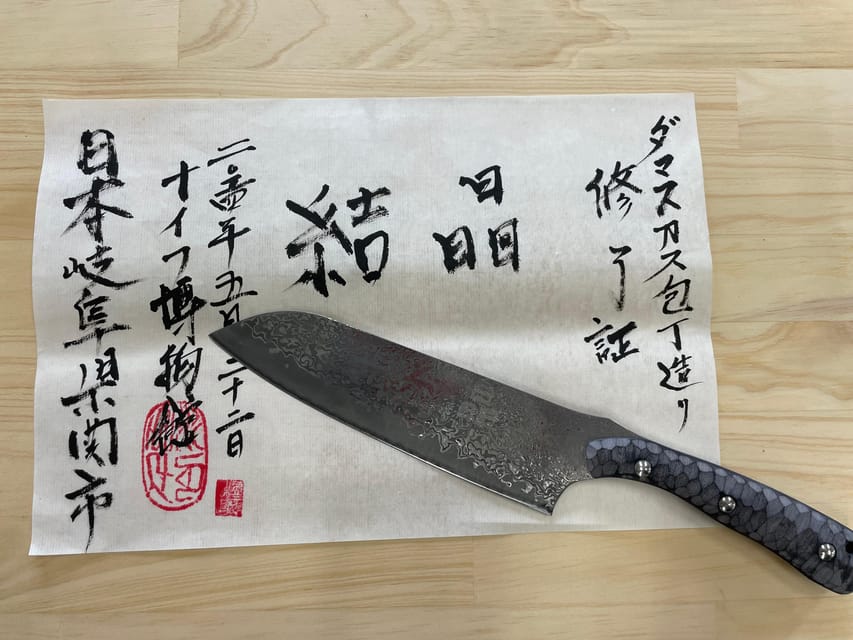
The museum visit takes place at the G. Sakai facility, where you can see knife collections and unusual examples of cutlery. The shop area also offers a broad range of products, from small pocket knives to kitchen and hunting knives.
Be clear about what this stop is. It is part museum, part factory setting, and part retail space. One participant felt it was not a traditional museum in the usual sense, but still found the knife operation impressive. That is a fair way to approach it.
If you want a large historical museum with long English explanations, this may feel modest. If you enjoy seeing real products, specialist tools, and the setting where knives are made and sold, it should be more satisfying.
The collection helps place your own knife in a larger picture. You can compare blade shapes, sizes, handles, and intended uses. You may also find a second knife to take home, though remember that Japan has rules for packing and transporting blades. Keep purchased knives safely wrapped and check your airline’s baggage requirements.
From kitchen knives to samurai swords
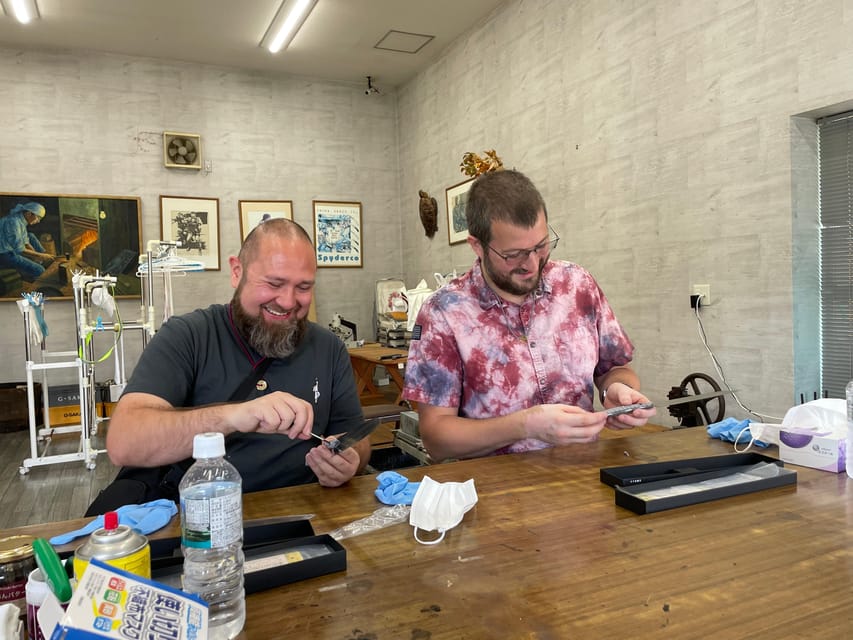
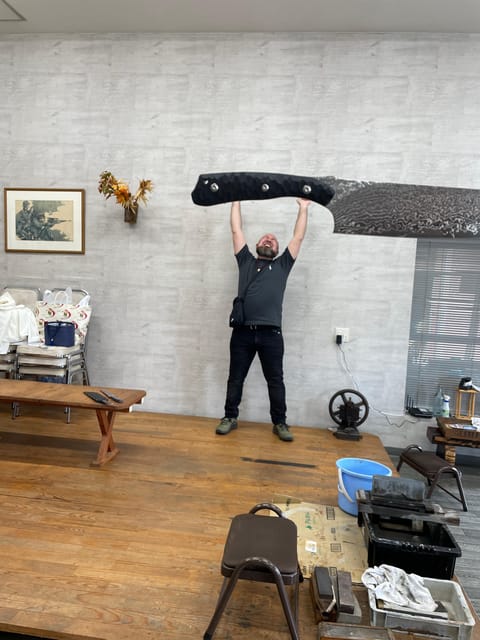
The final major stop is the Seki Swordsmith Museum or a related sword-making showroom and factory. Here you learn how Seki’s sword tradition connects with its modern blade industry.
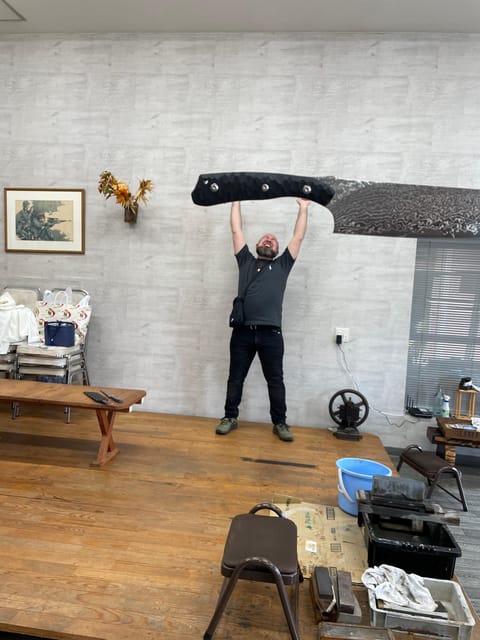
The visit is not presented as a full sword-forging class. Instead, you see sword-related work and hear about samurai swords, their production, repair, and care. One participant saw swords sent from around the world for repair and calibration. Another was allowed to hold an actual sword while speaking with a katana specialist.
That kind of access depends on the day and the location, so do not assume you will handle a sword. The reliable point is that you will visit a place focused on Japanese sword craft and learn more about Seki’s role in it.
This stop gives the day a useful wider frame. The kitchen knife in your bag is modern and practical, but its story sits beside a much older tradition of Japanese blade making. You can see why Seki takes its craft seriously without confusing a kitchen knife workshop with an ancient sword-forging ceremony.
What the $322 price includes
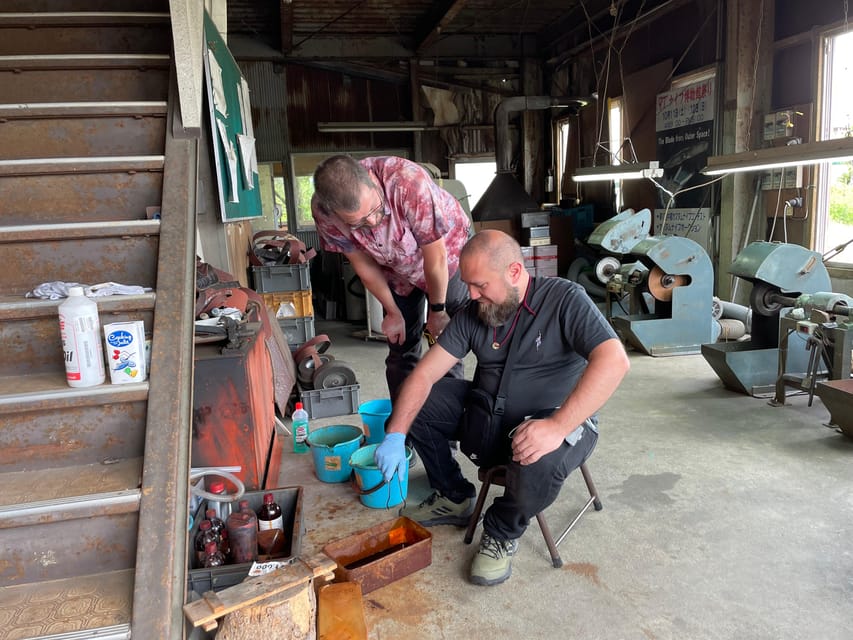
At $322 per person, this is not a cheap sightseeing day. The price makes more sense when you count what is bundled together: the knife set, instructor, English guide, local transport, museum admissions, and lunch.
You are also paying for access. Seki is spread out, and an independent visit would require planning train connections, local transport, workshop arrangements, and language support. Hiro’s role matters here. He meets you at the station, translates between you and the craftspeople, explains local details, and helps the day run smoothly.
The small group limit of five is another part of the value. You are not standing behind a crowd watching someone else sharpen a blade. You get direct help from Sumi and Yoshi, with time to ask questions and receive corrections.
Still, the price will make the most sense if you care about both the activity and the finished knife. If you only want to buy a Seki knife, a shop visit will cost less. If you want a quick museum stop, this day is too involved. You are paying for instruction, personal marking, transport, food, and a full cultural outing.
Timing, group size, and who should book
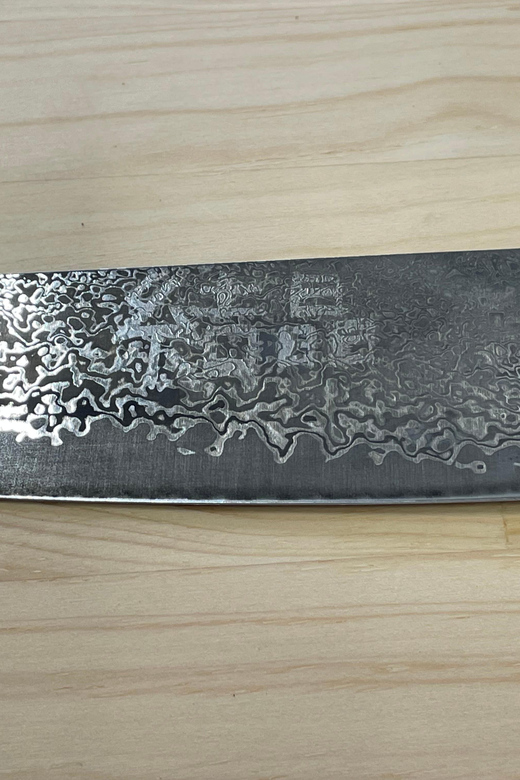
The scheduled experience lasts one day, with about two and a half hours listed for the workshop and museum, one hour for lunch, and one hour at the sword museum. In practice, allow extra time. The hands-on process may take longer, especially when each person is polishing, engraving, assembling, and sharpening a blade.
The group is limited to five people, and the live guide support is available in English and Japanese. That makes this a good choice for adults who want conversation and individual attention rather than a large bus tour.
The activity is not suitable for children under 18. It is best for:
- Food lovers who want to connect cooking with Japanese craftsmanship
- People interested in tools and design who enjoy learning how objects are finished
- Japan repeat visitors looking for something beyond the main city sights
- Culture-focused couples and small groups who value local guidance
- Souvenir hunters who prefer a useful object with a personal story
It may not suit you if you dislike hands-on work, have little patience for a slow workshop, or need a tightly timed schedule. The trip is also a poor fit if your Japan itinerary cannot spare a full day outside the main tourist routes.
Cancellation is free up to 24 hours before the activity, and you can reserve now and pay later. Those terms help if your route is still changing, but they do not remove the need to check train connections and the meeting time.
Should you book the Seki knife experience?
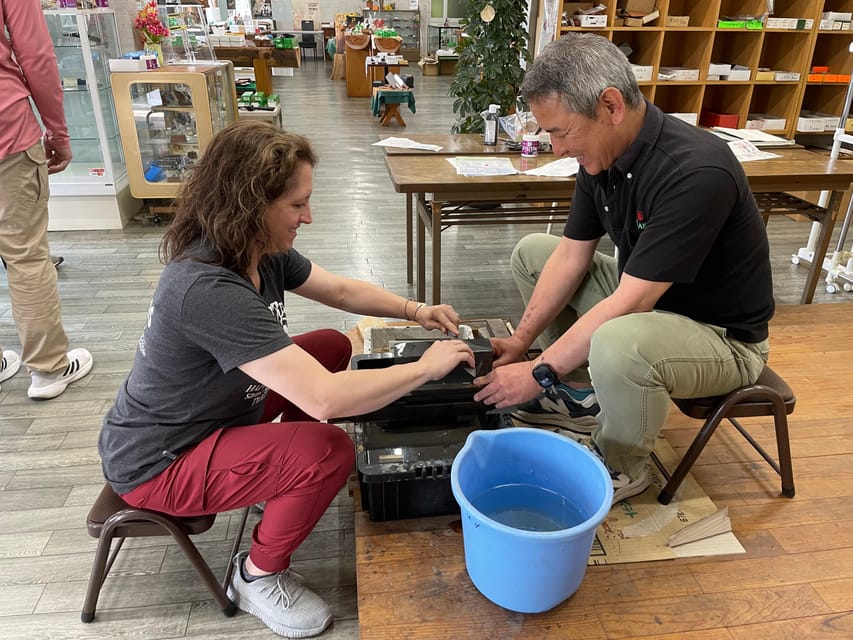
I would book this if you want a souvenir you can use, enjoy learning by doing, and have enough time for an offbeat day in Gifu. The strongest parts are the patient instruction from Sumi and Yoshi, Hiro’s translation and driving, the name on the blade, and the chance to test your finished knife yourself.
I would skip it if your main goal is a full traditional blacksmithing lesson. You are working from a prepared blank, then polishing, sharpening, assembling, and personalizing it. That is still substantial, but it is different from forging steel over a fire.
For the right person, the $322 cost is defensible because it covers much more than the knife. You get a small-group workshop, local food, transport, museums, and a direct look at Seki’s blade culture. Just build in extra time, meet the train at 10:06 a.m., and expect the day to be about craft rather than speed.
FAQ
Where does the experience begin?
You meet at Sekitomioka Station on the Nagaragawa Railway at 10:06 a.m., when the scheduled train arrives. The driver picks you up by car.
How long does the experience last?
It is a one-day experience. The listed schedule includes a two-and-a-half-hour workshop and museum visit, a one-hour lunch, and a one-hour visit to the Seki Swordsmith Museum. The knife-making portion can run longer.
What do I make during the workshop?
You finish a personalized Japanese kitchen knife. The work includes polishing, sharpening, assembly, and marking your name on the blade. The knife is described as a Damascus kitchen knife, with some participants identifying their blades as V10 steel.
Can I choose the style of knife?
You can choose from the available knife shapes and handle colors. The number of options may be limited, so a specific shape or color cannot be guaranteed.
Is lunch included?
Yes. Lunch at a local Japanese restaurant is included. Depending on the day, choices may include sushi, eel, or other Japanese meal types.
Are museum admissions and transport included?
Yes. The package includes entry tickets to the museums and transportation during the experience, along with an English guide and knife-making instructor.
Can children join the experience?
No. The activity is not suitable for children under 18.
More museums in Japan
- Tokyo: teamLab Planets TOKYO Digital Art Museum Entry Ticket
★ 4.6 · 9,779 reviews - Osaka Castle: Museum and Tower Entry Ticket
★ 4.5 · 2,380 reviews - Kyoto: Tea Museum Tickets and Matcha Grinding Experience
★ 4.9 · 739 reviews - Skip the lines Basic Ticket at SAMURAI NINJA MUSEUM KYOTO
★ 4.5 · 632 reviews
More craft workshops in Japan
- Chopstick Making Workshop in Ginza
★ 4.8 · 1,366 reviews - Kyoto : Chopsticks Making Workshop in Gion with Engraving Option
★ 5.0 · 958 reviews - Tokyo Chopstick Making Workshop with Artisan
★ 5.0 · 466 reviews - Osaka Sushi Making Experience
★ 5.0 · 400 reviews
Just added in Japan
- 1 Day Tour: Snow Monkeys & Snow Fun in Shiga Kogen★ 5.0 · 52 reviews
- Sapporo: Hokkaido, Noboribetsu and Lake Toya Day Tour★ 4.1 · 88 reviews
- Discover the Wonders of Sakurajima Half Day Tour in Kagoshima★ 5.0 · 34 reviews
- Private sightseeing tour from Shimizu Port / Van Taxi★ 5.0 · 114 reviews
- Hokkaido Seasonal: Lake Toya & Noboribetsu Jigokudani Valley★ 4.7 · 173 reviews
- Kagoshima Private & Custom Tour with Licensed Guide and Vehicle★ 5.0 · 29 reviews
- 《MEMBERS-ONLY-BAR-HOPPING》Discover Your Special Whiskey in Tokyo!★ 5.0 · 29 reviews
- Kobe: Guided Sake Breweries Tour with Tastings★ 5.0 · 55 reviews
Samurai & Ninja Experiences, compared.
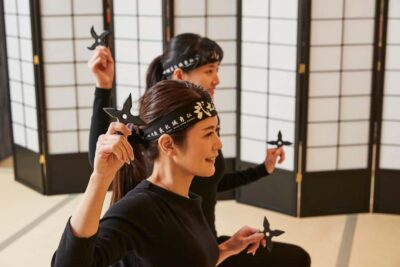
Samurai Ninja Museum Guided tour and Experience
Read our review →
Kendo and Samurai Experience with Uniform and Gear
Read our review →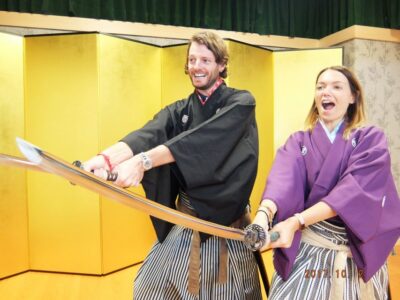
Samurai Sword Class by Experts in Traditional Arts
Read our review →
Skip the lines Basic Ticket at SAMURAI NINJA MUSEUM KYOTO
Read our review →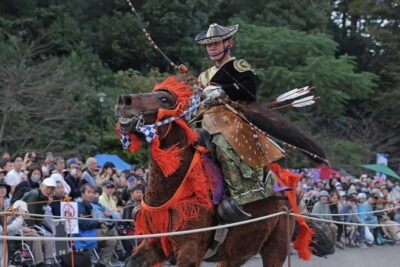
Samurai Sword & Archery Class from Samurai Descendant
Read our review →
Browse the lists this tour appears in