
Reviewed · FOOD TOURS
Nishiki Market Walking Food Tour with Local guide
Kyoto’s best food stops are easy to miss when you wander alone. This three-hour walking tour connects a department-store food hall, Rokkakudo Temple, Nishiki Market, and Nishiki Tenmangu Shrine, with five to eight local tastings along the way. You get a useful first look at foods such as wagashi, meat buns, sashimi, skewered wagyu, rolled omelets, and sake.
I like the small maximum of six people, which should make it easier to ask questions and keep the group moving through tight market lanes. I also like the range of settings: you are not limited to one famous market, but see how Kyoto food is sold in a polished depachika and in the more casual Nishiki shopping district. The main drawback is that the pace can feel fixed, and the included samples may not match every food listed in the description.
Key points at a glance
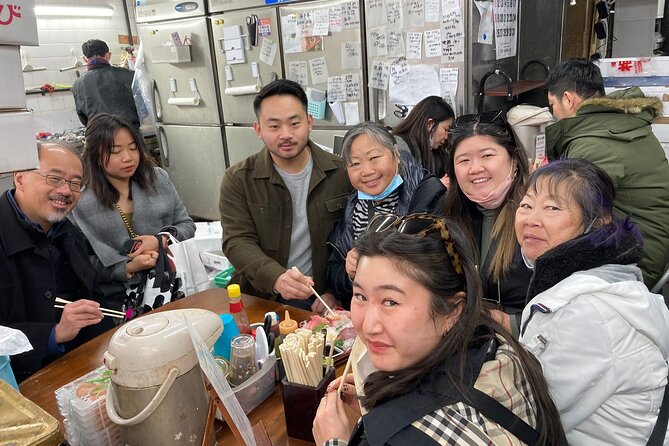
- Five to eight tastings included: The food may include meat buns, Japanese sweets, bread, sashimi, skewered wagyu, and other local specialties.
- Daimaru’s depachika: Spend about 30 minutes in a department-store basement devoted to beautifully presented food.
- Nishiki Market focus: Allow about an hour to see Kyoto’s Kitchen and learn which stalls deserve your attention.
- Small group of six: A useful format for narrow market passages and personal questions.
- Cultural stops included: Rokkakudo Temple begins the route, and Nishiki Tenmangu Shrine provides the finish.
- $79.07 per person: The price makes the most sense if you value guidance and several tastings more than a simple market walk.
Why this Kyoto food walk works
Food tours in Kyoto can become a string of random purchases. You see a skewer, buy it, then keep walking without knowing what made it special or where the local favorites are. This route gives your eating a little structure.
You begin at Starbucks Kyoto Sanjo Karasuma Building at 10:00 a.m. That meeting point is easy to identify and sits near public transportation. From there, the tour moves through central Kyoto rather than sending you far outside the city center. You get food, a few cultural landmarks, and an introduction to two very different shopping environments.
The tour is especially useful early in a Kyoto visit. You can note the shops and foods that interest you, then return later with more time and a larger appetite. The guide also introduces recommended businesses, so the value is not limited to the bites eaten during the three hours.
The format is social but not oversized. With no more than six people, you should have a fair chance to hear the guide and ask about ingredients, customs, or where to buy something later. A small group also matters at Nishiki Market, where a large cluster would be awkward.
More eating your way round Kyoto:
- Kyoto Night Foodie Tour in Gion (9+ dishes + 6 Sake tastings)
★ 5.0 · 1,762 reviews - Kyoto: Gion Food Tour 13 Dishes at 4 Eateries
★ 5.0 · 408 reviews - Kyoto Foodie Night Tour
★ 5.0 · 376 reviews
Starting near Sanjo Karasuma and Rokkakudo Temple
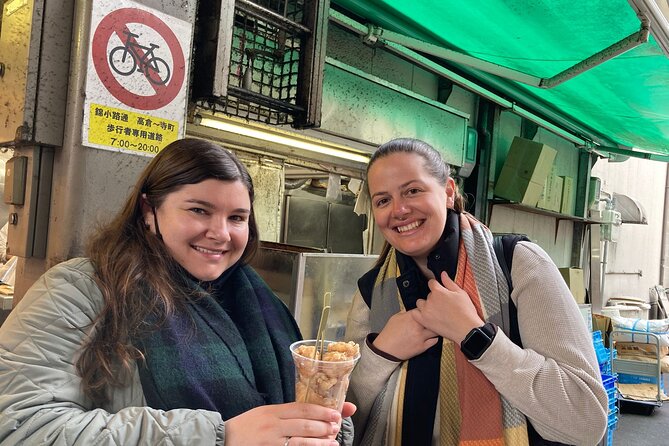
The tour starts at Starbucks Kyoto Sanjo Karasuma Building, not at Nishiki Market itself. That gives the outing a gradual beginning. You meet the guide, get oriented, and walk toward the food stops instead of being dropped straight into the market crowds.
Rokkakudo Temple is part of the route and offers a quiet historical pause before the serious eating begins. It helps place the food in a broader Kyoto setting. You are not only shopping for snacks. You are moving through an old part of the city where temples, shrines, businesses, and daily meals sit close together.
The temple visit is not described as a long guided sightseeing stop, so do not book this expecting an extended temple lecture. Think of it as a calm cultural marker between the meeting point and the food-focused portions of the walk.
That balance is one of the tour’s strengths. Food remains the main event, but you get enough history and place to make the route feel like Kyoto rather than a generic tasting circuit.
Daimaru Kyoto’s depachika food floor
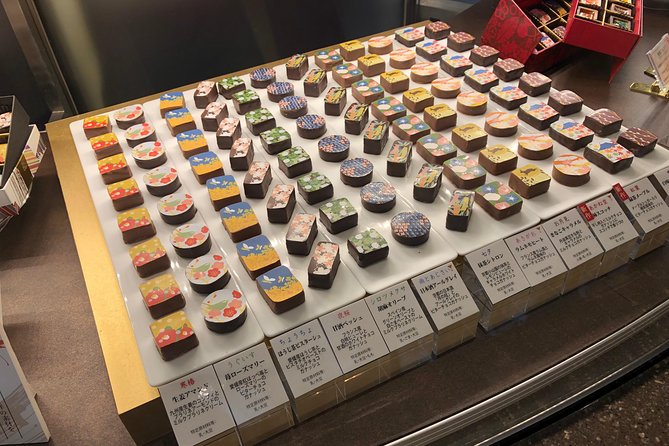
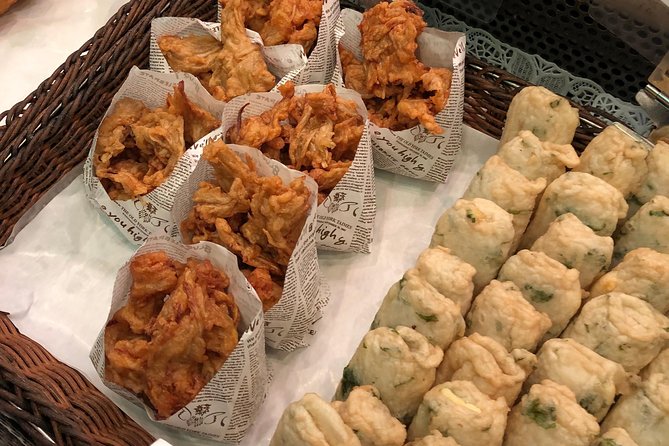
The first major food stop is Daimaru Kyoto, with about 30 minutes set aside for its depachika. In Japan, a depachika is a department-store basement food floor. Daimaru’s selection includes Kyoto delicacies, fresh sushi, carefully made sweets, seasonal foods, tempura, and other fried items.
This is a useful stop because the setting differs sharply from Nishiki Market. Daimaru is orderly, polished, and visually precise. Food is often packaged and presented with great care. You can see the high standard applied to everything from sweets to prepared meals.
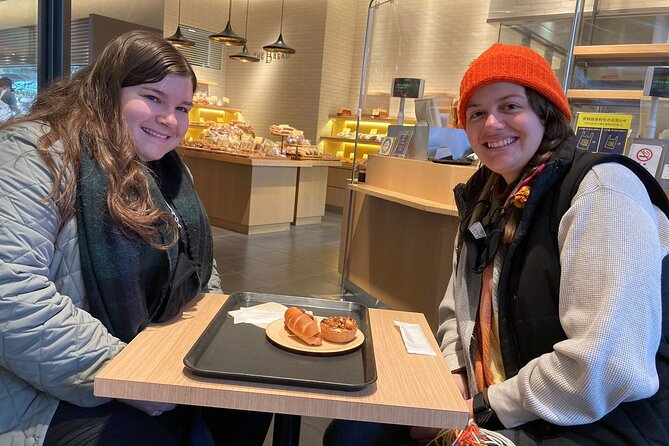
Possible tastings here include popular meat buns called nikuman and wagashi from a long-established wagashi shop. You might also sample tempura or other fried foods, depending on shop availability and the preferences of the group. Bread from Yaoyaichi is another possible tasting mentioned for the route.
The 30-minute limit keeps the tour moving, but it also creates the clearest concern. A department-store food basement can easily occupy an hour if you enjoy comparing sweets, boxed meals, and seasonal displays. You will get an introduction rather than unlimited browsing.
I would treat this stop as a lesson in how Japanese department stores handle food. Look closely at the presentation, packaging, and range of choices. If you see something you want to take home, ask the guide when to buy it. You may not have much spare time later.
Nishiki Market, Kyoto’s Kitchen
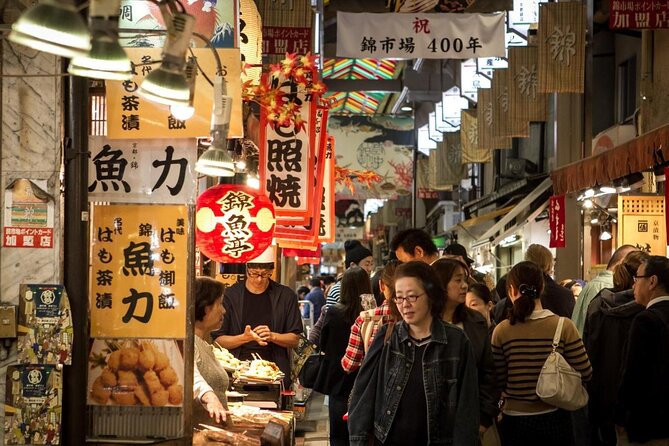
Nishiki Market is the center of the food portion, with about one hour devoted to the shopping district. It is often called Kyoto’s Kitchen, and the tour uses it for a broad sampling of local foods rather than a single sit-down meal.
Possible foods include rolled omelets, skewers, sashimi, skewered wagyu beef, and sake. Those examples cover a wide range of textures and flavors, from sweet and soft to grilled and savory. The exact selection can change with shop availability and group preferences, so you should not book this expecting a fixed tasting menu.
That flexibility is both useful and slightly uncertain. It lets the guide adapt to what looks good that day, and it can accommodate the interests of a small group. On the other hand, you may not receive every item you had in mind. If a particular food matters to you, ask about it early.
The guide’s role is important here. Nishiki Market contains many food shops, and an independent walk can become a parade of things you do not recognize. With a guide, you have someone pointing out recommended places and explaining what you are seeing. You also learn which foods are best treated as a quick bite and which are worth buying for later.
A sake tasting at a small shop is one possible part of the outing. It gives the market visit a more local and conversational feel, though sake is not guaranteed as a fixed inclusion. The tour also leaves room for extra purchases, but those cost more.
Same base, a different sort of day:
- PERFECT KYOTO 1-Day Bus Tour
★ 5.0 · 13,518 reviews - Kyoto: Fushimi Inari, Kinkakuji, Bamboo Grove 1 Day Bus Tour
★ 4.8 · 4,316 reviews - Kyoto: Tea Ceremony in a Traditional Tea House in Kiyomizu
★ 4.9 · 3,519 reviews - Kyoto Geisha Walking Tour: Gion District & Hidden Gems
★ 4.7 · 3,273 reviews
Eating five to eight local foods
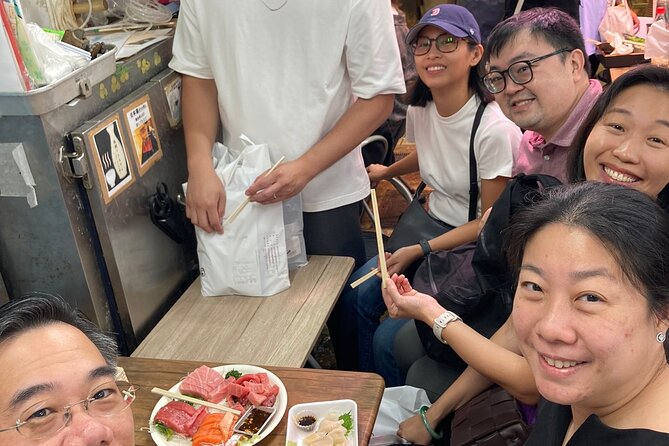
The included lunch tasting covers five to eight local foods. That is a solid amount for a three-hour walk, especially if the samples are varied. You should arrive hungry, but not ravenous. This is a tasting route, not a full restaurant lunch with a single large plate.
The examples give you a good sense of the range:
- Meat buns and bread for familiar, filling bites
- Wagashi for traditional Japanese sweets
- Tempura and fried foods from the department-store basement
- Sashimi and skewered wagyu at Nishiki Market
- Rolled omelets, skewers, and possibly sake
The word possibly matters. The food changes according to what the shops have and what the group prefers. Meat, seafood, wheat, and dairy may all appear. If you have allergies or dietary restrictions, contact Cooking Sun before booking and discuss what can be changed. Do not rely on making a last-minute request at the meeting point.
The food is included, but snacks beyond the provided tastings are not. That is easy to overlook at Nishiki Market, where nearly every stall can tempt you into another purchase. Bring a payment method for extras if you want to continue sampling.
The guide can also help you avoid wasting money on food that does not suit your taste. You still make the final choice, but a recommendation is useful when you are faced with unfamiliar ingredients and limited time.
Finishing at Nishiki Tenmangu Shrine
The walk ends at Nishiki Tenmangu Shrine, at 537 Nakanocho in Nakagyo Ward. Ending at a shrine gives the route a calmer final note after the market’s food stalls and shopping displays.
This is not just a practical endpoint. It gives you a moment to pause and think about what you have eaten and seen. The route starts with a temple, passes through commercial food spaces, and ends at a shrine. That sequence connects Kyoto’s daily food culture with its older religious setting without turning the tour into a formal history lesson.
The ending point is also useful for planning the rest of your day. You are left in central Kyoto, near the Nishiki area, rather than returned to the original meeting place. If you want to keep shopping or revisit a stall, you can do so after the official tour ends.
The guide makes the difference
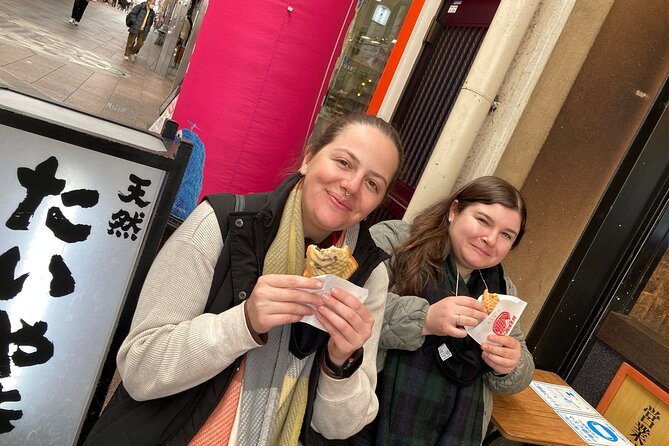
The food is the hook, but the guide determines how much you get from it. The most useful guide will explain what you are eating, point out shops you might otherwise pass, and adjust the pace when the group has a clear interest.
Guide names associated with the experience include Yoriko and Aoki. Yoriko is connected with tastings from several businesses and a possible sake stop, while Aoki is described as attentive and personable during the Nishiki Market portion. Andrea is also named in feedback for a food outing that included local eating, drinking, and cultural context, though the available information does not clearly identify that as this exact daytime route.
The practical lesson is simple: guide style may vary. One guide may spend more time on food details, while another may focus on personal attention or wider cultural context. You should ask questions. This is where a small group helps.
There is also a warning in the mixed feedback. One person found the tour interesting but too tied to a timetable, with limited freedom to decide how much to eat. If you like to linger at every stall, photograph every display, or choose your own lunch, you may find the structure restrictive.
Is $79.07 good value?
At $79.07 per person, this is not the cheapest way to walk through Nishiki Market. You are paying for more than access to the market, though. The price includes a local guide, the route planning, five to eight food tastings, the department-store visit, and cultural stops.
The value is strongest for first-time visitors who want an organized introduction. You get several types of Kyoto food without having to research individual shops or guess what to order. The small group also makes the fee easier to justify than it would be for a large, impersonal tour.
The value is weaker if you already know Nishiki Market well or prefer to spend your food budget on one substantial meal. Extra snacks are not included, and the tasting portions may not replace lunch for every appetite.
This tour is booked an average of 42 days ahead, so advance planning is sensible. A mobile ticket is provided, and confirmation arrives at booking. The meeting point is near public transportation, and most people can participate.
The route requires a cooperative weather day. If poor weather causes cancellation, you are offered another date or a full refund. You can cancel for a full refund up to 24 hours before the start time, but changes or cancellations inside that window are not accepted.
Who should book this food walk?
I would recommend it to you if you want an efficient introduction to Kyoto eating and do not want to spend your first market visit guessing. It suits food-focused visitors, first-time Kyoto visitors, couples, friends, and small families who enjoy trying several small portions.
It is also a good choice if you want to understand the difference between a department-store food floor and a traditional market district. That comparison gives the tour more depth than a simple snack crawl.
You may want another plan if you have strict dietary needs that cannot be discussed in advance, dislike seafood or meat, or want full control over every purchase. The food can include several common allergens, and the tasting list is flexible.
Should you book the Nishiki Market food tour?
Book it if you value guidance, variety, and a small group more than a completely free-form market visit. The route covers Daimaru, Nishiki Market, Rokkakudo Temple, and Nishiki Tenmangu Shrine, while five to eight tastings give you a practical first taste of Kyoto food.
Skip it if your main goal is to wander slowly and choose every bite yourself. The schedule is real, the samples vary, and extra food costs more. For most first-time visitors who want a well-planned introduction, $79.07 is a fair price for three hours of food, local orientation, and several ideas for where to eat next.
FAQ
How long does the tour last?
The tour lasts about three hours.
What time does the tour start?
It starts at 10:00 a.m.
Where does the tour meet?
Meet at Starbucks Coffee in the Kyoto Sanjo Karasuma Building, at 85-1 Mikuracho, Nakagyo Ward, Kyoto 604-8166.
Where does the tour end?
The tour ends at Nishiki Tenmangu Shrine, 537 Nakanocho, Nakagyo Ward, Kyoto 604-8042.
How many food tastings are included?
The tour includes a lunch tasting of five to eight local foods. The exact items can vary according to shop availability and group preferences.
Can I book if I have food allergies or dietary restrictions?
The provided food may contain meat, seafood, wheat, and dairy. Contact Cooking Sun before booking to discuss your restrictions and possible accommodations.
What happens if I need to cancel?
You can receive a full refund if you cancel at least 24 hours before the start time. Cancellations or changes made less than 24 hours before the tour are not accepted, and poor-weather cancellations offer a different date or a full refund.
Just added in Kyoto
- Private Cooking Class Udon in Kyoto Japan★ 5.0 · 23 reviews
- Your Private Vacation Photography Session In Kyoto★ 5.0 · 110 reviews
- Kyoto: Zen Meditation at a Private Temple with a Monk★ 5.0 · 25 reviews
- Private Pewter Sake Cup Experience with a Kyoto Artisan★ 5.0 · 31 reviews
- Kyoto Wagashi(Japanese sweets) Cooking Class near Fushimiinari★ 5.0 · 60 reviews
- Kyoto:Family-Friendly Kimono & Yukata Experience at WARGO★ 5.0 · 147 reviews
- Private Guided Traditional Buddhist Cooking in Japan★ 5.0 · 16 reviews
- Kyoto: Gion Geisha District & Sake-in-Hand Walking Tour★ 5.0 · 37 reviews
Food Tours, compared.
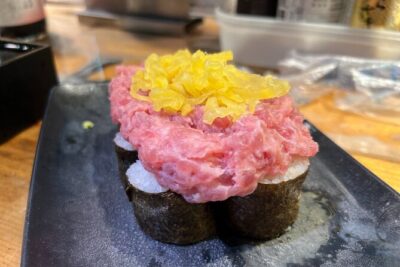
Shinjuku Food Tour (13 Dishes at 4 Local Eateries)
Read our review →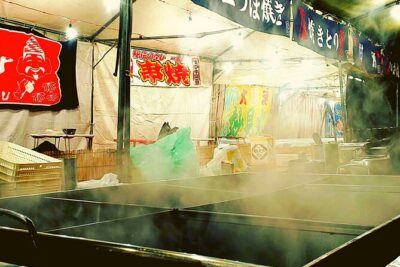
Osaka Food Tour: 13 Dishes at 5 Local Eateries
Read our review →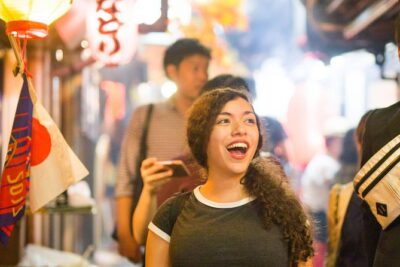
Best of Shinjuku: Izakaya Food Tour (4 Stops, 14+ Tastings)
Read our review →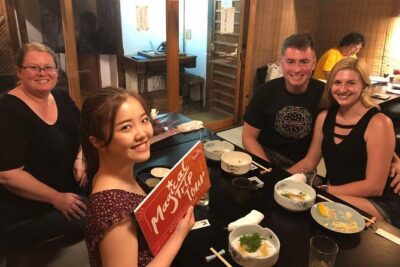
Kyoto Night Foodie Tour in Gion (9+ dishes + 6 Sake tastings)
Read our review →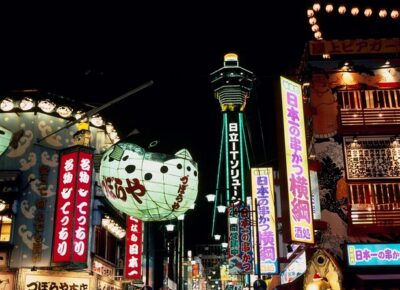
Hungry Osaka Street Food Tour:15 Tastings & 3 Drinks with a Local
Read our review →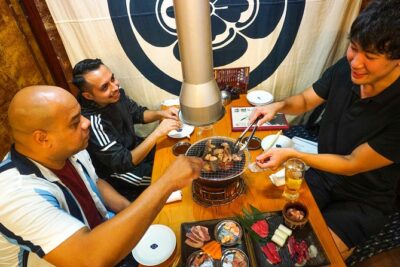
Tokyo Night Foodie Tour in Shinjuku – Seasonal Sushi, Wagyu Beef
Read our review →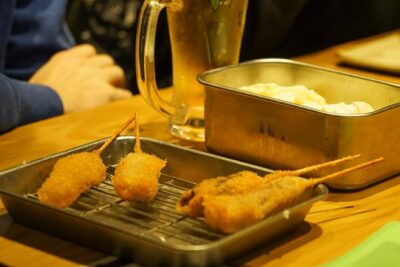
Osaka Local Foodie Walking Tour in Dotonbori and Shinsekai
Read our review →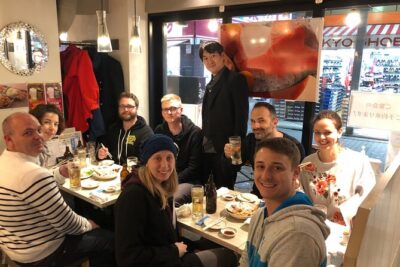
Eat and Drink Like a Local: Tokyo Ueno Food Tour-Taverns&Ramen
Read our review →Browse the lists this tour appears in