

Reviewed · CASTLE TOURS
Osaka: Castle History Walking Tour / Castle Tower Admission
Osaka Castle was built to make an attacking army lose its way, its nerve, and eventually its life. This tour makes you walk that plan: across moats, through angled gates, and along routes designed to expose invaders to fire. I especially like the focus on military design and the story of how the castle’s largest stone was hauled into place.
The separate entrance is another strong point, particularly when the tower line grows long later in the morning. Guides such as Mao, Spike, Kaz, Yuta, and Saya have earned praise for clear English, warm conversation, and patient answers. The main caution is that the experience is a brisk outdoor history walk, not a guided explanation of every floor in the museum.
Key points
- The castle is treated as a weapon, not just a pretty landmark: You follow triple moats, layered gates, zigzag routes, and masugata entrances built to slow attackers.
- The largest stone becomes a hands-on history lesson: You learn how workers moved massive blocks in the 16th century and can spot marks left by stone craftsmen.
- The tower admission adds a fine finish: After the guided approach, you reach the top for Osaka views and some time to explore the museum independently.
- Hokoku Shrine adds political context: The stop connects Osaka Castle with Toyotomi Hideyoshi and the legacy that Tokugawa Ieyasu set out to defeat.
- Early timing can save real time: A 9 a.m. start may help you avoid the longer tower and elevator lines that can appear by late morning.
- The guide is the main value: This tour suits you if you want the walls and gates explained, not simply photographed.
Osaka Castle makes more sense from the outside
The golden tower gets the photographs, but the castle’s real lesson begins well before you reach it. Osaka Castle was designed as a machine for delaying an enemy. Its moats, heavy stone walls, narrow approaches, and sudden turns forced an attacking army to move slowly while defenders watched from above.
That is what makes this 90-minute walk worthwhile. On your own, you can admire the scale of the walls and take a few good pictures. With a guide, you can see why a gate sits where it does, why the path bends, and why some walls appear to lean at such severe angles.
The tour begins in front of the Lawson S Otemae Rest House Store. Be careful here: several Lawson stores are in the area. Check the supplied Google Maps location before setting out, and look for the Local Guide Stars sign. This is a small practical detail, but arriving at the wrong convenience store can quickly eat into a short tour.
You will need comfortable shoes. The route passes through historical grounds and includes enough walking to make thin sandals or stiff new shoes a poor choice. Wear clothing suited to the weather, since much of the experience takes place outdoors.
Other castle tours in Osaka people book:
- Osaka Castle: Museum and Tower Entry Ticket
★ 4.5 · 2,380 reviews - Ultimate Osaka Walking Tour: Castle, Dotonbori & Hidden Gems
★ 5.0 · 862 reviews - Osaka Castle Walking Tour and Castle Tower Admission
★ 5.0 · 561 reviews
Triple moats and gates built to confuse attackers
The opening portion focuses on the castle grounds and the layers of defense around them. You see the outer moats and learn how water created distance between an attacking force and the walls. The point was not only to block a direct charge. The moats also divided an army and forced soldiers toward controlled crossing points.
The multi-layered gates are even more revealing. A masugata entrance uses a boxed or square layout that makes an attacker turn sharply after entering. The defenders could observe the trapped group from several directions, while the narrow space made it difficult for a large force to move together.
I like this part because it changes the way you look at a gate. It is no longer a grand entrance. It is a traffic problem designed by people who understood panic, crowding, and limited visibility.
Your guide will also point out the zigzag routes that enemies once had to follow. These turns bought defenders time and prevented an army from marching straight toward the central keep. The route may feel easy today, but the design becomes much clearer when you imagine approaching under fire, carrying weapons, and not knowing what waited around the next corner.
Stone walls that were meant to defeat climbers
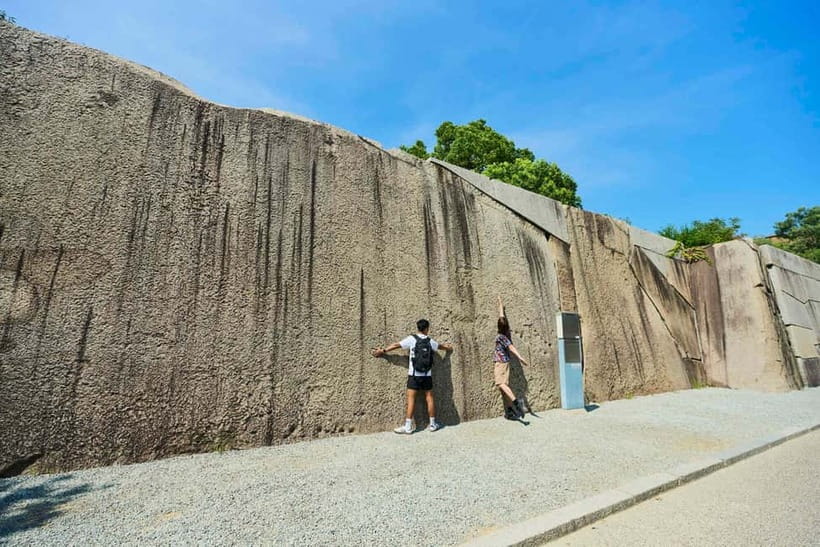
Osaka Castle’s enormous stone walls are one of its most impressive features, and the tour gives them a practical explanation. You learn how the stones were arranged, why the wall angles mattered, and how the construction made climbing difficult.
The castle’s largest stone is a highlight. It gives the guide a chance to explain how workers in the 16th century moved blocks of this size without modern cranes or trucks. The subject is more interesting than a simple claim that the stones were heavy. You begin to think about manpower, routes, ropes, timber, and planning.
Look closely at the stonework as you walk. You might find marks associated with the master craftsmen or groups responsible for particular blocks. These marks are easy to miss when you are focused only on the tower, and they are exactly the sort of small detail a guide can bring to your attention.
The walls also tell you something about power. Moving and fitting such large stones required control over labor and resources. The castle was a military structure, but it was also a public display of authority. Its size told allies and enemies that the people inside could organize an immense project.
The tower as command post and final defense
After the grounds and defensive layers, the route leads into Osaka Castle Tower. Admission is included, and the tour uses a separate entrance to help you avoid the main ticket line. Several visitors also appreciated being directed through the tower and toward the elevator access, especially when queues became longer later in the morning.
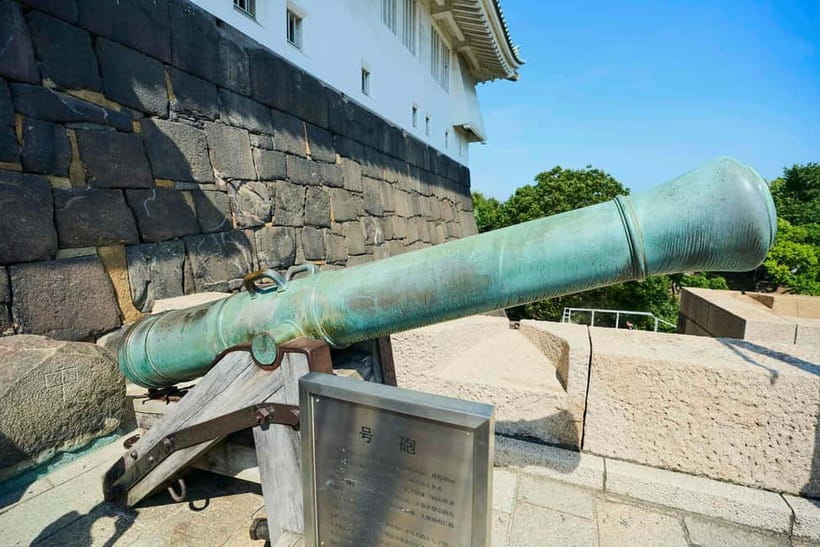
The tower itself combines museum displays with broad views over Osaka. Your guide explains how it worked as a command post and last line of defense, then points out arrow slits and gun ports. These openings were not decorative. They allowed defenders to observe and fire while staying protected behind the walls.
Gold has a role here, too. The castle used shining decoration as psychological warfare. It announced wealth and power to anyone approaching, while also making the stronghold easier to recognize from a distance. The message was simple: this was not an ordinary residence.
The walk through the tower is guided, but you should understand the limit. The guide does not provide a floor-by-floor museum tour. Instead, you receive the larger story and then have time to look around independently. That arrangement works well if you prefer a clear introduction before exploring displays at your own pace.
The top is the reward for the outdoor route. You get a city view and a chance to understand the castle’s commanding position. It is also a good final photo stop, though the tower can become crowded and the elevator line may change the pace of your visit.
Other walking tours in Osaka people book:
- Osaka: Hotspots & Hidden Gems Walking Tour Private or Group
★ 4.9 · 1,300 reviews - Osaka Local Foodie Walking Tour in Dotonbori and Shinsekai
★ 5.0 · 985 reviews - Osaka Bar Hopping Night Walking Tour in Namba (3 bars, 6 tastes)
★ 5.0 · 958 reviews - Osaka: Deep Backstreets Walking Tour with Dinner Option
★ 4.9 · 902 reviews
Hokoku Shrine and the Toyotomi-Tokugawa struggle
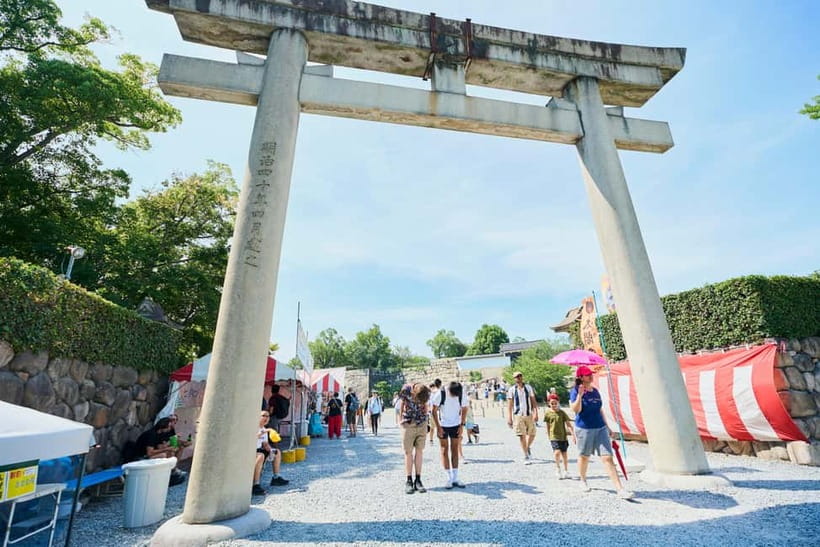
The itinerary includes about 20 minutes at Hokoku Shrine. This stop adds a human and political layer to the stonework. The shrine is connected with Toyotomi Hideyoshi, whose legacy is closely tied to Osaka Castle.
The story then moves toward the struggle between Hideyoshi’s supporters and Tokugawa Ieyasu. The castle may have looked invincible, but its walls could not settle a succession dispute forever. The conflict of 1614 and 1615 brought the fortress down after the fierce rivalry between the Toyotomi legacy and Tokugawa ambition.
That ending is important. Without it, the castle can seem like a timeless symbol of power. The tour shows you that fortifications are only as secure as the political world around them. Strategy, leadership, alliances, and timing mattered as much as stone.
A guide can also explain the broader Osaka setting and Japanese history around the castle. Guides including Spike, Ken, Mao, and Yuta have been singled out for handling detailed questions and for connecting the building to the wider story. If you enjoy asking why events unfolded as they did, this is where the tour earns its fee.
Why the guide matters at $33
At $33 per person, this is not the cheapest way to see Osaka Castle. The value comes from combining three useful things: an English-speaking guide, castle tower admission, and faster access through a separate entrance.
The ticket alone would not explain the defensive layout. You could walk the grounds, take pictures, and enter the tower, but you might miss the meaning of the moats, the masugata gates, the craftsmen’s marks, and the angles of the stone walls. For a first visit, that context makes the site easier to remember.
The price also buys structure. The guide leads you from the outer defenses to the shrine and then into the tower, rather than leaving you to work out a route across a large complex. Several guides have been praised for choosing strong photo spots, answering questions, and adjusting their pace for families or older participants.
Still, keep your expectations sensible. This is a short introduction, not a full-day examination of Osaka’s castles, wars, and museums. The tower museum is not explained floor by floor, and the group format means you will not control every stop.
The tour’s strong 4.9 rating from 230 reviews is supported by a clear pattern in the comments: guide quality is the biggest strength. Names including Saya, Mao, Spike, Kaz, Yuta, Ken, Yu, and Ami appear repeatedly in praise for friendly conversation, clear explanations, enthusiasm, and good handling of questions.
Timing, pace, and what the 90 minutes really means
The advertised duration is 90 minutes, while the detailed schedule lists a 75-minute guided castle visit, a 20-minute shrine visit, and a 25-minute castle stop that includes guided and self-guided time. Those figures appear to overlap or describe approximate segments rather than add up as separate blocks.
Plan on a compact visit with a steady pace. You will be outdoors for much of it, then spend time inside the tower. The route is suitable for people who can manage ordinary walking through historical grounds, but the experience is not designed as a seated lecture.
An early start can be smart. A 9 a.m. group may reach the tower before the lines build, and one detailed account noted that by around 11 a.m. the entrance and elevator queues were much longer. An early finish may also leave you time to use the nearby food stalls once they open.
Group size is not specified, so do not book on the assumption that you will receive a private tour. Some departures have effectively become private when no other participants arrived, but that is a lucky circumstance, not a promise. In a normal group, the guide’s ability to speak clearly and keep people together matters more than a tiny party.
Who will enjoy this Osaka Castle walk
I recommend it most strongly if you like military architecture, Japanese political history, or the practical details behind famous buildings. You will get more from the experience if questions such as how an army entered a gate or why a wall slopes sharply interest you.
It also works well for families. One guide kept a three-year-old engaged for the full tour, and several guides have been praised for friendly explanations that did not feel like a long classroom talk. Teenagers may respond especially well to the traps, weapons, gold, and battle story.
The tour can suit older participants too, provided everyone is comfortable with walking. Guides have adjusted the pace for people with mobility concerns and have made an effort to keep groups safe and comfortable. Still, you should choose supportive shoes and tell the guide early if someone needs a slower pace.
You may prefer a self-guided visit if you want to spend hours studying every museum display, move at your own speed, or avoid a fixed meeting time. The tour gives you a strong framework, but it cannot cover every object in the tower.
Practical details before you book
Bring comfortable shoes and clothing suited to the weather. The route includes outdoor historical areas, stone surfaces, gates, walls, and the approach to the tower.
The meeting point is the Lawson S Otemae Rest House Store. Confirm the exact location on Google Maps because multiple Lawson stores operate nearby. Look for the Local Guide Stars sign when you arrive.
The activity is offered in English with a live guide. You can cancel up to 24 hours before the start for a full refund, and the reserve-now, pay-later option allows you to hold a place without paying immediately.
The tour is operated by Local Guide Stars. Guides vary by departure, but the strongest guide reports consistently describe warm personalities, strong English communication, clear historical explanations, and patience with questions.
Should you book this Osaka Castle tour?
Book it if you want Osaka Castle to be more than a tower with a view. The separate entrance, included admission, and carefully explained defenses make $33 a fair price for a first visit, especially if you can take an early departure.
Skip it if you want a long, quiet museum visit or a fully private experience. For most people interested in the castle’s walls, battles, architecture, and political story, I would choose the tour. It turns the giant stones, confusing gates, and dramatic tower into one connected story, then leaves you with enough time to look around on your own.
FAQ
Where does the Osaka Castle tour meet?
Meet in front of the Lawson S Otemae Rest House Store. Several Lawson stores are nearby, so confirm the correct location on Google Maps and look for the Local Guide Stars sign.
How long does the experience last?
The advertised duration is 90 minutes. The schedule also lists approximate segments at Osaka Castle, Hokoku Shrine, and the castle tower, with some guided and self-guided time.
Is Osaka Castle Tower admission included?
Yes. The Osaka Castle Tower admission ticket is included in the price.
Does the guide explain every floor of the castle museum?
No. The experience includes a guided visit to the castle, but it does not include a guided tour of each museum floor. You have time to explore parts of the tower independently.
Is the tour in English?
Yes. The activity includes a live English-speaking guide.
Does the tour skip the main line?
The activity uses a separate entrance for faster access. Guides have also helped groups reach the elevator area more quickly when tower lines were long.
What should I bring?
Bring comfortable shoes and clothing suitable for the weather. The tour involves walking through historical sites and outdoor castle grounds.
Is the tour suitable for children?
Yes. The experience is suitable for people interested in history, military strategy, and architecture, and guides have kept very young children and teenagers engaged.
Can I cancel for a refund?
You can cancel up to 24 hours in advance for a full refund. A reserve-now, pay-later option is also available.
More walking tours elsewhere in Japan
- Osaka: Main Sights and Hidden Spots Guided Walking Tour
★ 4.9 · 702 reviews - Private Osaka Walking Tour: Highlights & Hidden Gems
★ 5.0 · 569 reviews - Kuromon Market Food Walking Tour in Osaka (6 stops, 6 tastes)
★ 5.0 · 550 reviews - Osaka: Five Must-See Highlights Walking Tour & Ramen Lunch
★ 4.7 · 411 reviews
More castle tours elsewhere in Japan
- From Osaka: Himeji Castle, Arima Onsen & Mt. Rokko Day Tour
★ 4.6 · 339 reviews - 5-Hour Osaka Bike Tour to the Neighborhood of Osaka Castle
★ 5.0 · 319 reviews - Osaka Castle Guided Tour
★ 4.7 · 249 reviews - Tokyo Castle & Imperial PalaceーShogun Walking Tour
★ 4.7 · 1,068 reviews
Just added in Osaka
- Osaka Temple Cool Foot Bath & Matcha Experience〈45min〉★ 4.9 · 82 reviews
- Osaka: Mind & Spirit Balance Temple Reiki Healing★ 5.0 · 41 reviews
- Osaka: Samurai Training Experience KENDO in Osaka★ 5.0 · 111 reviews
- Full Day Kyoto Tour : Bamboo Forest, Golden Temple, Fushimi Inari★ 5.0 · 84 reviews
- Osaka: Minoh, Katsuoji Temple, & Minoh Falls Full-day Tour★ 4.9 · 172 reviews
- OSAKA NIGHT FUSION Japanese Taiko Kabuki Samurai Dance Show★ 4.8 · 155 reviews
- Ramen and Gyoza Cooking Class in Osaka★ 5.0 · 202 reviews
- Osaka: A Modern Samurai, Kabuki, Taiko, & Dance Show★ 4.5 · 66 reviews
Castle Tours, compared.
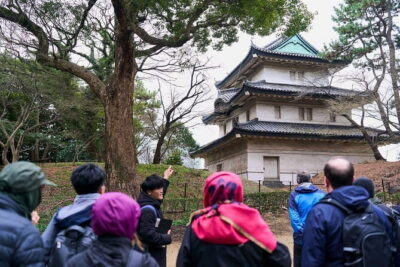
Tokyo Castle & Imperial PalaceーShogun Walking Tour
Read our review →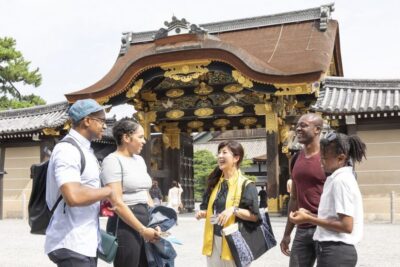
Nijo-jo Castle and Ninomaru Palace Guided Tour
Read our review →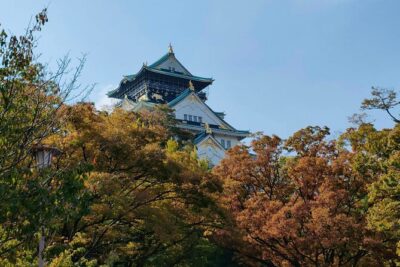
Ultimate Osaka Walking Tour: Castle, Dotonbori & Hidden Gems
Read our review →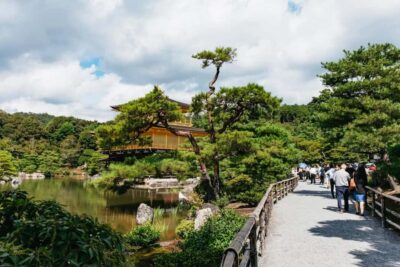
Nijo Castle, Kiyomizu & Fushimi Inari Guided Tour
Read our review →
Nijo, Kinkaku-ji, Arashiyama, Kiyomizu & Fushimi Inari
Read our review →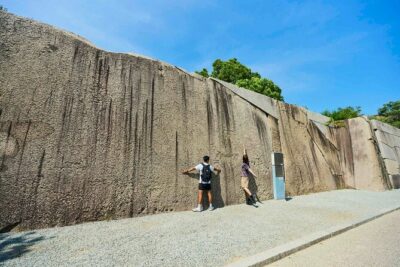
Osaka Castle Walking Tour and Castle Tower Admission
Read our review →
Imperial Palace East Garden and Edo Castle Walking Tour in Tokyo
Read our review →Browse the lists this tour appears in