
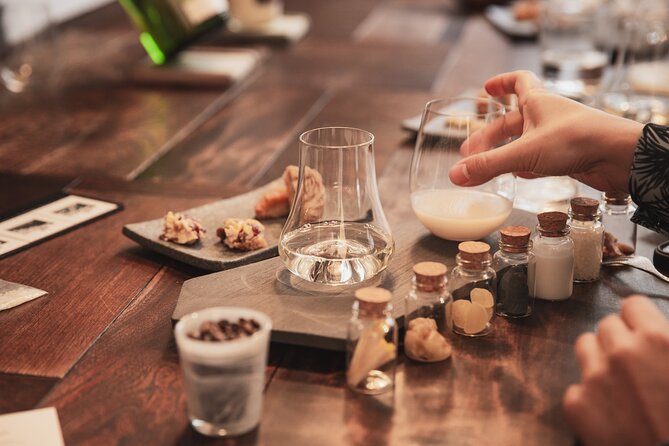
Reviewed · SAKE TASTING
Sake Omakase in Tokyo: Guided Tasting by Certified Sommeliers
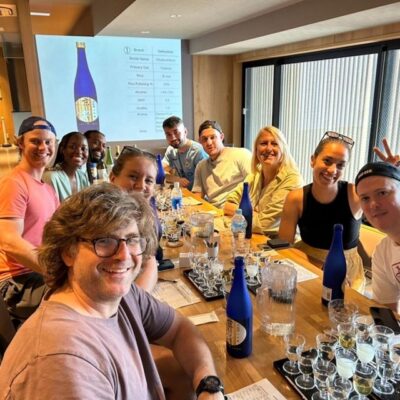
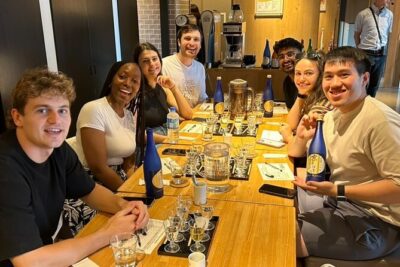
The clever part of this Tokyo sake tasting is that it treats sake as more than one drink. You compare rice, serving temperatures, herbs and spices, and even cups, so you can see why the same beverage changes from one pour to the next. The session takes place around a handsome reclaimed Showa-era wood table, not in a noisy bar.
I like the small six-person format, which gives you room to ask questions without losing the thread. I also like the food pairings: pickles, cheese, cured meats, and dessert help turn technical tasting into something you can actually enjoy. The main caution is simple: unlimited refills can catch up with you, so eat beforehand and pace yourself.
Key points at a glance
- Seven Japan-exclusive sakes: Taste a broad range rather than one house pour.
- Four themed courses: Explore rice, temperature, infusions, vessels, and food pairing.
- Small groups of six: The format allows plenty of direct conversation with the sommelier.
- English-language guidance: Eric, Aaron, Frank, and Phillip are among the hosts named for these sessions.
- Central Tokyo setting: Meet at Linden House in Kanda Ogawamachi and finish at the same place.
- About $79.52 per person: A fair price if you want instruction, food, and generous pours in one sitting.
Why this is more than a standard sake flight
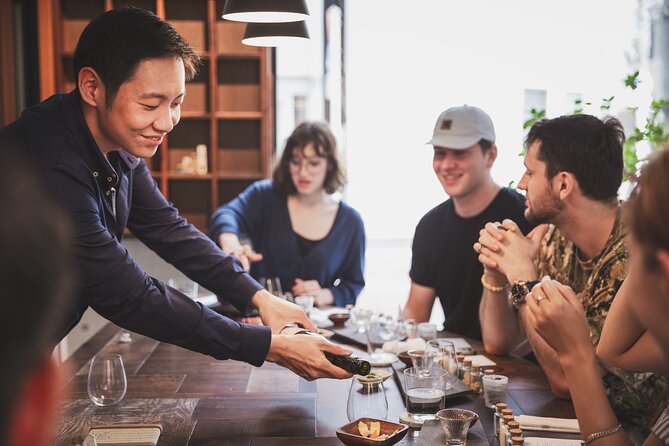
Many sake tastings simply place several glasses in front of you and run through labels. This one uses a four-course structure to show how sake behaves under different conditions. That approach matters because sake can seem confusing at first. Rice polishing, brewing methods, temperature, serving vessels, and food all change what you notice.
You are not expected to arrive with a vocabulary of fruity, dry, earthy, or umami-heavy. The sommeliers explain the basics as you go, then give you a chance to compare the results in the glass. If you have tried sake only once, this makes a friendly first step. If you already have a favorite style, the session helps you understand why you like it.
The setting also shapes the experience. Sake Studio uses a designer tasting room centered on a table made from reclaimed wood from a Showa-era building. That gives the tasting a clear sense of place without turning it into a formal lecture. You sit together, pour by pour, and talk through what is in front of you.
Other tasting rooms and breweries in Tokyo:
- Ramen and Sushi Cooking Class with Sake Pairing Set in Tokyo
★ 5.0 · 291 reviews - Sake Tasting Masterclass in Shinjuku (8+ Varieties with a Pro)
★ 5.0 · 271 reviews - Wagyu & Sake Pairing in Shinjuku – Steak, Shabu-Shabu & More
★ 5.0 · 112 reviews
The four-course route through seven sakes
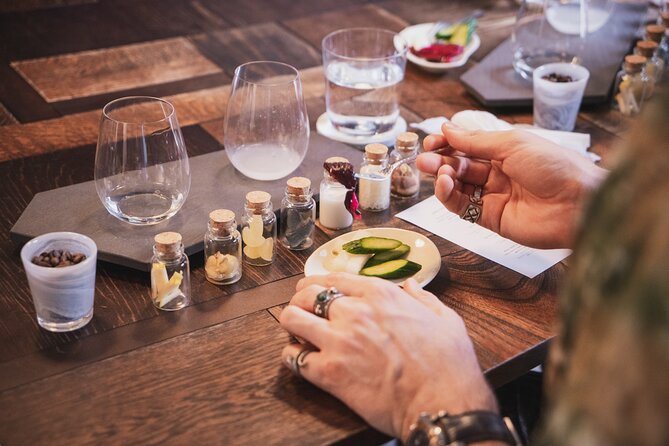
The exact labels can change, but the format is built around seven selected sakes served across four themes. You receive pours in a progression, with refills available as the session continues. This is not a quick sample-and-leave stop. Plan on roughly two hours.
Course one: comparing rice and brewing character
The opening course introduces the idea that rice choice and production methods affect the finished drink. You may notice differences in fragrance, weight, sweetness, acidity, and finish as the sommelier places one sake beside another.
This is a useful starting point because it gives you a reference point for the rest of the tasting. Instead of memorizing labels, you begin by asking what changes between the glasses. The guide can also explain how sake is made and how different types are classified.
For a first-time drinker, this is where the session earns its educational value. You can ask basic questions without feeling behind. For someone who already orders sake, the comparison may help connect a familiar taste to the method behind it.
Course two: five temperatures, five personalities
One of the most unusual parts of the tasting explores sake at five different temperatures. Temperature can bring out different aromas and textures, so a pour that seems quiet when chilled may feel rounder or more expressive when served warmer.
This is the kind of demonstration that is hard to grasp from a menu description. You experience the change directly. It also gives you practical information for later meals in Japan. If you find a style you like at one temperature, you can ask for it that way again.
The advantage is sensory and immediate. The limitation is that you need to pay attention. With several pours available, it is easy to focus on drinking and miss the comparison. I recommend taking small sips and noting which temperature works best for you.
Same base, a different sort of day:
- Mt Fuji and Hakone 1-Day Bus Tour Return by Bullet Train
★ 5.0 · 26,383 reviews - 1-Day Tokyo Bus Tour
★ 5.0 · 14,250 reviews - Tokyo: TOKYO SKYTREE® Admission ticket
★ 4.5 · 11,192 reviews - Tokyo: teamLab Planets TOKYO Digital Art Museum Entry Ticket
★ 4.6 · 9,779 reviews
Course three: herbs, spices, and unexpected combinations
Another course looks at spice and herb infusions. This moves the tasting away from the idea that sake has one fixed flavor profile. The additions can show how sake works with savory or aromatic ingredients and how pairing changes your impression of the drink.
Small bites are served with each course. The food selection includes pickles, cheeses, cured meats, and dessert, so the pairings do not stay in one narrow category. A salty bite can make a sake seem softer, while a sweet finish may highlight a different side of the same drink.
The food is not intended as a full meal. One earlier attendee offered the sensible tip of eating something before arriving, especially since the tasting includes free-flowing alcohol. Treat the snacks as pairing material, not dinner.
Course four: the glass and the final pairing
The drinking vessel itself receives attention in the final part of the tasting. Shape, material, and size can influence aroma and the way a drink reaches your palate. This theme is easy to overlook when you are ordering at a restaurant, but it can explain why the same sake feels different in different settings.
By this stage, you have seen several ways to alter the experience without changing the basic beverage. That makes the final course a useful wrap-up. You are not just deciding which sake tastes best. You are learning which conditions suit your own palate.
The people guiding the tasting
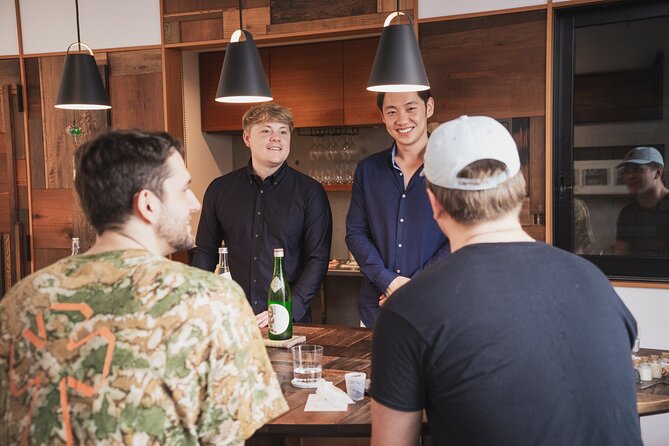
The hosts are native English-speaking sommeliers with experience across more than 2,500 tasting sessions. The named guides include Eric, Aaron, Frank, and Phillip. Their job is not only to recite facts. They answer questions, compare styles, and help you work out what you actually enjoy.
Eric is specifically associated with a seven-sake session, while Aaron and Frank are praised for making the group feel at ease. Phillip and Aaron are also described as presenting sake clearly while explaining production and types. Names and staffing can vary by date, but the format is designed around direct contact with the guide.
English is available, and the team also offers guidance in Japanese and Chinese. That is valuable in Tokyo, where a sake label may provide little help if you cannot read Japanese. You can ask about flavor, brewing, temperature, and pairing without relying on guesswork.
The group limit of six is one of the strongest practical features. A large tasting can become a lecture, with questions held until the end. Here, the small table setup makes conversation part of the session. It is also a good way to meet a few people without committing to a long group tour.
What the small bites add
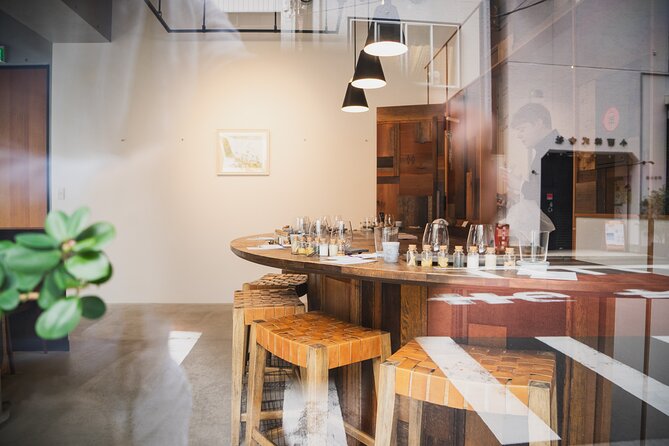
The included food is modest but well chosen for the format. Expect small bites such as pickles, cheese, cured meats, and dessert, with food paired to the sake across the courses.
I like this approach because it teaches you to judge sake with food, not in isolation. Most people will drink sake with a meal, so a tasting that includes salty, creamy, savory, and sweet flavors gives you information you can use later.
Do not book this expecting a substantial Japanese lunch or dinner. The food supports the tasting and helps settle the alcohol, but it is not described as a full meal. Have something to eat before you arrive, particularly if you plan to accept refills throughout the two hours.
Is $79.52 a fair Tokyo price?
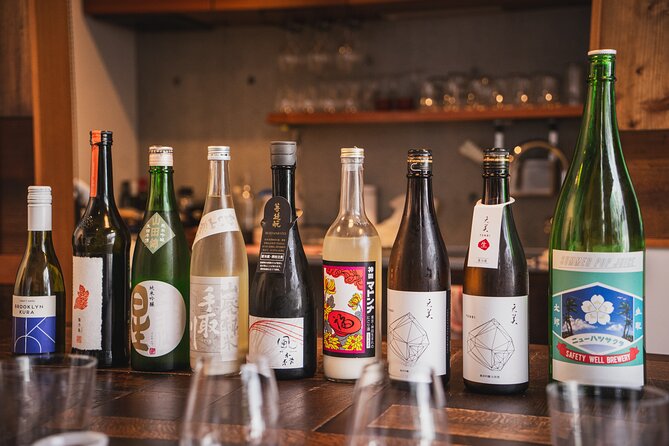
At about $79.52 per person, this is not the cheapest way to sample sake in Tokyo. You can find individual pours for less at restaurants or bottle shops. Those options, however, usually do not include a bilingual sommelier, four structured themes, seven selected sakes, unlimited refills, and paired snacks.
The value depends on what you want. If you simply want one drink before dinner, this is too much. If you want to understand sake and leave with a better idea of what to order, the price is reasonable for a two-hour session with food and instruction.
The Japan-exclusive selection also adds value. You are not just tasting widely exported labels that you could potentially find at home. The promise is a set of bottles chosen for this setting and unavailable outside Japan, although the specific names are not provided in advance.
Keep the alcohol policy in mind. This is an alcohol-centered activity, not a sightseeing stop with an occasional sample. It is not recommended if you have an alcohol allergy, and the free-refill format calls for moderation.
Getting there and fitting it into your day
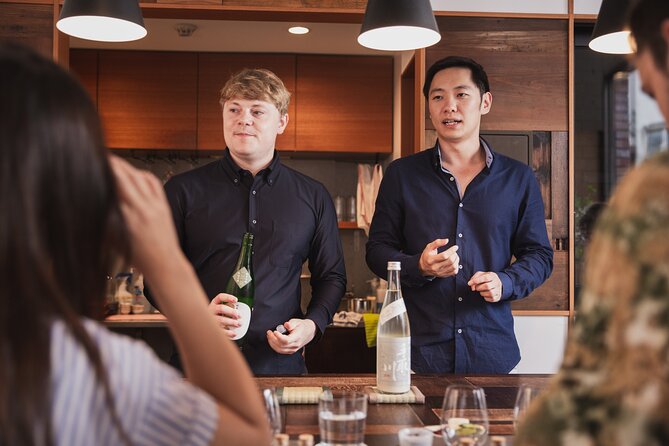
The meeting point is Linden House, at 1-chōme-9-9 Kanda Ogawamachi, Chiyoda City, Tokyo 101-0052. The location is near public transportation, and the activity ends back at the same meeting point.
That makes planning easy. You do not need to arrange a separate return transfer, and you can place the tasting before or after other central Tokyo plans. Since sake is served throughout, I would avoid scheduling a long walk, a demanding museum visit, or another alcohol-focused activity immediately afterward.
The mobile ticket is convenient for a Tokyo itinerary. Confirmation is provided when you book. Allow enough time to reach Kanda Ogawamachi, since arriving late could reduce your time at the table even though the session itself lasts about two hours.
Free cancellation is available up to 24 hours before the start time for a full refund. Changes or cancellations inside that window are not refunded, and the activity can be canceled if its minimum group size is not met. In that case, you are offered another date or experience, or a full refund.
Who will enjoy this sake tasting most
This is a strong choice for first-time sake drinkers. You receive enough explanation to understand the basics, but the session does not require prior knowledge. The tasting also suits people who already enjoy sake and want to compare serving temperatures, vessels, and food pairings in a more focused way.
Couples and solo visitors should both fit comfortably. The six-person limit keeps the mood social without making the table feel crowded. It is also a nice option for anyone who has already seen Tokyo’s major sights and wants a quieter, more local food-and-drink activity.
I would skip it if you do not drink alcohol, dislike structured tastings, or want a full meal. You should also think carefully about the free-flowing format if you have a low tolerance or plan to drive afterward. No transportation or hotel pickup is included, so you handle the journey to and from Kanda yourself.
The bottom line: should you book it?
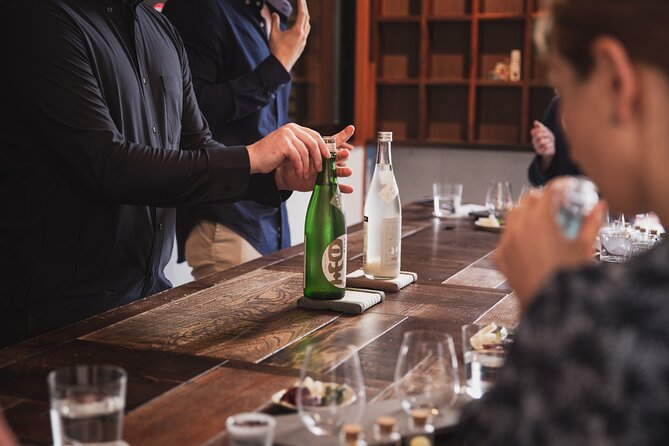
I would book this if you want to understand sake rather than simply sample it. The best parts are the six-person table, the English-speaking sommeliers, and the unusual comparisons involving temperature, rice, infusions, and vessels.
The main tradeoff is the cost and the amount of alcohol. At $79.52, you are paying for guidance and structure as much as for the drinks. Eat first, pace yourself, and arrive ready to ask questions. For a curious drinker in Tokyo, this is a useful and enjoyable way to turn a few pours into a lasting sense of what you like.
FAQ
How long does the sake tasting last?
The experience lasts approximately two hours.
How many sakes are included?
Seven sommelier-selected, Japan-exclusive sakes are included, served across four themed courses.
Are refills included?
Yes. The included sakes are served with unlimited refills during the tasting.
What food is served?
Small bites are provided with each course, including pickles, cheeses, cured meats, and dessert.
How many people can join?
The activity has a maximum of six travelers.
Where does the tasting meet?
It begins at Linden House, 1-chōme-9-9 Kanda Ogawamachi, Chiyoda City, Tokyo 101-0052, Japan, and ends back at the same meeting point.
Can I cancel for a full refund?
Yes. You can cancel at least 24 hours before the start time for a full refund. Cancellations or changes made less than 24 hours before the start time are not refunded.
Just added in Tokyo
- Japanese Whisky Hunting《HIGH-QUALITY-ONLY》Rare Tasting Class★ 5.0 · 20 reviews
- Luxury Tokyo Sake, Cocktail, Whisky and Pairing Tour★ 5.0 · 18 reviews
- Wagyu & Sake Pairing in Shinjuku – Steak, Shabu-Shabu & More★ 5.0 · 112 reviews
- Small-Group Wagyu Beef and 7 Japanese Dishes Tokyo Cooking Class★ 5.0 · 190 reviews
- Nikko: Edo Wonderland Edomura Cultural Theme Park Ticket★ 4.3 · 205 reviews
- 《MEMBERS-ONLY-BAR-HOPPING》Discover Your Special Whiskey in Tokyo!★ 5.0 · 29 reviews
- From Tokyo: Private Tour to Fuji/Hakone – Onsen, Art, Nature★ 5.0 · 116 reviews
- Tokyo: KABUKI Show at Kabukiza Theatre Admission Ticket★ 4.8 · 152 reviews
Sake Tasting, compared.
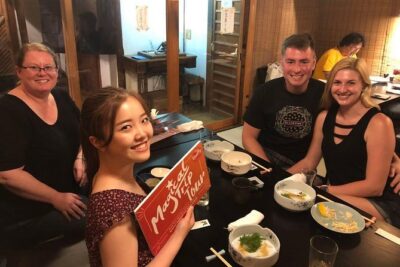
Kyoto Night Foodie Tour in Gion (9+ dishes + 6 Sake tastings)
Read our review →
1-Day Snow Monkeys, Zenko-ji Temple & Sake in Nagano
Read our review →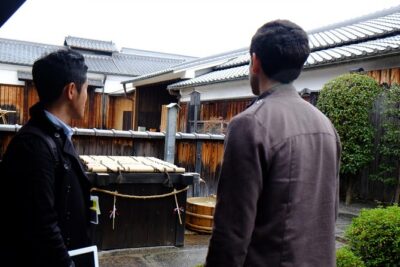
3-Hour Kyoto Insider Sake Brewery Tour with Tastings & Pairings
Read our review →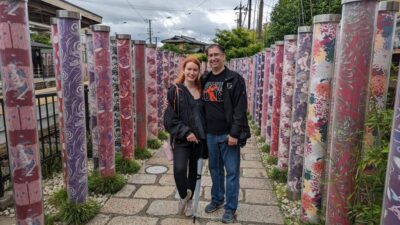
Arashiyama Bamboo, Temple, Monkeys, or Secret Sake Brewery
Read our review →
Insider Sake Brewery Tour with Sake and Food Pairing
Read our review →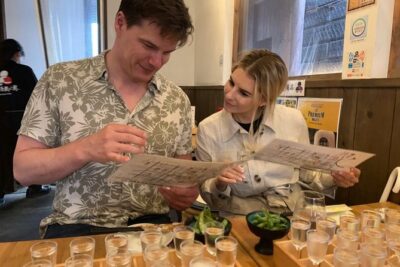
1.5-Hour Kyoto Insider Sake Experience with 7 Tastings & Pairings
Read our review →Browse the lists this tour appears in