Reviewed · TOURS IN TOKYO
Tokyo After 5: Local Eats, Drinks & Culture Walk
Tokyo after work is less about grand sights and more about finding the right little counter, ordering a cold drink, and sharing food around a hotplate. This small-group food walk gives you that easy introduction, moving from Ginza’s department-store food hall to yakitori alleys and Tsukishima’s monja-yaki district.
I like the mix of foods and neighborhoods, especially the hands-on monja-yaki stop. I also like the eight-person limit, which makes it easier to ask about etiquette, ingredients, and what to order. The main caution is the walking: one participant counted about 9,000 steps, and the subway portions include stairs.
Five things to know before you book
- Three very different food stops: You taste yakitori, monja-yaki, and wagashi rather than eating one large meal.
- Tsukishima is the unusual stop: Its Monja Street is less familiar to many first-time visitors than central Tokyo’s famous districts.
- The group is capped at eight: That matters when you are sharing a hotplate and moving through small neighborhood restaurants.
- Drinks are included: You receive two local drinks, such as sake, beer, or a soft drink, with alcohol served only to those aged 20 or older.
- Dietary limits matter: Vegetarian, vegan, and gluten-free options are not available, so this tour suits flexible eaters best.
Why this Tokyo food walk works
At $89 per person, this is not the cheapest way to eat in Tokyo. You are paying for more than the food itself: an English-speaking guide, two subway tickets, three tastings, two drinks, introductions to local eating customs, and help in places where ordering can otherwise feel uncertain.
The value is strongest if you are new to Tokyo’s food culture. You can certainly eat yakitori or monja-yaki for less on your own, but you may not know which small restaurant to choose, how to use the hotplate, or what the food means in daily Japanese life. The guide connects those dots.
The tour lasts 210 minutes, or three and a half hours. That is long enough to create a proper evening without taking over your whole night. You finish in Ginza, so you can continue shopping, find another bar, or return easily to your hotel.
The experience is limited to eight participants. That is a useful size for a food tour. You are not trying to hear a guide across a crowded sidewalk, and there is a better chance to talk while walking between stops. It also keeps the restaurant visits manageable, since some of the places described are small.
Other experiences people book in Tokyo:
- Mt Fuji and Hakone 1-Day Bus Tour Return by Bullet Train
★ 5.0 · 26,383 reviews - 1-Day Tokyo Bus Tour
★ 5.0 · 14,250 reviews - Tokyo: TOKYO SKYTREE® Admission ticket
★ 4.5 · 11,192 reviews
Starting at Mitsukoshi Ginza
Meet in front of the life-size sitting Lion statue outside Mitsukoshi Ginza at 4-6-16 Ginza, Chuo-ku. The meeting point is by the A7 exit of Ginza Station, and the station is served by the Ginza, Hibiya, and Marunouchi subway lines.
Give yourself a little extra time to find the statue. One participant found the meeting point difficult because the tour operator’s name was not obvious. If you booked through a third party, check the confirmation carefully and know the meeting point by the Mitsukoshi Lion, not just by the company name.
Ginza is a smart place to begin because it shows Tokyo’s polished side. Department stores here are not only for clothing and cosmetics. Their basement food halls, called depachika, are a major part of the city’s food culture.
Inside Ginza’s depachika food hall
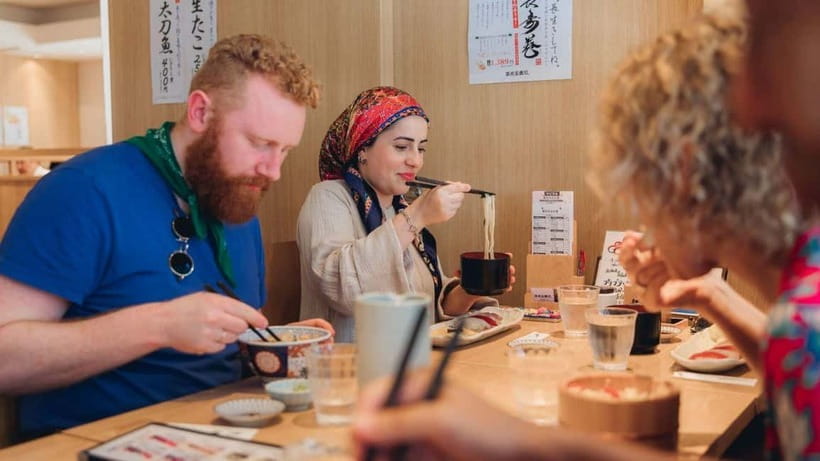
Your first stop is a guided look at a depachika. Picture rows of carefully arranged prepared foods, sweets, boxed meals, and seasonal specialties. The point is not simply to grab lunch. It is to see how Japanese food presentation, gift-giving, and seasonality come together in an everyday shopping setting.
A local guide is especially helpful here. You can ask what a dish is, how it is normally eaten, and which details matter beyond appearance. The tour also introduces etiquette and flavors before you reach the smaller restaurants, so you have some context for what follows.
The depachika section is more of a food culture lesson than a large tasting stop. Do not expect to leave the department store full. Instead, use it to get your bearings and notice how much care goes into food sold for ordinary meals, celebrations, and gifts.
Yakitori in Yurakucho’s after-work alleys
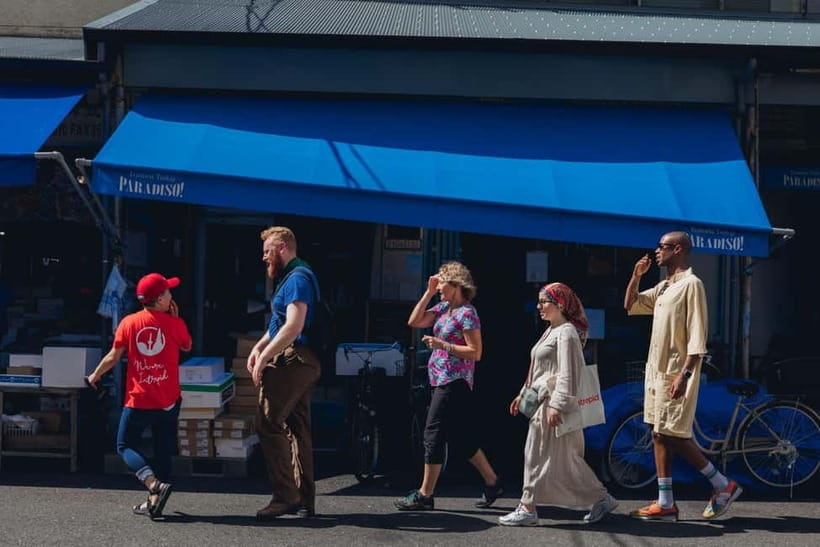
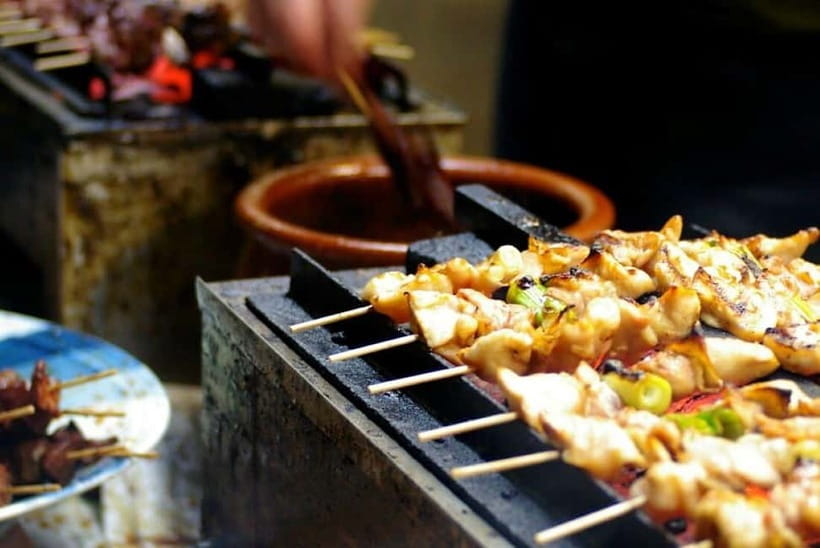
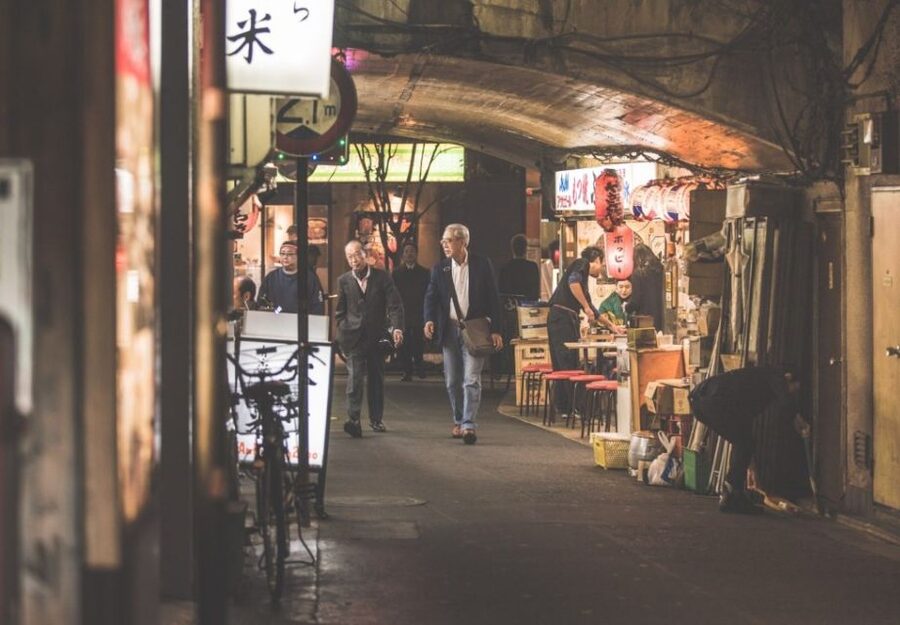
From Ginza, the tour heads toward Yurakucho, where lantern-lit backstreets fill with the smell of grilled chicken and smoke. Yakitori is simple at heart: skewered ingredients cooked over a grill. Yet the appeal comes from the setting as much as the food.
These narrow alleys are closely tied to Tokyo’s after-work routine. Office workers stop for a few skewers and a drink before heading home. You are not being taken to a formal restaurant with a polished dining room. You are seeing a casual side of the city where food is quick, social, and cooked right in front of you.
You can learn how the skewers are prepared and why different cuts and ingredients are treated in different ways. The included food is a tasting, not an unlimited dinner, and extra food or drinks cost more. That is worth remembering if you arrive hungry.
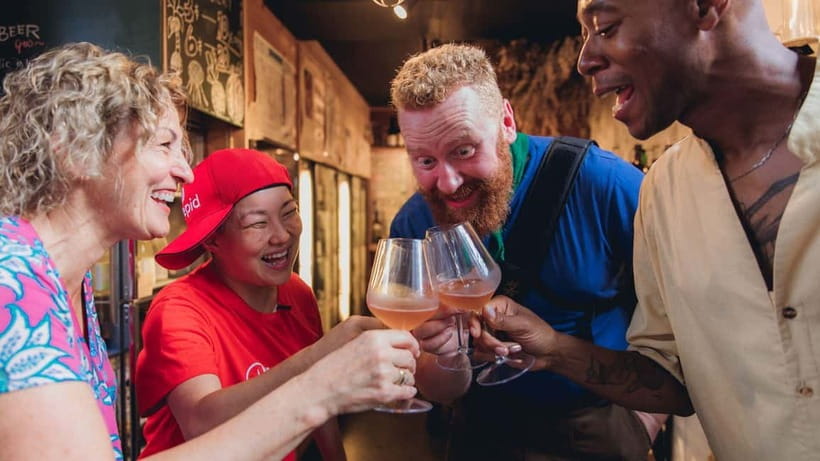
The drinks included with the tour may be sake, beer, or a soft drink. The details can vary, but the plan includes two local drinks. Anyone under 20 receives non-alcoholic drinks, since Japan’s legal drinking age is 20.
A past participant described the yakitori stop as an array of grilled meats and vegetables. That gives you a useful sense of the format: expect variety, but do not assume every skewer will suit your taste. If you are uneasy about unfamiliar cuts, tell the guide early and ask what each item is before eating.
Same base, a different sort of day:
- Tokyo: teamLab Planets TOKYO Digital Art Museum Entry Ticket
★ 4.6 · 9,779 reviews - Mt Fuji & Hakone Cruise, Drum Show Bullet Train 1 Day from Tokyo
★ 4.0 · 7,413 reviews - Tokyo: Sumo Show Experience with Chicken Hot Pot and a Photo
★ 4.8 · 6,678 reviews - Tokyo: Shinjuku Food Tour (13 Dishes at 4 Local Eateries)
★ 5.0 · 6,603 reviews
Tsukishima Monja Street and the hotplate
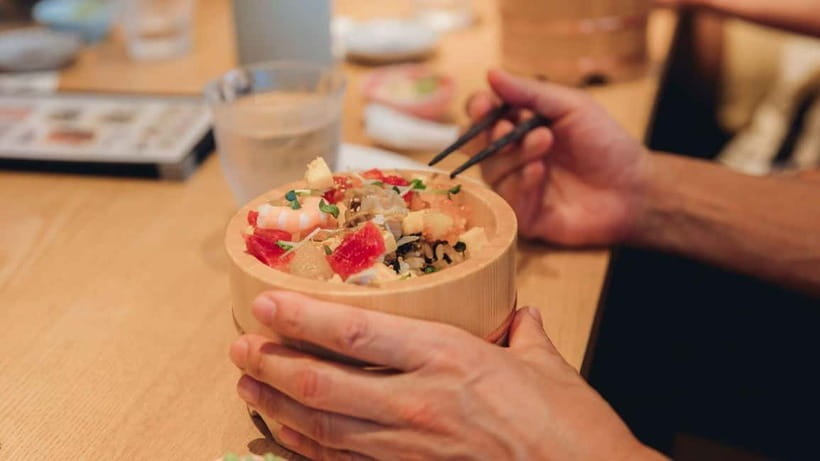
The tour then moves to Tsukishima Monja Street, the home of monja-yaki. This is the most hands-on part of the evening and, for many people, the most memorable.
Monja-yaki is a loose savory mixture cooked on a hotplate at the table. It is often compared with okonomiyaki, but the texture is different. Rather than forming a firm pancake, monja remains soft and spreadable, and you eat it directly from the hotplate with a small spatula.
Your guide helps prepare the meal and shows you how to cook it yourself. That instruction matters. The first attempt can feel awkward if you do not know when to stir, how to shape the mixture, or how to scrape up a bite without making a mess. Here, the cooking becomes part of the fun rather than a test of restaurant manners.
The restaurant stop has also included okonomiyaki on some versions of the experience. Food selections can change, so think of this as a chance to try hotplate cooking rather than a guarantee of one exact menu beyond the stated monja-yaki tasting.
Tsukishima is a practical choice for this tour because it adds a neighborhood many short Tokyo visits miss. You move away from the major department stores and see a district built around one local specialty. One past participant particularly valued visiting Tsukishima because it was not an obvious stop on a first visit to the city.
This is also where the small group helps. Eight people can gather around a hotplate without the experience becoming impersonal. You can watch the cooking, take a turn, and ask questions without competing with a large crowd.
Seasonal wagashi and the Japanese sweet tooth
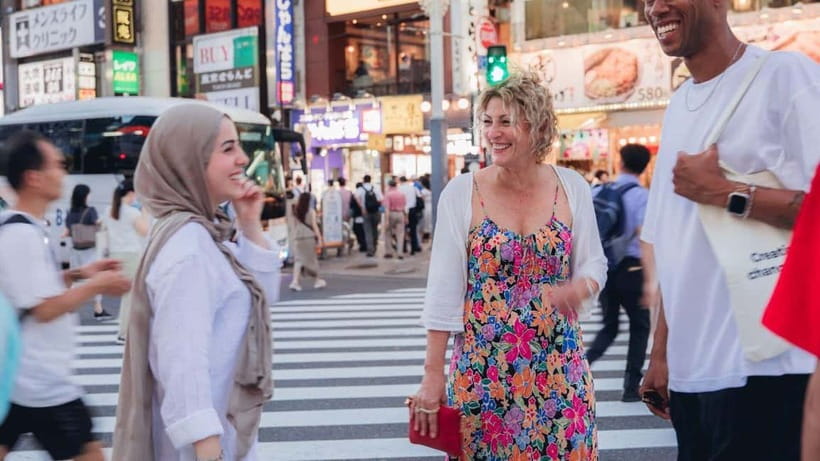
The sweet course focuses on wagashi, traditional Japanese confections often made with ingredients such as red bean paste, mochi, and seasonal elements. This is not just a sugar stop. Wagashi reflects Japan’s habit of expressing the seasons through shape, color, texture, and presentation.
Your guide explains the cultural meaning behind the sweets and how ingredients change with the time of year. That makes the tasting more interesting than simply being handed a pastry with no explanation.
Wagashi can be a surprise if you are used to Western desserts. Red bean paste is sweet but earthy, and mochi has a soft, sticky texture. One person on an earlier tour did not care for the wagashi, while another guide added a melon bread afterward. The lesson is simple: dessert tastes are personal, and the sweet stop may be fascinating even if it is not your favorite food.
The order of stops can vary, but the experience includes yakitori, monja-yaki, and wagashi as its three local food tastings. There may be enough food to make a satisfying start to the evening, but do not book it expecting a large multi-course dinner.
The guide makes the difference
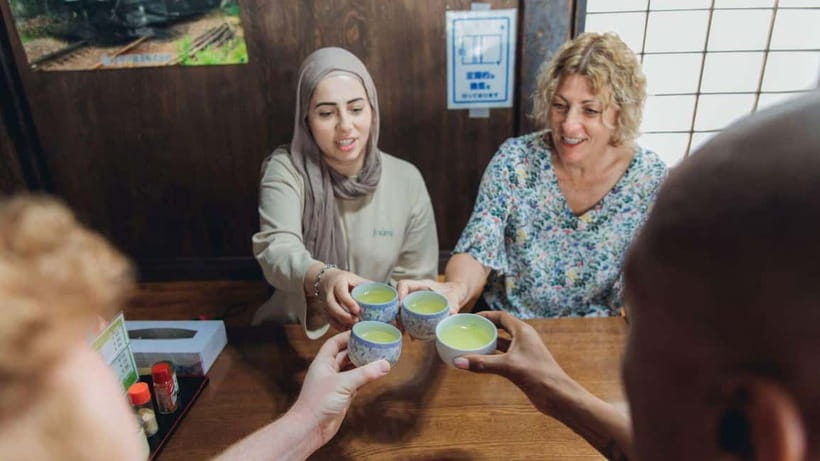
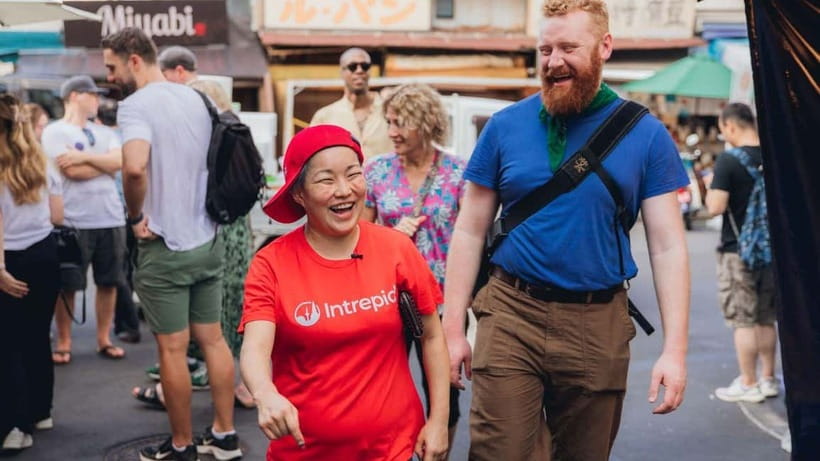
Food tours depend heavily on the guide. The company has used guides including Tsunematsu Hidenori, Yuki, Kirir, Meg, and Yoshi at different times. Their approach has been described as social, patient, attentive, and good at answering questions.
That personal contact is the main reason to choose a guided walk instead of a self-guided evening. You can ask about ingredients without embarrassment, learn how locals use the restaurants, and get help with basic etiquette. The best version of this tour is not just a sequence of tastings. It is a conversation about how people eat after work in Tokyo.
The quality of explanation can vary by guide. One earlier participant enjoyed the food but wished for more detail about preparation and ingredients. I would suggest asking direct questions if you want more depth. Ask how a dish is cooked, why a certain ingredient is seasonal, or how the restaurant fits into the neighborhood.
There has also been an isolated complaint about noise in a small restaurant, including a child connected with the restaurant owner. That kind of situation is not something the guide controls, but it is a reminder that these are working neighborhood places, not staged dining sets. You get local character, along with the occasional bit of noise or disorder.
Walking, subway tickets, and practical comfort
Two subway tickets are included, so the tour is not entirely on foot. The short rides help link Ginza, Yurakucho, and Tsukishima, but subway stations can involve stairs and longer underground walks.
Walking comfort deserves attention. A past participant with an 83-year-old husband had to leave early because the route was more demanding than expected. Another person counted around 9,000 steps. The exact total may vary, but you should be comfortable walking for several hours and managing station stairs.
Wear practical shoes. You will be moving between food stops, standing in alleys, and sitting around a hotplate. The evening format also means you should avoid arriving in clothing that you do not want exposed to cooking smells.
The tour ends in Ginza, not at the original statue. That is convenient if you want to continue your evening there, but note the difference when planning your route home.
Who should book this experience
I would choose this tour if you are visiting Tokyo for the first time and want an easy introduction to local food without handling every ordering detail yourself. It also suits anyone who prefers several small tastings to one formal meal.
The tour is a good match for curious eaters who are willing to try grilled meats, savory hotplate food, Japanese sweets, and local drinks. It works particularly well for solo visitors or couples who like meeting a few fellow food fans in a small group.
It is less suitable if you need strict dietary control. Vegetarian, vegan, and gluten-free options are not available, and the participating restaurants cannot meet all dietary requirements. If you have allergies or serious food restrictions, this is not the right tour to book.
The minimum age is 12. Participants under 20 can join, but they receive non-alcoholic drinks. Families with older children may enjoy the cooking element, though the evening schedule and walking distance are worth considering.
Is $89 a fair price?
For three and a half hours, $89 is a fair convenience price rather than a bargain food price. The package includes the guide, two subway tickets, three tastings, and two drinks. It also saves you from spending time researching restaurants and trying to explain your order in places where English may not be widely used.
You should still budget for extra food or drinks if you have a large appetite. The included portions are designed as tastings and a light evening meal, not an all-you-can-eat event.
The strongest value comes from access and confidence. You get to move through three distinct parts of Tokyo, understand what you are eating, and learn how to use a monja-yaki hotplate. If you already know Tokyo’s food scene and are comfortable choosing small restaurants alone, you may find the price less compelling.
The operator describes the tour as carbon neutral and is a B Corp certified company. That will matter to some people when choosing between similar food walks.
Should you book Tokyo After 5?
Book it if you want a friendly, guided start to Tokyo’s evening food culture, especially if yakitori, hotplate cooking, and Japanese sweets all sound appealing. The combination of Ginza’s depachika, Yurakucho’s after-work alleys, and Tsukishima’s Monja Street gives you more range than a tour that stays in one district.
Skip it if you need vegetarian, vegan, or gluten-free food, dislike unfamiliar textures, or have trouble with several hours of walking and station stairs. For everyone else, the small group, included drinks, practical food guidance, and hands-on cooking make the $89 price reasonable.
Book with comfortable shoes, a flexible appetite, and enough curiosity to ask questions. The best moments come from the ordinary details: a smoky skewer, a crowded little counter, a sticky bite of monja, and a sweet shaped to suggest the season.
FAQ
Where does the Tokyo food tour begin?
It begins outside Mitsukoshi Ginza, at the life-size sitting Lion statue. The address is 4-6-16 Ginza, Chuo-ku, Tokyo, near the A7 exit of Ginza Station.
Where does the tour finish?
The tour finishes in Ginza.
How long does the experience last?
The tour lasts 210 minutes, or three and a half hours.
How many people can join?
The group is limited to a maximum of eight participants.
What food is included?
The included tastings are yakitori, monja-yaki, and wagashi. The tour also visits a Ginza depachika food hall.
Are drinks included?
Yes. Two local drinks are included. They may be sake, beer, or a soft drink.
Can children join the tour?
Participants must be at least 12 years old. Anyone under 20 receives non-alcoholic drinks because the legal drinking age in Japan is 20.
Are vegetarian, vegan, or gluten-free options available?
No. The tour cannot provide vegetarian, vegan, or gluten-free options.
Is public transportation included?
Yes. Two subway tickets are included as the tour travels between its Tokyo neighborhoods.
Just added in Tokyo
- The 10 Tastings of Tokyo With Locals: Private Street Food Tour★ 5.0 · 48 reviews
- Small Town in the Big City: Tasting Tokyo’s Kichijoji★ 5.0 · 195 reviews
- Small Town in the Big City: Tasting Tokyo’s Kichijoji★ 5.0 · 16 reviews
- EXCLUSIVE Tokyo Secret: Kichijoji Small-Group Food & Bar Hopping★ 5.0 · 29 reviews
- Explore Kichijoji: Walk Through One of Tokyo’s Beloved Districts★ 5.0 · 21 reviews
- :Tokyo,Shibuya/ Pro Photography in Kimono / English-Friendly★ 5.0 · 26 reviews
- 【R34】Tokyo:Private Daikoku tour in Modified R34★ 4.9 · 92 reviews
- Tokyo:Calligraphy &Make your original folding fan in Asakusa★ 5.0 · 62 reviews
Tours in Tokyo, compared.
Mt Fuji and Hakone 1-Day Bus Tour Return by Bullet Train
Read our review →
teamLab Planets TOKYO Digital Art Museum Entry Ticket
Read our review →
Mt Fuji & Hakone Cruise, Drum Show Bullet Train 1 Day from Tokyo
Read our review →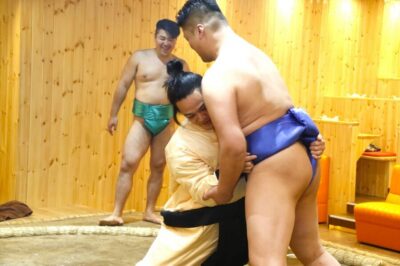
Sumo Show Experience with Chicken Hot Pot and a Photo
Read our review →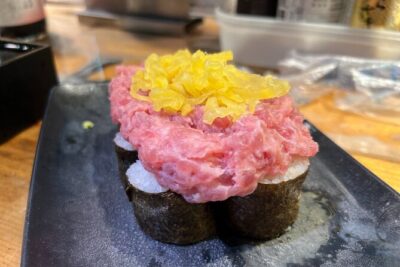
Shinjuku Food Tour (13 Dishes at 4 Local Eateries)
Read our review →