
Reviewed · MUSEUMS
Tokyo: Art Aquarium Museum GINZA Entry Ticket
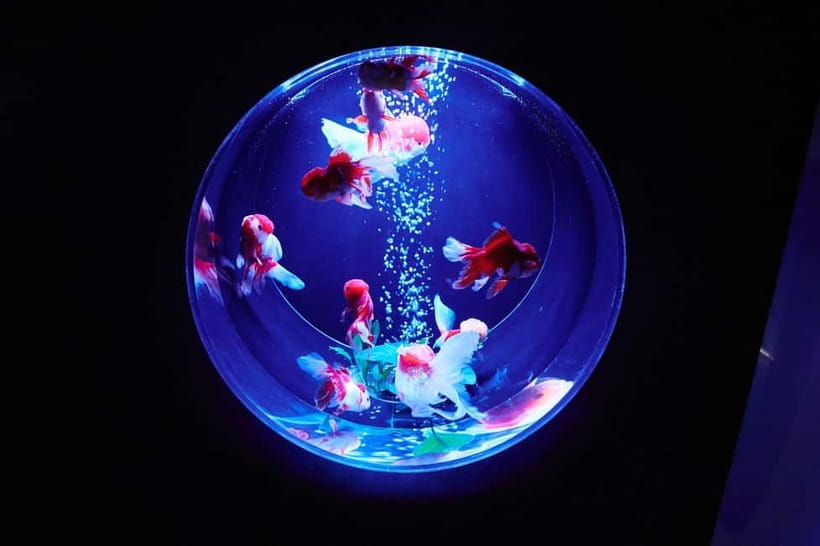
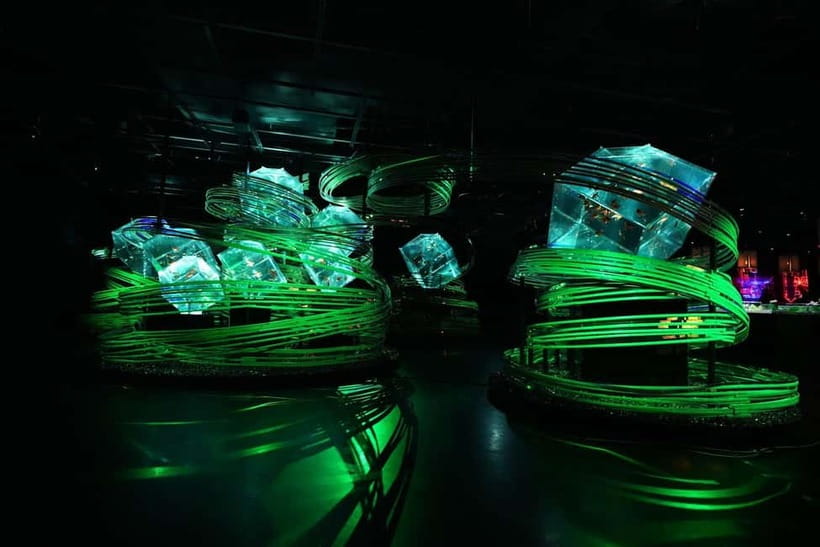
The Art Aquarium Museum GINZA turns goldfish into the stars of a modern art show. You move through glowing tanks, shifting colors, music, and gentle scents while the fish swim through carefully designed displays. It is less a conventional aquarium and more a short visual performance with living creatures at its center.
I like the beautiful lighting and the way each tank presents the goldfish differently. I also like the museum’s compact size: you can fit it neatly into a Ginza afternoon, or visit early when the rooms are quieter and photographs are easier. The main drawback is that the visit can be over in 30 minutes if you move quickly, so the $17 ticket makes the most sense when you take your time with the displays.
- Goldfish become living art through unusual tanks, color, music, and scent.
- The Ginza location is easy to reach, inside Ginza Mitsukoshi near several subway stations.
- Seasonal displays change throughout the year, giving repeat visitors a reason to return.
- Photography is allowed, though tripods, monopods, strobes, and lighting equipment are forbidden.
- The museum takes about 45 to 60 minutes for a relaxed visit, with some people finishing in around 30 minutes.
- Up to two children under elementary school age enter free with one paying adult.
A modern Ginza take on Edo goldfish culture
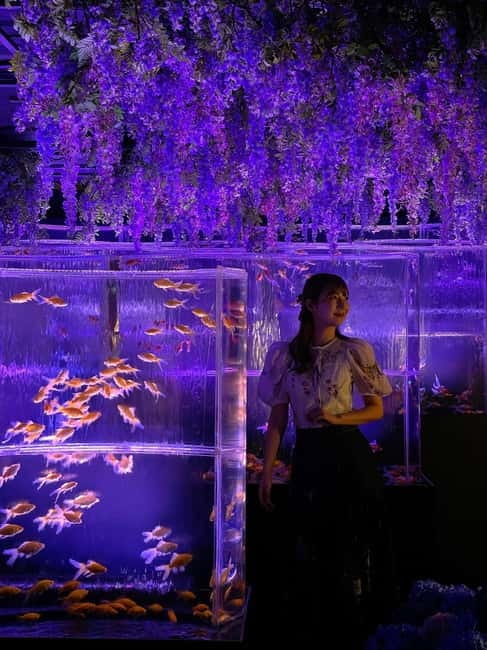
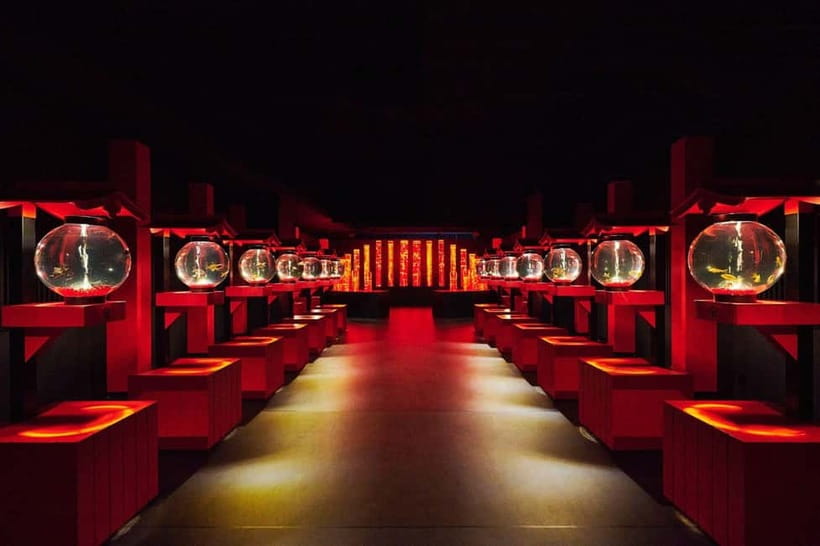
Goldfish have long been associated with Japanese summer culture and the old Edo-period pleasure of viewing ornamental fish. This museum takes that tradition and gives it a theatrical setting. Instead of placing fish in plain tanks with labels, it presents them within dark rooms shaped by light, sound, scent, and color.
That idea is the heart of the experience. You are not coming for a large collection of aquatic species or a science lesson. You are coming to watch goldfish move through designed spaces and to see how a familiar animal changes when framed as art.
The displays use the fish’s natural movement as part of the composition. A goldfish may glide through a brightly colored tank, appear against a patterned background, or become part of a larger arrangement of glass, light, and shadow. The result is highly visual, and it rewards slow looking more than quick sightseeing.
English information about the goldfish is available, which helps give the presentation some context. Still, the museum’s message is mainly visual. You will understand the mood and design even if you do not read every panel.
What your hour inside the museum feels like
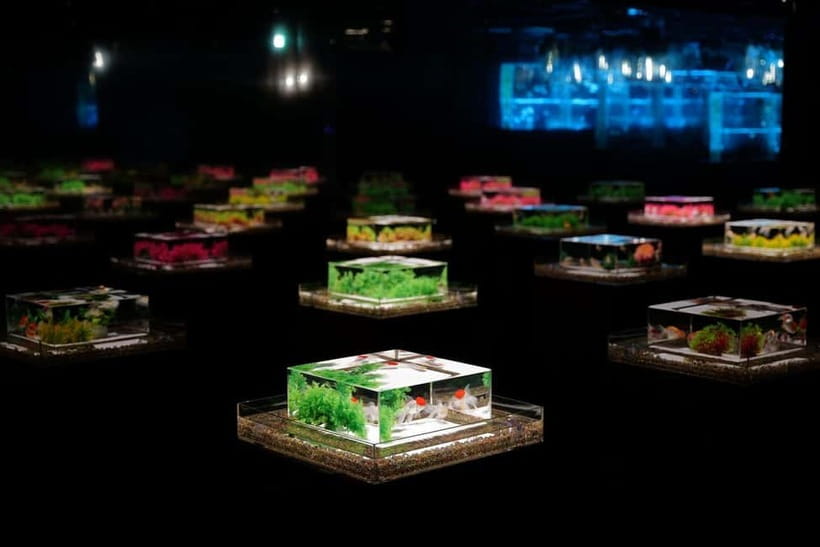
Your visit begins at Ginza Mitsukoshi, a major department store in central Tokyo. The admission reception and same-day ticket area are on the ninth floor of the new building. Once inside the museum, you follow the exhibition through a series of artfully arranged aquarium spaces.
There is no guide or scheduled walking tour included, so you set your own pace. That works well here. You can pause for a photograph, wait for a tank to change color, or simply watch the fish circle through the water without being pushed along by a group.
Plan on 45 minutes to one hour for a comfortable visit. If you mainly want photographs and do not linger, 30 minutes may be enough. The exhibition is compact, not a full-day attraction, and that is useful when planning a busy Tokyo schedule.
The atmosphere changes from one section to the next. Music sets a calm rhythm, while scent adds another layer to the presentation. The effect is quiet and dreamlike rather than loud or hectic. Several visitors particularly enjoyed the music and the way it helped connect the individual displays into one experience.
Do not expect a conventional aquarium route with large tanks, many species, or extensive natural habitats. The focus stays on goldfish and the artistic setting around them. That narrow focus will appeal to anyone who likes design and photography, but it may feel limited if you want a substantial aquarium visit.
A few more things to do in Tokyo worth a look
- Tokyo: teamLab Planets TOKYO Digital Art Museum Entry Ticket
★ 4.6 · 9,779 reviews - Tokyo: Samurai Ninja Museum Guided tour and Experience
★ 4.6 · 1,010 reviews - Ninja Experience (Family Friendly) at Samurai Ninja Museum TOKYO
★ 5.0 · 441 reviews
The displays: light, color, and moving fish
The strongest part of the museum is its visual presentation. Goldfish are already striking animals, with flowing fins and metallic color. The exhibition places them in settings that make their motion especially noticeable.
Lighting changes the mood of the tanks. Cool tones can make the fish seem delicate and distant, while warmer colors create a more traditional Japanese feel. Reflections and glass add to the effect, so the exhibits can look different depending on where you stand.
The music is not just background noise. It helps slow the pace and gives the rooms a unified mood. If you rush from tank to tank, you will miss part of what makes the museum work. I would give yourself time to stop at the displays that catch your eye and watch the fish complete a few circuits.
Scent is another unusual feature. The museum uses aromatherapy as part of the experience, adding a gentle sensory layer beyond sight and sound. This will appeal to you if you enjoy atmospheric exhibitions. If you are sensitive to fragrance, keep in mind that scent is deliberately part of the presentation.
The displays also change with the seasons. Since the Ginza venue is permanent, you can see a different arrangement or newly presented artwork on a return visit. One repeat visitor found that more than half of the art had changed over two years. That is a useful reason to return, especially if you already spend time in Ginza.
Why photographers will enjoy it
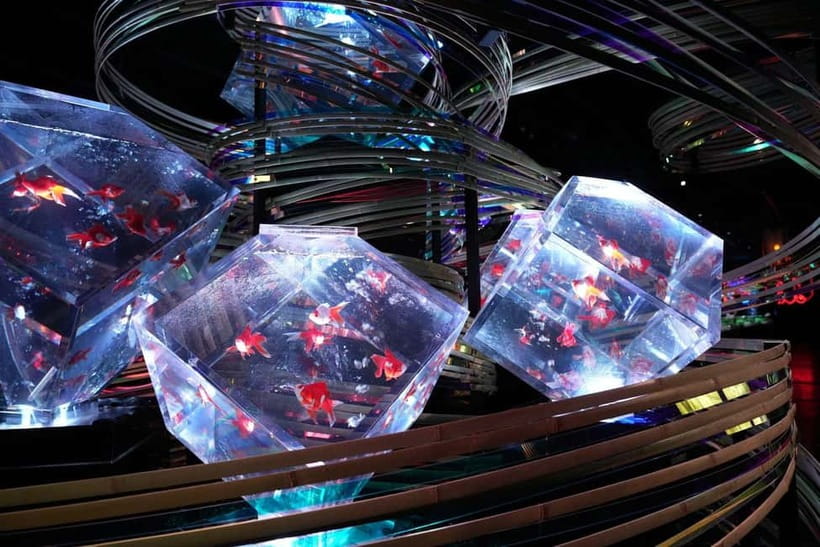
Photography is one of the museum’s biggest attractions. The glowing tanks, dark surroundings, bright fish, and changing colors create plenty of striking compositions. You can take pictures throughout the exhibition, making this a good stop for anyone who enjoys visual details.
The compact layout can help photographers. You do not need to walk long distances between subjects, and you can return to an earlier display if the light or fish movement was not right. Midweek mornings may be the calmest time for photography. A visit around 10:30 in the morning was described as quiet enough for unhurried pictures, with only a few other people present.
You will need to work within the museum’s rules. Tripods, monopods, and similar equipment are not allowed. Strobes and separate lighting equipment are also forbidden. Handheld photography is the practical approach.
Do not expect every image to come out easily. The rooms are designed for atmosphere, and low light or reflections may make photography tricky. Take a few moments to find the best angle rather than photographing every tank from the first spot you reach.
The museum is also a good place to put your phone away for a minute. The displays are made for photographs, but the fish are constantly moving, and the colors are more enjoyable when you watch them directly. I would take a few pictures, then spend time looking without a screen.
Seasonal changes and repeat visits
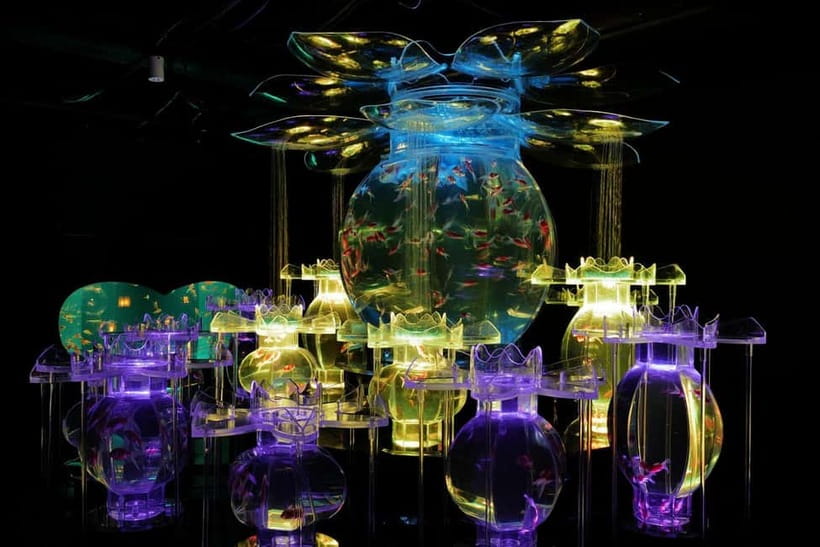
The museum’s permanent location makes it different from a temporary art event. Its presentation can shift throughout the year, bringing seasonal changes to a venue you can visit whenever you return to Tokyo.
The exact nature of those changes is not fixed in the available details, so you should treat the exhibition as a place with a changing visual program rather than expect one permanent set of tanks. This is good news for repeat visitors, but it also means you may want to check current opening information before setting your plans.
The seasonal idea fits the subject well. Goldfish viewing has strong ties to Japanese summer culture, yet the museum can reinterpret that tradition in different ways across the year. The setting inside Ginza also makes the museum easy to pair with shopping, dining, or a wider walk through central Tokyo.
One practical point: the museum is inside a department store, not in a separate building that is obvious from the street. Follow signs for Ginza Mitsukoshi and go to the ninth floor of the new building for admission. This is simple once you know it, but it is worth allowing a few extra minutes to find the correct entrance.
Same base, a different sort of day:
- Mt Fuji and Hakone 1-Day Bus Tour Return by Bullet Train
★ 5.0 · 26,383 reviews - 1-Day Tokyo Bus Tour
★ 5.0 · 14,250 reviews - Tokyo: TOKYO SKYTREE® Admission ticket
★ 4.5 · 11,192 reviews - Mt Fuji & Hakone Cruise, Drum Show Bullet Train 1 Day from Tokyo
★ 4.0 · 7,413 reviews
Getting to Ginza Mitsukoshi
The museum is at Ginza Mitsukoshi, 4-6-16 Ginza, Chuo-ku, Tokyo. The location is well served by rail, so you have several ways to reach it.
From Ginza Station, use Exit A7 on the Tokyo Metro Ginza, Marunouchi, or Hibiya lines. From Ginza 1-chome Station on the Yurakucho Line, it is about a five-minute walk from Exit 9.
Higashi Ginza Station is especially convenient. The museum is about two minutes away through the underground passage toward Ginza Station, using the Toei Asakusa Line or Tokyo Metro Hibiya Line.
The central location is a real advantage, although you may not find a long list of major sights right outside the door. One visitor felt the area offered less to do than expected after the museum. I would treat the Art Aquarium as one stop within a Ginza outing rather than as the sole reason to spend an entire day in the neighborhood.
The address is in Honshu, in central Tokyo, and the listed coordinates are 35.6712864, 139.7657382. Since closing days and business hours can vary, check the current schedule before you go.
Is $17 a fair price?
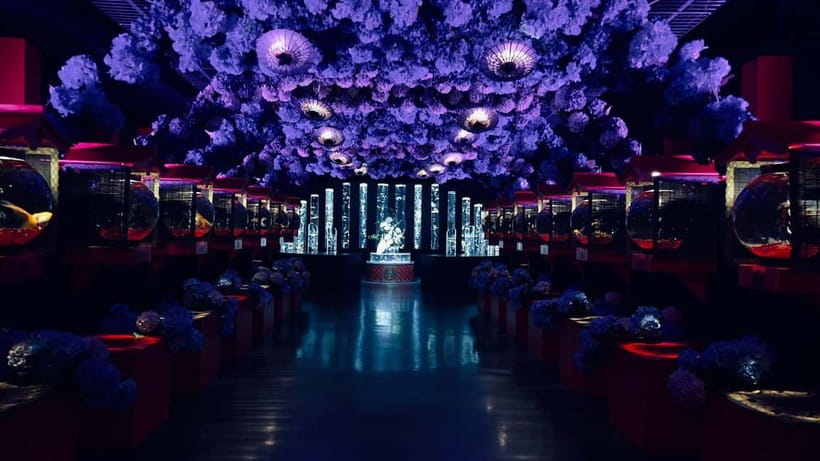
At $17 per person, this is not an expensive Tokyo attraction, but it is not a bargain if you expect several hours of entertainment. The visit usually takes about an hour, and the exhibition is compact. The value comes from the quality of the visual presentation, the central location, and the fact that the displays can change seasonally.
I would consider the ticket good value if you like art installations, photography, Japanese design, or unusual museums. It also works well when you want a polished indoor activity between shopping and meals in Ginza.
The value is weaker for you if you want a large aquarium, a detailed educational program, or a full-day attraction. You may finish quickly, especially if you do not stop for photos. In that case, combine the museum with other Ginza plans instead of making it your only activity.
Up to two children under elementary school age may enter free with one adult. That makes the cost easier for families with young children, though you should still consider whether the quiet, art-focused setting matches your child’s interests.
A note about the fish and the presentation
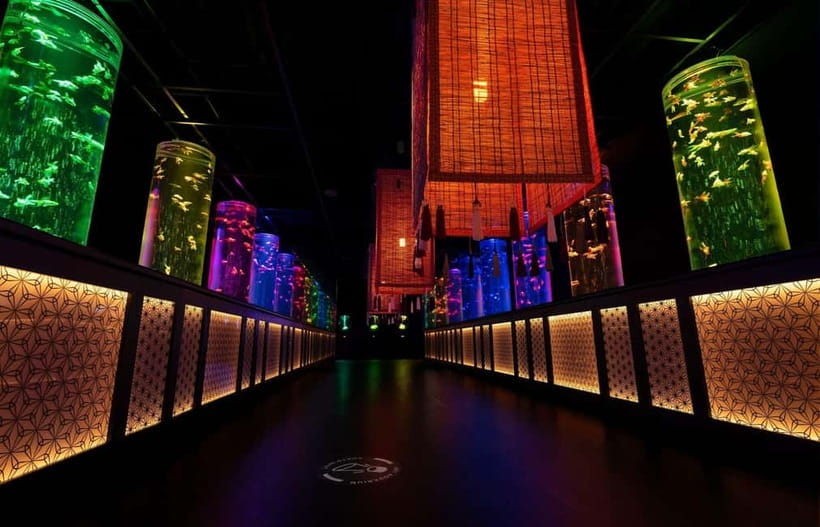
The museum’s displays are designed to make the goldfish look beautiful, and the artful lighting does that very effectively. At the same time, one visitor felt that some of the fish appeared poorly treated. That concern is worth acknowledging rather than brushing aside.
The provided information does not establish a specific welfare problem, so I cannot make a firm judgment about the care of the fish. I can say that the exhibition places living animals in a highly controlled artistic setting, and this may not feel comfortable to everyone.
If animal presentation is an important part of your decision, consider that point before booking. If you are comfortable with the concept and mainly want to see how goldfish are presented through art, the museum offers a distinctive experience that you will not get from a standard aquarium.
Who should visit Art Aquarium Museum GINZA?
I would recommend it most to you if you enjoy:
- Photography and colorful indoor exhibits
- Japanese art and traditional themes presented in modern ways
- Short attractions that fit between larger Tokyo plans
- Calm music, scent, and carefully shaped surroundings
- Goldfish, aquarium design, or unusual museums
- Seasonal displays and the possibility of seeing new artwork on a return visit
Families can also make good use of the visit, especially with the free entry for up to two young children per adult. Just remember that it is a quiet visual exhibition rather than an interactive children’s attraction.
You may want to skip it if you need a large aquarium, long guided tour, or extensive historical explanation. It is also less suitable if you dislike low-light photography conditions, added fragrance, or the use of live fish in art installations.
My booking advice
Book the Art Aquarium Museum GINZA if you want a short, polished, highly visual stop in central Tokyo. The strongest reasons are the creative goldfish displays, peaceful music, photography opportunities, and easy subway access.
For the best experience, choose a quieter time if your schedule allows, especially a midweek morning. Give yourself close to an hour, even though a fast visit can take only 30 minutes. Check the current opening days and hours, and remember that the activity is non-refundable once booked.
I would pair it with a Ginza shopping or dining plan, not treat it as a full-day outing. At $17, it earns its place when you value design and atmosphere. If that sounds like your kind of stop, it is an unusual and worthwhile addition to Tokyo.
FAQ
Where is Art Aquarium Museum GINZA located?
It is inside Ginza Mitsukoshi at 4-6-16 Ginza, Chuo-ku, Tokyo. Admission reception and same-day tickets are on the ninth floor of the new building.
How do I reach the museum from Ginza Station?
Use Exit A7 of Ginza Station on the Tokyo Metro Ginza, Marunouchi, or Hibiya lines.
How far is the museum from Ginza 1-chome Station?
It is about a five-minute walk from Exit 9 of Ginza 1-chome Station on the Tokyo Metro Yurakucho Line.
How far is the museum from Higashi Ginza Station?
It is about a two-minute walk through the underground passage toward Ginza Station. Higashi Ginza is served by the Toei Asakusa Line and Tokyo Metro Hibiya Line.
How long should I allow for the visit?
The estimated viewing time is one hour. You may finish in about 30 minutes if you move quickly, while a relaxed visit generally takes 45 minutes to one hour.
How much does admission cost?
The listed price is $17 per person.
Can children enter free?
Up to two children under elementary school age may enter free of charge with one adult.
Can I take photographs inside?
Yes. Photography is permitted, but tripods, monopods, and similar equipment are not allowed. Strobes and other lighting equipment are also prohibited.
Is the ticket refundable?
No. This activity is non-refundable. It is valid for one day, and closing days and business hours may vary.
Just added in Tokyo
- Wagyu & Sake Pairing in Shinjuku – Steak, Shabu-Shabu & More★ 5.0 · 112 reviews
- Small-Group Wagyu Beef and 7 Japanese Dishes Tokyo Cooking Class★ 5.0 · 190 reviews
- Nikko: Edo Wonderland Edomura Cultural Theme Park Ticket★ 4.3 · 205 reviews
- 《MEMBERS-ONLY-BAR-HOPPING》Discover Your Special Whiskey in Tokyo!★ 5.0 · 29 reviews
- Japanese Whisky Hunting《HIGH-QUALITY-ONLY》Rare Tasting Class★ 5.0 · 20 reviews
- Luxury Tokyo Sake, Cocktail, Whisky and Pairing Tour★ 5.0 · 18 reviews
- From Tokyo: Private Tour to Fuji/Hakone – Onsen, Art, Nature★ 5.0 · 116 reviews
- Tokyo: KABUKI Show at Kabukiza Theatre Admission Ticket★ 4.8 · 152 reviews
Museums, compared.
teamLab Planets TOKYO Digital Art Museum Entry Ticket
Read our review →
Samurai Ninja Museum Guided tour and Experience
Read our review →
Tea Museum Tickets and Matcha Grinding Experience
Read our review →
Skip the lines Basic Ticket at SAMURAI NINJA MUSEUM KYOTO
Read our review →
Ninja Experience (Family Friendly) at Samurai Ninja Museum TOKYO
Read our review →
Tokyo Studio Ghibli Museum and Ghibli Film Appreciation Tour
Read our review →
Geiko Maiko Dance of Kyoto & Visits of Gion Museum
Read our review →Browse the lists this tour appears in