Reviewed · TOURS IN TOKYO
Tokyo: Discover the Art of Kintsugi in Ginza
Kintsugi turns a broken ceramic into something worth keeping, with the cracks marked in metallic lines instead of hidden. I like the hands-on format and the fact that you leave with your own plate or bowl, not just a few photos and a short talk. I also like the calm private room, only about three minutes from Ginza Station.
The main consideration is authenticity. Traditional Kintsugi can take about a month, while this class uses synthetic lacquer and metallic powder so you can finish in 90 minutes. Your repaired piece is best treated as decoration, and it is not microwave-safe.
Key points at a glance
- A real object to repair: You work on a supplied ceramic piece and take it home afterward.
- A small Ginza setting: The workshop is limited to eight people in a private room near the station.
- Clear instruction: Tatsu and Teki Sensei are among the instructors who explain the process and help when a step becomes tricky.
- A useful cultural lesson: You learn how Kintsugi connects repair, beauty, and acceptance of imperfections.
- A practical souvenir: Pieces are carefully packaged, making them easier to carry in your luggage.
- A fast modern version: Synthetic lacquer and metallic powder let you complete the project in one 90-minute session.
A quiet craft lesson three minutes from Ginza Station
Ginza is famous for department stores, polished storefronts, and high-end shopping. This workshop gives you a different reason to spend time here. Instead of simply walking through the district, you settle into a private room in Cafe AOU Ginza forest and work with your hands.
The meeting point is on the ground floor of the Daiwa Ginza Building. The room is close to Ginza Station, which matters in central Tokyo. You do not need to give up half a day reaching a distant craft center, and the class fits neatly into a larger Ginza outing.
The venue may change if reservations or room availability require it. If that happens, you are sent the new location by email one day before the workshop. Check that message rather than relying only on the original address.
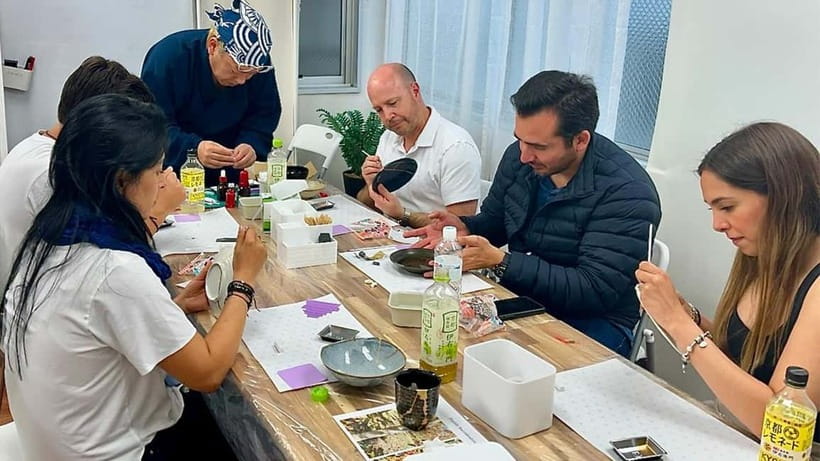
The group size is limited to eight people. That is small enough for the instructor to move around the table, demonstrate each step, and help you when your ceramic pieces do not line up neatly. It is still a group activity, so the pace can depend on how quickly everyone works.
Other experiences people book in Tokyo:
- Mt Fuji and Hakone 1-Day Bus Tour Return by Bullet Train
★ 5.0 · 26,383 reviews - 1-Day Tokyo Bus Tour
★ 5.0 · 14,250 reviews - Tokyo: TOKYO SKYTREE® Admission ticket
★ 4.5 · 11,192 reviews
What happens during the 90-minute class
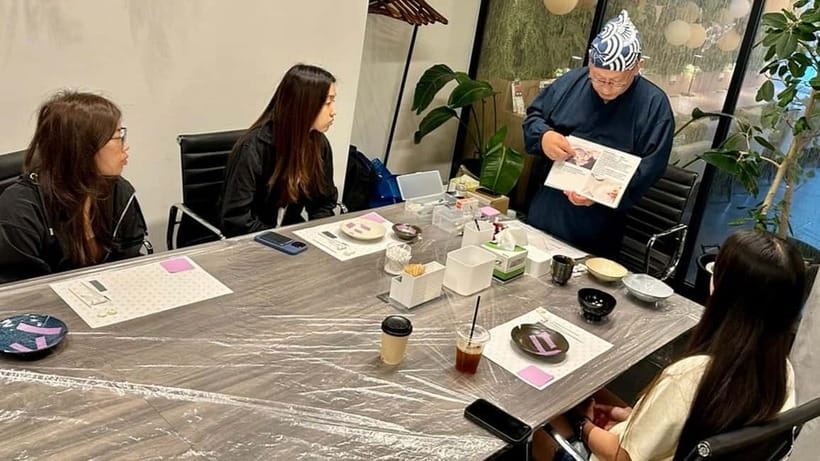
The session begins with an introduction to Kintsugi and the basic idea behind the craft. Broken ceramics are repaired rather than discarded, and the repaired lines become part of the object’s appearance. This gives the class more meaning than a standard souvenir-making activity.
You then receive a ceramic piece to restore. The supplied item may be a plate or bowl, and some sessions offer a choice between two colored cracked plates. You are not expected to bring your own broken pottery, which keeps the class simple for visitors with limited luggage.
The instructor explains the process step by step. You follow along as the broken sections are joined and the repair lines are finished with metallic powder. The work calls for care rather than speed. You may spend more time waiting for guidance if another person in the group is at a different stage, but that also means help is available when you need it.
Tatsu has welcomed participants at the building and talked through the class with coffee available at the start. Teki Sensei has guided beginners through difficult steps and helped keep the group moving. The instructor for your session may differ, but English and Japanese instruction are available.
A complimentary soft drink is included. Some sessions have also included coffee at the beginning, but the listed inclusion is a soft drink, so I would not count on coffee as part of every booking.
Why the Kintsugi idea matters
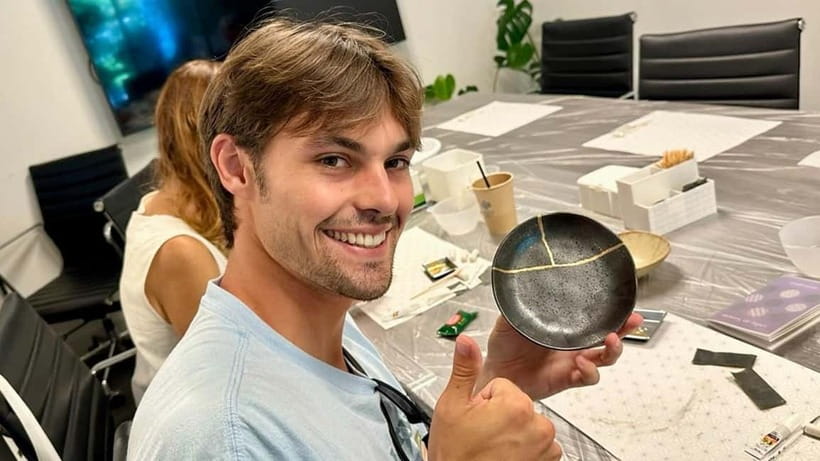
Kintsugi is often reduced to a simple slogan about finding beauty in flaws. The workshop gives that idea something physical. You see a break, work to repair it, and then make the line visible instead of trying to pretend the damage never happened.
That is the most worthwhile part of the class for me. You are not simply copying a decorative pattern onto a new object. You are working with a damaged piece and letting its previous life shape the final result.
The lesson also helps you understand the difference between a cultural tradition and a short visitor activity. Authentic Kintsugi traditionally uses natural lacquer and can take roughly a month to complete. This workshop uses synthetic lacquer and metallic powder as substitutes, allowing the work to be completed within 90 minutes.
That shortcut is practical, but it matters. If you want formal training in traditional lacquer work, this is not that. If you want a thoughtful introduction and a finished souvenir during a Tokyo stay, the modern method makes good sense.
The hands-on work is the main event
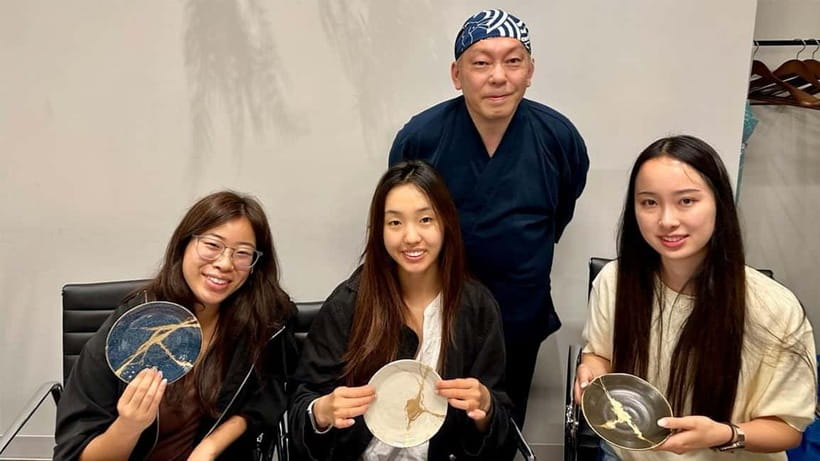
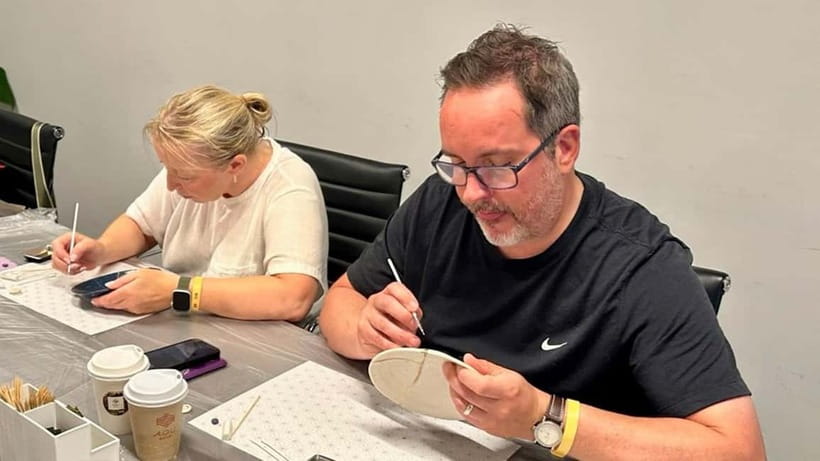
You get all necessary tools and materials, so there is no need to shop for supplies or know anything about ceramics. The instructor demonstrates the essential techniques, then gives you time to work on your own piece.
This is more satisfying than watching a craft demonstration from a distance. You make decisions about the repair and see the object change as you work. The final result will not look identical to anyone else’s, which is part of the appeal.
The class is suitable for beginners. You do not need previous Kintsugi experience, and the instruction is designed to take you through the process in order. Still, this is careful handwork. If you want constant activity with no pauses, the 90-minute structure may feel a little uneven when other participants need extra help.
One useful tip is to treat the class as a guided introduction, not a race to produce a perfect piece. The instructor may step in to help finish a difficult section or keep the group on schedule. That support is helpful, though it means you may not personally handle every single stage for the same amount of time.
Same base, a different sort of day:
- Tokyo: teamLab Planets TOKYO Digital Art Museum Entry Ticket
★ 4.6 · 9,779 reviews - Mt Fuji & Hakone Cruise, Drum Show Bullet Train 1 Day from Tokyo
★ 4.0 · 7,413 reviews - Tokyo: Sumo Show Experience with Chicken Hot Pot and a Photo
★ 4.8 · 6,678 reviews - Tokyo: Shinjuku Food Tour (13 Dishes at 4 Local Eateries)
★ 5.0 · 6,603 reviews
A souvenir that needs careful handling
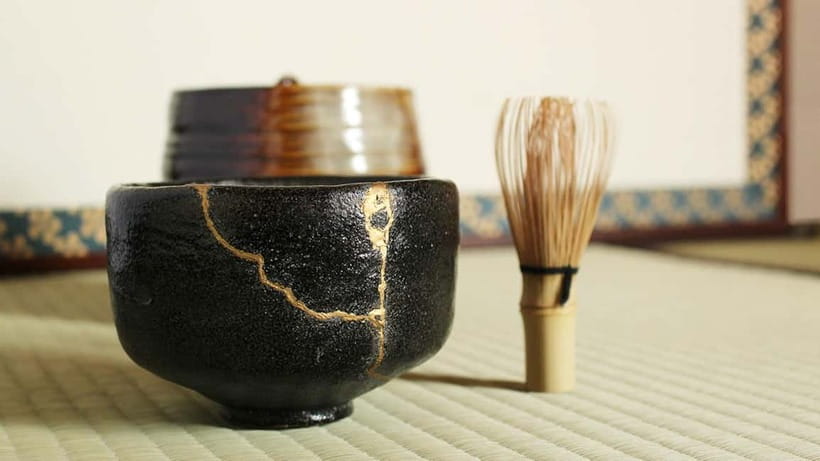
At the end, you keep your repaired ceramic. This gives the experience lasting value, especially if you are looking for a small Japanese craft item rather than another mass-produced purchase.
The pieces are packaged carefully for the trip home. That is a practical touch, since a plate or bowl can be awkward to protect in a suitcase. Keep the packaging until you arrive, and place the item where it will not be pressed by clothing or other objects.
Use the finished piece for decoration only. The repair is not microwave-safe because there is a risk of ignition. The supplied information also recommends avoiding use as ordinary tableware, so think of the finished work as a display piece, keepsake, or thoughtful gift.
That limitation is easy to overlook if you imagine taking the plate home for daily meals. The class is about the creative process and the meaning of repair, not about producing a fully restored kitchen item.
What the $75 price buys you
At $75 per person, this is not the cheapest short activity in Tokyo. The value depends on what you want from a souvenir and how much you care about making it yourself.
The price includes the 90-minute workshop, ceramic piece, tools, materials, instructor guidance, and a soft drink. You also avoid the cost and trouble of sourcing a suitable broken ceramic and buying materials for a one-time project.
I think the strongest value comes from the combination of instruction and a finished object. You are paying for a small-group lesson, not just a craft kit. The instructor explains the cultural idea, helps with the technical work, and shares local stories about Ginza. The careful packaging adds value for anyone flying home.
The price is harder to justify if you mainly want a cheap decorative plate or a long, traditional craft course. The synthetic materials and short format keep the activity accessible, but they also mean it should not be compared with a month-long Kintsugi apprenticeship.
Who will enjoy this Ginza activity
This class suits you if you like making things, prefer small groups, or want a cultural activity that does not depend on a long lecture. It is also a good option when you have already seen Ginza’s shops and want to experience another side of the district.
Families can book it for children aged 10 and older. A 10-year-old and a 14-year-old have taken part successfully with adult support and enjoyed the activity. Younger children are not accepted, and babies under one year are not suitable for the workshop.
The class is also a good fit for couples, friends, and solo visitors who enjoy calm creative work. You do not need to bring a partner to make the activity worthwhile, since the small group and instructor provide the social setting.
It is not suitable for people with mobility impairments, people with a cold, or people with hearing impairments according to the stated restrictions. The workshop is held in a private room, and you should check the current venue details before setting out.
How to fit it into a Tokyo day
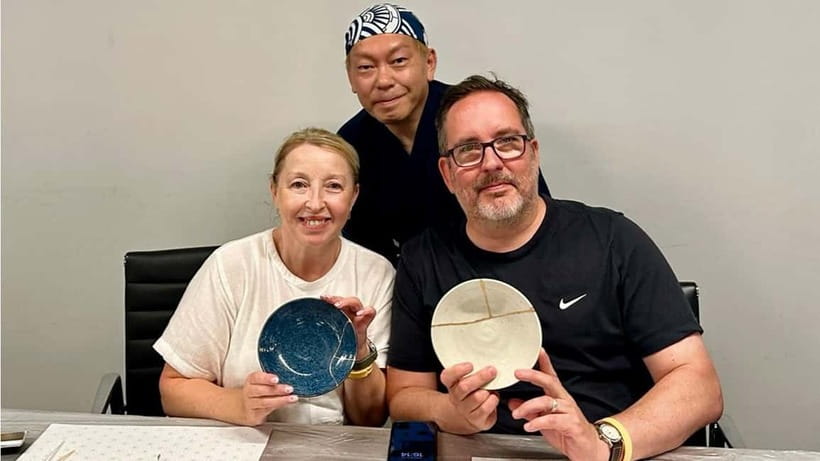
The 90-minute duration makes this easy to place between other Ginza plans. You can schedule it before shopping, after visiting nearby sights, or as a break from crowded streets and large department stores.
Allow a little extra time to find the building and reach the ground-floor meeting point. Ginza has many large buildings and busy crossings, so arriving with a few minutes to spare is sensible even though the venue is close to the station.
After class, you are already in one of Tokyo’s central shopping and dining districts. The activity works particularly well for someone who does not want to spend the entire day shopping but still wants a reason to visit Ginza.
Remember that the venue can change. Check your email the day before, especially if the exact meeting point matters for your schedule.
Practical limits worth knowing
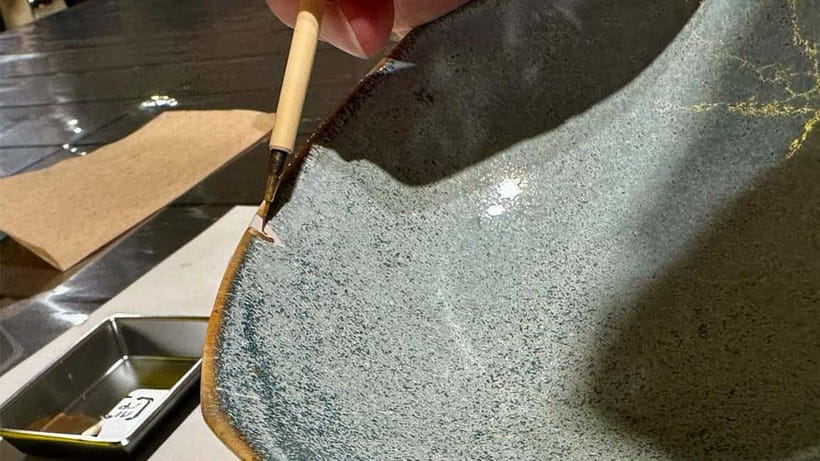
The repaired object is not suitable for microwave use and should be treated as decorative. This is the most important care note, since the finished plate or bowl can look usable even though the repair method is not designed for normal kitchen use.
The class is offered in English and Japanese. The small group is limited to eight participants, which should give you access to the instructor, though people working at different speeds can affect the rhythm of the session.
Free cancellation is available up to 24 hours before the start time for a full refund. You can also reserve now and pay later, which helps if your Tokyo schedule is still shifting.
The experience has a 4.9 rating from 35 reviews, but the practical details matter more than the number: the class is short, hands-on, beginner-friendly, and focused on producing a take-home object.
Should you book the Kintsugi workshop?
Book it if you want a personal souvenir, enjoy careful creative work, and like the idea of learning a Japanese aesthetic through your hands. The close location, eight-person limit, supplied materials, and careful packaging make it easy to fit into a Tokyo itinerary.
Skip it if you want authentic month-long lacquer work, a functional piece for everyday meals, or a fast activity with no waiting or delicate steps. For most visitors, the best way to judge this workshop is to see it as a thoughtful modern introduction to Kintsugi, not as formal traditional training.
At $75, it is a fair choice for a guided craft lesson in central Tokyo, especially when you value the story and effort behind your souvenir. The repaired piece will have its limits, but it will also be something you made yourself.
FAQ
Where is the Kintsugi workshop held?
The meeting point is Cafe AOU Ginza forest, on the ground floor of the Daiwa Ginza Building, about three minutes from Ginza Station.
How long does the workshop last?
The workshop lasts 90 minutes.
Is the activity offered in English?
Yes. Instruction is available in English and Japanese.
What is included in the price?
The price includes the 90-minute workshop, tools and materials, a ceramic piece to restore, instructor guidance, and a complimentary soft drink.
Can I take the repaired ceramic home?
Yes. You take home the repaired piece, and it is packaged to help protect it during your journey.
Is the repaired ceramic safe to use in a microwave?
No. The repaired item is not microwave-safe because there is a risk of ignition. It is recommended for decorative use only.
Just added in Tokyo
- The 10 Tastings of Tokyo With Locals: Private Street Food Tour★ 5.0 · 48 reviews
- Small Town in the Big City: Tasting Tokyo’s Kichijoji★ 5.0 · 195 reviews
- Small Town in the Big City: Tasting Tokyo’s Kichijoji★ 5.0 · 16 reviews
- EXCLUSIVE Tokyo Secret: Kichijoji Small-Group Food & Bar Hopping★ 5.0 · 29 reviews
- Explore Kichijoji: Walk Through One of Tokyo’s Beloved Districts★ 5.0 · 21 reviews
- :Tokyo,Shibuya/ Pro Photography in Kimono / English-Friendly★ 5.0 · 26 reviews
- 【R34】Tokyo:Private Daikoku tour in Modified R34★ 4.9 · 92 reviews
- Tokyo: Allstar Food Tour★ 4.7 · 29 reviews
Tours in Tokyo, compared.

Mt Fuji and Hakone 1-Day Bus Tour Return by Bullet Train
Read our review →


teamLab Planets TOKYO Digital Art Museum Entry Ticket
Read our review →
Mt Fuji & Hakone Cruise, Drum Show Bullet Train 1 Day from Tokyo
Read our review →
Sumo Show Experience with Chicken Hot Pot and a Photo
Read our review →
Shinjuku Food Tour (13 Dishes at 4 Local Eateries)
Read our review →