
Reviewed · SIGHTSEEING BUS TOURS
Tokyo: Open Top Panoramic Sightseeing Bus with Audio Guide
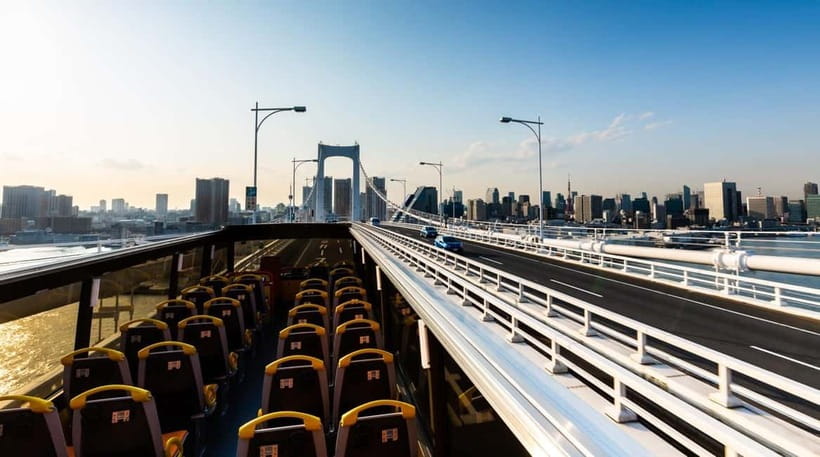
Tokyo looks different from the upper deck of a bus. You get a broad view of Tokyo Tower, Ginza’s streets, the Imperial Palace area, and the waterfront without changing trains every few minutes. I especially like the Rainbow Bridge crossing on the Bay Course and the GPS audio guide, which starts information as the bus reaches each sight.
The price is modest, and the 70-minute ride is a smart way to get your bearings on a first day or during a short stop. The trade-off is exposure to the weather, limited legroom, and occasional noise from the Japanese announcements. If rain closes the roof, the ride loses much of its open-air appeal.
Key points at a glance
- Two different 70-minute routes: Choose the Bay Course for Rainbow Bridge and Odaiba, or the City Course for the Imperial Palace area, Roppongi, Tokyo Tower, and Ginza.
- GPS audio commentary: Information begins according to the bus location and is offered in seven listed languages, including English, Chinese, French, Korean, Vietnamese, Thai, and Japanese.
- Tokyo views without transfers: The bus gives you a quick look at several districts in one sitting, useful when your time or energy is limited.
- The meeting point needs care: Tokyo VIP Lounge is about five minutes from Tokyo Station’s Yaesu North Exit, but you should allow extra time to find the building.
- Open air depends on weather: The bus runs in light rain, but the roof may close. Extreme weather, such as a typhoon, can cancel the ride.
- Good value with a few compromises: At $11 per person, this is inexpensive sightseeing, though the basic facilities, tight knee space, and weather exposure matter.
What this Tokyo bus ride is really like
This is a sightseeing loop, not a hop-on, hop-off service. You board once, stay on for about 70 minutes, and return to the city after passing a string of major landmarks.
That format works well in Tokyo, where a short distance on a map can mean several train changes, crowded platforms, and a fair amount of walking. From the bus, you can simply sit back and watch the city shift from red-brick station buildings to office towers, temple grounds, expressways, parks, and the bay.
The bus has an open upper section when conditions allow. That gives you a clear view above traffic and buildings, but it also puts you directly in the sun, wind, cold, or rain. I would treat the ride as an orientation tour rather than a substitute for visiting Tokyo’s sights on foot.
You do not get a live guide explaining the city throughout the ride. Japanese-speaking staff help with check-in, while the main information comes through the GPS audio system. The system follows the vehicle’s location and adjusts its timing when traffic changes the route.
That is a useful feature in a city where traffic can alter the schedule. It also means the commentary should arrive near the sight instead of playing long before you reach it. Still, you may hear live Japanese announcements over the bus speakers, and some riders have found this makes the audio harder to follow at times.
Other ways to see Tokyo in a day:
- From Tokyo: Mount Fuji Full-Day Sightseeing Trip
★ 4.5 · 4,970 reviews - Tokyo: Hop-On Hop-Off Sightseeing Bus Ticket
★ 3.9 · 4,207 reviews - Tokyo: Private City Highlights Tour with Local Guide
★ 4.8 · 1,433 reviews
Choosing the Bay Course for Rainbow Bridge and Odaiba
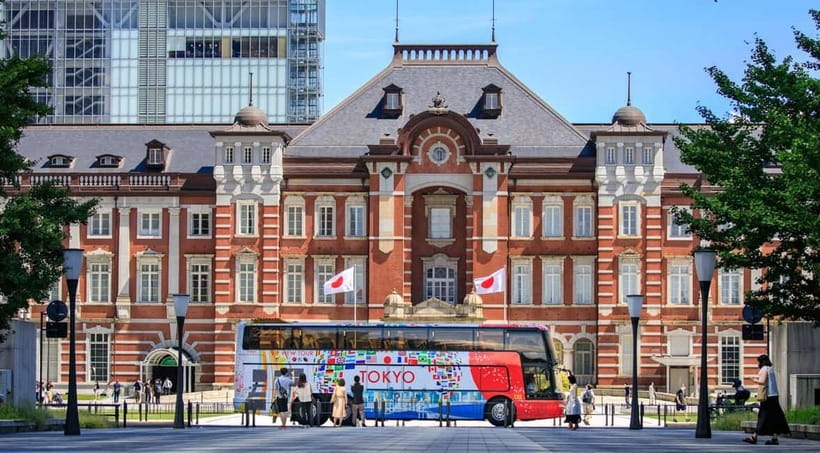
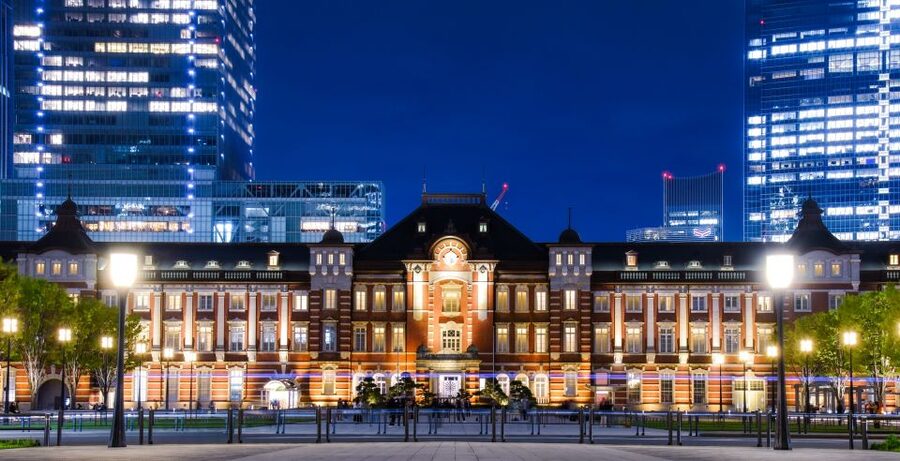
The Bay Course is the more scenic choice if you want water views and a stronger sense of Tokyo’s modern waterfront. It begins at the Tokyo Station Red Brick Station Building and passes through Marunouchi before heading toward Zojoji Temple and Tokyo Tower.
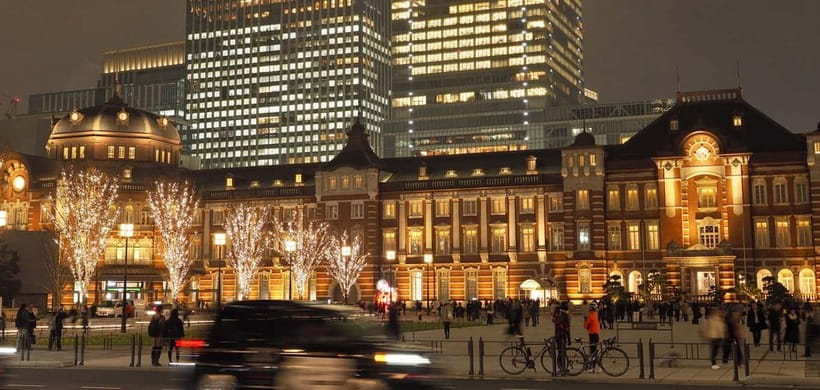
The opening section gives you a quick contrast between the formal station district and the polished office quarter around Marunouchi. Tokyo Station’s red-brick exterior is one of the city’s most recognizable buildings, while Marunouchi gives you a look at the financial heart of central Tokyo.
Zojoji Temple adds an older note before the bus reaches Tokyo Tower. From the upper deck, the tower is easier to frame than it often is from a crowded pavement. You should not expect a stop for an inside visit, though. This is a passing view, so have your camera ready and listen for the audio prompt.
The route then reaches Shibaura and Rainbow Bridge. The first-level crossing gives you a sense of the bridge’s scale and engineering, while the later second-level crossing provides another angle as the bus travels back toward central Tokyo. The drive across the bridge is the Bay Course highlight for me.
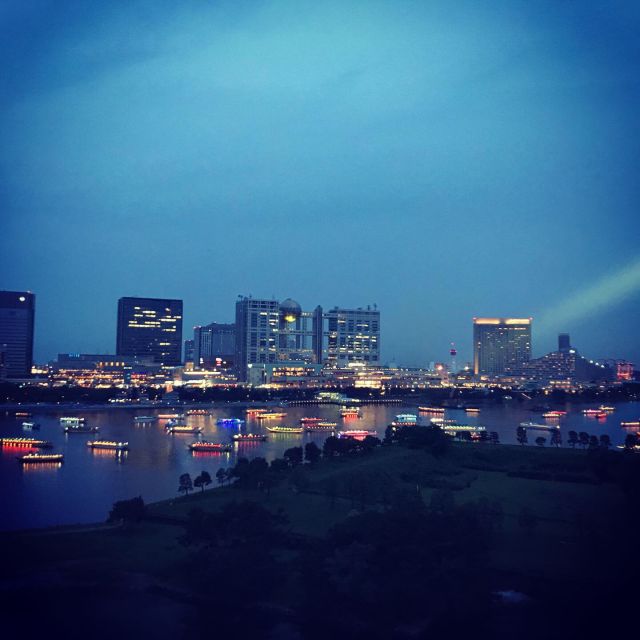
After the bridge, the bus passes the Fuji TV Building, the Statue of Liberty, and Odaiba Seaside Park. The small Statue of Liberty is a familiar Odaiba landmark, and the waterfront district has a broad, modern feel that differs sharply from old Tokyo neighborhoods.
Odaiba is one of the places where an open-top bus earns its keep. You can see the large structures, open public spaces, and bay setting in one sweep rather than catching separate trains between isolated sights. The ride does not give you time to explore the park, though, so note anything that deserves a later visit.
The return section crosses Rainbow Bridge again before passing Shiodome and Ginza. Shiodome is known for its tall office and hotel towers, while Ginza brings you back to Tokyo’s central shopping and dining district.
Choose the Bay Course if you want:
- Rainbow Bridge crossings
- Tokyo Bay and Odaiba
- Tokyo Tower from the road
- A strong mix of modern architecture and waterfront views
- A route that feels different from a standard central Tokyo walk
Choosing the City Course for palace grounds and skyscrapers
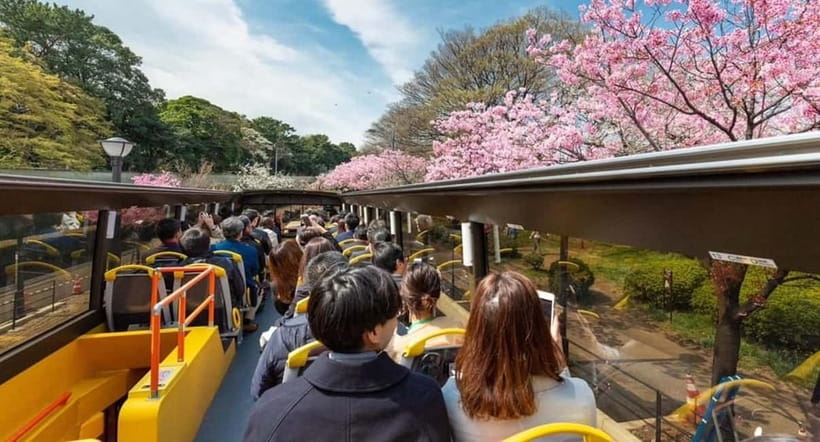
The City Course stays inland and focuses on Tokyo’s central districts. It begins at the same Tokyo Station meeting area, then moves through Marunouchi toward Chidorigafuchi.
Chidorigafuchi is associated with the Imperial Palace moat and its tree-lined surroundings. From the bus, you receive a passing view rather than a palace tour, but the route helps show how green and open parts of central Tokyo can be despite the surrounding office blocks.
Next comes the Akasaka State Guest House. The building is one of Tokyo’s grandest formal landmarks, and its presence adds a sense of ceremony to the route. Again, this is an exterior viewing experience. You will not stop for an interior visit as part of the bus ride.
The bus then passes Meiji Jingu Gaien, a large park area, before reaching Tokyo Midtown and Roppongi. This section is useful for understanding Tokyo’s mix of leisure space, offices, shopping, and high-rise development.
Roppongi and Tokyo Midtown offer some of the city’s most recognizable modern architecture. The elevated seat can help you take in the vertical scale, though tall buildings can also block views at street level. The route is less about one knockout sight and more about showing how the central districts connect.
Tokyo Tower returns on this course, followed by Hibiya and Ginza. Hibiya provides another green pocket beside major roads and commercial districts. Ginza closes the loop with its broad avenues, department stores, and high-end retail streets.
Choose the City Course if you want:
- The Imperial Palace area and Chidorigafuchi
- Akasaka State Guest House
- Meiji Jingu Gaien
- Tokyo Midtown and Roppongi
- Tokyo Tower, Hibiya, and Ginza
- A central Tokyo overview without the waterfront section
If you have time and interest, the two routes complement each other. The City Course explains central Tokyo’s urban core, while the Bay Course gives you a wider sense of the waterfront and bridge connections. Booking both on the same day is possible, and one rider did exactly that, enjoying the evening Bay route after taking the City Course earlier.
How the GPS audio guide works
The audio system is automatic. GPS tracks the bus, then sends information linked to the current area. The listed languages are Japanese, English, Chinese, French, Korean, Vietnamese, and Thai.
This setup is practical because you do not need to watch for a guide pointing at each building. You can look out from the upper deck while the system explains what you are seeing. It is particularly helpful if you know little about Tokyo’s districts and want a basic sense of why a temple, bridge, park, or office quarter matters.
The commentary includes historical and landmark information, but it is not a personal conversation with a guide. If you want neighborhood stories, restaurant advice, or answers tailored to your interests, you will need to explore on your own afterward.
Bring headphones if you have suitable ones. Headphones are not included, though optional headphones cost 100 yen. The jack accepts only a standard 3.5mm mini plug, so check your equipment before leaving your hotel.
There is also music between some announcements. Several passengers have found the music too loud compared with the spoken information. If you are sensitive to sound, your own headphones may give you a better experience, but you still need the correct plug.
Other tours by coach from Tokyo:
- Mt Fuji and Hakone 1-Day Bus Tour Return by Bullet Train
★ 5.0 · 26,383 reviews - 1-Day Tokyo Bus Tour
★ 5.0 · 14,250 reviews - Tokyo Mt Fuji 5th St & Hakone Cruise Bus Tour w/Bullet Train
★ 4.4 · 5,024 reviews - Tokyo: Meiji Shrine, Asakusa, Skytree Bus Tour and Cruise
★ 4.7 · 1,986 reviews
The meeting point near Tokyo Station
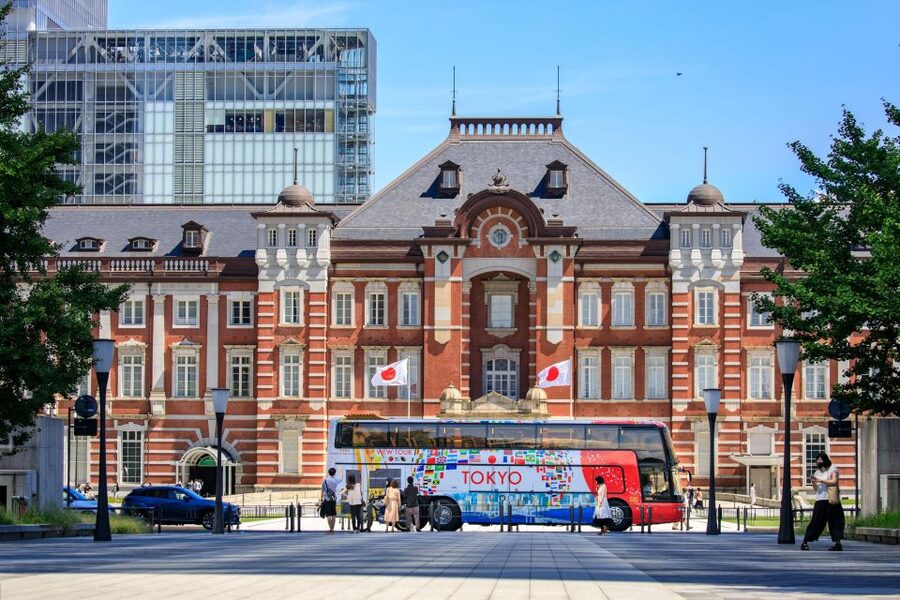
The meeting point is Tokyo VIP Lounge, on the second and third floors of a building with Family Mart on the ground floor. It is about a five-minute walk from Tokyo Station’s Yaesu North Exit.
This is the part of the experience where you should not cut things close. The lounge can be harder to locate than the route itself, especially if you are arriving with luggage or navigating Tokyo Station for the first time. Check the map and directions before your departure day, and allow at least 20 to 40 minutes for check-in.
The lounge is a shared paid facility, not a polished private club. Open-top bus customers can use it free from 40 minutes before departure. Outside that window, a facility charge may apply. Space is shared with other users, and seating may not be available when you arrive early.
A Japanese-speaking staff member is available to help. Communication in English may be limited, so keep your booking details visible and use the route name and departure time clearly. Once the group is ready, staff lead you on a short walk to the waiting bus.
The bus leaves on time and does not wait for late arrivals. Arriving at the wrong location or missing the departure does not qualify for a refund, even if you contact the operator before departure. This is a firm rule, so the five-minute walk should not be treated as the full amount of time you need.
Comfort, weather, and what to bring
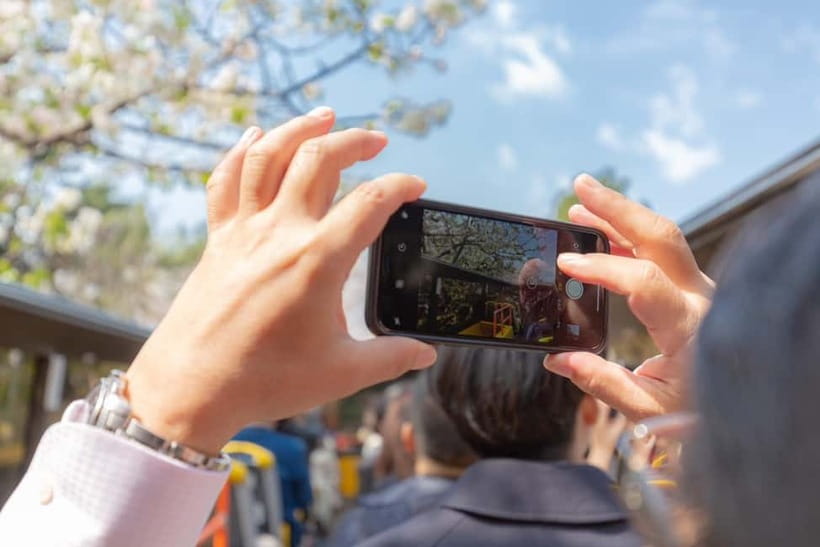
The open deck is the reason to book this ride, but it also creates its main drawbacks. You might find the bus cold in winter, hot in summer, or uncomfortable in direct sun. One passenger also found the knee space tight.
Dress for the forecast, not just the season. A light layer can help on a cool day, and sun protection makes sense in warm weather. Umbrellas are not allowed on the vehicle, so do not plan to use one during the ride.
The tour operates in ordinary rain, but the open top may be closed. In that case, the ride continues with a more limited view. Extreme weather, including typhoons, can lead to cancellation. The schedule may also shift slightly because of traffic, weather, or other conditions.
Smoking, food, and selfie sticks are not allowed. The selfie-stick rule is sensible on an upper deck, where equipment can obstruct another person’s view or create a safety problem.
The ride is best enjoyed from the upper deck when the weather is comfortable. On a wet day, you can still use the bus as a moving orientation tour, but you should book it for the route rather than expecting the full open-air effect.
Is $11 good value in Tokyo?
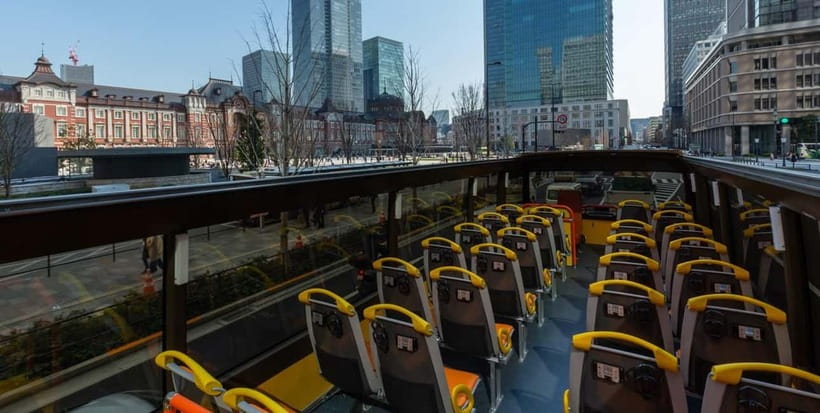
At $11 per person, the value is strong if you want a broad overview rather than a guided deep look at one district. You see major sights across a large area without paying for separate transport between them, and the audio adds useful context.
The price also explains some limits. The meeting lounge is basic, headphones cost extra, and there is no live guide in your chosen language. You are paying for a short, efficient circuit, not a premium coach tour with personal commentary.
I would compare the cost with what you want from your first few hours in Tokyo. If your goal is to visit the Imperial Palace grounds, Tokyo Tower, Odaiba, and Ginza inside, this bus cannot replace those visits. If your goal is to see where those places fit within the city, $11 is a reasonable spend.
The strongest value comes when you are new to Tokyo, have only a short stay, or want a calm break from train stations. It also works well on the first day, when a simple overview can help you decide which districts deserve more time later.
Who should book this ride?
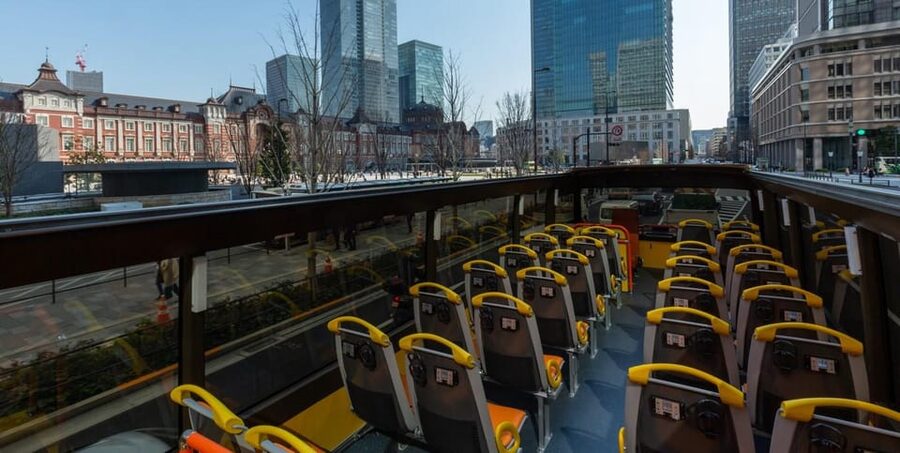
I would recommend it to first-time visitors, couples, families who want a low-effort city overview, and anyone with limited time. The 70-minute length is long enough to cover a lot, but short enough to fit around another activity.
It is also a good choice if you like photography and want elevated views of roads, bridges, towers, and city blocks. The Bay Course is especially appealing if Rainbow Bridge and Odaiba are high on your list.
You may want something else if you need wheelchair details, a fully live-guided experience, or plenty of legroom. Those points are not specified here, so ask the operator before booking if they are important to you.
The ride also suits independent explorers. You can note places that catch your eye, then return later by train or on foot. That is the best way to use the tour: let the bus show you the shape of Tokyo, then spend your precious sightseeing hours in the districts that interest you most.
Should you book the Tokyo open-top bus?
Book it if you want an inexpensive first look at Tokyo with clear views and minimal planning. Pick the Bay Course for Rainbow Bridge, Odaiba, and waterfront scenery. Pick the City Course for the Imperial Palace area, Roppongi, Tokyo Midtown, Tokyo Tower, and Ginza.
I would not book it expecting a luxury lounge, a personal guide, or guaranteed sunshine. I would book it as a practical 70-minute introduction, arrive early at the Yaesu meeting point, bring a compatible headset, and dress for the weather. At $11, the compromises are fair, and the bridge views can make the short ride worthwhile.
FAQ
How long is the Tokyo open-top bus tour?
The tour lasts 70 minutes. Both the Bay Course and the City Course have audio commentary.
Where is the meeting point?
The meeting point is Tokyo VIP Lounge on the second and third floors of a building with Family Mart on the ground floor. It is about a five-minute walk from Tokyo Station’s Yaesu North Exit.
How early should I arrive?
You should check in 20 to 40 minutes before the scheduled departure. The bus leaves promptly and cannot wait for late arrivals.
Is there a live guide?
No. The tour uses a GPS-enabled audio guide. Japanese-speaking staff are available to assist with check-in, but the experience does not include a live guide.
Which languages are available in the audio guide?
The listed languages are Japanese, English, Chinese, French, Korean, Vietnamese, and Thai.
Are headphones included?
No. Optional headphones cost 100 yen. The headphone jack supports 3.5mm mini plugs only.
What does the Bay Course include?
The Bay Course passes Tokyo Station, Marunouchi, Zojoji Temple, Tokyo Tower, Rainbow Bridge, the Fuji TV Building, the Statue of Liberty, Odaiba Seaside Park, Shiodome, and Ginza.
What does the City Course include?
The City Course passes Tokyo Station, Marunouchi, Chidorigafuchi, the Akasaka State Guest House, Meiji Jingu Gaien, Tokyo Midtown, Roppongi, Tokyo Tower, Hibiya, and Ginza.
Does the bus operate in rain?
The tour operates rain or shine except in extreme weather, such as typhoons. If it rains, the open top may be closed.
Can I bring food or an umbrella?
No. Smoking, food, umbrellas, and selfie sticks are not allowed on the vehicle.
Just added in Tokyo
- Luxury Tokyo Sake, Cocktail, Whisky and Pairing Tour★ 5.0 · 18 reviews
- Wagyu & Sake Pairing in Shinjuku – Steak, Shabu-Shabu & More★ 5.0 · 112 reviews
- Small-Group Wagyu Beef and 7 Japanese Dishes Tokyo Cooking Class★ 5.0 · 190 reviews
- Nikko: Edo Wonderland Edomura Cultural Theme Park Ticket★ 4.3 · 205 reviews
- 《MEMBERS-ONLY-BAR-HOPPING》Discover Your Special Whiskey in Tokyo!★ 5.0 · 29 reviews
- Japanese Whisky Hunting《HIGH-QUALITY-ONLY》Rare Tasting Class★ 5.0 · 20 reviews
- From Tokyo: Private Tour to Fuji/Hakone – Onsen, Art, Nature★ 5.0 · 116 reviews
- Tokyo: KABUKI Show at Kabukiza Theatre Admission Ticket★ 4.8 · 152 reviews
Sightseeing Bus Tours, compared.
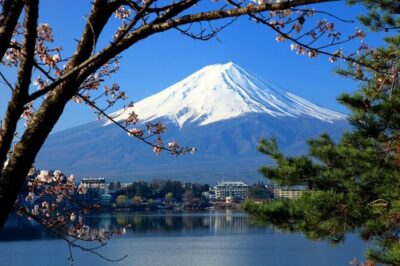
Mt Fuji and Hakone 1-Day Bus Tour Return by Bullet Train
Read our review →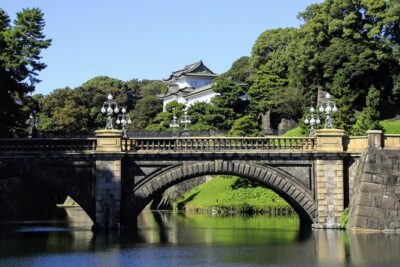
Peaceful Hiroshima & Miyajima UNESCO 1 Day Bus Tour
Read our review →
Tokyo Mt Fuji 5th St & Hakone Cruise Bus Tour w/Bullet Train
Read our review →
Meiji Shrine, Asakusa, Skytree Bus Tour and Cruise
Read our review →
Kyoto/Osaka: Nara, Fushimi Inari Taisha, Arashiyama Bus Tour
Read our review →Browse the lists this tour appears in