Reviewed · TOURS IN TOKYO
Tokyo: Private Tailored Tour with a Local Guide
Tokyo can feel like several cities stitched together, and this private tour gives you a local guide to help make sense of the change from quiet shrine paths to neon city streets. You can shape the day around temples, fashion, old neighborhoods, food, or pop culture rather than follow a fixed group route.
I like the personal format and the chance to learn Tokyo’s train and subway system as you go. I also like the wide mix of places, from Hachiko and Shibuya Crossing to the older streets of Yanaka. The main caution is value: at $63 per person, you still pay your own transport, meals, and entry fees, and the quality depends heavily on the guide assigned to you.
Key points to know before booking
- A private route can match your interests: You can focus on shrines, shopping, fashion, local neighborhoods, or Tokyo’s modern city life.
- The day covers several very different areas: Meiji Shrine, Harajuku, Shibuya, Asakusa, Yanaka, Shinjuku, and Nakano Broadway offer a broad first look at Tokyo.
- Public transport is part of the experience: Your guide can help you use Tokyo’s trains and subway, but transportation costs are not included.
- Guide quality matters: Marleen, Tassilo, and Isaac are among the named guides associated with especially warm and attentive experiences, though your guide may be someone else.
- The schedule can be ambitious: There are many districts on the plan, so tell your guide early which stops matter most to you.
- Bring cash and good shoes: You will walk, transfer between districts, and visit places where cards may not always work.
A private introduction to Tokyo’s many sides
The strongest feature here is not any single sight. It is the ability to connect Tokyo’s very different districts in one day with someone who can explain what you are seeing. A first-time visitor can move from the wooded approach to Meiji Shrine, through Harajuku’s youth fashion, into Shibuya’s giant crossing, and later to the temple streets of Asakusa.
That range is useful, but it also creates a tradeoff. Tokyo is spread out, and every transfer takes time. The tour can include a long list of places, but you will get more from it if you treat the route as a conversation with a guide rather than a race to collect photos.
The tour is private, so you are not tied to a large group’s pace. You can ask for local background, request more time in a favorite area, or shift attention toward your own interests. The experience is offered in English, German, Italian, Spanish, and French.
The guides named in the supplied feedback include Marleen, Tassilo, and Isaac. Specific praise centers on personal planning, clear explanations, warmth, patience, and a useful introduction to public transport. One German-language assessment also felt the guide was pleasant but new to Japan and not yet sure how to shape the day. That is a fair reminder to discuss your priorities at the start.
Other experiences people book in Tokyo:
- Mt Fuji and Hakone 1-Day Bus Tour Return by Bullet Train
★ 5.0 · 26,383 reviews - 1-Day Tokyo Bus Tour
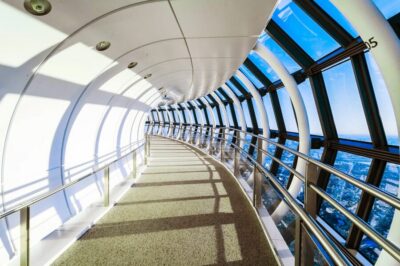
★ 5.0 · 14,250 reviews - Tokyo: TOKYO SKYTREE® Admission ticket
★ 4.5 · 11,192 reviews
Starting at Meiji Shrine and Harajuku
Meiji Shrine is a calm opening to a busy day. Dedicated to Emperor Meiji and Empress Shoken, it sits along broad, well-used paths that lead through a wooded setting to the main sanctuary. Your guide can explain the basic customs and point out what makes a Shinto shrine different from a Buddhist temple.
I like beginning here because it gives you cultural context before Tokyo’s commercial districts take over. It is also a place where your guide’s explanation can add real value. Without background, a shrine visit can become a walk toward a large wooden building, a few photographs, and a quick exit.
From the shrine, the route can move into Harajuku. Takeshita Street is the louder contrast, lined with youth fashion, sweets, and colorful street style. Your guide can point out local details and less obvious corners around the main shopping street, though the precise stops depend on your interests and the day’s route.
Harajuku is best for travelers who want to see how Tokyo’s fashion culture changes from one block to the next. It is not a quiet, traditional district, and anyone seeking a relaxed pace may prefer more time at Meiji Shrine or Yanaka.
Shibuya Crossing and the Hachiko statue
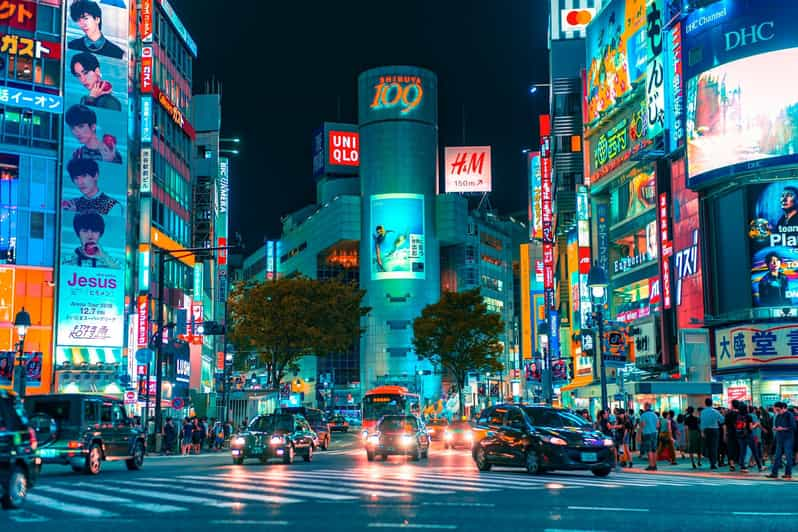
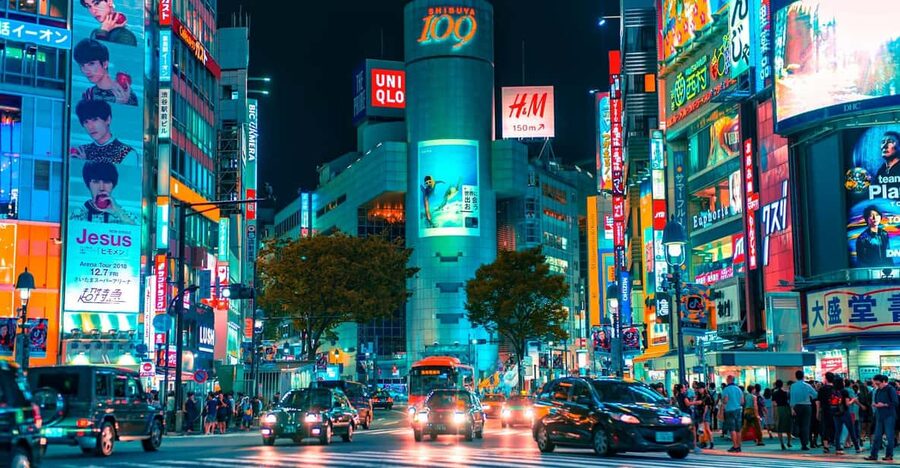
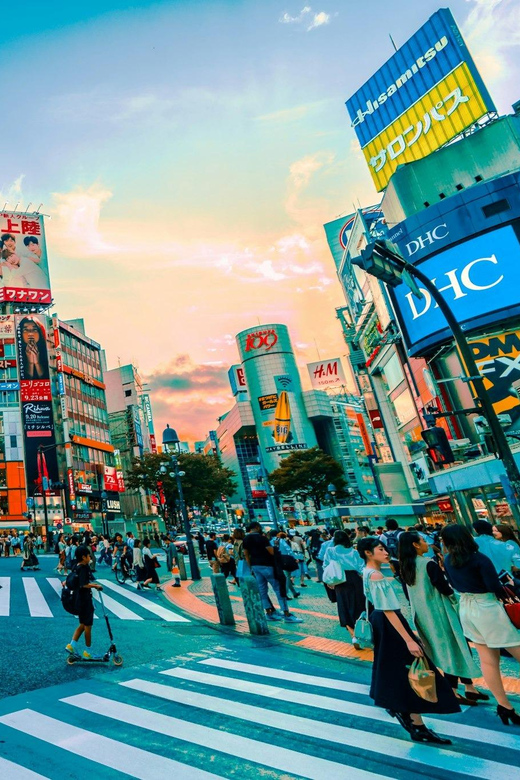
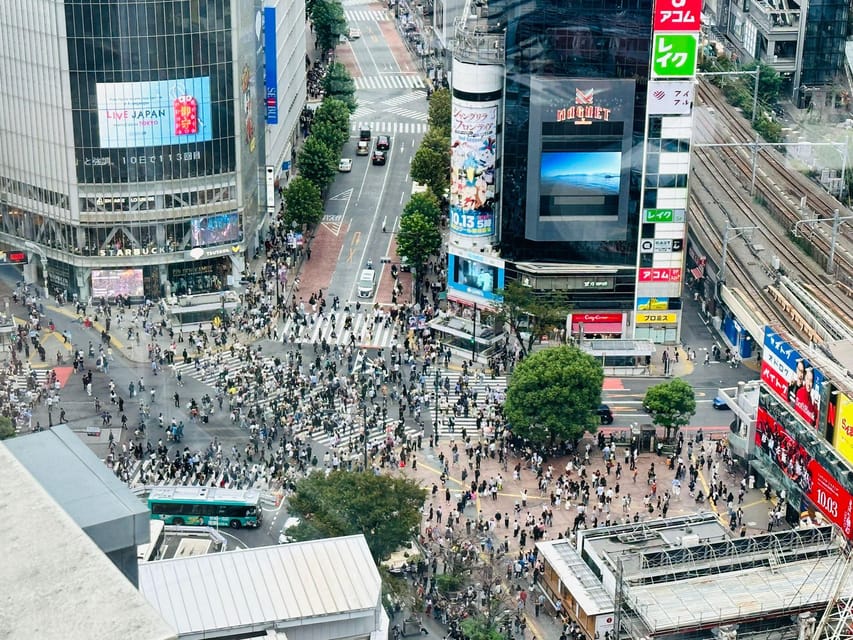
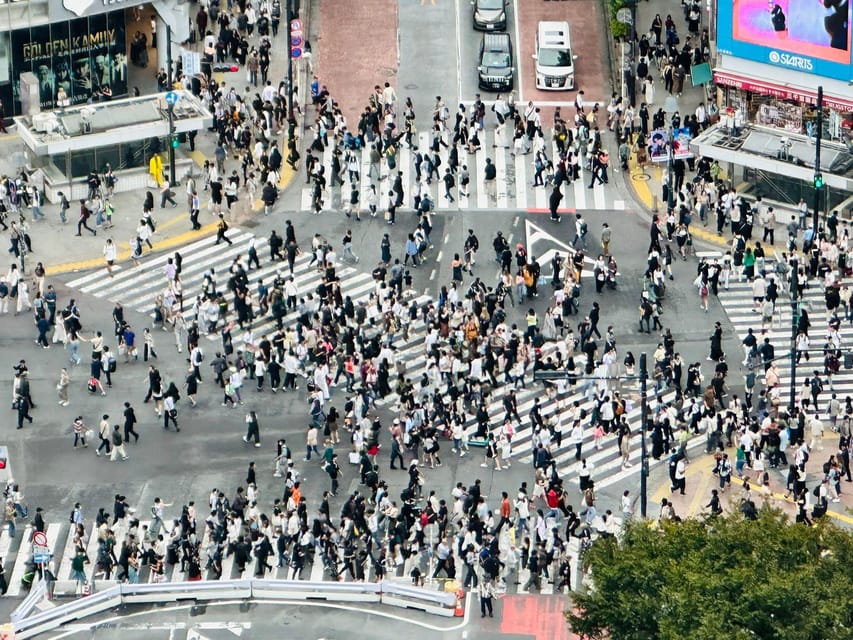
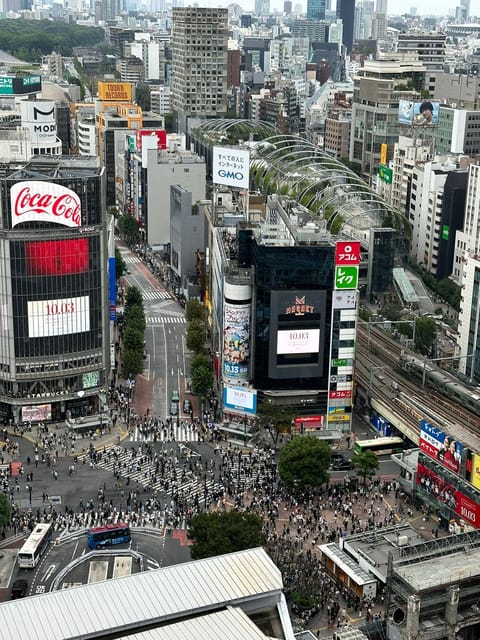
Shibuya gives you Tokyo at full volume. The famous crossing is a brief but memorable city scene, with people moving in several directions whenever the signals change. The Hachiko statue is nearby, a popular meeting point and a small monument to the loyal dog whose story became part of Tokyo’s public memory.
A guide is useful here mainly for orientation. Shibuya can feel confusing on a first visit, with multiple station exits and large buildings competing for attention. Your guide can help you reach the crossing, show you Hachiko, and explain how this part of the city fits into the wider district.
Do not expect the crossing itself to take a long time. Its appeal comes from the view and the sense of scale, not from a formal tour inside an attraction. If you want photos or a longer look at the surrounding streets, tell your guide before moving on.
Nakano Broadway for a different Tokyo
Nakano Broadway changes the tone again. It is known for specialist shopping and pop-culture stores, giving you a look at a side of Tokyo that differs from the polished department-store districts. The tour includes a guided visit, and this is one place where your own interests matter greatly.
If you enjoy anime, manga, collectibles, or Japanese subcultures, Nakano Broadway may be one of the day’s most useful stops. If those subjects do not interest you, you may prefer to spend the time in Yanaka, Asakusa, or another neighborhood.
Because no specific shops or purchases are promised, keep your expectations practical. This is an area to explore with guidance, not a guaranteed shopping package. Your guide can help you understand what you are seeing, but your own curiosity will shape the visit.
Same base, a different sort of day:
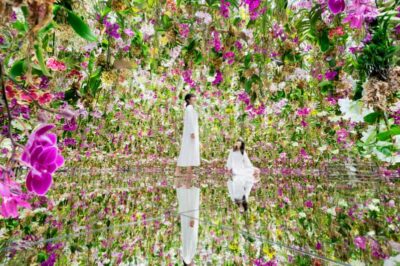
- Tokyo: teamLab Planets TOKYO Digital Art Museum Entry Ticket
★ 4.6 · 9,779 reviews - Mt Fuji & Hakone Cruise, Drum Show Bullet Train 1 Day from Tokyo
★ 4.0 · 7,413 reviews - Tokyo: Sumo Show Experience with Chicken Hot Pot and a Photo
★ 4.8 · 6,678 reviews - Tokyo: Shinjuku Food Tour (13 Dishes at 4 Local Eateries)
★ 5.0 · 6,603 reviews
Asakusa, Sensō-ji, and old Tokyo
Asakusa brings you to one of Tokyo’s best-known traditional districts. Sensō-ji Temple is the main draw, with its large red lanterns and busy approach. The temple has an important place in Tokyo’s story, and your guide can explain the site’s history, religious role, and surrounding streets.
This is one of the stops where a guide can prevent the visit from becoming a simple photo stop. You can ask about the temple buildings, the customs observed by visitors, and the way Asakusa connects with older Tokyo. The route also includes walking, so comfortable shoes are essential.
Asakusa can be crowded and commercial near the main approach. That is not necessarily a flaw, since the activity is part of the district’s character, but you should not expect a silent temple visit. Ask your guide to show you quieter corners if that matters more than seeing the main approach quickly.
The experience lists pickup options at Asakusa Station and Harajuku Station. If you do not want hotel pickup, you can arrange to meet at Harajuku Station or Asakusa Station. Confirm the meeting point clearly before the day begins, especially if your hotel is not close to either location.
Yanaka’s quieter neighborhood feel
Yanaka offers a more relaxed view of Tokyo. The district is associated with shitamachi, the old downtown atmosphere of traditional streets, small shops, galleries, and a strong neighborhood feel. It provides a useful contrast to Shibuya’s giant screens and Harajuku’s youth fashion.
I like this part of the route because it shows that Tokyo is not only about towers, shopping centers, and train stations. The area has a more personal scale, and your guide can help you notice details that are easy to miss when you walk alone.
The plan mentions quaint shops and galleries, but it does not promise particular purchases or scheduled visits. Think of Yanaka as a district walk shaped by what interests you. If you want to linger, say so. With so many areas listed for the day, this is the kind of stop that could be shortened unless you make it a priority.
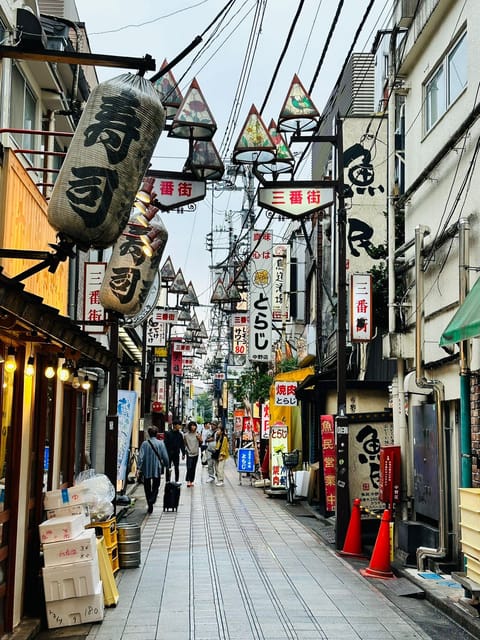
Shinjuku views and Omoide Yokocho
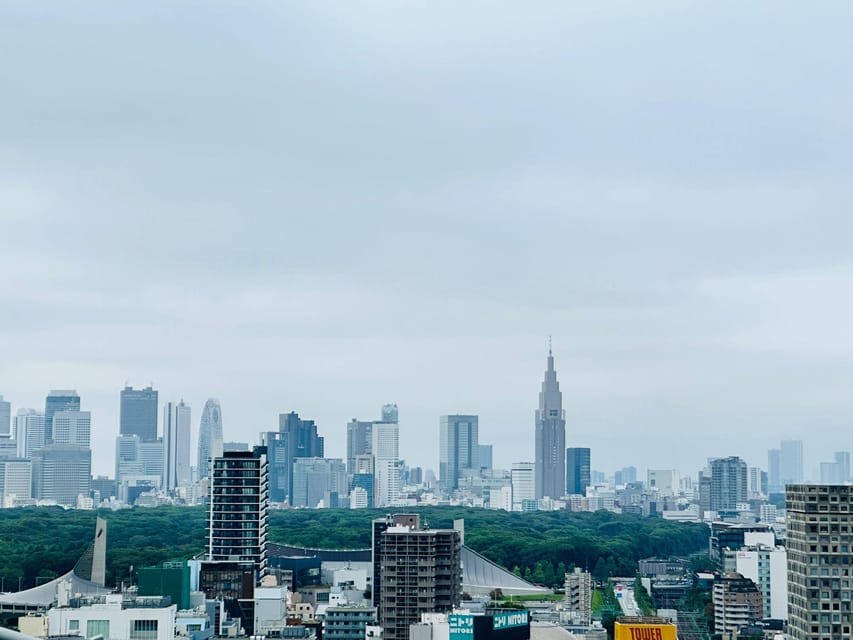
Shinjuku adds two contrasting experiences. The Tokyo Metropolitan Government Building offers broad city views, while Omoide Yokocho provides a more intimate look at old-style Tokyo atmosphere. The building is especially useful for getting your bearings and seeing how far the city stretches.
The viewing stop is practical as well as scenic. Tokyo can be hard to understand from street level, and a high viewpoint helps you grasp its scale. The information provided does not specify an entrance charge for the building, so remember that attraction fees are not included in the tour price.
Omoide Yokocho is known for its Showa-era feel, with narrow lanes and small eating places. Meals are not included, and the tour does not promise a meal reservation. You may have the chance to stop for food, but plan to pay separately and ask your guide how much time is available.
What $63 really buys you
At $63 per person, this is a reasonable price if you want a private introduction to Tokyo and value local help with the city’s transport system. The price becomes less attractive if you mainly want a driver, included admissions, a set meal, or a polished sightseeing package with every detail arranged.
You pay separately for trains and subway rides, food and drinks, and entrance fees. That matters in Tokyo because the route covers several districts. Even if individual fares are modest, multiple transfers can add to the day’s cost.
The private format is the main value. You are paying for a guide’s time and attention, not an all-inclusive ticket. One assessment found the price high when the guide mainly followed the requested sights and the customer paid for the subway independently. That criticism is worth taking seriously. Before booking, decide how much explanation and planning help you want.
The strongest experiences appear to come when the guide communicates with you before the tour and builds the day around your interests. Marleen was noted for arranging a personal route in advance. Isaac was described as warm, attentive, and passionate, while Tassilo was praised for clear explanations and a friendly manner. These names are useful examples, but they do not guarantee who you will receive.
Walking, transport, and practical comfort
Expect a full day of movement between distant parts of Tokyo. Wear comfortable walking shoes, carry a refillable water bottle, and dress for the weather. The route includes station transfers, shrine paths, temple approaches, shopping streets, and neighborhood walks.
Bring cash for personal expenses. The practical information warns that not every place accepts credit cards, and you will need money for transport, meals, drinks, shopping, and any entrance fees.
The activity is described as wheelchair accessible, yet the same information says it is not suitable for wheelchair users or people with mobility impairments. Treat this as a point that needs direct confirmation before booking. The walking and public transport portions may present challenges even if some locations themselves are accessible.
Pregnant people are also listed among those for whom the activity is not suitable. Since the day involves substantial walking and transfers, consider whether a shorter private route would fit your needs better, though this experience is offered as a one-day activity.
Free cancellation is available up to 24 hours before the start for a full refund, and you can reserve now while paying later. Starting times depend on availability, so check the time offered for your date.
Who should choose this Tokyo tour?
I would look closely at this tour if you are visiting Tokyo for the first time and want help connecting major sights with older neighborhoods. It suits couples, families, and private groups that prefer to ask questions rather than listen to a fixed script.
It is also a good fit if you want to learn how to move around Tokyo by train and subway. The guide can give you a useful overview of public transport while leading you between districts, which may make the rest of your trip easier.
You should be more cautious if you want a slow, deep visit to one or two neighborhoods. The suggested route is wide, and fitting Meiji Shrine, Harajuku, Shibuya, Nakano, Asakusa, Yanaka, Sensō-ji, and Shinjuku into one day could leave limited time at each place. Tell the guide your top three priorities rather than assuming every listed stop will receive equal attention.
Should you book it?
Book this tour if personal attention, local context, and a flexible route matter more to you than included transport or admissions. The best match is a first-time Tokyo visitor who wants to see both headline sights and less polished neighborhoods with help from a guide.
Skip it if you prefer an all-inclusive tour or if $63 feels high once subway fares, food, and entry costs are added. Before you go, ask who your guide will be, explain your must-see stops, and confirm how the day will balance sightseeing with transfers. That simple conversation may make the difference between a helpful Tokyo introduction and an expensive escort between places you already chose yourself.
FAQ
How long is the Tokyo private tour?
The activity is valid for one day. The exact starting time depends on availability.
Where can the tour begin?
Pickup or meeting options include Asakusa Station and Harajuku Station. Hotel pickup may also be arranged instead of meeting at a station.
Which languages are available?
The tour is offered with guides speaking English, German, Italian, Spanish, or French.
Are transportation, meals, and entrance fees included?
No. You pay separately for transportation, meals and drinks, and entrance fees to attractions.
Which Tokyo sights can be included?
The route can include Meiji Shrine, Harajuku and Takeshita Street, Shibuya Crossing, the Hachiko statue, Nakano Broadway, Asakusa, Sensō-ji Temple, Yanaka, Shinjuku, the Metropolitan Government Building, and Omoide Yokocho.
Can I cancel for a full refund?
Yes. You can cancel up to 24 hours in advance for a full refund.
Just added in Tokyo
- The 10 Tastings of Tokyo With Locals: Private Street Food Tour★ 5.0 · 48 reviews
- Small Town in the Big City: Tasting Tokyo’s Kichijoji★ 5.0 · 195 reviews
- Small Town in the Big City: Tasting Tokyo’s Kichijoji★ 5.0 · 16 reviews
- EXCLUSIVE Tokyo Secret: Kichijoji Small-Group Food & Bar Hopping★ 5.0 · 29 reviews
- Explore Kichijoji: Walk Through One of Tokyo’s Beloved Districts★ 5.0 · 21 reviews
- :Tokyo,Shibuya/ Pro Photography in Kimono / English-Friendly★ 5.0 · 26 reviews
- 【R34】Tokyo:Private Daikoku tour in Modified R34★ 4.9 · 92 reviews
- Tokyo:Calligraphy &Make your original folding fan in Asakusa★ 5.0 · 62 reviews
Tours in Tokyo, compared.
Mt Fuji and Hakone 1-Day Bus Tour Return by Bullet Train
Read our review →
teamLab Planets TOKYO Digital Art Museum Entry Ticket
Read our review →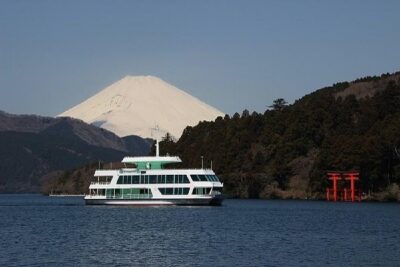
Mt Fuji & Hakone Cruise, Drum Show Bullet Train 1 Day from Tokyo
Read our review →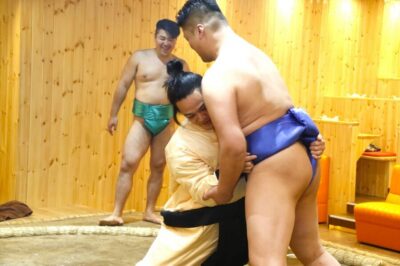
Sumo Show Experience with Chicken Hot Pot and a Photo
Read our review →
Shinjuku Food Tour (13 Dishes at 4 Local Eateries)
Read our review →