
Reviewed · TOURS IN TOKYO
TokyoSumoShow, ChickenHotPot, and Mochi-Pounding by Pro Wrestlers
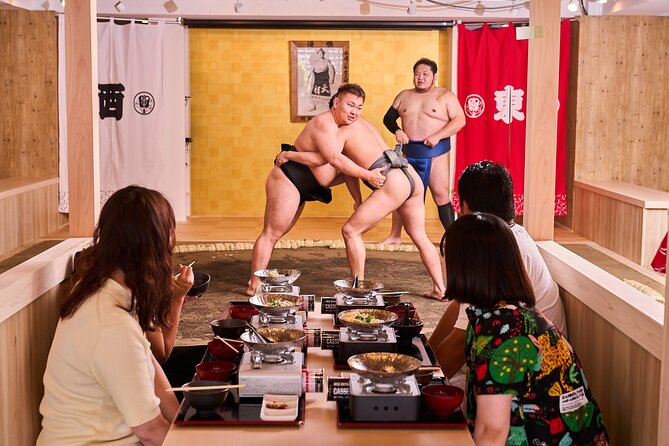
SUMOLAND turns sumo into a lively stage show, with former top-division wrestlers demonstrating techniques, staging bouts, and inviting you into the ring. You’ll also eat chicken chanko hot pot, try mochi pounding, and get close-up photos with the wrestlers.
I like the way the program mixes real athletic skill with simple explanations that work for English-speaking visitors. I also like the generous audience participation, especially for children. The tradeoff is clear: this is a polished entertainment program, not morning practice or an official tournament, and the food receives mixed marks.
- Former professional wrestlers in the ring: See athletes who competed at a high level demonstrate techniques and perform bouts.
- Chanko hot pot with the show: Eat the traditional chicken dish associated with sumo while the program unfolds.
- Mochi pounding for children and adults: Try a hands-on Japanese activity with the wrestlers.
- A supervised sumo challenge: Step into the ring and face a wrestler if selected.
- Ryogoku location: Visit Tokyo’s sumo district, a short walk from Ryogoku Station.
- Family-friendly format: The show is designed for adults and children, with photos and audience interaction built in.
A Sumo Show in Ryogoku, Tokyo’s Sumo District
Ryogoku is the natural setting for a sumo experience. The neighborhood is home to the sport’s major Tokyo presence, and SUMOLAND is located at 1F Takashima Ryogoku Mansion, 4-32-19 Ryogoku, Sumida City.
Look for the large sumo wrestler sign and flags near the venue. The location is close to public transportation, and Ryogoku Station puts you within reach of other Tokyo sights, including Asakusa, Akihabara, Nihonbashi, and Tokyo Skytree.
The activity lasts about 90 minutes to two hours. That is a useful length in a busy Tokyo schedule. You get a full program without giving up most of your day, and you can pair it with a walk around Ryogoku or another nearby district.
The program is supervised by the 63rd Yokozuna, giving it a link to the professional world of sumo. Still, keep your expectations straight. This is a theatrical and interactive introduction to the sport. It is not a tournament, and it is not a quiet visit to a training stable.
Chicken Chanko Starts the Program
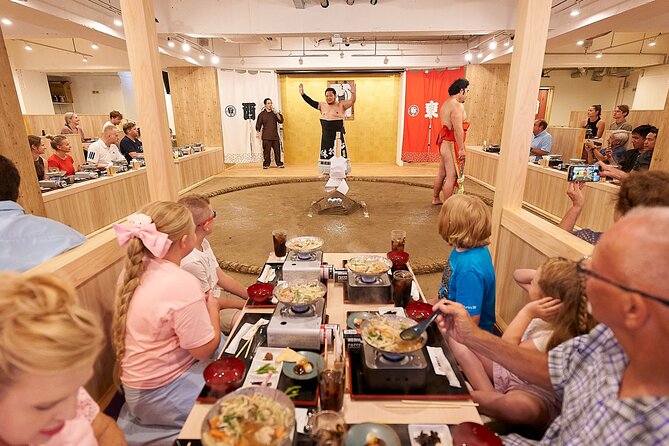
The meal is chicken chanko hot pot, prepared in connection with the Isegahama stable. Chanko is the hearty food linked with sumo wrestlers, and the hot pot gives you something to eat while the next part of the program is prepared.
The food seems to be best understood as part of the experience rather than the main reason to book. Some diners describe the chicken and broth as delicious, healthy, and especially good because of the soup base. Others find the meal merely fine. The mochi dessert earns particularly warm praise, so I would keep room for that.
This setup also helps the pacing. You are not sitting through a long performance with nothing to do. You can eat, watch the wrestlers prepare, and take in the explanations at the same time.
Alcohol and bottled water are not included. Vegetarian and vegan meals can be arranged if you request them at least two days ahead. Gluten-free and halal meals are not available, though you may bring your own food.
Other experiences people book in Tokyo:
- Mt Fuji and Hakone 1-Day Bus Tour Return by Bullet Train
★ 5.0 · 26,383 reviews - 1-Day Tokyo Bus Tour
★ 5.0 · 14,250 reviews - Tokyo: TOKYO SKYTREE® Admission ticket
★ 4.5 · 11,192 reviews
The Ring Entrance Makes Sumo Feel Close
The former wrestlers begin with a ring entrance ceremony. This is one of the moments that gives the program its visual punch. Rather than watching athletes from a distant arena seat, you see large, highly trained wrestlers enter close to the audience.
The entrance also sets up the basic idea of sumo as ritual and performance. You get a sense of the ceremony around the sport before the action begins.
The program includes explanations of sumo terms, moves, and strategies. Japanese words are paired with translations, and you may be asked to practice saying them. The style is informal and friendly, with the wrestlers using humor to make the sport easier to follow.
If you know little about sumo, this is useful. You will not need a detailed background before arriving. If you already follow tournaments closely, the basic explanations may feel light. One improvement would be more detail about tournament rules, rankings, and the longer history of the sport. The show focuses more on action and participation than on a full lesson.
Mochi Pounding Gives Children a Real Role
Mochi pounding is the hands-on part of the program. You will see how traditional Japanese rice cakes are made, then may get a chance to pound the mochi yourself with guidance from the wrestlers.
Children are welcome, and this is one of the easiest activities for younger participants to enjoy. It is physical, visual, and simple to understand even if you do not speak much Japanese. The wrestlers’ size makes the demonstration especially memorable, while the activity itself gives children a way to take part rather than simply watch.
Participation can be limited if many people want to join. The venue may allow one person per group or use a lottery. The same condition applies to the sumo challenge, so you should treat participation as a possibility, not a guarantee.
Souvenirs can change by season. The included item is part of the admission package, but the exact souvenir is not fixed.
The Sumo Show Brings Real Athletic Skill
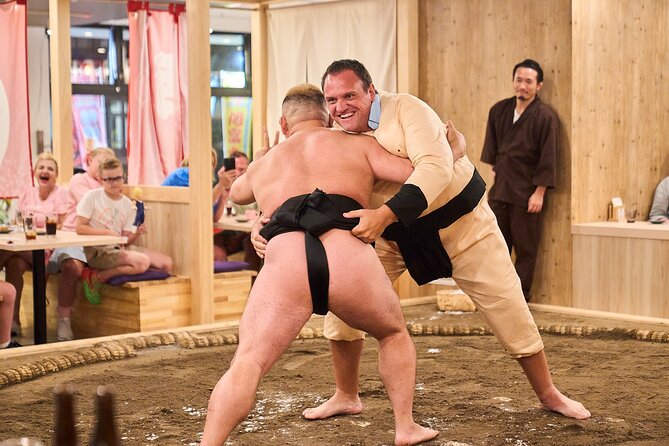
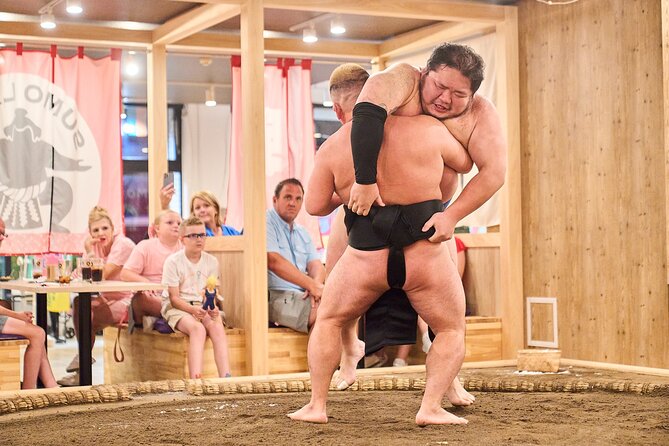
The main show features demonstrations and bouts by former professional sumo wrestlers. The performances are designed to entertain, but the athletic ability is genuine. You see the balance, timing, force, and footwork that make sumo much more demanding than its slow, deliberate image suggests.
The wrestlers also demonstrate techniques and training movements. This helps explain why the sport can look simple from a distance but require such control up close. A short bout has more impact when you have first seen the mechanics behind it.
The program uses video and narration between some acts. The explanations are accessible, but the educational side could be stronger. You may leave with a good feel for the basic moves and the physical demands of sumo without learning everything about tournament structure or the sport’s long development.
The strongest part is the personality of the performers. They act as approachable ambassadors, joke with the audience, and explain the sport without making it feel stiff. That warmth matters, particularly for families and anyone who feels unsure about Japanese etiquette or sumo customs.
Same base, a different sort of day:
- Tokyo: teamLab Planets TOKYO Digital Art Museum Entry Ticket
★ 4.6 · 9,779 reviews - Mt Fuji & Hakone Cruise, Drum Show Bullet Train 1 Day from Tokyo
★ 4.0 · 7,413 reviews - Tokyo: Sumo Show Experience with Chicken Hot Pot and a Photo
★ 4.8 · 6,678 reviews - Tokyo: Shinjuku Food Tour (13 Dishes at 4 Local Eateries)
★ 5.0 · 6,603 reviews
The Sumo Challenge Is the Big Family Moment
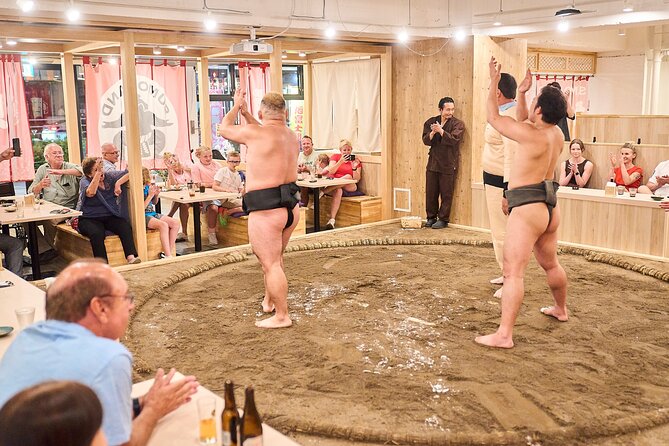
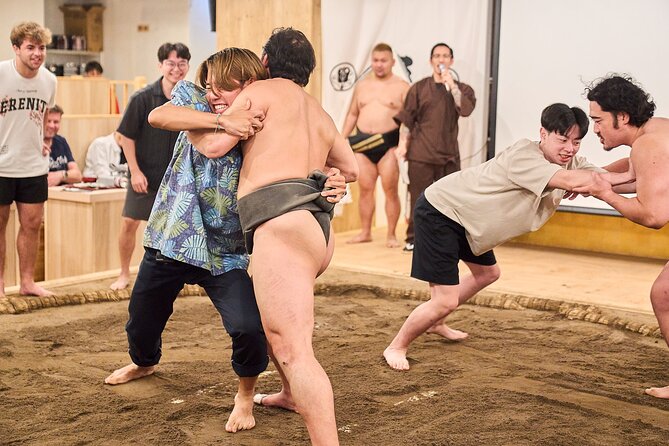
Near the end, selected audience members can enter the ring and face a real sumo wrestler. Children are welcome to try. The match is presented for fun, but the wrestlers’ strength and technique make it exciting to watch.
Even if you do not enter the ring, you get a good view of the action and plenty of opportunities to take pictures. The show is arranged so that watching someone else try can be nearly as entertaining as participating yourself.
Do not assume every person in your group will get a turn. If many people volunteer, the venue may limit participation to one person per group or choose by lottery. If this is important to your family, arrive ready to participate, but do not promise a child that he or she will definitely wrestle.
The show’s energy comes from this mix of demonstration and audience involvement. It avoids the problem of a cultural presentation becoming a passive lecture. At the same time, the challenge is clearly part of the entertainment format, not a test of serious sumo ability.
Photos and Seating at SUMOLAND
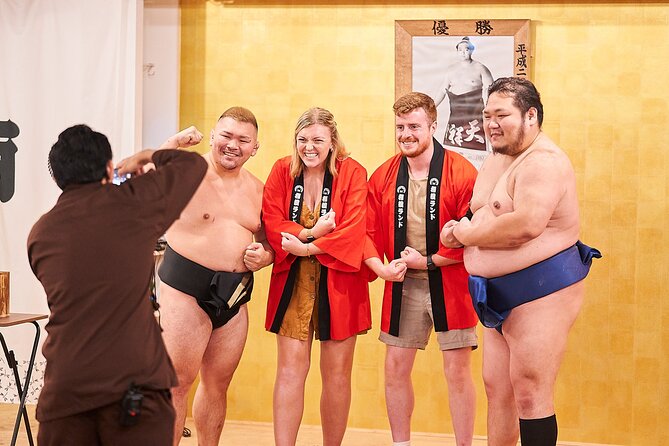
Photo time with the wrestlers follows the performance. This is a major benefit for families because you get a clear souvenir of the experience, not just memories of watching from a seat.
Seat locations are assigned by the venue. You cannot select a particular table or position, so the booking process does not guarantee a preferred view. The venue is arranged so that the audience can remain close to the wrestlers, but exact placement still depends on the staff.
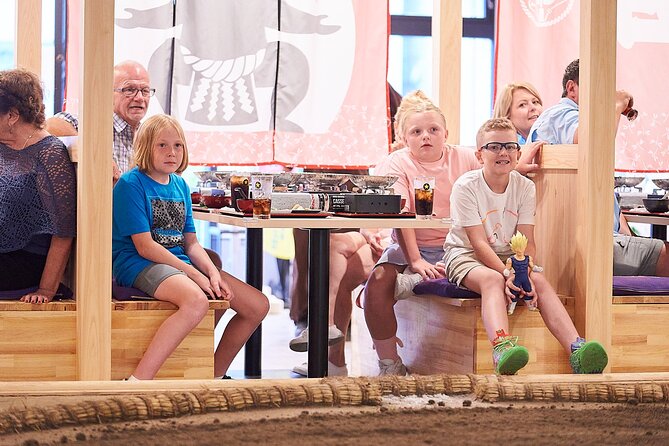
Pay attention to the seating rule if you are bringing a child. In standard seats, holding a child on your lap is considered unsafe, so you should reserve a place for every person. Box seats can hold up to six people and are safe for holding a child on your lap.
That detail affects the price and comfort of a family booking. A family with small children may value a box seat more than a couple who simply wants to watch the show. Check the seat type available when you book.
Is $106.12 a Good Value?
At $106.12 per person, this is not a cheap meal or a casual cultural stop. You are paying for a staged performance, former professional athletes, food, hands-on activities, a mobile ticket, and the convenience of a set program in Ryogoku.
I think the price makes the most sense if you want several things at once: an introduction to sumo, a meal, close-up photos, and a family activity. Buying a meal and a separate sumo-related experience would take more planning, while SUMOLAND gives you a structured visit lasting up to two hours.
The value is weaker if you want a formal tournament or a traditional training visit. This experience cannot replace sitting in the audience at an official sumo tournament, and it does not offer the quiet observation associated with morning practice.
Food is also a personal value question. If the hot pot is your main reason for booking, the mixed reactions suggest caution. If the show is your priority, the meal works as a useful part of the program, and the mochi receives particularly positive attention.
The very high overall rating and 98 percent recommendation indicate strong satisfaction, but I would still book it for the interaction and performance rather than for fine dining.
Who Will Enjoy This Most?
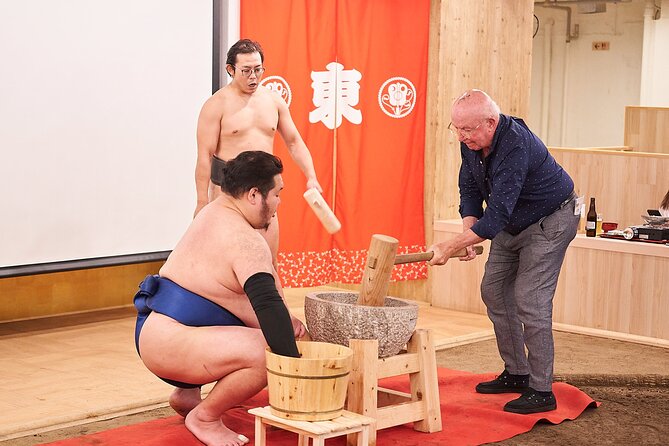
Families with children and teenagers are the clearest match. The mochi activity, sumo challenge, humor, and photo session keep young visitors involved. Adults also get a useful introduction to sumo without needing to understand tournament rankings beforehand.
First-time visitors to Japan may find this an easy way to connect a famous Japanese sport with food and local culture. It is also a good choice if you want something different from temples, shopping, and city viewpoints.
English-speaking visitors should find the format manageable. The program provides Japanese terms with translations and encourages you to repeat some of them. The staff are described as friendly and attentive, which helps make the experience less formal.
You may want a different activity if you are looking for a detailed academic explanation, a real tournament, or a traditional stable visit. The program gives you a lively introduction, not a complete course in sumo.
Practical Details Before You Book
Confirmation is sent within 48 hours, subject to availability. The ticket is mobile, and the venue is near public transportation.
Try to arrive a few minutes early. The show starts on time, and arriving before the opening gives you a calmer start. The exact performance schedule may vary, but plan for 90 minutes to two hours at the venue.
Vegetarian and vegan food require at least two days’ notice. Gluten-free and halal meals are not available, so bring your own food if necessary. Alcohol and bottled water cost extra or are not included.
You can cancel for a full refund up to 24 hours before the local start time. Cancellations and changes within 24 hours are not accepted for a refund.
Should You Book SUMOLAND?
Book it if you want a fun, close-up introduction to sumo with food and hands-on activities. The former wrestlers bring real skill, the audience interaction keeps the show moving, and families get several chances to take part.
Skip it if your goal is an official tournament, a serious training observation, or a more traditional and less theatrical experience. At this price, the show must be your main interest.
For most first-time visitors, especially families, SUMOLAND is a practical choice. Just reserve enough seats for children, request vegetarian food early, and treat the wrestler challenge as a bonus rather than a promise.
FAQ
Where is SUMOLAND located?
SUMOLAND TOKYO RYOGOKU is at 1F Takashima Ryogoku Mansion, 4-32-19 Ryogoku, Sumida City, Tokyo 130-0026, Japan.
How long does the experience last?
The program lasts approximately 90 minutes to two hours.
What food is included?
Chicken chanko hot pot is included. Alcoholic drinks and bottled water are not included.
Can I request a vegetarian meal?
Yes. Vegetarian and vegan meals are available if requested at least two days in advance.
Are gluten-free or halal meals available?
No. Gluten-free and halal meals are not available, but you may bring your own food.
Can children join the activities?
Yes. Children can take part in mochi pounding and may participate in the sumo challenge if selected.
Will everyone get to wrestle a sumo wrestler?
No. If many people want to participate, the venue may limit participation to one person per group or decide by lottery.
Can I choose my seat?
No. Seat locations are assigned by the venue.
Can I hold a child on my lap?
Standard seats are not considered safe for holding a child on your lap, so you should reserve a seat for every person. Box seats can hold up to six people and allow a child to sit on a lap.
What is the cancellation policy?
You can cancel at least 24 hours before the experience for a full refund. Cancellations or changes made within 24 hours are not accepted for a refund.
Just added in Tokyo
- Nikko: Edo Wonderland Edomura Cultural Theme Park Ticket★ 4.3 · 205 reviews
- 《MEMBERS-ONLY-BAR-HOPPING》Discover Your Special Whiskey in Tokyo!★ 5.0 · 29 reviews
- Japanese Whisky Hunting《HIGH-QUALITY-ONLY》Rare Tasting Class★ 5.0 · 20 reviews
- Luxury Tokyo Sake, Cocktail, Whisky and Pairing Tour★ 5.0 · 18 reviews
- Wagyu & Sake Pairing in Shinjuku – Steak, Shabu-Shabu & More★ 5.0 · 112 reviews
- Small-Group Wagyu Beef and 7 Japanese Dishes Tokyo Cooking Class★ 5.0 · 190 reviews
- Mt. Fuji & Hakone Cherry Blossom private One Day Tour★ 4.5 · 35 reviews
- Mt. Fuji, Hakone Private Tour from Tokyo – Onsen, Arts and Nature★ 5.0 · 79 reviews
Tours in Tokyo, compared.

Mt Fuji and Hakone 1-Day Bus Tour Return by Bullet Train
Read our review →
teamLab Planets TOKYO Digital Art Museum Entry Ticket
Read our review →
Mt Fuji & Hakone Cruise, Drum Show Bullet Train 1 Day from Tokyo
Read our review →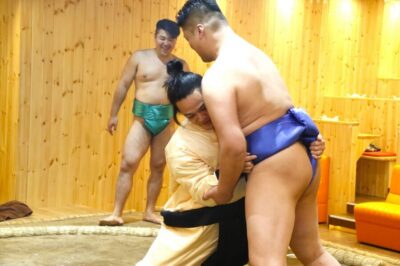
Sumo Show Experience with Chicken Hot Pot and a Photo
Read our review →
Shinjuku Food Tour (13 Dishes at 4 Local Eateries)
Read our review →
Tokyo Mt Fuji 5th St & Hakone Cruise Bus Tour w/Bullet Train
Read our review →Browse the lists this tour appears in