
Reviewed · CYCLING TOURS
Tokyo: 3-Hour Bike or E-Bike Tour of City’s Hidden Gems
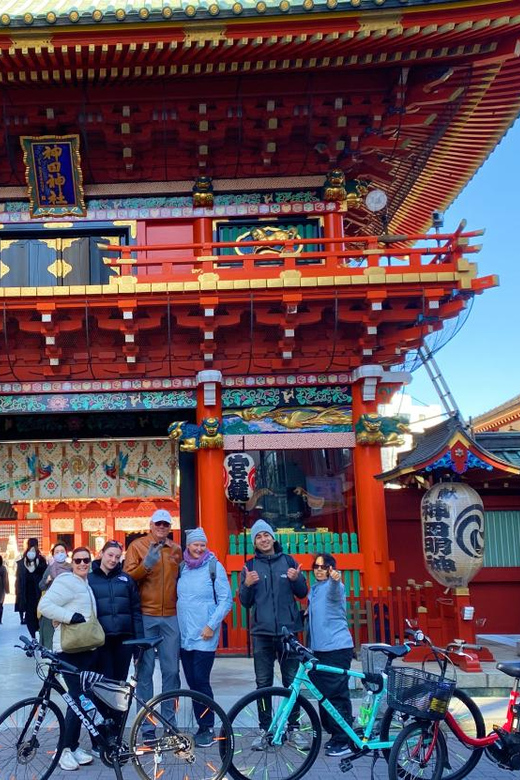
Tokyo reveals itself differently from a bicycle. In three hours, you can pass from the temple grounds of Zojo-ji to the Imperial Palace, Akasaka, Aoyama, Harajuku, and Shibuya. The route mixes major sights with quieter corners, so you get a useful first look at the city instead of seeing only one neighborhood. I especially like the quality Bianchi and Fuji bikes, plus the e-bike choice for riders who do not cycle often.
I also like the guides’ personal approach. Casey, Shin, Naoki, Marika, and others have been praised for clear explanations, safe riding, photos, and flexible routing. The main catch is that this is a real ride, not a sightseeing bus with occasional stops. You need to be comfortable cycling for several hours, and helmets cost an extra ¥1,000 in cash.
Key points to know before you ride
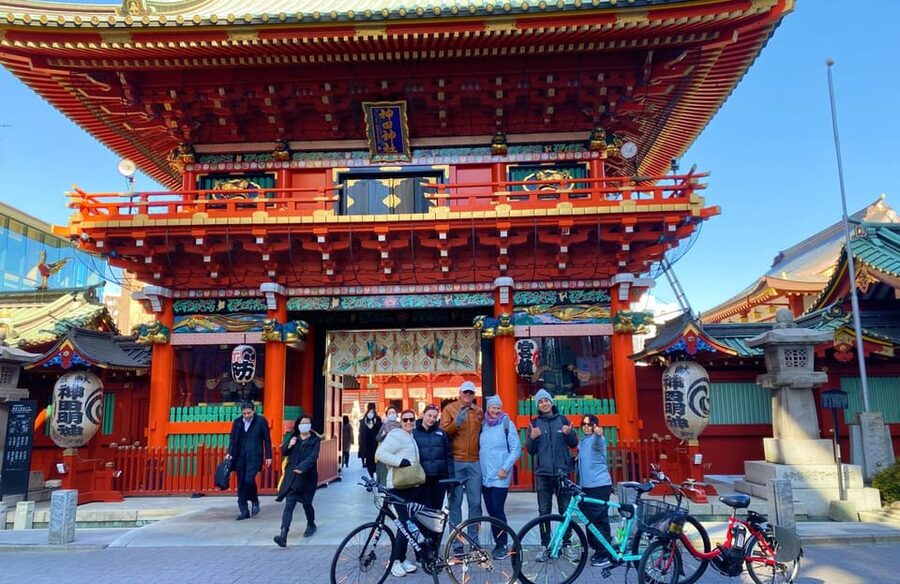
- The route crosses several Tokyo districts: You move from Shiba and the Imperial Palace area toward Akasaka, Aoyama, Harajuku, and Shibuya.
- Quality bikes make a difference: Bianchi and Fuji cross bikes are supplied, with an e-bike option for riders with less stamina.
- The guide adds the context: Stops come with stories about temples, shrines, modern life, and Tokyo’s changing neighborhoods.
- Small groups make city riding easier: A compact group can stop, cross streets, and park bikes with less fuss.
- You see more than you can cover on foot: The distance links areas that would take much longer by train and walking.
- Budget for a helmet: Helmets are available for ¥1,000 each, payable in cash at the site.
Why a bicycle is a smart way to meet Tokyo
Tokyo is too large to understand from a single station or observation deck. The city’s famous districts are spread across a wide area, and the best parts often appear between the headline sights: a temple wall, a formal avenue, a pocket of older buildings, or a small side street near a major shopping district.
This tour uses the bicycle to connect those pieces. You ride from the Commodore Perry statue near Daimon to the Bell of Peace, passing through central areas that would otherwise require several train rides. I like that balance. You get recognizable Tokyo, but you also see how the city shifts from ceremonial and traditional to polished, youthful, and fashion-focused.
The three-hour length works well as an introduction. It is long enough to cover ground, yet short enough to fit into a busy Tokyo schedule. You will not have a long indoor visit at every stop. Instead, the ride gives you short guided pauses, photo opportunities, and a broad sense of place.
Other rides on two wheels around Tokyo:
- Tokyo Great Cycling Tour
★ 5.0 · 811 reviews - Tokyo Top Highlights 3h Guided E-bike Tour
★ 5.0 · 714 reviews - 3h Tokyo E-Bike Tour: Hidden Gems, and Local Life with guide
★ 5.0 · 670 reviews
Meeting near Daimon and choosing your bike
The starting point is around the Statue of Commodore Perry, about a three-minute walk from Daimon Station’s A6 exit. Give yourself extra time to find the statue and guide. One rider found the meeting point hard to locate, so this is not the moment to leave the station at the last second.
The bikes are a strong part of the package. The operator provides Bianchi and Fuji cross bikes, described as high-quality road and cross bikes, along with convenient e-bikes. The distinction matters. A standard bike gives you a more active ride and is suitable if you cycle regularly. An e-bike is the safer choice if you rarely ride, are unsure about your stamina, or are visiting during hot weather.
The route includes extended cycling, so do not treat the tour as a gentle roll from one photo stop to another. You should be able to ride confidently in an urban setting. The tour does not accept children under 12, pregnant women, people with back problems, or anyone who cannot ride a bike.
A small pouch on the bike holds a phone, wallet, or keys. Bike insurance is included. Helmets are not included, but you can bring ¥1,000 in cash per helmet and obtain one on site. Wear comfortable clothes and shoes, and bring water. Smoking, alcohol, drugs, and littering are not allowed.
Zojo-ji and the old Shiba district
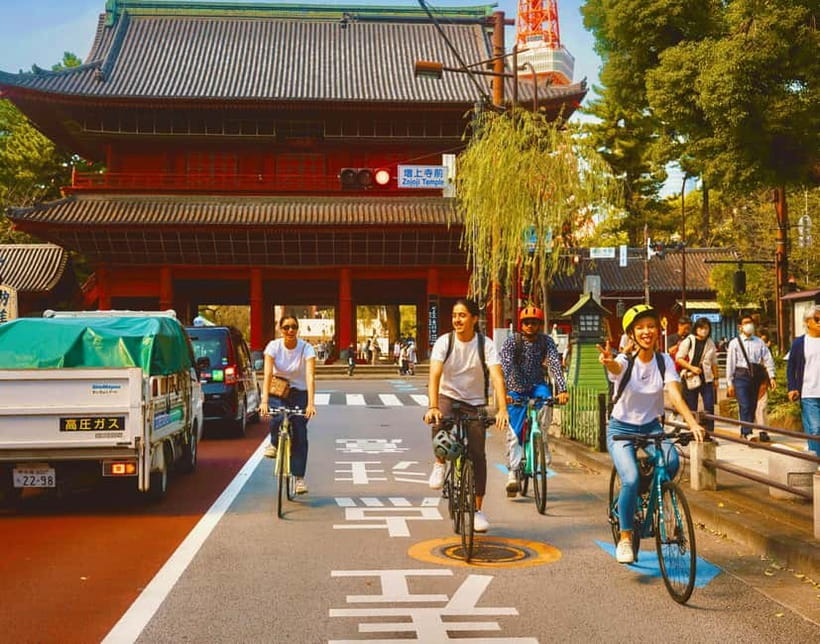
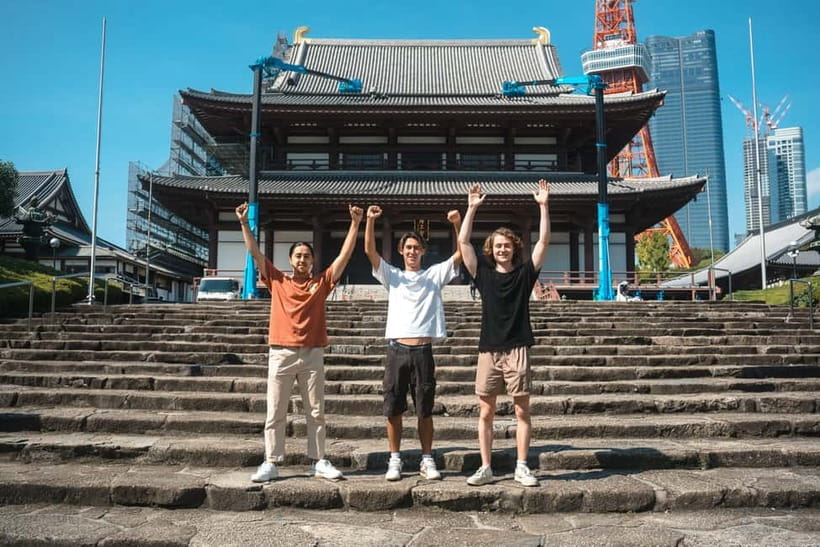
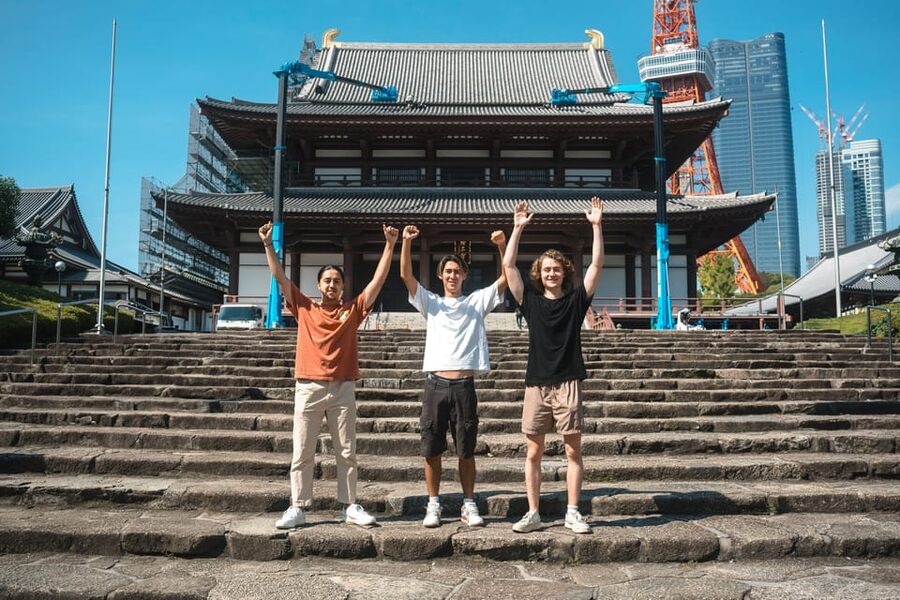
The first major stop is Zojo-ji Temple, reached after beginning near Daimon. Its setting near Tokyo Tower makes it one of the city’s most memorable combinations of old and new. Traditional temple architecture and a modern tower share the same view, giving you an instant lesson in Tokyo’s ability to preserve the past while building upward around it.
You get about 15 minutes here for a guided visit and photographs. That is enough to hear the main explanation and take in the grounds, but not enough for a slow temple visit. If you want a detailed look at every building, this tour will feel brisk. If you want useful context at the start of a larger city ride, the timing makes sense.
This is also where a guide can help you notice details you might otherwise pass. Guides such as Shin and Casey have been praised for explaining the history of temples and shrines in a clear way, including the difference between them. That kind of explanation is especially helpful if this is your first visit to Japan.
Imperial Palace and Ote-mon Gate
From Shiba, the route moves toward the Imperial Palace. You stop for about 10 minutes at the palace area, followed by a shorter five-minute pause at Ote-mon Gate.
The palace grounds are important less for a long interior visit than for their broad avenues, stonework, gates, and sense of ceremony. Ote-mon, one of the best-known entrances, gives the stop a strong visual focus. You can expect photographs and a short explanation rather than an extended palace tour.
This part of the ride shows why a bicycle works well here. The distance between central Tokyo’s major landmarks is manageable on two wheels, but tiring if you try to walk it all. One rider described cycling as more engaging than using the metro, and that is the practical advantage: you remain aware of the spaces between stations instead of appearing suddenly underground at the next sight.
Other quiet corners of Tokyo:
- Tokyo: Custom Hidden Gems & Highlights Tour with Local Guide
★ 4.7 · 272 reviews - Tokyo: 3-hour Guided E-Bike Tour of the City’s Hidden Gems
★ 4.8 · 251 reviews - Shibuya & Harajuku: Hidden Gems & Highlights Private Tour
★ 4.7 · 139 reviews - Tokyo: Full Course Tour: Explore 10 Must-Sees & Hidden Gems
★ 5.0 · 35 reviews
Akasaka Palace and the National Stadium
The route then heads toward the State Guest House Akasaka Palace, where you have about 10 minutes for photographs. The palace adds a different architectural note, with a formal, grand appearance that contrasts with the temple and palace settings earlier in the ride.
Next comes the New National Stadium, also with about 10 minutes for photographs. The stadium connects the tour to modern Tokyo and its large-scale public architecture. You do not get a full stadium event or interior tour, so think of this as an exterior stop and a chance to see another side of the city.
These pauses are short, but the variety is useful. In a single morning or afternoon, you see religious architecture, imperial sites, a formal state building, and a modern sports venue. The guide’s commentary is what gives these stops meaning. Without it, the route could feel like a fast series of photo locations.
Aoyama, Cat Street, and Miyashita Park
After the major landmarks, the tour shifts toward neighborhoods. There is a 15-minute stop at a lesser-known local spot, followed by brief visits around Minamiaoyama, Cat Street, and Miyashita Park.
This is one of the most appealing parts of the route for me. You have already seen Tokyo’s official face. Now you get areas shaped by design, shopping, youth culture, and everyday city life. The exact lesser-known stop may vary, so you should not expect a named attraction with a long formal visit. Instead, the value is in seeing how the neighborhoods connect.
Cat Street gives the ride a more relaxed, local feel than the grand avenues around the Imperial Palace. The five-minute visit is short, but it breaks up the ride and lets you look around on foot. Miyashita Park gets only about three minutes, so treat it as a quick orientation point rather than a park visit.
The tour’s flexible character matters here. Shin has been praised for adjusting the route to match the interests of his group, while other guides, including Miguel, KG, Nouchi, and Georgie, have been singled out for friendly conversation and cultural explanations. Your exact guide and group size will shape how much time you spend talking at each neighborhood stop.
Finishing at Shibuya Crossing
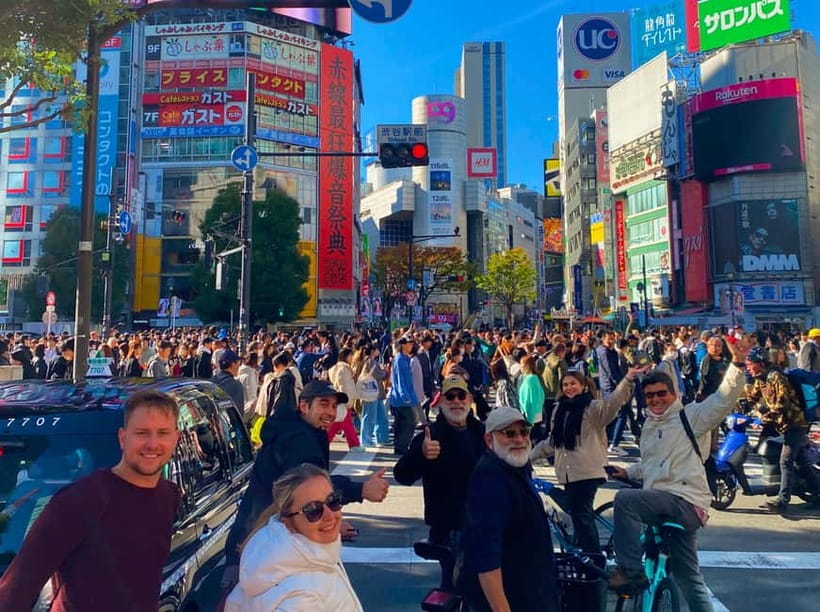
The final major stop is Shibuya Crossing, with about five minutes to visit and take photographs. It is a fitting finish because the crossing gives you Tokyo at its most recognizable and energetic, after you have seen quieter and more formal parts of the city.
Five minutes is enough to see the crossing and take a few photos, but not enough to explore Shibuya. If you want department stores, cafés, shopping streets, or nightlife, plan a separate visit after the ride. The bicycle tour gives you orientation, not a full afternoon in every district.
The stated finish is the Bell of Peace. Since the tour ends there, check your onward plans before booking. The route does not return you to the starting point, and the supplied information does not promise a return transfer. That is not a problem if you are happy to continue exploring, but it matters if you need to be back near Daimon.
What the three-hour pace feels like
The tour includes several short stops, but the cycling sections link them together. You will get off the bike for photographs and explanations, then ride again through central Tokyo. This creates a faster, more varied experience than a walking tour, while keeping the group together at a human pace.
I would call the physical effort moderate, with the important warning that heat changes the experience. One rider enjoyed the tour even during Tokyo’s record-breaking summer heat, but also appreciated stops for refreshments. Bring water and consider the e-bike if you are not used to riding in warm conditions.
The route is suitable for casual riders who can manage a sustained city ride, not just for serious cyclists. Still, the phrase casual rider should not be mistaken for no effort. If you rarely cycle, the e-bike option is worth the additional consideration. It lets you enjoy the commentary and scenery without worrying that the final section will become a struggle.
Guides have also been praised for watching out for riders, taking photographs, and keeping the ride organized. That support is valuable in a large city, particularly when the group needs to stop, park, or move through busy streets.
Guides and the small-group advantage
The guide is central to the quality of this experience. You are not simply renting a bicycle and following a map. The guide explains sites, connects traditional customs with modern Japanese life, and helps the group move safely through the city.
English and Japanese are available. Guides named in the feedback include Casey, Shin, Naoki, Marika, Nouchi, Georgie, Miguel, KG, Rinto, and Kosei. You will not necessarily be assigned one of these people, but the repeated praise for clear explanations, friendliness, flexibility, and safety gives you a reasonable idea of the guiding style.
Private and small-group options are available. A small group is especially useful for a bicycle tour because it reduces the time spent waiting at crossings and regrouping. It also gives you a better chance to ask questions or request a little more context at a stop.
The route may be adjusted to suit group interests, but do not assume every stop will become a long visit. This is still a three-hour city ride with a set sequence of areas to cover.
Is $60 good value?
At $60 per person, the tour is not the cheapest way to see Tokyo. You can explore many districts by train for less money, especially if you are comfortable planning your own route. But that comparison misses what you are paying for.
Your fee includes a quality Bianchi or Fuji bike, an English-speaking guide, local explanations, a bike pouch, and bike insurance. You also avoid planning a complicated route across several central neighborhoods. The guide supplies the route and the context, while the bicycle lets you cover more ground than walking.
The value is strongest if you have only a short stay or want a broad first look at Tokyo. It is also good for people who find the metro efficient but impersonal. The value is weaker if you want long temple visits, extensive shopping time, or a relaxed stop at every attraction.
Remember the extra helmet charge of ¥1,000 per unit, paid in cash. The e-bike option is available, but the supplied information does not state an additional price, so confirm the exact choice and cost when booking.
Who should book this ride?
I would choose this for an active first day in Tokyo, a short city break, or a return visit when you want to connect neighborhoods you have not seen together. It suits couples, friends, solo visitors, and small groups who enjoy moving through a city rather than checking off one indoor attraction at a time.
It is a particularly good match if you want both traditional and modern Tokyo. Zojo-ji and the Imperial Palace provide historic settings, while Aoyama, Cat Street, Miyashita Park, and Shibuya show the city’s newer side.
I would skip it if you cannot ride confidently, have a back problem, are pregnant, or want a slow sightseeing pace. I would also think twice about booking a standard bike if you rarely cycle. In that case, choose the e-bike and bring water.
Free cancellation is available up to 24 hours before departure, and you can reserve now and pay later. That flexibility helps if your Tokyo schedule is still shifting, but the main decision is simpler: do you want three hours of active sightseeing or a slower, mostly stationary tour?
FAQ
How long is the Tokyo bike tour?
The tour lasts three hours.
Where does the tour start?
Meet the guide around the Statue of Commodore Perry, about a three-minute walk from Daimon Station exit A6.
Where does the tour finish?
The tour finishes at the Bell of Peace.
Which languages are available?
The tour is available with English-speaking or Japanese-speaking guides.
What kind of bikes are provided?
The operator provides Bianchi and Fuji cross bikes, along with an e-bike option.
Should I choose an e-bike?
An e-bike is recommended if you do not cycle often, lack stamina, or are uncomfortable riding longer distances.
Are helmets included?
Helmets are not included. They are available on site for ¥1,000 per unit, payable in cash.
Is bike insurance included?
Yes, bike insurance is included.
What should I bring?
Bring comfortable shoes, comfortable clothes, and water.
Who cannot join the tour?
The tour is not suitable for children under 12, pregnant women, people with back problems, or people who cannot ride a bike.
Just added in Tokyo
- The 10 Tastings of Tokyo With Locals: Private Street Food Tour★ 5.0 · 48 reviews
- Small Town in the Big City: Tasting Tokyo’s Kichijoji★ 5.0 · 195 reviews
- Small Town in the Big City: Tasting Tokyo’s Kichijoji★ 5.0 · 16 reviews
- EXCLUSIVE Tokyo Secret: Kichijoji Small-Group Food & Bar Hopping★ 5.0 · 29 reviews
- Explore Kichijoji: Walk Through One of Tokyo’s Beloved Districts★ 5.0 · 21 reviews
- :Tokyo,Shibuya/ Pro Photography in Kimono / English-Friendly★ 5.0 · 26 reviews
- 【R34】Tokyo:Private Daikoku tour in Modified R34★ 4.9 · 92 reviews
- Tokyo:Calligraphy &Make your original folding fan in Asakusa★ 5.0 · 62 reviews
Cycling Tours, compared.
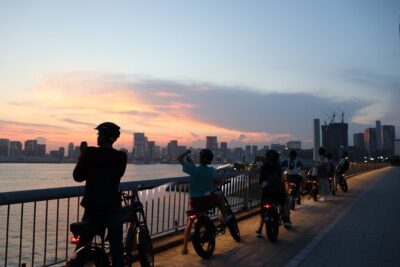
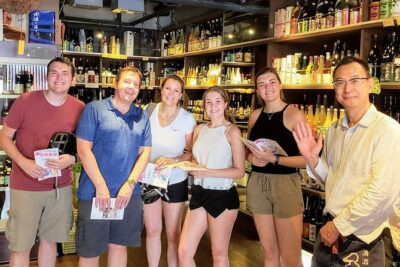
3h Tokyo E-Bike Tour: Hidden Gems, and Local Life with guide
Read our review →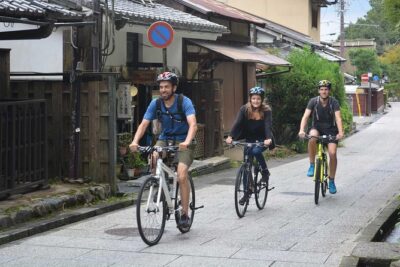
Arashiyama Bamboo Forest & Hidden Gems Bike Tour (Early Bird)
Read our review →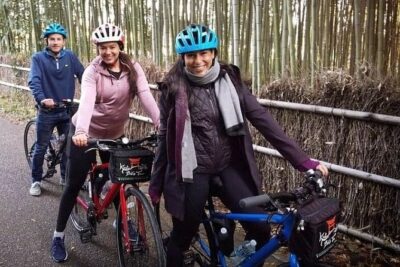
5 Top Highlights of Kyoto Full Day Bike Tour (E-bike option)
Read our review →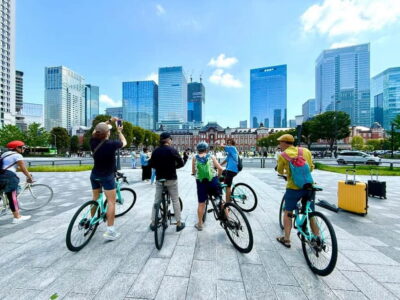
Hiroshima 2hr Peace Cycling Tour with Local Guide
Read our review →Browse the lists this tour appears in