Reviewed · TOURS IN KYOTO
Sacred Pathways: Discover the Philosopher’s Path of Kyoto
Kyoto’s Philosopher’s Path is at its best when you slow down. This four-hour walk follows a canal beneath trees, links two major temple sites, and gives you room to notice small gardens, moss, cafés, and quiet corners that are easy to miss on your own. The tour also brings the area’s Zen ideas and artistic traditions into focus.
I like the relaxed pace and the small groups, capped at eight people. I also like that guides such as Kevin and Craig bring years of Kyoto life to the walk, answering questions about daily culture as well as temples. The main consideration is simple: you will walk about 5 kilometers, and the path may feel too long if you want a short sightseeing outing or have limited mobility.
Key points
- The Philosopher’s Path at a gentle pace: Follow a tree-lined canal along the eastern foothills, with time for photos and quiet pauses.
- Two important temple stops: Visit Ginkakuji’s famous garden and Nanzenji, including its striking brick aqueduct.
- Zen explained in plain language: Learn how Zen shaped gardens, temples, design, and the arts.
- Small groups of up to eight: The format lets you hear the guide and move through narrow areas without a flag or microphone.
- A practical $64 package: Entrance fees and a digital city guide are included, while food and drinks are extra.
- Good local guidance: English and French tours are available, with guides including Kevin and Craig.
Why the Philosopher’s Path works so well on foot
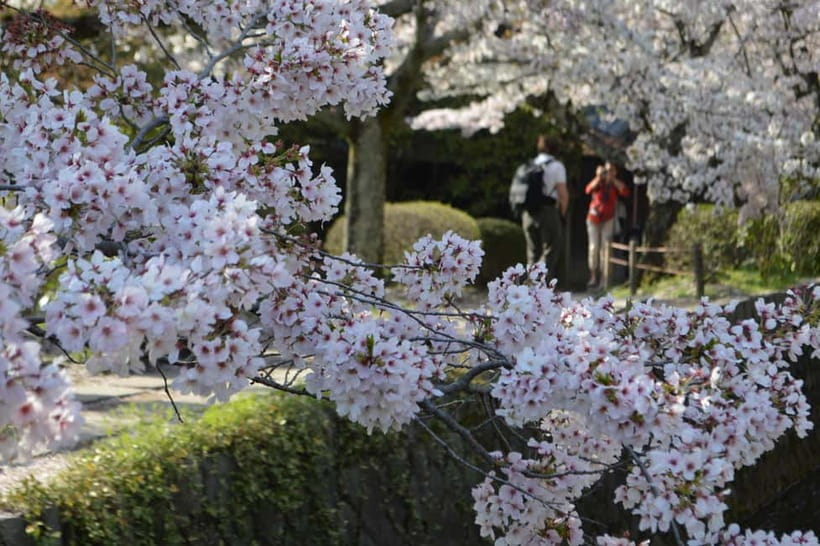
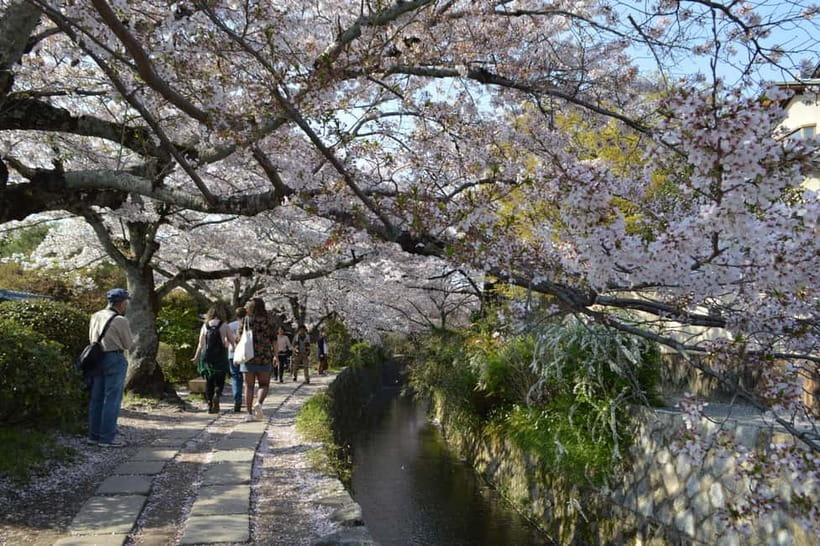
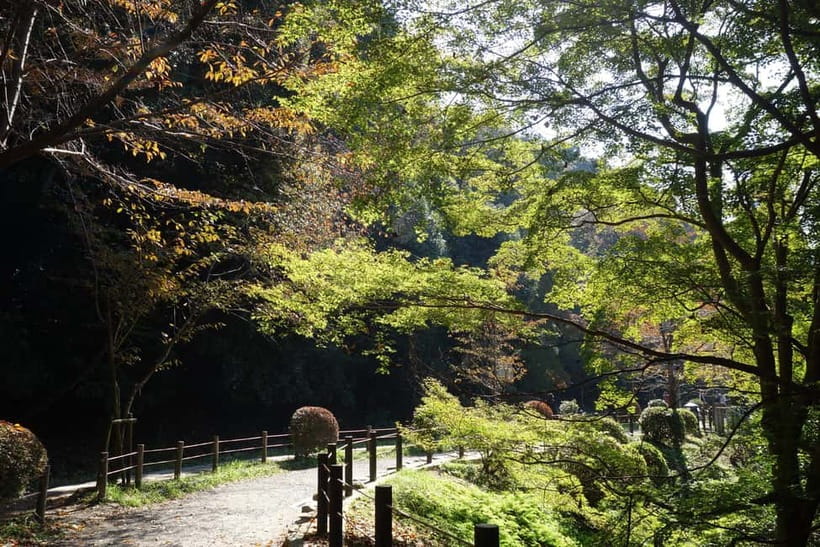
The Philosopher’s Path runs beside a narrow canal at the foot of Kyoto’s eastern mountains. It is not a grand avenue or a single monument. Its appeal comes from the way several small pleasures add up: water moving beside the walkway, trees overhead, temple entrances, mossy gardens, cafés, and stretches where the city seems to fall away.
You move at walking speed, which matters here. A bus can deliver you to a famous temple, but it cannot give you the same sense of how the shrines, homes, gardens, and wooded hills fit together. The path gives the tour a natural rhythm. You walk, stop, listen, take pictures, and continue.
The setting changes with the weather and season. In soft morning light, moss and wet stone can look especially fresh. Rain may make the gardens feel quieter and can reduce the number of people around, though it also means you should dress for a wet walk. The tour does not depend on perfect sunshine to work well.
Other experiences people book in Kyoto:
- PERFECT KYOTO 1-Day Bus Tour
★ 5.0 · 13,518 reviews - Kyoto: Fushimi Inari, Kinkakuji, Bamboo Grove 1 Day Bus Tour
★ 4.8 · 4,316 reviews - Kyoto: Tea Ceremony in a Traditional Tea House in Kiyomizu
★ 4.9 · 3,519 reviews
Ginkakuji, the Silver Pavilion with a serious garden
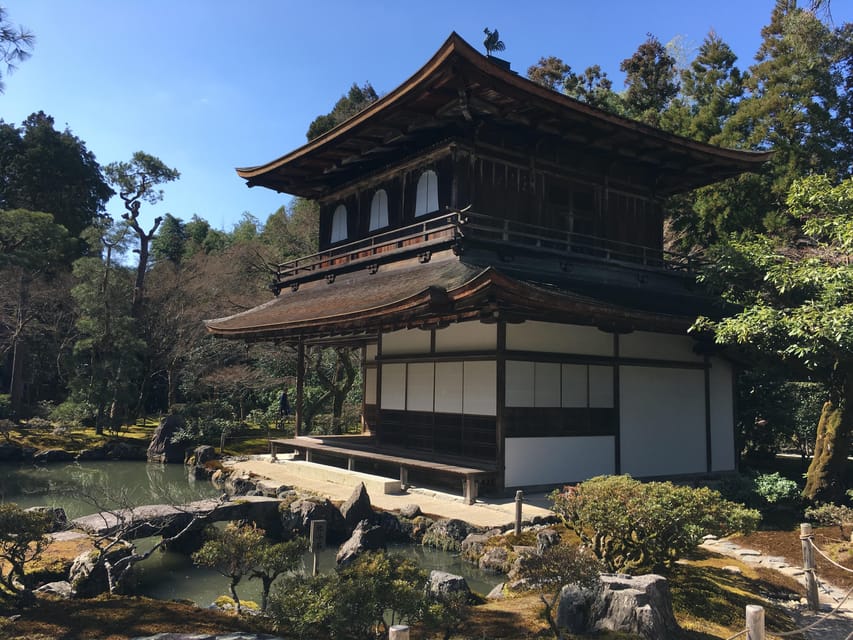
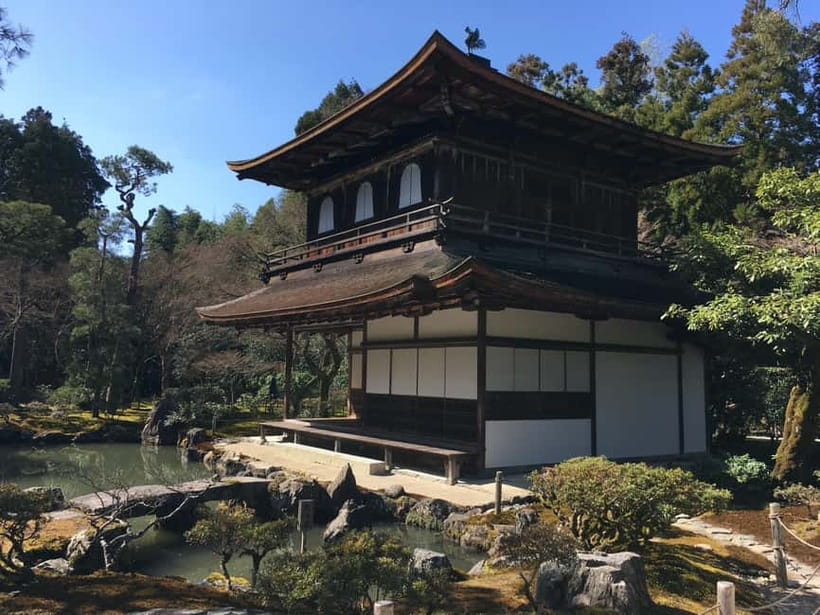
Ginkakuji is often called the Silver Pavilion, though its name can create the wrong expectation. The focus is not a shining silver exterior. The real reward is the garden surrounding the temple, where raked gravel, carefully placed stones, moss, trees, and water create a controlled sense of calm.
This is a useful place to learn how Japanese gardens communicate without relying on bright decoration. Empty space matters. So does the contrast between rough stone, smooth gravel, clipped plants, and older timber. A guide can point out details that otherwise look merely pretty, then connect them to Zen thought and Japanese arts.
You should allow yourself time to look rather than race from one photo stop to the next. The garden has layers, and its character changes as you move through it. The included entrance fee also keeps the visit simple. You do not need to stop and count yen at the gate.
Ginkakuji can be one of Kyoto’s busier sights, so the small-group format is useful. It will not make the temple empty, but a guide can help you use your time well and explain what you are seeing instead of leaving you to wander without context.
Nanzenji and the unexpected aqueduct
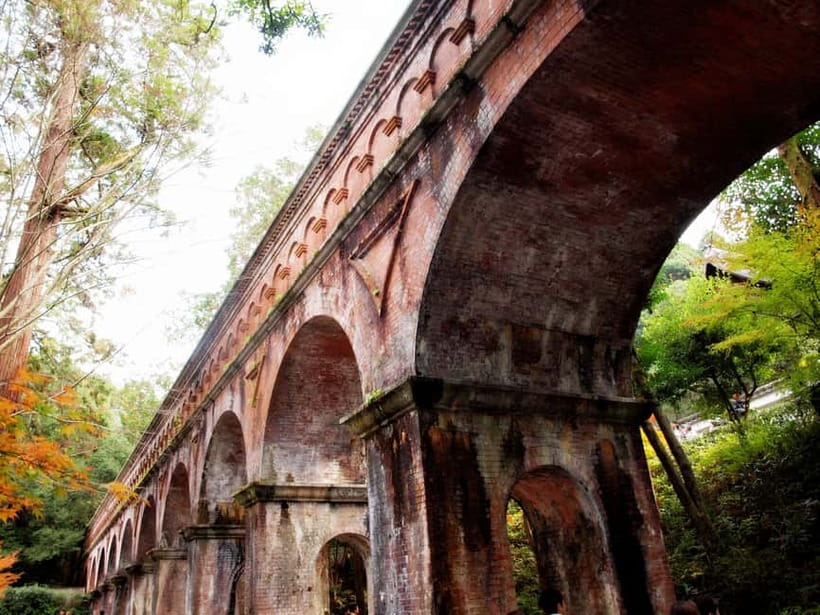
Nanzenji gives the walk a different architectural note. It is one of Kyoto’s best-known Zen temple complexes, and the scale feels more imposing than the quieter garden scenes along the canal. The tour includes a visit here, where the setting combines temple buildings, wooded grounds, and a large brick aqueduct.
The aqueduct is an especially memorable stop because it does not fit the usual picture of a Japanese temple. Its arches bring an unexpected piece of infrastructure into the temple grounds. That contrast helps show how Kyoto contains several periods and styles at once. You get temple architecture, religious space, and a practical structure from a later era in one place.
Nanzenji is also a good point for discussing Zen as a living influence rather than a decorative label. The tour connects the temple environment with ideas of attention, restraint, and simplicity, then shows how those ideas appear in gardens and art. You will not simply hear dates and names. The aim is to understand why these places look and feel the way they do.
How the Zen and culture discussion adds value
A temple visit without context can become a procession of roofs, gates, gravel, and stone. The visual beauty is still there, but you may miss the choices behind it. This tour focuses on the connection between Zen and Japanese culture, giving you a framework for reading what you see.
Zen influence appears in the care given to empty space, the arrangement of rocks, the use of natural materials, and the preference for calm over clutter. The guide’s job is to connect those ideas to the places in front of you, not to turn the walk into a lecture.
The strongest guide reports point to people who explain clearly and welcome questions. Kevin is noted for his history and cultural insight, his easy conversation, and his useful Kyoto recommendations. Craig brings the perspective of someone who has lived in Kyoto for 13 years and enjoys sharing the city with visitors.
That local perspective can make a real difference. You can ask about the temples, the neighborhood, or places to eat after the tour. The company also provides a digital city guide and restaurant recommendations, which add practical value beyond the four-hour walk.
Same base, a different sort of day:
- Kyoto Geisha Walking Tour: Gion District & Hidden Gems
★ 4.7 · 3,273 reviews - Kyoto: Tea Ceremony Ju-An at Jotokuji Temple
★ 4.9 · 3,207 reviews - Kyoto: Gion Magical Night Walking Tour with Geisha Trivia
★ 4.9 · 2,393 reviews - Kyoto: 45-Minute Tea Ceremony Lesson Experience
★ 4.3 · 2,378 reviews
A small group makes the route easier
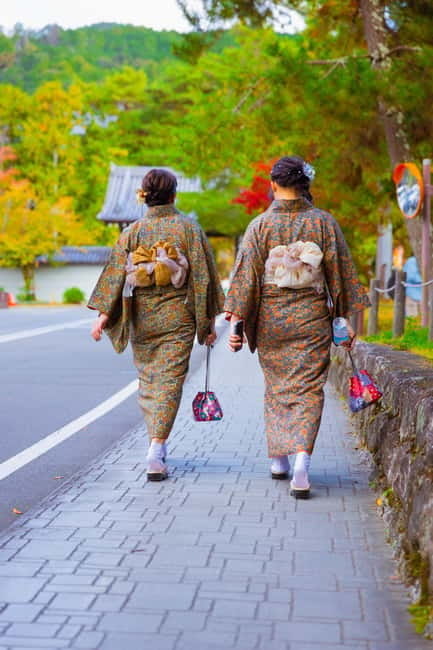
The group size is limited to eight people. That is a meaningful advantage on a route with narrow stretches, temple entrances, and areas where a large crowd would get in the way.
You do not have to follow a guide holding a flag or struggle to hear instructions through a microphone. The group can move at a human pace and stop when something catches your attention. It also feels easier to ask a question when you are not one person in a crowd of thirty.
A small group does not guarantee a private experience. Other people will still be using the path and visiting the temples. Still, it reduces the usual pressure of large sightseeing groups and helps the walk feel less like a scheduled march.
Private tours are also available. That option may suit families with children, couples who want a slower rhythm, or anyone with particular interests. The company asks families traveling with children under ten to inquire about a private tour, and children under ten are not accepted on the standard activity.
The four-hour pace and walking requirement
The tour lasts four hours and covers about 5 kilometers, or roughly 3 miles. That is not an athletic challenge, but it is more than a quick stroll between nearby sights. You will spend much of the time on foot, with stops at temples and gardens along the way.
The relaxed pace is one of the best features. You have time to take photos, look closely at the gardens, and pause at a café if the timing allows. One account of the walk included time to sit in a café, though food and drinks are not part of the price.
Do not book this expecting a ride between attractions. The heart of the experience is the walk from one place to the next. Wear comfortable shoes and plan for the weather. A moderate level of fitness is required, and the tour is not suitable for people over 95 years old.
The route’s length also means you should think about when to schedule it. A four-hour morning or afternoon can fit well into a Kyoto day, but you may not want to place another demanding walking activity immediately afterward.
What the $64 price includes
At $64 per person, the tour sits in the middle of the market for a guided half-day activity, but the value depends on how much you want from a guide. You are paying for four hours, a bilingual guide, admission fees, a small group, and a digital city guide.
The included entrance fees are practical. Kyoto’s temple admissions can be easy to overlook when planning a day, and having them covered means you do not need cash at each stop. Food and drinks are not included, so budget separately if you want tea or a café break.
I think the price makes the most sense for first-time visitors who want help understanding what they see. If you already know Kyoto’s temples well and prefer to walk alone, you may find the added cost less useful. If you want cultural context, local recommendations, and a calm route through several major sights, the package is easier to justify.
The high rating of 4.9 from 20 reviews also fits the pattern of praise around the guides, pace, and access to quieter areas. I would place the greatest weight on those repeated strengths rather than on the number alone.
Who should book this Kyoto walk
This experience is a good match for you if you want:
- A slower alternative to crowded group sightseeing
- A clear introduction to Zen and Japanese garden design
- A scenic walk rather than a bus-based route
- Time for photography and questions
- A guide who can add restaurant and city advice
- A small group or private setting
It is less suitable if you want to see as many sights as possible in a short time. You will not be whisked across Kyoto to a long list of attractions. The experience focuses on one area and gives it proper attention.
Families should note the age rule. Children under ten are not accepted on the standard tour, and the company asks families with younger children to inquire about a private option. People with trouble walking several miles should also choose carefully.
The languages offered are English and French. The tour is led by a live guide, not an audio app, so the experience depends on your preferred language and the option you book.
Practical details before you reserve
The meeting point can vary depending on the option you choose, so check your confirmation carefully. You should arrive on time, since a small walking group cannot easily wait for late arrivals.
Entrance fees are included. Food and drinks are not. Drones are not allowed.
You can cancel up to 24 hours ahead for a full refund, and the reserve-now, pay-later option lets you hold a place without paying today. Starting times vary, so check availability before building the rest of your Kyoto schedule.
Guides may include Kevin or Craig. Kevin has been praised for his approachable style, strong grasp of Kyoto’s past and Japanese culture, and useful local suggestions. Craig’s long residence in Kyoto gives him a personal connection to the city and makes it easier to ask everyday questions.
Should you book Sacred Pathways?
Book this tour if you want to understand Kyoto as you walk through it. The Philosopher’s Path supplies the setting, Ginkakuji provides the garden artistry, and Nanzenji adds temple scale and the memorable aqueduct. The guide ties those pieces together with stories about Zen, culture, and the city.
I would especially recommend it for first-time Kyoto visitors, couples, older teens, and anyone who prefers a quiet half-day over a packed checklist. The main tradeoff is the 5-kilometer walk. If you can handle that distance and value explanation over speed, $64 is a fair price for the small group, included admissions, and local guidance.
FAQ
How long does the Philosopher’s Path tour last?
The tour lasts four hours.
How far do you walk?
The route covers about 5 kilometers, or 3 miles, so you need at least a moderate level of fitness.
Which places are visited?
The tour visits the Philosopher’s Path, Ginkakuji Temple, and Nanzenji Temple. Nanzenji is also known for its large aqueduct.
Are entrance fees included?
Yes. All entrance fees are included in the tour price.
Are food and drinks included?
No. Food and drinks are not included.
Which languages are available?
Live guided tours are available in English and French.
Can children under ten join?
Children under ten are not suitable for the standard tour. Families who want to book with younger children should inquire about a private tour.
Just added in Kyoto
- Private Cooking Class Udon in Kyoto Japan★ 5.0 · 23 reviews
- Your Private Vacation Photography Session In Kyoto★ 5.0 · 110 reviews
- Kyoto: Zen Meditation at a Private Temple with a Monk★ 5.0 · 25 reviews
- Private Pewter Sake Cup Experience with a Kyoto Artisan★ 5.0 · 31 reviews
- Kyoto Wagashi(Japanese sweets) Cooking Class near Fushimiinari★ 5.0 · 60 reviews
- Private Guided Traditional Buddhist Cooking in Japan★ 5.0 · 16 reviews
- Kyoto: Gion Geisha District & Sake-in-Hand Walking Tour★ 5.0 · 37 reviews
- Kyoto:Family-Friendly Kimono & Yukata Experience at WARGO★ 5.0 · 147 reviews
Tours in Kyoto, compared.

Tea Ceremony in a Traditional Tea House in Kiyomizu
Read our review →
Kyoto Geisha Walking Tour: Gion District & Hidden Gems
Read our review →


Gion Geisha District Walking Tour – Stories of Geisha
Read our review →
Best of Kyoto: Gion, Geisha, Pagodas & Cobblestones
Read our review →