
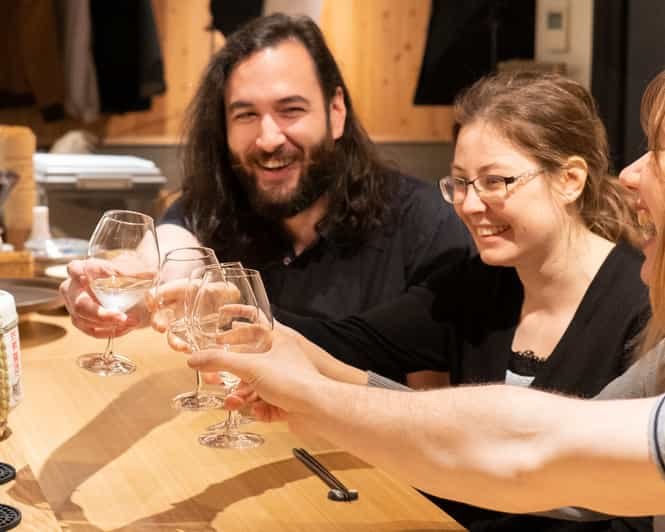
Reviewed · SAKE TASTING
Sake & Food Pairing with Sake Professional
The most useful thing about this experience is that it changes sake from one strong, mysterious drink into a range of styles you can compare. In 150 minutes, you taste five sakes from across Japan, pair them with Japanese snacks, and learn what separates one bottle from another.
I like the small group of no more than 10, which gives you room to ask questions. I also like the tasting chart: it turns a pleasant afternoon into a practical lesson you can use the next time you face a wall of Japanese bottles. The main drawback is the food. Snacks are included, but this is not a full meal, so eat beforehand.
Key points at a glance

- Five different sakes from across Japan: You taste a broad range instead of sticking with one familiar style.
- A hands-on tasting chart: You record your impressions and learn what to look for when choosing sake later.
- English-speaking guides with personality: Hosts such as Tadashi, Joe, Max, and Andrea have led lively, accessible sessions.
- Japanese snacks with every tasting: The pairings help show how sake works with food, though portions are not substantial.
- Ushinobi Sake Bar in Shinjuku: The venue is on the second floor near Okubo Station, with an entrance that can be easy to miss.
- A friendly local angle: You can ask for Tokyo suggestions and sake-buying advice while meeting Japanese sake fans.
Five sakes, five different impressions
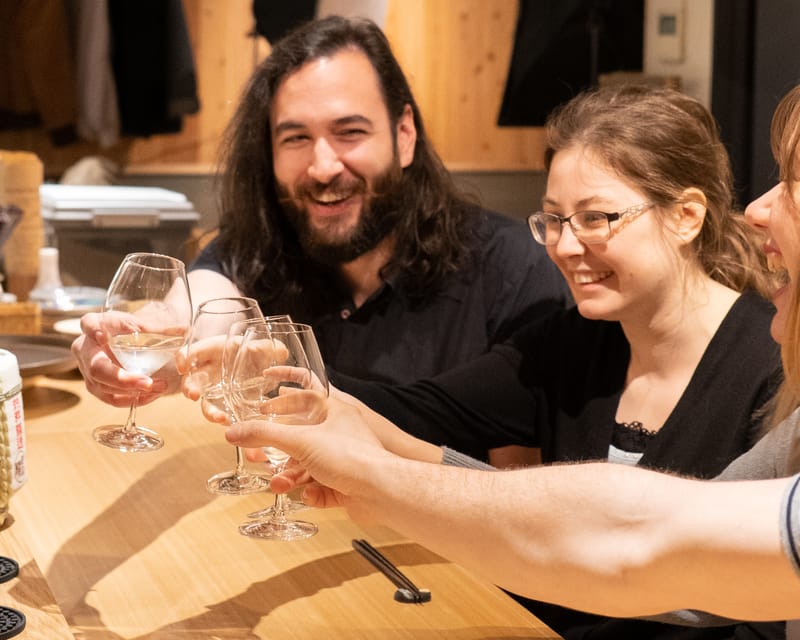
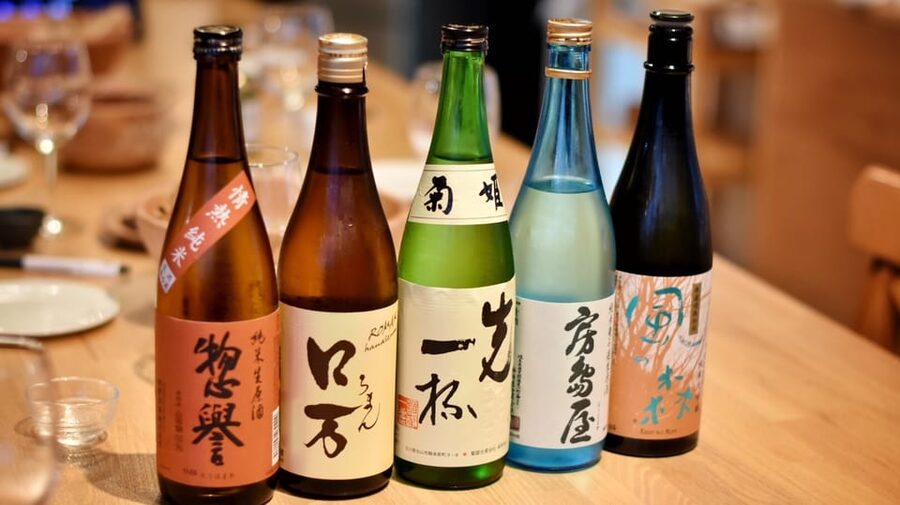
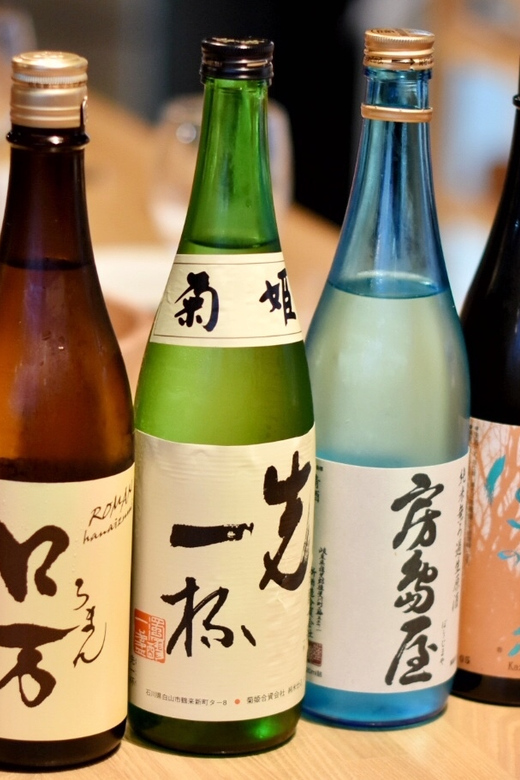
If your sake experience is limited to one hot cup at a Japanese restaurant, this class gives you a much wider view. The five selections come from breweries across Japan, so the point is not simply to drink more. You compare how sake can differ in aroma, taste, weight, and finish.
The exact bottles can change, and that is part of the value. Modern Japanese breweries now make many styles, including producers from long-established family businesses who are trying fresh approaches for new drinkers. You may find a sake that is light and easy to drink, another with a more pronounced flavor, and others that challenge your idea of what sake should taste like.
Your guide explains each brewery as you taste. That context matters because sake can seem like a confusing list of Japanese names and labels when you first encounter it. By hearing where each bottle comes from and considering it beside four others, you begin to notice patterns.
You do not need to arrive with a trained palate. The session is designed for people who have had little sake before, as well as those who already know they enjoy it. The teaching stays practical. You are not expected to memorize technical terms or pretend to detect flavors you do not notice.
A useful approach is to treat the tasting chart as a record of your own reactions, not a test. Note which sake you prefer, which snack works best with it, and which style you would order again. Your personal favorite may not be the most expensive or the most traditional option, and that is fine. The goal is to find your taste.
Other tasting rooms and breweries in Tokyo:
- Ramen and Sushi Cooking Class with Sake Pairing Set in Tokyo
★ 5.0 · 291 reviews - Sake Tasting Masterclass in Shinjuku (8+ Varieties with a Pro)
★ 5.0 · 271 reviews - Sake Omakase in Tokyo: Guided Tasting by Certified Sommeliers
★ 5.0 · 239 reviews
How the tasting chart helps you choose bottles
The tasting chart is one of the strongest parts of the experience because it gives structure to the session. Without some way to compare the samples, five small pours can blur together, especially when you are learning new vocabulary at the same time.
You will create your own chart while the guide discusses each sake. The chart helps you place your impressions side by side. You might record what you notice about the smell, the flavor, the strength, or how well the sake works with the snack served alongside it.
This is useful after the class. In a shop or restaurant, you can ask a better question than simply asking for sake. You can describe the kind of style you enjoyed and use the lesson as a starting point. The class does not promise to make you a sake expert in one afternoon, but it can give you enough confidence to explore.
I particularly like that the activity does not treat sake as a single category. That common assumption is one reason some people decide they dislike it. Five contrasting pours give you a fair chance to discover that you may dislike one style but enjoy another.
The teaching also appears to work well for mixed groups. One participant arranged the experience for a partner who already loved sake, only to find that both of them were surprised by the range of flavors. That makes this a good choice when one person in your party is curious and another already has a favorite bottle.
Japanese snacks, with one important warning
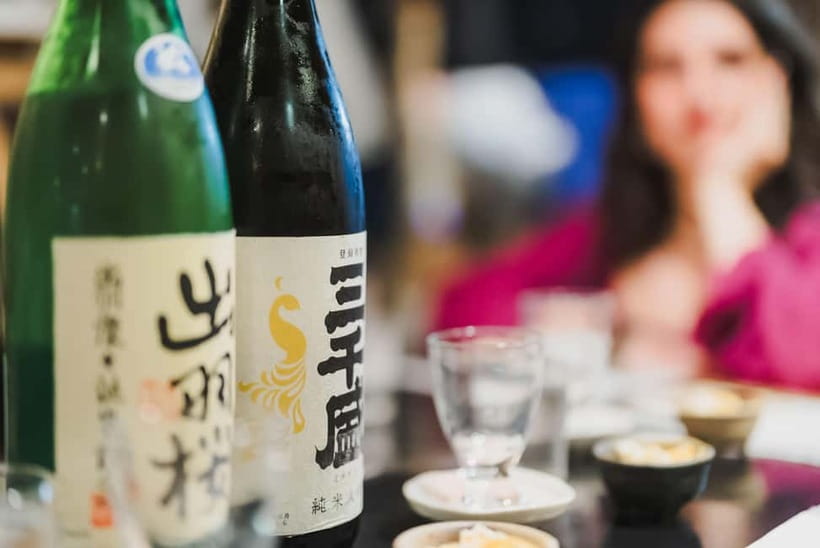
Each tasting comes with Japanese snacks chosen to accompany the sake. These pairings add more than decoration. Food can change how a drink tastes, and the snack gives you a simple way to test the guide’s explanations.
You may notice that a sake feels different with food than it did on its own. That is one of the most useful lessons for anyone who plans to enjoy sake with dinner in Japan. Instead of judging a bottle in isolation, you begin to think about what you would eat with it.
Still, keep your expectations clear. The snacks are not a full meal. One practical suggestion is to eat before you arrive, especially because five tastings over two and a half hours can leave you wanting something more substantial afterward.
This is not a serious problem if you plan for it. Have lunch or an early meal before the session, then treat the snacks as tasting partners. You can also make dinner plans for afterward in Shinjuku, where you will have plenty of options, though the activity information does not specify a particular restaurant or post-class stop.
Dietary restrictions should be shared with the supplier in advance. The available information does not promise that every request can be met, so early notice is the sensible move.
The guide makes the difference
The format depends heavily on the person leading it, and the named hosts have different strengths. Tadashi has been praised for clear English and strong sake knowledge. Joe has also given useful local recommendations, which adds value if you want more ideas for your time in Tokyo.
Max has been described as a warm and well-informed host, with the practical reminder to eat before the session. Andrea has led the class with an energetic style and a clear love of both sake and Tokyo. Other hosts may lead your date, so you should not book solely expecting one particular person unless the supplier confirms it.
The consistent advantage is the chance to ask questions in English rather than simply follow a recorded presentation. If a flavor seems odd to you, you can ask why. If you want to know what to order at a Japanese restaurant, you can raise that too.
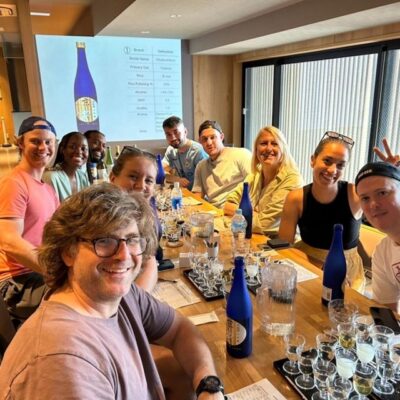
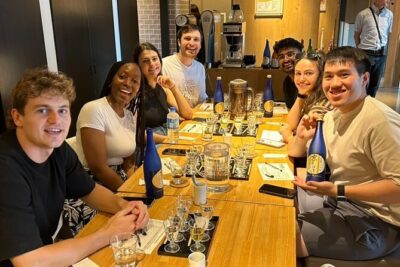
The small group format matters here. With a limit of 10 people, the session can feel personal, and on some dates the group may be smaller. One past session had just two participants, which allowed for a more tailored discussion. You should not assume that every date will be that quiet, but the cap prevents the class from becoming a large lecture.
You will also meet Japanese sake lovers at the venue. That social element gives the afternoon a local touch, although the primary purpose remains tasting and instruction, not a neighborhood walking tour.
Same base, a different sort of day:
- Mt Fuji and Hakone 1-Day Bus Tour Return by Bullet Train
★ 5.0 · 26,383 reviews - 1-Day Tokyo Bus Tour
★ 5.0 · 14,250 reviews - Tokyo: TOKYO SKYTREE® Admission ticket
★ 4.5 · 11,192 reviews - Tokyo: teamLab Planets TOKYO Digital Art Museum Entry Ticket
★ 4.6 · 9,779 reviews
Finding Ushinobi Sake Bar in Shinjuku
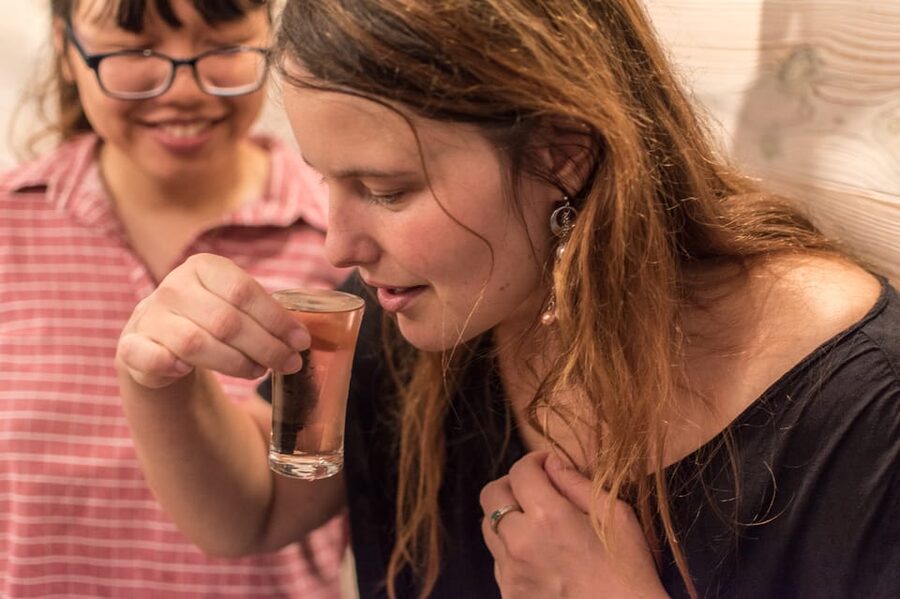
The meeting point is Ushinobi Sake Bar, near Okubo Station on the JR Yamanote line, station code JB09, at the South Exit. Enter directly on the second floor.
The entrance is somewhat hidden, so do not leave this detail until the last minute. Check the supplied venue directions before you set out and allow a little extra time to locate the door. The class itself lasts 150 minutes, and arriving flustered or late is an avoidable way to start.
Transport is not included. You make your own way to the bar, so this activity works best for someone already spending time in Shinjuku or nearby. It is not a sightseeing tour with hotel pickup.
The location also affects how you plan the rest of the day. You can place the tasting between other Tokyo activities, but remember that sake is the focus for two and a half hours. It may be wise to avoid scheduling something that requires intense concentration immediately afterward.
Is $69 a fair price?
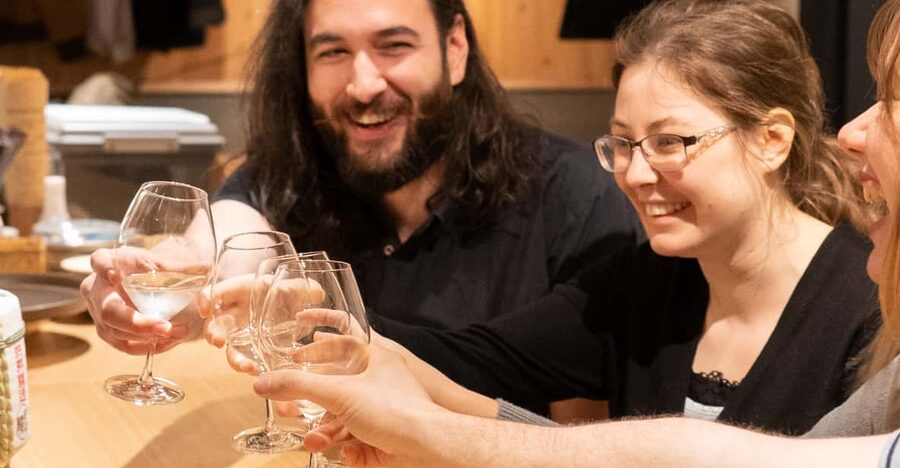
At $69 per person, this is not the cheapest way to sample sake. You could buy a bottle or order a few glasses for less, but that would not include an English-speaking guide, five comparisons, brewery background, snacks, or a tasting chart.
The value is strongest if you are new to sake and want someone to explain what you are drinking. A bottle purchased without guidance can be a gamble, especially when labels and styles are unfamiliar. Here, the session helps you identify what you like before you spend more on bottles or restaurant pours.
It also makes sense for couples or friends with different levels of interest. A sake fan gets variety and detail, while a beginner gets a clear introduction rather than being left to guess. The social setting can be more enjoyable than a formal lecture, especially when the guide keeps the mood lively.
The price is less convincing if you are looking for dinner. Snacks are included, but they are not intended to replace a meal. Add the cost of your transport and food before or after the class when working out your day’s budget.
The flexible booking terms help if your Tokyo plans are still shifting. You can reserve and pay later, and cancellation is free up to 24 hours before the activity for a full refund. Starting times vary, so check availability for your chosen date.
Who will enjoy this sake class?
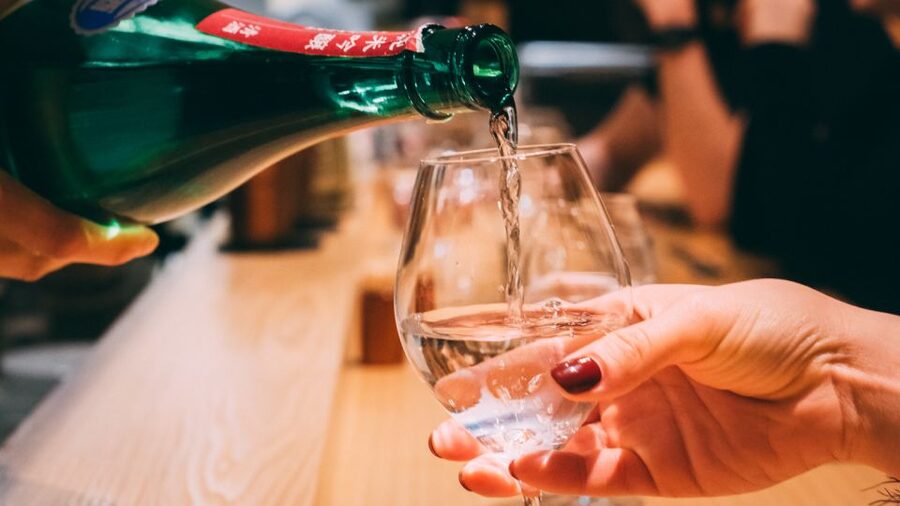
This is a strong match for you if you have tried sake only a few times, want to understand Japanese drinks without a formal course, or enjoy tasting activities that mix food and conversation. It is also a good pick for someone who thinks they dislike sake but has only tasted one type.
Sake fans can enjoy the range of producers and the chance to compare bottles in a guided setting. The class may be especially useful if you want to sharpen your ability to choose sake in Japan, rather than simply drink it.
The small group setup suits people who like questions and conversation. If you prefer a private tasting, note that the standard format is a shared group of up to 10. A small attendance on your date is possible, but not guaranteed.
This activity is not suitable for pregnant women. It also may not suit anyone expecting a full meal, a brewery visit, or a tour of several neighborhoods. It takes place at one sake bar and centers on tasting, discussion, snacks, and local advice.
What to know before you book
Plan to eat first. This is the most useful practical advice because the session includes plenty to drink but only light food.
Wear whatever is comfortable for a seated tasting, and bring an open mind about sake styles. You do not need prior experience, and you do not need to know Japanese terms before arriving.
Look up the second-floor entrance at Ushinobi Sake Bar before leaving. The location is near Okubo Station, but the doorway can be hard to spot if you are rushing.
If you have food restrictions, tell the supplier in advance. English is the stated tour language, and the group is limited to 10 participants.
Should you book it?
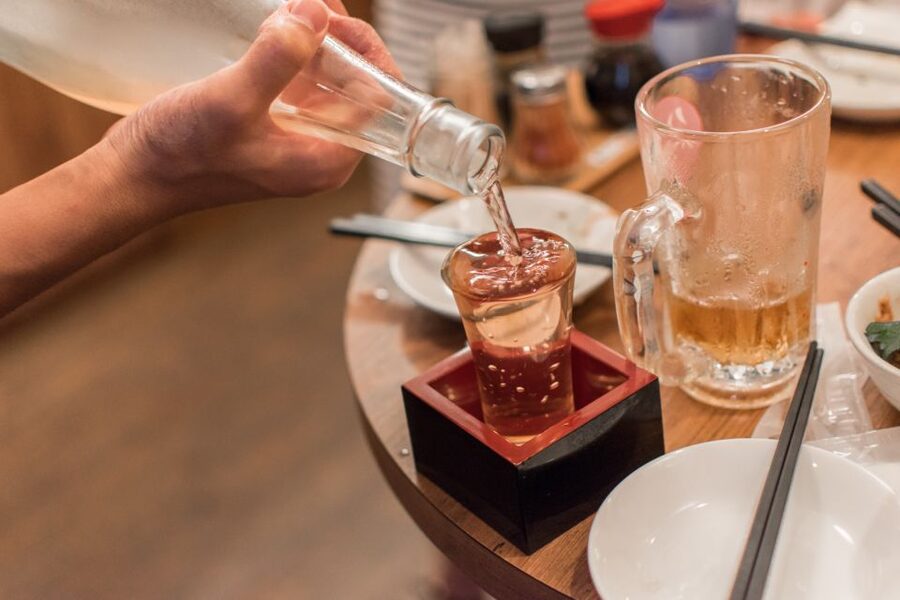
Book this experience if you want a friendly, guided introduction that gives you more than a few anonymous samples. The five-sake comparison, personal tasting chart, and English discussion make the $69 price reasonable for a beginner or an interested sake drinker.
Skip it if you want a full meal, a brewery visit, or a cheap night out. For everyone else, this is a useful Shinjuku activity, especially when you eat beforehand and arrive ready to compare rather than simply sip.
FAQ
Where does the sake tasting take place?
It takes place at Ushinobi Sake Bar in Shinjuku. The closest station is Okubo Station, station code JB09, South Exit. Enter the venue directly on the second floor.
How long does the experience last?
The session lasts 150 minutes, or two and a half hours.
How many types of sake will I taste?
You will taste five different kinds of sake from across Japan.
Is food included?
Japanese snacks are included and paired with the sake. They are not a full meal, so eating before the activity is recommended.
Is the experience conducted in English?
Yes. The live tour guide language is English.
How large is the group?
The experience is offered as a small group with a maximum of 10 participants.
Is transportation included?
No. You are responsible for making your own way to Ushinobi Sake Bar.
Can I cancel or pay later?
You can reserve now and pay later. Cancellation is free up to 24 hours in advance for a full refund.
Just added in Tokyo
- The 10 Tastings of Tokyo With Locals: Private Street Food Tour★ 5.0 · 48 reviews
- Small Town in the Big City: Tasting Tokyo’s Kichijoji★ 5.0 · 195 reviews
- Small Town in the Big City: Tasting Tokyo’s Kichijoji★ 5.0 · 16 reviews
- EXCLUSIVE Tokyo Secret: Kichijoji Small-Group Food & Bar Hopping★ 5.0 · 29 reviews
- Explore Kichijoji: Walk Through One of Tokyo’s Beloved Districts★ 5.0 · 21 reviews
- :Tokyo,Shibuya/ Pro Photography in Kimono / English-Friendly★ 5.0 · 26 reviews
- 【R34】Tokyo:Private Daikoku tour in Modified R34★ 4.9 · 92 reviews
- Tokyo:Calligraphy &Make your original folding fan in Asakusa★ 5.0 · 62 reviews
Sake Tasting, compared.
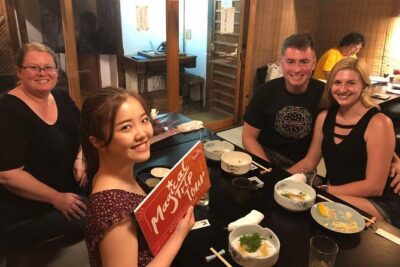
Kyoto Night Foodie Tour in Gion (9+ dishes + 6 Sake tastings)
Read our review →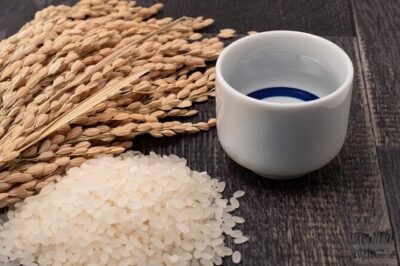
1-Day Snow Monkeys, Zenko-ji Temple & Sake in Nagano
Read our review →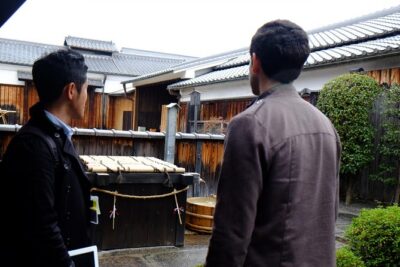
3-Hour Kyoto Insider Sake Brewery Tour with Tastings & Pairings
Read our review →
Arashiyama Bamboo, Temple, Monkeys, or Secret Sake Brewery
Read our review →
Insider Sake Brewery Tour with Sake and Food Pairing
Read our review →
1.5-Hour Kyoto Insider Sake Experience with 7 Tastings & Pairings
Read our review →Browse the lists this tour appears in