
Reviewed · SAMURAI & NINJA EXPERIENCES
SAMURAI EXPERIENCE in Tokyo(Harajuku)【SAMURAI’ve】
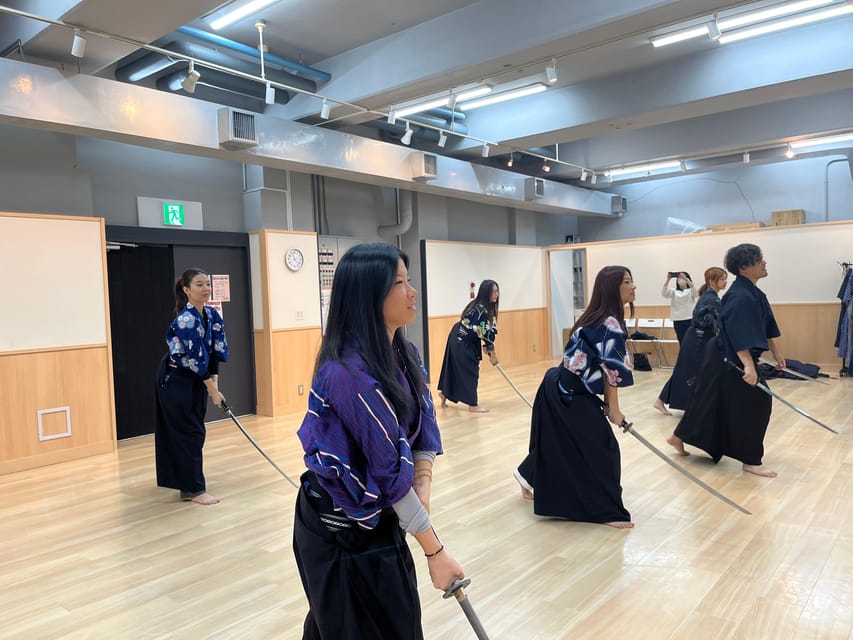
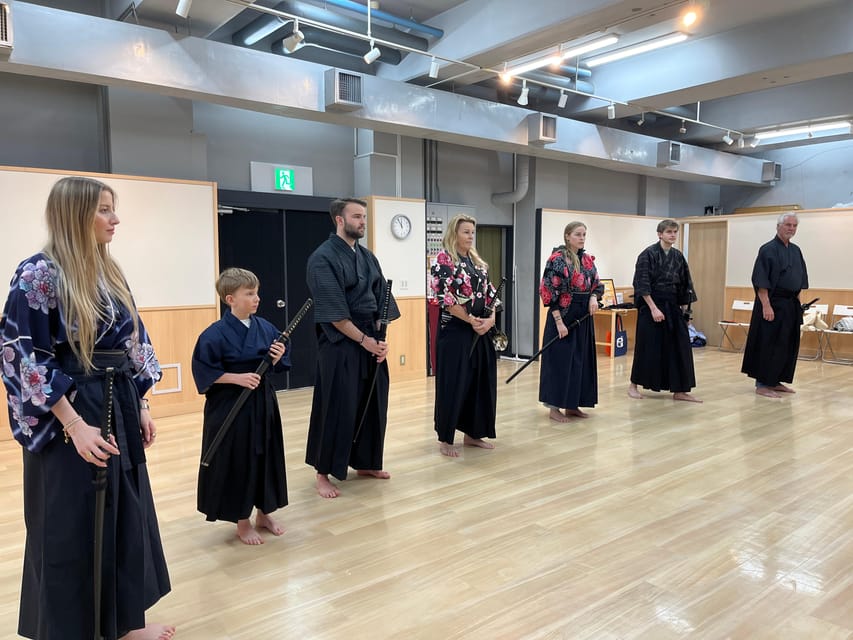
The most memorable part of this Tokyo workshop is the shift from watching samurai on screen to learning the small details behind the image: how to stand, how to show respect, how to hold a sword, and how to move with purpose. Your instructor, who works in video and stage productions, leads the class in a dojo near Harajuku.
I like the hands-on kimono dressing and the chance to practice Tachimawari, the stylized sword movements used in fight scenes. I also like the small group limit of 10, which makes a one-hour class feel more personal. The main drawback is the short duration. You get a lively introduction, not a full martial-arts course, and transportation to the meeting point is not included.
Key points to know before you book
- You learn samurai etiquette first: Reigi sahou gives the class more depth than a simple costume photo session.
- The kitsuke kimono is part of the activity: You learn how to put it on before handling the sword.
- Tachimawari adds a stage-fighting touch: You practice stylized movements used in Japanese sword-fighting scenes.
- The group stays small: A maximum of 10 people allows room for instruction and photos.
- The meeting point is easy to reach: It is about five minutes from Kitasandou Station and eight minutes from Harajuku Station.
- The class suits families and international visitors: Instruction is available in English, Japanese, and Chinese, though children under five cannot join.
What this Harajuku samurai class really offers
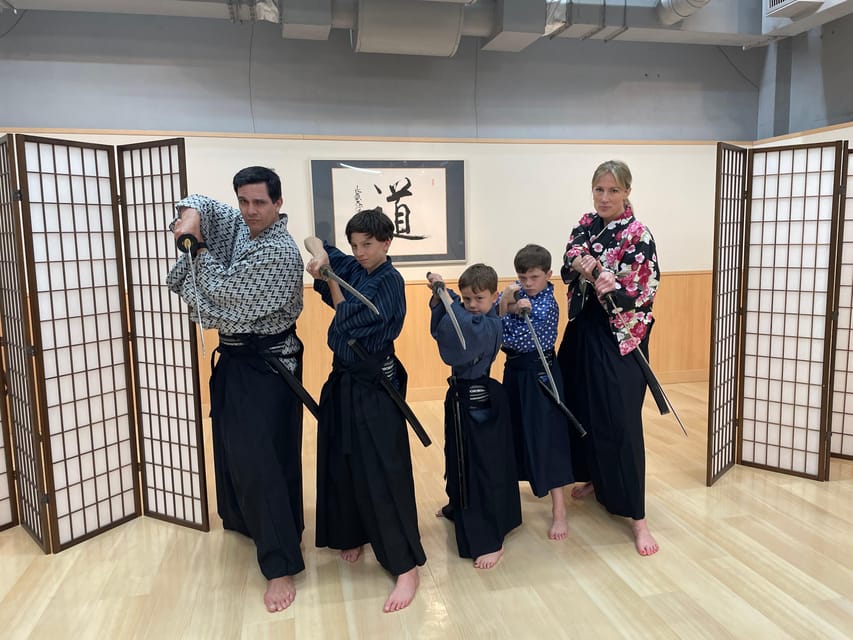
This is best understood as a short cultural workshop with a performance element. You are not signing up for a long course in kenjutsu, and the one-hour schedule does not leave room for advanced sword work. Instead, you get a focused introduction to samurai conduct, clothing, movement, and presentation.
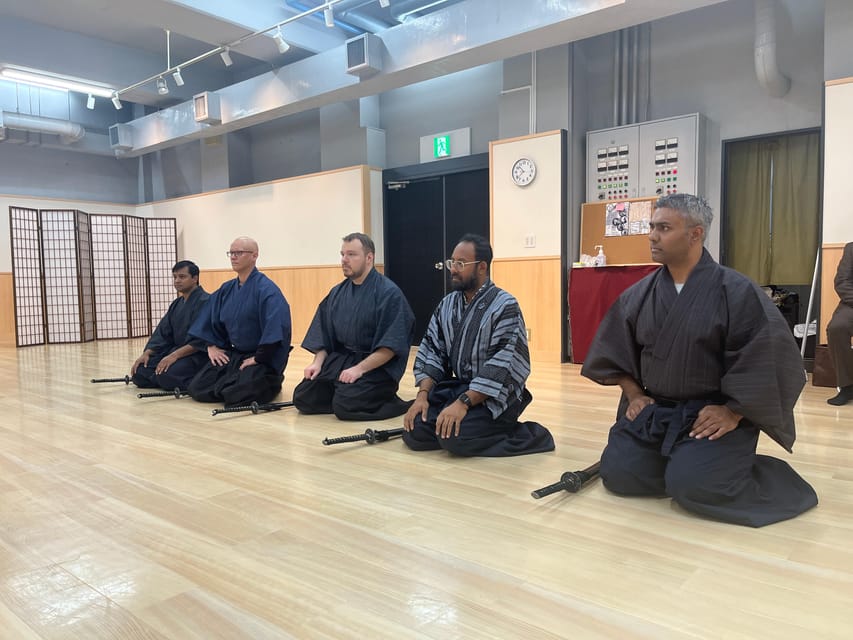
I like that the experience does not begin with a sword. It begins with behavior. Reigi sahou, the manners and formal conduct associated with samurai, helps explain why posture and respect matter before any sword movement starts. That gives the class a little more substance than simply putting on a costume and posing for a picture.
The workshop also has a playful side. You will learn a few basic movements, then use them in Tachimawari, stylized action designed for sword-fighting scenes. That makes the activity approachable for beginners, including families and people who have never tried a martial-arts class.
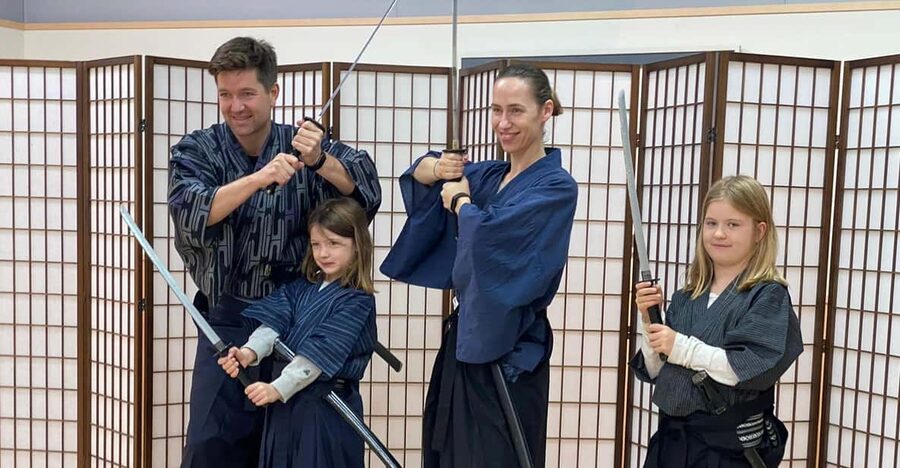
The final photos give you something concrete to take home. You pose in the samurai kimono while holding a sword, so the session finishes with a visual record of the experience rather than ending as soon as the instruction is over.
Other samurai and ninja experiences in Tokyo people book:
- Tokyo: Samurai Restaurant Show Ticket with 2 Drinks
★ 4.5 · 1,307 reviews - Tokyo: Samurai Ninja Museum Guided tour and Experience
★ 4.6 · 1,010 reviews - Tokyo: Samurai Sword & Archery Class from Samurai Descendant
★ 5.0 · 603 reviews
Finding the dojo near Harajuku
You will need to make your own way to the meeting point. The dojo is about a five-minute walk from Kitasandou Station and roughly eight minutes from Harajuku Station. Once you arrive, enter through the red door and continue to the second-floor basement.
That last instruction is worth saving on your phone. A small venue can be harder to spot than a major attraction, and the red door is the useful landmark provided for finding the entrance. I would allow a few extra minutes, especially if you are coming from a nearby shopping street or arriving with children.
The location works well with a day in Harajuku. You can schedule the class around time in the neighborhood, but do not assume transportation is included. The $70 price covers the instructor, kimono, lessons, sword activity, and photos. Train fare, food, and drinks are separate.
Putting on the kitsuke kimono
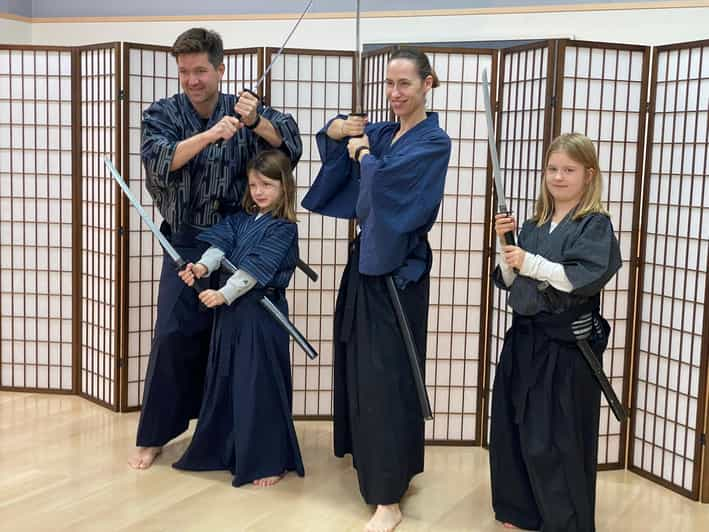
The clothing portion is one of the most distinctive parts of the hour. You learn how to put on a kitsuke kimono and dress in a style meant to look like an authentic samurai outfit. This gives you a better sense of how much presentation matters to the character.
I would wear comfortable clothes underneath and avoid anything that makes changing awkward. Comfortable clothing is the only stated item to bring, but it is practical advice here. The activity includes movement, so you want an outfit that lets you stand, turn, and handle the dressing process without fuss.
The kimono also changes the feel of the class. Once dressed, you are not simply learning a few motions in everyday clothes. The clothing asks you to pay attention to posture, balance, and how you carry yourself. That connection between clothing and conduct is a useful part of the experience.
Keep your expectations sensible. The class teaches you how to put on the provided kimono for the session. It is not presented as a full tailoring or traditional-dress course, and the short schedule means the focus remains on the experience rather than technical detail.
Learning samurai manners before the sword
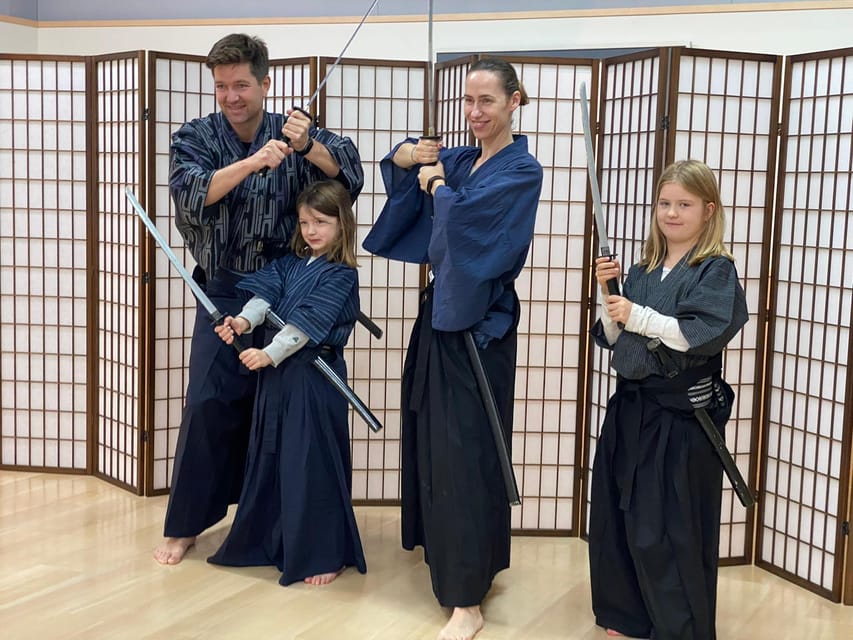
The Reigi sahou lesson introduces the etiquette expected of a samurai. The supplied details do not list every gesture or rule covered, so I would think of this as an accessible introduction rather than a complete guide to Japanese formal behavior.
Still, this is an important part of the hour. Without it, the class could feel like a costume rental with a few staged poses. Starting with manners gives you a reason for the controlled movements that follow. You learn that the samurai image is built as much on restraint and respect as on action.
This section should also help participants of different ages take part together. Children can enjoy the role-play, while adults get a bit of cultural context. The class is open to anyone with the samurai spirit, regardless of age or gender, with one clear restriction: children under five cannot participate.
The instructor teaches in English, Japanese, and Chinese. That is useful for an international group, though the quality of the experience will still depend on how comfortably you follow the language used during your session. One French participant found the activity worthwhile even though the instruction was in English, which suggests that the physical demonstrations help support the spoken guidance.
Other swordplay and stealth sessions in Tokyo:
- Best Samurai Experience in Tokyo
★ 5.0 · 458 reviews - Ninja Experience (Family Friendly) at Samurai Ninja Museum TOKYO
★ 5.0 · 441 reviews - Tokyo: Samurai Entertainment Night Show in Kanda Shrine
★ 4.6 · 417 reviews - Tokyo Sword Experience – includes Museum Ticket/Ninja Experience
★ 5.0 · 314 reviews
Practicing basic sword movements
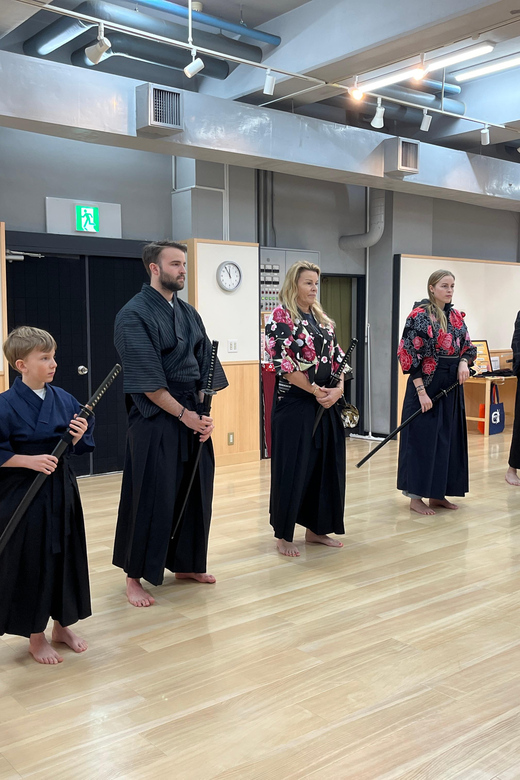
After the etiquette lesson, you work on basic samurai sword-fighting moves. The emphasis is on learning a few movements you can remember and share with friends or family later, not on mastering a large set of techniques.
That approach suits the one-hour format. You have enough time to learn the broad shape of the activity without being buried in complicated instruction. The instructor is active in video and stage productions, so the session includes an entertainment and performance angle that fits the sword-fighting theme.
I would pay close attention to the instructor’s demonstrations and resist the urge to rush. Sword movements look simple when performed by someone trained for the stage, but the appeal comes from control and timing. A clean, deliberate motion will look better in photographs than a fast, messy one.
The activity is described as a sword-fighting experience, but the supplied information does not specify the type of sword used or provide a detailed safety briefing. If you have a particular concern about equipment or physical limitations, ask the provider before booking. Wheelchair users cannot join, and the activity is not designed as an accessible option for every mobility need.
Tachimawari brings the lesson to life
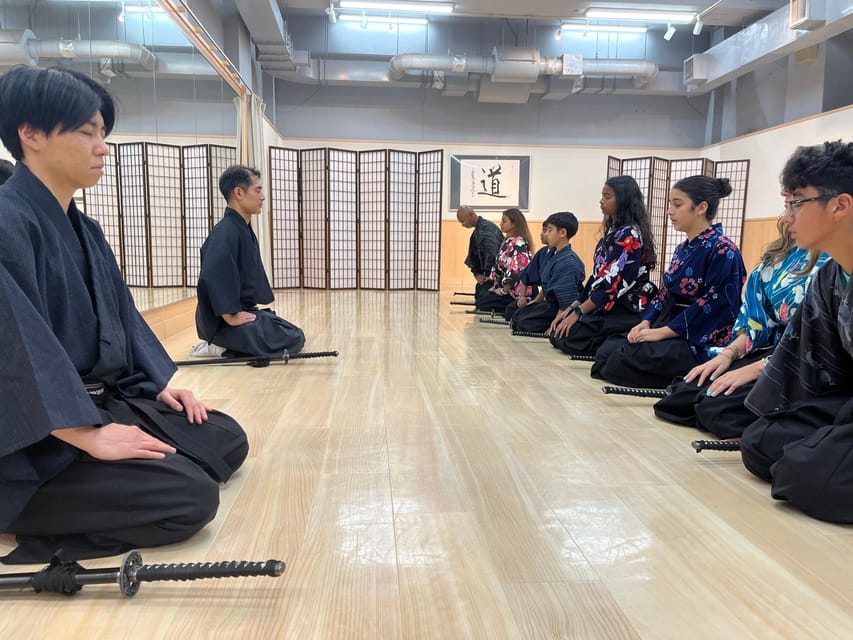
The class then puts the basic moves into Tachimawari, the stylized movement used in sword-fighting scenes. This is the moment when the workshop shifts from cultural instruction to performance.
Tachimawari is a good fit for people who enjoy films, theater, or playful role-play. You are not just repeating an isolated movement. You are using the posture and sword work in a scene-like format, which gives the lesson a clear purpose.
The stage connection also explains why the instructor’s background matters. Someone who works in video and stage productions can frame the activity around movement that reads well to an audience. That does not turn you into a professional performer in 60 minutes, but it can make the exercise more fun and easier to remember.
Families seem particularly well suited to this portion. A parent and child can enjoy the same activity at different levels, and the class does not require prior experience. I would still judge your child’s comfort with formal instruction and sword handling before booking, even though the activity is open to most ages above five.
Finishing with sword-and-kimono photos
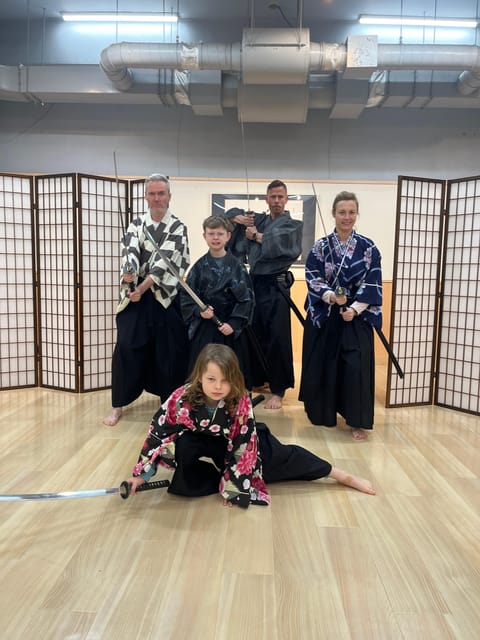
The photoshoot closes the class. You pose wearing the samurai kimono and holding a sword, giving you a chance to show the posture and attitude you have practiced.
This final step is more than a quick souvenir picture. It gives the hour a clear ending and lets you enjoy the visual result of the dressing and movement lessons. If you are booking the activity as part of a Tokyo holiday, these images may become the most useful reminder of the day.
The photos also make this a practical choice for mixed-interest groups. One person may care most about Japanese etiquette, another about stage fighting, and another about dressing up. The portrait session gives everyone a shared activity at the end.
The photoshoot is included, but the details do not specify how many images you receive or whether they are delivered digitally. If that matters to you, confirm the arrangement when booking. The important point is that photography is part of the scheduled experience, not an extra activity you must arrange separately.
Is $70 good value for one hour?
At $70 per person, this is not a cheap drop-in photo opportunity. The value comes from combining several short activities in one organized session: instruction from a qualified instructor, a samurai etiquette lesson, kimono use, sword practice, Tachimawari, and photos.
I think the price is reasonable if you want a compact, themed activity in central Tokyo and expect active participation. You are paying for teaching, costumes, a structured class, and the convenience of having the photo portion built in. The small group limit of 10 also matters, since it should give the instructor a better chance to guide participants than a large performance-style attraction would.
The value is weaker if you only want a quick costume portrait or if you already practice Japanese sword arts. In that case, the class may feel introductory. It is designed to give a first taste, not replace serious training.
The one-hour duration is both a strength and a limitation. It fits neatly into a busy Tokyo itinerary, but it also means every section moves along quickly. I would choose it for a fun cultural activity, not for technical study.
Who will enjoy this most?
I would recommend the class to:
- Families with children aged five and older
- First-time visitors who want a cultural activity with movement
- Fans of samurai films, Japanese theater, or stage combat
- Couples and friends looking for unusual Tokyo photos
- International visitors who value multilingual instruction
- People who prefer a small group over a large sightseeing tour
I would be more cautious if you use a wheelchair, since wheelchair users cannot join. I would also think twice if your main goal is advanced sword training, detailed kimono instruction, or a long historical lecture. None of those is the central purpose here.
The workshop does not require a particular age or gender, as long as you have the samurai spirit. That open approach makes it easy to book for a mixed group, though children under five are excluded.
Booking details that matter
You can cancel up to 24 hours before the activity for a full refund. You can also reserve now and pay later, which helps if your Tokyo schedule is still changing.
Check the available start times before building the rest of your day around the class. Since the activity lasts one hour, the bigger scheduling issue is usually getting to the dojo and leaving enough time to find the red-door entrance.
Wear comfortable clothes. Food and drinks are not included, and transportation is not provided. The instructor support is available in English, Japanese, and Chinese.
Should you book the samurai workshop?
Book this if you want a short, friendly, hands-on introduction to samurai culture rather than a formal martial-arts lesson. The combination of Reigi sahou, kimono dressing, basic sword work, Tachimawari, and photos gives you several ways to take part, and the small group size is a real advantage.
I would especially choose it for a family, a group of friends, or anyone who wants more than a standard Tokyo sightseeing stop. Skip it if you need wheelchair access, have a child under five, or expect advanced sword instruction.
For most suitable participants, the $70 cost buys a well-packed hour with a clear souvenir at the end. Come in comfortable clothes, arrive early enough to find the red door, and treat the class as playful cultural training with a stage-fighting twist.
FAQ
Where does the samurai experience take place?
It takes place at a dojo in Tokyo, near Harajuku. Enter through the red door and proceed to the second-floor basement.
How far is the dojo from the nearest stations?
The meeting point is about a five-minute walk from Kitasandou Station and an eight-minute walk from Harajuku Station.
How long does the activity last?
The activity lasts one hour.
What languages does the instructor speak?
Instruction is available in English, Japanese, and Chinese.
What is included in the price?
The price includes the instructor, a samurai kimono to wear, the samurai etiquette lesson, the sword-fighting experience, and the photoshoot.
What should I wear or bring?
Bring comfortable clothes. Food and drinks are not included.
Can children join the activity?
Children can join if they are at least five years old. The activity is open regardless of age and gender above that minimum, as long as participants have the samurai spirit.
Can I cancel or pay later?
You can cancel up to 24 hours in advance for a full refund. You can also reserve your place and pay later.
Just added in Tokyo
- The 10 Tastings of Tokyo With Locals: Private Street Food Tour★ 5.0 · 48 reviews
- Small Town in the Big City: Tasting Tokyo’s Kichijoji★ 5.0 · 195 reviews
- Small Town in the Big City: Tasting Tokyo’s Kichijoji★ 5.0 · 16 reviews
- EXCLUSIVE Tokyo Secret: Kichijoji Small-Group Food & Bar Hopping★ 5.0 · 29 reviews
- Explore Kichijoji: Walk Through One of Tokyo’s Beloved Districts★ 5.0 · 21 reviews
- :Tokyo,Shibuya/ Pro Photography in Kimono / English-Friendly★ 5.0 · 26 reviews
- 【R34】Tokyo:Private Daikoku tour in Modified R34★ 4.9 · 92 reviews
- Tokyo:Calligraphy &Make your original folding fan in Asakusa★ 5.0 · 62 reviews
Samurai & Ninja Experiences, compared.
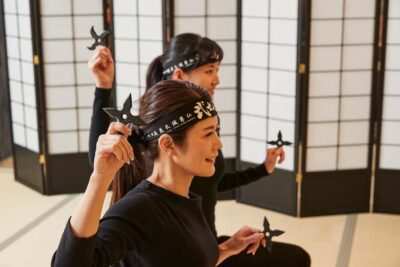
Samurai Ninja Museum Guided tour and Experience
Read our review →
Kendo and Samurai Experience with Uniform and Gear
Read our review →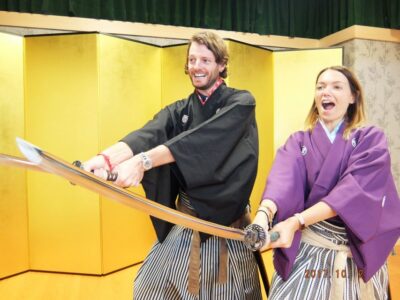
Samurai Sword Class by Experts in Traditional Arts
Read our review →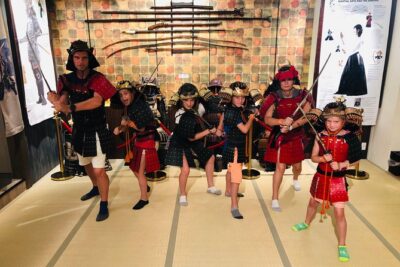
Skip the lines Basic Ticket at SAMURAI NINJA MUSEUM KYOTO
Read our review →
Samurai Sword & Archery Class from Samurai Descendant
Read our review →
Browse the lists this tour appears in