Reviewed · TOURS IN KYOTO
Kyoto: City Secrets eBike Tour
Kyoto’s best moments often come between the famous sights. This 9km e-bike ride uses quiet lanes, temple paths, mountain roads, and backstreets to connect the Golden Pavilion with lesser-seen shrines, Zen gardens, and old neighborhood stops. You get a strong look at Kyoto without spending half the day waiting for buses.
I especially like two things here: the small group of no more than eight, which lets the guide adjust the pace, and the mix of major sights with places you would be unlikely to find on your own. The route also includes some memorable extras, such as a tea stop, an old mochi shop, and a visit to a Zen temple.
The main consideration is simple: you need to be comfortable on a bicycle. Most of the ride is easy with motor assistance, but some sections include hills, descents, cobblestones, and tight turns. City cycling is not hard here, but it does require attention.
Key points to know before you book
- A 9km route covers a lot of Kyoto: The e-bike lets you connect temples, shrines, quiet lanes, and hill areas in one half-day.
- The Golden Pavilion is paired with calmer stops: You see one of Kyoto’s headline sights, then move away from the crowds.
- Guides bring the route to life: Yuta, Henry, Sean, Michael, Shizuka, Shawn, and others explain history, religion, local customs, and neighborhood life in English.
- The group is capped at eight: That makes road safety, questions, and small changes of pace easier to manage.
- You may visit places such as Daitoku-ji, a Zen temple, an old mochi shop, and a traditional tea room: Exact stops can vary with conditions and timing.
- Arrive early and ride confidently: Departure times are 9:00 am, 9:30 am, and 1:00 pm. Arrive 15 minutes early.
Why Kyoto works so well by e-bike
Kyoto is spread across a broad basin, with mountains pressing in around the city. Its most interesting sights are not arranged along one neat tourist street. A bus or taxi can get you from point A to point B, but a bicycle lets you notice the small changes along the way: a narrow lane, a stream, a wooden house, a quiet shrine gate, or a sudden view toward the hills.
This tour covers about 9km over 225 minutes. That is not a race. The electric assistance takes the sting out of hills and keeps the group moving, so you can spend more time looking around and less time worrying about your legs. At the same time, you are still riding, so this feels more active than a standard sightseeing bus.
I like the balance of movement and stops. You ride through ordinary parts of Kyoto, then pause at temples, shrines, gardens, cafes, or food stops. The result is a better sense of how the city fits together.
The bikes have been described as comfortable and easy to use, and guides regularly check that everyone is doing well. Water and refreshments may be provided, especially in hot weather. You should still bring water, dress for the season, and expect to spend a good part of the afternoon outdoors.
Other experiences people book in Kyoto:
- PERFECT KYOTO 1-Day Bus Tour
★ 5.0 · 13,518 reviews - Kyoto: Fushimi Inari, Kinkakuji, Bamboo Grove 1 Day Bus Tour
★ 4.8 · 4,316 reviews - Kyoto: Tea Ceremony in a Traditional Tea House in Kiyomizu
★ 4.9 · 3,519 reviews
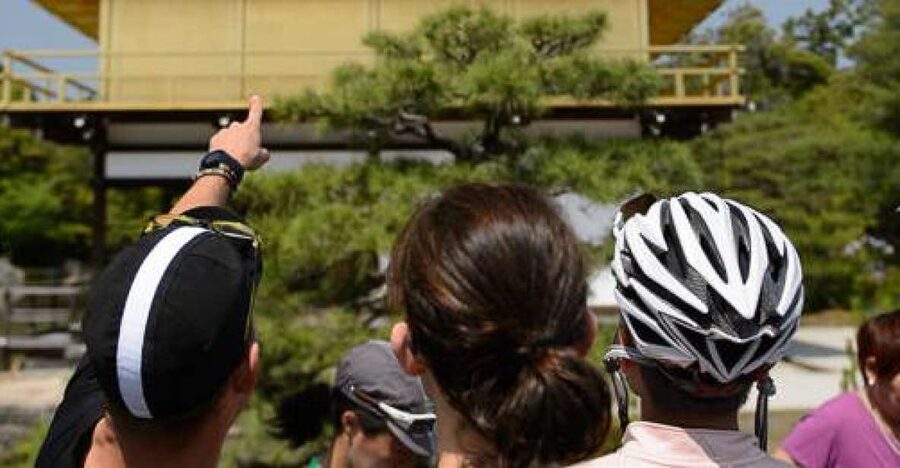
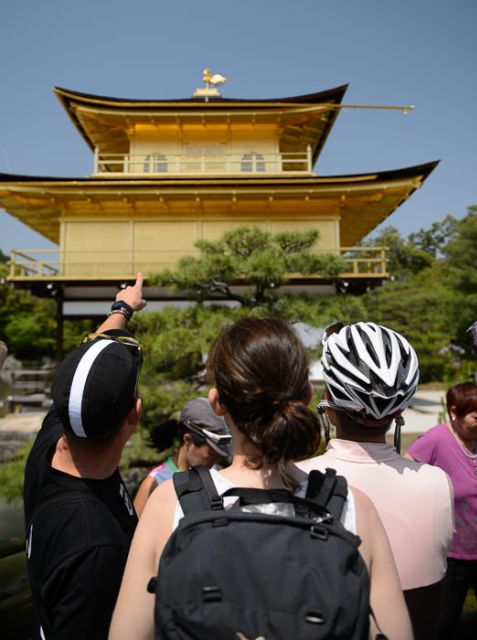
The Golden Pavilion, worth seeing even on a busy day
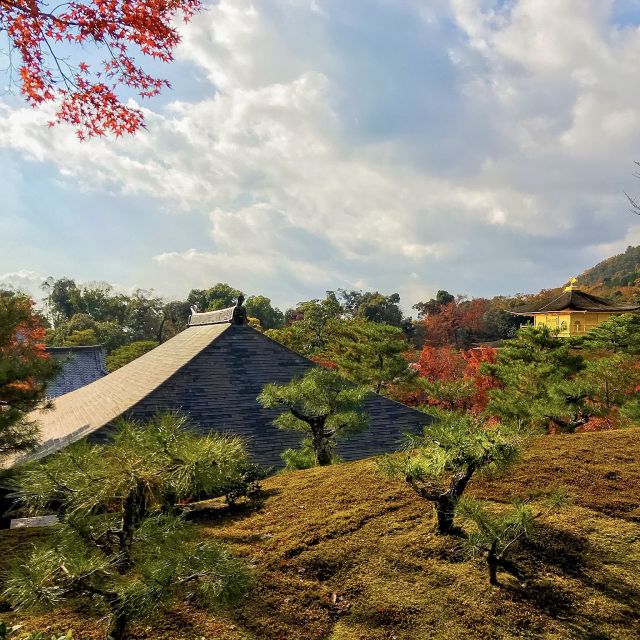
Kinkaku-ji, commonly called the Golden Pavilion, is the tour’s major landmark. Its gold-covered upper stories reflect across a pond, making it one of Kyoto’s most recognizable scenes.
This is not a quiet, private visit. The pavilion is a major stop, and you should expect other sightseers. The value of reaching it by bicycle is that the route does not end there. After seeing the famous temple, you move through quieter areas rather than staying on the main tourist circuit all day.
Your guide can provide the religious and historical context that a quick photograph misses. The stop is also a useful contrast: first, Kyoto’s most polished postcard view; later, smaller places where the mood is slower and less formal.
The time spent at each stop can be fairly brief. That suits you if you want a broad introduction to Kyoto, but it may disappoint if you prefer long, unhurried visits inside every temple. This is a moving tour with several stops, not a single-site temple study.
Geisha streets and the shrine of learning
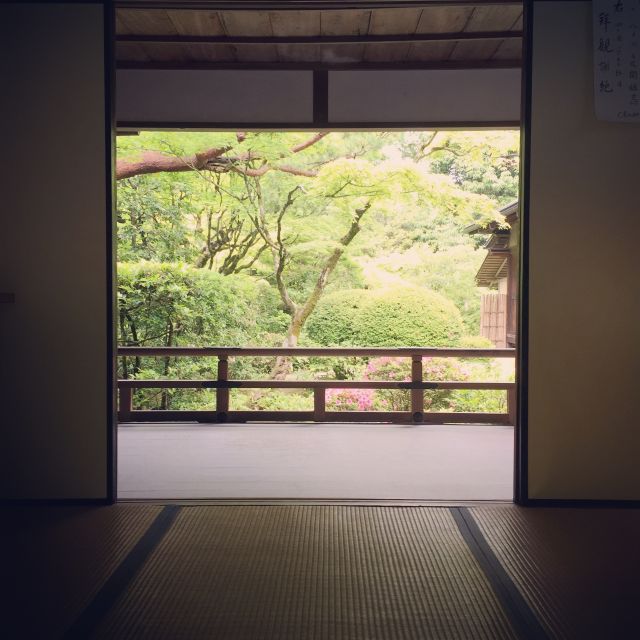
The route also passes through Kyoto’s oldest geisha district. A geisha district is not a stage set, and you should treat it as a living neighborhood rather than a place for intrusive photographs. Riding through its lanes gives you a sense of the older city fabric, with traditional buildings and a more intimate scale than the main avenues.
The tour includes Kyoto’s shrine of knowledge, which adds another layer to the city’s religious life. Guides explain how shrines and temples differ, how people use them, and what you are looking at when you pass through a gate or approach a worship area.
This is one of the tour’s strengths. A guide such as Yuta or Sean can connect a building to Japanese customs, history, and daily behavior without turning the visit into a dry lecture. Henry and Michael have also been praised for adding personal stories and practical suggestions for the rest of your stay.
The exact rhythm depends on your guide and the day. One group might spend extra time on a temple explanation. Another might move on sooner to avoid a crowded street or take advantage of a quieter stop. That flexibility is useful, but it also means the experience is not a fixed checklist.
Daitoku-ji and the calm of Zen gardens
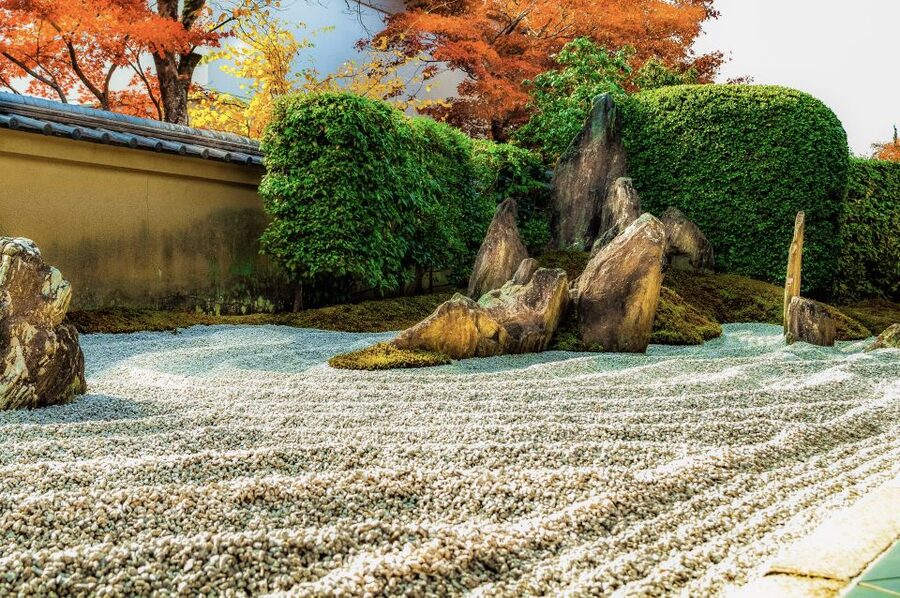
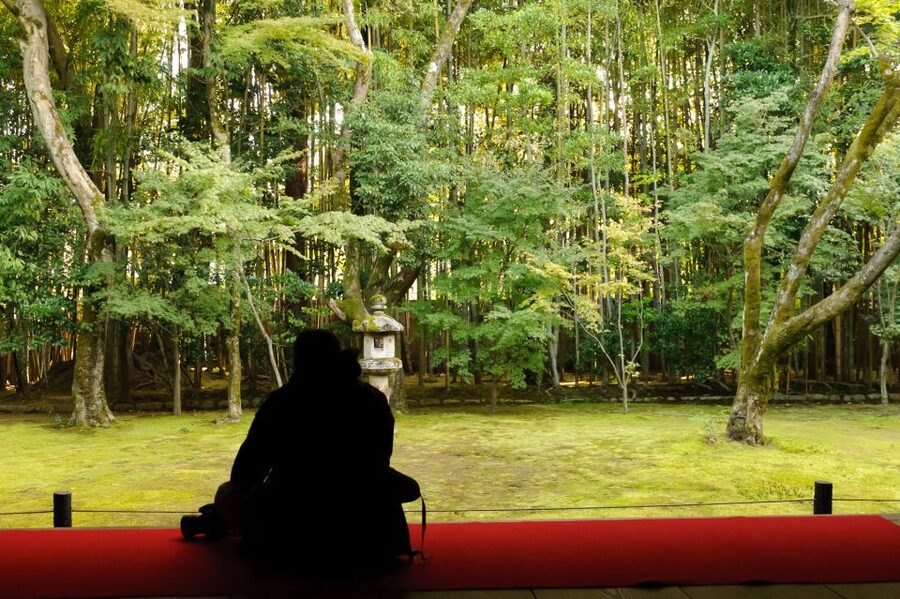
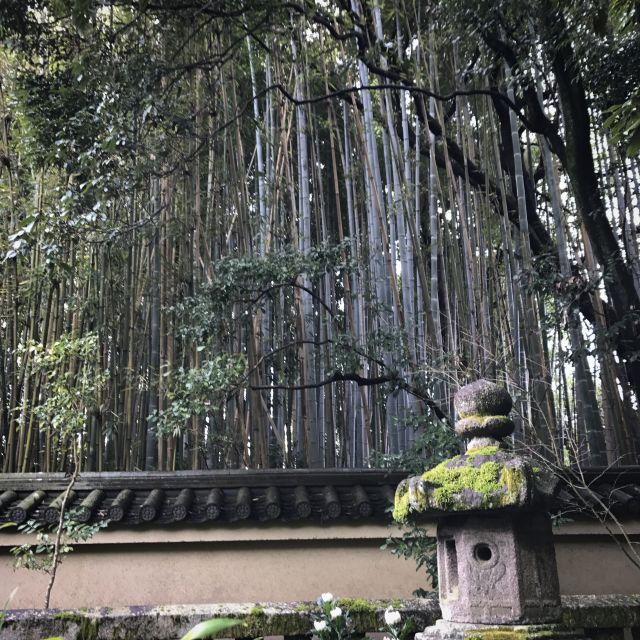
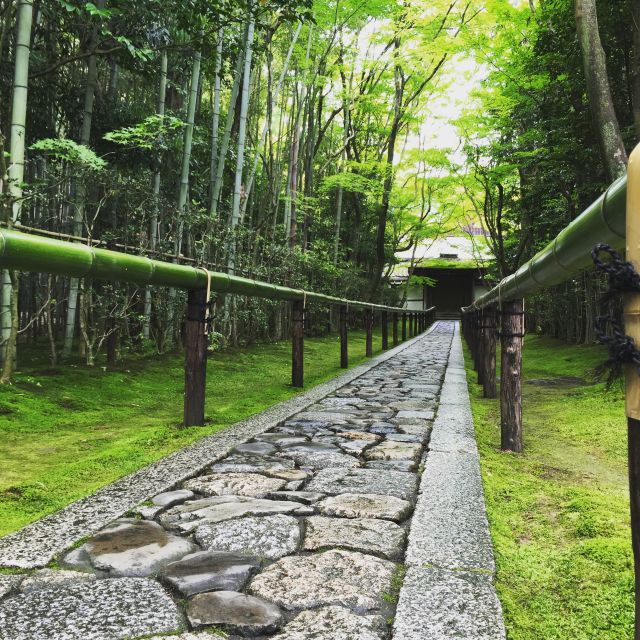
The Zen portion is likely to be the most rewarding part for you if crowded attractions wear you down. Daitoku-ji is a major Zen temple complex, and the route may include a tea ceremony or tea-room visit there. One stop described by participants included traditional tea and sweets, while another featured a thousand-year-old cafe.
The appeal is not just visual. Zen gardens invite you to slow down and notice space, texture, and sound. Instead of rushing from one object to another, you get a chance to sit, look, and hear your guide explain how Zen ideas shape the setting.
Yuta, who has a personal connection to Zen Buddhism, has led tours where the monastery visit became especially meaningful. That does not mean every departure will have the same guide or exact conversation, but it shows why the guide matters here. The temple stop is much better when someone can explain the religious purpose behind the design.
The quieter mountain roads near the end of the ride can be a real highlight. You might find yourself away from traffic, hearing birds and moving through a more peaceful part of Kyoto. This section also brings the main physical challenge: a hill, a descent, or a tighter path. The electric motor helps on the uphill, but you still need to control the bike carefully on the way down.
Same base, a different sort of day:
- Kyoto Geisha Walking Tour: Gion District & Hidden Gems
★ 4.7 · 3,273 reviews - Kyoto: Tea Ceremony Ju-An at Jotokuji Temple
★ 4.9 · 3,207 reviews - Kyoto: Gion Magical Night Walking Tour with Geisha Trivia
★ 4.9 · 2,393 reviews - Kyoto: 45-Minute Tea Ceremony Lesson Experience
★ 4.3 · 2,378 reviews
Small food stops add local flavor
Several elements of the route go beyond temples. An old family-run mochi shop, a traditional tea room, and a very old cafe have all featured as memorable stops. These breaks matter because they show Kyoto as a place where food, hospitality, and neighborhood life sit beside formal religious sites.
Mochi is a chewy rice cake with a long place in Japanese food culture. A stop at an old shop gives you more than a snack. It lets you see how a small family business can become part of the city’s character over many generations.
The tea stop is another good pause. After riding, sitting down with a drink and a sweet is welcome, particularly in warm weather. It also gives your guide a natural chance to explain manners and customs without making the experience feel like a classroom.
Food stops may vary, so do not book this expecting a full meal or a guaranteed tasting menu. Think of them as small cultural breaks built into an active sightseeing route.
What the guides add to the ride
The guide is the heart of this experience. Names that appear repeatedly across the departures include Yuta, Henry, Sean, Michael, Shawn, Shizuka, and Utah. Their styles differ, but the strongest pattern is clear: you get a personal explanation of Kyoto rather than a recorded script.
Yuta is particularly good at connecting Zen Buddhism, local history, and the practical needs of the group. Henry has been praised for energy, clear explanations, and finding a mix of major and lesser-known places. Sean is noted for good route choices, cultural background, and follow-up suggestions for the rest of your time in Kyoto.
Michael brings a friendly, local feel and often adds personal stories. Shizuka has led visits that included the Golden Pavilion and tea at Daitoku-ji, with an emphasis on Zen ideas. Shawn is remembered for explaining stops clearly and making an effort to remember names.
The guide also controls the safety of the ride. Good group leadership matters in Kyoto, where traffic lights, narrow roads, pedestrians, and local cycling rules require attention. You will be expected to keep left and follow Japanese road rules. One useful tip is to watch carefully for red lights and avoid assuming a quiet side street is free of traffic.
Is the cycling difficult?
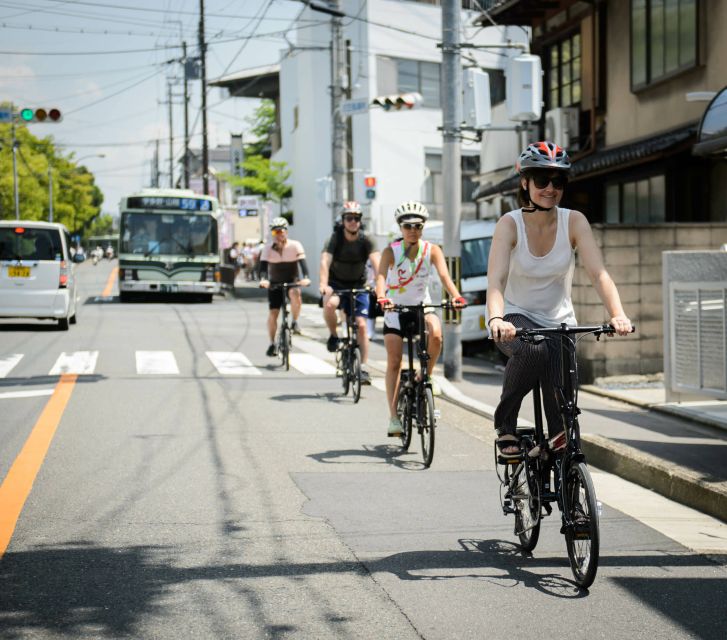
Most of the route is described as flat and easy, thanks to the motor assistance. You do not need to be in top athletic shape, but you must be able to ride a bicycle confidently.
The route can include:
- Occasional uphill sections
- A downhill stretch with views
- Cobblestones
- Tight turns
- Mountain roads
- Busy areas that require careful navigation
The e-bikes make the uphill portions much easier, but they do not remove the need for balance or braking skills. If you are nervous on a bicycle, tell the guide at the start. The group size allows for some personal attention, and guides are described as careful about comfort and safety.
This tour is designed for people over 13 who can ride confidently. It is not suitable for anyone under 140cm, or 4 feet 6 inches. Families with teenagers can be a good fit, especially if everyone is comfortable cycling in a city.
Rain is another factor. The provider may cancel in heavy rain, storms, or other bad weather, with a full refund for those cancellations. Light rain may not end the ride, and ponchos have been available on wet departures, but you should check the forecast and dress sensibly.
Price and timing: is $127 fair?
At $127 per person, this is not a cheap bicycle rental. You are paying for the guide, e-bike, helmet, attraction admission, route planning, and a small group. The 225-minute duration also gives you a substantial half-day rather than a short introductory spin.
The price makes more sense if you want to cover several parts of Kyoto in one outing and prefer a guide who can explain what you are seeing. It is less appealing if you only want to pedal casually or if you already know the temples and can navigate the city on your own.
The small group is important here. Eight riders is large enough to create a social outing, but small enough for the guide to watch the road, answer questions, and adapt the pace. A private tour would cost more, while a large bus tour would not give you the same access to narrow lanes and quiet corners.
You can choose 9:00 am, 9:30 am, or 1:00 pm, depending on availability. The afternoon departure works well if you want a slower start or plan to use the ride as an introduction to the city. Morning departures may suit you if you want the rest of the day free for another district.
Arrive 15 minutes before departure at NORU. Missing the start can mean losing the full booking, and no-shows are not refundable. The booking information gives both 24 hours and 12 hours as the cancellation cutoff, so confirm the exact rule at the time of booking.
Who should book this Kyoto e-bike tour?
I would choose this tour for a first or second day in Kyoto if you want a broad feel for the city. It helps you get your bearings, learn how the temples and shrines fit into local life, and collect ideas for places to return to later.
It is also a strong choice for a repeat visitor. You still see major sights, but the backstreets, Zen settings, neighborhood cafes, and less familiar temples make the outing feel different from a standard sightseeing day.
Families with teenagers, couples, active adults, and small groups of friends are likely to enjoy it. You should skip it if you dislike bikes, have trouble with tight turns, or want to spend a long time at one temple. The route keeps moving, and its pleasure comes from the combination of riding, short visits, conversation, and scenery.
Should you book the City Secrets eBike Tour?
Book it if you want to see Kyoto actively and understand more than the usual postcard sights. The combination of the Golden Pavilion, geisha district, shrine, Zen gardens, old food stops, and quiet hill roads gives you a varied half-day at a sensible pace.
I would be especially inclined to book if you have only a few days in Kyoto, or if crowds make the famous temples tiring. The main question is not the price. It is whether you are happy on a bicycle. If the answer is yes, this is a practical and engaging way to connect the city’s major sights with its quieter side.
FAQ
Where does the Kyoto e-bike tour meet?
The meeting point is NORU in Kyoto.
How long does the tour last?
The tour lasts 225 minutes, or 3 hours and 45 minutes.
How far do you ride?
The planned cycling route is about 9km.
What departure times are available?
The listed departure times are 9:00 am, 9:30 am, and 1:00 pm. Availability can vary, so check when booking.
Is the tour conducted in English?
Yes. The tour includes a live English-speaking guide.
How large is the group?
The tour is limited to eight participants.
What is included in the price?
The price includes the English-speaking guide, e-bike, helmet, and entrance fees to the attractions visited.
Who can join the ride?
The tour is designed for people over 13 who can ride a bicycle confidently. It is not suitable for anyone under 140cm, or 4 feet 6 inches.
Just added in Kyoto
- Your Private Vacation Photography Session In Kyoto★ 5.0 · 110 reviews
- Kyoto: Zen Meditation at a Private Temple with a Monk★ 5.0 · 25 reviews
- Private Cooking Class Udon in Kyoto Japan★ 5.0 · 23 reviews
- Private Pewter Sake Cup Experience with a Kyoto Artisan★ 5.0 · 31 reviews
- Kyoto Wagashi(Japanese sweets) Cooking Class near Fushimiinari★ 5.0 · 60 reviews
- Kyoto:Family-Friendly Kimono & Yukata Experience at WARGO★ 5.0 · 147 reviews
- Private Guided Traditional Buddhist Cooking in Japan★ 5.0 · 16 reviews
- Kyoto: Gion Geisha District & Sake-in-Hand Walking Tour★ 5.0 · 37 reviews
Tours in Kyoto, compared.
Tea Ceremony in a Traditional Tea House in Kiyomizu
Read our review →
Kyoto Geisha Walking Tour: Gion District & Hidden Gems
Read our review →

Gion Geisha District Walking Tour – Stories of Geisha
Read our review →
Best of Kyoto: Gion, Geisha, Pagodas & Cobblestones
Read our review →