
Reviewed · SAMURAI & NINJA EXPERIENCES
Tokyo : Authentic Samurai Experience in a Private Space.
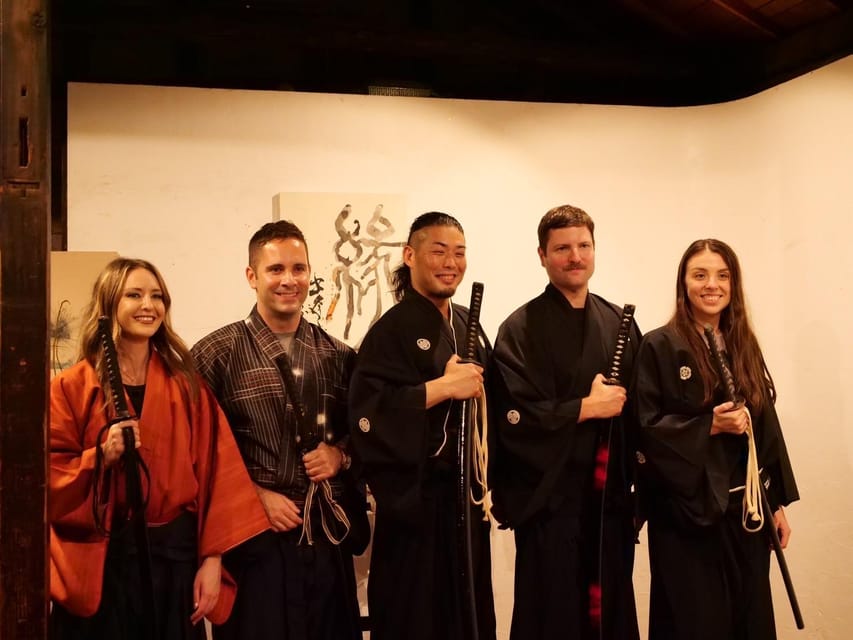
The main draw here is simple: you get to put on formal samurai clothing, hold a real sword, and learn how to move with it under careful instruction. I like the tiny group size, limited to three people, and the setting in an old private Japanese house. I also like that the session includes tea, photographs, and a short lesson on Bushido rather than treating the sword as a stage prop.
The main consideration is the price, $322 per person for 90 minutes. That is a serious charge for a short activity, and the sword practice is structured rather than an extended martial-arts class. Pregnant women, people with mobility impairments, and children under 10 cannot take part.
Key points at a glance
- A three-person class: The small group gives you direct time with the instructor and makes questions easier.
- Formal samurai dress: You change into traditional clothing before learning sword etiquette and movements.
- A real sword: The activity includes handling a real sword, with safety instructions and controlled practice.
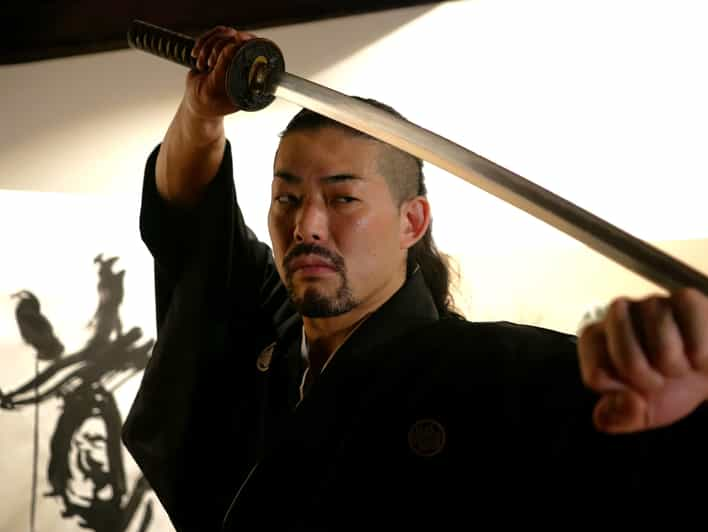
- A final samurai exchange: You face a real samurai in a supervised sword sequence, not an unsupervised fight.
- Tea in an old private house: The session ends with Japanese tea, conversation, and time for photographs.
- A patient teaching style: Instructor Musashi-oka is described as friendly, clear, and willing to correct technique at a beginner’s pace.
Entering an old Japanese house for a samurai lesson
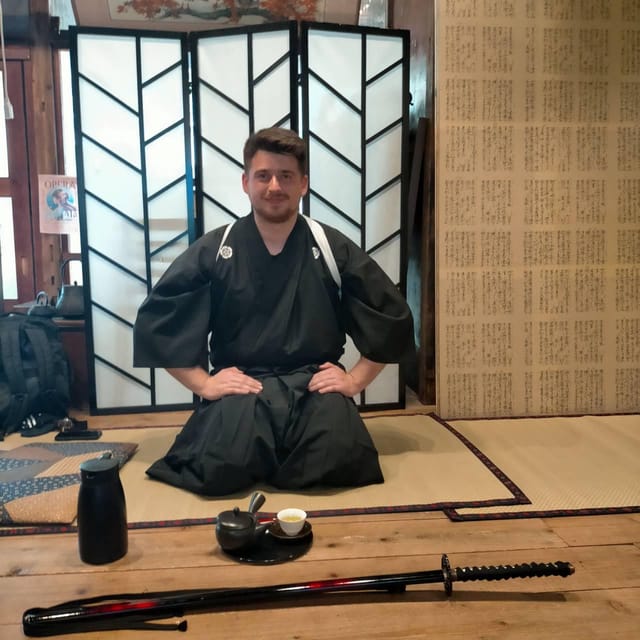
This is not a large stage show with a crowd watching from rows of seats. You meet near a signboard, follow the arrow, and enter through the doorway of an old private house. The setting matters. You are not simply handed a costume in a modern studio and asked to pose. The house gives the activity a quieter, more personal frame.
The program is called the Bushido Experience. Bushido is introduced as a code and way of conduct connected with the samurai, so the session aims to cover more than sword swings. You learn basic etiquette, how to carry yourself, and why certain movements are performed in a particular order.
Your instructor may be Musashi-oka, identified in participant feedback as the samurai teacher. His teaching style is a strong part of the program. He is described as patient, friendly, funny, and careful about showing where a movement needs work. That matters if you have never handled a sword. The lesson is built for beginners, not just people who already train in martial arts.
English and Japanese are spoken. The English instruction has been described as easy to follow even across a language difference, but you should still expect some demonstrations and repeated movements to do part of the explaining. That is useful here. Sword technique is physical, and watching the instructor often makes the instruction clearer than hearing a long explanation.
Other samurai and ninja experiences in Tokyo people book:
- Tokyo: Samurai Restaurant Show Ticket with 2 Drinks
★ 4.5 · 1,307 reviews - Tokyo: Samurai Ninja Museum Guided tour and Experience
★ 4.6 · 1,010 reviews - Tokyo: Samurai Sword & Archery Class from Samurai Descendant
★ 5.0 · 603 reviews
Dressing in formal samurai clothing
The session begins with changing into samurai formal dress. This is not a minor photo prop. It sets the tone and helps you understand that posture, movement, and etiquette are part of the experience.
Yukari helps with the clothing, takes photographs and videos, and serves the tea later. Having a host handle the dressing is especially helpful because traditional clothing can feel unfamiliar. You can focus on the experience rather than trying to work out every fold and fastening yourself.
The outfit also changes how you move. You may become more aware of your stance, your hands, and the way you turn. That is one reason the clothing works as more than decoration. It gives the lesson a physical context.
Bring realistic expectations about the photographs. You can take a typical Japanese photo in the old house, and the host records images for you, but this is not presented as a dedicated professional photo shoot. The photos are a useful memory of the session, not the main product.
Learning Bushido before touching the blade
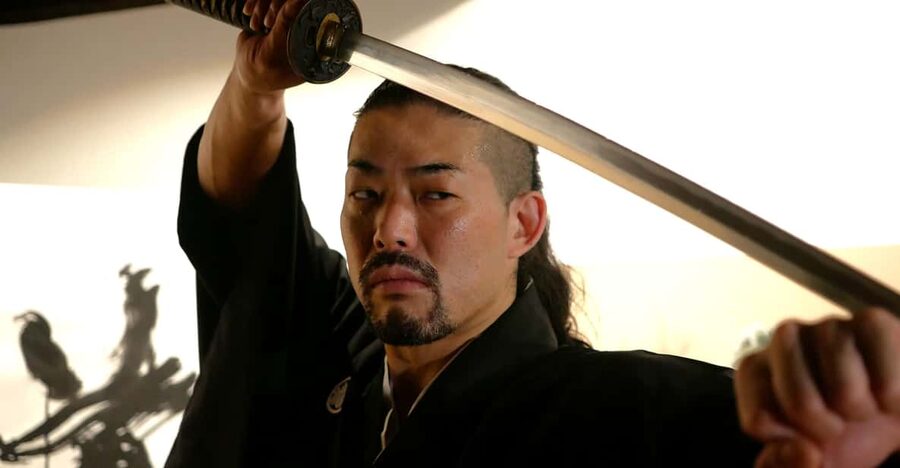
Before the final exchange, you learn how to handle the sword and the etiquette connected with it. The instructor demonstrates how to draw and sheath it, how to stand, and how to swing. The structure gives you a basic understanding of why the sword is treated with such care.
One participant with experience in historical European martial arts found the session useful for its attention to wearing the clothing, drawing and sheathing the sword, stance, and katana movement. That detail is important for anyone with previous martial-arts experience. You will not be starting an advanced course, but you can still find value in comparing the Japanese method with another sword tradition.
For a first-time participant, the lesson is less about speed and more about control. You are shown how to position yourself and perform the movements in sequence. The instructor corrects errors and keeps the pace approachable.
I would like a little more time for repeated cutting motions. One participant specifically felt that several extra practice swings focused on the cutting movement would improve the lesson. That is a fair point. Ninety minutes must cover dressing, etiquette, instruction, the final exchange, photographs, and tea, so the sword practice cannot be unlimited.
Still, the short format has an advantage. You get a complete introduction without committing half a day to a specialist class. If you want a thorough study of Japanese swordsmanship, this is not enough. If you want a carefully guided first encounter, the format makes sense.
Handling a real sword with clear safety limits
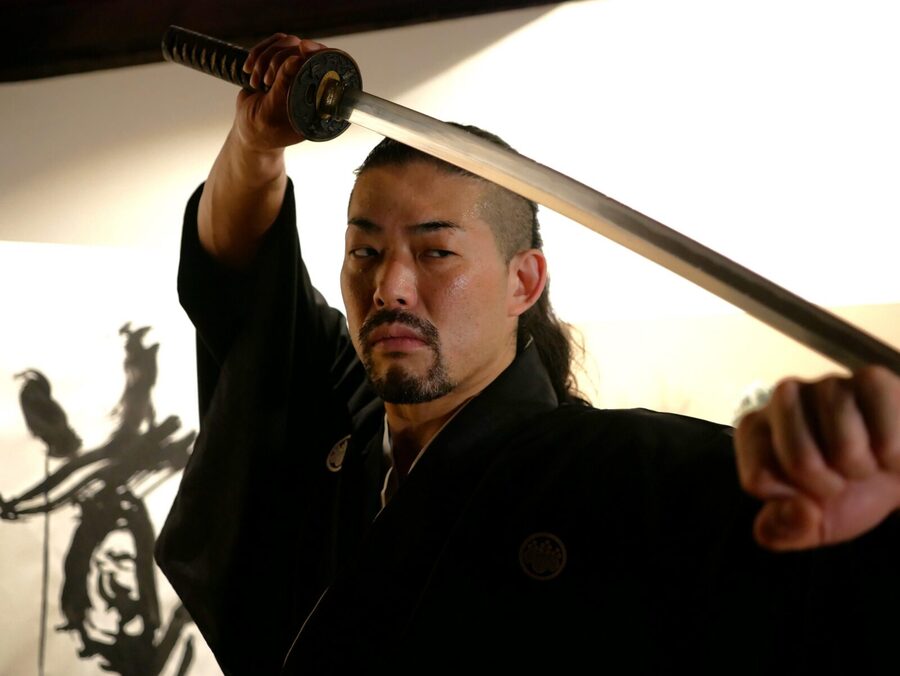
The activity includes a real sword, which is one reason the price is higher than a basic costume experience. You are not only wearing samurai clothing for a photograph. You are taught how to hold, draw, sheath, and swing a real blade under supervision.
Safety is taken seriously. You are told that no one will point the blade at you. If you feel uncomfortable with the edge of the blade, tell the staff before the activity begins. That is a useful instruction, and you should follow it openly rather than trying to hide discomfort.
The final portion includes fighting against a real samurai with a sword. Read that wording carefully. This should be understood as a controlled demonstration or supervised exchange, not a free-form duel. The safety guidance and beginner-friendly teaching point to a choreographed activity where you follow the instructor’s directions.
This part is likely to be the emotional high point. You have learned the basic movements, put on the clothing, and then use those movements in a formal encounter. It gives the earlier instruction a purpose.
The sword is also interesting as an object. One participant asked the instructor to take it apart after the session and found the construction fascinating. The instructor agreed willingly. If you are interested in weapons, craft, or how a katana is assembled, ask about this at the end. It is not listed as a standard part of the program, so treat it as an extra request rather than a guaranteed feature.
Other swordplay and stealth sessions in Tokyo:
- Best Samurai Experience in Tokyo
★ 5.0 · 458 reviews - Ninja Experience (Family Friendly) at Samurai Ninja Museum TOKYO
★ 5.0 · 441 reviews - Tokyo: Samurai Entertainment Night Show in Kanda Shrine
★ 4.6 · 417 reviews - Tokyo Sword Experience – includes Museum Ticket/Ninja Experience
★ 5.0 · 314 reviews
The tatami cutting highlight
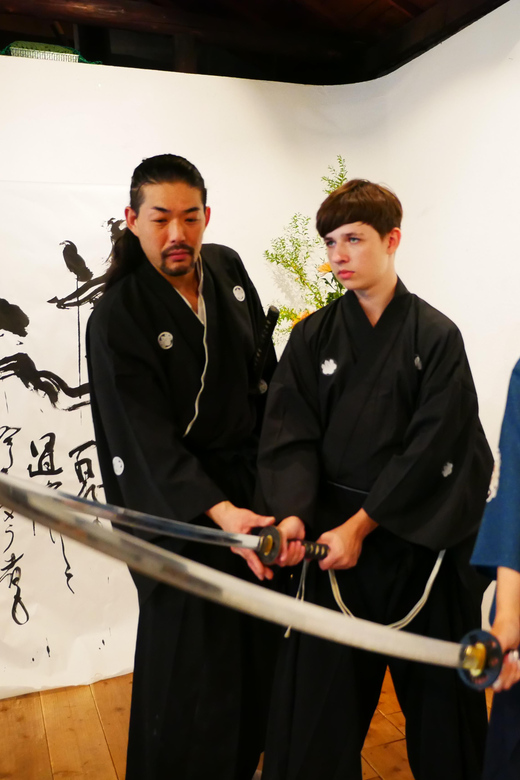
Tatami cutting is mentioned as a highlight by a participant with sword-training experience. It gives the sword movements a practical focus and can be more satisfying than repeating a motion in the air.
The available information does not promise tatami cutting to every participant, so you should not book this activity solely on the assumption that it will be included. Ask the provider if it is available during your session. If it is offered, expect the instructor to decide what is suitable based on your ability and the safety conditions.
The same participant managed a more difficult seated cut after finding the standing technique manageable. That suggests the instructor can adjust the challenge for someone with prior practice. Beginners should not expect the same progression. Your session may stay with basic movements and the supervised display.
Meeting a real samurai in the final sequence
The last sword segment brings you face to face with a real samurai. The wording makes this sound dramatic, but the appeal is not danger. It is the chance to use the posture and sequence you have just learned while responding to an experienced performer and instructor.
The controlled format lets you concentrate on timing and form. You are not expected to improvise or win. Listen carefully, keep the blade pointed only as instructed, and do not make the exchange faster or more forceful than the teacher directs.
This is also the point where the small group helps. With only three participants, the instructor can watch each person more closely. That is a better arrangement for a sword activity than a large class where mistakes might be missed.
The activity is open to men and women, and the lesson starts from the basics. It suits couples, solo visitors, and small groups of friends who want a shared cultural activity without joining a large production.
Tea, conversation, and photographs after the sword work
Once the formal activity ends, you are served Japanese tea. The tea is not an afterthought. It gives you a calm finish after concentrating on the sword and provides time to speak with the hosts and the other participants.
Yukari serves the tea, and it has received especially warm praise. This part may appeal to you if the cultural side matters as much as the sword. The quiet change from martial instruction to tea service helps show two different parts of Japanese tradition within one short program.
You can also use this time to ask questions. A participant found the instructor willing to answer questions and explain details, including the sword’s construction. Since the group is so small, the closing conversation should feel more personal than a standard tour farewell.
The session ends at the house, and you are released there. No further guided activity is included after the tea. Make sure your plans allow you to leave from the meeting location rather than assuming transport back to a hotel or station is part of the experience.
Is $322 fair for 90 minutes?
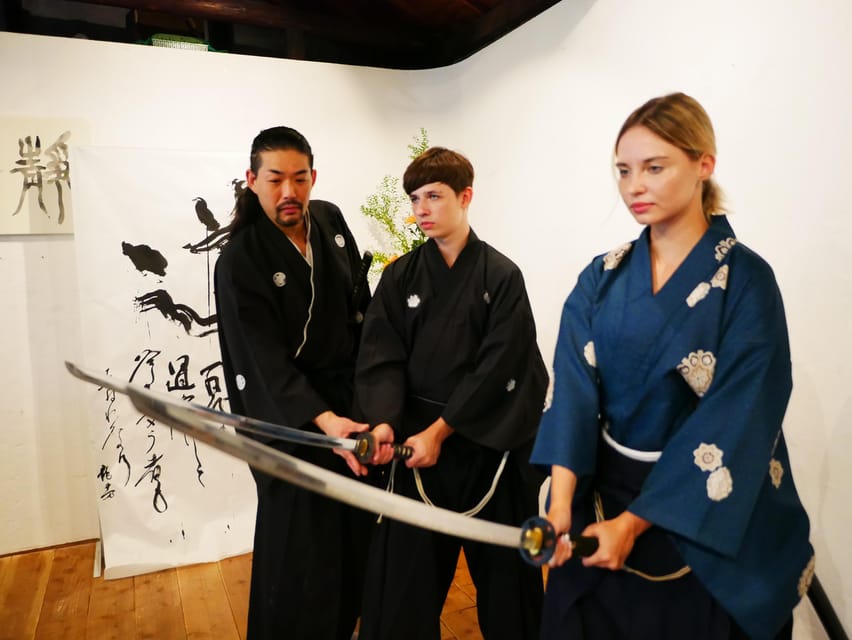
At $322 per person, this is expensive for a 90-minute activity. You are paying for a private-feeling setting, a maximum of three participants, formal dress, a real sword, an English-speaking instructor, a supervised samurai exchange, tea, and photographs.
The value depends on what you want. If your priority is a long training session, the price will probably feel high because the actual sword practice is only one part of the appointment. If you want a polished private cultural encounter with personal instruction, the small group changes the calculation.
A large public show can offer more spectacle for less money. It usually cannot offer the same level of direct correction or the chance to ask the instructor to explain the sword in detail. This experience is aimed at participation, not simply watching.
I would also compare it with ordinary kimono rental and photo sessions. Those may cost less, but they do not include Bushido instruction, sword etiquette, or the final exchange with a samurai. The price is easiest to justify if you want all of those elements together and prefer a private setting.
The activity has a five out of five rating from 18 reviews, with repeated praise for the instructor’s patience, the friendly hosts, the tea, the old house, and the chance to handle a genuine katana. Those strengths are consistent with the program’s design. The main limitation remains time. You receive a memorable introduction, not a full course.
Who should book this experience?
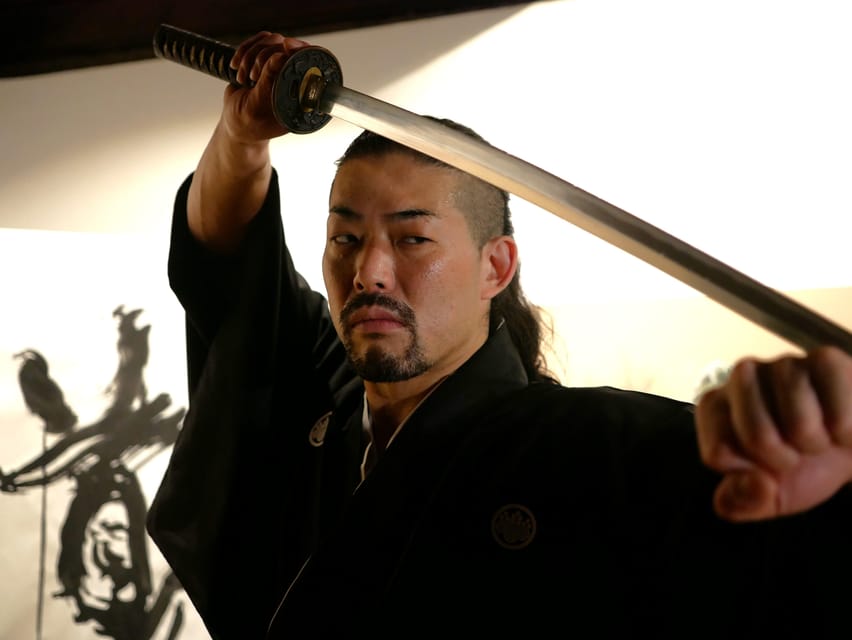
I would recommend it to adults and older children who are curious about Japanese culture, samurai etiquette, and traditional sword handling. It is particularly well suited to people who want to take part rather than watch a performance.
It should also work for martial-arts practitioners who want to compare techniques. The experience is basic enough for a beginner, yet the instructor may offer extra detail or a harder variation if you already have relevant training.
History and weapons enthusiasts may enjoy asking about the sword’s parts and construction. Ask politely at the end, since that explanation is not guaranteed as a regular part of the schedule.
This is less suitable for anyone seeking a long, physically demanding workout. It is also not suitable for pregnant women, people with mobility impairments, or children under 10. Scooters are not allowed, so do not plan to arrive carrying or using one.
The activity is a poor match if you dislike the idea of being near a blade. The staff will not point it at you, and you can state your concerns before the session, but handling a real sword is central to the program.
Practical booking advice
The group is limited to three participants, so book ahead if the timing matters. Availability varies by starting time, and the full duration is 90 minutes.
You can cancel up to 24 hours before the activity for a full refund. The reserve-now, pay-later option also helps if your Tokyo plans are still changing.
Wear or bring clothing that allows you to change comfortably. The supplied information does not set out a specific dress code, so avoid assuming that special equipment or transport is included. Follow the signboard near the meeting point and enter through the marked entrance.
If you have concerns about the blade, mobility, or the final samurai exchange, raise them before the lesson starts. Clear communication is better than trying to adjust during a sword movement.
FAQ
How long does the samurai experience last?
The experience lasts 90 minutes, including dressing, Bushido instruction, sword practice, the final samurai exchange, photographs, and Japanese tea.
How many people can join the session?
The group is limited to three participants.
Is the activity available in English?
Yes. The instructor and host can provide the experience in Japanese and English.
Do I get to wear samurai clothing?
Yes. A kimono dressing experience is included, along with formal samurai clothing for the session.
Is a real sword included?
Yes. The activity includes a real sword and instruction in how to handle, draw, sheath, and swing it. No one will point the blade at you, and you should tell the staff in advance if you are uncomfortable with the blade edge.
Who cannot take part?
The activity is not suitable for pregnant women, people with mobility impairments, or children under 10. Scooters are also not allowed.
Should you book it?
Book this if you want a small, personal introduction to samurai culture and value direct teaching, traditional dress, a real sword, tea, and photographs in one setting. The patient instruction from Musashi-oka, the help from Yukari, and the old private house give the 90-minute visit a clear sense of occasion.
Skip it if $322 feels too high for a short activity or if you want extended sword training. For everyone else, this is a focused and unusual way to connect with Japanese tradition, with enough structure to keep beginners comfortable and enough detail to interest people who already know something about swords.
Just added in Tokyo
- The 10 Tastings of Tokyo With Locals: Private Street Food Tour★ 5.0 · 48 reviews
- Small Town in the Big City: Tasting Tokyo’s Kichijoji★ 5.0 · 195 reviews
- Small Town in the Big City: Tasting Tokyo’s Kichijoji★ 5.0 · 16 reviews
- EXCLUSIVE Tokyo Secret: Kichijoji Small-Group Food & Bar Hopping★ 5.0 · 29 reviews
- Explore Kichijoji: Walk Through One of Tokyo’s Beloved Districts★ 5.0 · 21 reviews
- :Tokyo,Shibuya/ Pro Photography in Kimono / English-Friendly★ 5.0 · 26 reviews
- 【R34】Tokyo:Private Daikoku tour in Modified R34★ 4.9 · 92 reviews
- Tokyo:Calligraphy &Make your original folding fan in Asakusa★ 5.0 · 62 reviews
Samurai & Ninja Experiences, compared.
Samurai Ninja Museum Guided tour and Experience
Read our review →
Kendo and Samurai Experience with Uniform and Gear
Read our review →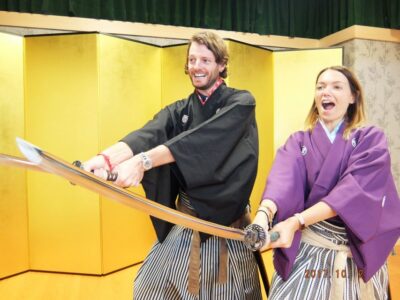
Samurai Sword Class by Experts in Traditional Arts
Read our review →
Skip the lines Basic Ticket at SAMURAI NINJA MUSEUM KYOTO
Read our review →
Samurai Sword & Archery Class from Samurai Descendant
Read our review →
Browse the lists this tour appears in