
Reviewed · MARTIAL ARTS EXPERIENCES
Tokyo: Karate Experience with Former All-Japan Champion
The best part of this Tokyo activity is that it treats karate as more than a set of punches and kicks. You begin with the bow, breathing, and focus that shape a proper class, then work through techniques with Ryo, a former All-Japan Kyokushin champion. I like the respectful start and the practical finish, where you defend against controlled punches and kicks without contact.
I also like how well the lesson fits mixed groups. A child, a complete beginner, and an experienced karate student can all take part because Ryo adjusts the pace and watches your movements closely. The main consideration is the booking option: the 90-minute class does not necessarily include a karate uniform, so check the exact choice before you reserve.
Key points at a glance
- Train with a former champion: Ryo placed third at the 2013 Kyokushin World Union Championship and became an All-Japan champion in the under-80-kilogram division.
- Start and finish with proper manners: Bowing, belly breathing, and focus are part of the lesson, not decoration.
- Suitable for first-timers and martial artists: Ryo breaks each movement into small steps and adapts to your ability.
- Practice without unnecessary risk: The sparring section is non-contact, with pad work for punches, kicks, and knees.
- A useful family activity: Children as young as eight have taken part successfully, with patient instruction in clear English.
- Good value for a focused lesson: At $58 per person, you receive instruction, equipment, water, and a serious workout in 60 to 90 minutes.
Why this karate class feels different from a tourist photo stop
Tokyo offers plenty of cultural activities that ask you to watch, taste, or pose. This one asks you to work. You will sweat, concentrate, repeat movements, and learn why karate begins with respect before you throw a single punch.
That balance is what makes the class appealing. You get a real introduction to Japanese martial arts, but you are not expected to join a dojo or commit to months of training. In one compact session, you learn the basic structure of a karate lesson and get a feel for Kyokushin style.
Ryo has practiced Kyokushin Karate for 20 years. Kyokushin is known for full-contact competition, yet this class is designed for visitors with different ages and abilities. The lesson does not throw beginners into hard contact. Instead, the sparring ideas are taught through controlled movements, defense drills, and pad work.
I especially like that the cultural side is not separated from the physical side. The bow is not a quick photo opportunity. It frames the lesson and gives you a better sense of karate etiquette. For many people, that opening ritual may be as memorable as the kicks.
Other martial arts sessions in Tokyo:
- Tokyo: Samurai Sword & Archery Class from Samurai Descendant
★ 5.0 · 603 reviews - Tokyo: Samurai Kendo Practice Experience
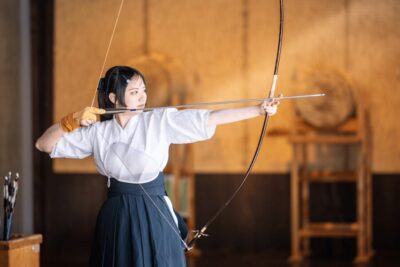
★ 4.7 · 102 reviews - Tokyo: Japanese Archery (Kyudo) Experience
★ 5.0 · 78 reviews
Meeting Ryo, the instructor behind the lesson
Ryo is a second-dan black belt and has taught karate since 2010. His competition background is serious: he placed third in the 2013 KWU Kyokushin World Championship in Bulgaria and became an All-Japan champion in the Kyokushinkan International under-80-kilogram division.
That experience matters, but teaching skill matters just as much. Ryo has worked with children and adults, and the class is built around explanation rather than intimidation. He demonstrates movements, breaks them into parts, then gives you corrections as you practice.
His English is described as very good, and the lesson is offered in English and Japanese. That makes a real difference when you are learning stance, timing, and defense. A vague explanation is not much use when your front foot is pointing the wrong way. Ryo’s method is more practical: show the move, let you try it, then adjust your position.
His teaching also suits returning martial artists. Students with experience in Shotokan, Goju Ryu, Tae Kwon Do, Kenpo, Muay Thai, and other styles have found value in comparing methods. You will not be asked to forget your own training. Instead, you can notice how Kyokushin handles stance, power, kicks, kata, and self-defense.
Bowing, breathing, and the first ten minutes
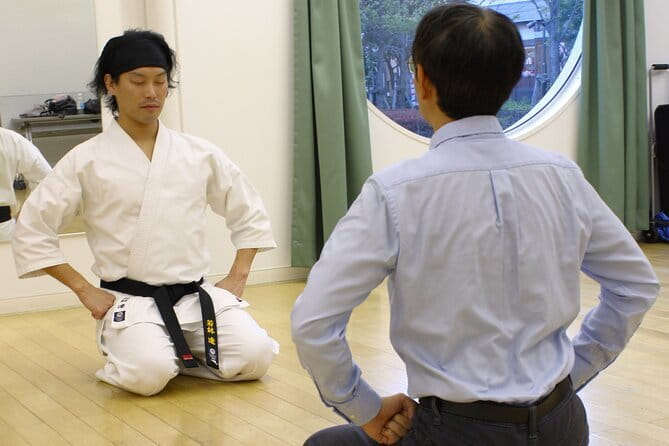
The lesson starts with the basic idea that karate begins with a bow and ends with a bow. You learn how to bow correctly, then practice breathing from your belly to settle your attention.
This may sound simple, but it changes the mood of the class. You are not rushing into random punches. You are learning to stand still, listen, and prepare your body. If you have never tried martial arts, this gives you a calm entry point. If you already train, it gives you a chance to compare how another instructor frames the class.
The opening also introduces one of karate’s central values: control. Power without control is not useful in a lesson, and the breathing work helps you think before you move. Parents may appreciate this part because it gives younger students a clear structure from the start.
Do not expect a long lecture on philosophy. The focus stays active and practical. You bow, breathe, and then move into the warm-up.
Stretching that prepares your whole body
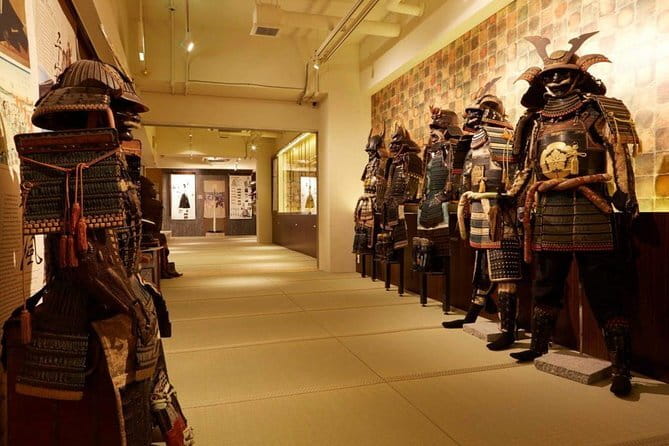
The warm-up works through the major areas you will use: leg muscles, hip joints, shoulder blades, and chest. This is not filler before the real lesson. Karate asks for rotation, balance, reach, and quick changes of position, so warming up properly helps you move with less strain.
You may notice that flexibility affects nearly every technique. A kick is not only about lifting the leg. Your hips, supporting foot, and posture all matter. The opening stretches give Ryo a chance to see how each person moves before the more technical work begins.
This is another reason the class suits mixed groups. A flexible martial artist and a stiff first-timer do not need the same corrections. The pace can be adjusted before anyone is asked to kick or block at speed.
Wear comfortable workout clothing unless your booking specifically includes a karate gi. One important detail is that the uniform is tied to the option called PRIVATE/90min Session with Karate Gi. The 90-minute class without that option does not provide a gi, so read the selection carefully and bring suitable clothes if needed.
Same base, a different sort of day:
- Mt Fuji and Hakone 1-Day Bus Tour Return by Bullet Train
★ 5.0 · 26,383 reviews - 1-Day Tokyo Bus Tour
★ 5.0 · 14,250 reviews - Tokyo: TOKYO SKYTREE® Admission ticket
★ 4.5 · 11,192 reviews - Tokyo: teamLab Planets TOKYO Digital Art Museum Entry Ticket
★ 4.6 · 9,779 reviews
Learning punches, blocks, and kicks step by step
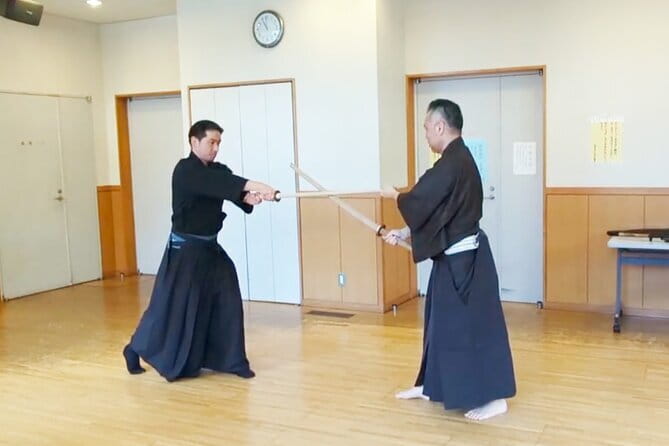
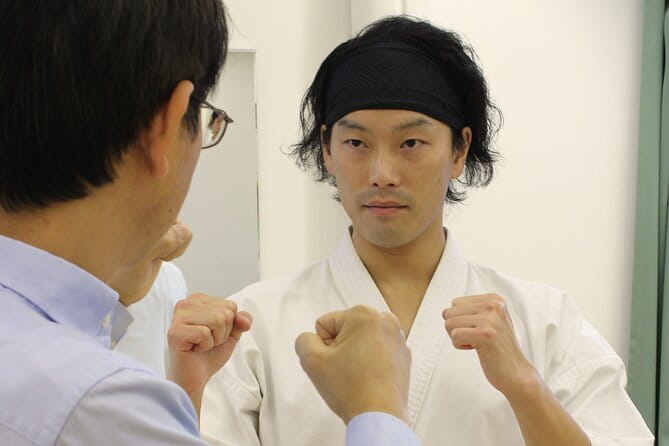
Once you are warm, Ryo introduces the basic stance and core techniques. You practice punches, blocks, and kicks, with each movement divided into smaller parts.
That method is useful for beginners because karate techniques can look fast and complicated when performed at full speed. By separating the steps, Ryo lets you understand where your hands go, how your body turns, and when your weight shifts. You build the complete action rather than trying to copy a blur.
You will also receive tips aimed at accuracy and efficiency. The goal is not simply to hit hard. Your stance, balance, distance, and timing all affect the result. Experienced students can use this section to compare Kyokushin mechanics with the style they already know.
The lesson includes kata demonstration as well. Kata are patterns made from a sequence of karate techniques. Watching Ryo perform a pattern gives you a sense of how individual punches, blocks, and stances fit together in a larger form.
If you already practice Shotokan or another traditional style, the differences may be one of the most interesting parts. You might recognize familiar movements while noticing different emphasis in posture, power, or application. If you are new to karate, the demonstration shows how basic exercises connect to formal practice.
Pad work brings the techniques to life
The included punching and kicking pads add a physical target to the lesson. This is often the point where a basic technique begins to feel real. You can focus on making contact with the pad while Ryo helps you manage distance and form.
Pad work also gives you a safe outlet for energy. You can practice punches, kicks, and possibly knee strikes with more force than you would use in a partner drill, while the instructor controls the exercise. It is a good option for visitors who want a workout rather than a purely ceremonial class.
At the same time, this is not a competition session. You should expect instruction and correction, not a test of who can hit hardest. Ryo’s job is to help you use proper technique and remain in control.
For children, the pads can make the lesson especially approachable. A nervous child can start slowly, then gain confidence as the session progresses. A 10-year-old with Tae Kwon Do experience and a 15-year-old with Kenpo training both found room to work at their own level, while complete beginners have also been comfortable.
Non-contact sparring and practical defense
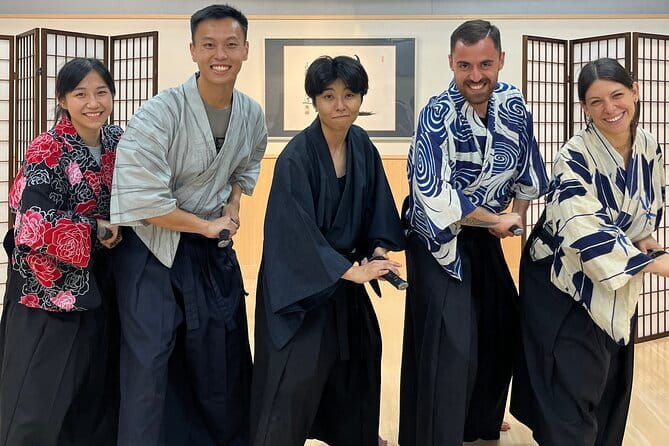
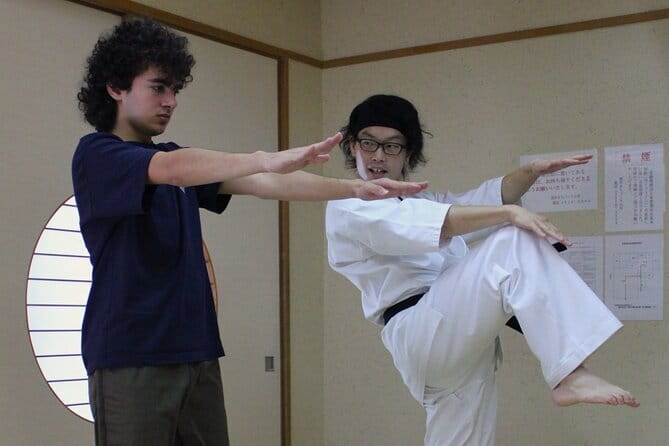
The final section introduces the essence of kumite, or sparring, without physical contact. This is a smart design for a short public class. You get to understand movement, reactions, and defense without taking unnecessary hits.
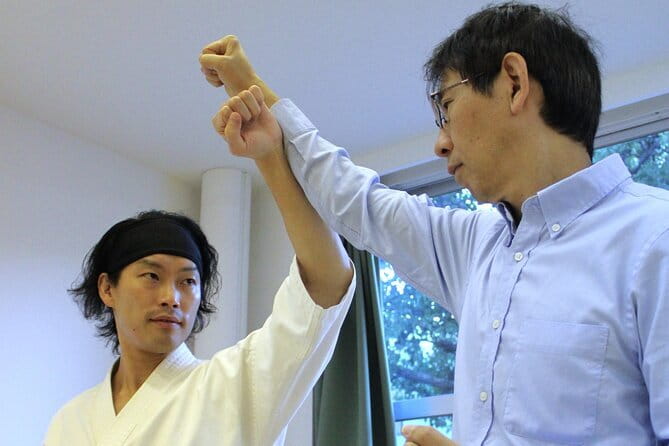
Ryo teaches responses to attacks such as punches, front kicks, and low kicks. The work is based on positioning, blocking, and precision. You may move through the sequence slowly at first, then add speed as the pattern becomes clearer.
For a beginner, this is a useful lesson in distance and awareness. A punch is not just something you throw. You also need to recognize the line of attack and know where to place your defense. For an experienced martial artist, the value may be in seeing how Ryo explains the same idea through Kyokushin technique.
The non-contact format also makes the activity suitable for family groups and mixed abilities. You can train with a partner without turning the class into a fight. That said, you should still follow the instructor carefully. Controlled sparring depends on attention, and even non-contact drills can become awkward if you rush.
What the setting adds to the experience
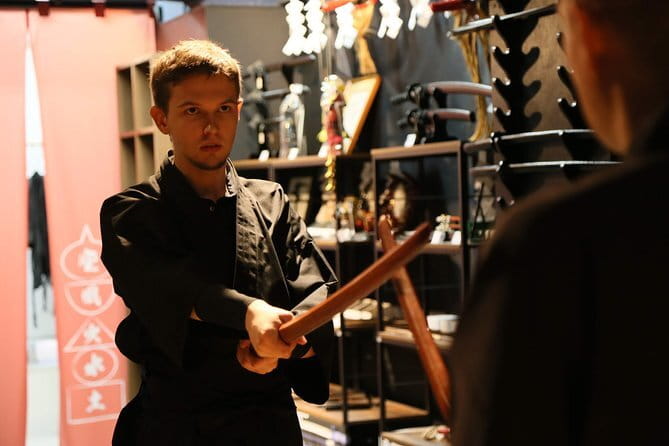
The class takes place in central Asakusa, a convenient part of Tokyo, though the exact meeting point can vary by booking option. One unusual detail is that the lesson may take place in the middle of a martial arts store.
That setting gives the activity a less staged feel. You are surrounded by the world of martial arts rather than placed in a generic room made only for tourists. It also adds a fun visual element for anyone interested in karate equipment and training culture.
Because the meeting point depends on the option you choose, check the booking details before setting out. Do not assume every version meets in exactly the same place. Asakusa is easy to combine with other Tokyo sightseeing, but allow enough time to find the correct meeting point.
Is $58 per person good value?
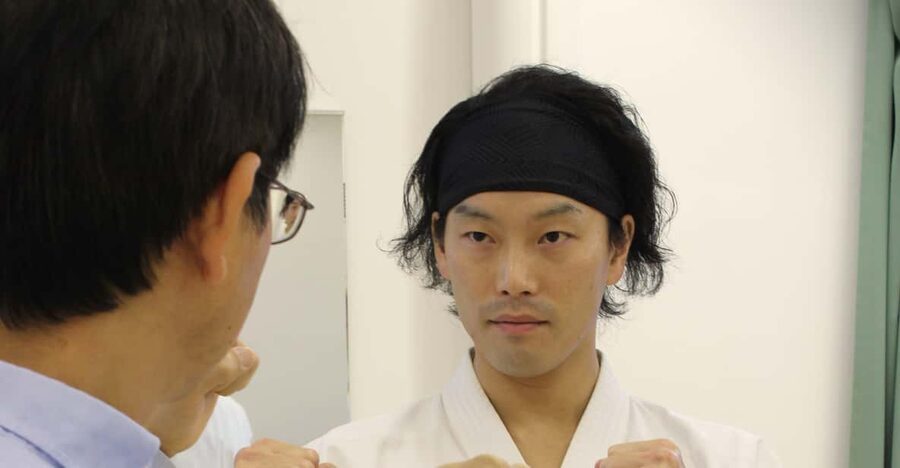
At $58 per person, this is not the cheapest way to spend an hour in Tokyo. Its value comes from the quality and focus of the instruction rather than the length alone.
You receive a guided lesson with a qualified black belt, stretching, technique practice, kata demonstration, pad work, non-contact sparring, and a bottle of water. The lesson lasts from one hour to 90 minutes, depending on the option. Private and small-group formats are available, which can make the price more appealing if you want direct corrections.
The comparison is simple. If you only want to wear a uniform and take a few pictures, this class may offer more instruction than you need. If you want to understand karate and get a proper workout, the price is reasonable for a specialist lesson in Tokyo.
Check the uniform detail before booking. A karate gi is included only with the specified private 90-minute option, so the headline price does not automatically mean you will receive one. That small distinction prevents an avoidable surprise.
The free cancellation policy allows cancellation up to 24 hours before the activity for a full refund, and you can reserve now and pay later. Those terms are useful when Tokyo plans are still shifting, though they do not change the need to select the right session.
Who should book this karate experience?
I would recommend it to several kinds of visitors:
- Complete beginners who want a first lesson without joining a long-term school.
- Families with older children who want an active cultural activity and patient instruction.
- Experienced martial artists who want to compare Kyokushin with Shotokan, Goju Ryu, Tae Kwon Do, Kenpo, Muay Thai, or another style.
- Visitors who prefer participation to sightseeing and want a real workout during their Tokyo stay.
- Solo visitors and couples who like private or small-group teaching.
You do not need prior karate experience. The structure begins with basic movements, and the instructor can slow down or adjust the work. At the same time, experienced students are unlikely to find the class empty or purely symbolic, since the lesson includes technical corrections, kata, defense, and sparring concepts.
I would be more cautious if you are looking for hard-contact competition training. The class teaches the essence of kumite without physical contact, and the pad work is controlled. That makes it safer and more accessible, but it is not a substitute for a full Kyokushin fight session.
Practical tips before you go
Wear clothing that allows your hips, shoulders, and legs to move freely. If you book the session without a gi, you should plan to train in workout clothes. The included water is useful, but you should still arrive ready for physical activity.
Tell Ryo about your experience level at the start. If you have trained in another martial art, mention the style. That gives him a useful starting point and lets you ask about differences in stance, kicks, forms, or defense.
If you are bringing a child, explain that the lesson is active but controlled. The class can be adapted, and the instructor has worked with children, but young participants still need to listen carefully and follow directions.
Allow for the full 60 to 90 minutes rather than treating this as a quick photo stop. The bowing, breathing, warm-up, technical instruction, pad work, and non-contact sparring each serve a purpose. Rushing through them would miss what makes the activity worthwhile.
Should you book it?
Book this if you want to practice karate in Japan, not just watch it. Ryo brings real Kyokushin competition and teaching experience, yet the lesson remains friendly enough for beginners and children.
The strongest reasons to choose it are the clear English instruction, careful adjustments, useful mix of culture and exercise, and access to both basic technique and practical defense. The main limits are the short format and the need to check whether your chosen option includes the gi.
For a first taste of karate, a family activity, or a style comparison for someone already training, this is a strong use of an hour in Tokyo. Choose the private or small-group option if personal correction matters most, and confirm the uniform details before paying.
FAQ
How long does the karate experience last?
The activity lasts between one hour and 90 minutes. Starting times depend on availability.
How much does the experience cost?
The listed price is $58 per person.
Is the lesson suitable for complete beginners?
Yes. The class is designed for both beginners and people who already have karate or other martial arts experience.
Who teaches the karate lesson?
The instructor is Ryo, a Japanese Kyokushin Karate black belt and former All-Japan champion. He has taught karate since 2010 and holds a second-dan black belt.
Is the lesson taught in English?
Yes. Instruction is available in English and Japanese.
Do I need previous martial arts experience?
No. Previous experience is not required. Ryo teaches basic punches, blocks, kicks, stance, and non-contact sparring step by step.
Is a karate uniform included?
A karate uniform is included with the option called PRIVATE/90min Session with Karate Gi. The 90-minute class without that option does not provide a gi, so check your selected booking carefully.
What equipment is provided?
The activity includes punching and kicking pads, a kata demonstration, an interactive lesson, and a bottle of water. The specified private 90-minute gi option also includes a karate uniform.
Can I cancel the booking?
Yes. You can cancel up to 24 hours in advance for a full refund. Reserve-now, pay-later booking is also available.
Just added in Tokyo
- The 10 Tastings of Tokyo With Locals: Private Street Food Tour★ 5.0 · 48 reviews
- Small Town in the Big City: Tasting Tokyo’s Kichijoji★ 5.0 · 195 reviews
- Small Town in the Big City: Tasting Tokyo’s Kichijoji★ 5.0 · 16 reviews
- EXCLUSIVE Tokyo Secret: Kichijoji Small-Group Food & Bar Hopping★ 5.0 · 29 reviews
- Explore Kichijoji: Walk Through One of Tokyo’s Beloved Districts★ 5.0 · 21 reviews
- :Tokyo,Shibuya/ Pro Photography in Kimono / English-Friendly★ 5.0 · 26 reviews
- 【R34】Tokyo:Private Daikoku tour in Modified R34★ 4.9 · 92 reviews
- Tokyo:Calligraphy &Make your original folding fan in Asakusa★ 5.0 · 62 reviews
Martial Arts Experiences, compared.
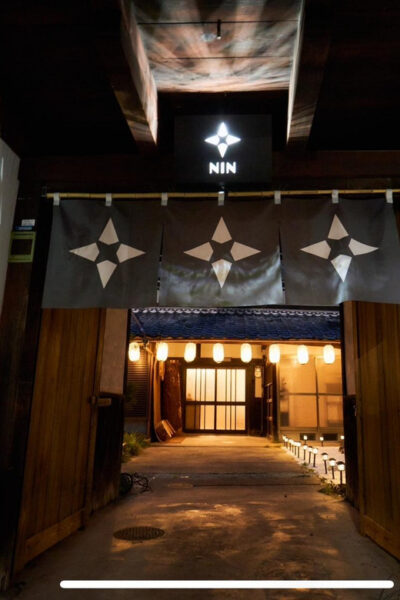
Kendo and Samurai Experience with Uniform and Gear
Read our review →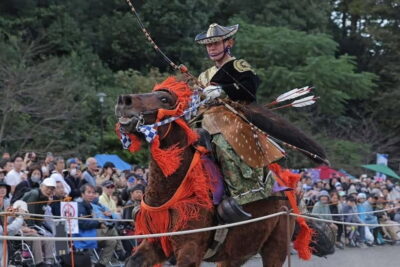
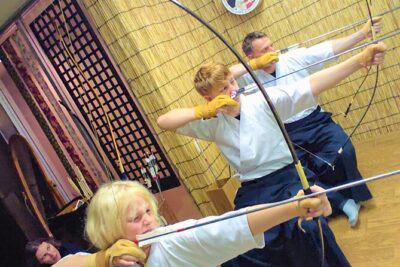
Samurai Sword & Archery Class from Samurai Descendant
Read our review →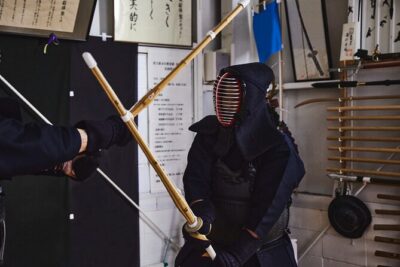
Japanesel Archery Experience HIROSHIMA CASTLE SHARAKU
Read our review →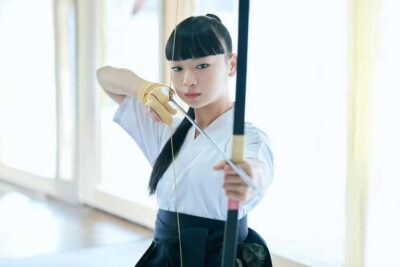
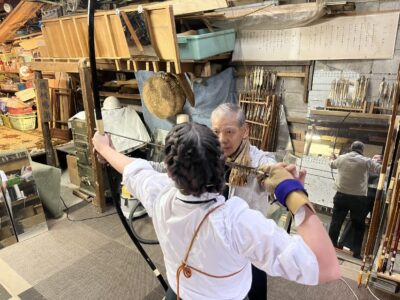
Japanese Archery Workshop with Experienced Instructor
Read our review →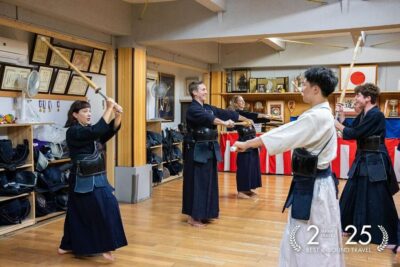
Browse the lists this tour appears in