
Reviewed · FOOD TOURS
Tokyo: Night Foodie Tour in Shinjuku
An itamae-made sushi course and a table full of Wagyu give this Shinjuku evening its main appeal. You are not simply being shown a restaurant district. Your guide leads you through places that can be hard to find, explains how to eat what arrives, and keeps the evening moving through Kabukicho and Golden Gai.
I like the contrast between the stops: careful sushi first, hands-on yakiniku next, then a relaxed snack or drink to finish. I also like the small-group format and the guides’ personal touch. Guides such as Fuji, Amy, Max, Yuki, and Ken have helped visitors order, explained customs, taken photos, and adjusted food for younger diners when possible.
The main drawback is price. At $127 per person, this is not a bargain dinner, and portions are described as modest rather than enormous. The final snack stop can also feel less special than the sushi and Wagyu. Still, the price includes food, drinks, a guide, and about three to three and a half hours of walking and eating.
What makes this Shinjuku evening special
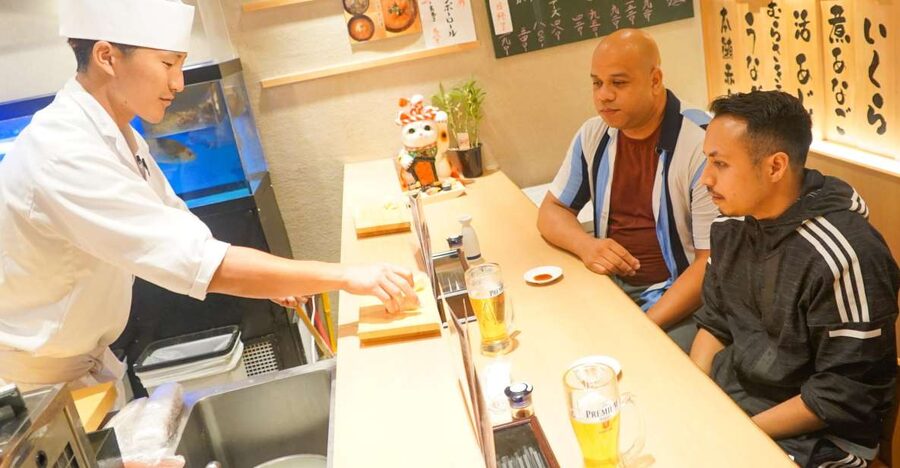
- Watch sushi prepared in front of you: The opening course centers on seasonal omakase sushi, with the chef choosing the selection.
- Cook Wagyu at your own table: Thinly sliced beef is grilled on a traditional Japanese BBQ stove, with guidance from your host.
- See more than neon streets: The route passes through Kabukicho and Golden Gai, with time for local history, customs, and neighborhood context.
- Finish with a distinctly Japanese snack stop: Depending on the group, you may visit a snack bar or cozy bar for sweets, snacks, dessert, or a drink.
- Get practical help with ordering: English-speaking guides explain dishes, drinks, and table customs, which is useful when menus are unfamiliar.
- Expect quality over quantity: The evening focuses on several good courses rather than a giant eating challenge.
Starting near Shinjuku Station’s West Exit
The meeting point is in front of the black pillar of Kyu-Ome-kaido, beside the Uniqlo Shinjuku Nishiguchi shop. Allow seven to eight minutes from the West Exit of JR Shinjuku Station. Look for a guide holding an orange MagicalTrip sign.
This sounds simple, but Shinjuku Station is a maze of exits, underground passages, and busy streets. Give yourself extra time. You do not want to begin the evening hot, rushed, and already lost. The guide brings you into the tour from this practical starting point, then handles the route from there.
The route begins with a local restaurant visit of about 50 minutes. You will also walk between stops, so wear comfortable shoes. The food is the star, but the short walks help you understand how quickly Shinjuku shifts from department stores and station crowds to small restaurants, bars, shrines, and entertainment streets.
The advertised duration is three hours, while the included guide time is listed as three and a half hours. Plan for roughly an evening rather than treating the shorter figure as an exact finish time.
Other food tours in Tokyo people book:
- Tokyo: Shinjuku Food Tour (13 Dishes at 4 Local Eateries)
★ 5.0 · 6,603 reviews - Tokyo: Shinjuku Food Tour (15 Dishes and 4 Eateries)
★ 4.9 · 2,033 reviews - Best of Shinjuku: Izakaya Food Tour (4 Stops, 14+ Tastings)
★ 5.0 · 1,863 reviews
First course: seasonal sushi and the chef’s choices
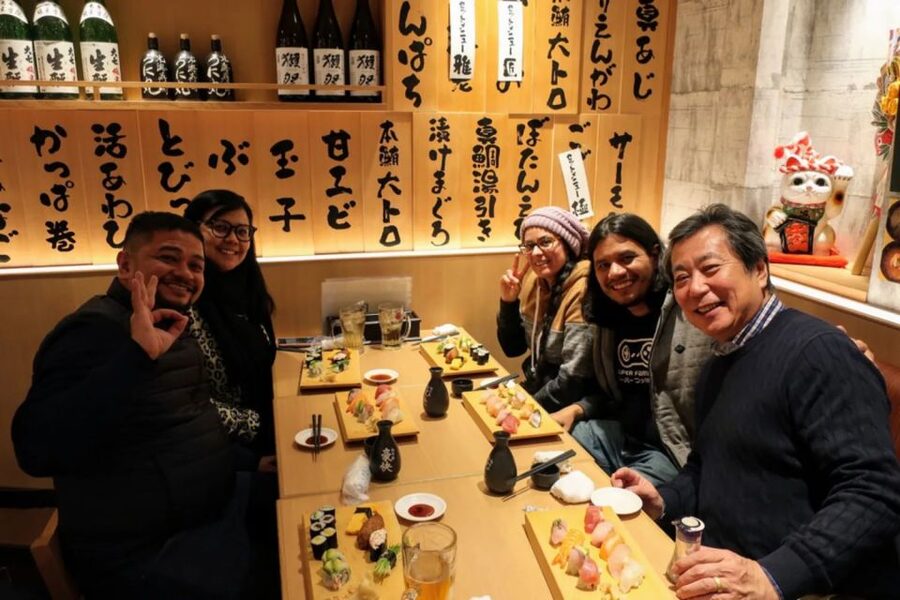
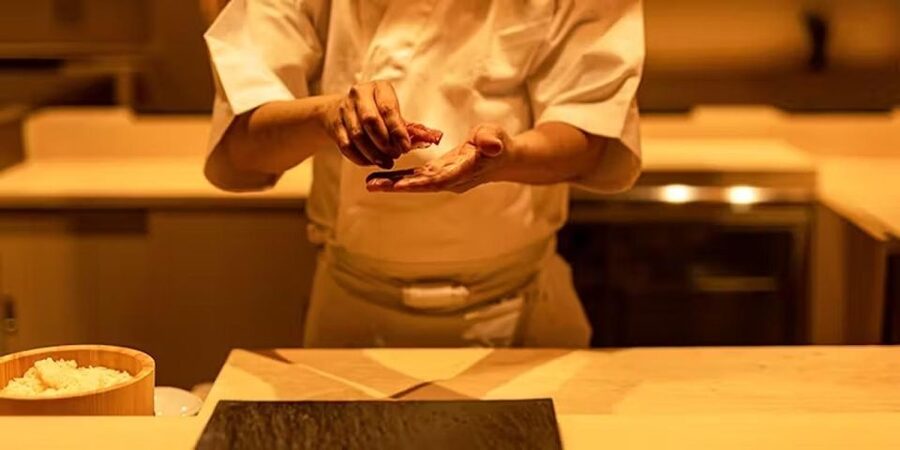
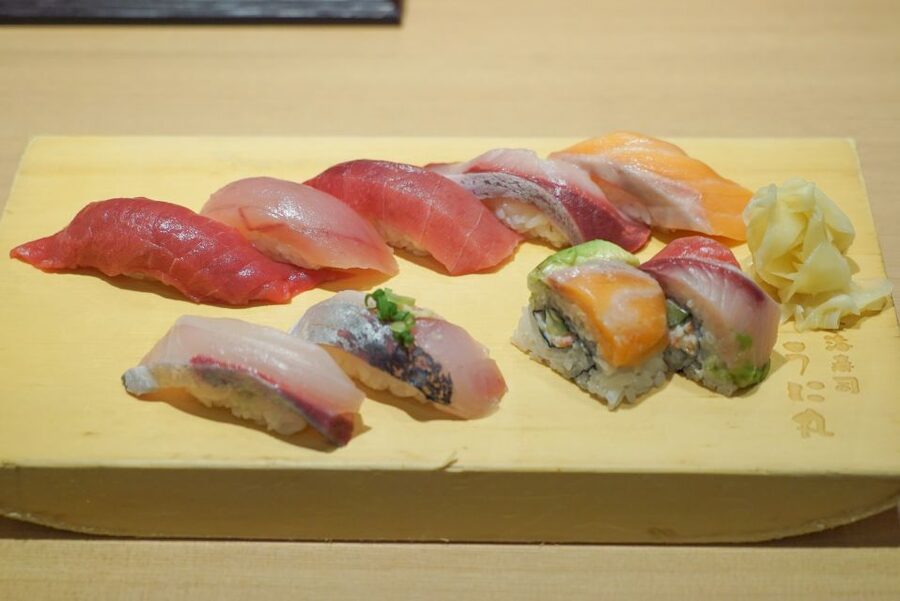
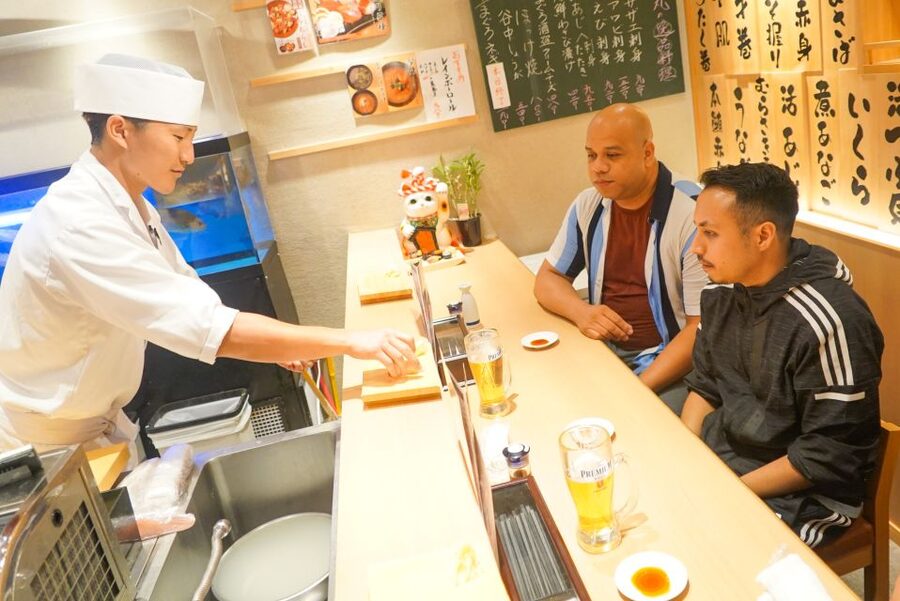
The first meal is at a sushi restaurant selected for the group. The key feature is the chef preparing artisanal nigiri in front of you. You can choose the omakase style, which means you let the chef select the seasonal pieces.
This is a good introduction to Japanese sushi culture because you are not left to guess what to order. Your guide can explain the fish, the order of the pieces, and how to approach the meal. For first-time visitors, that removes much of the worry that comes with an unfamiliar sushi counter.
The sushi course is also more than a quick sample. It is one of the two main food stops, and the quality is intended to be a central part of the evening. Several guides have been praised for describing the dishes and helping diners understand Japanese food customs. That personal explanation is worth something in a city where a picture menu may not tell you much about texture, preparation, or serving order.
Vegetarian food is listed as available, but you should still raise dietary needs before booking. The operator does not promise an allergy-free kitchen, and each restaurant controls its own preparation. Substitutions may not be possible at every stop.
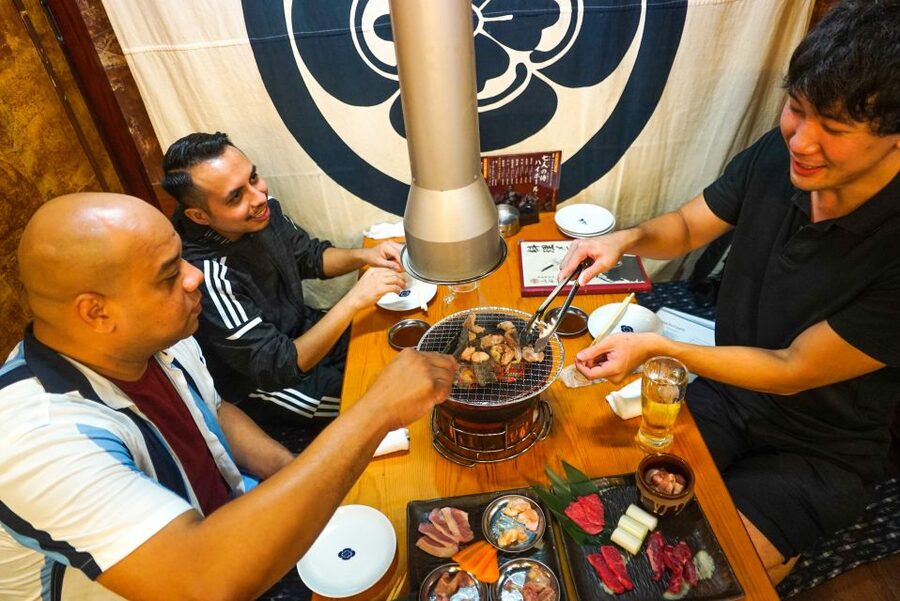
Second course: Wagyu yakiniku at the table
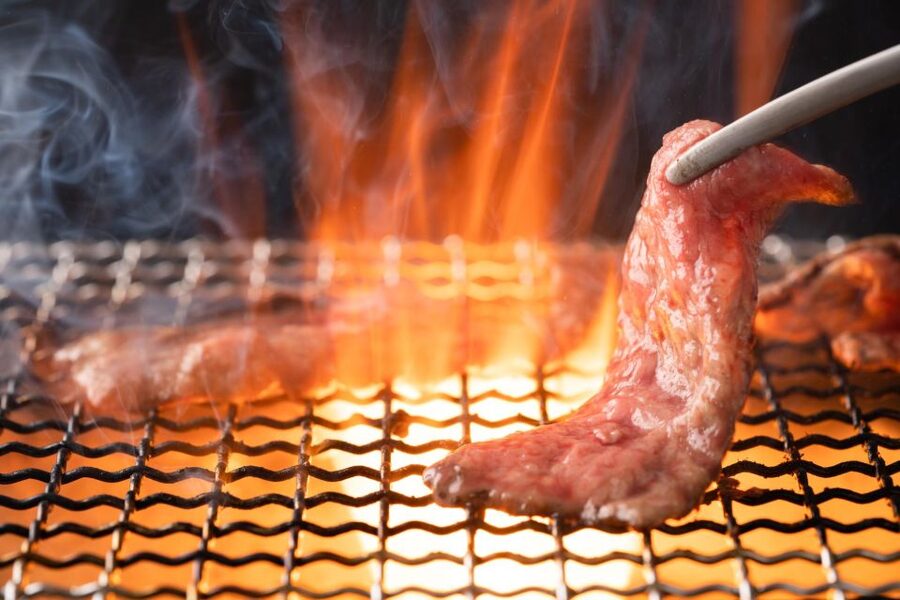
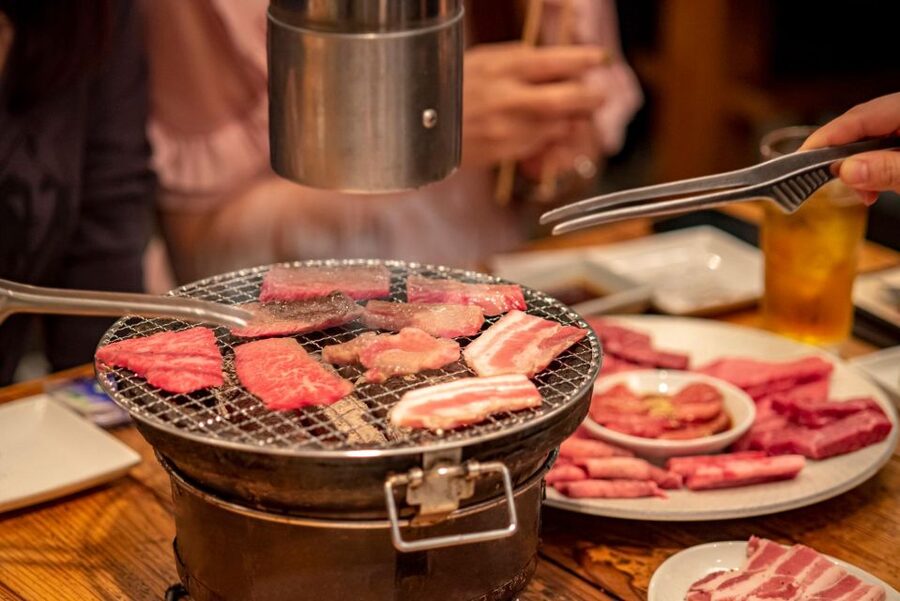
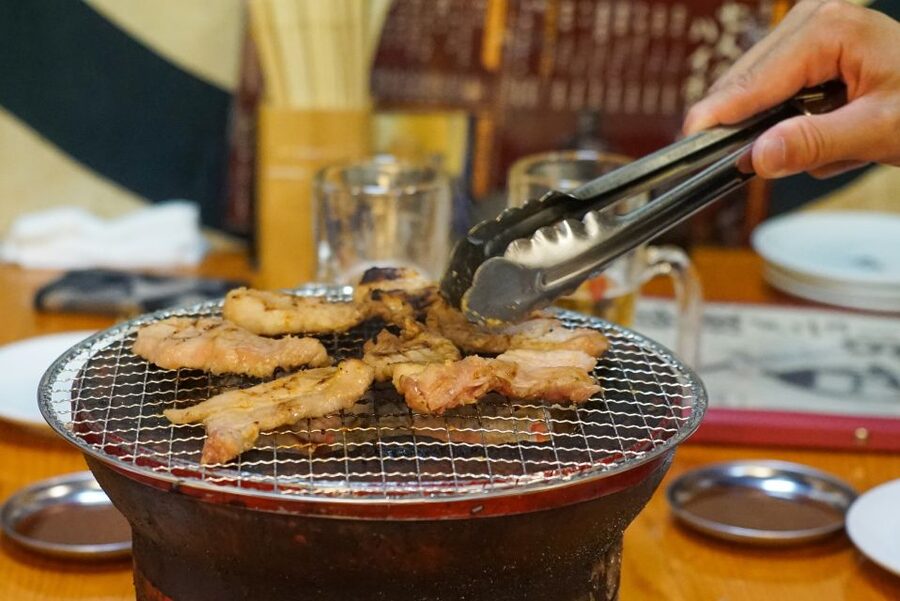
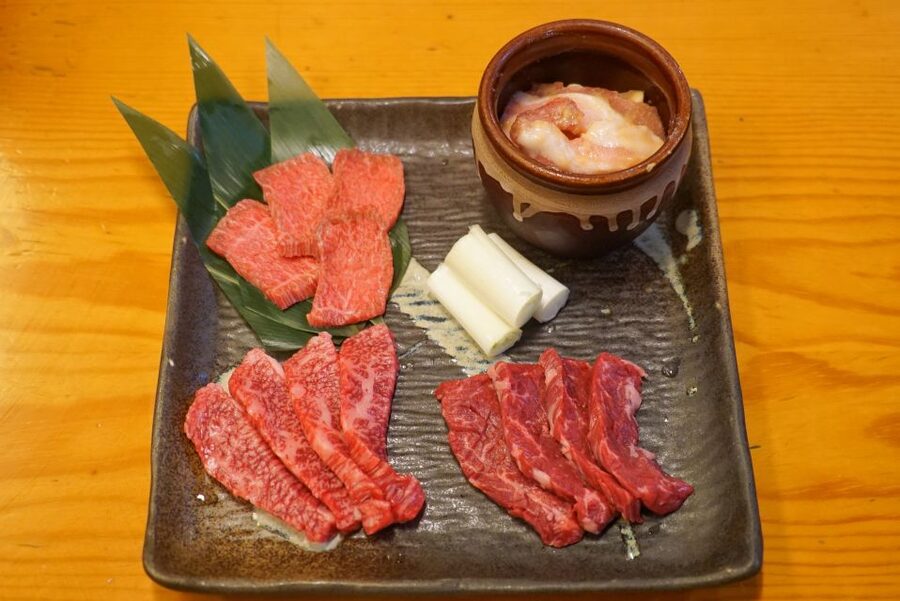
After sushi, the group moves to a yakiniku restaurant near Shinjuku West or Kabuki-cho. Here, you grill thin slices of Wagyu on a small Japanese BBQ stove at the table.
This is the most hands-on part of the night. Rather than receiving a finished steak, you cook the beef yourself and eat it at the point you prefer. Your guide explains how to handle the grill and how to enjoy the meat. Some dinners have included a salt block for rubbing the beef, an unusual detail that makes the course more memorable.
The meal is described as a full Wagyu dinner, with vegetarian food available. You should not expect a huge pile of meat, though. The strongest praise centers on the quality of the beef and the fun of preparing it, not on sheer volume. One useful way to think about the tour is as a tasting of high-end Japanese food, not an all-you-can-eat barbecue.
I like this stop because it shows a different side of Japanese food culture from the sushi course. Sushi asks you to notice freshness and restraint. Yakiniku asks you to take part, watch the heat, and decide when each piece is ready. The change of pace keeps the evening from becoming three similar restaurant visits.
Kabukicho after dark, with a guide to make sense of it
The route includes about ten minutes of guided walking through Kabukicho. This is Tokyo’s famous entertainment and nightlife district, where bright signs, narrow lanes, restaurants, bars, and crowds compete for your attention.
A guide is useful here because Shinjuku can feel like a wall of choices. You may pass a restaurant that looks inviting but have no idea what happens inside. The tour gives you an introduction to the area without asking you to solve its layout on your own.
Several guides have added stops at nearby sights, shrines, small stalls, or light displays when the route allowed. The exact walking path can vary, so do not treat every extra sight as guaranteed. What you can count on is neighborhood context between meals, not a formal sightseeing tour.
Kabukicho is also a place where you should stay alert and keep your group together. The tour is open to all ages, but the district’s nightlife character may not suit every family. If you are bringing children, tell the operator in advance. The final stop can be changed to a Japanese snack restaurant for families.
More eating your way round Tokyo:
- Tokyo Night Foodie Tour in Shinjuku – Seasonal Sushi, Wagyu Beef
★ 5.0 · 1,161 reviews - Eat and Drink Like a Local: Tokyo Ueno Food Tour-Taverns&Ramen
★ 5.0 · 957 reviews - Tokyo: Shibuya Food Tour (13 dishes and 4 Eateries)
★ 5.0 · 770 reviews - Tsukiji Fish Market: Street Food & Culture Walking Tour
★ 5.0 · 669 reviews
The final stop: sweets, snacks, or a drink
The evening ends at a local bar, snack bar, or cozy food stop for about 40 minutes. Depending on the group, you may have a Japanese dessert, an alcoholic drink, or access to nostalgic sweets and savory snacks.
This stop is less predictable than the sushi and yakiniku. Some people may enjoy the relaxed setting and the chance to try unusual packaged treats. Others may find it less impressive after such a polished sushi course and excellent beef. I would treat it as a social finish rather than the main reason to book.
The included items list two drinks, along with dessert or an alcoholic drink. Alcohol is available, but the legal drinking age in Japan is 20. Families with children are directed toward a snack-focused option instead.
The last stop also gives you time to ask your guide about the rest of your Tokyo stay. Guides have offered restaurant suggestions, ordering help, and tips for exploring on your own. That can be especially useful early in a visit, when you are still learning how Japanese restaurants work.
Golden Gai and the walk back
A short guided section through Golden Gai follows the final stop, after which the route returns to the black pillar near the station.
Golden Gai is known for its dense collection of tiny bars and narrow lanes. The stop is brief, about ten minutes, so you will not explore every alley or settle in for a full bar crawl. Instead, you get a quick look at one of Shinjuku’s most distinctive nighttime areas.
The walking is part of the value. You are moving through a neighborhood rather than being driven from one restaurant to the next. I would still keep your expectations realistic: this is primarily a food tour with local orientation, not a detailed history walk or a long nightlife outing.
How good is the value at $127?
The $127 price makes sense if you would otherwise spend time guessing where to eat and worrying about language barriers. It includes a seasonal sushi course, a full Wagyu dinner, two drinks, dessert or an alcoholic drink, a certified English-speaking guide, and tour photos.
The value improves if you are new to Tokyo or want a planned first evening in Shinjuku. You get three different kinds of stops, food explanations, neighborhood walks, and help with ordering. Several visitors who initially felt the cost was high later considered the food quality and small-group attention worth it.
The value is weaker if your main goal is to eat as much as possible. One guide has described the meal as modest portions of high-end food. You are paying for access, guidance, and a carefully arranged evening as much as for calories.
Private and small-group options are available. A private booking can be useful for families or a group with particular food preferences, though the operator still cannot guarantee an allergy-free meal.
Guides make the difference
The experience depends heavily on the person leading it. The strongest guide feedback has centered on warmth, clear English, practical help, and knowledge of Tokyo food customs.
Names that have received especially warm praise include Fuji, Amy, Max, Yuki, Ken, Taka, Hiro, Saki, Rai, and Kazu. Amy has helped a child receive sushi more suited to his taste. Max has kept solo participants involved. Fuji has explained drinks such as sake and shochu, as well as local customs and neighborhood sights.
That does not mean you can request any particular guide or that every tour will feel identical. The useful point is that the company puts a real person between you and the restaurants. You are not just following a fixed audio route.
The small-group setup also matters. It gives you more chances to ask questions and makes it easier for the guide to notice if you need help with an unfamiliar dish. Solo visitors can fit into the social rhythm, while couples and families can focus on each other without arranging every meal themselves.
Practical details before you book
Bring cash. The tour includes the listed food and drinks, but additional food and drinks cost extra.
The tour is in English and is open to all ages. The legal drinking age is 20, and alcohol is not required for the experience. Families should expect the final stop to focus on Japanese snacks rather than a bar.
Some locations are not suitable for wheelchairs or strollers, and the tour is not recommended for wheelchair users. The route includes walking through crowded areas, restaurant entrances, and places where access can be limited.
Tokyo’s weather can be extreme. Summer temperatures may reach 40°C, while winter lows can fall to -5°C. Wear shoes suited to walking and dress for the season, since the tour moves between outdoor streets and indoor restaurants.
Smoking rules vary by venue, and the company may not be able to change a stop if smoking is prohibited there. If this matters to you, ask before booking.
Free cancellation is available up to 24 hours before the start time, and you can reserve now and pay later. Check the available start times because the evening schedule varies.
Who should book this Shinjuku food tour?
I would choose this tour for a first or second night in Tokyo, especially if you want a safe way to get oriented in Shinjuku while eating very well. It is also a good fit for solo visitors, couples, families with older children, and anyone nervous about ordering sushi or yakiniku alone.
You should book it if you value quality and explanation over quantity. The sushi, Wagyu, neighborhood walking, and guide support create a rounded evening that would be difficult to arrange efficiently on your own.
I would skip it if you already know Shinjuku’s food scene, prefer casual low-cost meals, or want a long bar-hopping night. The final snack stop may feel lighter than the first two courses, and the $127 price is a serious commitment.
For most first-time Tokyo visitors who want a memorable introduction to Japanese food and Shinjuku after dark, I think the cost is defensible. Just arrive hungry enough for three stops, not expecting a giant feast, and be ready to walk.
FAQ
Where does the Tokyo Night Foodie Tour meet?
Meet in front of the black pillar of Kyu-Ome-kaido, next to the Uniqlo Shinjuku Nishiguchi shop. It is about a seven to eight minute walk from the West Exit of JR Shinjuku Station. The guide will hold an orange MagicalTrip sign.
How long does the tour last?
The activity is advertised as three hours, while the included guide time is listed as three and a half hours. Check the available start time when booking and plan for an evening-length experience.
What food is included?
The tour includes a seasonal sushi course selected by the chef, a full Wagyu beef yakiniku dinner, two drinks, and dessert or an alcoholic drink. Extra food and drinks are not included.
Is vegetarian food available?
Vegetarian options are listed as available for both the sushi and Wagyu stops. The operator cannot guarantee allergy-free preparation or dietary substitutions at every restaurant.
Is alcohol included?
Two drinks are included, and alcohol is available. The legal drinking age in Japan is 20. Families with children can visit a Japanese snack restaurant for the final stop.
Is the tour offered in English?
Yes. The tour has a live English-speaking guide.
Are private groups available?
Yes. You can book a private group or join a small group.
Is the tour suitable for wheelchair users or strollers?
No. Some locations are not accessible by wheelchair or stroller, and the tour is not suitable for wheelchair users.
What should I bring?
Bring cash. You should also wear comfortable shoes and prepare for the weather, since the tour includes walking outdoors in Shinjuku.
Just added in Tokyo
- Nikko: Edo Wonderland Edomura Cultural Theme Park Ticket★ 4.3 · 205 reviews
- 《MEMBERS-ONLY-BAR-HOPPING》Discover Your Special Whiskey in Tokyo!★ 5.0 · 29 reviews
- Japanese Whisky Hunting《HIGH-QUALITY-ONLY》Rare Tasting Class★ 5.0 · 20 reviews
- Luxury Tokyo Sake, Cocktail, Whisky and Pairing Tour★ 5.0 · 18 reviews
- Wagyu & Sake Pairing in Shinjuku – Steak, Shabu-Shabu & More★ 5.0 · 112 reviews
- Small-Group Wagyu Beef and 7 Japanese Dishes Tokyo Cooking Class★ 5.0 · 190 reviews
- Mt. Fuji, Hakone Private Tour from Tokyo – Onsen, Arts and Nature★ 5.0 · 79 reviews
- Tokyo Cyberpunk Street Photo Tour★ 5.0 · 165 reviews
Food Tours, compared.
Shinjuku Food Tour (13 Dishes at 4 Local Eateries)
Read our review →
Osaka Food Tour: 13 Dishes at 5 Local Eateries
Read our review →
Best of Shinjuku: Izakaya Food Tour (4 Stops, 14+ Tastings)
Read our review →
Kyoto Night Foodie Tour in Gion (9+ dishes + 6 Sake tastings)
Read our review →
Hungry Osaka Street Food Tour:15 Tastings & 3 Drinks with a Local
Read our review →
Tokyo Night Foodie Tour in Shinjuku – Seasonal Sushi, Wagyu Beef
Read our review →
Osaka Local Foodie Walking Tour in Dotonbori and Shinsekai
Read our review →
Eat and Drink Like a Local: Tokyo Ueno Food Tour-Taverns&Ramen
Read our review →Browse the lists this tour appears in