
Reviewed · SAMURAI & NINJA EXPERIENCES
Tokyo: Samurai Adventure! Authentic Sword Experience
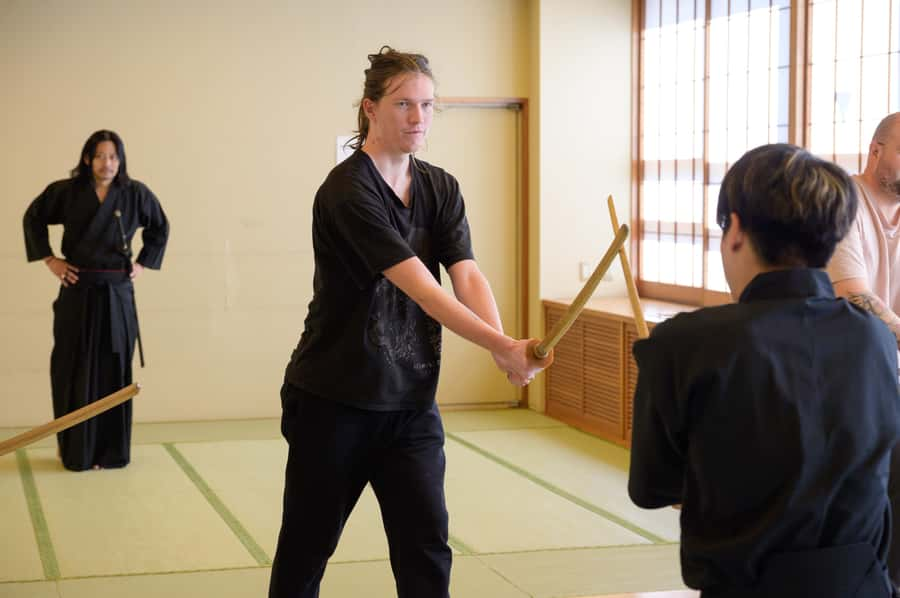
The best part of this Tokyo activity is that you do not just pose beside a sword. You learn how a samurai scene is built, from the first stance to a controlled swing, with action actors Dai and Kume guiding you. The practice uses wooden swords, and the lesson is designed for beginners, not trained swordsmen.
I like the friendly, physical format and the chance to work beside Japanese students in the public class. I also like the modest $24 price, which includes instruction, demonstrations, equipment, and photos. The main consideration is that one session offers an introduction, not a full martial arts course, and some movements may be tiring if you have physical limitations.
Key points to know before booking
- Learn Tate action movements: Practice the stylized sword work used in samurai performances and film scenes.
- Train with Dai and Kume: The professional action actors lead demonstrations, correct your form, and keep the lesson approachable.
- Choose public or private: Join Japanese acting students in a public class, or receive a lesson shaped around your level in the private course.
- Use wooden practice swords: You learn grip, stance, swings, and defensive movements without actual sword fighting.
- Add a samurai costume: Costume rental is optional, and it can make the final photo session more memorable.
- Reach it from central Tokyo: The studio is easy to access from Tokyo Station, Ginza, and Tsukiji, with the activity ending at the same meeting point.
What this samurai lesson really offers
This is a performance workshop with a cultural introduction, not a combat class. That distinction matters. You will not handle a sharpened katana or trade real blows with another person. Instead, you learn the controlled movements that make sword action look convincing and dramatic.
The lesson is taught by professional action actors. Dai and Kume lead the work with demonstrations, simple instructions, and hands-on corrections. You begin with basic body movement, then add the sword. This order helps you understand that samurai action is not simply waving a blade around. Position, timing, balance, and presentation all matter.
The activity is listed in Tokyo, on Honshu, at Samurai Experience Photo Studio ICHI. Search that exact name on Google Maps when you plan your route. The class finishes back at the meeting point, though some sessions may use a nearby dojo after you meet at the studio.
Arrive 15 minutes early. You will have less time to settle in if you arrive at the last minute, especially if you choose the costume option or need to find the studio in a busy central Tokyo neighborhood.
Other samurai and ninja experiences in Tokyo people book:
- Tokyo: Samurai Restaurant Show Ticket with 2 Drinks
★ 4.5 · 1,307 reviews - Tokyo: Samurai Ninja Museum Guided tour and Experience
★ 4.6 · 1,010 reviews - Tokyo: Samurai Sword & Archery Class from Samurai Descendant
★ 5.0 · 603 reviews
From warm-up to first sword movement
The session begins with warm-up exercises. This may sound like a small detail, but it is useful because the class involves standing, stepping, holding a wooden sword, and repeating movements. A warm-up also gives beginners a chance to loosen up before trying the more theatrical actions.
Next comes an introduction to samurai history and culture. The private course gives this background first, while the public course folds the cultural setting into the lesson. Do not expect a long academic lecture. The point is to give meaning to the movements before you begin practicing them.
You then learn how to hold the sword correctly. Grip and posture come before speed. The instructors show you how to rest the sword, how to position your body, and how to make a controlled swing. Basic defensive actions are included as well.
The lesson moves step by step, so you are not expected to know martial arts. Comfortable clothing and closed-toe shoes are important. High heels are not allowed, and loose or awkward clothing may make stepping and swinging harder.
Watching Dai and Kume demonstrate the craft
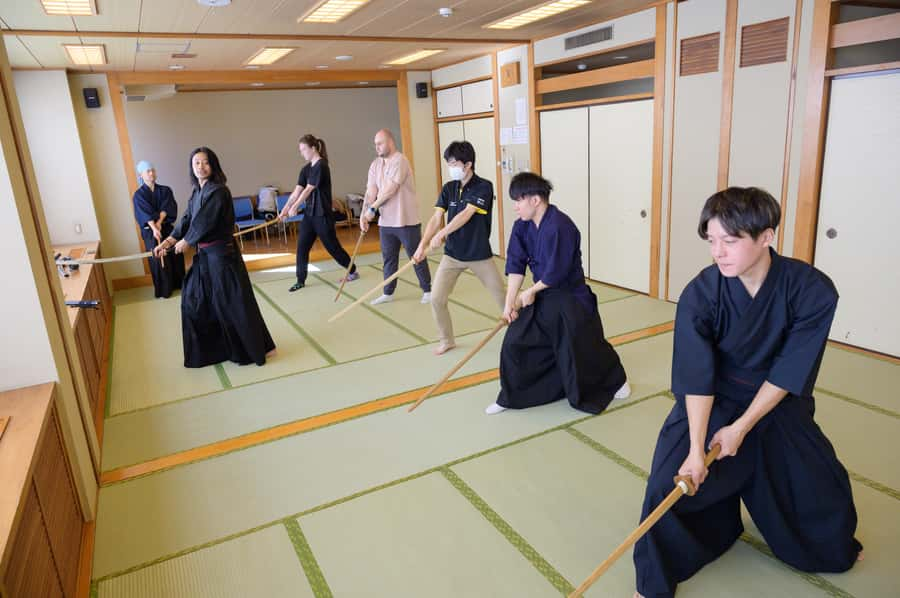
A major part of the appeal is seeing the instructors perform the movements at close range. Their demonstration gives you a clear picture of the difference between a practice swing and polished stage action.
Dai, often addressed as Dai Sensei, and Kume show how a samurai scene gains force through timing and precision. You can watch the movements before trying them yourself, then receive tips as you practice. The instruction is conducted in Japanese and English.
That bilingual setup helps, but this is still a physical lesson. You will understand much of it by watching and copying, even if you are not fluent in either language. The instructors are also reported to be patient when someone needs a movement explained again or adjusted.
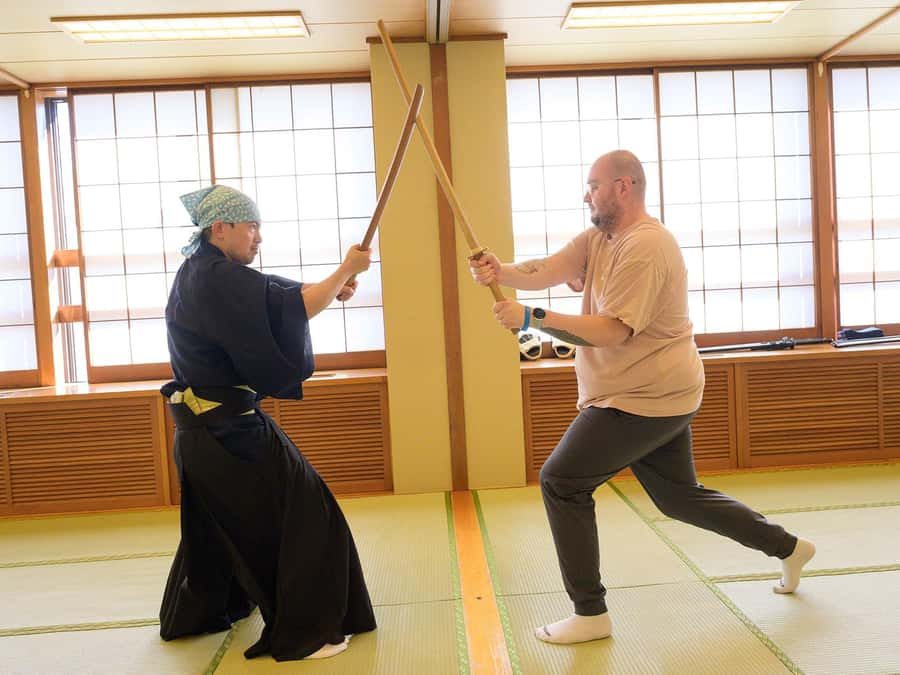
Do not confuse the dramatic presentation with actual sword combat. The workshop teaches safe actions with practice swords. The paired work is closer to rehearsing a film scene than fighting an opponent.
Practicing with a partner
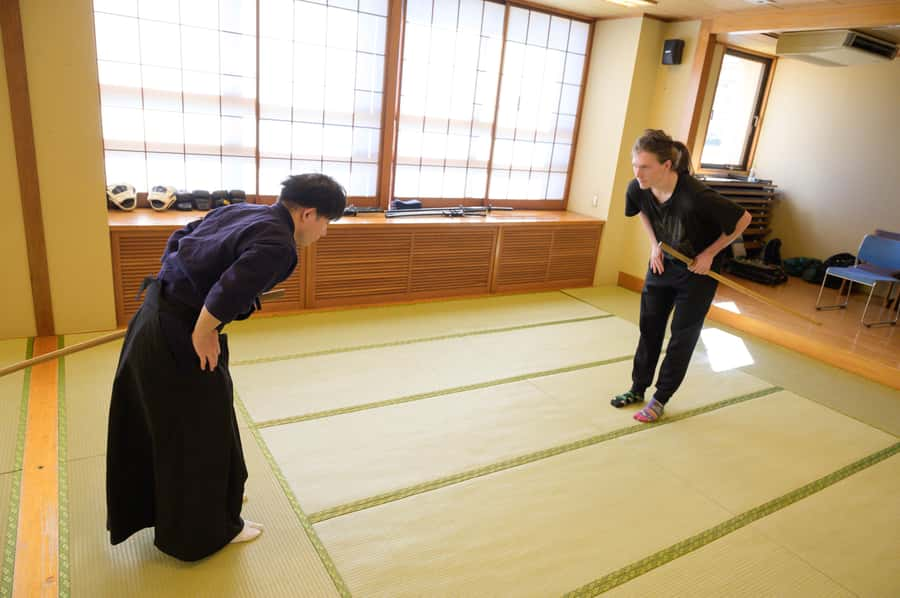
Once you have the basics, you practice with a professional samurai in a paired sequence. This is where the class becomes more than a demonstration. You get to apply the stance, grip, and swing in a short action scene.
The pairing adds fun, but it also makes the lesson more physical and social. You may work with an instructor, another participant, or members of the public class. The setting can include Japanese students who are learning samurai action for their own acting work.
That public class offers the more communal version of the experience. You observe students training, then practice alongside them. For many people, this is the most interesting cultural exchange in the session. You are not simply watching a staged show for tourists. You are sharing practice space with people who are studying the same performance skills.
If you want more attention or have a specific goal, choose the private course. It begins with a short explanation of samurai culture, then the action actor adjusts the instruction to your level. The private option is especially suited to martial arts practitioners and people who already have a strong interest in Japanese culture.
Other swordplay and stealth sessions in Tokyo:
- Best Samurai Experience in Tokyo
★ 5.0 · 458 reviews - Ninja Experience (Family Friendly) at Samurai Ninja Museum TOKYO
★ 5.0 · 441 reviews - Tokyo: Samurai Entertainment Night Show in Kanda Shrine
★ 4.6 · 417 reviews - Tokyo Sword Experience – includes Museum Ticket/Ninja Experience
★ 5.0 · 314 reviews
Public class or private lesson?
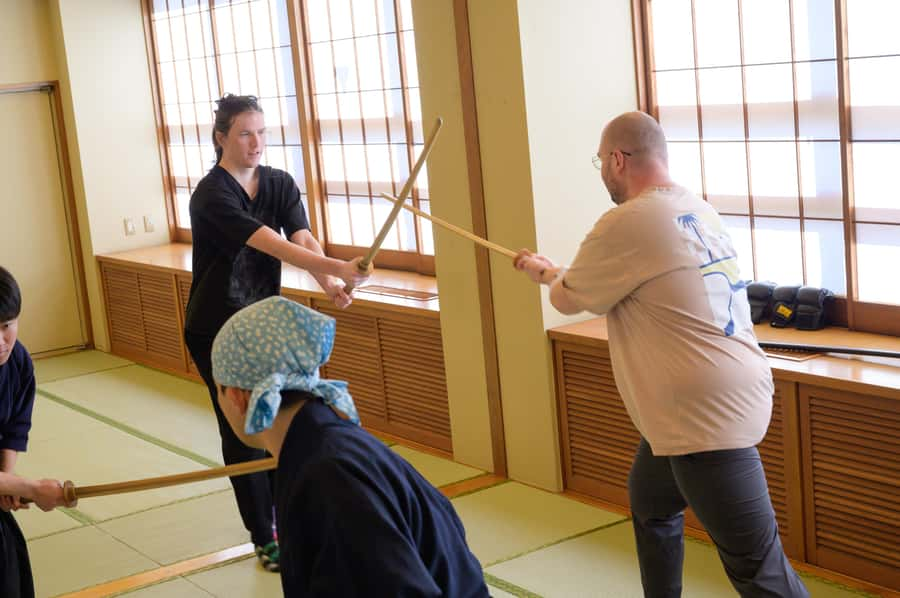
The public course is the better value for most first-time participants. It places you in a class with Japanese students, gives you access to the demonstrations and practice, and keeps the experience lively. It is also a good choice if you like meeting people and do not need every movement tailored to you.
The private course costs more than the basic $24 public experience, but the focused attention can make sense for a couple, family, or martial arts student with particular aims. You receive instruction shaped around your ability and interests rather than following a shared class pace.
One useful detail is that a public class can sometimes feel nearly private if few people book that time. That is not something you can count on, but it means the public option may occasionally offer more individual attention than expected.
Families and mixed-age groups can also enjoy the format. A three-generation group found the activity suitable for a shared outing, and children have joined the training. Still, everyone needs to manage the physical demands of standing and moving with a practice sword.
Costume, photos, and the visual side
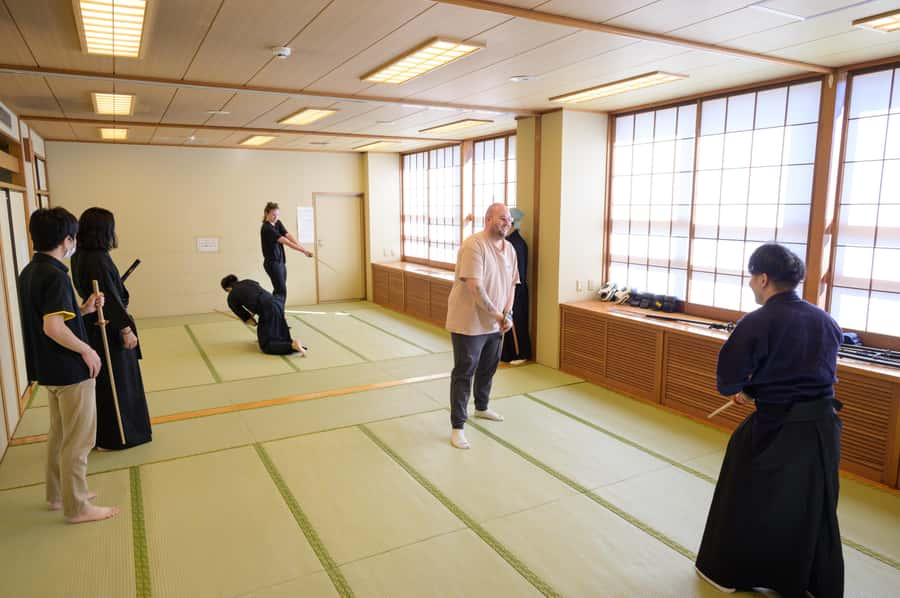
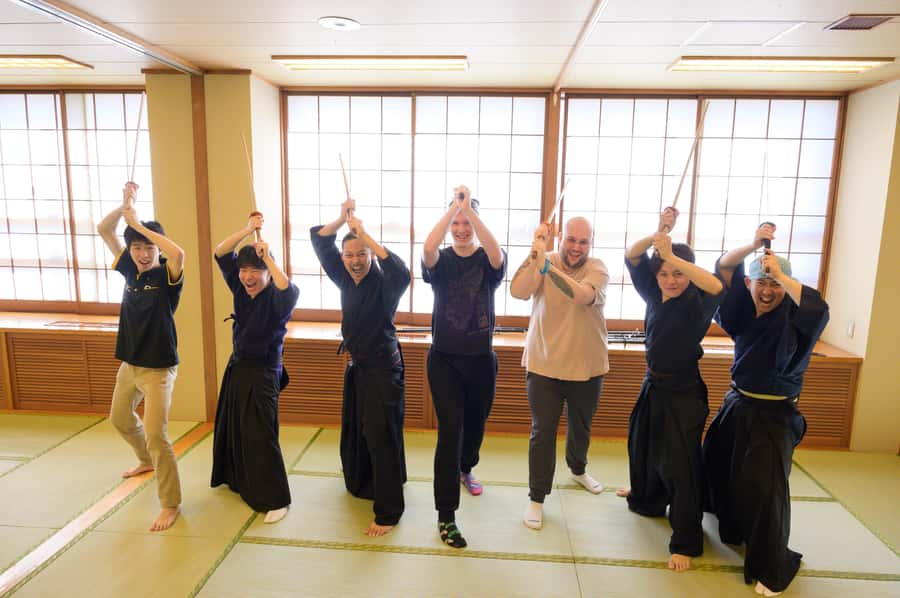
A samurai costume is available as an option rather than included in the basic price. If you want the strongest visual memory, add it. Wearing the clothing changes the feel of the session and gives the photo portion more character.
The photo session takes place at the end. You can pose with the samurai and keep pictures of the activity as a souvenir. This is not just a quick snapshot beside a display. After practicing the movements, you have a better sense of what the costume and sword represent in the action setting.
If you prefer not to dress up, observation is still allowed and can be enjoyable. That makes the activity more flexible for a family member who wants to come along but does not feel comfortable with physical practice.
Keep expectations sensible. One lesson cannot teach a complete sword system, and it will not turn you into a samurai performer. What it can do is show you how a small set of movements is built, rehearsed, and presented safely.
Why the $24 price is good value
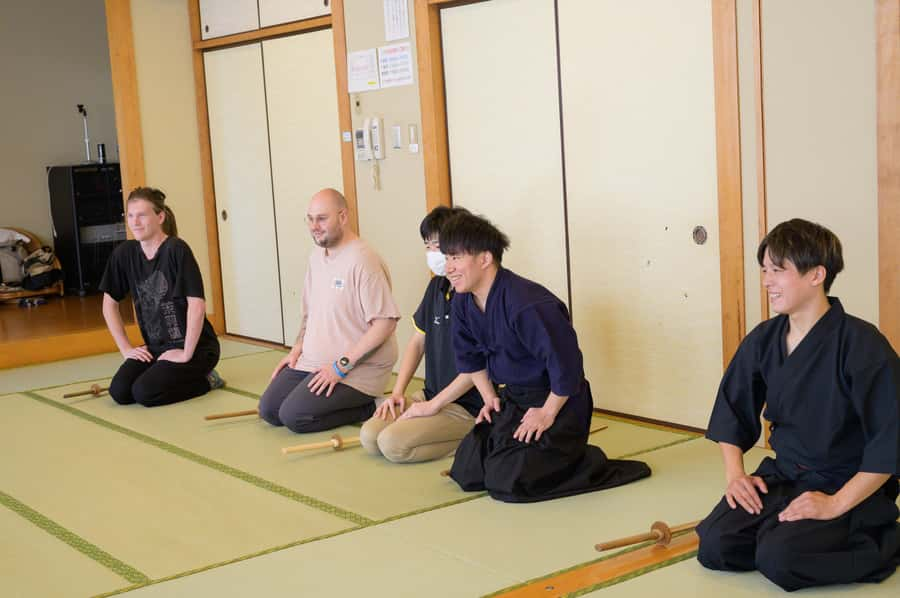
At $24 per person, this is one of the easier Tokyo activities to fit into a sightseeing budget. The price includes a samurai history introduction, live training demonstrations, hands-on practice, wooden swords, and a photo session.
You are paying for instruction rather than a passive performance. That is the key value. You watch skilled action actors, then try the movements with their help. The activity also gives you a more active break from temples, shopping streets, and train rides.
Meals, drinks, transportation, and the optional costume are not included. Plan for those separately. The studio is accessible from Tokyo Station, Ginza, and Tsukiji, but you must make your own way there.
The price is especially fair if you want a short cultural activity with a physical element. It is less useful if you are seeking a serious martial arts course, a long historical lecture, or a full day of entertainment.
Who should book this experience?
I would recommend it to first-time visitors who want something more active than sightseeing. It works well for couples, families, and small groups, especially if everyone enjoys trying a new skill together.
It is also a good match for fans of samurai films and Japanese stage combat. You will gain a clearer sense of how dramatic sword scenes are performed, rather than simply collecting a costume photo.
Martial arts practitioners may prefer the private course. The instructors can adjust the lesson to your level and goals, and the extra attention may make the basic movements more useful.
You should think twice if you have back problems, vertigo, a pre-existing medical condition, or difficulty with physical activity. The experience is not suitable for pregnant people or wheelchair users. Electric wheelchairs are specifically not allowed. Alcohol and drugs are prohibited, as are drones, smoking, and explosive substances.
Practical tips for a smoother session
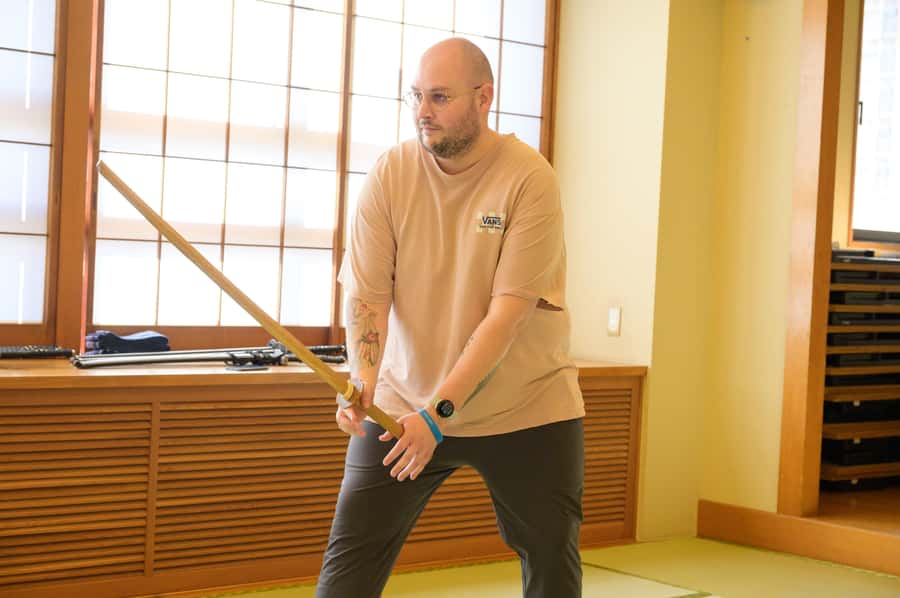
Wear comfortable clothes that let you move freely. Closed-toe shoes are required, and high heels are not allowed. You do not need to bring a sword because wooden practice swords are provided.
Arrive 15 minutes early and search for Samurai Experience Photo Studio ICHI on Google Maps. The studio is the registered meeting point. In some sessions, you may change there and then walk to a nearby dojo, so allow a little time for that transition.
If you are choosing between the two formats, ask yourself how much personal attention you want. Pick public for the shared class and lower price. Pick private if you want the instructor to focus on your level, interests, or martial arts background.
The activity is offered in Japanese and English. Cancellation is available without a fee up to 24 hours before the start, and you can reserve now and pay later, which is helpful when your Tokyo schedule is still shifting.
Should you book this samurai adventure?
Book it if you want a friendly, affordable introduction to samurai performance that lets you participate rather than simply watch. Dai and Kume bring warmth and clear instruction, and the combination of demonstrations, wooden sword practice, paired action, and photos gives the session a satisfying arc.
Choose the private option if you want depth or have martial arts experience. Choose the public class if you want the best value and the chance to practice alongside Japanese students.
Skip it if you need a wheelchair-accessible activity, cannot manage light physical movement, or expect real sword combat. For most healthy beginners, though, this is a memorable way to spend part of a Tokyo day, with enough cultural context to make the action feel meaningful and enough playfulness to keep it from becoming stiff.
FAQ
Where does the samurai experience meet?
The meeting point is registered on Google Maps as Samurai Experience Photo Studio ICHI. Search for that exact name when planning your route. The activity ends back at the meeting point.
Is the activity suitable for beginners?
Yes. Beginners are welcome, and the instructors teach basic stance, grip, sword handling, swings, and defensive movements step by step.
Do participants use real swords?
No. You practice with wooden swords, and the lesson does not involve actual sword fighting.
Can I choose between a group and private class?
Yes. The public course includes practice alongside Japanese students learning samurai action. The private course gives you a lesson tailored to your level and goals.
Is a samurai costume included?
No. A samurai costume is available as an optional extra. The basic experience includes the lesson, wooden practice swords, demonstrations, and photos.
What should I wear and bring?
Wear comfortable clothing and closed-toe shoes suitable for physical activity. Arrive 15 minutes early. High-heeled shoes are not allowed.
Just added in Tokyo
- The 10 Tastings of Tokyo With Locals: Private Street Food Tour★ 5.0 · 48 reviews
- Small Town in the Big City: Tasting Tokyo’s Kichijoji★ 5.0 · 195 reviews
- Small Town in the Big City: Tasting Tokyo’s Kichijoji★ 5.0 · 16 reviews
- EXCLUSIVE Tokyo Secret: Kichijoji Small-Group Food & Bar Hopping★ 5.0 · 29 reviews
- Explore Kichijoji: Walk Through One of Tokyo’s Beloved Districts★ 5.0 · 21 reviews
- :Tokyo,Shibuya/ Pro Photography in Kimono / English-Friendly★ 5.0 · 26 reviews
- 【R34】Tokyo:Private Daikoku tour in Modified R34★ 4.9 · 92 reviews
- Tokyo:Calligraphy &Make your original folding fan in Asakusa★ 5.0 · 62 reviews
Samurai & Ninja Experiences, compared.
Samurai Ninja Museum Guided tour and Experience
Read our review →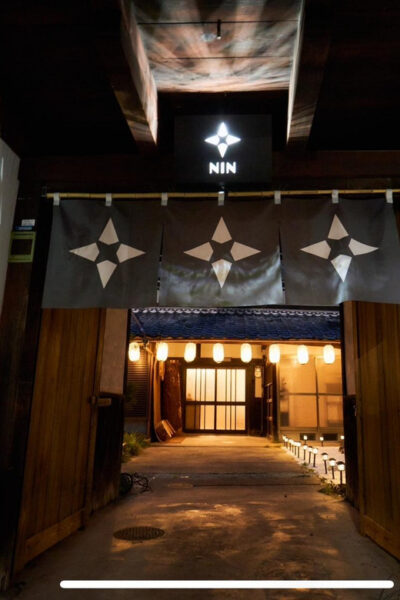
Kendo and Samurai Experience with Uniform and Gear
Read our review →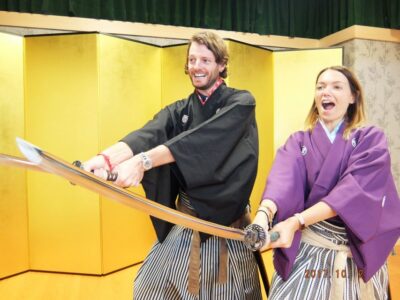
Samurai Sword Class by Experts in Traditional Arts
Read our review →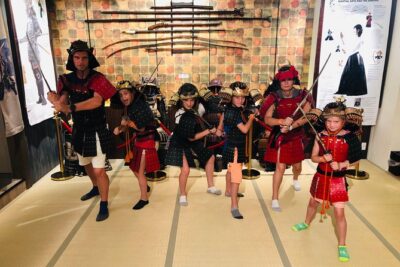
Skip the lines Basic Ticket at SAMURAI NINJA MUSEUM KYOTO
Read our review →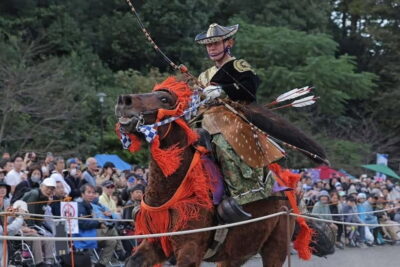
Samurai Sword & Archery Class from Samurai Descendant
Read our review →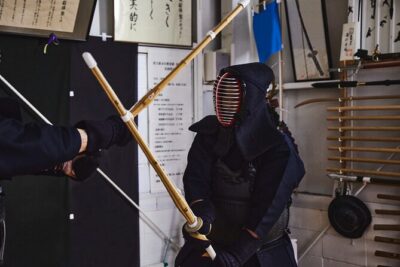
Browse the lists this tour appears in