
Reviewed · WAGYU & KAISEKI DINING
Tokyo: Wagyu and Sushi Gastronomic Journey
The main event here is the pairing of Wagyu beef and sushi with an evening walk through Shinjuku’s neon-lit streets. You get food, local context, and a useful introduction to places that can feel confusing on your own, especially Golden Gai and Omoide Yokocho.
I like the small group, capped at 10 people, and the way the evening mixes a proper meal with street-level Tokyo. I also like that the food is not treated as an afterthought: the guide explains Wagyu’s regional differences, sushi technique, and the customs behind what you are eating. The trade-off is simple: $154 is a serious price for a three-hour outing, and the exact dishes and restaurant names are not specified.
Key points to know before booking
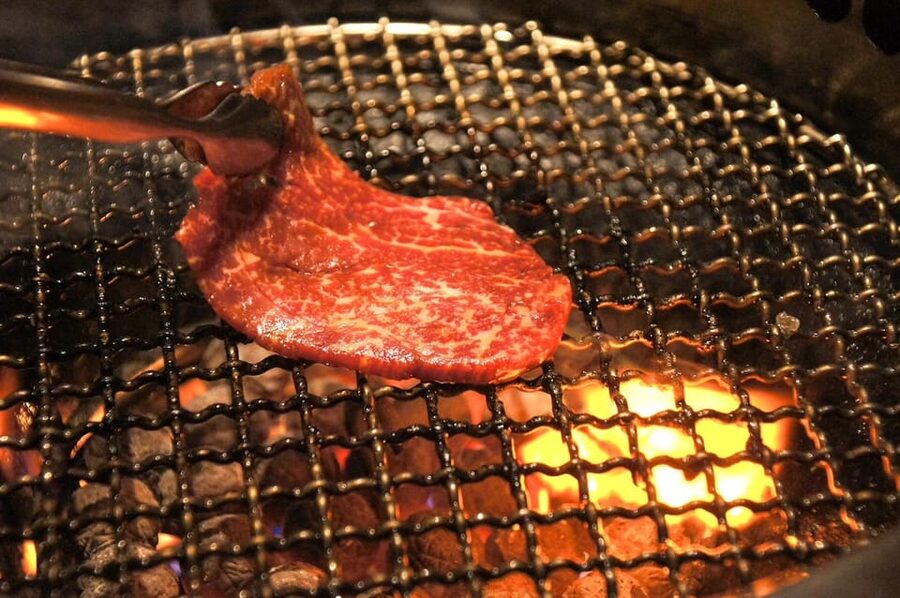
- Two major Japanese food traditions: Taste Wagyu and sushi during dinner at two separate food venues.
- A useful Shinjuku orientation: Walk through Kabukicho, Omoide Yokocho, Hanazono Shrine, and Golden Gai.
- Small group format: The group is limited to 10, giving you more room to ask questions.
- English-speaking guidance: Your guide explains the food, local customs, and neighborhood background.
- Drinks included for adults: Alcoholic beverages are available to participants aged 20 and above.
- A fairly active evening: Expect three to three and a half hours of walking, standing, eating, and navigating narrow alleys.
Why the Wagyu and sushi pairing works
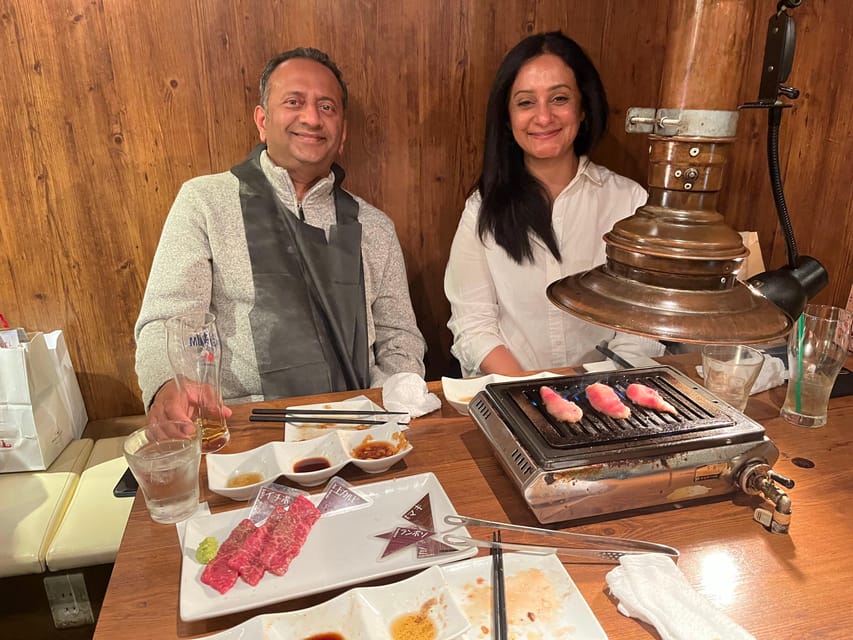
Many Tokyo food tours focus on one specialty. This one gives you two very different lessons in Japanese cooking.
Wagyu is known for its fine marbling and soft texture, but the useful part of the experience is learning why that texture varies. The guide explains Wagyu’s development, flavor, and regional styles, so you can think beyond the simple idea that expensive beef is automatically better. That context helps you notice the balance of fat, seasoning, and cooking when the beef reaches your table.
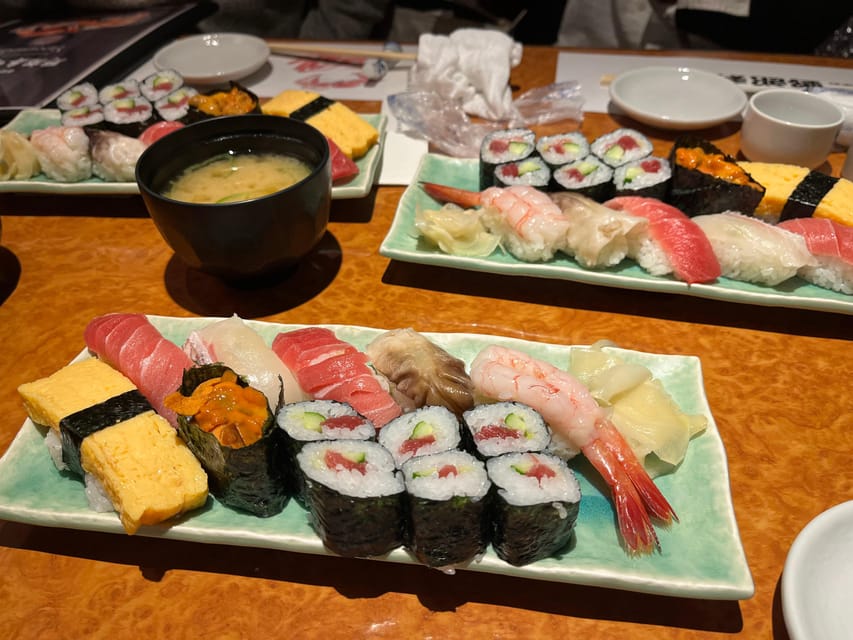
Sushi offers a different kind of precision. You can watch chefs work with fresh seasonal ingredients and traditional methods, while your guide explains what you are eating and how to approach it. For a first taste of serious sushi, that guidance can prevent you from feeling lost in front of a plate of unfamiliar pieces.
I especially like the contrast. Wagyu is rich and substantial. Sushi is lighter, cleaner, and shaped by the quality of the fish and rice. The meal becomes a lesson in texture and restraint, not just a parade of costly bites.
The two-venue setup also breaks up the evening. You are not planted at one table for three hours. Instead, dinner is combined with a walk through Shinjuku, giving you time to digest, look around, and ask questions.
Other long dinners in Tokyo:
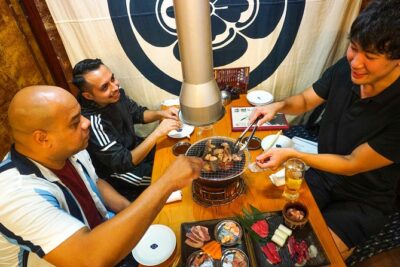
- Tokyo Night Foodie Tour in Shinjuku – Seasonal Sushi, Wagyu Beef
★ 5.0 · 1,161 reviews - Tokyo: Wagyu and 7 Japanese Dishes Cooking Class
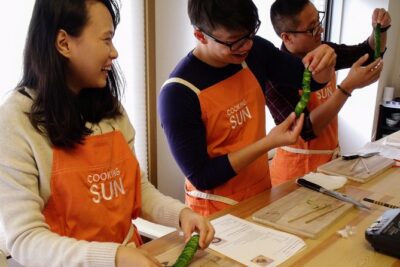
★ 4.9 · 273 reviews - Small-Group Wagyu Beef and 7 Japanese Dishes Tokyo Cooking Class
★ 5.0 · 190 reviews
Meeting near the west side of Shinjuku
The meeting point is directly in front of the 3rd Burger at 7-chōme-10-5 Nishishinjuku. That detail matters in Shinjuku, where a large station, multiple exits, and crowded streets can make a simple meeting feel like a small expedition.
Give yourself extra time to find the right spot. The tour does not include hotel pickup, and you need to reach the meeting point independently. Transportation used during the evening is also not included. The stated cost can range from 200 to 800 yen, depending on the route and transport needed.
Once the group gathers, expect an English-speaking local guide and a maximum of 10 participants. That is a good size for food stops, where a larger group could crowd the table or make conversation difficult. One guide named in the tour feedback is Emma, who was praised for her friendly manner and explanations of Japanese dining. Guides can vary by departure, so do not assume Emma will lead your particular evening.
The tour runs for about three hours, though you should allow three to three and a half. Tokyo food tours are better when you do not schedule a train connection or another paid activity immediately afterward.
Kabukicho after dark
The first major neighborhood section is Kabukicho, Shinjuku’s famous entertainment district. It is a place of bright signs, nightlife, restaurants, bars, and constant movement. The tour gives you a guide to the area instead of dropping you into the middle of it with no context.
This is useful because Kabukicho can feel like two different places at once. One side is playful and colorful, filled with pop culture references and glowing storefronts. Another side is more adult-oriented and commercial. A guide helps you read the district without treating every sign as a tourist attraction.
One expected stop is the Godzilla Head on top of the Shinjuku Toho Building. It is an unmistakable piece of Tokyo pop culture, and it gives the walk a fun visual marker. You will also get a sense of how entertainment, food, and nightlife overlap in Shinjuku.
The walk through Kabukicho is not a separate sightseeing tour with major monuments. Its value is in the atmosphere and local explanation. I would rate this part highly if you want to understand how Tokyo’s night districts function. If you prefer quiet streets and formal historical sites, Kabukicho may feel loud and commercial.
That contrast is part of the point. A few minutes later, the tour can shift from giant signs and nightlife to a small shrine or a narrow food alley. Shinjuku changes character quickly, and the guide helps connect those scenes.
Hanazono Shrine, a quiet pause in the city
Hanazono Shrine offers a calmer stop amid Shinjuku’s bright streets. The shrine gives you a chance to see traditional religious practice in a setting that feels very different from Kabukicho.
The attraction is not a long formal visit. It is the sudden quiet, the traditional setting, and the chance to ask your guide about shrine customs. You may find the pause especially welcome after walking through the louder parts of the district.
I like this inclusion because it keeps the evening from becoming only a food crawl or nightlife tour. You get a small piece of old Tokyo beside one of the city’s most modern entertainment zones. The contrast helps explain why Shinjuku can feel so layered, even when you are walking only a few blocks.
Keep your expectations measured. The tour information does not promise a ceremony, private access, or an extended religious lesson. Think of Hanazono Shrine as a short cultural stop that adds balance to the food and bar districts.
Same base, a different sort of day:
- Mt Fuji and Hakone 1-Day Bus Tour Return by Bullet Train
★ 5.0 · 26,383 reviews - 1-Day Tokyo Bus Tour
★ 5.0 · 14,250 reviews - Tokyo: TOKYO SKYTREE® Admission ticket
★ 4.5 · 11,192 reviews - Tokyo: teamLab Planets TOKYO Digital Art Museum Entry Ticket
★ 4.6 · 9,779 reviews
Omoide Yokocho and the small-scale side of Tokyo dining
Omoide Yokocho is a narrow alleyway lined with tiny bars and eateries. It is known for yakitori and other Japanese comfort foods, and it offers a very different dining atmosphere from the Wagyu and sushi venues.
This is where the tour begins to feel especially practical. Small Japanese bars can be hard to enter when you do not know the customs, the menu, or whether there is room. A local guide removes much of that uncertainty and helps you understand what the alley is known for.
The setting is compact. You should expect narrow passageways, close seating, and a more informal feel than a polished restaurant. That can be a highlight if you want food in a distinctly local-looking environment. It may be less appealing if you need plenty of personal space or prefer a quiet meal.
The inclusion of Omoide Yokocho also gives you a look at everyday comfort food. Wagyu and sushi are the headline dishes, but yakitori and small-bar cooking show another side of Japanese eating. The food culture here is not only about refined presentation. It is also about simple dishes, shared drinks, and making good use of limited space.
Golden Gai, where the evening ends
The tour finishes in Shinjuku Golden Gai, a maze of narrow lanes with more than 200 tiny bars. Each bar has its own character and theme, and the district offers a close-up look at Tokyo’s postwar drinking culture.
You are not simply passing through a bar street. The guide explains how Golden Gai developed and why the area remains known for its unusually small establishments. The lanes are easy to wander into and harder to understand from a map, so having a guide is useful.
Golden Gai is intimate by design. Some bars may have only a few seats, and the atmosphere can change from one doorway to the next. The tour includes alcoholic drinks for participants aged 20 and above, but the supplied details do not specify whether the final stop includes a particular bar or a fixed number of drinks. Ask the guide on the night if you want to know what is planned.
The tour ends here rather than returning you to the starting point. That is convenient if you want to continue your own evening in Shinjuku. It also means you should know where you are going afterward, especially if you are staying in another part of Tokyo.
Golden Gai is best for people who enjoy urban atmosphere, conversation, and compact spaces. It is not the right match if you want a quiet, spacious final meal.
What the $154 price includes
At $154 per person, this is not a budget dinner. The value depends on how much you want the guide and neighborhood access, not just the amount of food.
Your price includes dinner, visits to two different food venues, a local guide, and alcoholic drinks for participants aged 20 and over. You are also paying for interpretation: someone explains Wagyu, sushi, Shinjuku’s districts, and the customs that can be hard to pick up during a first visit.
That makes the price easier to justify for a first-time visitor who wants a planned evening with food and sightseeing in one package. It can also work well for solo visitors who would otherwise need to arrange restaurant reservations and navigate several unfamiliar areas alone.
The value is weaker if you already know Shinjuku, speak Japanese, and feel comfortable choosing restaurants without help. In that case, you may prefer to spend $154 directly on a meal of your choice and explore Golden Gai independently.
The food quality receives especially strong praise. The Wagyu is repeatedly described as tender and memorable, while the sushi is praised for freshness and flavor. Several people also highlight the guides’ warmth and food explanations. Those points matter because the tour’s success depends on both parts: good ingredients and a guide who can give them meaning.
Who will enjoy this evening most
I would recommend this experience to you if you want three things in one outing:
- A guided introduction to Wagyu and sushi
- A walk through Shinjuku’s nightlife districts
- Help navigating narrow food alleys and small bars
It is a good fit for couples, solo visitors, and small groups who want an evening with plenty of variety. The group limit of 10 keeps the format more personal than a large bus-style food tour.
Food-focused visitors will get the most from the explanations of beef, sushi, seasonal ingredients, and cooking methods. First-time visitors to Tokyo may also appreciate having someone explain the differences between Kabukicho, Omoide Yokocho, Hanazono Shrine, and Golden Gai in one continuous route.
I would be more cautious about booking if you dislike walking, standing, narrow lanes, crowded nightlife districts, or meals with an unknown menu. The tour information does not provide a detailed accessibility plan, and the route includes alleys and entertainment areas. You should ask the provider directly about mobility needs before booking.
This is also not a quiet, formal food lesson. You will be moving through busy parts of Shinjuku and sharing the evening with a small group. The guide adds structure, but the city remains noisy and active around you.
Useful planning details
The tour is offered in English and lasts about three hours, with some departures running closer to three and a half. Starting times vary, so check availability before you book.
You can cancel up to 24 hours before the start for a full refund, and you can reserve now while paying later. If the operator has no contact from you on the tour day, the activity may be canceled, with a full refund issued in that case.
Bring comfortable shoes and arrive early at the 3rd Burger meeting point. Keep some money available for transportation, since the 200 to 800 yen transport cost is not included. If you are under 20, alcoholic beverages are not available to you.
Should you book the Wagyu and Sushi Gastronomic Journey?
Book it if you want a guided food-and-neighborhood evening rather than a standalone restaurant reservation. The strongest reasons are the two-part meal, the small group, the English explanations, and the unusual route through Kabukicho, Hanazono Shrine, Omoide Yokocho, and Golden Gai.
Skip it if $154 feels too high for a three-hour outing or if you would rather choose your own restaurants and explore Shinjuku alone. The exact food venues are not named in the available details, so you are paying for the overall experience rather than selecting a particular famous restaurant.
For the right person, this is a smart first-night introduction to Shinjuku. You get the polished pleasure of Wagyu and sushi, then see the narrow alleys, shrine grounds, neon streets, and tiny bars that give the district its character.
FAQ
How long does the Tokyo Wagyu and Sushi Gastronomic Journey last?
The tour is scheduled for three hours, though the total duration may run from three to three and a half hours.
Where does the tour meet?
The meeting point is directly in front of the 3rd Burger at 7-chōme-10-5 Nishishinjuku.
Where does the tour finish?
The tour finishes in Shinjuku Golden Gai.
Is transportation included?
No. Transportation costs are not included and may range from 200 yen to 800 yen.
Are alcoholic drinks included?
Alcoholic beverages are included for participants aged 20 and above.
What language is the tour conducted in?
The tour is conducted in English with a live guide.
Just added in Tokyo
- The 10 Tastings of Tokyo With Locals: Private Street Food Tour★ 5.0 · 48 reviews
- Small Town in the Big City: Tasting Tokyo’s Kichijoji★ 5.0 · 195 reviews
- Small Town in the Big City: Tasting Tokyo’s Kichijoji★ 5.0 · 16 reviews
- EXCLUSIVE Tokyo Secret: Kichijoji Small-Group Food & Bar Hopping★ 5.0 · 29 reviews
- Explore Kichijoji: Walk Through One of Tokyo’s Beloved Districts★ 5.0 · 21 reviews
- :Tokyo,Shibuya/ Pro Photography in Kimono / English-Friendly★ 5.0 · 26 reviews
- 【R34】Tokyo:Private Daikoku tour in Modified R34★ 4.9 · 92 reviews
- Tokyo:Calligraphy &Make your original folding fan in Asakusa★ 5.0 · 62 reviews
Wagyu & Kaiseki Dining, compared.
Tokyo Night Foodie Tour in Shinjuku – Seasonal Sushi, Wagyu Beef
Read our review →
Small-Group Wagyu Beef and 7 Japanese Dishes Tokyo Cooking Class
Read our review →
Wagyu & Sake Pairing in Shinjuku – Steak, Shabu-Shabu & More
Read our review →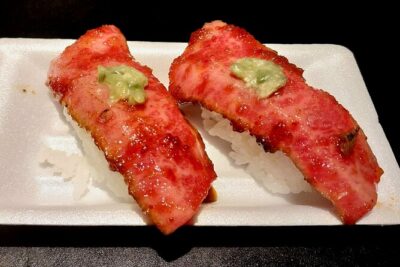
Kyoto Food Tour of 10 Tastings with Wagyu, Mochi & More Surprises
Read our review →
Kyoto Evening Gion Food Tour Including Kaiseki Dinner
Read our review →
SUMO BEATS SHOWCASE: Taiko Drum and Wagyu burger!
Read our review →
Scuba Diving Tour with Wagyu Lunch and English guide
Read our review →Browse the lists this tour appears in