Reviewed · TOURS IN KYOTO
Private car tour Let’s uncover secrets of majestic Kyoto history
Kyoto’s best moments often come after you leave the famous postcard stops. This private car tour with Takashi is built around quiet temples, local food, and a flexible route rather than a fixed march through the city. You can visit Fushimi Inari, explore moss gardens, stop for ramen or kaiseki-style food, and adjust the day to suit your group.
I like the hotel pickup and air-conditioned vehicle, especially during Kyoto’s hot summer months. I also like the small-group format, which lets you spend more time at a temple or change plans when a senior family member needs a rest. The main caution is that the advertised stops cover a wide area, so you should confirm the final route and admission costs before booking.
Key points to know before booking
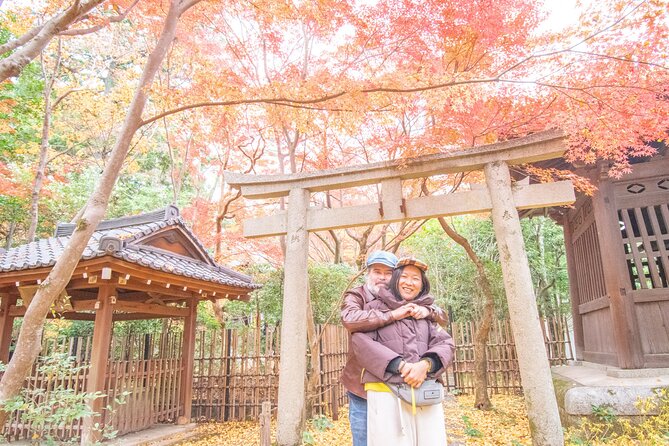
- A private van for up to 10 people: You travel only with your own group, with pickup and drop-off at your Kyoto hotel.
- Takashi is the central part of the experience: He speaks English well, explains Japanese customs, and adjusts the day to your interests.
- Fushimi Inari takes about two hours: You can see the famous torii gates and continue toward bamboo paths and quieter mountain sections.
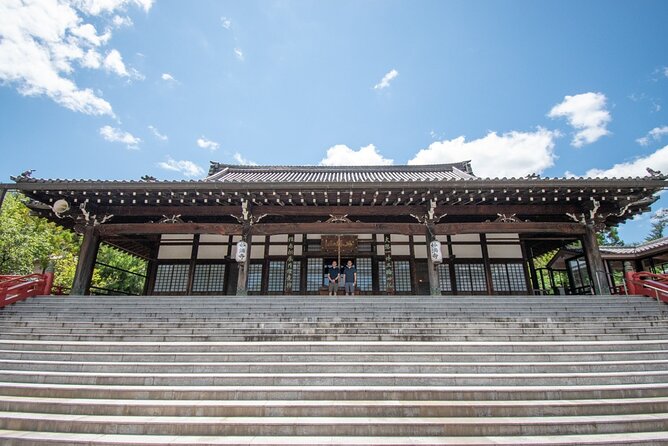
- The temple choices are varied: Ryoan-ji, Otagi Nenbutsu-ji, Adashino Nembutsu-ji, and Kennin-ji offer very different settings and stories.
- Local food can be part of the day: Lunch is not included, but Takashi can suggest ramen, kaiseki-style meals, cafes, sake stops, and Kyoto sweets.
- Check the route and fees: The listed plan includes more places than most seven-hour days can comfortably cover, and an admission charge of up to ¥3,000 per person may apply.
Why a private car makes sense in Kyoto
Kyoto is compact on a map but slow by road. Temples and shrines are spread between the eastern hills, northern districts, and Arashiyama. Public transport works well for major sights, but connecting several less familiar places can mean multiple trains, buses, walks, and waits.
Here, you are picked up at your hotel and driven between stops in an air-conditioned vehicle. That matters in July and August, when temperatures can reach 36 degrees Celsius, and it helps families carrying bags, traveling with older relatives, or simply wanting a break from constant navigation.
The vehicle is listed as suitable for groups of up to 10. A larger group gets good value from the flat private format, but you should still confirm the exact vehicle size and seating arrangement when booking. At $108.58 per person, the price is easiest to justify with six to ten people. For a couple, it becomes a premium experience, though you are paying for a private guide, transport, hotel service, and a day shaped around your interests.
This is not a standard bus tour. You do not have to follow a guide holding a flag through every stop, and you can ask for a slower pace or a different lunch. That freedom is the main reason to choose it.
Other experiences people book in Kyoto:
- PERFECT KYOTO 1-Day Bus Tour
★ 5.0 · 13,518 reviews - Kyoto: Fushimi Inari, Kinkakuji, Bamboo Grove 1 Day Bus Tour
★ 4.8 · 4,316 reviews - Kyoto: Tea Ceremony in a Traditional Tea House in Kiyomizu
★ 4.9 · 3,519 reviews
Starting at Fushimi Inari’s thousands of gates
Fushimi Inari-taisha is the most familiar stop on the route, and it is likely to be the busiest. The lower shrine area is famous for its long rows of orange-red torii gates, donated over many years by individuals and businesses.
The planned two-hour visit gives you more than a quick photo stop. You can walk beyond the first crowded section toward the forested mountain paths, where the sound of the city fades and the shrine grounds become calmer. Bamboo, birdsong, stone markers, and wooded trails give the visit a different feel from the bright entrance area.
You do not need to climb the entire mountain to enjoy Fushimi Inari. Ask Takashi to match the walk to your group’s fitness and available time. The paths include stairs, so this stop can be tiring in heat or rain. Comfortable shoes and water will help.
Admission to the shrine grounds is free. Food and small sweets near the shrine are not part of the tour price, though local snack stops can sometimes be added to the day.
Kennin-ji and the appeal of a quieter temple
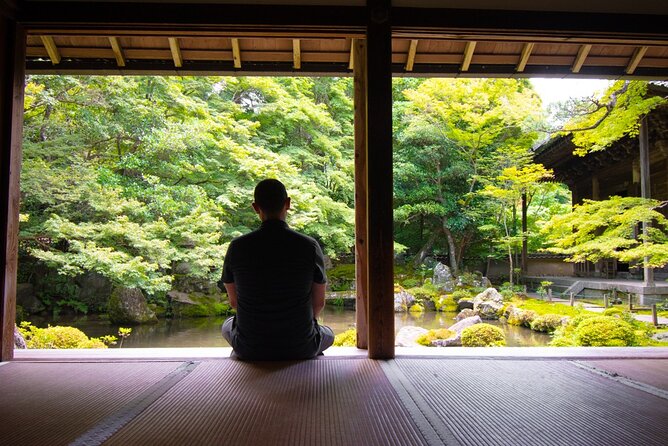
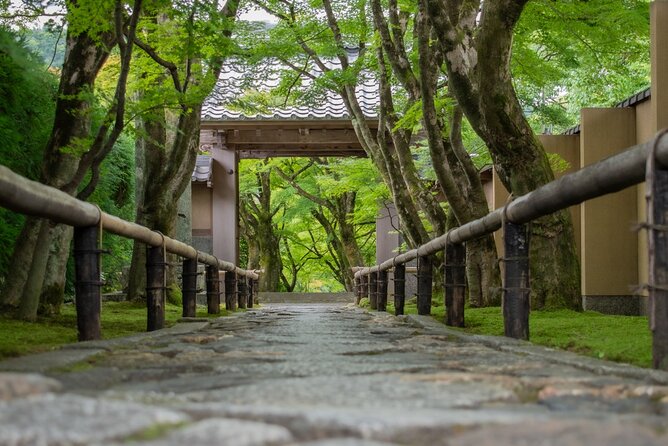
Kennin-ji is presented as a secret temple, with its name disclosed during the tour. The appeal is its quiet atmosphere and moss garden, rather than a single famous monument.
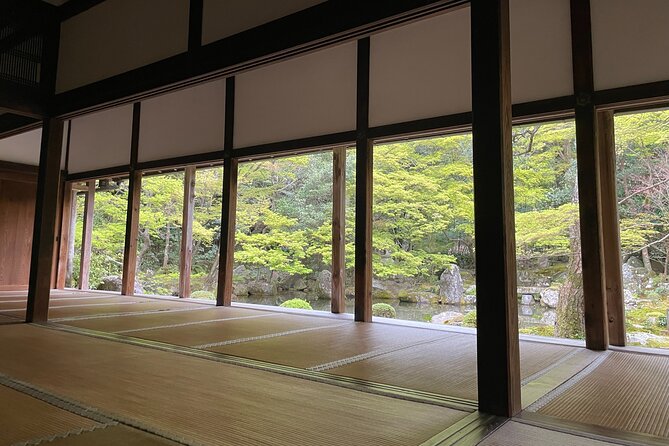
A one-hour stop gives you time to slow down and look carefully. Kyoto temple gardens reward attention to small details: the arrangement of rocks, the shape of trees, the sound of gravel underfoot, and the way a building frames the garden. Takashi’s role is useful here because the value of a less famous temple is not always obvious at first glance.
The word secret should not be taken too literally. Kyoto has few completely unknown sights, and access or opening conditions can change. Still, a smaller temple can feel far calmer than the major sites, especially when you are visiting as part of a private group.
Ryoan-ji and the famous rock garden
Ryoan-ji is one of northern Kyoto’s best-known Zen temples. Its rock garden is simple at first glance, with carefully placed rocks set into pale gravel. The arrangement encourages you to sit, look, and decide what you see in it.
The planned visit lasts about an hour. That is enough for the main garden and temple grounds, though not a full study of every corner. The garden may be crowded, particularly at popular times, so your ability to linger will depend on the conditions that day.
This is a good stop if you want a clear introduction to Zen design and Japanese temple culture. It also balances the smaller, less familiar temples on the route. Admission is not necessarily covered by the base price, so confirm the current amount before departure.
Same base, a different sort of day:
- Kyoto Geisha Walking Tour: Gion District & Hidden Gems
★ 4.7 · 3,273 reviews - Kyoto: Tea Ceremony Ju-An at Jotokuji Temple
★ 4.9 · 3,207 reviews - Kyoto: Gion Magical Night Walking Tour with Geisha Trivia
★ 4.9 · 2,393 reviews - Kyoto: 45-Minute Tea Ceremony Lesson Experience
★ 4.3 · 2,378 reviews
Adashino Nembutsu-ji and Otagi Nenbutsu-ji
Adashino Nembutsu-ji offers a more reflective visit. The temple is associated with memorial stones and a long religious tradition in the Arashiyama area. Its history connects with early communities in the region, including people described as having Korean roots.
The scheduled 30 minutes is short, but it can work if you focus on the main grounds. The setting is quieter than central Kyoto, and the temple gives you a chance to consider the city’s past beyond famous aristocratic villas and grand halls.
Otagi Nenbutsu-ji is another short stop, also listed at around 30 minutes. It is known for hundreds of expressive stone figures, each with a different face and mood. The atmosphere is playful as well as spiritual, making it a welcome change after more formal gardens.
The site has links with an artist and craftsman associated with tea ceremony, calligraphy, and other arts. Look closely at the garden details and stone figures rather than rushing through for a single photograph.
These two temples are strong choices for anyone who wants smaller religious sites. The tradeoff is distance. Since they sit away from the central cluster of Kyoto attractions, the driving time between stops can reduce time for other locations.
Yasakanoto, Kinkaku-ji, and a route that needs clarification
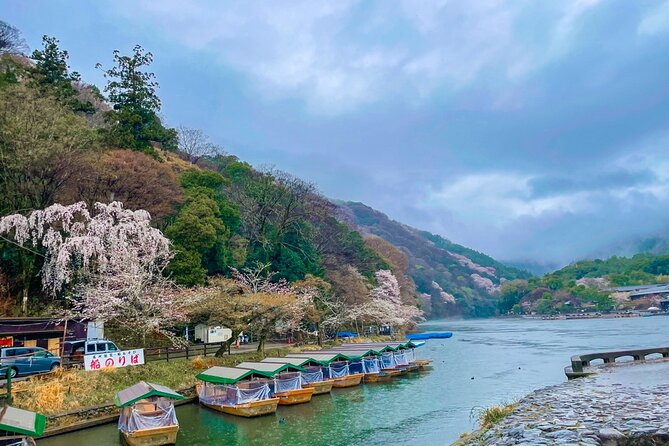
The itinerary information uses Yasakanoto as a stop but describes Kinkaku-ji, the Golden Pavilion. Those are different places, so you should ask Takashi or the booking provider which site is intended for your date.
Kinkaku-ji was originally the villa of shogun Ashikaga Yoshimitsu and became a temple after his death. Its upper floors are covered in gold leaf, and the building reflects across a pond in the surrounding garden. It is one of Kyoto’s most recognizable sights and usually attracts many visitors.
Yasakanoto, by contrast, refers to the five-story Yasaka Pagoda in the Higashiyama district. It is close to traditional streets and other major sights in eastern Kyoto. Both stops are worthwhile, but they create very different experiences, so do not assume the name and description refer to the same place.
This is one of the few points where I would be especially practical: request a written outline of the final route. The plan includes Fushimi Inari, northern Kyoto, Arashiyama, eastern Kyoto, and possibly Kibune. That is a lot for seven hours, even with a private vehicle.
The dessert stop and the local flavor of the day
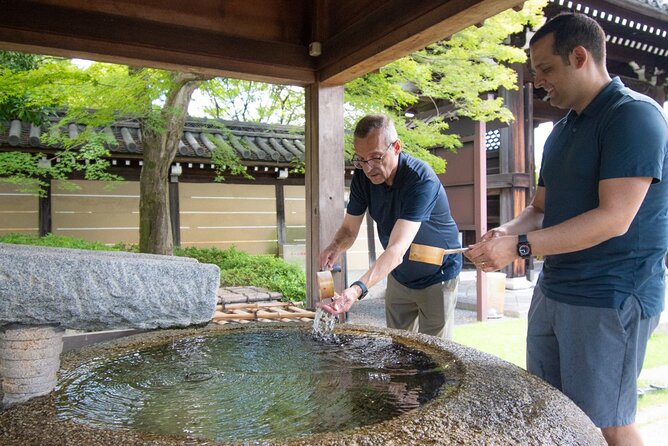
The itinerary includes a stop connected with Monkey Park Iwatayama but describes a local dessert shop rather than a visit to the monkey park itself. This is another detail worth confirming.
The dessert suggestions are appealing and distinctly Kyoto: mochifu, a pounded rice sweet with a texture different from ordinary mochi, and shaved ice flavored with yuzu or matcha. These small food stops can make the day feel less like a checklist of temples.
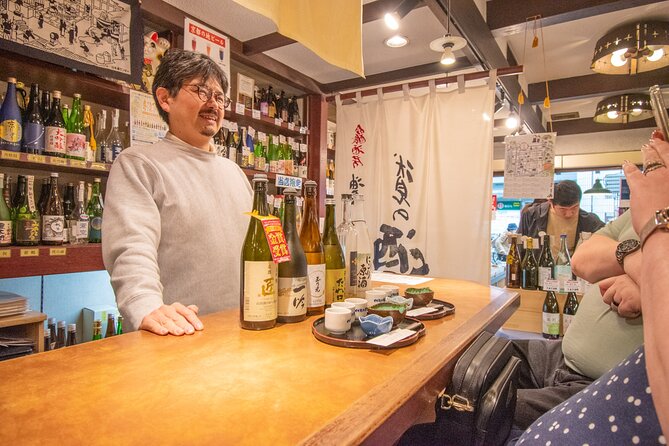
Lunch is not included. Takashi can suggest a local restaurant based on your preferences and the route, but you pay for the meal. Past itineraries have included ramen, neighborhood restaurants, kaiseki-style lunches, cafes, and even sake tasting in Kyoto’s sake district.
One particularly useful feature is the local food advice. You may stop at a pickle shop, try caramelized miso mochi, or sample regional snacks. These moments are often easier to enjoy with a local guide than when you are trying to choose from a long list online.
Kibune Shrine and the limits of a seven-hour day
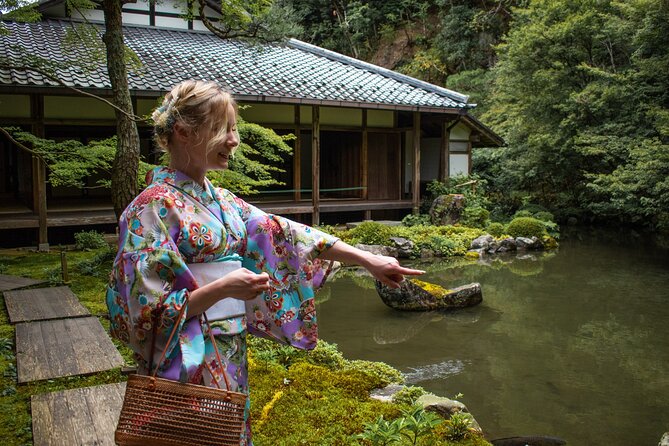
Kibune Shrine is listed as a possible 30-minute stop. It is associated with the Kibune area north of central Kyoto and has a strong connection with local worship and water. The description also refers to a koi fish pond where visitors can feed the fish.
The stop sounds appealing, but its location makes the route especially ambitious when combined with Fushimi Inari, Ryoan-ji, Arashiyama, and eastern Kyoto. You should treat the itinerary as a menu of possible places, not a guarantee that every listed stop will be completed in one day.
This flexibility can work in your favor. If you prefer northern Kyoto, Takashi may build the day around Ryoan-ji, Otagi Nenbutsu-ji, Adashino Nembutsu-ji, and Kibune. If this is your first visit, you might instead choose Fushimi Inari plus a few quieter temples and leave more time for lunch.
Takashi’s role and the best way to use the flexibility
The strongest part of this experience is the guide. Takashi is described as friendly, fluent in English, patient, and willing to tailor the day. He has accommodated family groups, older relatives, changing weather, and different food requests.
You will get more from the tour if you tell him what matters before pickup. Say if you want gardens, Buddhist history, local food, photography, shopping, sake, or a gentler walking pace. You can also ask for more explanation while driving between sites. One useful piece of practical feedback is that the historical context may be stronger at the destinations than during the journeys, so ask questions as you go.
Photography may be available, but do not assume a full professional photo service. One booking included disappointment about the number of pictures taken, while another family particularly appreciated photos in kimono. If photographs matter to you, confirm exactly what is included.
The tour has a 4.8 rating from 45 ratings, with 93 percent recommending it. That is a strong record, but one serious booking failure is also recorded. In that case, the provider said a platform system problem prevented the reservation from arriving correctly, and the payment was refunded. To protect your day, make sure you receive confirmation and contact details before the start time.
What the price includes and what it does not
The $108.58 per-person price includes a private experience, an air-conditioned vehicle, hotel pickup and drop-off, fuel, and parking fees up to ¥3,000 per day. Advice on local restaurants and dessert shops is also included.
Lunch is not included. Admission charges are unclear in the supplied details: individual stops are marked as having no admission fee, but a separate note lists an admission fee of ¥3,000 per person. Ask for the exact total before you book, especially if the final route includes Ryoan-ji, Kinkaku-ji, or other ticketed temples.
For a large family or group of friends, the price can compare well with hiring separate transport and paying for a private guide. For two people, public transport will cost less, but it will not provide the same door-to-door service or route flexibility.
Free cancellation is available up to 24 hours before the start time. Cancellations within 24 hours are not refunded, and changes inside that window are not accepted.
Who will enjoy this Kyoto tour most
I would choose this experience if you want to see more than the standard central Kyoto circuit, dislike changing trains and buses, or have a group with mixed energy levels. It is also a good fit for families who want lunch and sightseeing to remain flexible.
The private format suits first-time visitors who want help making decisions, as well as repeat visitors looking for quieter temples. The air-conditioned van is especially useful during hot weather.
I would hesitate if you want a precise, fixed itinerary with every listed stop guaranteed. The route covers too much ground for that promise to be realistic in seven hours. I would also hesitate if your budget is tight and you are happy using Kyoto’s excellent public transport.
FAQ
How long is the private Kyoto car tour?
The tour lasts approximately seven hours.
How many people can join the private tour?
The private vehicle and experience are available for groups of up to 10 people.
Is hotel pickup included?
Yes. Pickup and drop-off at your Kyoto hotel are included.
Is the vehicle air-conditioned?
Yes. An air-conditioned vehicle is included.
Is lunch included in the price?
No. Lunch is not included, but you can request a stop at a local restaurant or dessert shop recommended by the guide.
Who is the guide?
The guide is Takashi, an English-speaking local guide who can adjust the itinerary to your group.
Does the tour visit Fushimi Inari Shrine?
Yes. Fushimi Inari-taisha is listed as the first stop, with approximately two hours planned there.
Are admission tickets included?
The details list individual stops as having free admission but also state an admission fee of ¥3,000 per person. Confirm which fees apply to your final route before booking.
Can the itinerary be changed?
Yes. The experience is private and can be adjusted to your group’s preferences and situation.
What is the cancellation policy?
You can cancel at least 24 hours before the start time for a full refund. Cancellations or changes made within 24 hours are not accepted for a refund.
Should you book it?
Book this tour if you value comfort, local guidance, and flexibility more than a perfectly fixed schedule. Takashi can help you connect major sights with quieter temples, local sweets, and a meal that fits your day.
Before paying, ask for the exact stops, clarify Yasakanoto versus Kinkaku-ji, confirm whether the dessert shop replaces Monkey Park, and request the full admission total. With those details settled, this can be a fine choice for a family or private group that wants Kyoto to feel less rushed and less predictable.
Just added in Kyoto
- Private Cooking Class Udon in Kyoto Japan★ 5.0 · 23 reviews
- Your Private Vacation Photography Session In Kyoto★ 5.0 · 110 reviews
- Kyoto: Zen Meditation at a Private Temple with a Monk★ 5.0 · 25 reviews
- Private Pewter Sake Cup Experience with a Kyoto Artisan★ 5.0 · 31 reviews
- Kyoto Wagashi(Japanese sweets) Cooking Class near Fushimiinari★ 5.0 · 60 reviews
- Kyoto:Family-Friendly Kimono & Yukata Experience at WARGO★ 5.0 · 147 reviews
- Private Guided Traditional Buddhist Cooking in Japan★ 5.0 · 16 reviews
- Kyoto: Gion Geisha District & Sake-in-Hand Walking Tour★ 5.0 · 37 reviews
Tours in Kyoto, compared.

Tea Ceremony in a Traditional Tea House in Kiyomizu
Read our review →
Kyoto Geisha Walking Tour: Gion District & Hidden Gems
Read our review →


Gion Geisha District Walking Tour – Stories of Geisha
Read our review →
Best of Kyoto: Gion, Geisha, Pagodas & Cobblestones
Read our review →