
Reviewed · FUSHIMI INARI TOURS
Kyoto 6h Private Tour Fushimi Inari, Kiyomizu, Gion & Hidden Gems
Kyoto packs thousands of shrines and temples into a city that can feel confusing on a first visit. This private half-day tour gives you a clear route through seven major sights, from the orange torii gates of Fushimi Inari to the wooden lanes of Gion, without asking you to solve the transport puzzle yourself.
I like two things right away: the private format, which keeps the day focused on your group, and the mix of famous landmarks with quieter places such as Chishaku-in. The tour also makes good use of taxis and public transportation, saving time between eastern Kyoto sights.
The catch is that the advertised price covers the guide, not the day’s other costs. You will need extra yen for taxis, transit, and temple admission, and there is no lunch break. The noon start also gives you only a short afternoon to cover a lot of ground.
Key points to know before booking
- Seven sights in about five and a half hours: The route moves quickly but covers Kyoto’s major eastern highlights.
- A private guide for up to three people: You get a more personal experience than on a large group outing.
- Fushimi Inari and Kiyomizu-dera anchor the day: These are Kyoto icons, with very different settings and moods.
- Chishaku-in adds a quieter temple stop: Its Japanese garden offers a welcome pause from the bigger attractions.
- Extra costs matter: Plan for about 150 yen per person for public transportation, 2,500 to 3,000 yen per taxi, and about 1,500 yen per person for temple admission.
- Wear proper walking shoes: You will use slopes, temple grounds, back lanes, and busy sightseeing streets.
A fast, well-planned introduction to eastern Kyoto
This tour is best understood as a carefully packed orientation to Kyoto. It does not give you long, leisurely hours at each temple. Instead, it shows you the city’s most recognizable sights, adds a less obvious temple, and ends in Gion, where you can continue exploring on your own.
The route works because most stops sit in or near eastern Kyoto. You begin at Kyoto Station, then travel south to Fushimi Inari before moving north toward temples and traditional streets. The guide handles the route, explains what you are seeing, and tells you how to reach your next destination after the tour ends.
The private setup matters here. A guide can answer questions about shrine customs, Buddhist art, architecture, and local districts without waiting for a large group to catch up. The names attached to this experience include Yoshi, Kaori, and Mutsumi. Their individual styles differ, but the useful qualities associated with them include patience, humor, clear explanations, and a willingness to listen to your interests.
You should still expect a brisk pace. The schedule allocates about one hour to Fushimi Inari, 40 minutes to Chishaku-in, one hour to Sanjusangendo, one hour to Kiyomizu-dera, one hour to Ninenzaka and Sannenzaka, five minutes at Yasakanoto, and 20 minutes in Gion. Those stops add up to just over five hours before travel time, so the day leaves little room for major changes.
Other shrine walks around Kyoto:
- Kyoto: Fushimi Inari, Kinkakuji, Bamboo Grove 1 Day Bus Tour
★ 4.8 · 4,316 reviews - Fushimi Inari Hidden Hiking Tour (Private Option Available)
★ 5.0 · 1,750 reviews - Kyoto/Osaka: Nara, Fushimi Inari Taisha, Arashiyama Bus Tour
★ 4.7 · 1,275 reviews
Fushimi Inari and its famous orange gates
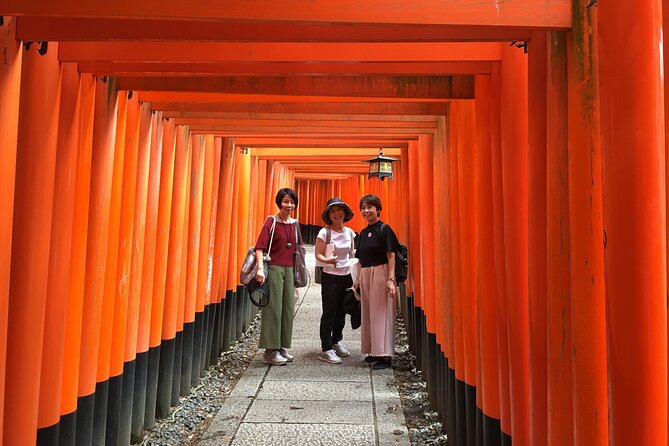
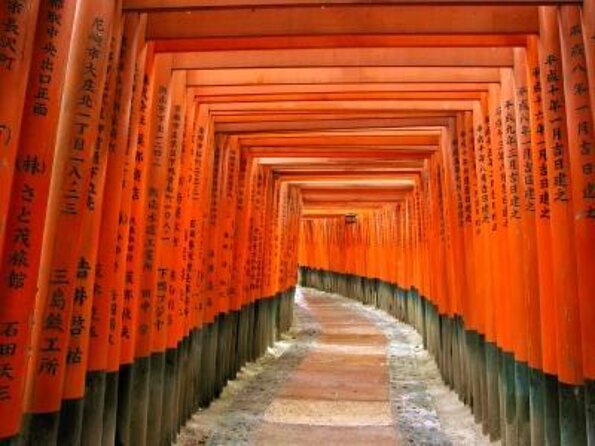
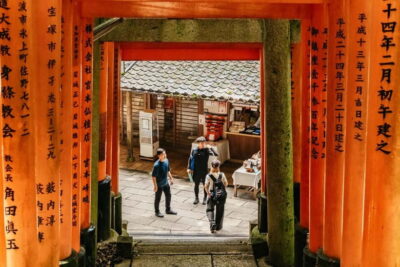
Your first stop is Fushimi Inari-taisha, one of Kyoto’s most recognizable sights. The shrine is known for its long corridors of orange torii gates, donated over the years by businesses and individuals seeking good fortune.
The planned visit lasts about an hour. That is enough to walk through a section of the torii gates and get a strong sense of the shrine, but not enough to climb the entire mountain path. If you have seen photographs of seemingly endless gates stretching uphill, keep your expectations realistic. This itinerary gives you an introduction rather than a full hike.
The shrine is dedicated to Inari, associated with rice, prosperity, and business success. You will see fox imagery around the grounds, since foxes are regarded as Inari’s messengers. Your guide can add context that is easy to miss when you are focused on taking photographs.
This is also the busiest part of the day in many seasons. The tour’s early placement helps you get there before the rest of the afternoon route, but you should not expect solitude. The practical advantage of a guide is that you can move with purpose rather than losing time deciding which path to follow.
Chishaku-in brings a quieter pause
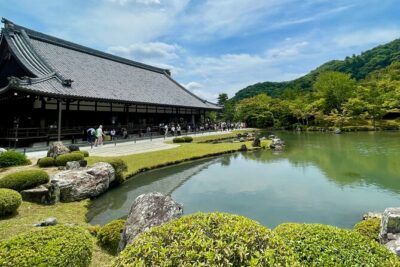
Chishaku-in is the tour’s less obvious stop and one of its best contrasts. After the crowds and photographs at Fushimi Inari, this temple offers a calmer setting with a traditional Japanese garden.
You have about 40 minutes here. That is not a long visit, but it gives you time to slow down, sit, and look carefully at the garden rather than simply checking another monument off a list. The appeal is the atmosphere: this is a place for quiet observation, not a dramatic landmark competing for attention.
Admission is not included. You should carry yen for the entry fees, since the tour specifically advises having Japanese cash ready. Exact admission prices can change, so treat the stated total of about 1,500 yen per person for all temples as a planning figure rather than a guarantee.
Chishaku-in also shows why a private guide can be useful. Without local direction, you might spend your limited Kyoto time only at the largest attractions. Here, the guide gives you a smaller temple experience without requiring you to research it in advance.
Sanjusangendo delivers Kyoto’s great indoor art experience
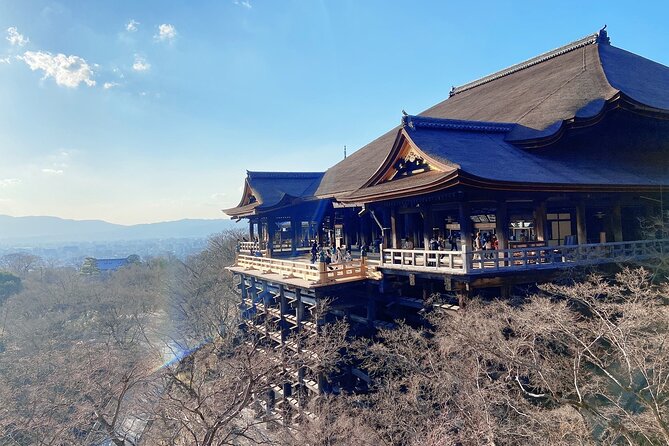
Sanjusangendo is a very different stop. Its long wooden hall is famous for its rows of 1,000 statues of Kannon, the Buddhist goddess of mercy. The building itself is an important part of the visit, but the repeated figures inside create the strongest impression.
The scheduled hour gives you enough time to appreciate the hall and its sculpture rather than rushing through. Photography rules apply inside, so this is a place where looking carefully matters more than collecting pictures.
The temple is also associated with a large number of national treasures. Your guide can help explain what you are seeing, which is valuable because the hall’s scale can be difficult to understand without context. The long, orderly interior may appeal especially to you if you enjoy art, religious history, and architecture more than outdoor viewpoints.
You will pay an additional admission fee here. Shoes and temple etiquette may also matter at indoor religious sites, so listen to your guide’s instructions and dress in a way that makes removing footwear easy if required.
Other evenings in the old entertainment quarters of Kyoto:
- Kyoto Geisha Walking Tour: Gion District & Hidden Gems
★ 4.7 · 3,273 reviews - Kyoto: Gion Magical Night Walking Tour with Geisha Trivia
★ 4.9 · 2,393 reviews - Kyoto: Gion Geisha District Walking Tour – Stories of Geisha
★ 4.7 · 2,187 reviews - Best of Kyoto: Gion, Geisha, Pagodas & Cobblestones
★ 4.9 · 2,058 reviews
Kiyomizu-dera gives you Kyoto from above
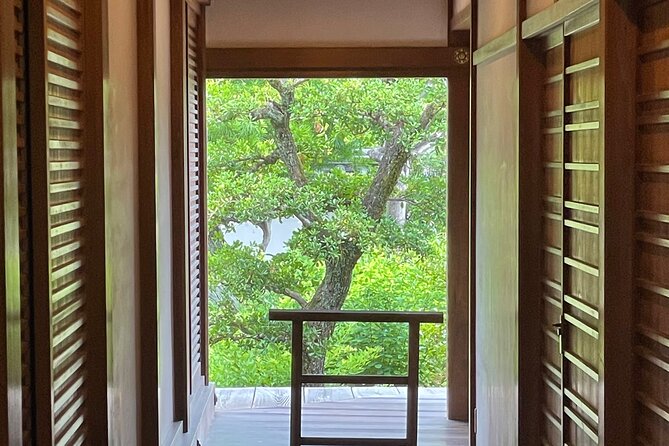
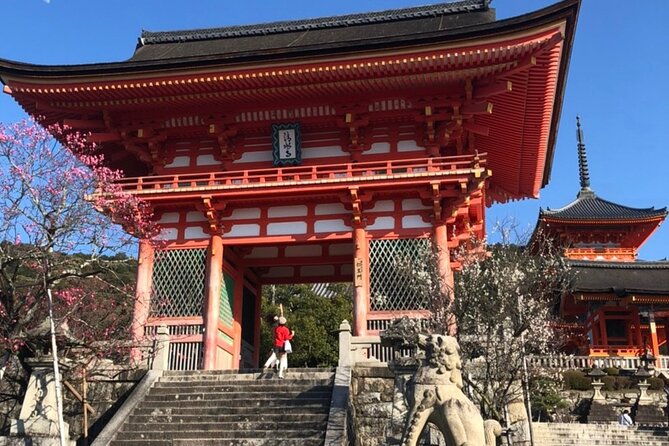
Kiyomizu-dera is the day’s major temple landmark and a UNESCO World Heritage site. Its large wooden stage projects from the hillside, giving you broad views over Kyoto.
The temple visit lasts about an hour. That time lets you see the main hall and balcony, take in the city view, and walk through part of the grounds. Kiyomizu-dera is not a small site, so you will not see every corner in this short visit.
The setting is part of its appeal. The temple sits above a busy historic district, and its elevated position gives you a sense of how Kyoto spreads beyond the central streets. On a clear day, the view is especially useful for getting your bearings.
This is another paid stop, and the approach includes slopes and heavy foot traffic. You should wear shoes with good support. The temple can feel crowded, but the guide helps you understand where to go and keeps the stop from becoming a vague walk through a large complex.
Ninenzaka and Sannenzaka turn sightseeing into street life
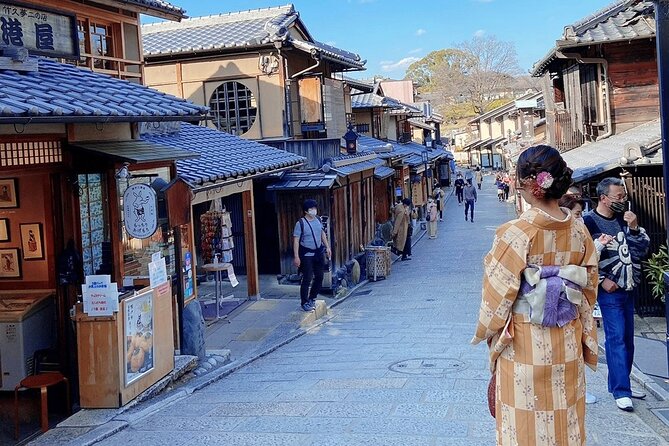
After Kiyomizu-dera, the route moves through Ninenzaka and Sannenzaka, two traditional slopes lined with wooden buildings, shops, cafes, and souvenir stalls.
The hour scheduled here gives you more freedom than the temple stops. You can browse gifts, look at the old-style facades, and enjoy the streets at walking pace. This is a good place to shop for presents, but you should not confuse the district with an untouched historic village. It is a popular commercial area designed around sightseeing.
The slopes are attractive and photogenic, but they can be tiring. The paving is uneven in places, and the route rises and falls. Comfortable shoes are not a minor suggestion here. They can make the difference between enjoying the afternoon and counting the minutes until you sit down.
This part of the tour also gives you a taste of Kyoto beyond formal religious sites. The wooden streets, small shops, and side lanes show how temples connect with everyday commerce and local traditions. You will have more freedom to pause for a purchase, but the group must still keep to the schedule.
Yasakanoto offers a quick Kyoto photograph
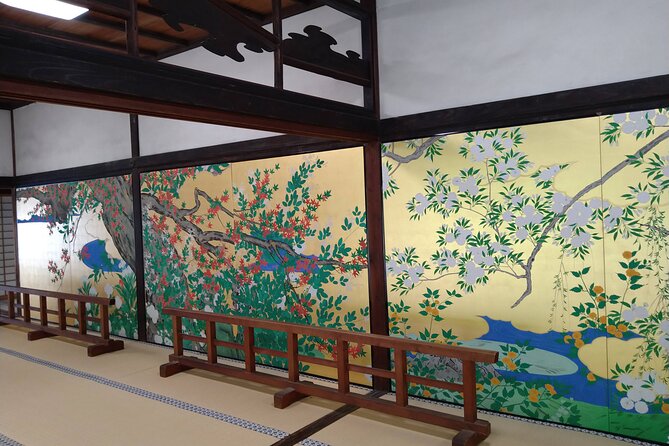
Yasakanoto is a five-story pagoda and a familiar Kyoto landmark. The visit is brief and exterior only, so you should treat it as a photo stop rather than a temple visit.
The pagoda rises above the traditional streets and makes a strong backdrop for photographs. Because the stop lasts only five minutes, have your camera ready before you arrive. There is no time for a long look inside or an extended explanation.
Its location fits neatly into the walking route through the Higashiyama district. It is a small stop, but it helps connect the different parts of the afternoon: temple architecture, old streets, and the recognizable skyline of Kyoto.
Gion closes the tour with a change of mood
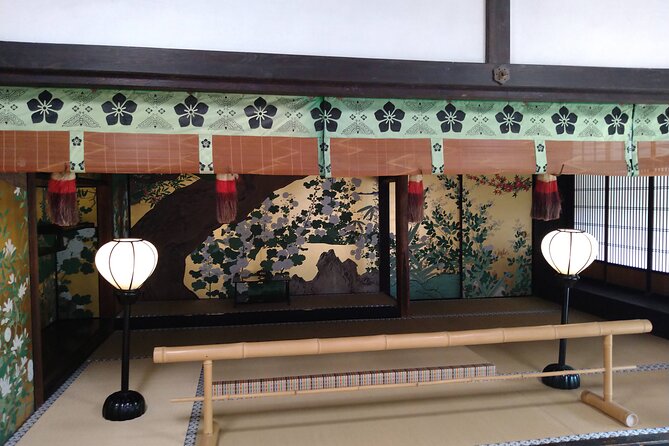
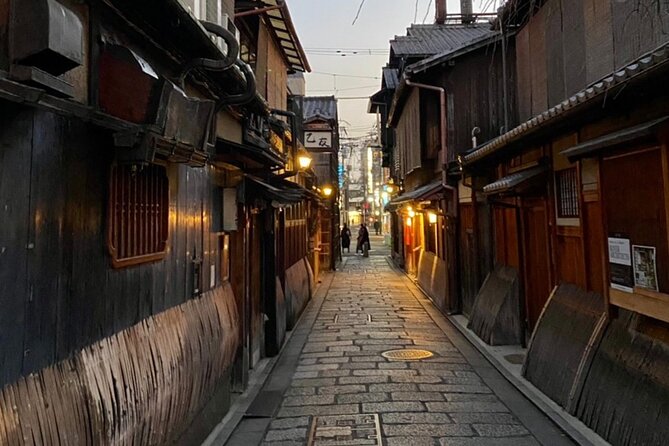
The final stop is Gion, Kyoto’s well-known geisha district. You have about 20 minutes to walk through the area and see its traditional entertainment streets.
Gion is associated with geiko and maiko, the local terms for geisha and apprentice geisha. Seeing one is never guaranteed, and you should avoid treating people working in the district as photo subjects. The value of this stop is the architecture, atmosphere, and sense of place, not a promised encounter.
The tour ends around Gion, which is practical if you want dinner or more evening exploration nearby. Your guide explains how to reach your next destination after the tour, but there is no hotel drop-off. The final meeting point is in the Gion area, not back at Kyoto Station.
Because the Gion visit is short, you may want to return later if this district is a major priority. The tour gives you an introduction and a useful starting point, but it does not provide time for a full evening here.
What the $236.48 group price really covers
The listed price is $236.48 for a group of up to three people. Since the fee is per group rather than per person, it becomes more appealing for three people sharing the booking. A solo visitor pays the same group rate, so the value depends heavily on how many people are in your party.
The price includes a local professional guide. It does not include lunch, admission fees, public transportation, taxi fares, or hotel pickup. You should budget for three separate additions:
- Public transportation costs about 150 yen per person.
- A taxi costs about 2,500 to 3,000 yen per taxi.
- Entry to all temples is estimated at about 1,500 yen per person.
The guide uses taxis and public transportation to save time and energy. That is a sensible choice for a half-day route, but it means your final cost is higher than the headline price. Carry Japanese yen, since admission desks, taxis, transit, and some shops may not accept other currencies.
For a group of three, the tour’s main value is time and organization. You are paying to avoid planning seven stops, checking routes, and managing a changing afternoon schedule. If you are comfortable navigating Kyoto on your own, the price may feel high. If you have one free day and want a guide to make the most of it, the convenience is easier to justify.
Timing, food, clothing, and meeting details
The tour begins at 12:00 p.m. at the Kyoto Tourist Information Center, Kyo-Navi, on the second floor of the Kyoto Station Building. There is no pickup service, so you need to reach the starting point yourself.
Finish lunch before you arrive. The schedule does not include a meal break, and the seven-stop route leaves little time to stop for food. You may have brief opportunities to buy a drink or snack, but the tour information specifically recommends eating beforehand.
Wear comfortable shoes and prepare for stairs, slopes, temple grounds, and traditional lanes. Bring enough yen for the extra expenses. A mobile ticket is provided, and the meeting point is near public transportation.
The experience requires good weather. If poor weather cancels the tour, you can choose another date or receive a full refund. You can cancel for a full refund up to 24 hours before the start time, but changes or cancellations inside that window are not accepted.
Who will get the most from this Kyoto tour
I would choose this tour for a first visit to Kyoto, especially if you have limited time and want a strong introduction to the city’s major eastern sights. It also suits couples, families, and small groups who prefer asking questions privately rather than following a large crowd.
The tour is useful if you care about context. Sanjusangendo, Chishaku-in, and Kiyomizu-dera can all be more meaningful when someone explains the religious art, architecture, and customs in front of you.
I would be more cautious if you want a slow day. The itinerary is fixed because it covers so much in half a day, and you cannot freely replace stops or change the starting point. You may also prefer an independent visit if shopping, photography, or a long climb at Fushimi Inari matters more to you than seeing seven different places.
The strongest part of the experience is the combination of famous Kyoto sights and a quieter temple, supported by a private guide who can adjust explanations to your interests. Guides such as Yoshi, Kaori, and Mutsumi are associated with friendly, patient, and flexible guiding styles, though your assigned guide may differ.
Should you book this private Kyoto tour?
Book it if you want to see a lot on your first Kyoto afternoon and value a guide who handles directions, timing, and local context. It is particularly good for a group of two or three, since the price is shared across the party.
Think twice if you dislike fixed schedules, want a proper lunch stop, or plan to spend hours at one temple. The tour moves quickly and costs more after transport and admissions are added.
For the right visitor, this is a practical first look at Kyoto: major shrines, Buddhist art, a quiet garden, old wooden streets, a pagoda, and Gion in one well-packed route.
FAQ
How long does the Kyoto private tour last?
The experience lasts approximately five hours and 30 minutes.
What time does the tour begin?
The tour begins at 12:00 p.m.
Where does the tour start?
It starts at the Kyoto Tourist Information Center, Kyo-Navi, on the second floor of the Kyoto Station Building.
Where does the tour end?
It ends around the Gion area at 570-177 Gionmachi Minamigawa, Higashiyama Ward. The guide explains how to reach your next destination after the tour.
How many people can join the private tour?
The price covers a private group of up to three people.
Are admission fees included?
No. Temple admission is not included. The estimated cost for all temple entries is about 1,500 yen per person.
Are transportation costs included?
No. Public transportation costs about 150 yen per person, and a taxi costs about 2,500 to 3,000 yen per taxi.
Is lunch included?
No. The tour has no lunch break, so you should eat before it begins.
Can I cancel for a full refund?
Yes. You can cancel at least 24 hours before the local start time for a full refund. Cancellations or changes made less than 24 hours before the start time are not refunded or accepted.
More hidden-gem tours in Kyoto
- Private Kyoto Tour with a Local, Highlights & Hidden Gems, Personalised
★ 5.0 · 1,543 reviews - Arashiyama Bamboo Forest & Hidden Gems Bike Tour (Early Bird)
★ 5.0 · 613 reviews - Kyoto: Hidden Gems E-Bike Tour with Local Japanese Guide
★ 4.9 · 189 reviews - Kyoto: Gion Hidden Gems & Geisha Culture Tour
★ 4.9 · 126 reviews
Just added in Kyoto
- Private Cooking Class Udon in Kyoto Japan★ 5.0 · 23 reviews
- Your Private Vacation Photography Session In Kyoto★ 5.0 · 110 reviews
- Kyoto: Zen Meditation at a Private Temple with a Monk★ 5.0 · 25 reviews
- Private Pewter Sake Cup Experience with a Kyoto Artisan★ 5.0 · 31 reviews
- Kyoto Wagashi(Japanese sweets) Cooking Class near Fushimiinari★ 5.0 · 60 reviews
- Kyoto:Family-Friendly Kimono & Yukata Experience at WARGO★ 5.0 · 147 reviews
- Private Guided Traditional Buddhist Cooking in Japan★ 5.0 · 16 reviews
- Kyoto: Gion Geisha District & Sake-in-Hand Walking Tour★ 5.0 · 37 reviews
Fushimi Inari Tours, compared.
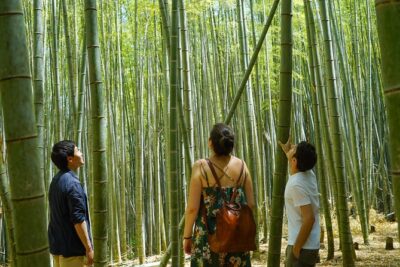
Fushimi Inari Hidden Hiking Tour (Private Option Available)
Read our review →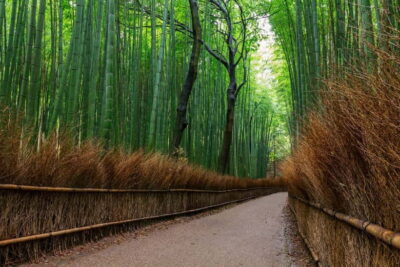
Kyoto/Osaka: Nara, Fushimi Inari Taisha, Arashiyama Bus Tour
Read our review →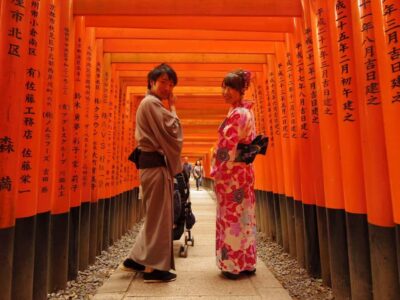
Osaka/Kyoto: Arashiyama, Nara & Fushimi Inari Shrine w/Lunch
Read our review →
Nijo Castle, Kiyomizu & Fushimi Inari Guided Tour
Read our review →
Nijo, Kinkaku-ji, Arashiyama, Kiyomizu & Fushimi Inari
Read our review →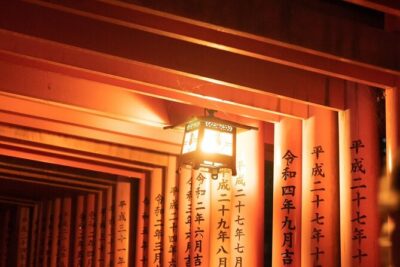
Kyoto Early Bird English Tour: Fushimi-Inari and Arashiyama
Read our review →Browse the lists this tour appears in