
Reviewed · TEA CEREMONY EXPERIENCES
Oboro | Mindful Tea Ceremony in a 100-Year-Old Kyoto Teahouse
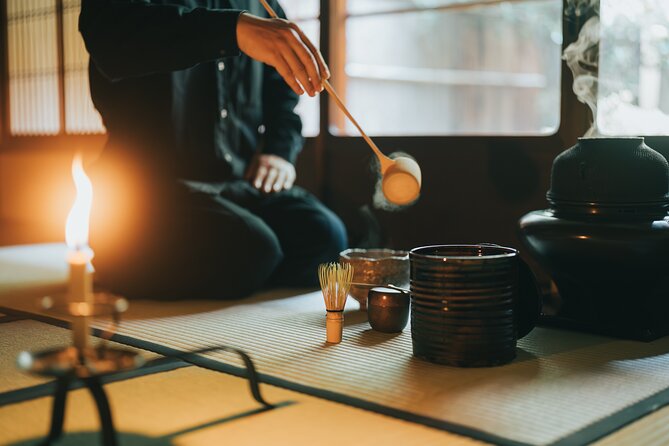
Oboro’s tea ceremony is less about drinking a quick cup of matcha and more about watching a careful ritual unfold in a 100-year-old Kyoto teahouse. Candlelight, quiet sounds, simple décor, and a host who explains each step create a calm break from the city.
I like the small maximum group of eight, which gives you room to see the utensils and ask questions. I also like the English guidance, especially from hosts such as Taku and Naoki, who explain the meaning behind the movements instead of leaving you to guess.
The main consideration is the short 50-minute schedule. This is a focused introduction, not a long tea-school lesson. Arrive early: after 10 minutes, you cannot join, and the quiet setting works best if you are ready to slow down rather than rush through it.
Key points to know before booking
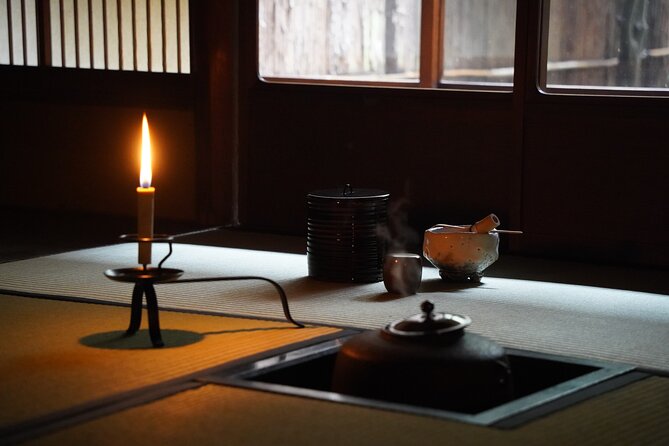
- Candlelit setting: The ceremony takes place in a spare, peaceful room rather than a busy café.
- Small group format: A maximum of eight people keeps the ritual easy to see and hear.
- English explanation: A guide translates and answers questions during the ceremony.
- Tea and sweets included: You receive a welcome tea, a small sweet, and freshly prepared matcha or another tea option.
- Rare organic green tea: The host prepares the tea one bowl at a time, with close attention to the tools and process.
- Handmade keepsake: The experience ends with a small candle that recalls the quiet mood of the ceremony.
Entering a 100-year-old Kyoto teahouse
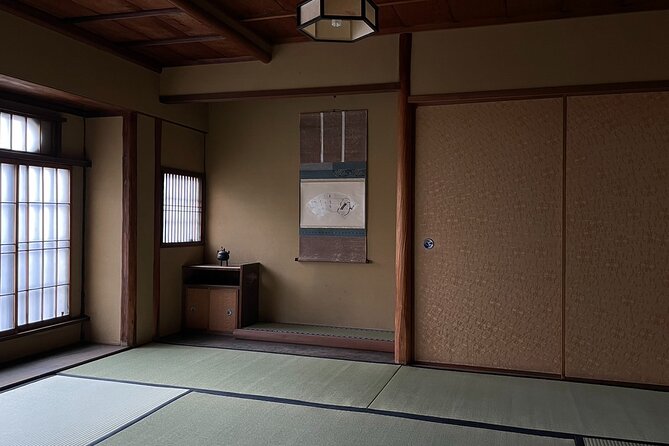
The first pleasure here is the setting. Oboro is in Kyoto’s Kamigyo Ward, at 237 Nakaogawachō, in a teahouse described as more than 100 years old. The room is minimally decorated, so your attention goes to the candles, the tea utensils, the host’s movements, and the people sharing the space with you.
That simplicity matters. Many tea experiences in Japan take place in restaurants or shops where conversation, customers, and background noise compete for your attention. Oboro is designed to feel slower and more private. It gives you a chance to notice small things, such as the sound of an item being placed down or the warmth of a tea bowl in your hands.
You begin with a welcome tea and sweets. This opening helps you shift from sightseeing mode to the ceremony itself. It is also useful if you are new to Japanese tea culture, since you can settle in before the more formal preparation begins.
The mood is gentle rather than stiff. You are not expected to know every rule before you arrive. The emphasis is on respect, attention, and shared quiet, which makes this a good first tea ceremony for people who might feel nervous about doing something incorrectly.
Other tea ceremonies in Kyoto people book:
- Kyoto: Tea Ceremony in a Traditional Tea House in Kiyomizu
★ 4.9 · 3,519 reviews - Kyoto: Tea Ceremony Ju-An at Jotokuji Temple
★ 4.9 · 3,207 reviews - Kyoto: 45-Minute Tea Ceremony Lesson Experience
★ 4.3 · 2,378 reviews
Watching matcha become a ceremony
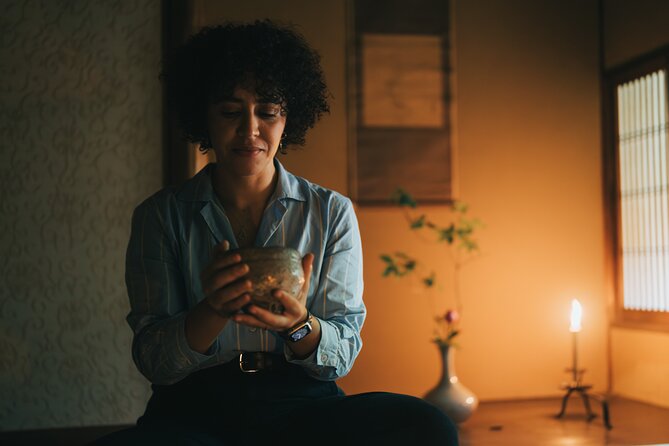
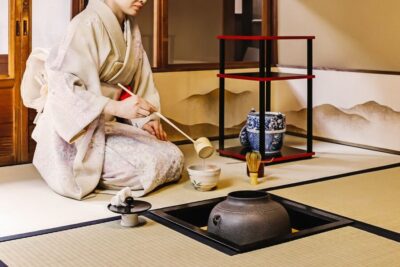
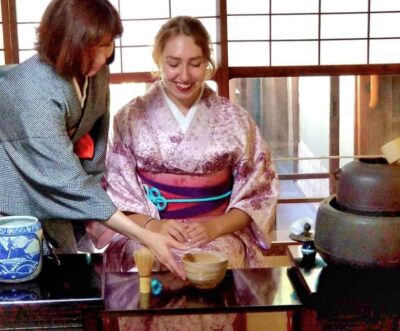
The central part of the session is the preparation of tea. The host cleans the utensils, arranges the tools, and prepares the bowl with deliberate movements. You watch the process before tasting the finished tea, so the drink becomes part of a larger act rather than the whole point.
The tea is whisked and served one bowl at a time. That pacing is important. You can look closely at the motion of the whisk, the shape of the bowl, and the way the host handles each item. The ceremony shows techniques that are rarely visible when matcha is served casually in a restaurant.
The tea is described as rare organic green tea. Matcha is the main focus, though the experience can also suit someone who prefers another type of tea. One family found that a daughter enjoyed the matcha while another participant chose black tea, so you do not need to be a committed matcha drinker to take part.
A small sweet is served before the tea. This gives the ceremony a pleasant rhythm and helps balance matcha’s stronger, grassy taste. If you normally find matcha sharp or bitter, tasting the sweet first may make the drink easier to appreciate.
Do not expect a large tasting menu or a full meal. The food is a small part of the ritual, and the tea remains the focus. If you are hungry, eat beforehand.
What the English guide adds
An English-speaking guide is included, and that makes a real difference. Tea ceremony movements can look beautiful but mysterious if no one explains them. At Oboro, the guide translates the host’s words and provides context, so you can understand why the utensils are cleaned, why the tea is prepared in a particular order, and how to approach the experience.
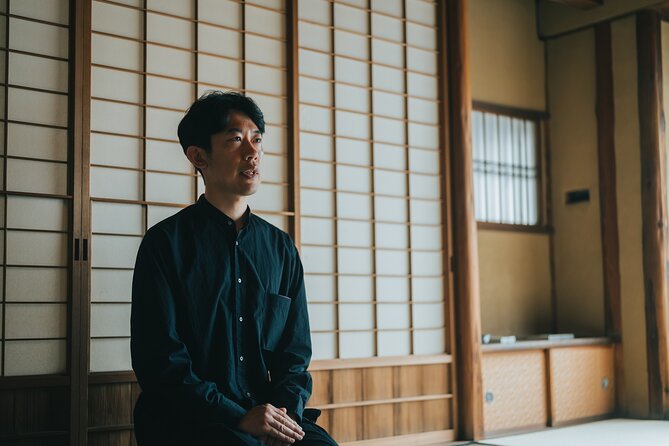
Taku has been praised for speaking excellent English, explaining the cultural meaning of the ceremony, and keeping the session informative without making it feel like a lecture. Naoki has also led the experience with a soft-spoken style that suits the reflective setting. Ryoko is connected with the tea house as well.
The hosts are willing to answer questions. That makes this more useful than simply watching a performance. You can ask about tea, Japanese customs, the tools, or the purpose of the gestures. If you have never attended a tea ceremony, this chance to ask simple questions is valuable.
The translation also helps if you are traveling with family or friends who have different levels of interest. One person can focus on the ritual, another can ask about Japanese culture, and someone else can simply enjoy the tea and atmosphere.
Why the candlelight changes the experience
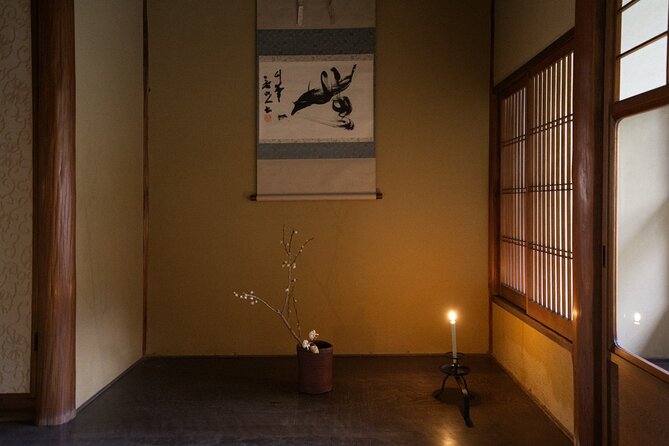
The handmade candles are not just decoration. The softly lit room gives the ceremony a slower pace and encourages you to pay attention to your senses. You may notice the flicker of the flame, the feel of the bowl, the scent of the tea, and the quiet between each movement.
That atmosphere is one of Oboro’s strongest qualities. Kyoto can be tiring, particularly after a day of temples, streets, shops, and train rides. A peaceful 50 minutes can reset your pace without taking half a day from your schedule.
The candlelight also makes the experience feel different from a standard tea tasting. In a bright café, you might focus on flavor alone. Here, the room, the tools, the sound, and the gesture all form part of the occasion.
Still, this mood will not suit everyone. If you want a lively demonstration, lots of tea varieties, or a hands-on workshop, Oboro may feel too quiet. The host prepares the tea for you, and the main activity is watching, listening, tasting, and reflecting.
Other tea rooms and ceremonies in Kyoto:
- Kyoto: Table-Style Tea Ceremony at a Kyo-Machiya
★ 4.9 · 1,211 reviews - Kimono Tea Ceremony at Kyoto Maikoya, NISHIKI
★ 5.0 · 911 reviews - Kyoto: Arashiyama Bamboo Forest, Monkeys, Matcha & Temple Tour
★ 5.0 · 759 reviews - Kyoto: Tea Museum Tickets and Matcha Grinding Experience
★ 4.9 · 739 reviews
A closer look at the 50-minute schedule
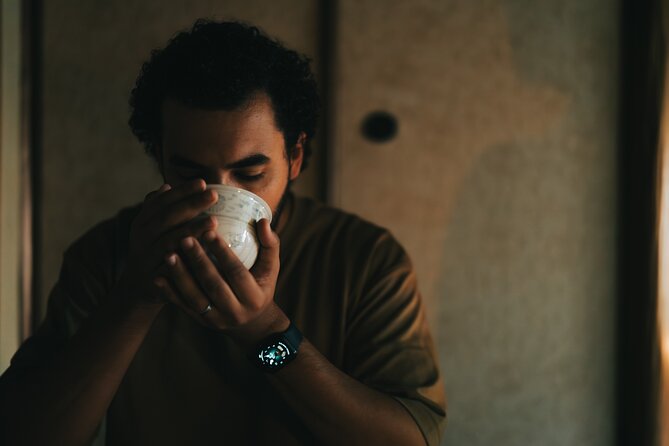
The 50-minute duration is short enough to fit neatly into a Kyoto sightseeing day. You can place it between other plans without giving up an entire afternoon. It is also long enough to cover the welcome, sweets, explanation, preparation, tasting, and closing candle gift.
A typical flow looks like this:
- You arrive and are guided into the softly lit space.
- A welcome tea and sweet help you settle.
- The group moves into the tearoom or begins the main ritual.
- The host cleans and arranges the utensils.
- Organic green tea is whisked and served one bowl at a time.
- The guide explains the meaning of the actions and answers questions.
- You receive a small handmade candle at the end.
The exact balance between watching, explanation, and questions can depend on the group. With no more than eight people, the host can keep the room personal without making the session drag.
The short format also keeps the ceremony approachable for children or family members with limited patience, though the peaceful nature of the experience means it is best for anyone able to sit quietly and pay attention.
Group size, location, and arrival advice
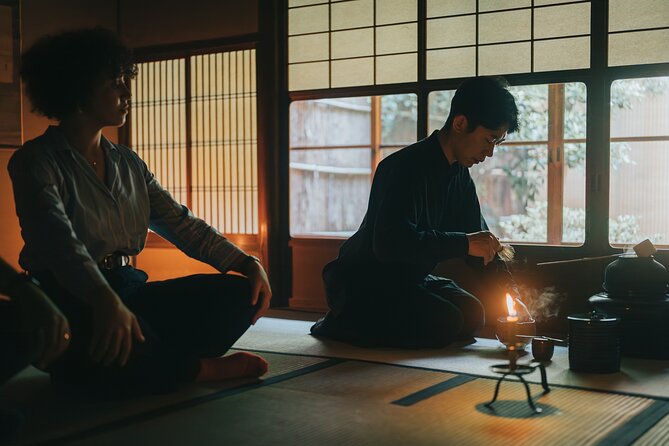
The group limit is eight people. That is small enough for you to see the host’s hands and hear the English explanation without the room feeling crowded. It also makes it easier to ask a question without interrupting a large presentation.
The meeting point is 237 Nakaogawachō in Kyoto’s Kamigyo Ward, postal code 602-0053. The location is near public transportation. Since the activity ends at the same place, you do not need to arrange a separate return meeting point.
Plan your route before leaving. The late-arrival rule is strict: if you arrive more than 10 minutes after the start, you cannot participate. A tea ceremony depends on a quiet beginning, so a late arrival would disrupt the group.
I would aim to arrive early enough to find the building without stress. Keep your mobile ticket ready, since the booking includes mobile admission. If your Kyoto plans are tightly packed, leave a sensible buffer for public transport and finding the address.
Is $45.98 a fair price?
At $45.98 per person, this is not the cheapest way to drink matcha in Kyoto. You can find tea in cafés for far less. The price is easier to justify if you want the ritual, the old teahouse setting, the English explanation, and a small group rather than a simple beverage.
You are paying for about 50 minutes of guided cultural time. The cost includes coffee or tea, the English-speaking guide, sweets, the ceremony, and the handmade candle. The candle is a modest gift, but it gives the experience a physical reminder beyond a photograph.
The value also depends on what you want from Kyoto. If your priority is sampling several teas, this is not the right purchase. If you want to understand how tea is prepared and why the movements matter, the price is more reasonable.
I would compare it with the cost of another paid cultural activity, not with the price of a drink. The small group and translation are especially useful for first-time visitors who want a clear introduction without committing to a long formal lesson.
Who will enjoy Oboro most?
I would recommend this experience to you if you want a quiet cultural activity with a clear English explanation. It is particularly suited to first-time tea ceremony participants, couples, families, and solo visitors who appreciate a calm setting.
It also works well for people who do not usually drink matcha. The focus is on the ritual and the preparation, and another tea option may be available. One participant even chose black tea while another enjoyed the matcha, showing that you can appreciate the ceremony without being devoted to green tea.
The experience may be less suitable if you prefer hands-on activities. The supplied information describes watching the host prepare the tea, not making your own bowl. It may also disappoint anyone expecting an elaborate meal, a long history lecture, or a full afternoon class.
The candlelit room can be a good choice after a busy day. You get a chance to sit still, listen, and take in a traditional practice without a large crowd around you.
A few practical limits to keep in mind
The experience requires good weather, and poor conditions can lead to a new date or a full refund. It also requires a minimum number of participants, so a cancellation is possible if that number is not reached. In either case, you are offered another date or experience, or a full refund.
You can cancel free of charge up to 24 hours before the start time. Cancellations or changes made less than 24 hours before the activity are not refunded or accepted. The cut-off uses Kyoto local time, so check the time carefully if you are booking from another country.
Tips and gratuities are not included. The included items are tea or coffee and the English-speaking guide. There is no need to budget for a meal as part of the session, but you should eat beforehand if you need something substantial.
Should you book this Kyoto tea ceremony?
Book Oboro if you want a small, quiet, well-explained introduction to Japanese tea culture. The candlelit room, old teahouse, patient hosts, and one-bowl-at-a-time preparation give the experience more character than a quick café stop.
I would be less quick to recommend it if you want to make tea yourself, taste a wide range of drinks, or spend several hours on formal instruction. For everyone else, the $45.98 price is fair when you value atmosphere, translation, and a personal group size.
Arrive early, wear a patient frame of mind, and let the ceremony move at its own pace. The best souvenir may not be the handmade candle. It may be the reminder to give one small part of your Kyoto day your full attention.
FAQ
How long does the Oboro tea ceremony last?
The experience lasts approximately 50 minutes.
Where does the tea ceremony begin and end?
It begins at 237 Nakaogawachō, Kamigyo Ward, Kyoto, 602-0053, Japan, and ends back at the same meeting point.
How many people can join?
The activity has a maximum of eight participants.
Is an English-speaking guide included?
Yes. An English-speaking guide is included to translate and explain the ceremony.
What is included in the price?
Tea or coffee and the English-speaking guide are included. A welcome tea, sweets, prepared tea, and a small handmade candle are also part of the described experience. Tips and gratuities are not included.
Can I cancel for a full refund?
Yes, if you cancel at least 24 hours before the start time. Cancellations or changes made less than 24 hours before the start time are not refunded or accepted.
Just added in Kyoto
- Private Cooking Class Udon in Kyoto Japan★ 5.0 · 23 reviews
- Your Private Vacation Photography Session In Kyoto★ 5.0 · 110 reviews
- Kyoto: Zen Meditation at a Private Temple with a Monk★ 5.0 · 25 reviews
- Private Pewter Sake Cup Experience with a Kyoto Artisan★ 5.0 · 31 reviews
- Kyoto Wagashi(Japanese sweets) Cooking Class near Fushimiinari★ 5.0 · 60 reviews
- Kyoto:Family-Friendly Kimono & Yukata Experience at WARGO★ 5.0 · 147 reviews
- Private Guided Traditional Buddhist Cooking in Japan★ 5.0 · 16 reviews
- Kyoto: Gion Geisha District & Sake-in-Hand Walking Tour★ 5.0 · 37 reviews
Tea Ceremony Experiences, compared.
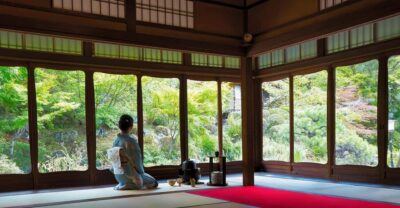
Tea Ceremony in a Traditional Tea House in Kiyomizu
Read our review →
World Heritage Kyoto & Nara Uji Authentic Matcha Experience
Read our review →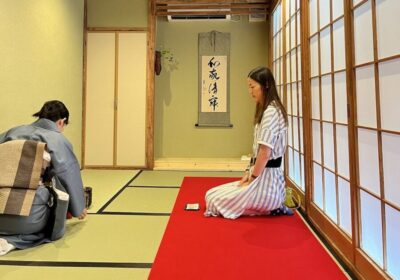
Arashiyama Bamboo Forest, Monkeys, Matcha & Temple Tour
Read our review →Browse the lists this tour appears in