
Reviewed · SAMURAI & NINJA EXPERIENCES
Ninja 2-hour Hands-on Lesson by Japanese master in Kyoto -Medium
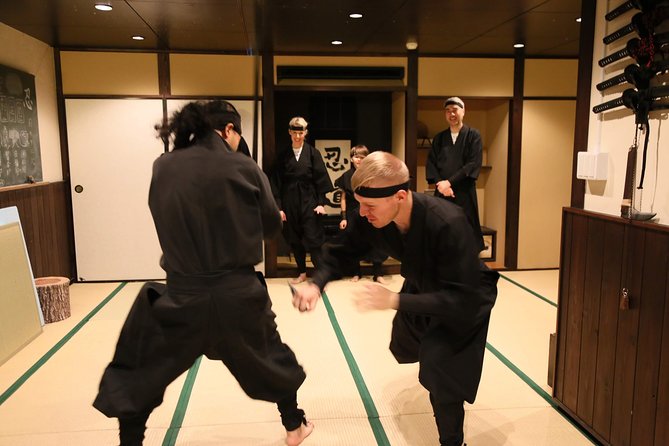
Kyoto’s two-hour ninja lesson is part martial-arts introduction, part hands-on cultural activity, and part wonderfully silly photo opportunity. You begin with ninja breathing and meditation, then move through walking techniques, traps, sword handling, shuriken, kunai, a sickle with chain, rope skills, and blow darts. The Japanese instructors teach in English and keep the class moving.
I like the small maximum of six people, which gives you room to ask questions and try each exercise without being lost in a crowd. I also like that the class provides ninja clothing, so you are not trying to perform sword movements in a dress shirt or sightseeing clothes.
The main consideration is price: at $95.51 per person, this is not a cheap way to fill two hours. It makes the most sense if you want an active, unusual Kyoto experience rather than a formal museum lesson or a low-cost sightseeing stop.
Key points at a glance
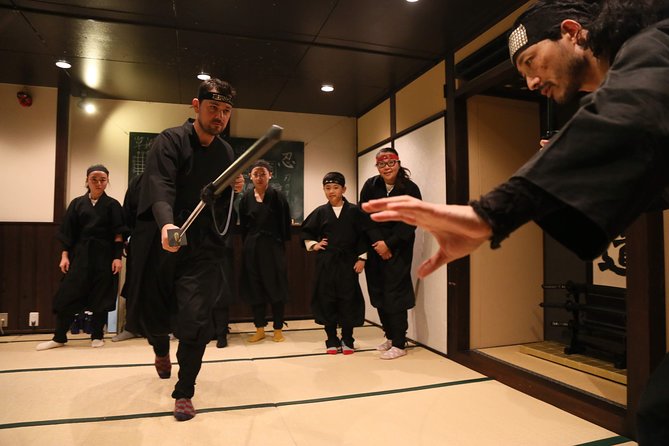
- A six-person maximum: The small class size makes instruction and practice more personal.
- A full beginner program: You cover breathing, meditation, walking, weapons, rope skills, and a ninja trick house.
- English instruction: A Japanese sensei trained in ninja arts teaches the lesson in English.
- Ninja clothing included: You change into provided clothing before training and can take memorable photos.
- Many hands-on stations: The class includes sword work, shuriken, kunai, blow darts, and other tools.
- Useful for families: Children and adults have taken part together, and the activities are built for beginners.
Starting at NINJA DOJO and STORE KYOTO
The lesson begins at NINJA DOJO and STORE KYOTO, at 528 Hakurakutenchō, 2F, in Kyoto’s Shimogyo Ward. The meeting time listed for this session is 10:00 a.m., and the activity finishes back at the same place.
Give yourself extra time to find the building. The practical arrival routine is part of the experience: come about 15 minutes early, leave your shoes at the entrance, use the slippers provided in the shoe boxes, and go upstairs. This is a working dojo and shop, not a large attraction with a broad public lobby, so arriving early helps you start calmly.
At the door, staff help you get ready. One instructor named Sho is mentioned in the experience details, while the lead teacher may vary by session. The instructors are Japanese masters trained in ninja arts and teach in English. The teaching style described throughout the class is patient, humorous, and hands-on.
The group limit matters here. With no more than six people, you are not simply watching a demonstration from the back of a room. You can see the movement clearly, ask for help, and take a turn with each activity. A small group also works well for families, couples, and solo visitors who want something more personal than a large staged show.
Other swordplay and stealth sessions in Kyoto:
- Kyoto Samurai Experience
★ 5.0 · 1,294 reviews - Kyoto: Kendo and Samurai Experience with Uniform and Gear
★ 4.9 · 815 reviews - Kyoto: Samurai Sword Class by Experts in Traditional Arts
★ 4.9 · 657 reviews
Changing into ninja clothing
Before the lesson begins, you put on the provided ninja clothing. This is not just a costume detail. The outfit helps separate the class from an ordinary sightseeing stop, and it makes the photographs much more fun.
Staff assist with the clothing when needed, which is useful if you are visiting with children or have never worn anything similar. You should plan to move around, kneel, handle equipment, and follow demonstrations, so dress in clothes that are comfortable underneath.
The photos are one of the pleasant extras of this activity. Several participants received photographs and videos by email through Google Photos on the same day. The information does not promise this as a formal inclusion every time, so treat it as a possible staff service rather than the main reason to book. Still, it can save you from trying to take self-timer pictures while holding a ninja sword.
Beginning with Kuji-In, breathing, and walking
The session starts with a quieter side of ninja practice. You learn ninja breathing and ninja meditation called Kuji-In before moving into physical techniques.
This opening gives the lesson more substance than a simple weapons demonstration. It introduces the idea that ninja training involved control, focus, and careful movement, not only throwing stars. You do not need previous meditation or martial-arts experience. The program is described as an elementary two-hour lesson, with an entry-level lesson followed by five additional techniques.
Ninja walking comes next. The point is not to sprint around the room like a film character. You learn how the body is placed and how movement can be controlled. This is a good early exercise because it gives beginners something approachable before they handle equipment.
You may find the class playful, but it is not presented only as a novelty act. The instructors balance discipline with humor, which helps children stay interested and gives adults permission to enjoy the theatrical side without feeling foolish.
The ninja trick house and its hidden mechanisms
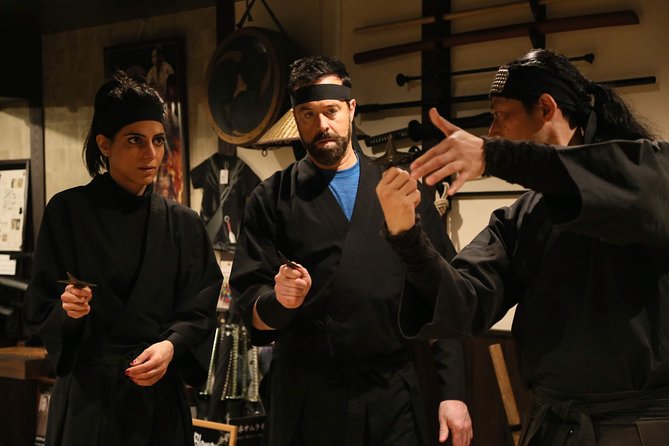
The introduction to the ninja trick house adds a different kind of activity. You learn about a gimmick and trap at the dojo’s ninja trick house, showing how concealed spaces and surprises fit into the popular image of ninja life.
This part is especially useful for families because it changes the rhythm of the class. Instead of standing in one place and repeating movements, you get a look at the physical setting and the tricks built into it. It also gives context to the tools and techniques that follow.
Do not expect a large historical attraction or a full archaeological reconstruction. This is a compact lesson in a dojo and store. The value comes from taking part and seeing how the instructor explains the ideas, not from spending hours touring an elaborate museum.
Same base, a different sort of day:
- PERFECT KYOTO 1-Day Bus Tour
★ 5.0 · 13,518 reviews - Kyoto: Fushimi Inari, Kinkakuji, Bamboo Grove 1 Day Bus Tour
★ 4.8 · 4,316 reviews - Kyoto: Tea Ceremony in a Traditional Tea House in Kiyomizu
★ 4.9 · 3,519 reviews - Kyoto Geisha Walking Tour: Gion District & Hidden Gems
★ 4.7 · 3,273 reviews
Sword training and the long list of tools
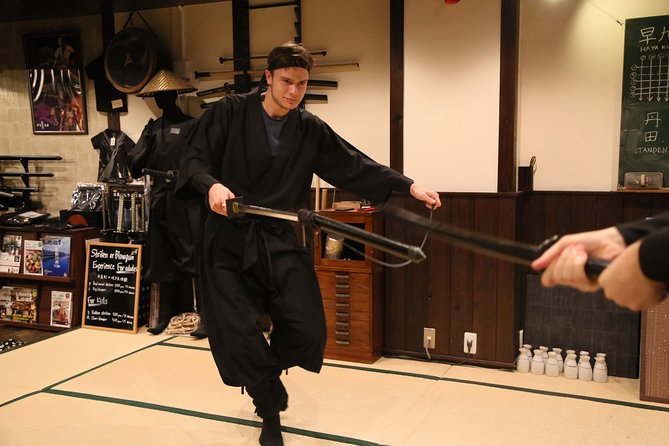
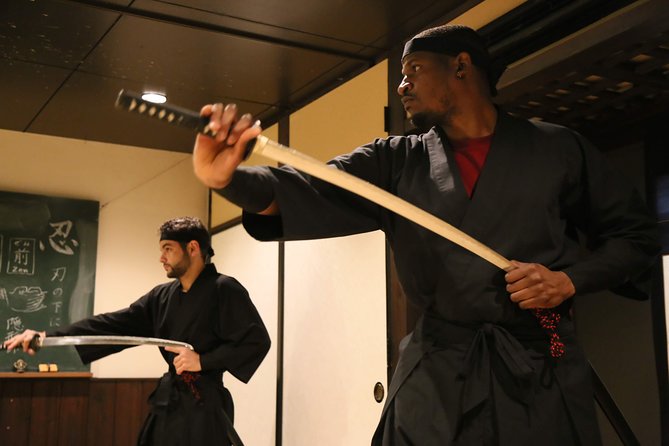
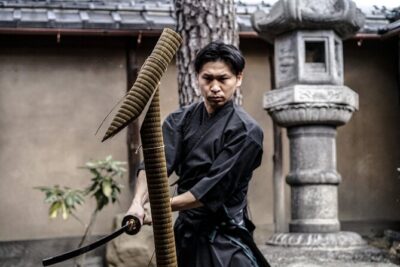
The sword segment is likely to be the moment many people anticipate. The instructor demonstrates how to wield a ninja sword, then gives you a chance to practice the basic handling under direction.
The session also covers a surprisingly long list of equipment:
- Kunai, or dagger
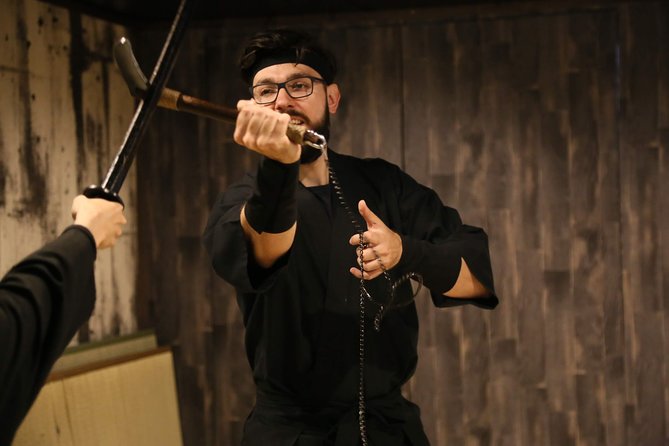
- Kusarigama, a sickle with chain
- Rope techniques
- Kunai with rope
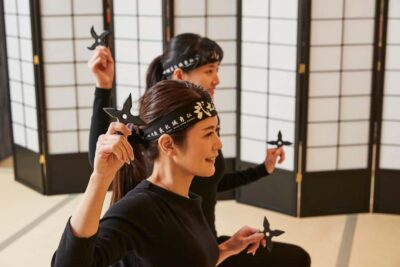
- Shuriken, commonly called ninja stars
- Ninja sword with shuriken
- Stick-type shuriken
- Ninja blowgun and blow darts
The exact amount of time spent on each item can vary, since the lesson has to fit all these subjects into two hours. You should think of this as an introduction to many techniques, not a complete course in any one weapon.
That variety is also the reason the class feels active. You are not repeating one sword form for the entire session. You move from demonstration to practice, then on to a new tool. Reviews of the experience repeatedly praise the chance to handle equipment and try techniques on targets, including throwing stars and shooting blow darts.
Safety and supervision are important here. The class is led by an instructor, and the tools are presented as part of structured training rather than free play. Follow directions closely, especially when changing from one activity to another.
What the teaching style adds
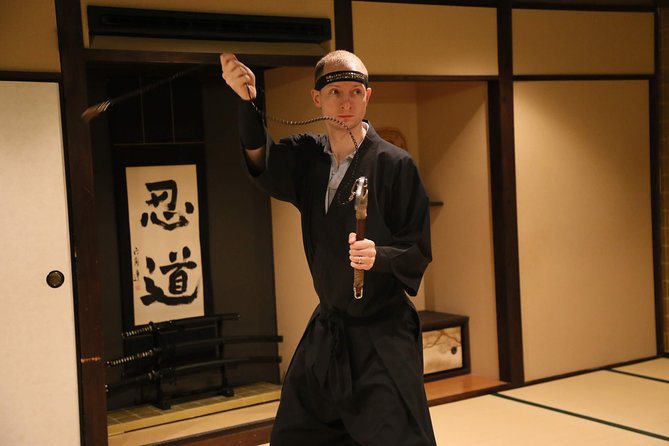
The best feature of this experience is not any single weapon. It is the way the instructors turn a long list of techniques into a class that beginners can follow.
The teaching is in English, and the instructor demonstrates each movement before you try it. The class has been described as accessible to people with different fitness levels, including middle-aged adults who are not especially limber. You do not need to arrive with martial-arts training.
The tone also matters. The instructors use humor, but they do not abandon the teaching. You get explanations of movement, some cultural background, and a clear chance to practice. One useful caution is that the amount of historical information may feel limited if your main interest is the documented history of ninja. The lesson focuses more on doing than on a long lecture.
That balance makes it a strong choice for a first introduction. You leave with a sense of the discipline, the imagery, and the tools, but not with a professional qualification or a complete study of ninja history.
Why the six-person limit changes the experience
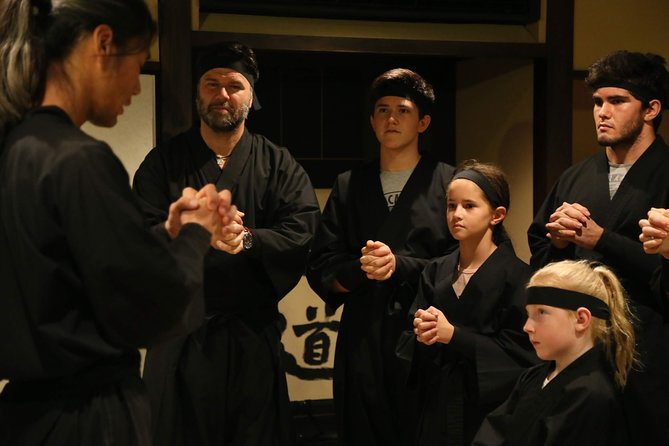
A small group is more than a marketing detail in a class like this. Sword handling, throwing practice, and blowgun work all become easier to follow when the instructor can watch each person.
You also spend less time waiting. In a large group, a weapons activity can turn into a line, with a quick turn followed by a long pause. A maximum of six should give you a better chance to repeat movements and ask for corrections.
The group can include mixed ages. Families with children from roughly early elementary age through teenagers have taken part, as have couples and adults traveling alone. The published information says most people can participate, but it does not provide a formal age range, fitness requirement, or detailed accessibility guide. If someone in your party has specific mobility needs, contact the provider before booking.
Service animals are allowed, and the dojo is near public transportation. There is no hotel pickup or drop-off, so you make your own way to the meeting point.
Is $95.51 a fair price?
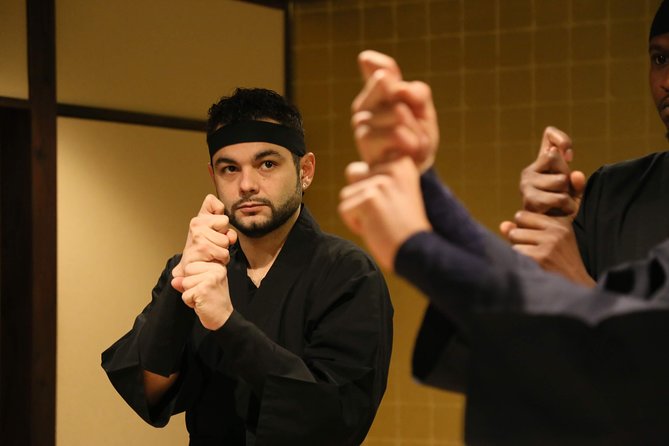
At $95.51 per person, the lesson costs more than a standard two-hour attraction. The value depends on what you want from Kyoto.
You are paying for a small group, an English-speaking Japanese instructor, clothing rental, admission, and access to a wide range of activities. If the class includes the staff photography reported by participants, that adds a useful memory to the package, though you should not book on the assumption that professional photos are guaranteed.
I think the price is easier to justify for a family or a small private-feeling group. Four family members will spend a significant amount, but everyone can take part rather than having adults watch children from the sidelines. For a solo visitor or couple, the cost is harder to compare with Kyoto’s many low-cost temples and neighborhoods, but the activity offers something those sights cannot: guided participation.
This is also a good rainy-day idea in practical terms, though the cancellation terms say the activity requires good weather. If poor weather causes a cancellation, you are offered another date or a full refund. The policy also requires cancellation at least 24 hours before the start time for a full refund. Within 24 hours, the payment is not refunded, and late changes are not accepted.
Who will enjoy this Kyoto lesson most?
You are a strong match if you want an activity that is:
- Active but suitable for beginners
- Easy to enjoy with children
- Different from temples, gardens, and food tours
- Structured around demonstrations and practice
- Photogenic without requiring you to arrange a costume rental
- Small enough for personal instruction
It is especially good for parents with children who want a shared activity. The lesson also suits teenagers, couples, and solo visitors looking for a two-hour side adventure.
You may want to skip it if your priority is serious academic study. The program offers some information and ninja philosophy, but its center is practical training. It is also not ideal if you dislike dressing up, handling props, or taking part in playful activities.
The lesson ends where it begins, which makes it simple to fit into a Kyoto day. You can schedule it before lunch and continue sightseeing afterward, though you should allow extra time for getting to the dojo and changing.
Should you book it?
I would book this if you want one Kyoto activity where your family or friends can actually do something together. The combination of ninja clothing, meditation, sword training, throwing practice, and a small class gives the two hours a clear shape and plenty of variety.
At $95.51, it is not a casual bargain. But for a first-time visitor who has already planned the major temples and wants a memorable change of pace, the hands-on format earns its price. Go in expecting a beginner lesson with cultural flavor, not a full course in ninja history, and you should get exactly the kind of unusual Kyoto memory this activity promises.
FAQ
Where does the ninja lesson begin?
The lesson begins at NINJA DOJO and STORE KYOTO, 528 Hakurakutenchō, 2F, Shimogyo Ward, Kyoto, Japan, postal code 600-8422.
What time does the class start?
The listed start time is 10:00 a.m.
How long does the experience last?
The lesson lasts approximately two hours.
How many people can join the class?
The activity has a maximum of six participants.
Is the lesson taught in English?
Yes. A Japanese sensei trained in ninja arts teaches in English.
Are ninja clothes included?
Yes. Ninja clothing rental during the training is included.
What techniques are covered?
The lesson can include Kuji-In meditation, ninja breathing, ninja walking, a ninja trick house introduction, sword training, kunai, kusarigama, rope techniques, shuriken, stick-type shuriken, and a ninja blowgun with blow darts.
Do I need previous martial-arts experience?
No previous experience is required in the provided information. The session is described as an elementary, entry-level lesson for beginners.
Is transportation included?
No. Hotel pickup and drop-off are not included. The dojo is near public transportation.
Can I cancel for a full refund?
You can cancel at least 24 hours before the experience start time for a full refund. Cancellations or changes made within 24 hours are not refunded or accepted. If the provider cancels because of poor weather or because the minimum number of participants is not reached, you are offered another date or a full refund.
Just added in Kyoto
- Kyoto: Private Photoshoot Service★ 5.0 · 158 reviews
- Kyoto Rickshaw Tour★ 5.0 · 210 reviews
- Izakaya Style Cooking Class★ 5.0 · 219 reviews
- Kyoto: Traditional Concert at Townhouse or Bathhouse★ 4.9 · 224 reviews
- Kyoto: Arashiyama Bamboo, Temple, Matcha, Monkeys & secret spots★ 5.0 · 219 reviews
- Samurai Training with Modern day Musashi in Kyoto★ 5.0 · 256 reviews
- Kyoto: Kimono Tea Ceremony with Matcha and Sweet★ 4.9 · 249 reviews
- South Kyoto in a Nutshell: Gentle Backstreet Bike Tour!★ 5.0 · 225 reviews
Samurai & Ninja Experiences, compared.
Samurai Ninja Museum Guided tour and Experience
Read our review →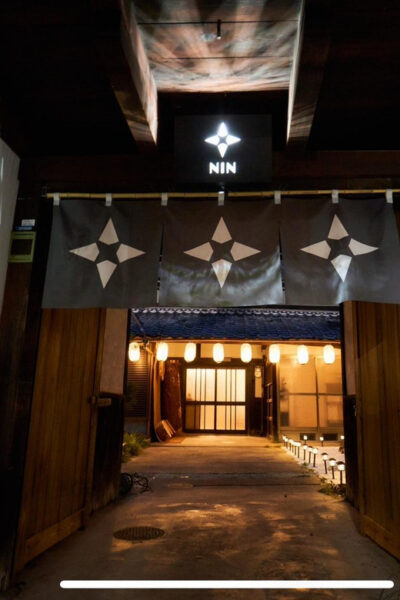
Kendo and Samurai Experience with Uniform and Gear
Read our review →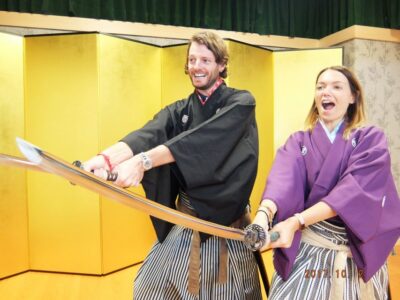
Samurai Sword Class by Experts in Traditional Arts
Read our review →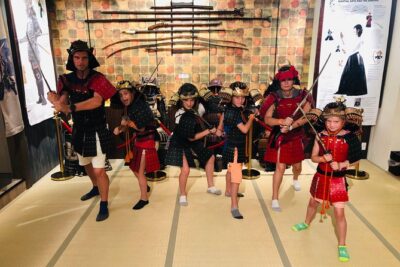
Skip the lines Basic Ticket at SAMURAI NINJA MUSEUM KYOTO
Read our review →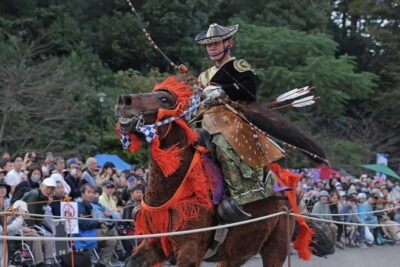
Samurai Sword & Archery Class from Samurai Descendant
Read our review →
Browse the lists this tour appears in