
Reviewed · SAMURAI & NINJA EXPERIENCES
Ninja 1-hour Hands-on Lesson by Japanese master in Kyoto -Entry
A short Kyoto class lets you trade shrine queues for a ninja outfit, then learn how to breathe, walk, meditate, and move with purpose. The session includes sword practice, kunai and shuriken throwing, blowgun darts, and a look at hidden doors and traps in a ninja trick house.
I like the small maximum group of six, which gives you more time with the instructor, and I like the mix of history and hands-on practice. Guides such as Sho and Jack teach in clear English, with plenty of humor. The main drawback is the one-hour limit: you sample many skills, but you do not receive a serious or detailed course in ninja history.
Key points to know before booking
- You handle several ninja tools: Try a sword, kunai, shuriken, and blowgun rather than watching a demonstration from the sidelines.
- The class begins with body control: Ninja breathing, meditation, and quiet walking come before the weapons.
- The dojo uses practical surprises: Secret rooms, trap doors, and a trick-house demonstration give the lesson a playful edge.
- Groups stay small: A maximum of six people makes this a better pick than a large costume-and-photo show.
- Children and adults can join: Families with children around seven and older have found the activities engaging, while adults can enjoy the history and technique.
- The price reflects the format: At $80.58 per person, you pay for instruction, equipment, clothing rental, and a compact activity near central Kyoto.
What happens when you enter the Kyoto dojo
The meeting point is NINJA DOJO and STORE KYOTO, at 528 Hakurakutenchō, 2F, in Kyoto’s Shimogyo Ward. The dojo is near public transportation, so it fits neatly into a day spent around central Kyoto.
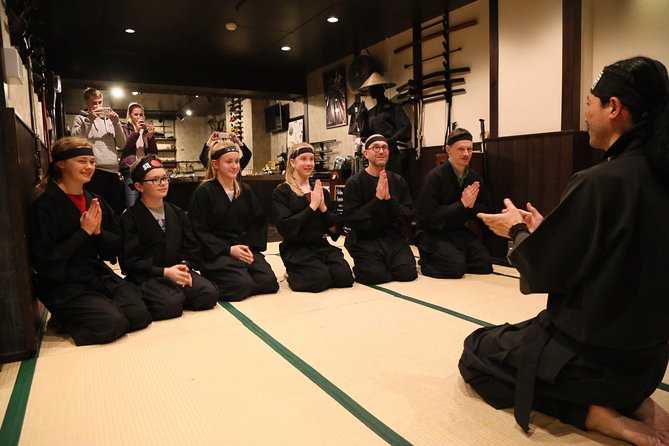
The class starts with ninja clothing rental. This is more than a quick costume photo, since changing into the outfit helps mark the shift from sightseeing to participation. It also makes the session more memorable for children and teenagers, who often respond well to having a clear role to play.
Your instructor teaches in English. Sho and Jack are among the guides associated with the class, and the teaching style is energetic, friendly, and easy to follow. The lesson is designed for beginners, so you do not need previous martial arts experience.
The group can include up to six people. That number matters here. You need room to practice movements and throw tools safely, and a small class gives the instructor a better chance to correct your stance or explain a technique. A private booking can feel especially personal, but even a full group remains fairly limited.
Other swordplay and stealth sessions in Kyoto:
- Kyoto Samurai Experience
★ 5.0 · 1,294 reviews - Kyoto: Kendo and Samurai Experience with Uniform and Gear
★ 4.9 · 815 reviews - Kyoto: Samurai Sword Class by Experts in Traditional Arts
★ 4.9 · 657 reviews
First learn to breathe, meditate, and walk
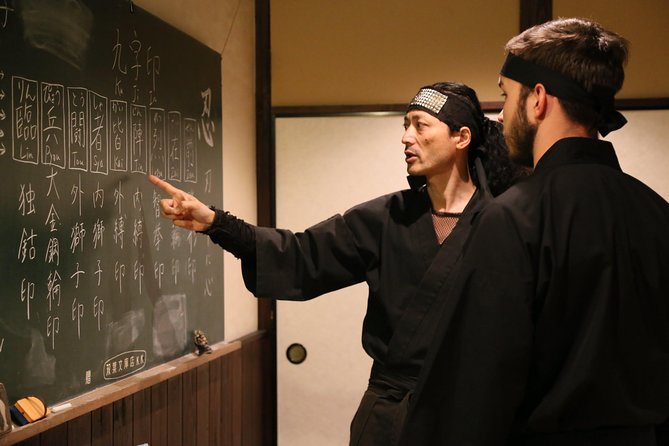
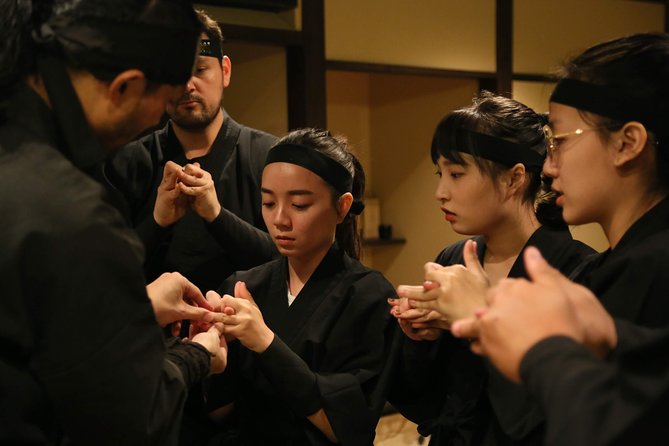
The opening section covers the quiet side of ninja training. You practice breathing and ninja meditation, known as Kuji-In, before moving into ninja walking.
This part may sound less exciting than throwing stars, but it gives the lesson some structure. Ninja skills are presented as more than weapons. Control, awareness, silence, and body position are part of the picture. You get a basic sense of why a ninja would train the body and mind before trying to move unseen.
Do not expect a long meditation session or a formal martial arts course. The class has a lot to fit into one hour. Instead, treat this opening as a quick introduction to the ideas behind stealth and discipline.
The walking exercise is one of the more memorable sections for families. It is simple enough for beginners, but it can be surprisingly difficult to perform smoothly. You may find yourself laughing as you try to move quietly and keep your balance.
Explore the trick-house doors and traps
The dojo includes a demonstration of ninja gimmicks and traps. You may see secret doors, hidden spaces, or a floor designed to suggest danger, including a dark section with spikes. The instructor shows you how to approach these features safely and explains the ninja-style movement involved.
This is where the class shifts from a basic lesson to a small piece of theater. The trick-house elements make the history easier to picture, especially for children. They also give you something to remember beyond a row of targets.
The lesson does not claim to recreate an entire historical ninja residence. It offers a compact demonstration, with the instructor explaining how the gimmicks work and how a ninja might use movement and awareness to avoid them. If you want an academic study of ninja architecture, this will feel light. If you want a practical and entertaining introduction, it works well.
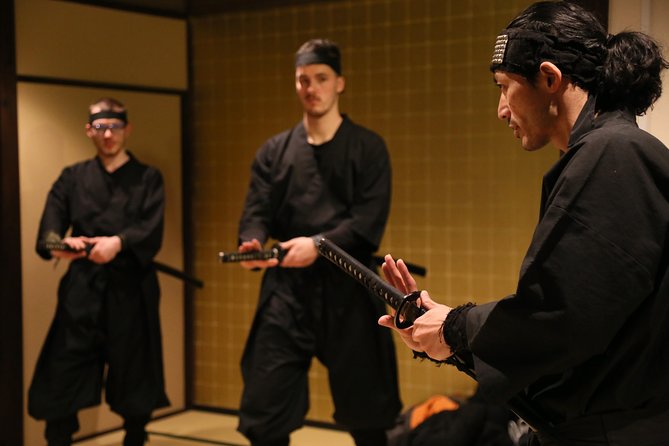
Practice sword handling with close instruction
The sword section begins with a demonstration. You then practice basic sword movements under instruction.
This is not a free-for-all with sharp weapons. The session is supervised, and the tools are introduced in a controlled way. The aim is to help you understand grip, posture, and movement rather than turn you into a trained swordsman in sixty minutes.
The sword practice often becomes a favorite moment for families because it feels dramatic without requiring advanced ability. Teenagers and adults can enjoy the physical challenge, while younger children can take part when they can listen carefully and follow directions.
The class moves quickly, so you should pay attention during the demonstration. Trying to copy the motion before understanding the stance can make the exercise feel awkward. Listen first, then practice slowly.
Same base, a different sort of day:
- PERFECT KYOTO 1-Day Bus Tour
★ 5.0 · 13,518 reviews - Kyoto: Fushimi Inari, Kinkakuji, Bamboo Grove 1 Day Bus Tour
★ 4.8 · 4,316 reviews - Kyoto: Tea Ceremony in a Traditional Tea House in Kiyomizu
★ 4.9 · 3,519 reviews - Kyoto Geisha Walking Tour: Gion District & Hidden Gems
★ 4.7 · 3,273 reviews
Throw kunai and shuriken at targets
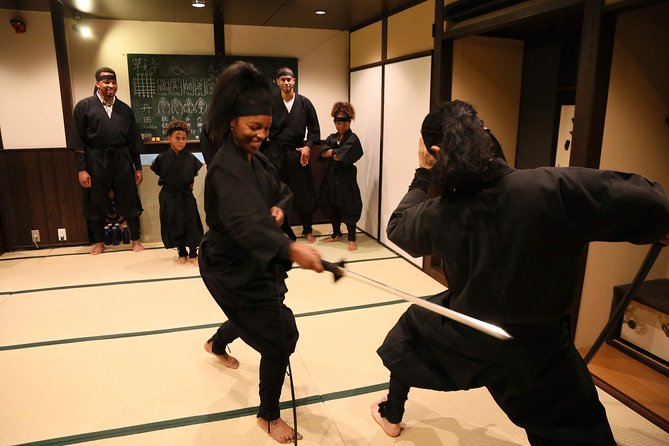
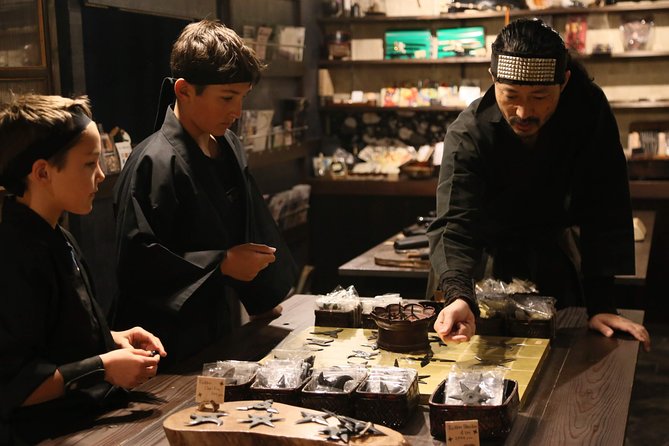
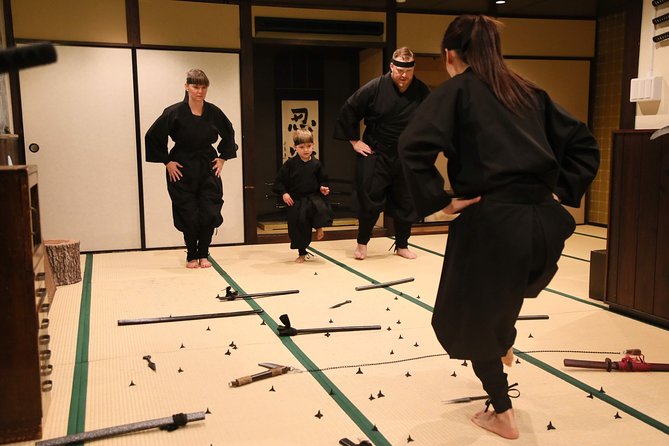
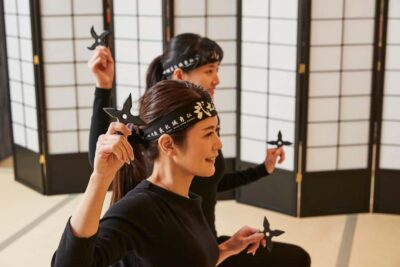
The weapons portion includes kunai, a dagger-shaped throwing tool, and shuriken, often called ninja stars. You throw at wooden targets under the instructor’s guidance.
This is the most immediately satisfying part of the session. You get repeated attempts, and the instructor explains the technique rather than simply handing you a prop. Some people find the shuriken easier than expected, while others discover that accuracy takes more control than movies suggest.
The activity is handled with care. The instructors explain how to use the equipment and keep the process suitable for beginners. Still, you should take every safety instruction seriously, particularly if you are bringing children.
A few families also enjoy trying a chopstick toss as part of the wider practice. It sounds easy until you try it. These small tests give the class a playful tone and help keep the pace lively.
Finish with the ninja blowgun
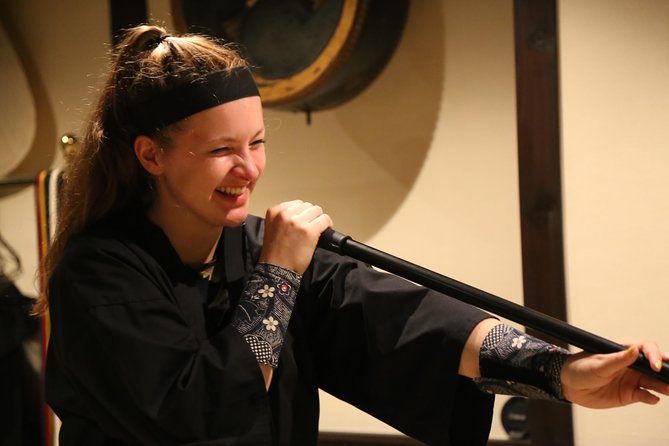
The blowgun, or blow dart, section gives you one more chance to aim at a wooden target. It is a different skill from throwing. You need steady breathing and a controlled release, which connects nicely to the breathing work at the start.
This link between the quiet opening and the weapons practice is one of the class’s better features. You begin by learning to control your breath, then use that control in a simple target activity.
The blowgun can be a hit with adults as well as children. Some people find they are better at it than expected. The instructor demonstrates the correct method, and you get a chance to try rather than simply watch.
As with the sword and throwing tools, the experience is introductory. You will not leave with professional-level skill, but you will understand the basic challenge and enjoy the novelty of using equipment rarely offered in ordinary sightseeing activities.
What the one-hour format does well
The hour moves at a brisk pace. You cover meditation, breathing, walking, trick-house features, sword work, kunai, shuriken, and blowgun practice. That variety prevents the session from dragging, and most people will find that the time passes quickly.
The tradeoff is depth. Each section is short. You learn enough to understand the basic idea and try the movement, but not enough to study ninja history in detail or repeat one technique for a long period.
I would choose this version if you have a tight Kyoto schedule or want one unusual activity between temples and meals. It also works as a first taste before booking a longer two-hour lesson. Several families have wished they had chosen the longer option after enjoying the one-hour class.
At the same time, the shorter format has a clear advantage for younger children and mixed-age groups. You get variety before anyone loses patience. It also suits adults who want something fun and physical without giving up half a day.
Is $80.58 per person a fair price?
At $80.58 per person, this is not a cheap drop-in activity. You are paying for an English-speaking Japanese instructor, clothing rental, admission, equipment use, and a small group capped at six people.
The value depends on what you want from Kyoto. If you only want a quick costume photo, the price is high. If you want a guided activity with several kinds of hands-on practice, the cost is easier to justify. You are not just entering a room and posing with plastic props. You receive instruction in movement, breathing, sword handling, throwing, and blowgun use.
The small group also improves the value. With six or fewer people, you should have a reasonable chance to practice each activity. A large class could turn the same itinerary into a long wait between turns.
Families may find the price worthwhile because everyone can take part. Children often treat it as the highlight of their Kyoto visit, while adults get history, technique, and a break from temple visits. Couples and groups of adult friends can enjoy it too, though adults seeking serious martial arts training may find the lesson too basic.
Who will enjoy this most?
This is a strong choice for families with school-age children and teenagers. The class offers costumes, secret doors, movement games, and weapons practice, all within one hour. It also takes place indoors, which gives you an air-conditioned break during a hot day of sightseeing.
It suits fans of ninja films, anime, and Japanese history, though you do not need to know Naruto or other ninja stories to enjoy it. A little pop-culture knowledge may help you recognize the playful references, but the instructor explains the activities from the ground up.
Couples and adult friends can enjoy the humor and unusual setting. The class is not limited to children, and the staff works to make the activities engaging for all ages.
I would be more cautious if your main goal is an in-depth study of samurai or ninja history. The lesson gives background, but the emphasis is action and participation. It is also not the right pick if you dislike dressing up, handling practice weapons, or following physical instructions.
Most people can participate, and service animals are allowed. The experience ends back at the dojo. Food, drinks, and hotel pickup are not included, so plan your transport and meal separately.
Practical booking advice for your Kyoto day
Wear something that lets you move comfortably under the rented ninja clothing. The lesson includes walking, throwing, sword movements, and blowgun practice, so restrictive clothing could make the session less pleasant.
Arrive at the stated meeting point in good time. The class is short, and arriving late can cost you a meaningful part of the instruction. One guide has accommodated late arrivals caused by traffic, but you should not count on having extra time.
The activity requires good weather under its operating policy, even though the lesson is held in a dojo. If poor weather causes cancellation, you are offered another date or a full refund. The same applies if the minimum number of participants is not reached.
You can cancel for a full refund up to 24 hours before the start time. Changes or cancellations inside that window are not accepted for a refund. Confirmation arrives when you book, and the mobile ticket is convenient for a day of sightseeing.
Should you book the ninja lesson?
Book it if you want a lively, compact Kyoto activity with real instruction, several hands-on stations, and a small group. The best parts are the range of skills, the English-speaking instructors, the trick-house features, and the chance to use a sword, kunai, shuriken, and blowgun.
I would especially recommend it for families and teenagers. It gives children something active to remember, while adults can enjoy the cultural background and the challenge of learning unfamiliar movements.
Skip it if you want a serious historical seminar or extended martial arts training. For everyone else, the one-hour lesson offers a playful change of pace at a price that makes sense when you value personal instruction and participation over simple sightseeing.
FAQ
Where does the ninja lesson meet?
The class begins and ends at NINJA DOJO and STORE KYOTO, 528 Hakurakutenchō, 2F, in Kyoto’s Shimogyo Ward.
How long does the experience last?
The entry-level lesson lasts approximately one hour.
How many people can join the class?
The group has a maximum of six participants.
Is the lesson taught in English?
Yes. A Japanese Sensei who has trained in ninja arts teaches the lesson in English.
What activities are included?
The class includes Kuji-In meditation, ninja breathing and walking, a trick-house demonstration, sword training, kunai training, shuriken throwing, and ninja blowgun practice.
Is ninja clothing included?
Yes. Ninja clothing rental during the training is included in the admission price.
Just added in Kyoto
- Kyoto: Private Photoshoot Service★ 5.0 · 158 reviews
- Kyoto Rickshaw Tour★ 5.0 · 210 reviews
- Izakaya Style Cooking Class★ 5.0 · 219 reviews
- Kyoto: Traditional Concert at Townhouse or Bathhouse★ 4.9 · 224 reviews
- Ninja 2-hour Hands-on Lesson by Japanese master in Kyoto -Medium★ 5.0 · 218 reviews
- Kyoto: Arashiyama Bamboo, Temple, Matcha, Monkeys & secret spots★ 5.0 · 219 reviews
- Kyoto Geisha District Walking Tour in Gion★ 5.0 · 232 reviews
- The right way to know Kyoto★ 5.0 · 257 reviews
Samurai & Ninja Experiences, compared.
Samurai Ninja Museum Guided tour and Experience
Read our review →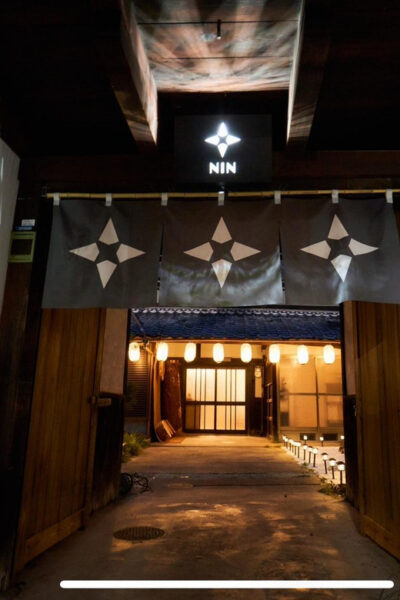
Kendo and Samurai Experience with Uniform and Gear
Read our review →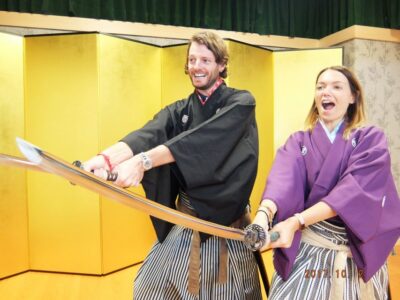
Samurai Sword Class by Experts in Traditional Arts
Read our review →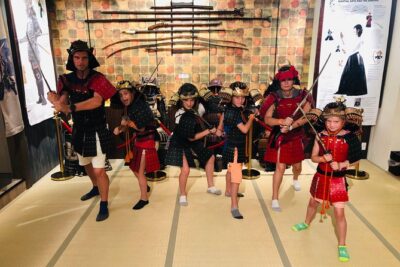
Skip the lines Basic Ticket at SAMURAI NINJA MUSEUM KYOTO
Read our review →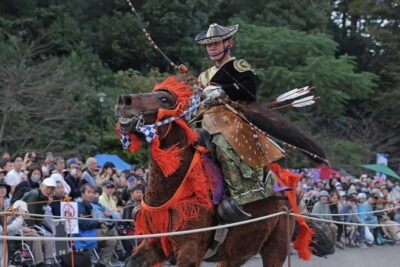
Samurai Sword & Archery Class from Samurai Descendant
Read our review →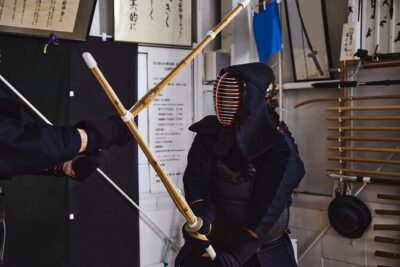
Browse the lists this tour appears in