Reviewed · TOURS IN KYOTO
Shamisen Discovery in Kyoto 【Group】
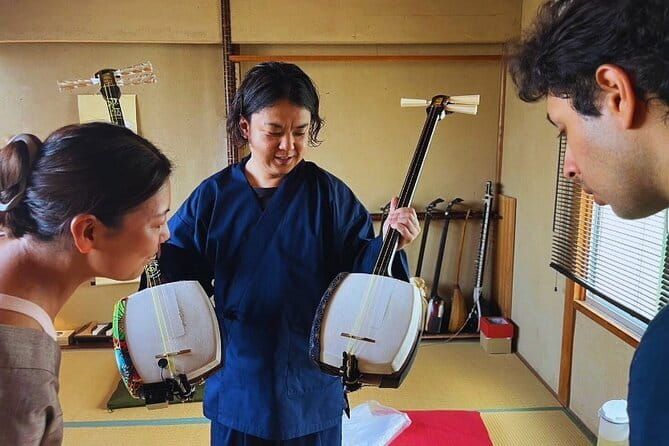
A one-hour shamisen lesson gives you something most Kyoto sightseeing cannot: a chance to make a little Japanese music yourself. Instructor Jack begins with the instrument’s background, then guides you through posture, the bachi pick, scales, and simple playing. I like the small class of no more than five and the fact that you finish with a real jam session, not just a demonstration.
I also like the personal touches: Jack can take photos of you holding the instrument, and coffee or green tea is included. The main limitation is time. Sixty minutes goes quickly, so you will get a lively introduction rather than a full music course.
Key points at a glance
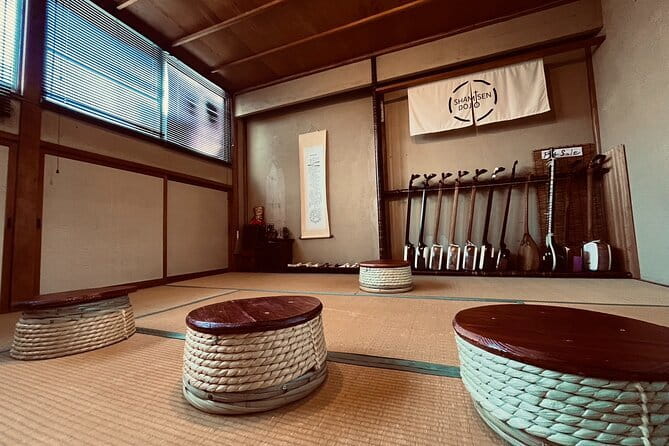
- Small-group format: The class has a maximum of five participants, giving you useful access to Jack during practice.
- A real hands-on lesson: You learn how to hold the shamisen and bachi, play basic techniques, and work through one scale.
- A musical finish: The class ends with free playing and a jam while Jack provides accompaniment.
- Good for beginners: You do not need prior shamisen experience, and the lesson can suit people with or without a music background.
- Left-handed instruments available: Left-handed participants can request a suitable shamisen.
- A compact Kyoto activity: The experience lasts about an hour and ends at the starting point, with tea or coffee included.
What makes a shamisen lesson worth your Kyoto time
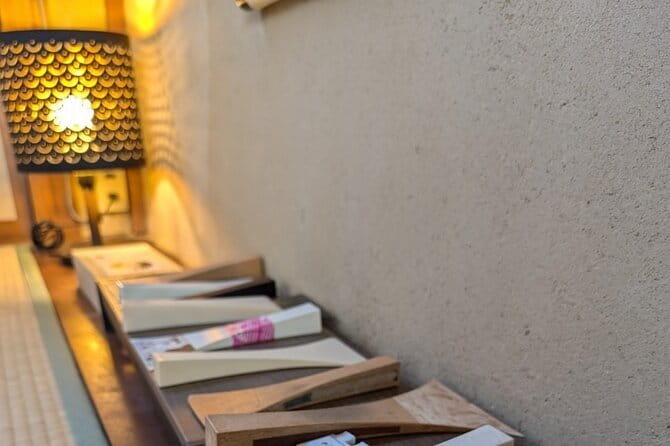
Kyoto is full of famous sights, but many of them ask you to look, listen, and move on. This class asks you to take part. You hold a rental shamisen, feel the weight of the large bachi pick, and try to produce the instrument’s distinct sound under Jack’s direction.
That difference matters. Even if you are not a musician, the lesson gives you a physical sense of how Japanese traditional music works. You are not simply told that the shamisen has a long cultural story. You learn how its playing style depends on the instrument’s shape, the pick, the strings, and the player’s hand position.
The class is especially appealing if you enjoy local activities that are less crowded than Kyoto’s major temples. It takes place in the Murasakino Nakakashiwanocho area of Kita Ward, away from the standard central Kyoto sightseeing circuit. The experience begins and ends at the same meeting point, so you can plan it as a focused side trip rather than a complicated all-day outing.
Other experiences people book in Kyoto:
- PERFECT KYOTO 1-Day Bus Tour
★ 5.0 · 13,518 reviews - Kyoto: Fushimi Inari, Kinkakuji, Bamboo Grove 1 Day Bus Tour
★ 4.8 · 4,316 reviews - Kyoto: Tea Ceremony in a Traditional Tea House in Kiyomizu
★ 4.9 · 3,519 reviews
Meeting Jack and getting comfortable with the instrument
The class starts with an introduction to the shamisen, including its different types and basic background. Jack has more than 20 years of experience with the instrument and teaches the material in a practical order. You first need to understand what you are holding before you can make it sound good.
The shamisen is a three-stringed Japanese instrument, but the lesson is not built around a long lecture. You should expect a concise explanation followed by active practice. Jack covers the proper way to hold the instrument and bachi, then helps you find a workable position.
That setup is important for first-timers. The bachi is larger and handled differently from the picks used with many Western string instruments. A little guidance early on can save you from spending the whole session fighting the instrument.
The small group helps here. With no more than five people, you have a better chance of receiving individual correction than in a large workshop. If you bring a friend, sibling, or partner, you can learn together while still having room for personal help.
Left-handed participants are not left to improvise. Lefty shamisen are available, which is a useful detail to confirm when booking or arriving for the lesson.
The first sounds, scales, and playing techniques
Once you are settled, Jack introduces basic shamisen playing techniques and one shamisen scale. You should not expect to leave as a trained performer, but you can expect to understand the building blocks of the music.
The class also introduces the five signature sounds of Japan. This gives the hour a clear structure. Rather than simply strumming at random, you get a sense of how particular tones and patterns are used to shape a Japanese musical phrase.
People with some musical background may move through this section quickly. Several participants with experience on other instruments were able to play simple material within the hour. If you have never played a string instrument, the pace should still feel manageable because Jack adjusts his help to the person in front of him.
That flexibility is one of the strongest reasons to choose this class over a larger cultural demonstration. A demonstration can show you what an expert can do. This session helps you understand what your own hands need to do.
Still, keep your expectations sensible. The course is an introduction. You will learn basic form, a scale, and a way into the instrument. You are unlikely to master complex traditional pieces in 60 minutes, and the lesson does not promise that you will.
The free session and final jam
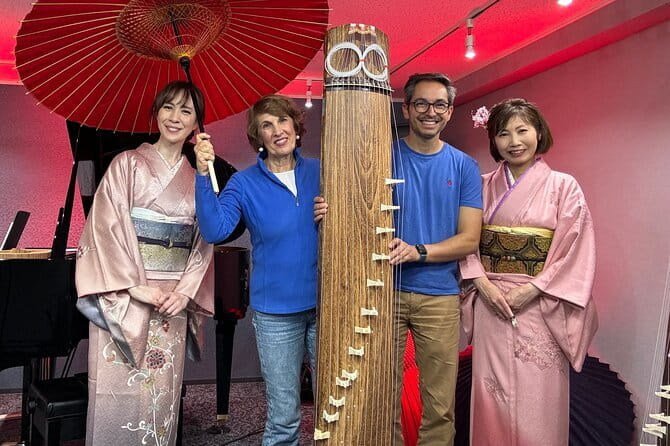
The final part is where the class becomes especially fun. You get free time to play the shamisen, then join a jam session with Jack providing accompaniment. Participants can create their own melodies within the sounds and scale introduced earlier.
This is a clever way to finish. It gives you a chance to stop worrying about perfect technique and listen to how the instrument fits into a larger musical exchange. You may play only a few notes, but those notes have a purpose because Jack supports the session.
The jam also makes the activity work for mixed groups. One person may have years of musical experience, while another may be holding a shamisen for the first time. Each person can contribute at a different level.
If you are shy about performing, remember that this is a small class, not a public stage. The atmosphere is designed around trying things out. Jack has been described as gentle, encouraging, and able to adjust the lesson to different levels of understanding. That matters more than a formal performance at this stage.
The hour can pass quickly, especially once the jam begins. If you want a longer and more detailed session, you may need to ask about extended instruction separately. The experience provided here is a compact introduction, not a 90-minute masterclass.
Same base, a different sort of day:
- Kyoto Geisha Walking Tour: Gion District & Hidden Gems
★ 4.7 · 3,273 reviews - Kyoto: Tea Ceremony Ju-An at Jotokuji Temple
★ 4.9 · 3,207 reviews - Kyoto: Gion Magical Night Walking Tour with Geisha Trivia
★ 4.9 · 2,393 reviews - Kyoto: 45-Minute Tea Ceremony Lesson Experience
★ 4.3 · 2,378 reviews
Photos, tea, and the small touches
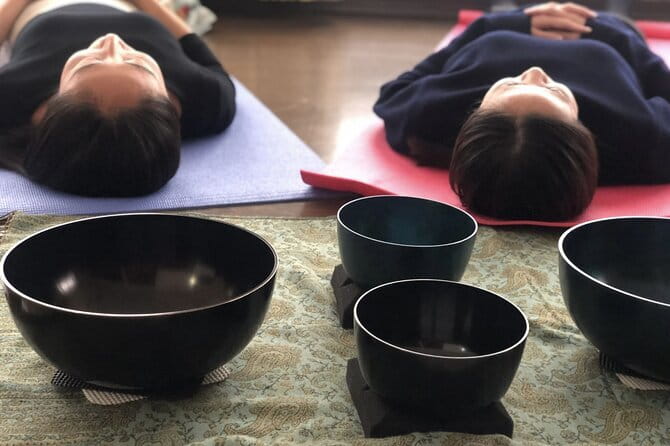
A short photo session is included, with the shamisen you choose. You can have your picture taken holding the instrument, which gives you a useful souvenir of an activity that is hard to capture with ordinary sightseeing photos.
This is not the main reason to book, but it adds value. You leave with more than a vague memory of watching someone play. You have a record of yourself taking part.
Coffee, tea, or green tea is included as well. It is a modest touch, but it helps the experience feel relaxed rather than rushed from the moment you arrive. Do not treat it as a full meal or refreshment stop. It is simply a short break built into the lesson.
The rental shamisen is included, so you do not need to arrange an instrument before arriving. That makes the class practical for visitors who are curious about the shamisen but are not ready to buy or transport one.
Who will enjoy this most
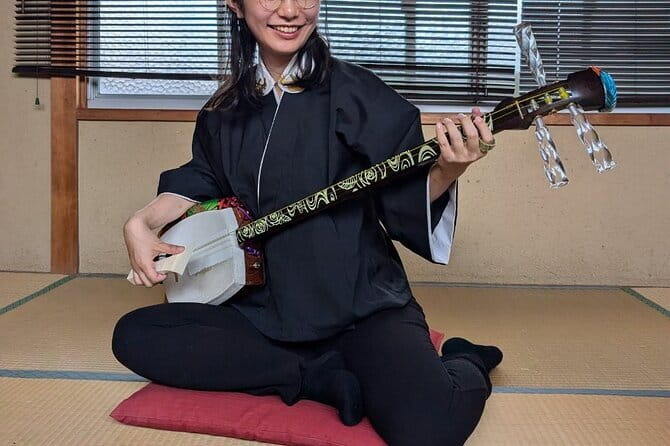
I would recommend this activity first to anyone who wants a hands-on cultural experience in Kyoto. It works particularly well for:
- First-time shamisen players
- People who enjoy music, even without formal training
- Couples, siblings, and parent-child pairs
- Visitors looking for an activity away from crowded temple routes
- Left-handed participants who need a suitable instrument
- Anyone wanting a short activity that fits around a larger Kyoto itinerary
The class also suits musicians. You can compare the shamisen with the instruments you already play, and Jack can respond to a more musically experienced participant. The lesson may feel familiar in some ways, but the instrument and playing method offer plenty that is new.
Families should consider the one-hour format. A 17-year-old and a parent, for example, can take part together without committing to a long workshop. The experience is short enough to hold attention, but substantial enough to feel like more than a quick photo opportunity.
You should think twice if you want a long historical lecture, an advanced technical course, or a polished concert. The lesson offers context, but its focus is making music. It is best approached with curiosity rather than a demand for professional results.
The location, timing, and group size
The meeting point is in Murasakino Nakakashiwanocho, Kita Ward, Kyoto, postal code 603-8312. The class ends back at the same point. Public transportation is nearby, though private transportation is not included.
Because the experience is only an hour, the meeting location matters. Allow enough time to reach the address without cutting it close. The activity is not a hotel pickup, so you are responsible for getting to the starting point.
The maximum group size is five. That is small enough for personal attention but not the same as a private lesson. If you want the instructor entirely to yourself, this group format may not be the right choice.
On the other hand, the group setting can make the jam more enjoyable. You hear several people trying the instrument and may feel less pressure than you would in a one-on-one lesson. Booking with friends gives the session a social feel without turning it into a large class.
The activity is confirmed at booking, and mobile tickets are supported. Free cancellation is available if you cancel at least 24 hours before the start time. Cancellations or changes made inside that window are not refunded or accepted, so check your Kyoto schedule before booking.
Is $65.89 good value?
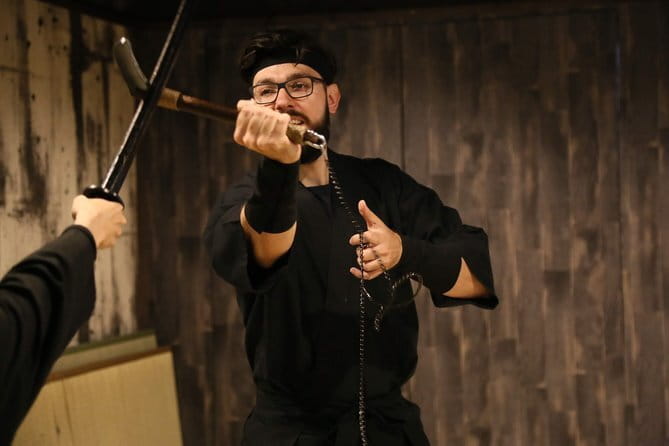
At $65.89 per person, this is not the cheapest one-hour activity in Kyoto. It is also more than the cost of simply visiting a temple or walking through a traditional district. The value comes from the equipment, instruction, small class, photos, refreshments, and the chance to play an authentic instrument yourself.
A private lesson would normally offer more personal time, but this experience keeps the price lower by using a group of up to five. For a specialized cultural activity with an experienced instructor and a rental shamisen included, the cost is reasonable if active participation matters to you.
The one-hour limit is the main factor in the value calculation. If you view it as a complete music course, you may find it too short. If you view it as a guided introduction and a memorable Kyoto activity, the price makes more sense.
I would compare it with what you want from the day. If you already have several passive sightseeing stops planned, this gives you a welcome change of pace. If your schedule is packed and the meeting point requires a long journey from your other plans, the short duration may be less convenient.
How to fit it into a Kyoto day
The lesson can work well as part of a northern Kyoto outing. The Murasakino location puts you in a different setting from the busiest central sights, and you can plan other nearby stops around the class if your schedule allows.
One sensible approach is to visit a major sight in the morning, then attend the lesson later. Kinkaku-ji, the Golden Pavilion, has been suggested as a possible pairing, though you should allow enough travel time and avoid squeezing the two activities together.
Do not book the shamisen lesson immediately before an important timed entry unless you know your route well. The class itself is about 60 minutes, but you also need time to reach the meeting point and settle in. Kyoto’s roads and public transportation can make a short distance take longer than expected.
The activity ends where it begins, which makes onward planning easier. You can continue sightseeing, stop for food, or return to your hotel without arranging a separate pickup.
Should you book the Shamisen Discovery in Kyoto?
Book it if you want to do something active, personal, and distinctly Japanese. Jack’s long experience, the five-person limit, left-handed instruments, included rental, and closing jam make this more than a basic instrument demonstration.
I would especially choose it for a couple, family pair, or small group with mixed musical ability. You do not need to play an instrument, and you do not need to arrive with a serious musical goal. You simply need to be willing to try.
Skip it if you want advanced shamisen training, a long concert, or a full-day cultural program. The hour is brief, and the class gives you a taste rather than mastery.
For most visitors, that is the point. You get to hold the instrument, learn how it works, make a few sounds, play along with Jack, and leave with photos and a story that a standard Kyoto sightseeing stop cannot provide.
FAQ
How long does the Shamisen Discovery experience last?
The course lasts approximately 60 minutes.
Where does the experience begin?
It begins at Murasakino Nakakashiwanocho, Kita Ward, Kyoto, 603-8312, Japan.
Where does the activity end?
The activity ends back at the meeting point.
How many people can join the class?
The group has a maximum of five participants.
Is the class suitable for beginners?
Yes. The course introduces basic shamisen information, playing techniques, one scale, free playing, and a jam session, making it suitable as an introduction.
Is a shamisen provided?
Yes. Rental shamisen are included in the experience.
Are left-handed shamisen available?
Yes. Left-handed shamisen are available for left-handed participants.
Is tea or coffee included?
Yes. Coffee and/or tea, including green tea, is included.
Can I cancel for a full refund?
Yes, if you cancel at least 24 hours before the experience start time. Cancellations or changes made less than 24 hours before the start time are not refunded or accepted.
Just added in Kyoto
- Kyoto: Zen Meditation at a Private Temple with a Monk★ 5.0 · 25 reviews
- Private Cooking Class Udon in Kyoto Japan★ 5.0 · 23 reviews
- Your Private Vacation Photography Session In Kyoto★ 5.0 · 110 reviews
- Private Pewter Sake Cup Experience with a Kyoto Artisan★ 5.0 · 31 reviews
- Kyoto Wagashi(Japanese sweets) Cooking Class near Fushimiinari★ 5.0 · 60 reviews
- Kyoto:Family-Friendly Kimono & Yukata Experience at WARGO★ 5.0 · 147 reviews
- Private Guided Traditional Buddhist Cooking in Japan★ 5.0 · 16 reviews
- Kyoto: Gion Geisha District & Sake-in-Hand Walking Tour★ 5.0 · 37 reviews
Tours in Kyoto, compared.
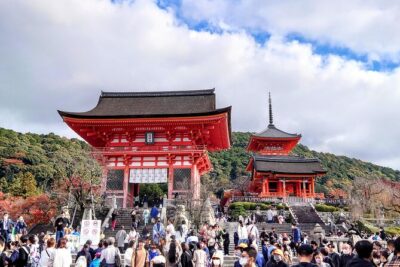

Tea Ceremony in a Traditional Tea House in Kiyomizu
Read our review →
Kyoto Geisha Walking Tour: Gion District & Hidden Gems
Read our review →


Gion Geisha District Walking Tour – Stories of Geisha
Read our review →
Best of Kyoto: Gion, Geisha, Pagodas & Cobblestones
Read our review →