Reviewed · TOURS IN KYOTO
Hammer Pattering Experience of Ring
A plain metal ring becomes a personal Kyoto souvenir in about an hour. At Itoaware Kyoto, you use the Japanese Tankin technique, hammering a texture into a ring that has already been formed and finished. The result is small, useful, and tied to your own handwork rather than a shop shelf.
I like two things here: you choose the material, thickness, shape, and texture, and you leave with the finished ring the same day. The staff also help with sizing, final polishing, and a commemorative photo. The main thing to understand is that this is ring finishing, not a full jewelry-making class. You do not cut, solder, or weld the metal.
Key points at a glance
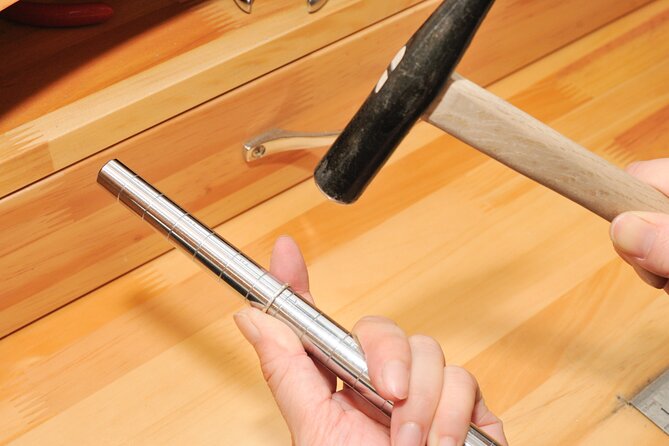
- Traditional Tankin hammering: Use special hammers and tools to create a handmade pattern on the ring.
- Choose your design: Select the material, thickness, shape, and texture before you begin.
- About one hour: The workshop is short enough to fit into a busy Kyoto day.
- Private activity: Only your own group participates, making it easier to ask for help.
- Take it home that day: Staff polish and clean the ring during the final step.
- Good value at $21.68: The price covers a hands-on activity and a personal souvenir, not just a demonstration.
What you actually make at Itoaware Kyoto
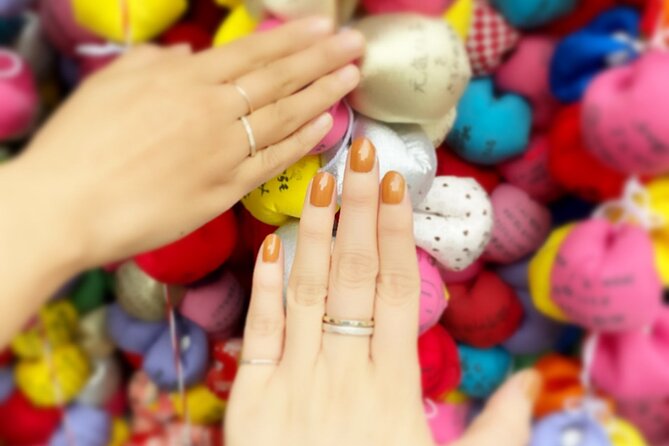
The title can suggest a complete ring-making course, with a strip of metal shaped into a circle and joined at the ends. That is not what happens here. You work on a ring that has already been welded or polished, then create its surface pattern with carefully placed hammer marks.
That difference matters. You are not learning every stage of jewelry production, and you will not practice soldering or welding. Instead, the class focuses on the visible character of the ring: its texture, shine, and handmade look.
I think this narrower focus works well for a one-hour activity. You get straight to the part that changes the ring in front of you. Each tap leaves a mark, so the finished piece carries evidence of your hand rather than looking completely factory-made.
The workshop uses the Japanese style called Tankin. The supplied information does not name the individual staff members, but the people at the shop explain the process, help with sizing, and support you through the final stage. The setup is suited to beginners, and most people can participate.
Other experiences people book in Kyoto:
- PERFECT KYOTO 1-Day Bus Tour
★ 5.0 · 13,518 reviews - Kyoto: Fushimi Inari, Kinkakuji, Bamboo Grove 1 Day Bus Tour
★ 4.8 · 4,316 reviews - Kyoto: Tea Ceremony in a Traditional Tea House in Kiyomizu
★ 4.9 · 3,519 reviews
Choosing the material, shape, and texture
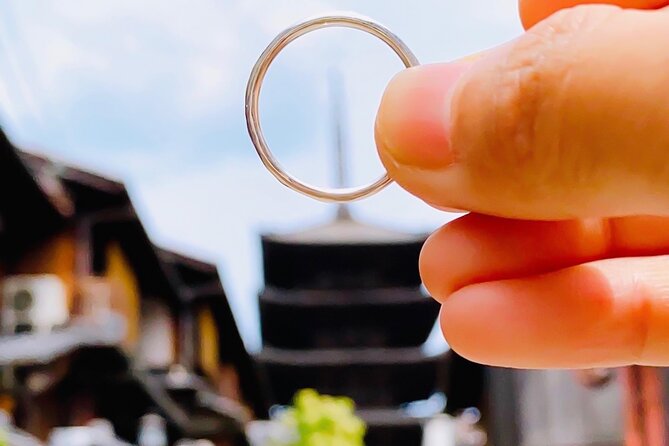
The first meaningful choice is the ring itself. You select the material, thickness, and shape, then decide what sort of texture you want to create. The available information refers to silver and gold options, including sterling silver in the feedback, but it does not give a full materials chart or say whether every option costs the same.
If you are buying for two people, make your choices together before the hammering begins. A matching pair can share a general style while still showing different textures. One person might choose a bolder pattern, while the other keeps a lighter finish.
Thickness also affects the feel of the finished ring. A narrow ring gives you less surface to mark, while a wider ring offers more room for texture. The staff can help you with sizing and the design choices, so ask for guidance before you begin rather than guessing.
The workshop is a good fit for a couple, family, or small private group. A family with two boys and two adults enjoyed the short lesson and left with keepsakes, which suggests that the activity does not require previous craft skills. You still need to follow the instructions carefully, since the texture is made by hand and cannot simply be erased.
The one-hour hammering session
Once your ring is selected, the main work begins. You use special hammers and tools to process the surface, adding the pattern one mark at a time. The staff explain how to handle the tools and guide you while you work.
The appeal is in the simple rhythm. You are not watching someone else make an object for you. You are making a series of choices, then seeing how those choices change the metal. The task is active without taking up an entire afternoon.
The staff’s support is important here. Several people praised the friendly, patient help, and one particularly useful detail is that the class includes assistance with sizing. That makes the workshop less stressful if you are unsure how the ring should fit.
Because the activity is private, only your group takes part. You can ask questions without needing to compete with a large class. It also gives couples and families room to work at their own pace within the roughly 60-minute session.
Still, do not expect a long technical lesson. The focus is on creating the ring’s texture, not on mastering traditional jewelry construction. If your goal is to learn metal cutting, soldering, welding, or a full studio process, this class will feel limited.
Final polishing and your Kyoto keepsake
After the hammering is complete, skilled craftsmen polish and clean the ring. This final step gives the piece a finished appearance and removes the roughness left by the workshop process.
You can take the ring home on the day of the activity. That is a real advantage for a short stay in Kyoto. You do not need to return to the shop later, arrange delivery, or worry about fitting a jewelry pickup into the rest of your schedule.
The finished ring also carries a clear memory of the place. One couple had Kyoto engraved on their rings as a reminder of their honeymoon stop. The information provided does not confirm that engraving is part of the standard activity, so you should ask Itoaware directly if you want that option.
A commemorative photo is also part of the support offered by the staff. That gives you a record of the making process, not just the object at the end. If you are booking as a couple, family, or group of friends, plan to allow a moment for that photo before leaving.
Same base, a different sort of day:
- Kyoto Geisha Walking Tour: Gion District & Hidden Gems
★ 4.7 · 3,273 reviews - Kyoto: Tea Ceremony Ju-An at Jotokuji Temple
★ 4.9 · 3,207 reviews - Kyoto: Gion Magical Night Walking Tour with Geisha Trivia
★ 4.9 · 2,393 reviews - Kyoto: 45-Minute Tea Ceremony Lesson Experience
★ 4.3 · 2,378 reviews
Is $21.68 a good price?
At $21.68 per person, this is priced as an accessible craft activity rather than a major luxury purchase. The value comes from combining instruction, tool use, design choices, final cleaning, and a ring you take home.
That price looks especially fair if you want a souvenir with a personal story. A mass-produced ring from a shop may cost less, but it will not carry the marks you made during the class. A longer jewelry course would offer more technical training, but it would also take more time and may cost more.
The price question depends on what you expect. If you want a complete jewelry-making lesson, the activity may not feel substantial enough because there is no welding or soldering. If you want a short, hands-on memory and a wearable gift, the cost is easier to justify.
Material choice may affect the final price, but the supplied details do not explain any additional charges. Check the current booking terms and available material options before you commit to a particular ring.
Location and timing in Kyoto’s Higashiyama
The meeting point is Itoaware Kyoto at 91-5 Hoshinocho, Higashiyama Ward, Kyoto 605-0853. The activity begins and ends at that same address.
The shop is near public transportation, which helps if you are fitting the workshop between other Kyoto plans. The booking data does not provide walking times from particular stations or nearby sights, so use the full address when planning your route and allow enough time to arrive before the start.
The activity lasts about one hour. I would not book it so tightly against a train, restaurant reservation, or timed admission that a small delay creates a problem. The workshop itself is short, but selecting your ring, hammering the texture, and completing the final photo all form part of the visit.
The experience is booked about eight days ahead on average. That does not guarantee availability, but it is a useful clue for planning. Confirmation is sent within 48 hours of booking, subject to availability, so make sure the number of people in your reservation matches the number who will attend.
Who will enjoy this workshop most?
I would choose this for couples who want a shared souvenir, families looking for a short creative activity, and anyone who prefers buying fewer but more personal gifts. The finished ring is useful, compact, and easy to carry for the rest of a Japan trip.
It also works well for a honeymoon or anniversary stop. A pair of rings can mark the trip without requiring a full custom jewelry order. The option to add a Kyoto reference, if offered by the shop, could make the souvenir even more personal, but confirm that detail before booking.
Children and first-time crafters can take part, as the activity is designed around guided hammering rather than advanced jewelry skills. Most people can participate, and service animals are allowed. The information does not give a minimum age, so contact the provider if a young child will join.
This is less suitable for someone seeking a long, technical workshop. You will not shape a raw strip of metal into a ring or learn how to join it. You create the surface finish on a prepared ring, with staff support from the first choice through the final polish.
Booking, changes, and practical cautions
Free cancellation is available if you cancel at least 24 hours before the local start time. A cancellation made less than 24 hours in advance is not refunded, and changes inside that window are not accepted.
Contact Itoaware through Instagram direct message at @itoaware.kyoto if you have questions about materials, sizing, engraving, or the number of participants. That is especially useful if you want something beyond the standard texture process.
The activity is private for your group, not a shared class with unrelated participants. That makes it a comfortable choice if you want a quieter session or need to ask for help often. It also means you should enter the correct group size when booking.
The overall rating is 4.8 from 20 ratings, with a 100 percent recommendation figure. The strongest praise centers on kind staff, clear explanations, attractive finished rings, and the reasonable price. The main caution is consistent with the activity itself: this is a texture class, not full ring construction.
Should you book the Hammer Pattering Experience of Ring?
Book it if you want a one-hour Kyoto activity with a personal result. You choose the ring, make the texture yourself, get help with the fit, and leave with a polished souvenir for $21.68 per person.
I would especially pick it for a couple or family that wants a shared memory without giving up half a day. The private format, same-day pickup, and patient staff make the process easy to fit into a sightseeing plan.
Skip it if the words ring making mean cutting, bending, and soldering metal from scratch. For that goal, this workshop is too limited. For a handmade keepsake with a clear connection to your time in Kyoto, it offers a simple and sensible hour.
FAQ
Where does the Hammer Pattering Experience of Ring take place?
It takes place at Itoaware Kyoto, 91-5 Hoshinocho, Higashiyama Ward, Kyoto 605-0853, Japan.
How long does the workshop last?
The work time is approximately one hour.
Where does the activity finish?
The activity ends back at the same meeting point where it begins.
What is the Tankin technique used in the class?
Tankin is the Japanese traditional style used to create texture by hammering the ring with special tools.
Do I make the entire ring from raw metal?
No. The ring has already been welded or polished. You add the surface patterns and texture with hammering tools.
Can I choose the ring’s design?
Yes. You can choose the material, thickness, shape, and texture.
Can I take the ring home after the class?
Yes. Staff polish and clean the ring, and you can take it home on the same day.
Is this a private activity?
Yes. Only your own group participates.
What is the cancellation policy?
You can cancel for a full refund up to 24 hours before the experience start time. Cancellations or changes made less than 24 hours before the start are not accepted for a refund.
Just added in Kyoto
- Private Cooking Class Udon in Kyoto Japan★ 5.0 · 23 reviews
- Your Private Vacation Photography Session In Kyoto★ 5.0 · 110 reviews
- Kyoto: Zen Meditation at a Private Temple with a Monk★ 5.0 · 25 reviews
- Private Pewter Sake Cup Experience with a Kyoto Artisan★ 5.0 · 31 reviews
- Kyoto Wagashi(Japanese sweets) Cooking Class near Fushimiinari★ 5.0 · 60 reviews
- Kyoto:Family-Friendly Kimono & Yukata Experience at WARGO★ 5.0 · 147 reviews
- Private Guided Traditional Buddhist Cooking in Japan★ 5.0 · 16 reviews
- Kyoto: Gion Geisha District & Sake-in-Hand Walking Tour★ 5.0 · 37 reviews
Tours in Kyoto, compared.


Tea Ceremony in a Traditional Tea House in Kiyomizu
Read our review →
Kyoto Geisha Walking Tour: Gion District & Hidden Gems
Read our review →


Gion Geisha District Walking Tour – Stories of Geisha
Read our review →
Best of Kyoto: Gion, Geisha, Pagodas & Cobblestones
Read our review →