
Reviewed · TOURS IN KYOTO
Itajime Shibori Scarf Class
The best part of this Kyoto activity is the grand reveal. You fold and clamp the fabric, choose your dye colors, then watch the pattern appear when the scarf is opened. I like the one-on-one help and the chance to make something useful rather than simply buy a souvenir. I also like that the class connects directly to a museum filled with serious shibori work.
The main thing to consider is the short, variable schedule. The activity may take 30 minutes or closer to an hour, and the class is held on the second floor, where the entrance can be hard to spot from the street. If you want a long craft workshop, this may feel brief. If you want a focused cultural stop, it fits neatly into a Kyoto sightseeing day.
Key points to know before booking
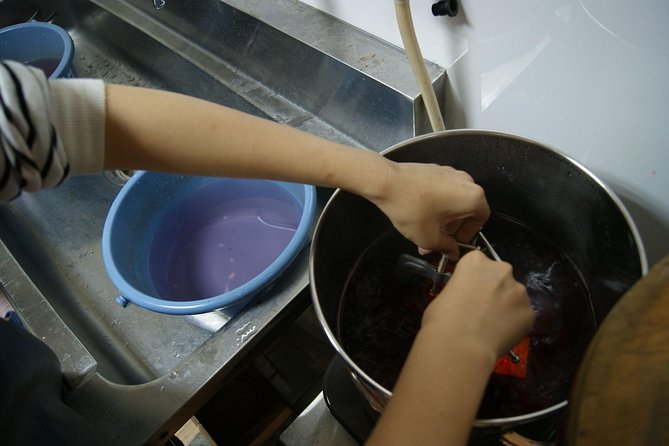
- Make your own itajime scarf: Fold, clamp, and dye Japanese fabric using a traditional shibori method.
- See the craft beyond the classroom: The museum’s upper-floor displays show intricate shibori pieces and explain how the art is used in kimono fabric.
- Expect personal instruction: The small group size, capped at 10 people, allows staff to guide you through each step.
- A good family activity: Children age 6 and older can take part, and adult pricing applies to all ages.
- Plan for a short visit: The class lasts about 30 to 60 minutes, with museum viewing fitting naturally before or after the craft.
- Bring home a real souvenir: Your scarf is dried, finished, and packaged for you to take away.
Making a scarf instead of buying one
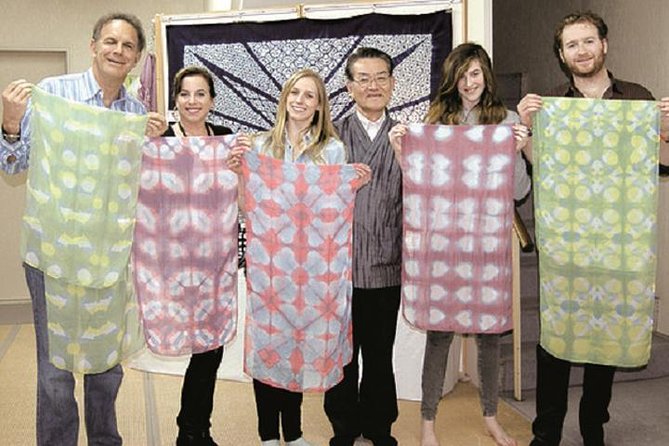
Kyoto is full of shops selling beautiful textiles, but this class gives you a better sense of what goes into them. Shibori is Japan’s traditional resist-dyeing craft. Fabric is folded, tied, stitched, clamped, or otherwise protected before dye is applied. The covered sections resist the color, producing patterns when the fabric is opened.
This workshop focuses on itajime shibori, a method that uses folding and boards or other traditional tools to create repeated shapes. You are not simply watching an artisan work. You make the key choices yourself, including the fabric and colors, then follow the instructions to create the pattern.
That makes the scarf more personal than a standard shop purchase. The final design may not look exactly as you expected, which is part of the fun. Shibori rewards careful folding, but it also leaves room for surprise. The final opening of the fabric is the moment that gives the class its spark.
The staff are described as patient, kind, and willing to explain the process at a comfortable pace. Instructor June is specifically praised for careful guidance. Kenji and the museum team are also known for taking time to explain both the practical work and the wider craft tradition. Guide assignments can vary, so you should not assume a particular person will lead every session.
Other experiences people book in Kyoto:
- PERFECT KYOTO 1-Day Bus Tour
★ 5.0 · 13,518 reviews - Kyoto: Fushimi Inari, Kinkakuji, Bamboo Grove 1 Day Bus Tour
★ 4.8 · 4,316 reviews - Kyoto: Tea Ceremony in a Traditional Tea House in Kiyomizu
★ 4.9 · 3,519 reviews
What happens during the 30 to 60 minute class
The class begins with the practical decisions. You choose from Japanese fabrics and select the colors for your scarf. The available choices give you creative control without requiring you to arrive with any artistic experience.
Next comes the folding and clamping. This is where the pattern is built. The instructor shows you how to position the fabric and use the tools, then helps you correct anything that needs adjusting. Clear instructions matter here because small changes in the folds can affect the final design.
The fabric is then dyed. The process is active, but not frantic. Several people describe the class as relaxing, which makes sense: the work is tactile and focused, and the session takes place in a calm museum setting.
The reveal comes after the dyeing and drying process. You open the folded fabric to see the pattern that your arrangement created. Staff add the finishing touches, then your scarf is dried and packaged so it is ready to carry home.
The exact timing varies. Some sessions appear to finish in about 30 minutes, while others take closer to an hour. If your schedule is tight, allow the full hour rather than counting on the shorter estimate. The museum viewing can also extend your visit, especially if you stop to watch the film or ask questions.
Why the museum visit adds real value
The Kyoto Shibori Museum is not just a waiting room for a craft class. It gives you a useful look at the skill behind the simple folds you have just made. The displays on the second floor include finely worked shibori pieces, and a film explains the dyeing process and the production of kimono fabric.
That contrast is valuable. Your scarf is a manageable introduction, while the museum shows what happens when the same broad ideas are handled by highly skilled makers over a much longer period. You will see why elaborate shibori garments can require such careful planning and labor.
The museum also presents shibori as a living Japanese craft rather than a dated souvenir technique. The experience links fabric construction, dyeing, kimono production, and decorative art. You leave with a clearer idea of why patterned Japanese textiles look the way they do.
I would allow time to visit the exhibition even if you mainly booked the class. Some people spend the waiting period on the second floor, while others tour the displays after finishing the scarf. The exhibit is especially useful for adults and older children who want more context than the craft table alone provides.
There are also textile goods and related items to browse. One account describes purchasing a leather and shibori purse, but shopping is an extra, not the main reason to book. The strongest souvenir remains the scarf you create yourself.
A small setting with personal attention
The group limit is 10 people, and the class can feel even more personal when attendance is light. One person described receiving dedicated individual guidance, while families appreciated the staff’s attention to both adults and children.
That small scale is a major advantage over a large workshop where an instructor must demonstrate once and move on. Here, you can ask why a fold matters, check your arrangement, and get help before the dye is applied. This is particularly useful if you do not think of yourself as artistic.
The class suits solo visitors, couples, families, and mixed-age groups. A 12-year-old enjoyed the activity, and teenage boys who were not especially interested in crafts also found it engaging. Children must be at least 6 years old, but remember that adult pricing applies to everyone.
Families should appreciate the clear end point. Each person makes a scarf, sees the result, and leaves with something tangible. Some children also receive a certificate, depending on the arrangements made by the staff. That detail can make the experience feel special for younger participants, though it should not be treated as a guaranteed inclusion unless confirmed when booking.
Same base, a different sort of day:
- Kyoto Geisha Walking Tour: Gion District & Hidden Gems
★ 4.7 · 3,273 reviews - Kyoto: Tea Ceremony Ju-An at Jotokuji Temple
★ 4.9 · 3,207 reviews - Kyoto: Gion Magical Night Walking Tour with Geisha Trivia
★ 4.9 · 2,393 reviews - Kyoto: 45-Minute Tea Ceremony Lesson Experience
★ 4.3 · 2,378 reviews
Location and fitting it into a Kyoto day

The museum is near public transportation, so you do not need a car to reach it. Two car parking spaces and bicycle parking are available, but capacity is very limited. If you are driving, do not count on finding a space.
The entrance can be a little confusing. The classroom is on the second floor, and street signage is not always obvious. I would arrive with the museum name and booking details ready on your phone and allow a few extra minutes to find the correct entrance.
The museum is close to a major Kyoto castle, described as about a two-minute walk away. That makes the class easy to pair with a castle visit. You could see the castle, make your scarf, and then spend time with the shibori displays in one compact outing.
The activity works well on a rainy day or during a break from temple and shrine sightseeing. It gives your day a quieter rhythm without taking up half a day. The mobile ticket is handy for keeping the confirmation available while you are moving around Kyoto.
Is $43.60 a fair price?
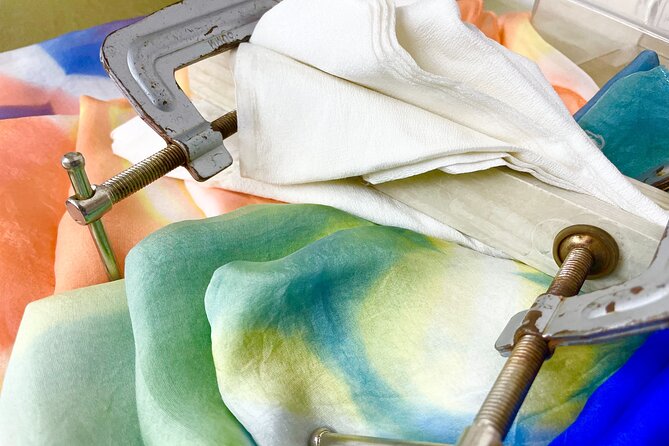
At $43.60 per person, this is not the cheapest souvenir activity in Kyoto. It is a fair price if you value instruction, museum access, and a finished handmade item rather than simply buying a scarf from a shop.
The value comes from several parts working together. You receive fabric, dyes, tools, staff guidance, the class itself, access to the museum displays, and a packaged scarf to take home. You also get a practical introduction to one of Japan’s traditional textile arts.
A shop-bought scarf may cost less, especially if you choose a simple design. But it will not carry the memory of making it, and you may not understand the folding and dyeing process behind the pattern. This class is best judged as a cultural activity with a souvenir attached, not as a bargain shopping trip.
The small group size strengthens the value. Personal help can make the difference between a confusing craft session and one that feels easy to follow. The class also avoids the time commitment of a full-day workshop, which matters if you are fitting it between major Kyoto sights.
Who will enjoy this most

I would recommend this experience to anyone who likes crafts, textiles, design, or practical cultural activities. It is also a good choice if you want an indoor stop that feels connected to Kyoto rather than a generic tourist attraction.
Families with children age 6 and older should find it manageable. The activity is structured, staff are patient, and the result gives children something concrete to remember. Older children and teenagers may especially enjoy the reveal because it feels less like a school demonstration and more like making a personal object.
Solo visitors can also book comfortably. The small setting allows individual attention, and one person even made several scarves during a visit. That may depend on time and staff approval, so ask before planning on producing more than one.
You may want to skip it if you dislike short workshops, prefer a long detailed lesson, or have no room in your luggage for a textile souvenir. You should also leave extra time if you want to study the museum properly. The class itself is compact, but the exhibition can easily tempt you to linger.
Practical details before you go
Confirmation is provided at booking, and the mobile ticket means you can keep the details on your phone. Most people can participate, and the experience is suitable for children from age 6.
The maximum group size is 10. Adult pricing applies to all ages, so check the total carefully if you are booking for a family.
Free cancellation is available when you cancel at least 24 hours before the local start time. Inside that window, the payment is not refunded, and changes are not accepted. This is worth noting if your Kyoto plans depend on weather or a moving sightseeing schedule.
Give yourself a little buffer for the second-floor entrance. The location is close to public transportation and near the castle, but the street-facing signage may not immediately make the classroom obvious.
Should you book the Kyoto shibori class?
Book it if you want a personal souvenir with a story, especially if you enjoy making things or want a calmer break from Kyoto’s major sights. The combination of a short craft class, patient instruction, and a serious textile museum gives the experience more substance than a simple dyeing activity.
I would be most likely to recommend it to families, solo visitors, couples, and anyone curious about Japanese fabric traditions. The price is reasonable for the instruction and museum visit, though not a low-cost way to buy a scarf.
Skip it only if your schedule is extremely tight or you want a long, advanced craft course. For most visitors, the one-hour maximum, small group size, and finished scarf make this an easy cultural addition near the castle.
FAQ
How long does the Itajime Shibori Scarf Class last?
The activity takes approximately 30 minutes to 1 hour. The exact duration can vary depending on the class and the time needed for the scarf to dry and receive its finishing touches.
Where does the scarf class take place?
The class takes place at the Kyoto Shibori Museum in Kyoto, Japan. The classroom is on the second floor, and the entrance may not be clearly marked from the street.
What will I make during the class?
You will make a scarf using the itajime shibori dyeing method. You choose Japanese fabric and colors, use traditional tools, and take the finished scarf home.
Is the museum visit included?
Yes. Admission to the Kyoto Shibori Museum is included. The museum displays shibori work and provides information about the craft and Japanese textile production.
What is the minimum age?
The minimum age is 6 years old. Adult pricing applies to all ages.
How many people can join the activity?
The maximum group size is 10 people. The small limit allows staff to provide individual help during the scarf-making process.
Can I cancel for a full refund?
Yes, if you cancel at least 24 hours before the experience start time, you can receive a full refund. Cancellations or changes made less than 24 hours before the start time are not refunded.
Just added in Kyoto
- Private Cooking Class Udon in Kyoto Japan★ 5.0 · 23 reviews
- Your Private Vacation Photography Session In Kyoto★ 5.0 · 110 reviews
- Kyoto: Zen Meditation at a Private Temple with a Monk★ 5.0 · 25 reviews
- Private Pewter Sake Cup Experience with a Kyoto Artisan★ 5.0 · 31 reviews
- Kyoto Wagashi(Japanese sweets) Cooking Class near Fushimiinari★ 5.0 · 60 reviews
- Kyoto:Family-Friendly Kimono & Yukata Experience at WARGO★ 5.0 · 147 reviews
- Private Guided Traditional Buddhist Cooking in Japan★ 5.0 · 16 reviews
- Kyoto: Gion Geisha District & Sake-in-Hand Walking Tour★ 5.0 · 37 reviews
Tours in Kyoto, compared.

Tea Ceremony in a Traditional Tea House in Kiyomizu
Read our review →
Kyoto Geisha Walking Tour: Gion District & Hidden Gems
Read our review →

Gion Geisha District Walking Tour – Stories of Geisha
Read our review →
Best of Kyoto: Gion, Geisha, Pagodas & Cobblestones
Read our review →