
Reviewed · TOURS IN KYOTO
Kyo-arashi Shibori Scarf Class
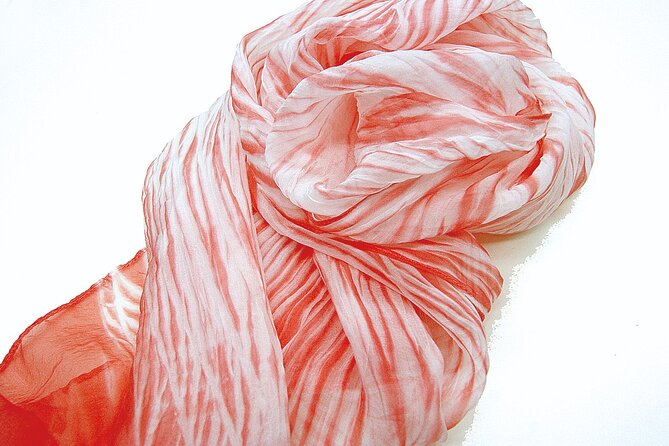
The best part of this Kyoto activity is the reveal. You bind a silk scarf around a pipe, dye it, then unwind the string and open the cloth to see the pattern you created. The result is not a factory souvenir. It is a wearable reminder of your own choices, including the color and the way you folded the fabric.
I like the hands-on format and the fact that a professional guides every step. I also like that your $50.30 fee includes museum admission and a chance to try on a shibori kimono, so the short class has more to it than simply taking home a scarf.
The main drawback is the brief schedule. A class can take only 30 minutes, and the scarf needs time to dry, so you will not get a long craft workshop. The minimum age is 12, and adult pricing applies to everyone.
Key points to know before booking

- Your scarf measures about 70 by 17 inches: The finished silk piece is large enough to wear, not just display.
- You choose the dye color: The personal color choice makes each scarf different.
- The class is usually private: Only your group participates, with individual sessions lasting roughly 30 to 60 minutes.
- The pipe-and-string method creates the pattern: You fold the fabric, wrap it around a pipe, bind it, compress it, and dye it.
- Museum admission is included: While your scarf dries, you can see shibori displays and try on a kimono.
- English support is available: Nina is named as an English-speaking instructor, and the staff can guide you through the process.
Making a Kyoto souvenir with your own hands

Kyoto offers no shortage of pretty things to buy. The trouble is that a shop-bought souvenir can blur into the rest of your luggage once you get home. This class gives you a different kind of keepsake. You take part in the making, and the finished scarf carries the small irregularities of your own work.
The craft is called kyo-arashi shibori. Here, the process begins with a silk scarf measuring about 180 centimeters by 44 centimeters, or roughly 70 by 17 inches. That is a generous size for a souvenir, and it gives the pattern room to show across the fabric.
You do not need previous experience. The instructor shows you how to fold the cloth in a particular way, wrap it around a pipe, and wind string around the fabric. You then push or squish the material toward the bottom of the pipe before adding dye.
That last part is important. The final look is not fully clear at the start. You make a series of simple choices, but the pattern appears only after the string comes off and the scarf unfolds. If you enjoy a little surprise in a craft activity, this is the moment that makes the class worthwhile.
Other experiences people book in Kyoto:
- PERFECT KYOTO 1-Day Bus Tour
★ 5.0 · 13,518 reviews - Kyoto: Fushimi Inari, Kinkakuji, Bamboo Grove 1 Day Bus Tour
★ 4.8 · 4,316 reviews - Kyoto: Tea Ceremony in a Traditional Tea House in Kiyomizu
★ 4.9 · 3,519 reviews
The Kyoto Shibori Museum setting
The class takes place at the Kyoto Shibori Museum at 135-5 Shikiamicho, in Nakagyo Ward. The museum is near public transportation, which makes it a practical stop during a day in central Kyoto. Two car parking spaces and two bicycle parking spaces are available, though those spaces are limited enough that I would not build your whole plan around driving.
The museum portion gives the class useful context. You can look at shibori displays while your own fabric dries, and you can try on a shibori kimono. That turns waiting time into part of the visit rather than a pause with nothing to do.
The kimono opportunity is especially helpful if you are curious about how shibori works on a larger garment. A scarf is approachable and easy to handle, but a kimono shows how the technique can become part of a full piece of clothing.
You should allow yourself enough time to look around. The class itself may finish in 30 minutes, but the museum and kimono activity give you a reason to stay longer. The supplied schedule describes the whole experience as approximately 30 minutes to one hour, so do not expect a full afternoon at the museum.
How the kyo-arashi process works
The class is short because the instructor keeps the process focused. You will work through these main stages:
- Fold the silk scarf in the instructed way.
- Wrap the folded fabric around a pipe.
- Wind string around the pipe and compress the cloth toward one end.
- Apply the color you choose.
- Unwind the string.
- Roll the fabric with a towel and press it.
- Unfold the scarf to see the finished pattern.
The steps are simple to describe, but the order matters. Folding and binding control where the dye can reach. The covered sections resist the color, while the exposed areas take it up. When you unfold the scarf, the design appears from that contrast.
I like this format because you are not merely watching a demonstration. You handle the fabric at every stage. The instructor stays close enough to correct your technique, which matters when you are trying a traditional Japanese craft for the first time.
The pressing stage also gives the process a satisfying finish. You roll the scarf with a towel and press it before opening it. Then comes the result, with the pattern revealed across the silk.
You can customize the scarf to your color preference. The available information does not list the full color range, so you should ask the instructor what choices are available when you arrive. The important point is that the scarf is not identical to every other one made in the class.
The reveal is the highlight

The most memorable moment comes when you remove the string and unfold the cloth. Until then, the scarf is compressed and partly hidden. The finished design only becomes clear once the material opens out.
This makes the class a good choice for families with older children and for anyone who prefers making something to simply looking at it. The activity has a clear beginning, a series of hands-on steps, and a final result you can take away.
The instructor’s role is a strength here. English guidance is available, and Nina is specifically thanked for helping participants through the process. You do not need to arrive with craft vocabulary or a detailed plan. The method is taught as you go.
The class is also described as private, with only your group taking part. That gives the activity a more personal feel than a large workshop. It should also make it easier to ask questions or get help with the folding and binding.
There is one point to keep in mind: a private class does not necessarily mean a long or slow class. The session may still last only 30 minutes. If you want extended instruction, a broad choice of materials, or time to repeat the technique, this may feel compact.
Same base, a different sort of day:
- Kyoto Geisha Walking Tour: Gion District & Hidden Gems
★ 4.7 · 3,273 reviews - Kyoto: Tea Ceremony Ju-An at Jotokuji Temple
★ 4.9 · 3,207 reviews - Kyoto: Gion Magical Night Walking Tour with Geisha Trivia
★ 4.9 · 2,393 reviews - Kyoto: 45-Minute Tea Ceremony Lesson Experience
★ 4.3 · 2,378 reviews
What the museum and kimono add
The scarf is the central activity, but the museum admission improves the value of the visit. You are not paying only for a short dyeing session. You also have access to displays and the chance to try on a shibori kimono while the fabric dries.
That matters because the dyeing itself has a waiting period. Your scarf needs time to dry, and the museum gives you something useful to do during that interval. You can look at the displays, take in the craft from another angle, and see how the design works on clothing rather than only on a narrow length of silk.
The kimono experience also helps you understand the scale of the finished craft. Your scarf is personal and manageable. A kimono lets you see the same kind of visual effect across a much larger garment.
The gift shop is another reason to allow a little extra time. It is not listed as a separate paid feature, but it is part of the museum visit described by the experience. If you like Japanese textiles, you may want to browse before leaving.
Is $50.30 good value?

At $50.30 per person, this is not the cheapest short activity in Kyoto. The class may last only 30 to 60 minutes, and you should judge the price against what is included rather than the time alone.
You receive a large silk scarf, professional instruction, museum admission, and the chance to try on a shibori kimono. The scarf is the main value. A personalized silk item made during your trip can be more meaningful than a generic purchase, especially if you have limited luggage space and want one substantial souvenir.
The private format adds value for people who want direct help. You are not expected to keep pace with a large group, and you can ask for guidance as you fold, bind, and press the cloth.
The price makes the most sense for you if you care about the activity as well as the object. If you only want an inexpensive scarf, buying one may cost less. If you want a short, guided craft session with a finished silk piece and a museum visit, the fee is easier to justify.
Adult pricing applies to all ages. The minimum age is 12, so families should check the age rule carefully before booking. The class may suit older children well, but it is not presented as an activity for younger children.
Timing your visit in Kyoto
Multiple start times are offered, which helps you fit the class into a sightseeing day. Since the class takes place at one fixed museum address and ends back at the meeting point, it is easy to plan as a single stop rather than a moving tour.
I would avoid placing it between two tightly timed reservations. The stated duration is approximate, and the scarf drying, museum browsing, and kimono try-on can make the visit feel longer than the hands-on portion alone.
The activity is booked, on average, 23 days in advance. That does not guarantee that every time slot will sell out, but it is a useful planning signal. If the class is important to your Kyoto schedule, booking ahead is sensible.
A mobile ticket keeps the arrival process simple. You should still check the meeting details on your confirmation and arrive at the Kyoto Shibori Museum address, since the experience begins and ends there.
Free cancellation is available if you cancel at least 24 hours before the start time. Changes or cancellations made inside that period are not accepted for a refund.
Who will enjoy this class most?
I would choose this for you if you want a personal souvenir, enjoy simple creative work, or need a short indoor activity in Kyoto. It works well for couples, friends, families with participants aged 12 and older, and solo visitors who like learning by doing.
It is also a good fit for a mixed-interest group. Someone who is less interested in making the scarf can spend time with the museum displays or try on the kimono. The activity does not require everyone to have the same level of artistic interest.
You may want to skip it if you are looking for a long workshop, a broad textile lesson, or a detailed study of several shibori techniques. This class focuses on one method, kyo-arashi, and moves at a brisk pace.
The experience also asks you to accept a little uncertainty. You choose your color and follow the method, but you cannot fully predict the pattern before the fabric opens. That is part of the fun, though perfectionists may want to keep expectations flexible.
Practical details that matter
The meeting point is:
Kyoto Shibori Museum
135-5 Shikiamicho
Nakagyo Ward, Kyoto 604-8261, Japan
The museum is near public transportation. Limited parking is available, with two car spaces and two bicycle spaces. The activity is considered suitable for most participants, but the minimum age is 12.
The class is usually individual and lasts between 30 and 60 minutes. Your group participates privately, and the experience ends at the same museum meeting point.
English assistance is available. Nina is identified by name in the supplied information, while the wider staff is described as attentive and accommodating. If you have questions about dye colors or the drying time, ask at the start so you can plan the rest of your day.
Should you book the Kyo-arashi Shibori Scarf Class?
Book it if you want to make a useful Kyoto souvenir instead of simply buying one. The combination of a large silk scarf, direct instruction, museum admission, and a kimono try-on gives the short class a solid amount of content.
I especially recommend it for visitors who have a free hour, want an indoor stop, or are looking for an activity that works across generations. The private format and English guidance make the process approachable, while the final reveal gives you a clear payoff.
Skip it if your budget is tight or if you want a longer, more technical workshop. At $50.30, the value depends on caring about the making process as much as the scarf itself.
For most people who enjoy crafts, the class is an easy Kyoto addition. You leave with something personal, and you have a better sense of how a carefully bound piece of fabric can become a patterned silk garment.
FAQ
Where does the Kyo-arashi Shibori Scarf Class take place?
The class takes place at the Kyoto Shibori Museum, 135-5 Shikiamicho, Nakagyo Ward, Kyoto 604-8261, Japan.
How long does the class last?
The class usually lasts between 30 and 60 minutes. The full visit may also include time to browse the museum and try on a kimono while your scarf dries.
What will I make during the class?
You will make a silk scarf measuring about 180 by 44 centimeters, or approximately 70 by 17 inches, using the kyo-arashi shibori method.
Can I choose the scarf color?
Yes. The class allows you to customize the scarf according to your color preference. The full range of available colors is not specified.
Is museum admission included?
Yes. Admission to the Kyoto Shibori Museum is included, along with the opportunity to try on a shibori kimono.
What is the minimum age?
The minimum age is 12. Adult pricing applies to all ages.
Can I cancel for a refund?
You can cancel for a full refund up to 24 hours before the experience starts. Cancellations or changes made less than 24 hours before the start time are not accepted for a refund.
Just added in Kyoto
- Private Cooking Class Udon in Kyoto Japan★ 5.0 · 23 reviews
- Your Private Vacation Photography Session In Kyoto★ 5.0 · 110 reviews
- Kyoto: Zen Meditation at a Private Temple with a Monk★ 5.0 · 25 reviews
- Private Pewter Sake Cup Experience with a Kyoto Artisan★ 5.0 · 31 reviews
- Kyoto Wagashi(Japanese sweets) Cooking Class near Fushimiinari★ 5.0 · 60 reviews
- Kyoto:Family-Friendly Kimono & Yukata Experience at WARGO★ 5.0 · 147 reviews
- Private Guided Traditional Buddhist Cooking in Japan★ 5.0 · 16 reviews
- Kyoto: Gion Geisha District & Sake-in-Hand Walking Tour★ 5.0 · 37 reviews
Tours in Kyoto, compared.

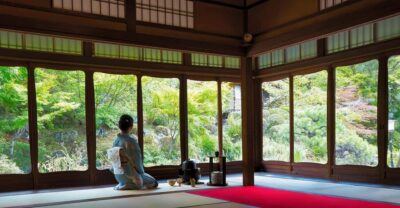
Tea Ceremony in a Traditional Tea House in Kiyomizu
Read our review →
Kyoto Geisha Walking Tour: Gion District & Hidden Gems
Read our review →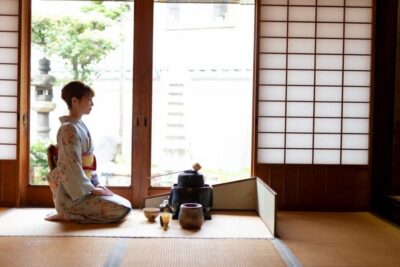
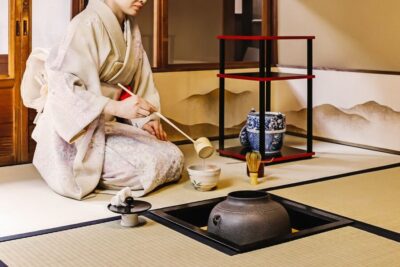

Gion Geisha District Walking Tour – Stories of Geisha
Read our review →
Best of Kyoto: Gion, Geisha, Pagodas & Cobblestones
Read our review →