Reviewed · TOURS IN KYOTO
Kyoto Afternoon Tour from Kyoto or Osaka
Kyoto’s biggest sights are spread across the city, but this afternoon tour links three important ones in less than five hours: Fushimi Inari Taisha, Sanjusangendo Temple, and Kiyomizu-dera. You get Shinto gates, a Buddhist hall filled with statues, and a hilltop temple with broad views, all without sorting out Kyoto’s transport system yourself.
I like the mix of places. Sanjusangendo gives you a quiet, focused look at Buddhist art, while Fushimi Inari and Kiyomizu-dera offer the best photo chances. I also like that transport and entrance fees are included, and guides such as Yoshi, Jessie, Donna-San, and Momo have been praised for being warm, funny, and clear.
The trade-off is time. Fushimi Inari gets about 30 minutes, Sanjusangendo about 30 minutes, and Kiyomizu-dera about 70 minutes. That is enough for an introduction, but you will need to keep moving, especially in crowded streets or at the end of the day when fading light can reduce the views.
Key points at a glance
- Three major sights in one afternoon: Visit Fushimi Inari, Sanjusangendo, and Kiyomizu-dera without arranging separate transport.
- Sanjusangendo’s 1,001 statues: See the temple’s famous rows of life-size Kannon figures inside Japan’s longest wooden building.
- A guide-led introduction to Kyoto: English-speaking guides explain Japanese religious customs, history, and local sights.
- Kiyomizu-dera’s famous approach: Walk the uphill shopping lane toward the temple, with time for photos and a quick stop in the shops.
- A useful choice for a short stay: The tour works well if you have only one afternoon in Kyoto or want an easy first look at the city.
- Expect a brisk pace: Crowds, traffic, walking, and limited time can make the visits feel rushed.
Three Kyoto landmarks, one practical afternoon
This is a sightseeing sampler, not a slow temple walk. You meet the guide in the afternoon at the Avanti Tour Desk near Kyoto Station, then travel by vehicle between the sites.
That arrangement matters in Kyoto. The sights are not next door to one another, and city traffic can affect arrival times. The tour operator notes that the order and timing may change because of road conditions and congestion. You should see all three listed places, but do not treat the schedule as a minute-by-minute promise.
The group can include up to 40 people. That is not a private or intimate outing, so you need to stay close to the guide and listen carefully in busy areas. Several guides have received especially warm praise for keeping groups organized and making the commentary entertaining. Yoshi, in particular, is described as friendly, funny, and informative, while Jessie and Donna-San are also noted for their clear and personable manner.
Other experiences people book in Kyoto:
- PERFECT KYOTO 1-Day Bus Tour
★ 5.0 · 13,518 reviews - Kyoto: Fushimi Inari, Kinkakuji, Bamboo Grove 1 Day Bus Tour
★ 4.8 · 4,316 reviews - Kyoto: Tea Ceremony in a Traditional Tea House in Kiyomizu
★ 4.9 · 3,519 reviews
Fushimi Inari and the red torii gates
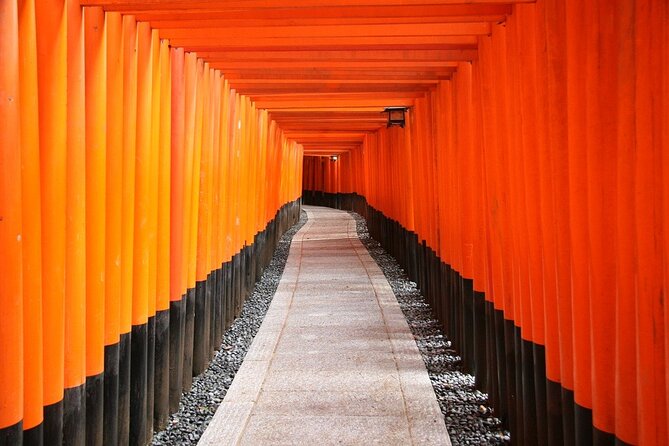
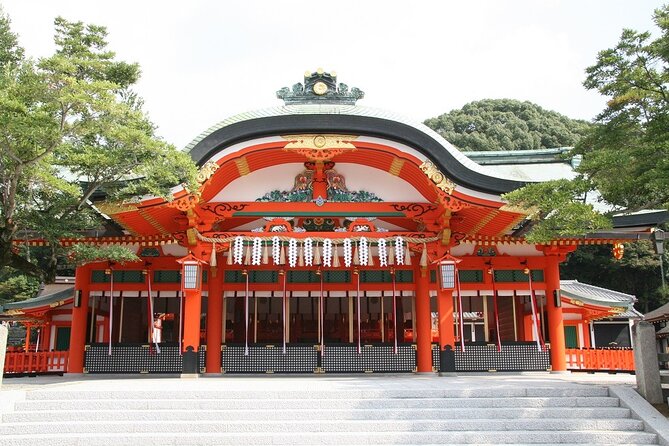
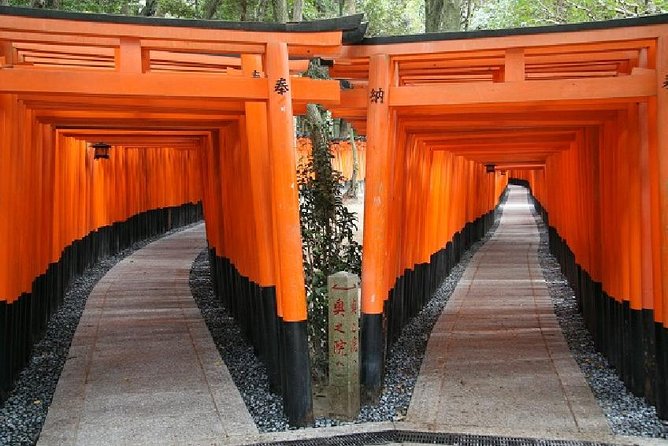
Fushimi Inari Taisha is the head shrine of roughly 40,000 Inari shrines across Japan. Its famous Senbon Torii are the main attraction: long lines of bright red gates that climb through the wooded shrine grounds.
You get about 30 minutes here, plus a walk of roughly 15 minutes each way from the parking area to the shrine. That walking detail is easy to miss when planning the afternoon. Wear shoes that are comfortable on pavement and uneven surfaces, and do not expect to hike the entire mountain trail during this short stop.
The colors make this the tour’s strongest quick-photo location. Red shrine gates, traditional buildings, and the movement of people through the passage give you an immediate sense of one of Kyoto’s best-known religious sites. Your guide can also explain the connection between Inari and the fox figures commonly associated with the shrine.
The short visit has limits. Fushimi Inari is a large complex, and 30 minutes cannot cover it fully. The tour also does not enter the Shin-en garden. If this shrine is your main reason for coming to Kyoto, you would want more time here on another visit.
For this tour, think of Fushimi Inari as a vivid first taste rather than a full exploration. You will see the signature gates and understand why the shrine matters, but you will not have much room for a long uphill walk, quiet reflection, or extended photography.
Sanjusangendo and its 1,001 Kannon figures
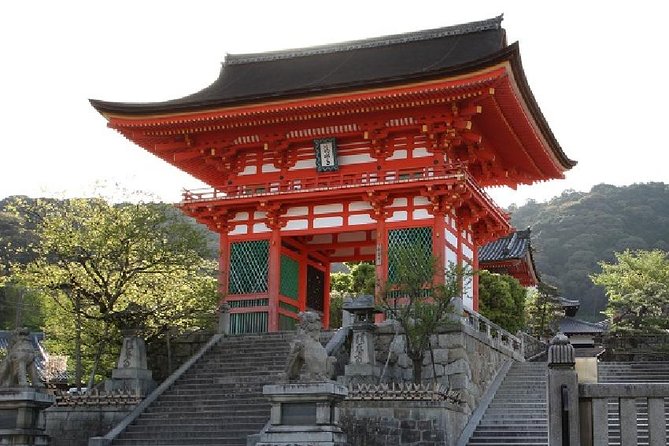
Sanjusangendo is the most focused stop of the afternoon. The wooden hall measures about 120 meters, making it Japan’s longest wooden structure. Inside are 1,001 life-size statues of Kannon, the Buddhist bodhisattva of compassion, dating from the 13th century.
The hall’s scale is impressive, but the statues are the real reason to come. Arranged in rows, they create an intense and highly ordered interior. This is not a place where you simply glance at a façade, take a photo, and leave. The experience comes from seeing the repeated figures together, with their individual details emerging as you look along the rows.
You get about 30 minutes here. That may sound short, but it is a concentrated visit and usually gives you enough time to understand the main feature of the temple. The guide’s explanation is particularly useful at this stop because the religious meaning and artistic detail are not always obvious from a quick walk through.
Photography restrictions or interior rules may apply at temples, so follow the guide and posted instructions. Sanjusangendo is also a place where a quieter manner is appropriate. The hall rewards attention more than speed, even though the schedule asks you to move on.
Several people have described this temple as the most powerful stop of the afternoon. I can understand why. Fushimi Inari is colorful and Kiyomizu-dera is scenic, but Sanjusangendo offers the tour’s most distinctive interior experience.
Kiyomizu-dera and the uphill approach
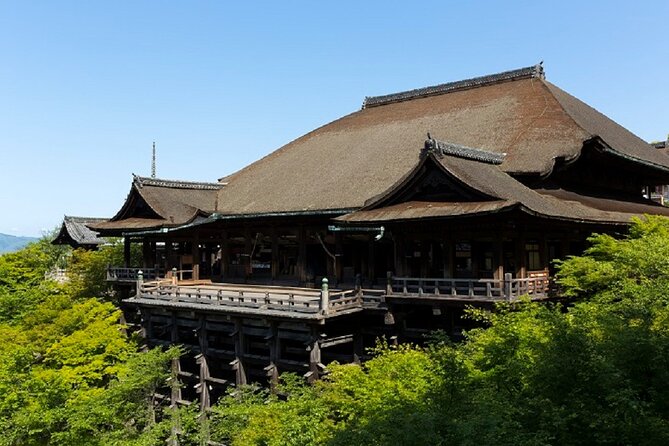
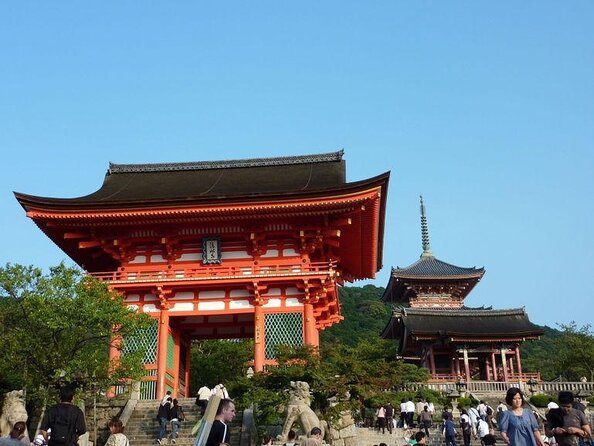
Kiyomizu-dera gets the longest visit, about 1 hour and 10 minutes. The route includes the traditional shopping street leading uphill to the temple, so this is not simply a bus drop-off and a quick look at one building.
The approach is part of the fun. Rows of pottery shops and other stores line the lane, giving you a chance to browse, pick up a small souvenir, or buy a quick ice cream. Do not spend all your time shopping, though. The temple grounds and viewpoints are the main event.
Kiyomizu-dera is a UNESCO World Heritage site, famous for its broad wooden terrace and views across Kyoto. From the temple and nearby paths, you can look over the city and the surrounding foothills of Higashiyama. This is the stop most likely to supply the classic Kyoto photograph.
The walk uphill can be strenuous, especially on a hot, sunny day. You do not need to be an athlete, but you should be ready for a fair amount of walking and some incline. The route can also be crowded and noisy, which may surprise you if you picture a silent mountain temple.
Timing is important here. An afternoon schedule can bring you to Kiyomizu-dera around dusk at certain times of year. One reported experience reached the temple at about 4:30 p.m., with darkness arriving before departure. That can mean weaker city views and less chance of seeing autumn foliage in daylight. If sweeping views are your top priority, check the season and sunset time before booking.
The tour may allow you to stay behind after the formal visit, but this should not be treated as guaranteed. Ask the guide on the day if you want to remain in the area and make your own way onward.
Same base, a different sort of day:
- Kyoto Geisha Walking Tour: Gion District & Hidden Gems
★ 4.7 · 3,273 reviews - Kyoto: Tea Ceremony Ju-An at Jotokuji Temple
★ 4.9 · 3,207 reviews - Kyoto: Gion Magical Night Walking Tour with Geisha Trivia
★ 4.9 · 2,393 reviews - Kyoto: 45-Minute Tea Ceremony Lesson Experience
★ 4.3 · 2,378 reviews
What the guide adds
The guide is the strongest reason to choose this tour instead of simply visiting the sites on your own. The temples and shrine are easy to find, but their customs, symbols, and purpose are less obvious.
A good guide turns the afternoon into more than a checklist. You can expect explanations of Shinto and Buddhist traditions, background on Kyoto’s years as Japan’s capital from 794 to 1868, and help understanding what you are seeing at each stop.
The best comments about guides focus on personality as much as information. Yoshi is described as funny, attentive, and able to keep the group engaged. Jessie is praised for being friendly and informative. Donna-San is noted for clear English and a caring approach, while Momo is described as an excellent guide.
Guide quality can vary from group to group, and a large group makes it harder to hear. Stay near the guide during explanations, especially at Fushimi Inari and on the busy Kiyomizu-dera approach. If you fall behind for photographs or shopping, it may be difficult to locate the group again.
Is $82.58 good value?
At $82.58 per person, this is not the cheapest way to see Kyoto. You are paying for convenience, an English-speaking licensed guide, transportation between separate areas, and admission to Sanjusangendo and Kiyomizu-dera.
The value is strongest if you have limited time or are staying in Osaka and want a simple Kyoto introduction. Organizing three major sites independently involves public transport, route planning, entrance fees, and watching the clock. The included vehicle saves effort, especially during hot or humid weather.
The value is weaker if you prefer long visits, quiet corners, or detailed photography. You could spend much of a day at Fushimi Inari alone, and Kiyomizu-dera deserves more than a brief stop if you want to explore every path and shop. The tour gives you range, not depth.
For a first afternoon, I think the price is reasonable if you place a high value on structure and transport. It is less appealing for repeat visitors who already know Kyoto’s transit system and want to set their own pace.
The tour is commonly booked about 27 days ahead, so popular dates may fill before your trip. Confirmation is sent within 48 hours, subject to availability. Free cancellation is available up to 24 hours before the start time, which gives you some flexibility when arranging a packed Japan itinerary.
Who should book this afternoon tour?
This experience suits you if:
- You have only one day or one afternoon in Kyoto.
- You are visiting from Osaka and want transport arranged.
- You want a guide to explain religious customs and historical details.
- You prefer seeing three major places instead of spending a full day at one site.
- You are comfortable walking, using stairs, and keeping to a schedule.
- You want included admission fees and a clear meeting point near Kyoto Station.
It may not suit you if you want a private tour, dislike group travel, or need a slow pace. Families with young children should note that children up to age five can join free, but no bus seat is provided unless you book the child rate. Participants under 18 need written parental permission, and anyone under 15 or not yet enrolled in middle school must be accompanied by a parent or guardian.
Service animals are allowed, and most people can participate, but the walking from the parking area and the uphill route to Kiyomizu-dera still matter. If mobility or stamina is a concern, ask for current details before booking rather than assuming the vehicle reaches each entrance.
My verdict: a useful first look at Kyoto
I would choose this tour for a first Kyoto visit when time is tight. You get three very different experiences: the red gates of Fushimi Inari, the concentrated beauty of Sanjusangendo, and the city views from Kiyomizu-dera.
The guides are a major plus, especially when you get someone as engaging as Yoshi, Jessie, Donna-San, or Momo. The main caution is the pace. You will see a lot, but you will not see everything.
Book it if you want orientation, transport, and a friendly introduction. Skip it if your ideal Kyoto day means lingering at one temple, returning for evening photographs, or following your own route. For many first-time visitors, this is a sensible way to get your bearings before choosing which places deserve a longer return visit.
FAQ
How long does the Kyoto Afternoon Tour last?
The tour lasts approximately 4 hours and 40 minutes, or about five hours.
Where does the tour begin?
You meet the guide in the afternoon at the Avanti Tour Desk near Kyoto Station.
Which places does the tour visit?
The tour visits Fushimi Inari Taisha Shrine, Sanjusangendo Temple, and Kiyomizu-dera Temple.
Is transportation included?
Yes. Transportation costs between the tour stops are included, along with the licensed English-speaking guide fee and admission fees.
How much walking is required?
You walk about 15 minutes each way from the parking area to Fushimi Inari. The approach to Kiyomizu-dera is uphill, and the tour includes walking around the temple and shopping lane.
Does the tour enter the Shin-en garden at Fushimi Inari?
No. The tour does not enter the Shin-en garden.
Can I cancel for a full refund?
Yes, if you cancel at least 24 hours before the experience start time. Cancellations or changes made less than 24 hours before the start time are not accepted for a refund.
Just added in Kyoto
- Private Cooking Class Udon in Kyoto Japan★ 5.0 · 23 reviews
- Your Private Vacation Photography Session In Kyoto★ 5.0 · 110 reviews
- Kyoto: Zen Meditation at a Private Temple with a Monk★ 5.0 · 25 reviews
- Private Pewter Sake Cup Experience with a Kyoto Artisan★ 5.0 · 31 reviews
- Kyoto Wagashi(Japanese sweets) Cooking Class near Fushimiinari★ 5.0 · 60 reviews
- Kyoto:Family-Friendly Kimono & Yukata Experience at WARGO★ 5.0 · 147 reviews
- Private Guided Traditional Buddhist Cooking in Japan★ 5.0 · 16 reviews
- Kyoto: Gion Geisha District & Sake-in-Hand Walking Tour★ 5.0 · 37 reviews
Tours in Kyoto, compared.

Tea Ceremony in a Traditional Tea House in Kiyomizu
Read our review →
Kyoto Geisha Walking Tour: Gion District & Hidden Gems
Read our review →


Gion Geisha District Walking Tour – Stories of Geisha
Read our review →
Best of Kyoto: Gion, Geisha, Pagodas & Cobblestones
Read our review →